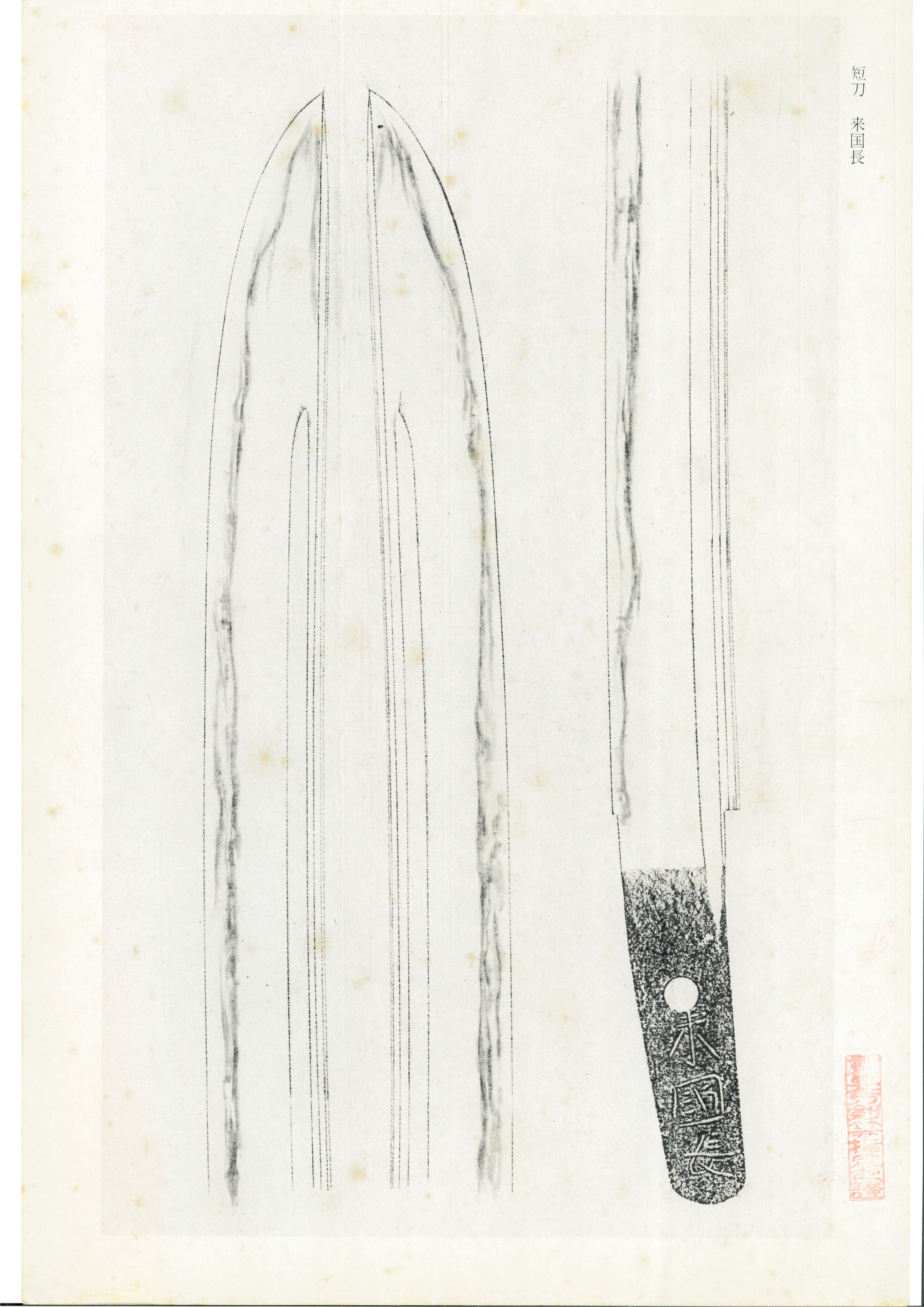
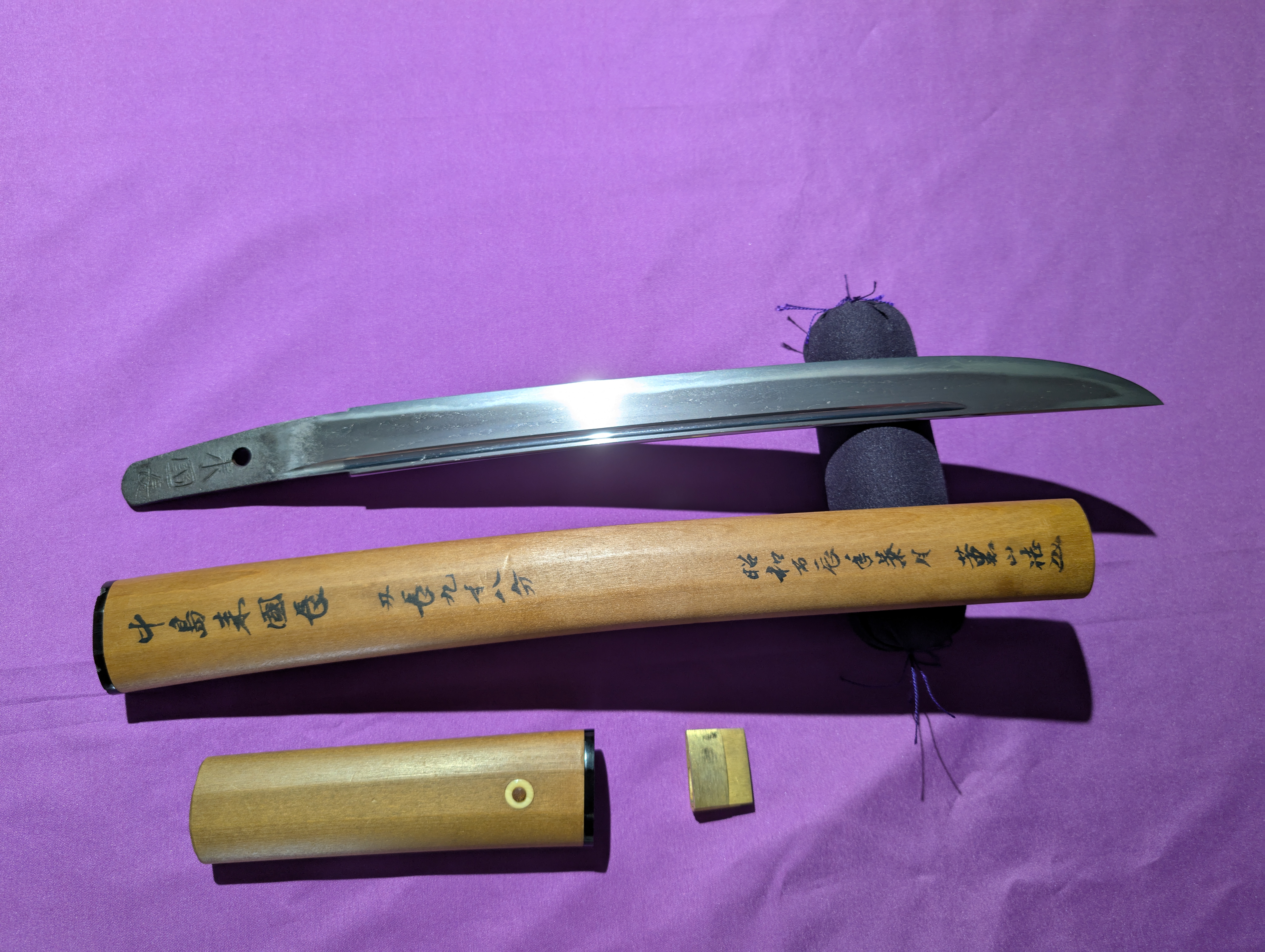
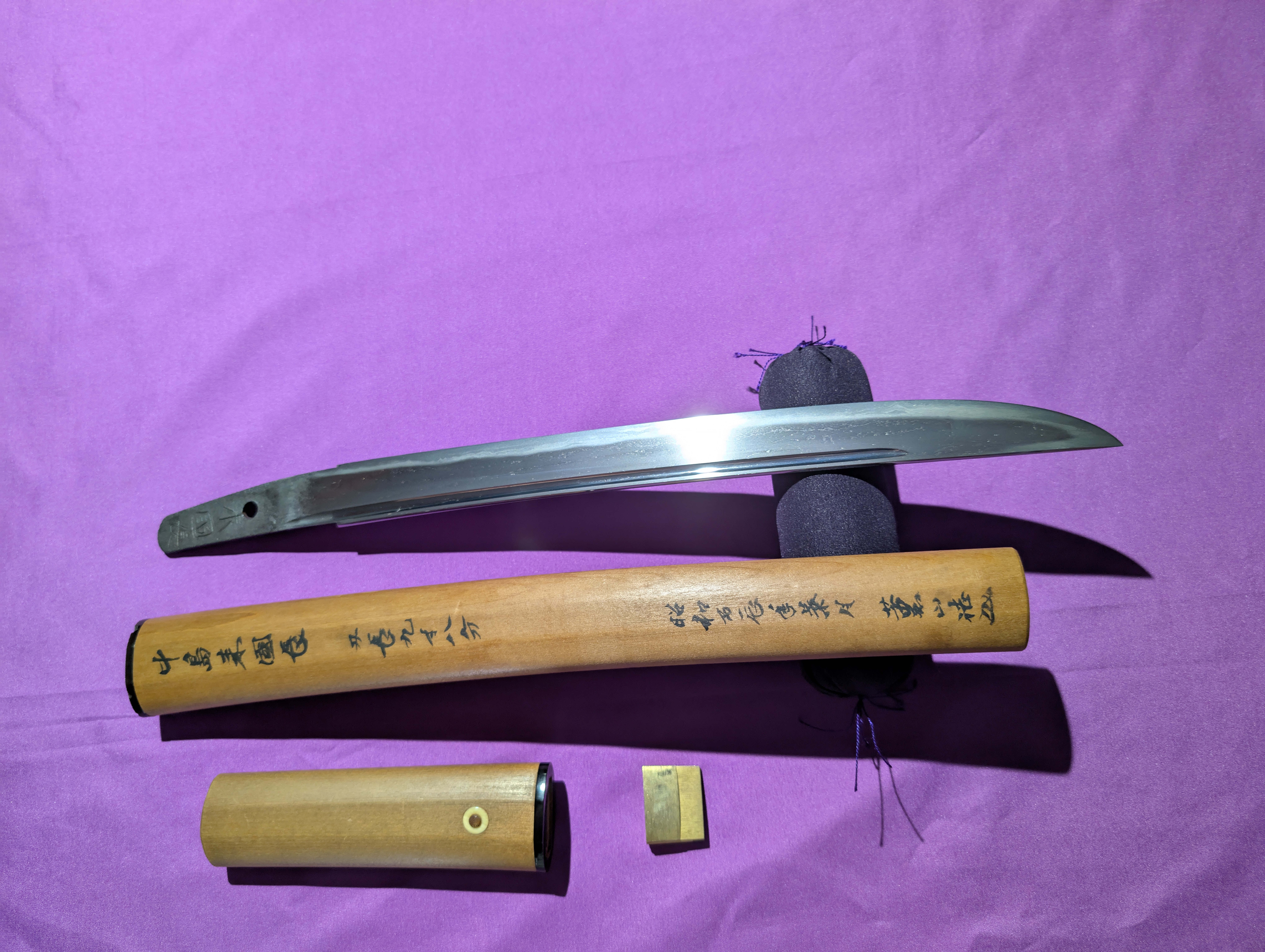
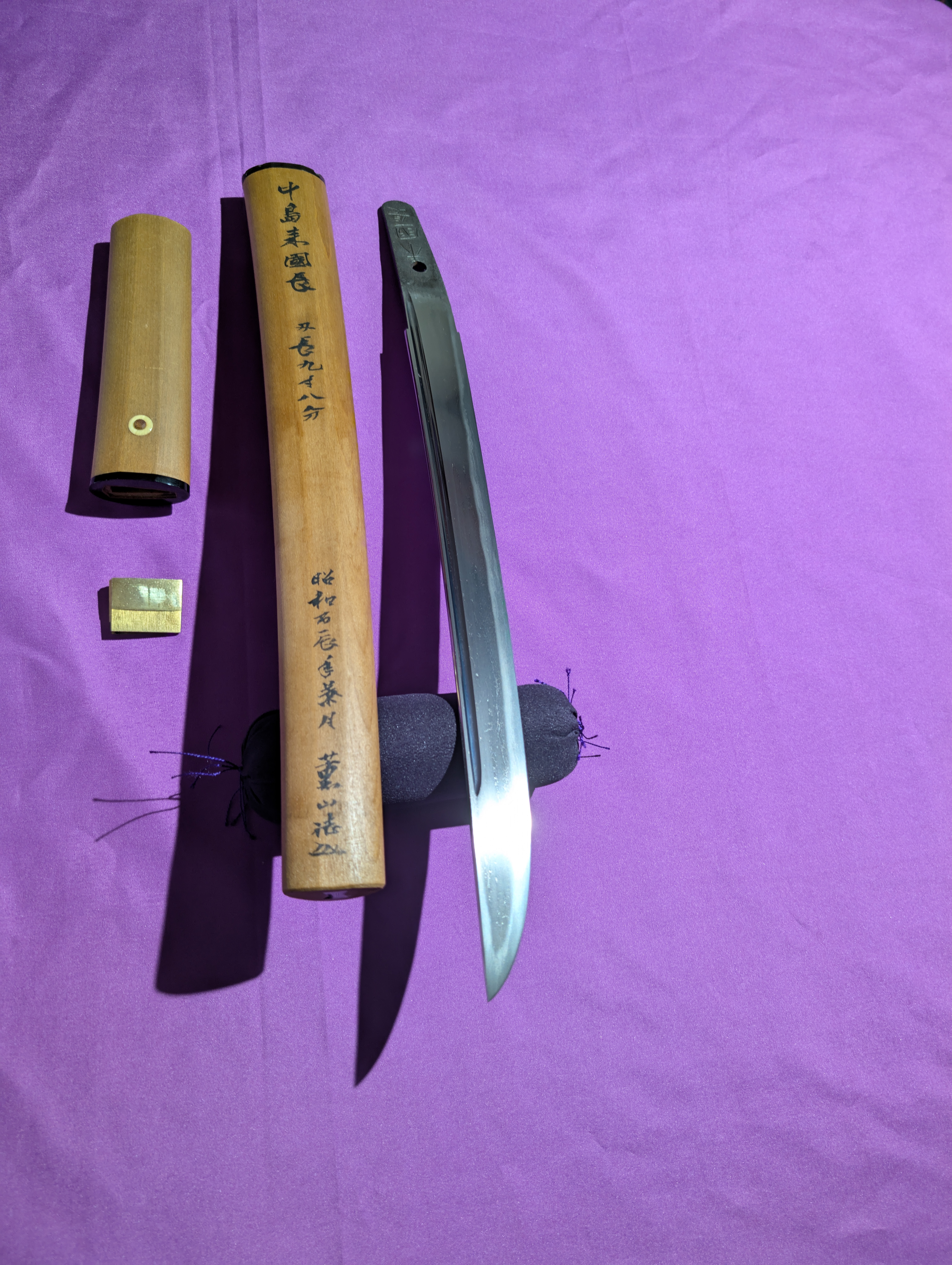
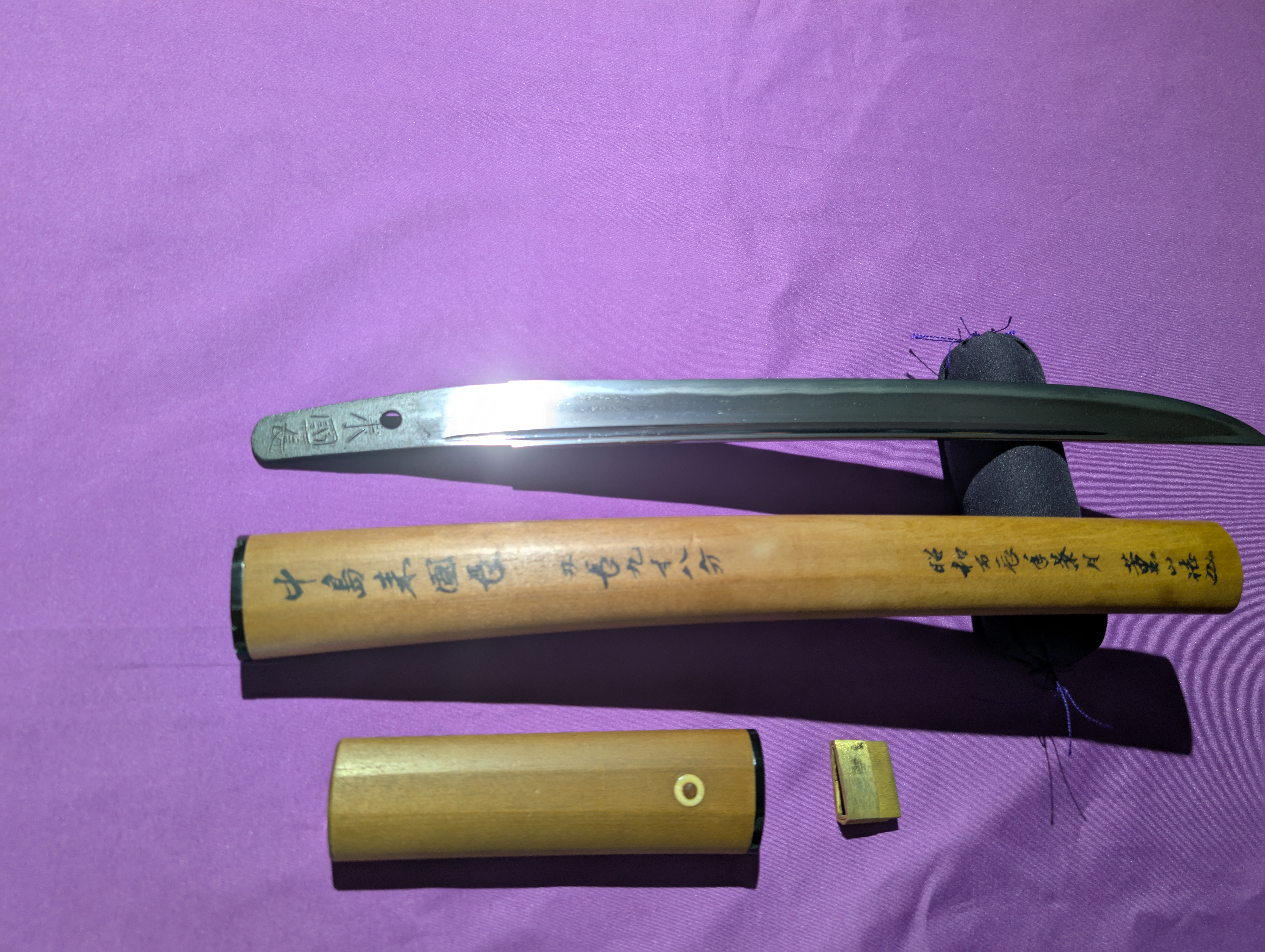
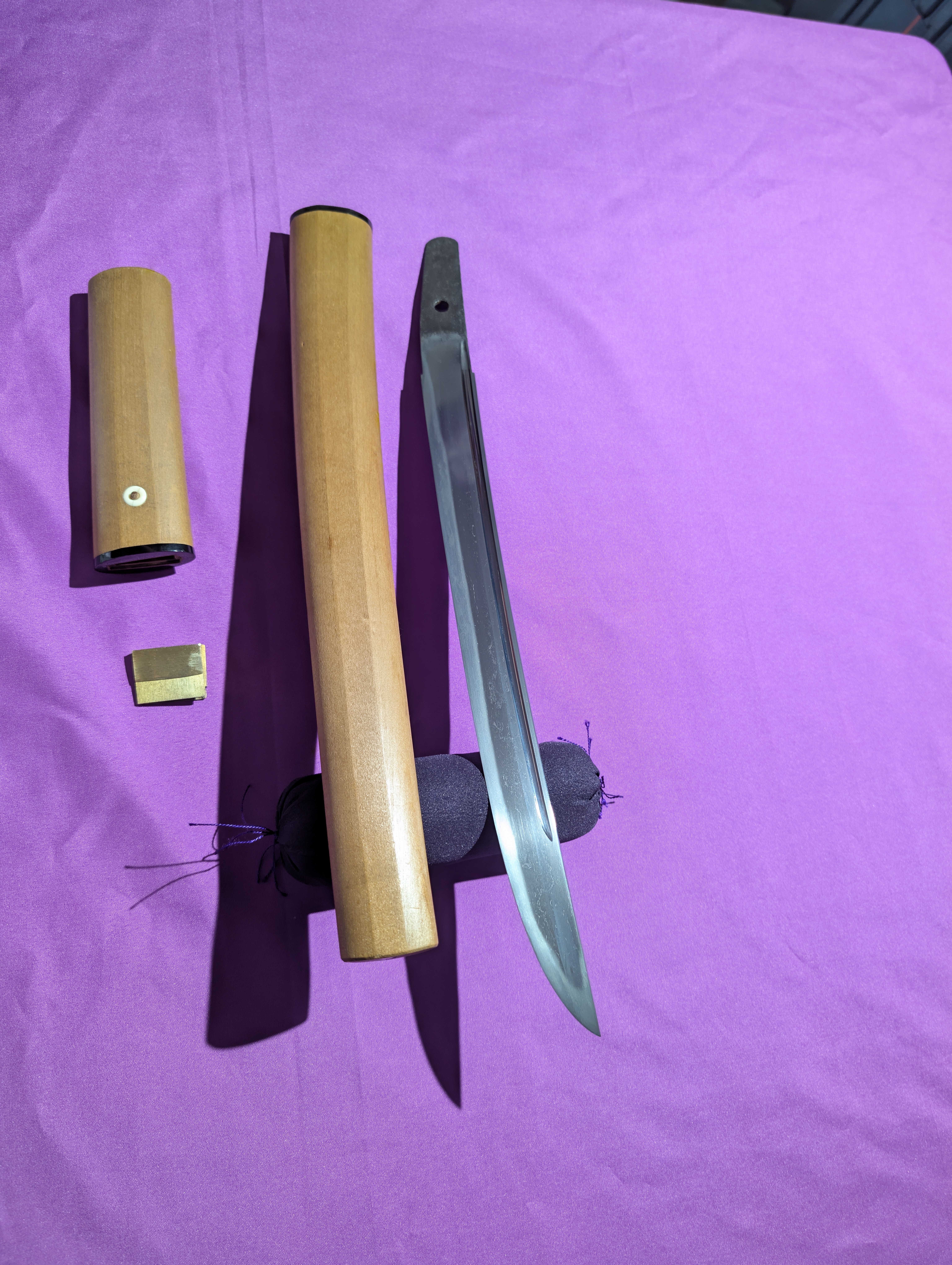
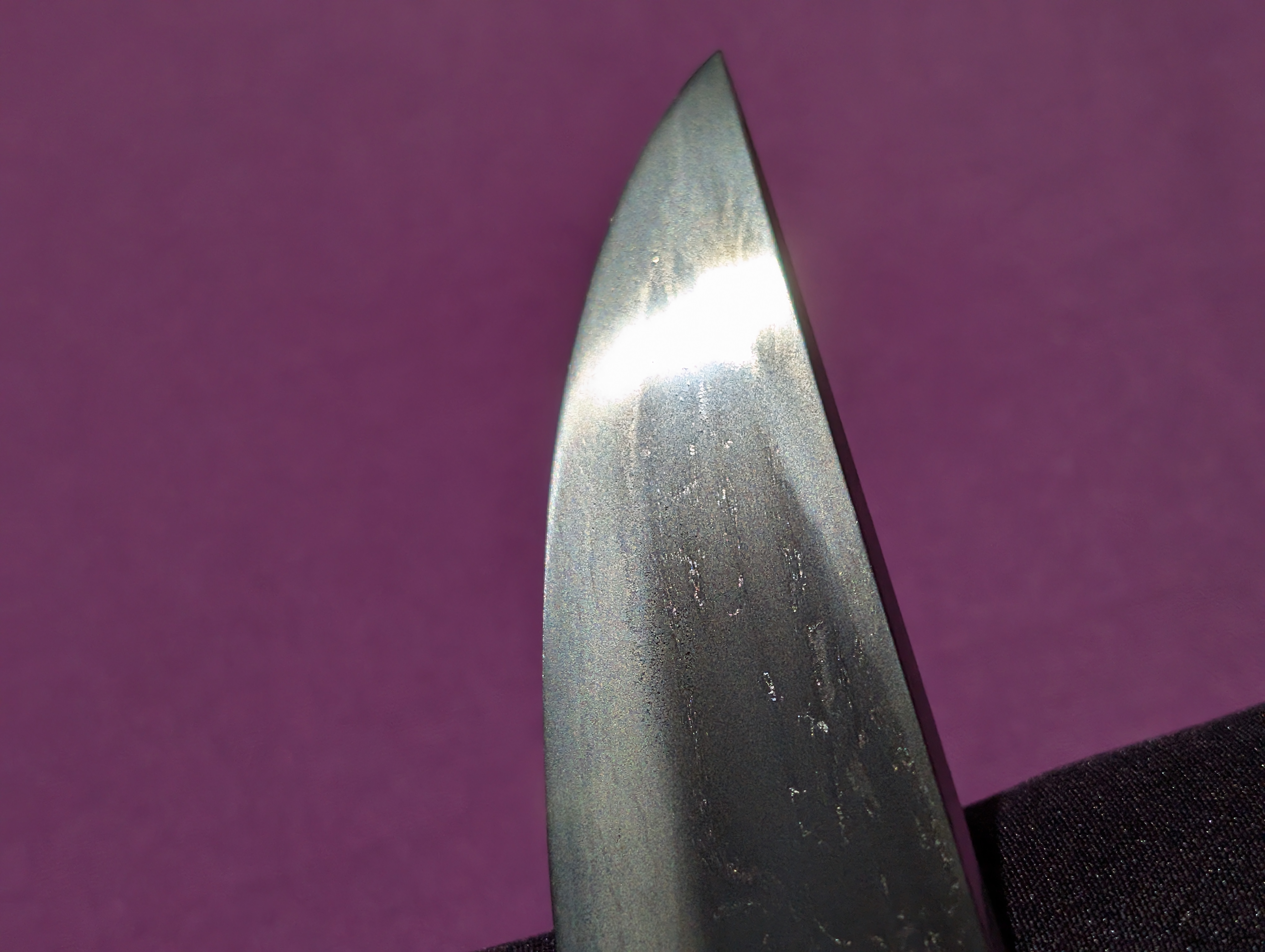
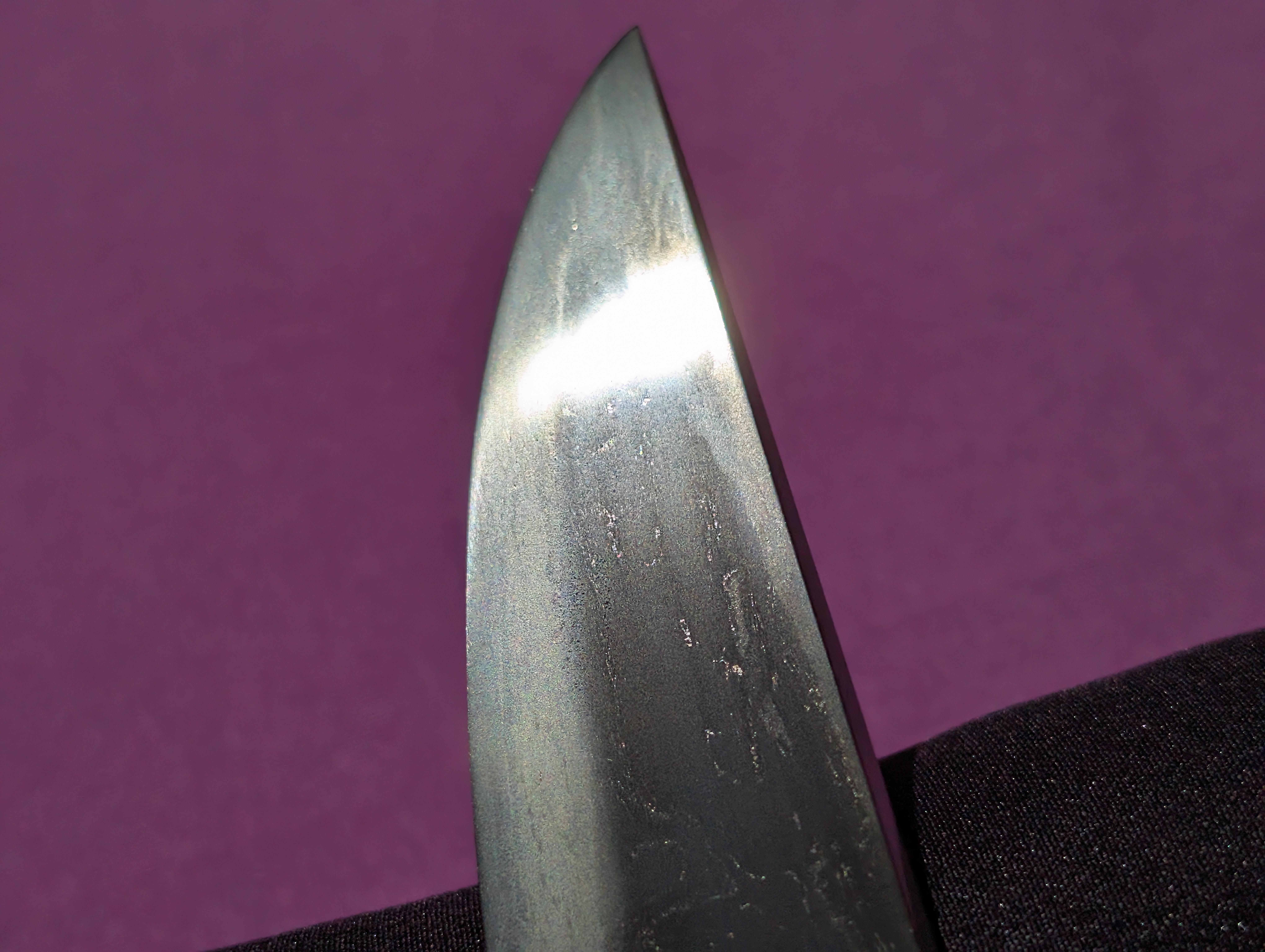
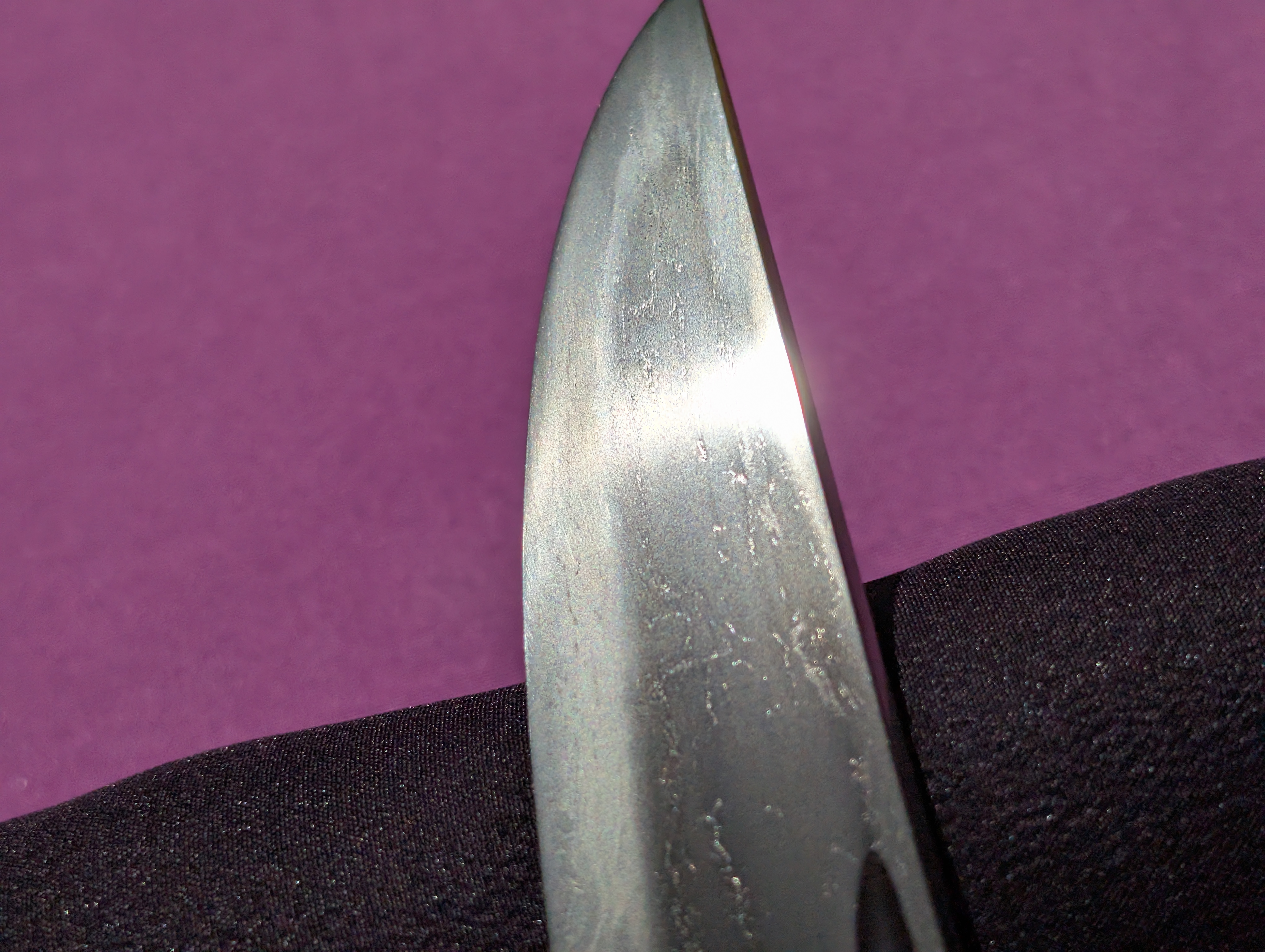
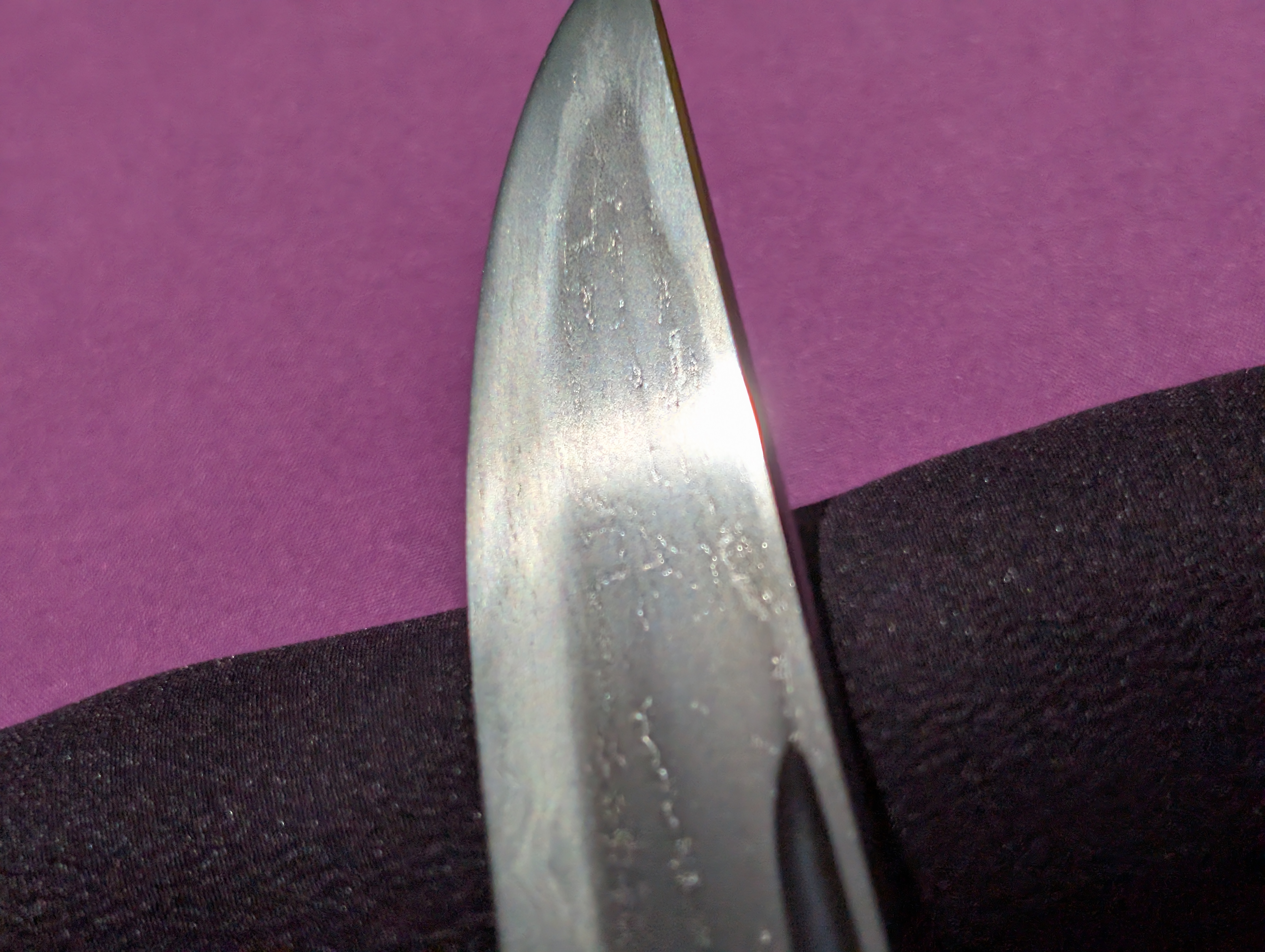
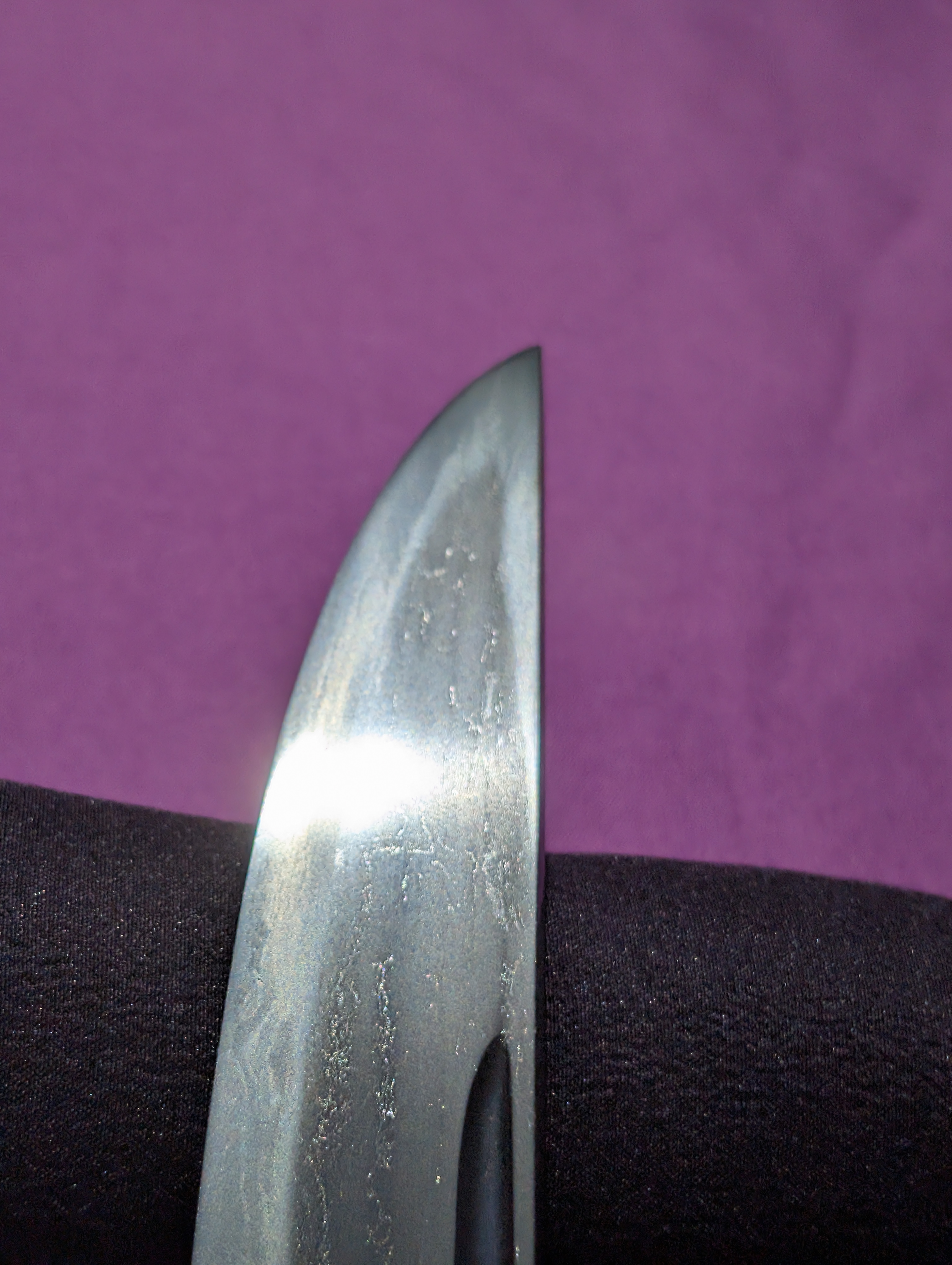
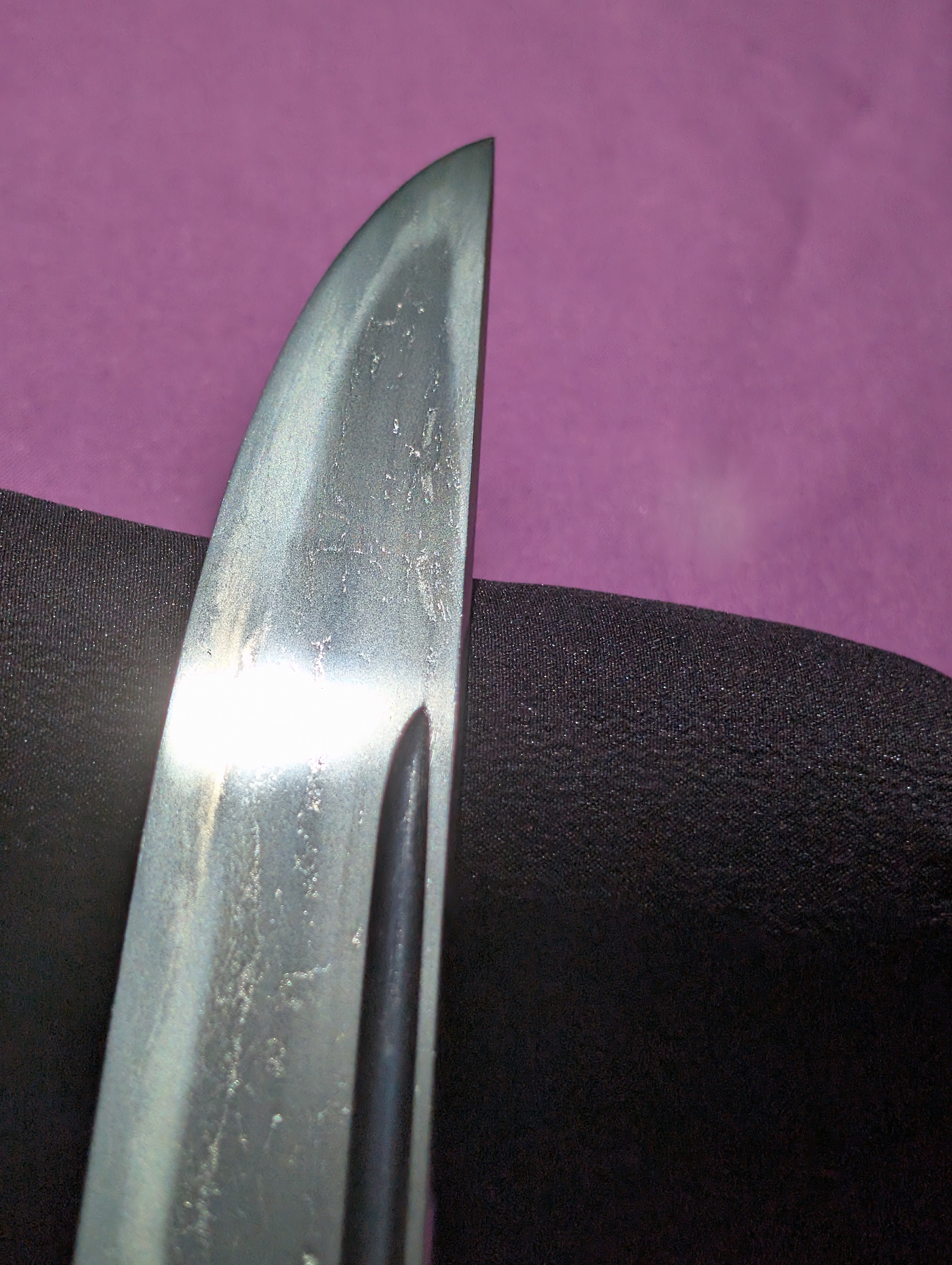
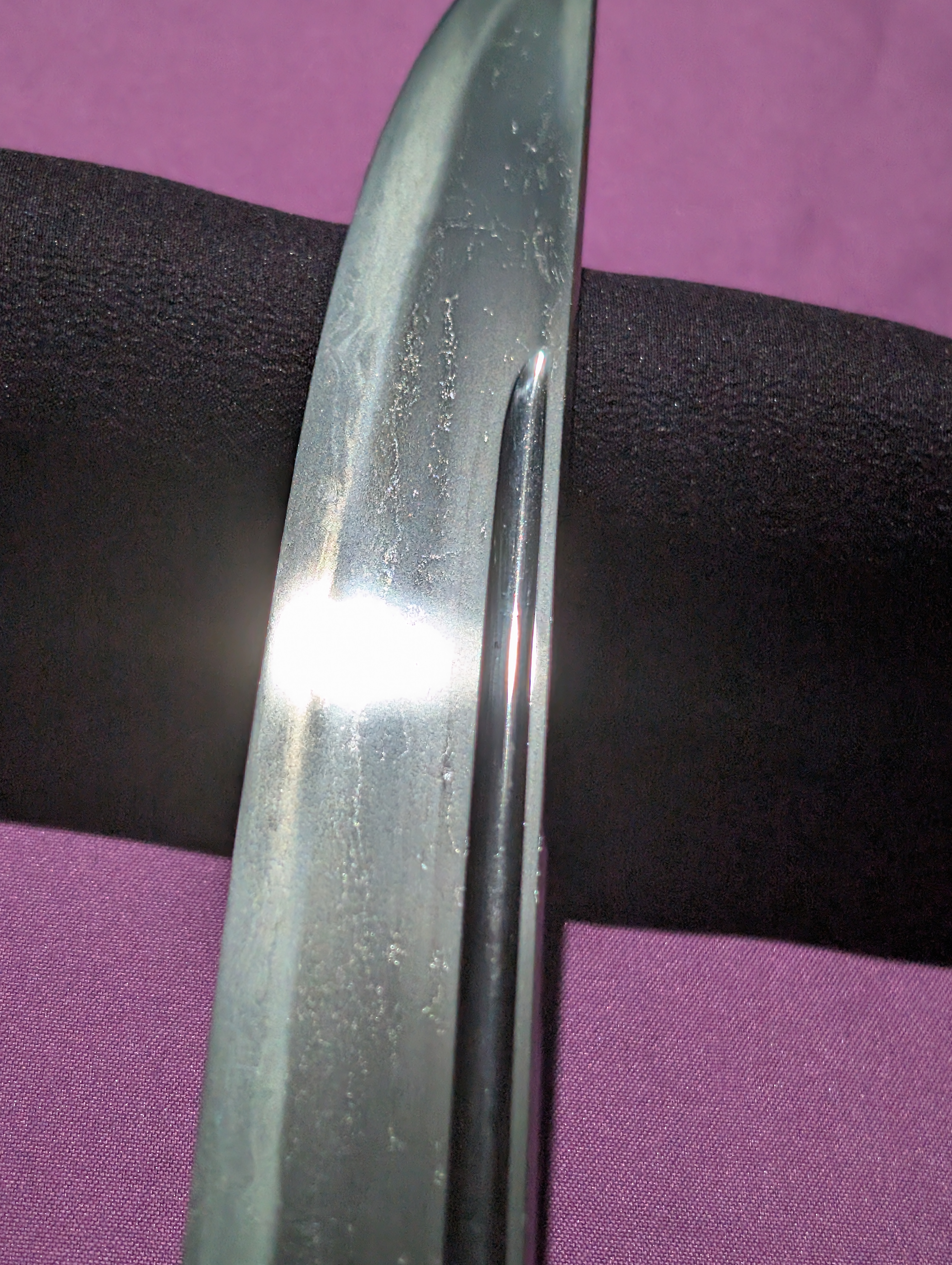
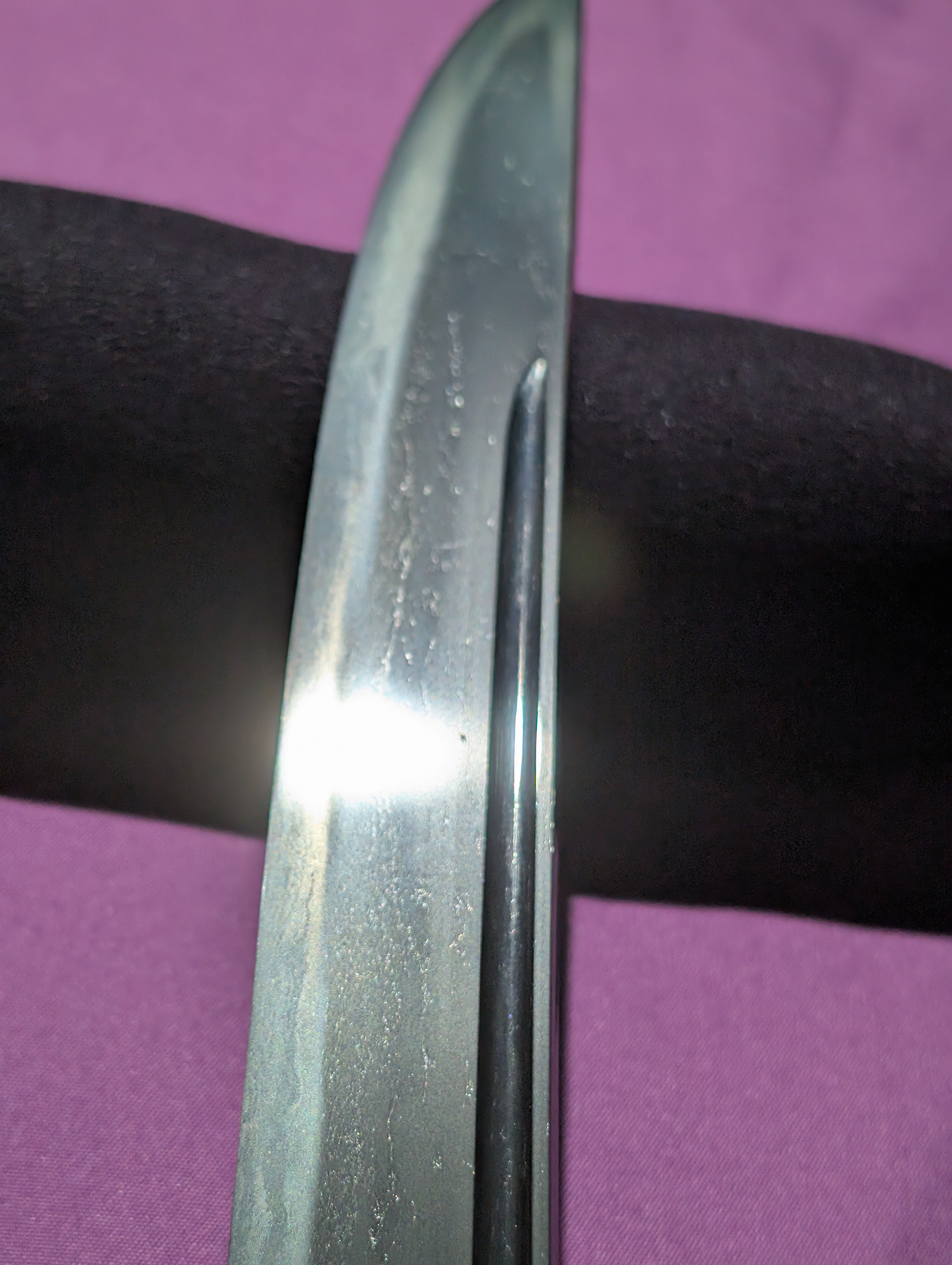
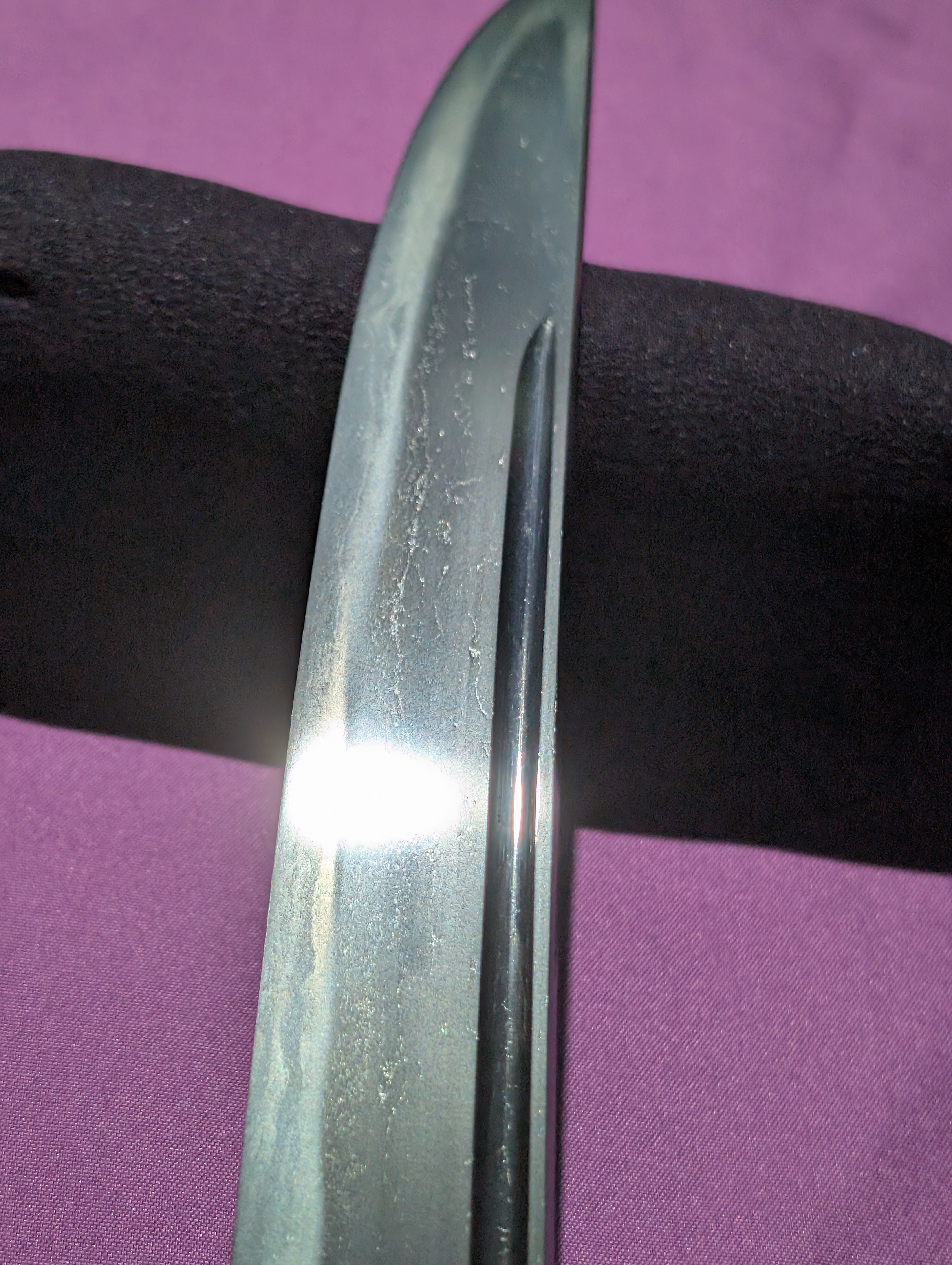
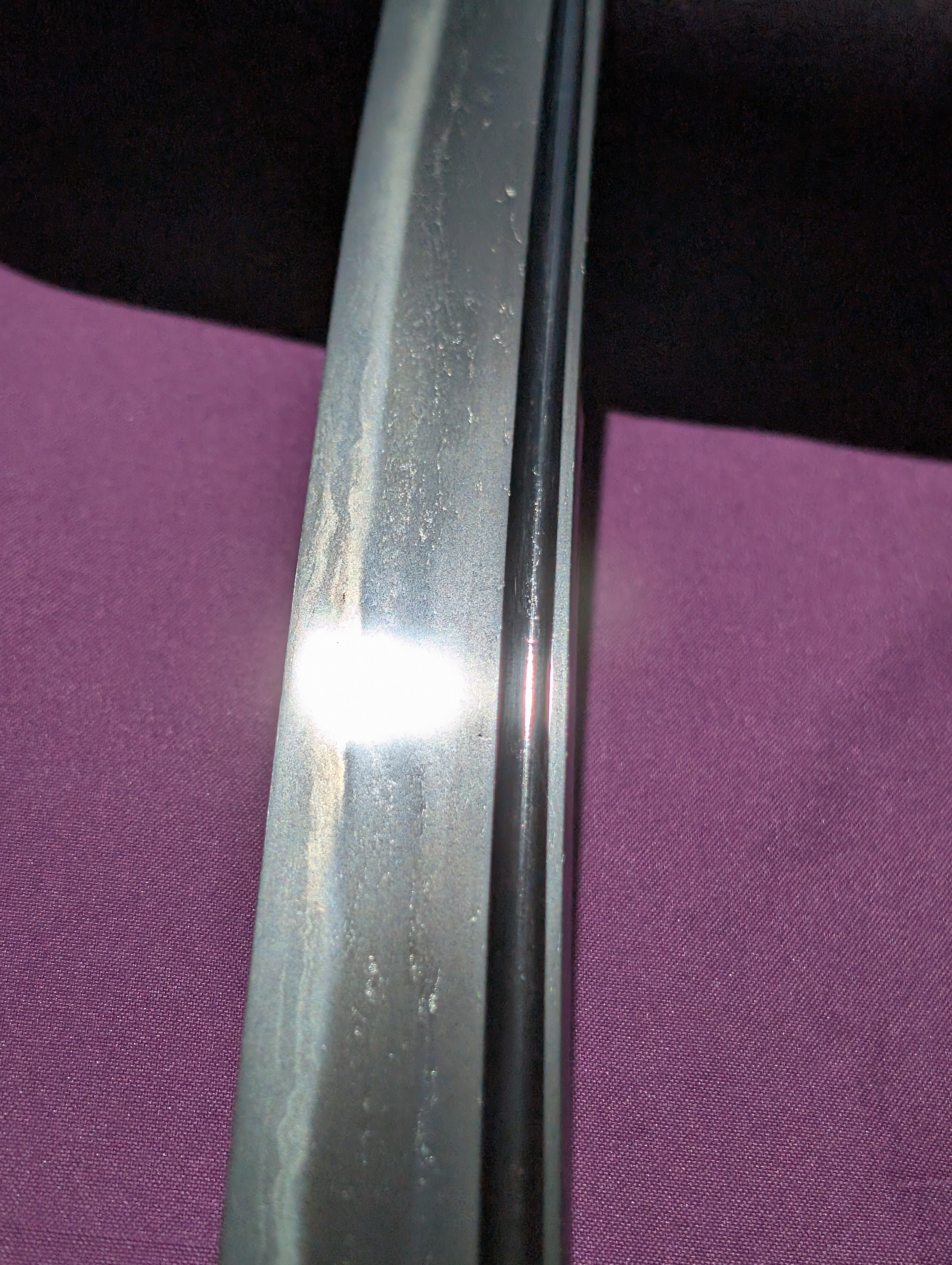
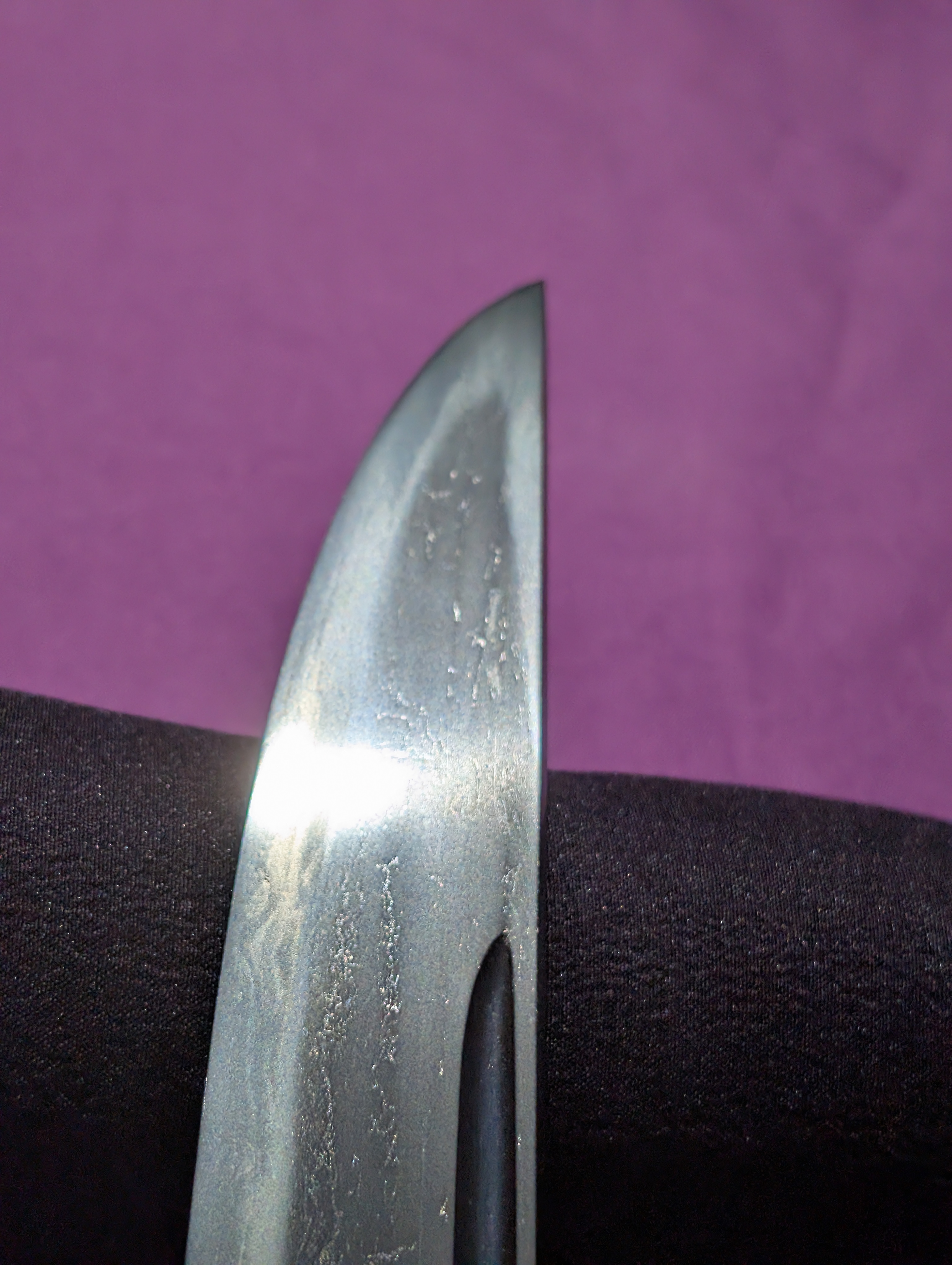
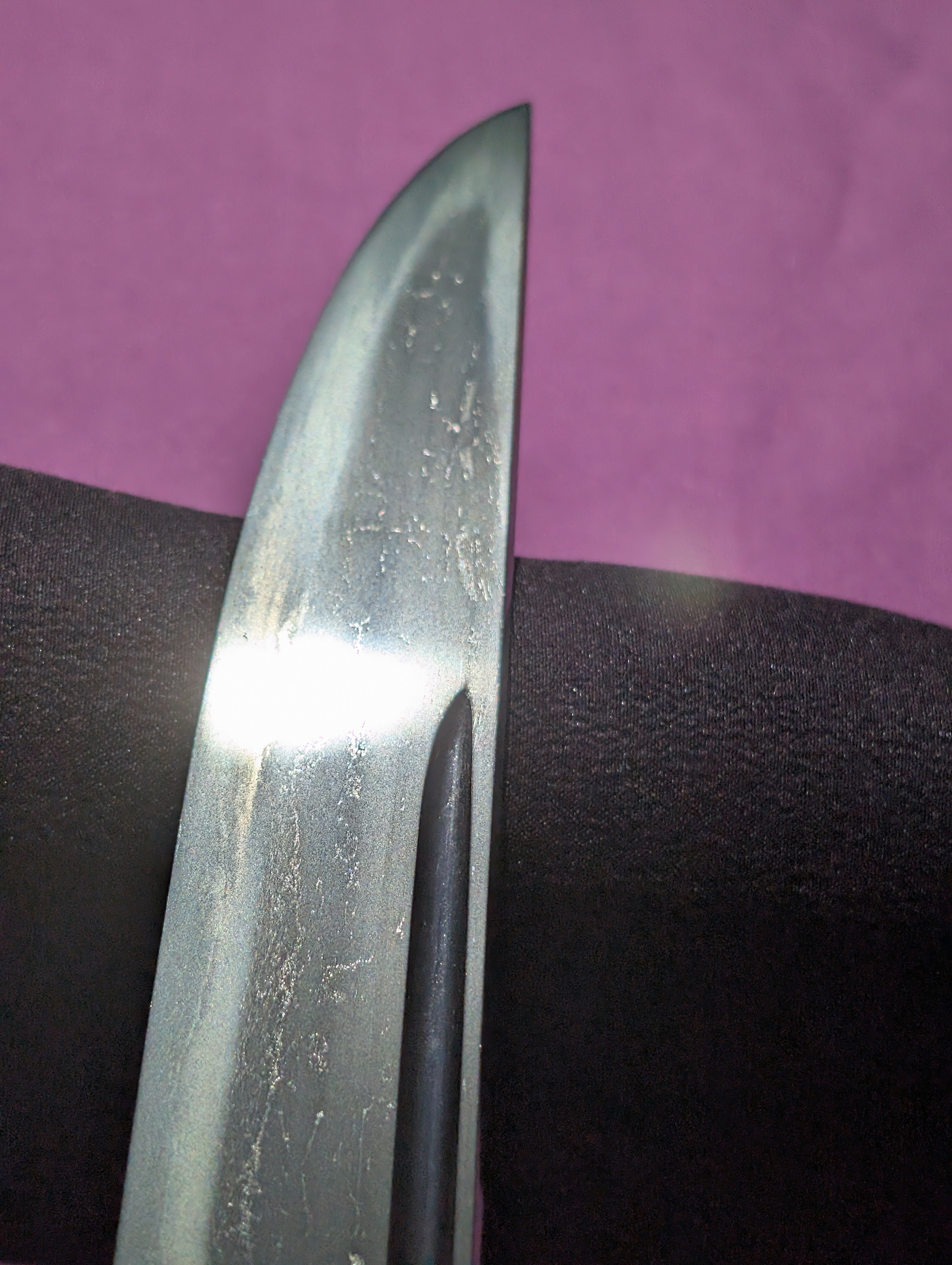
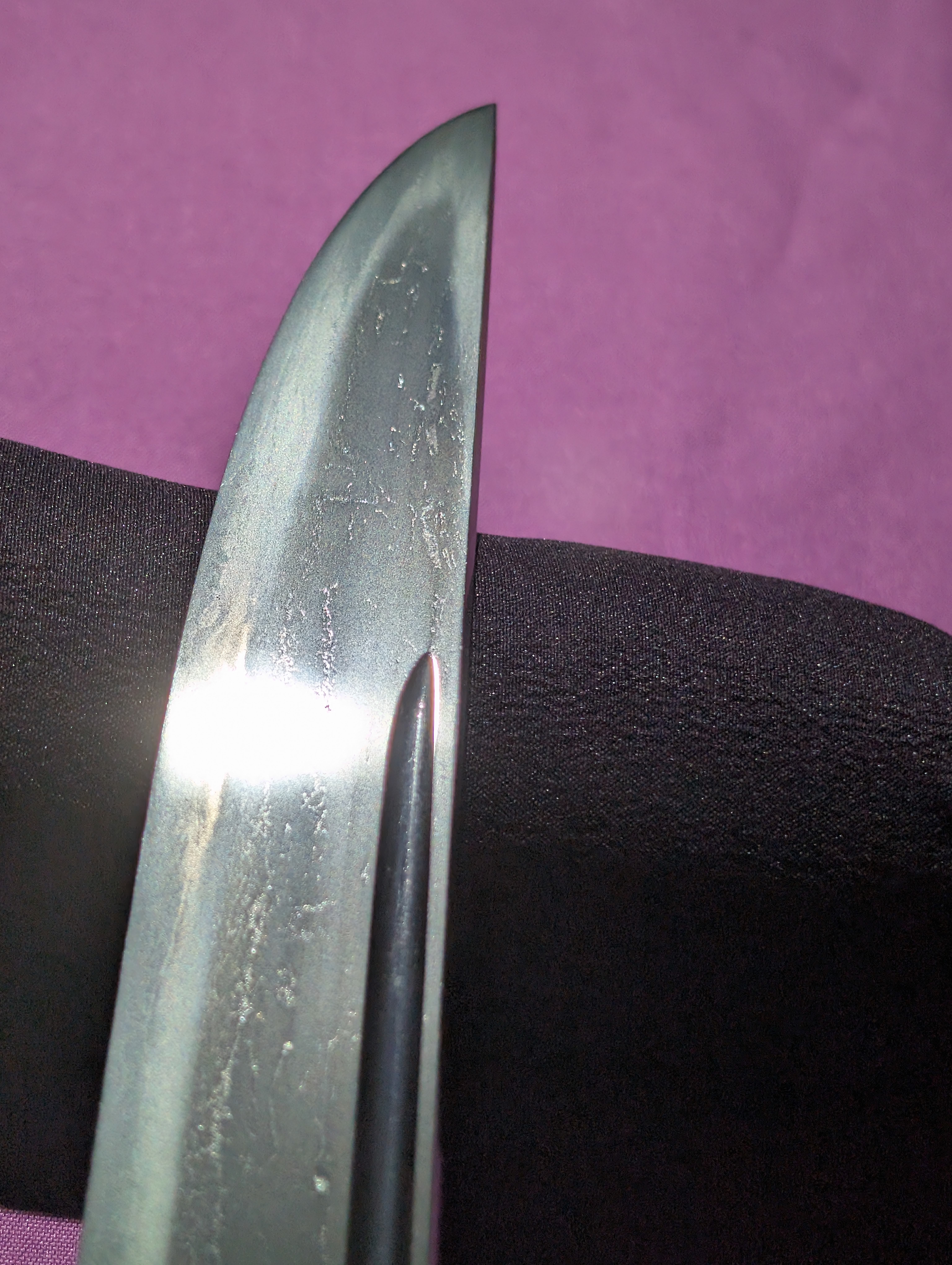
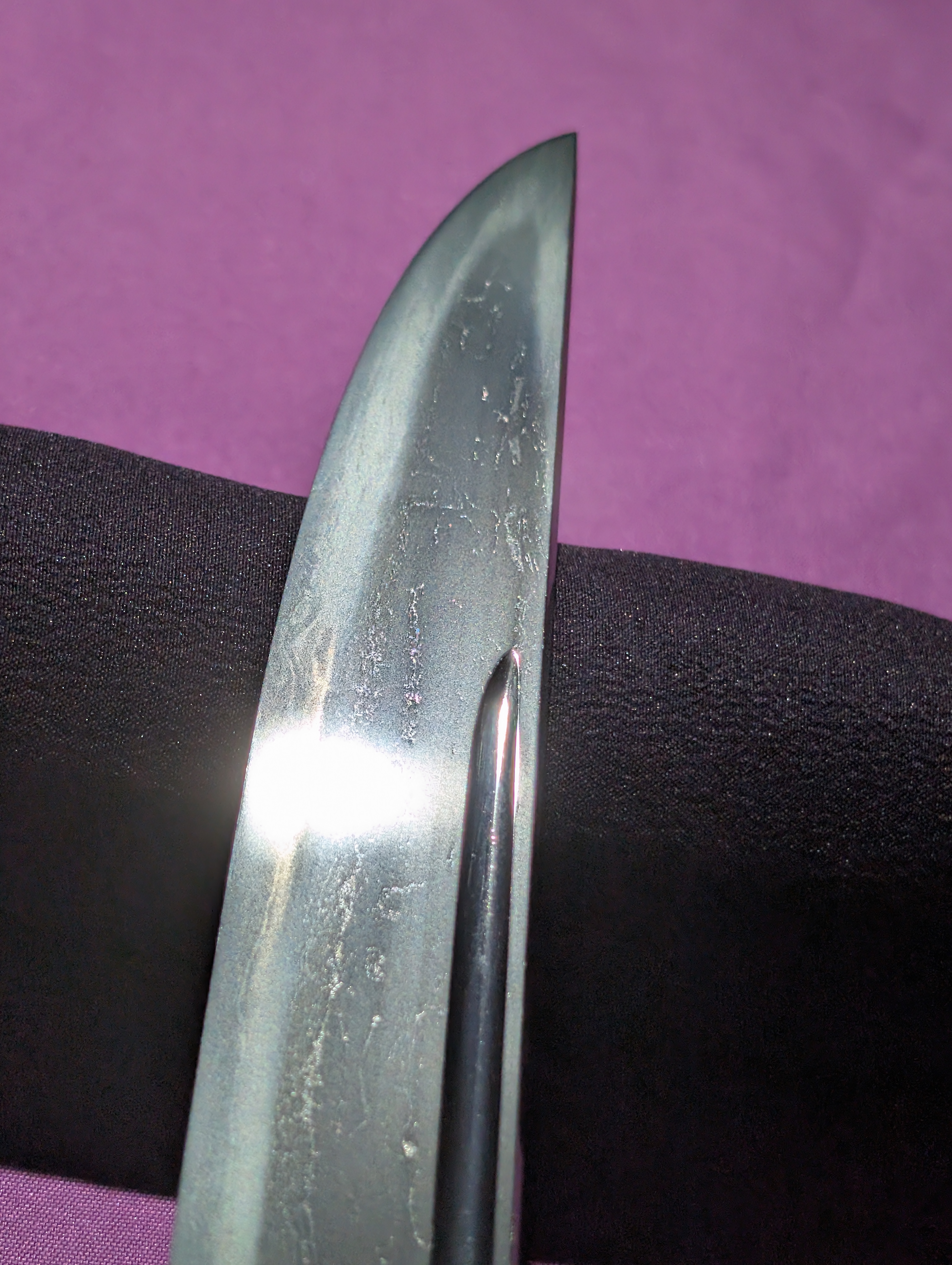
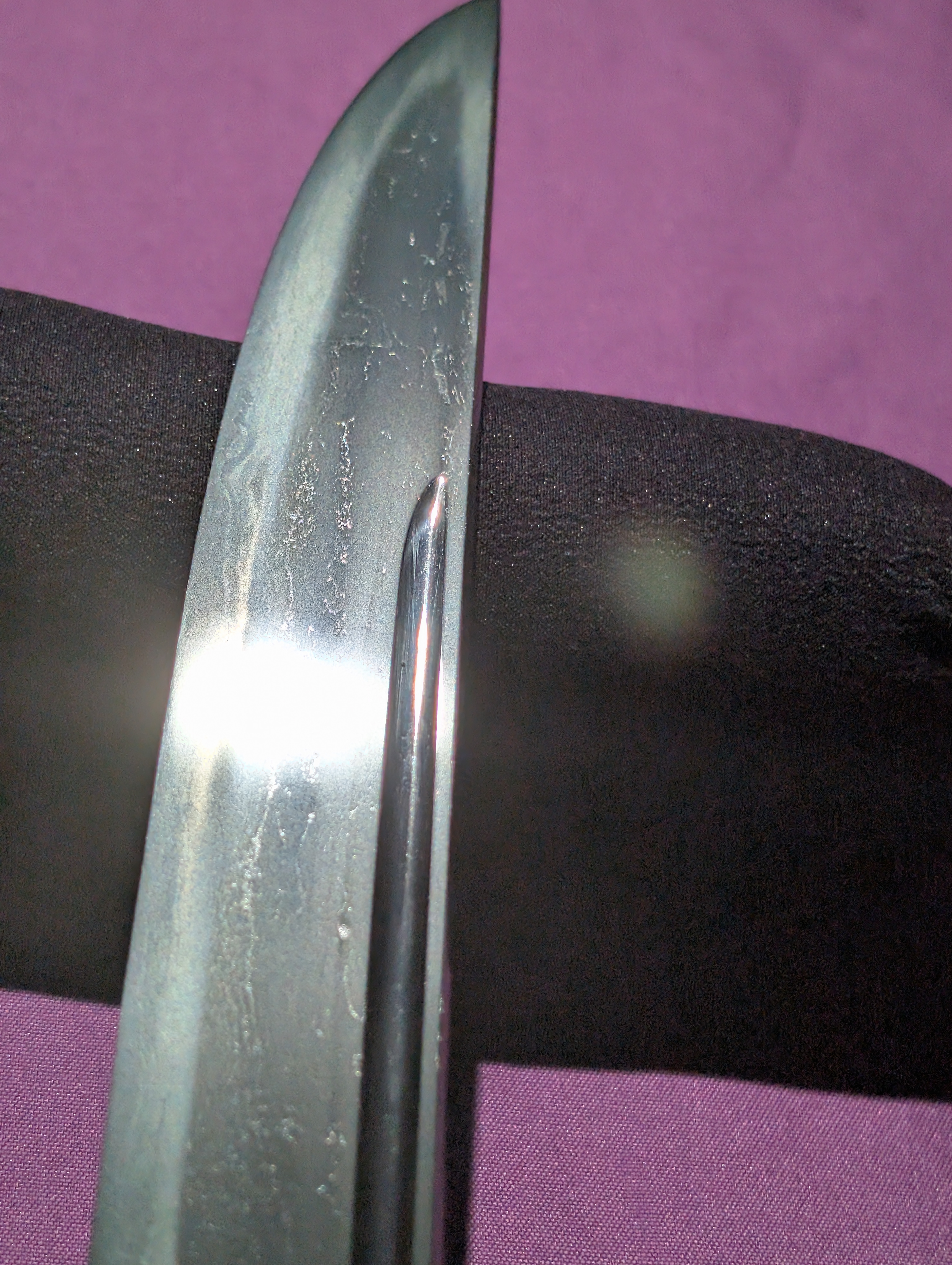
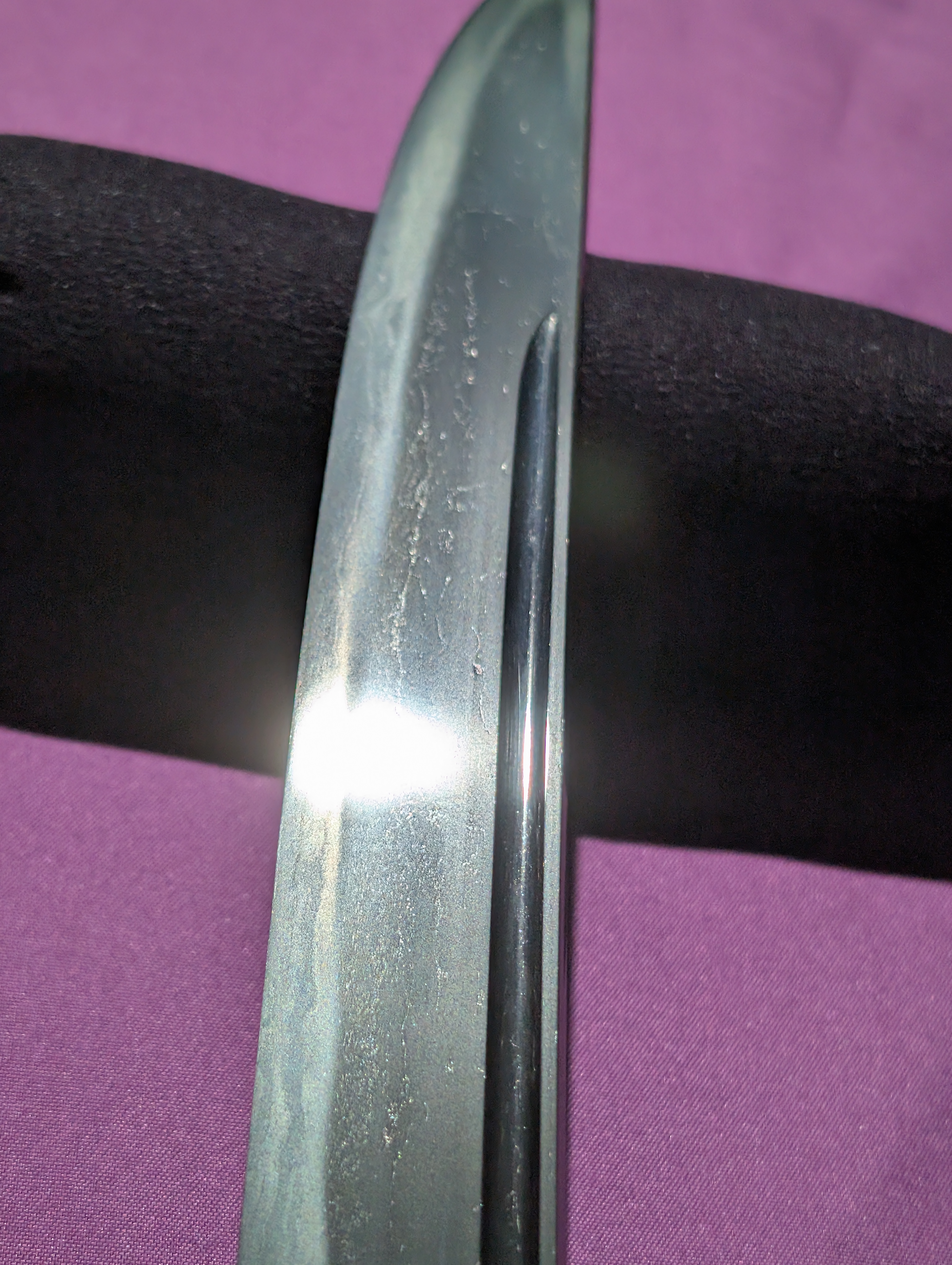
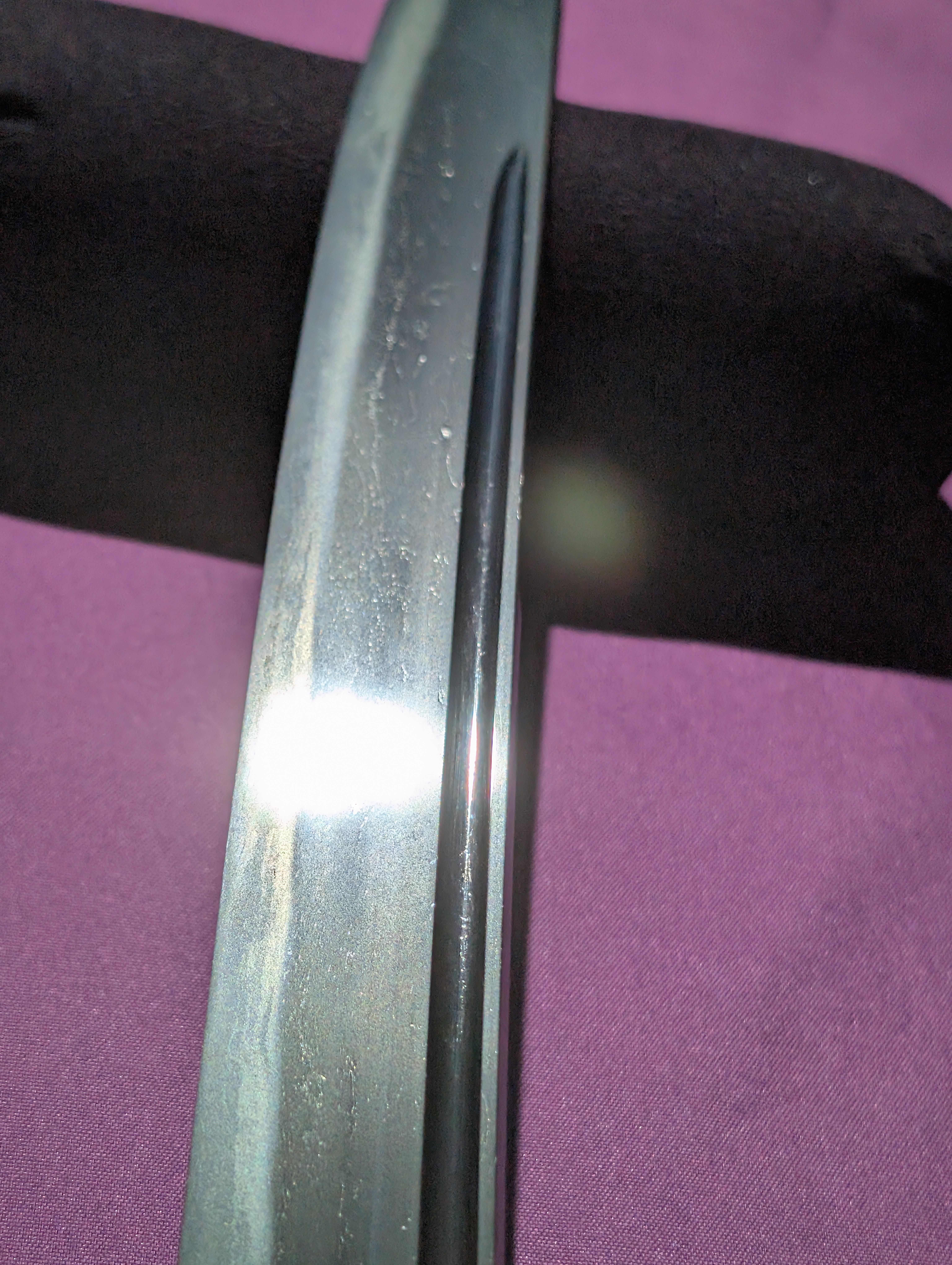

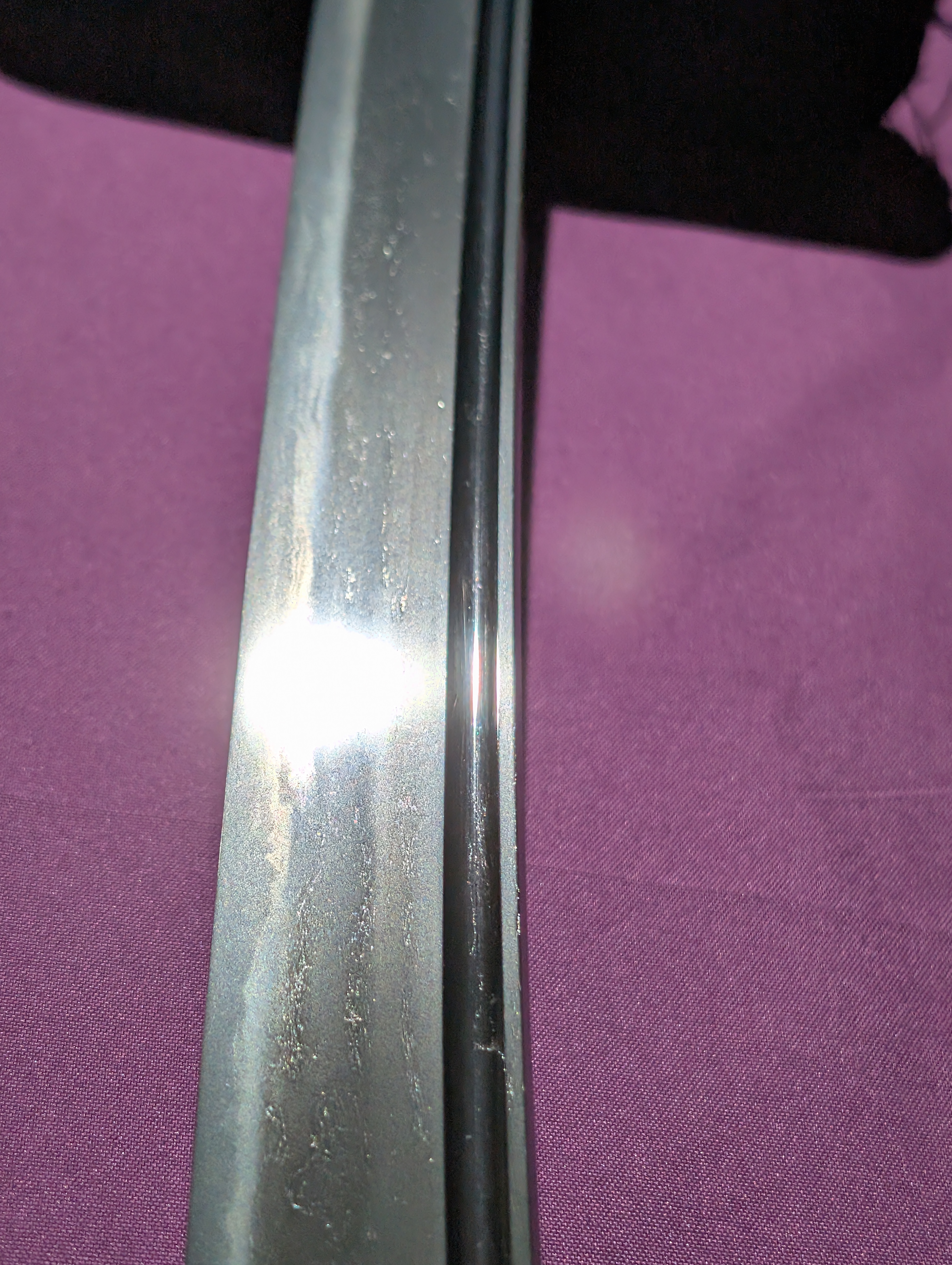
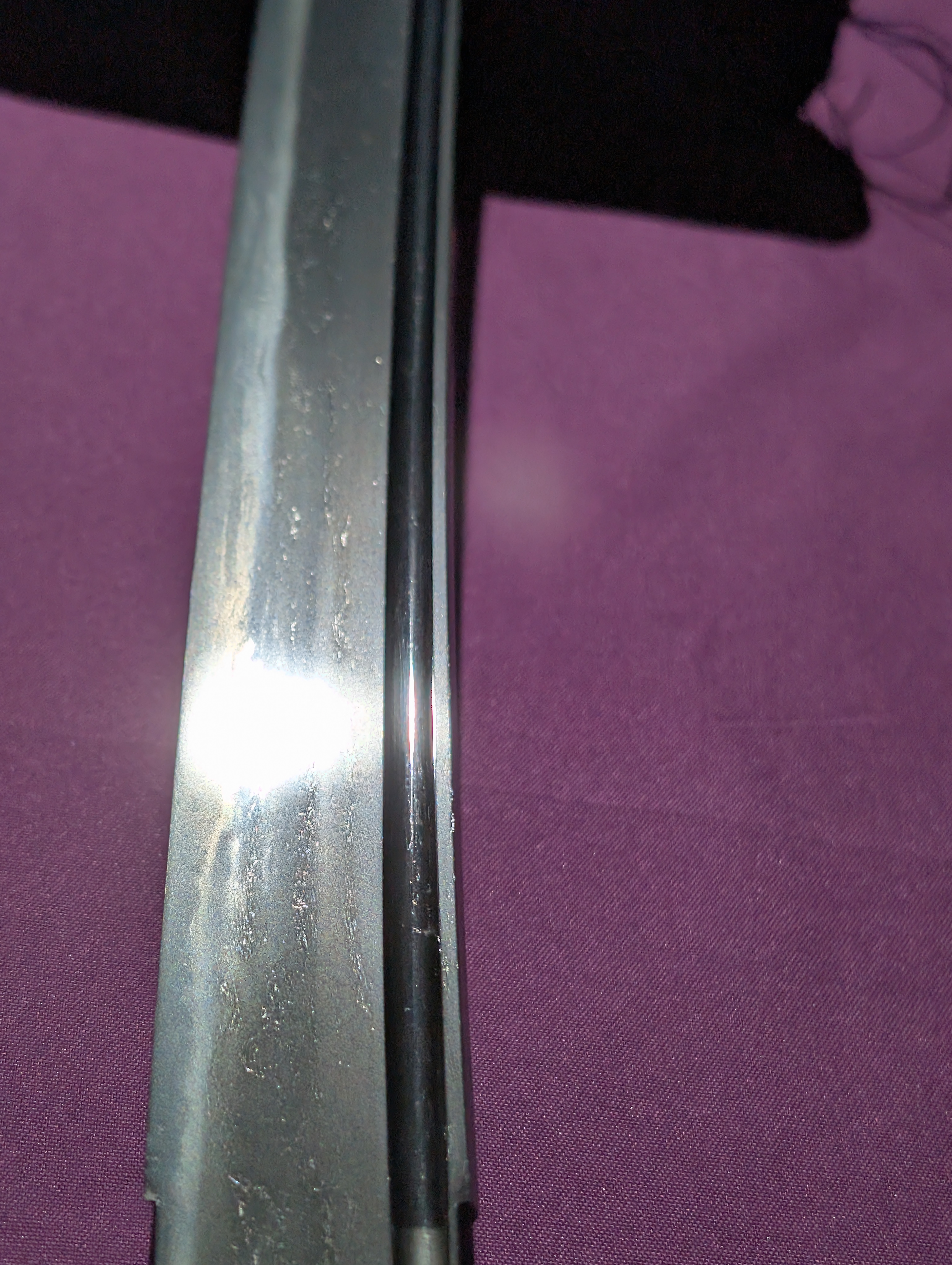
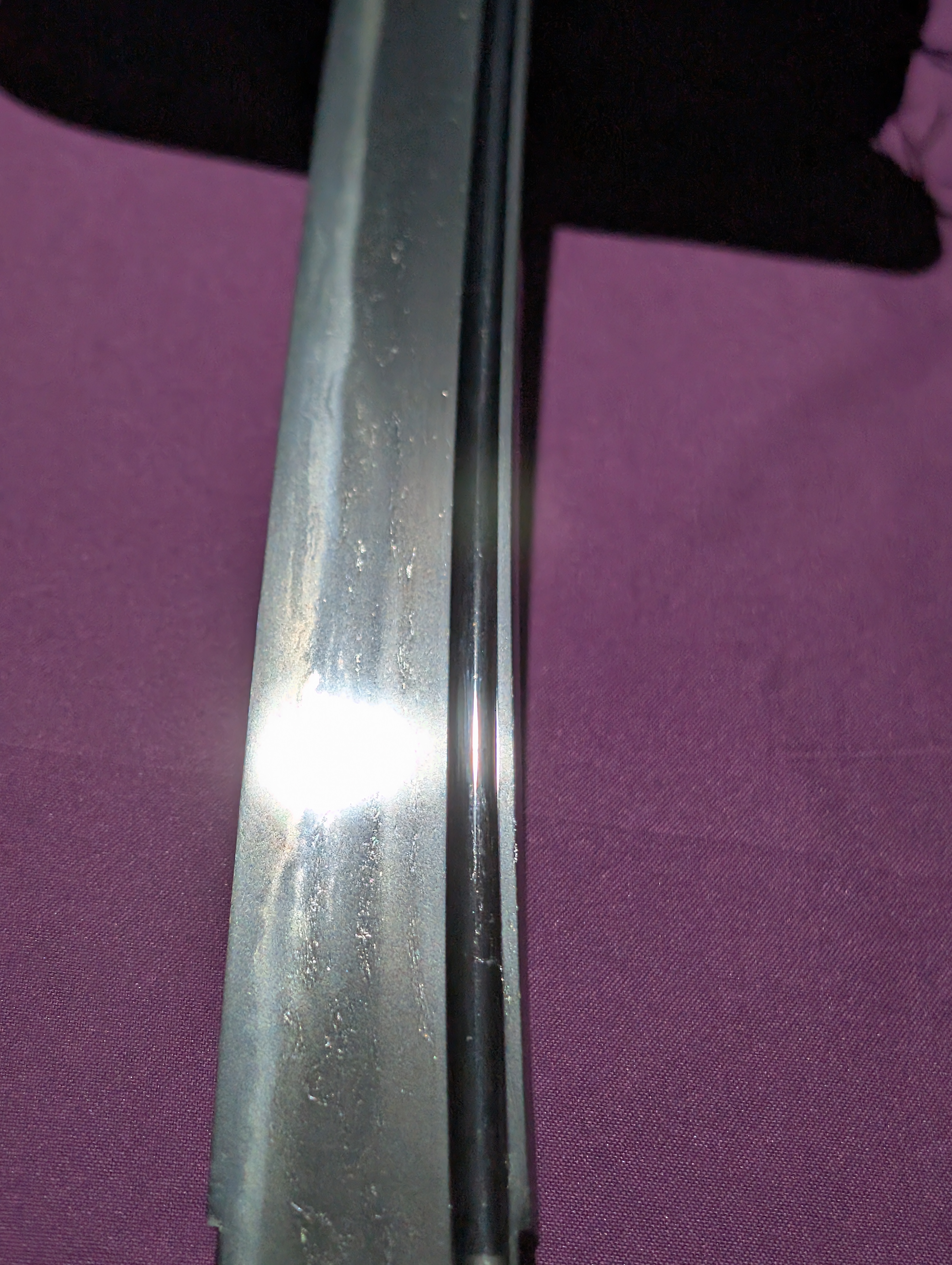
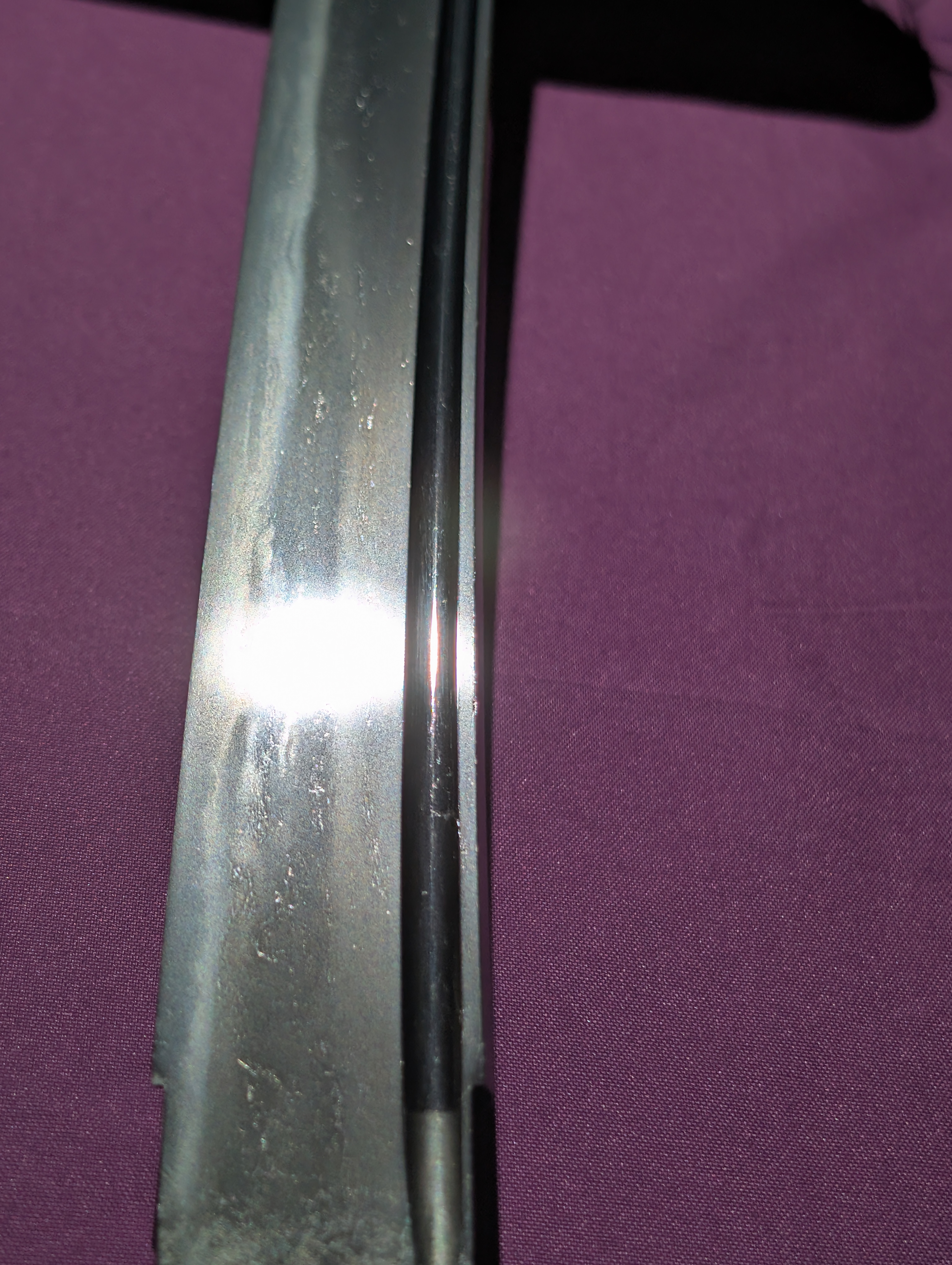
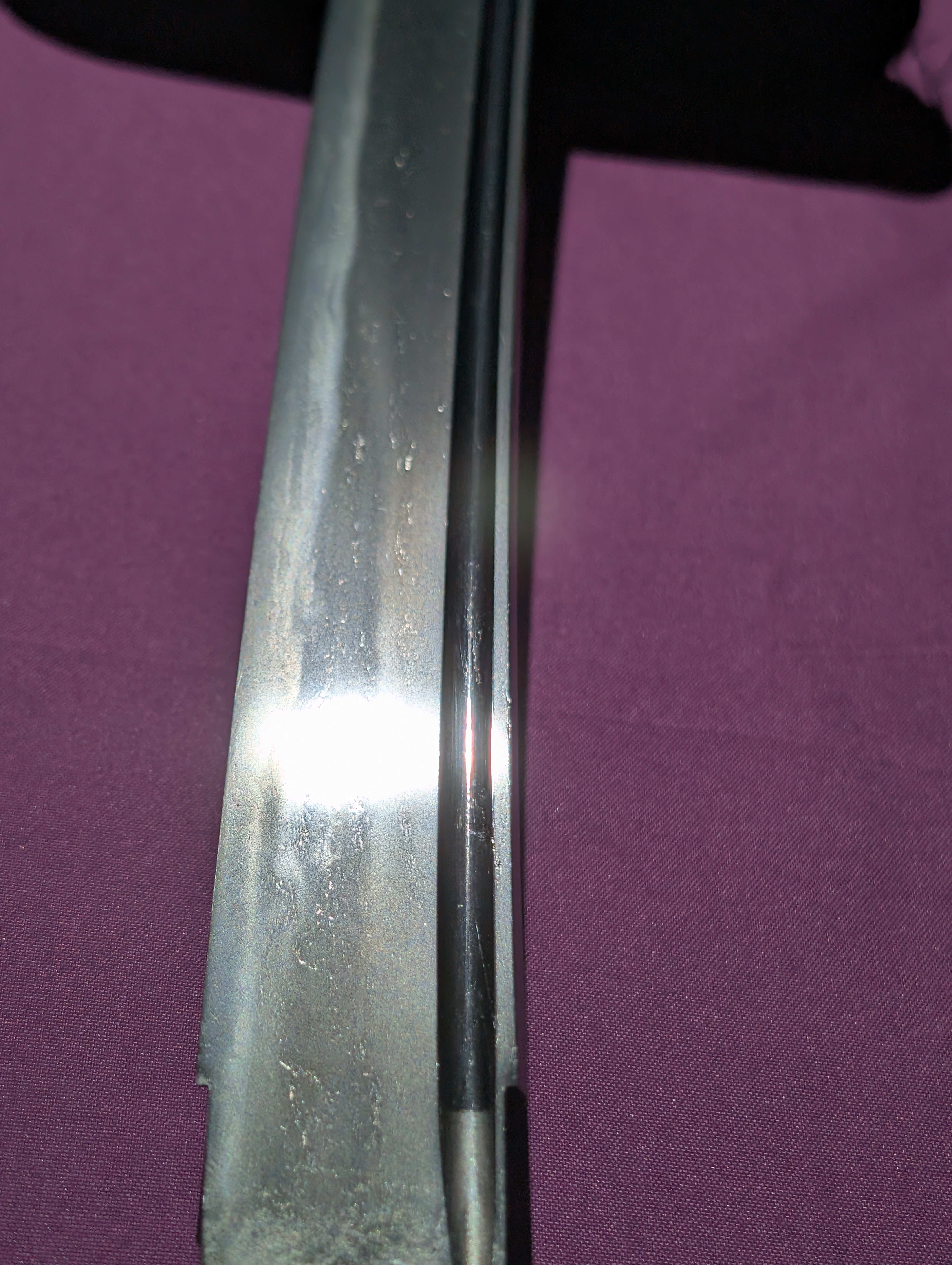
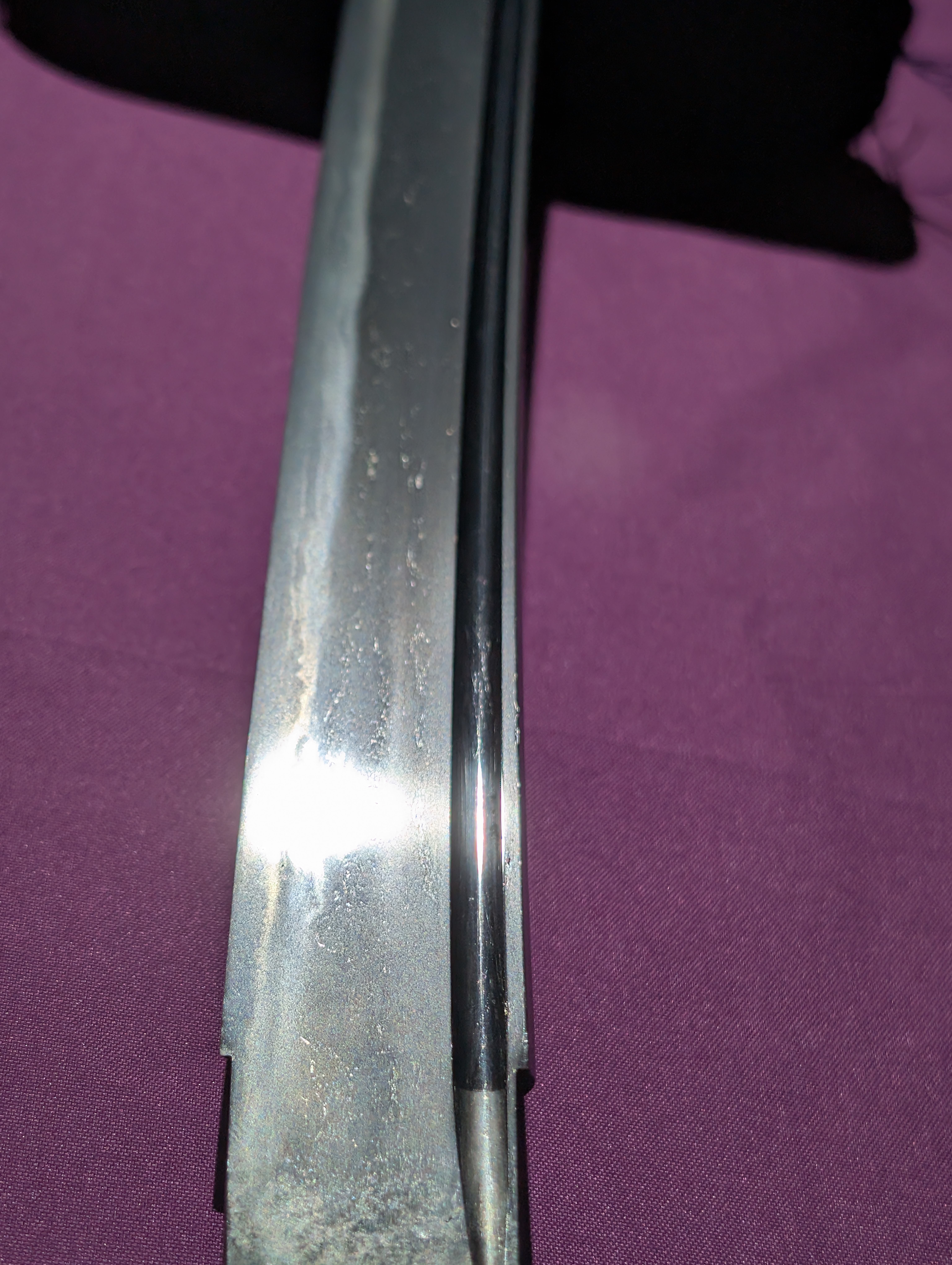
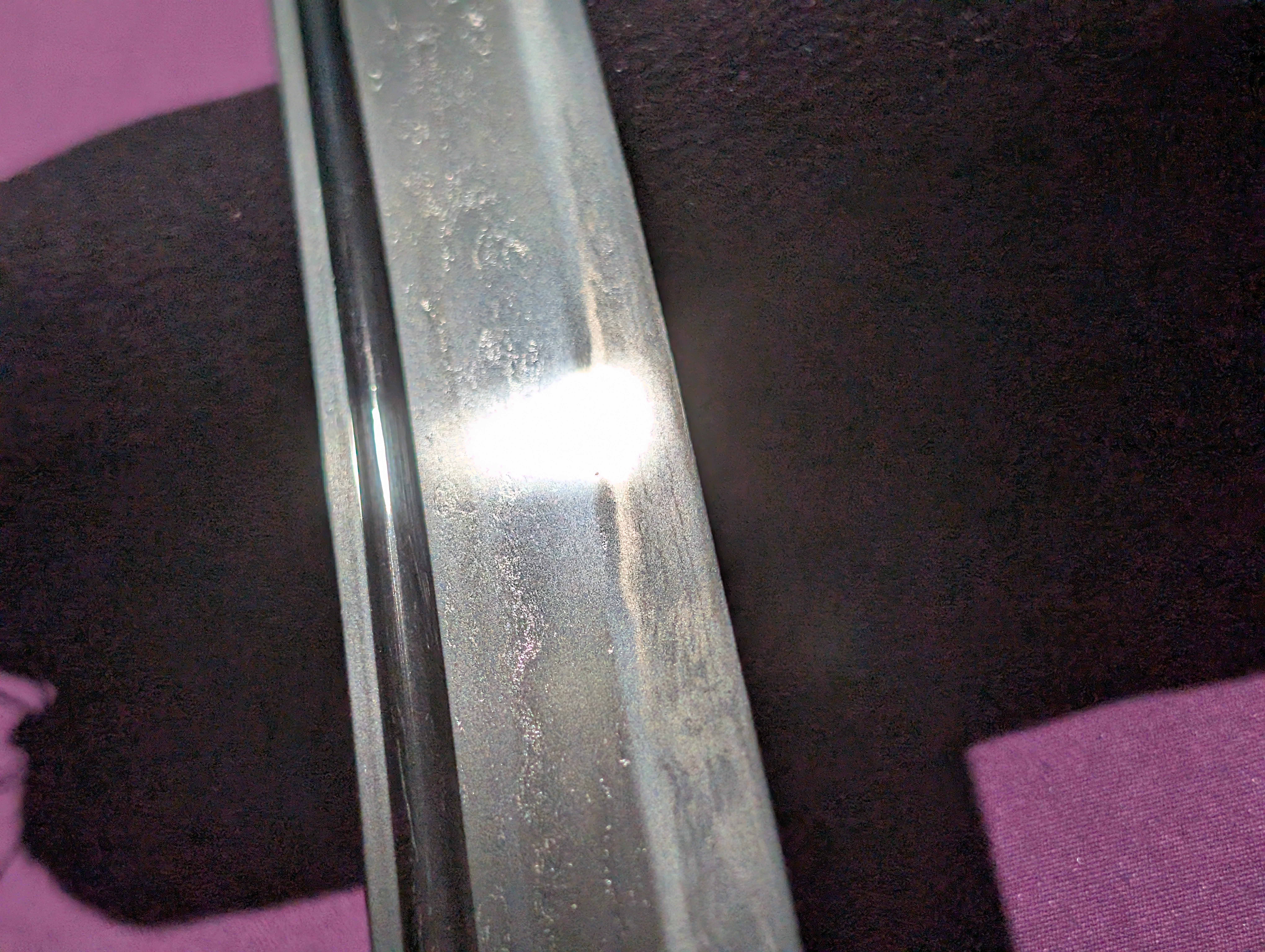
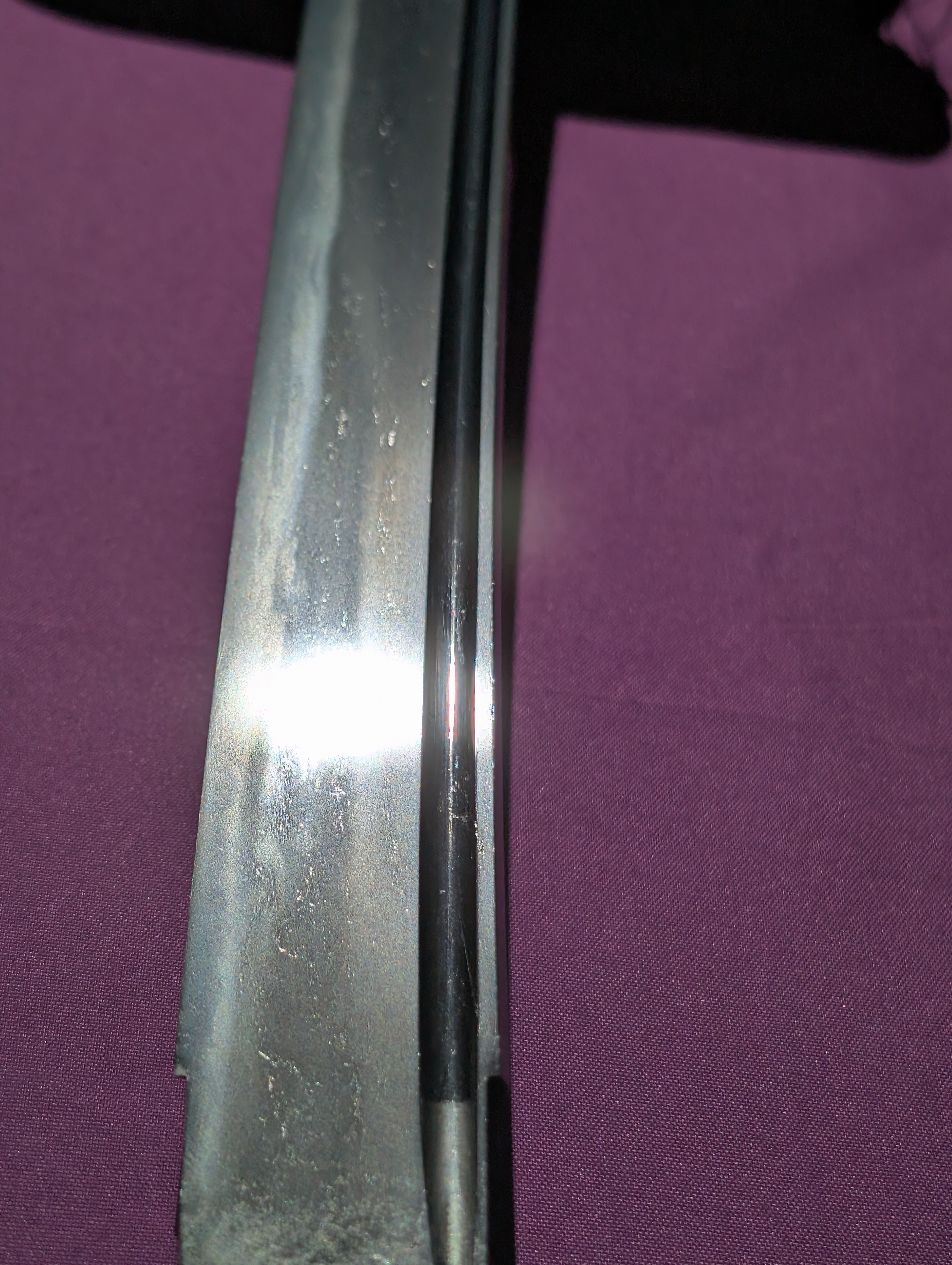
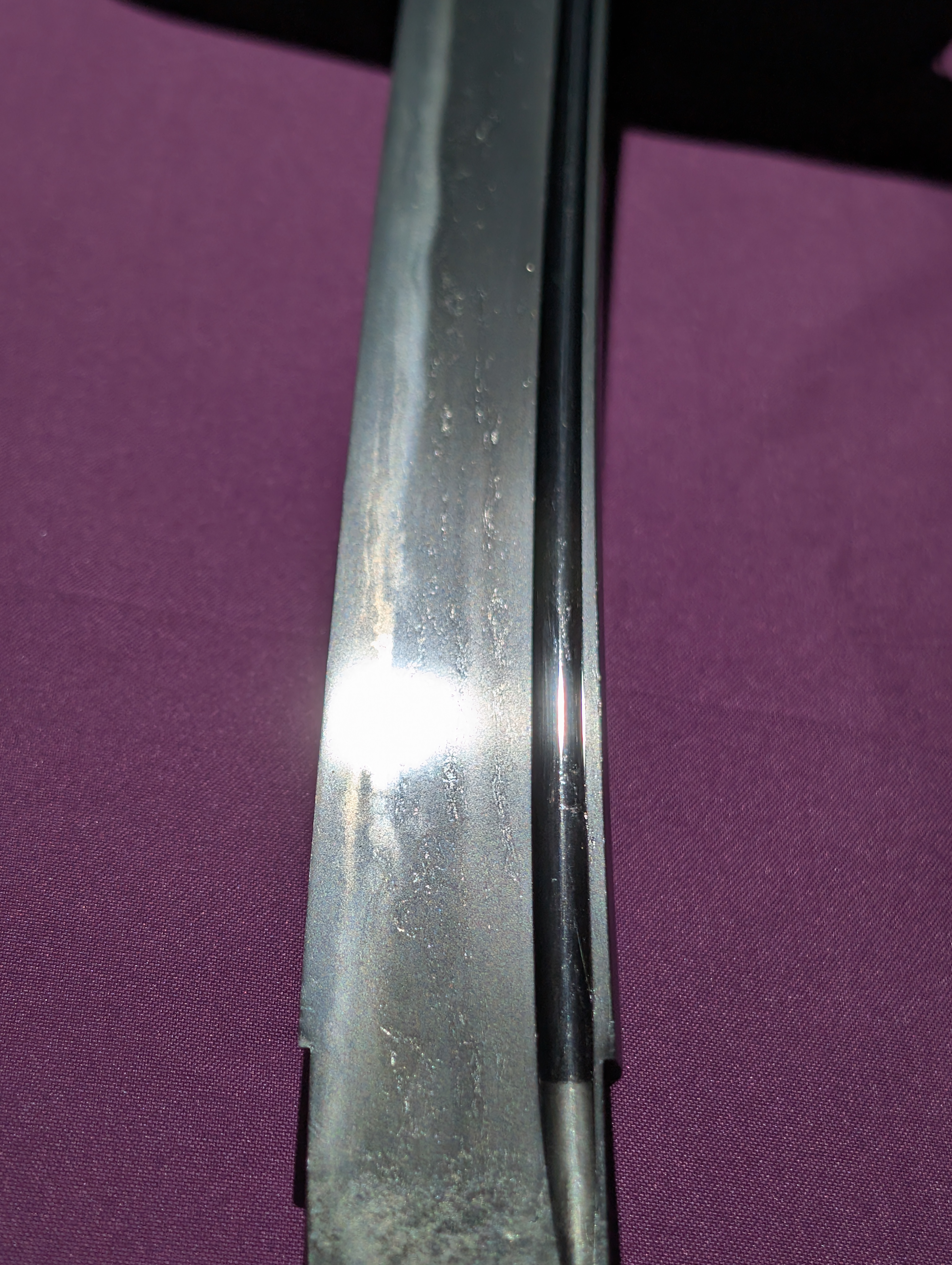
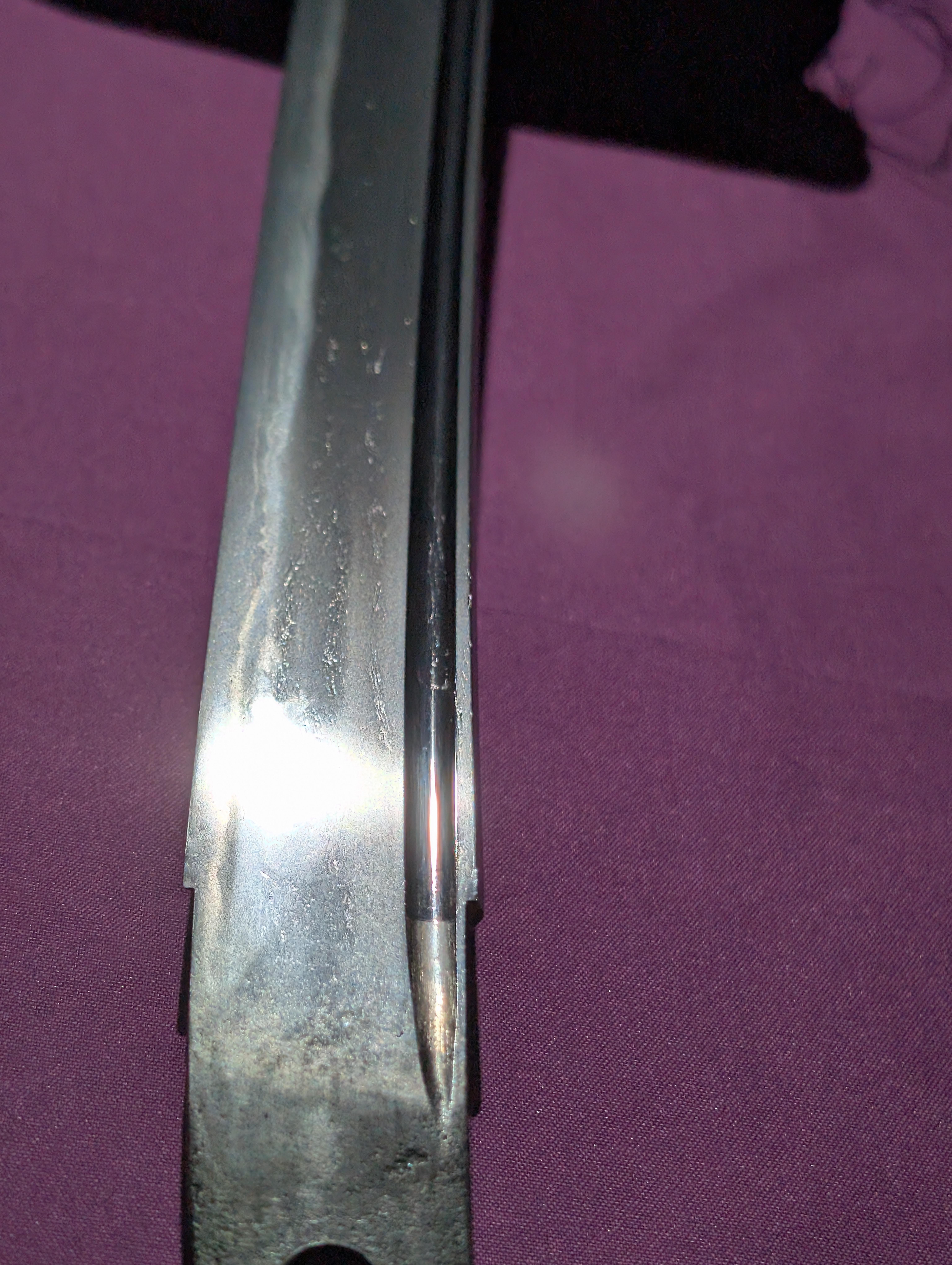
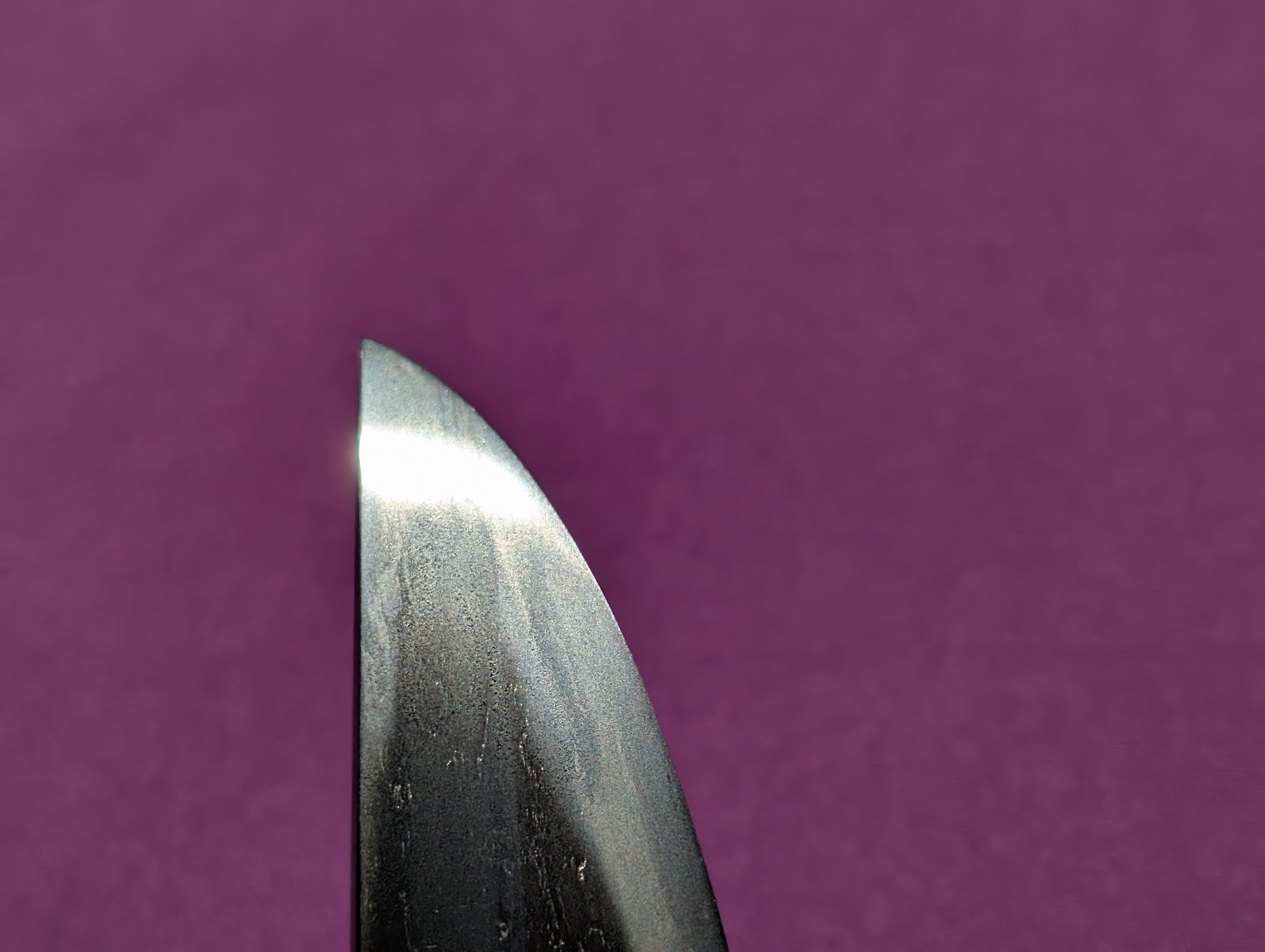
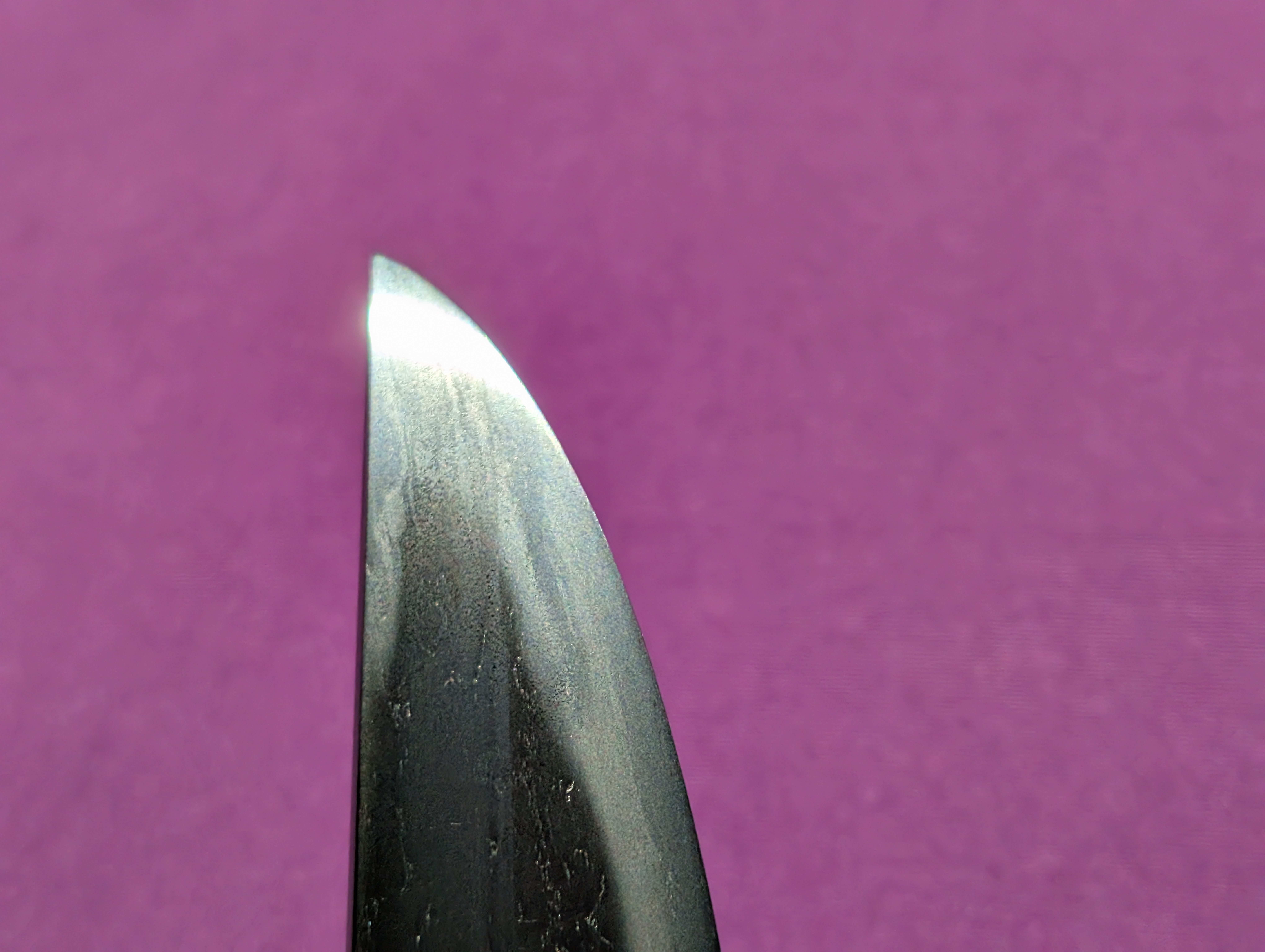

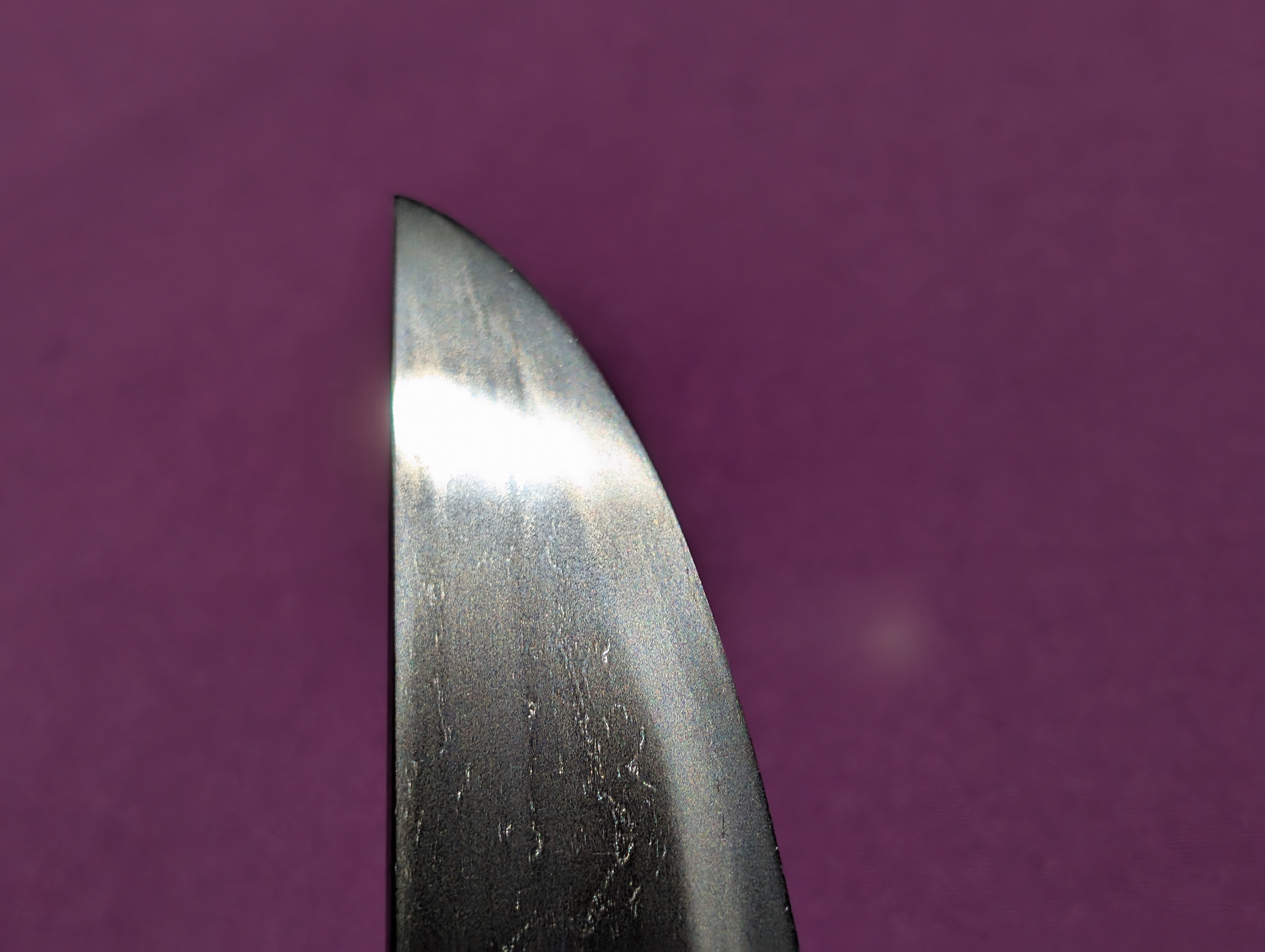

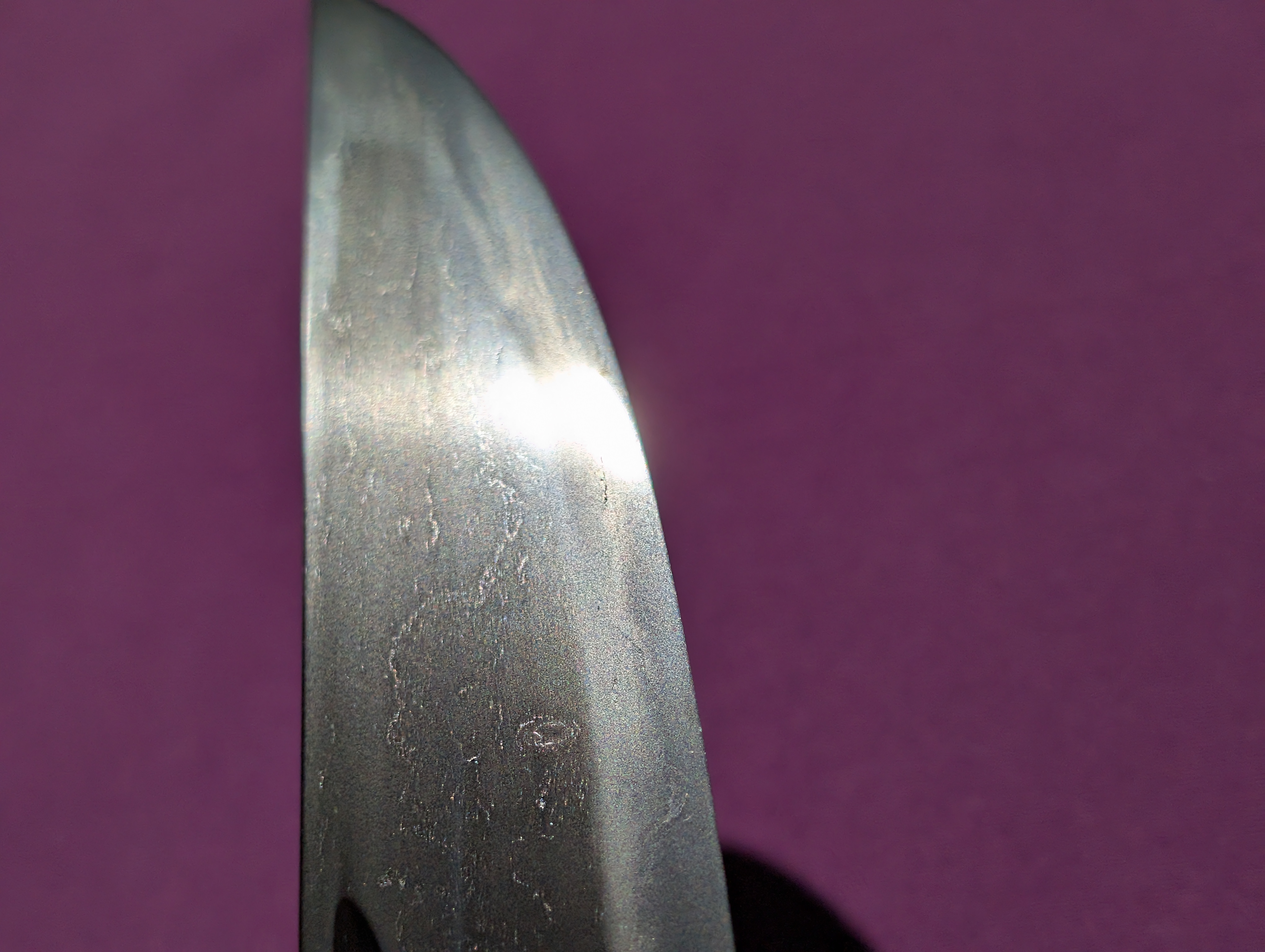

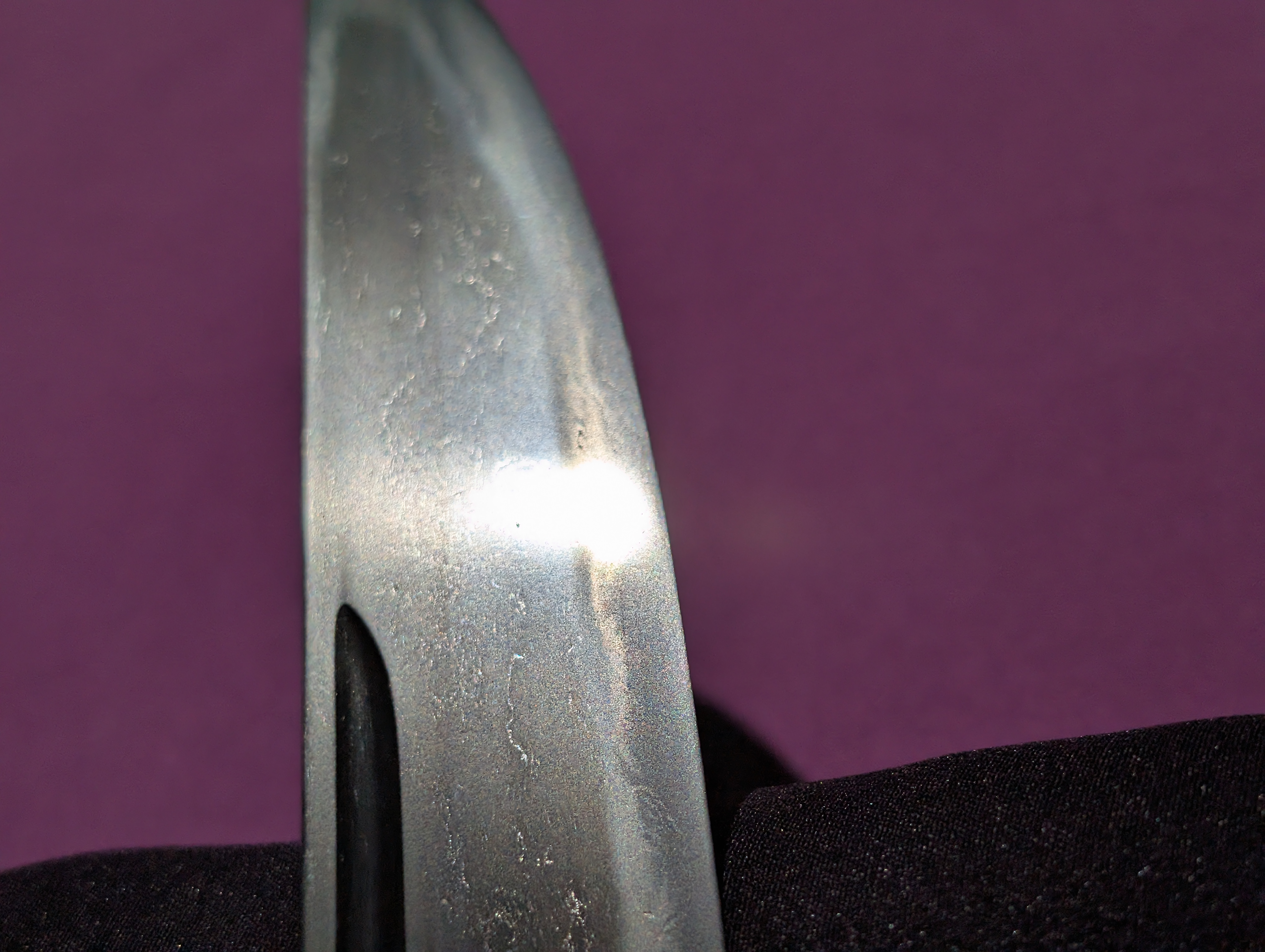
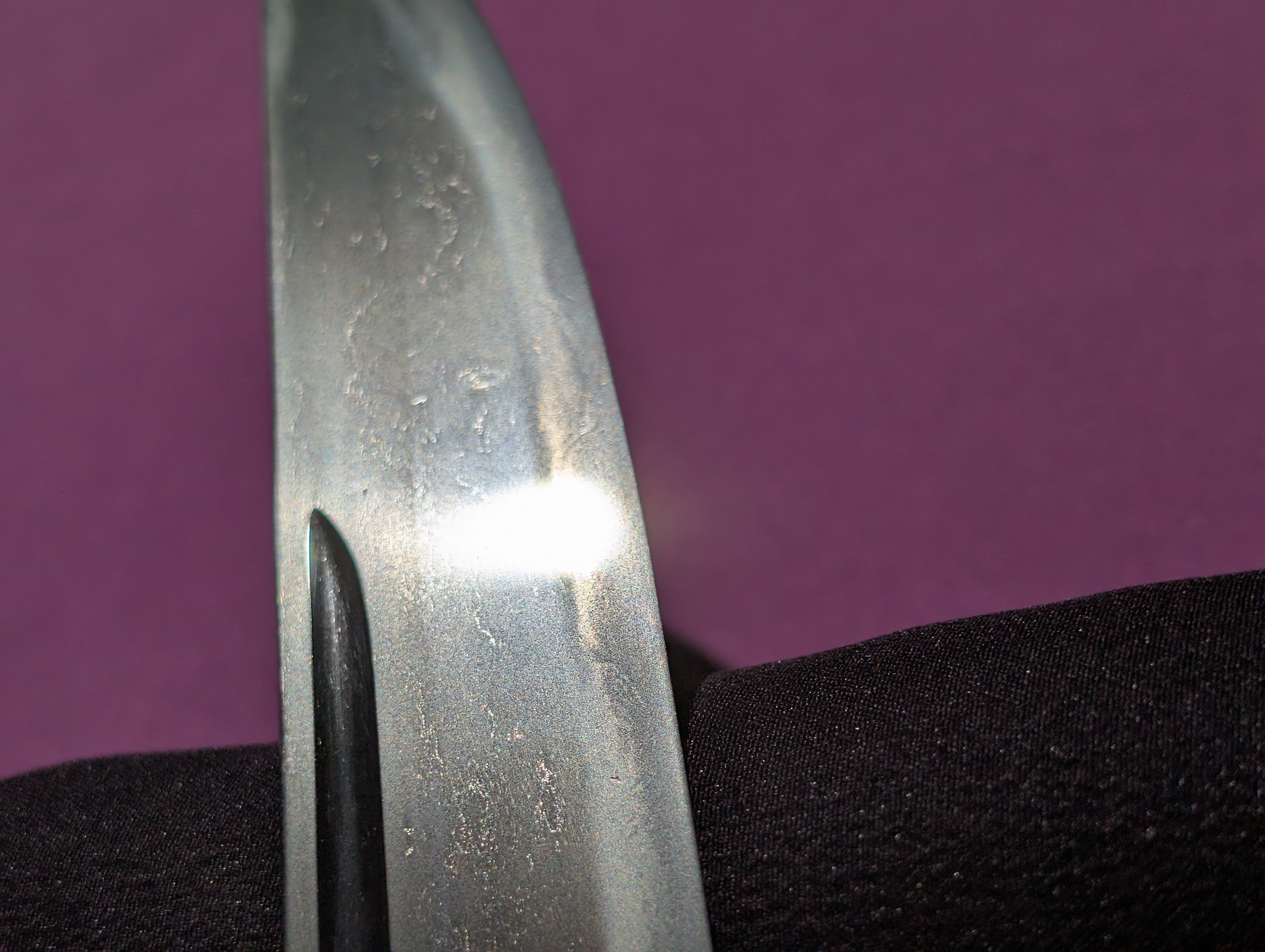

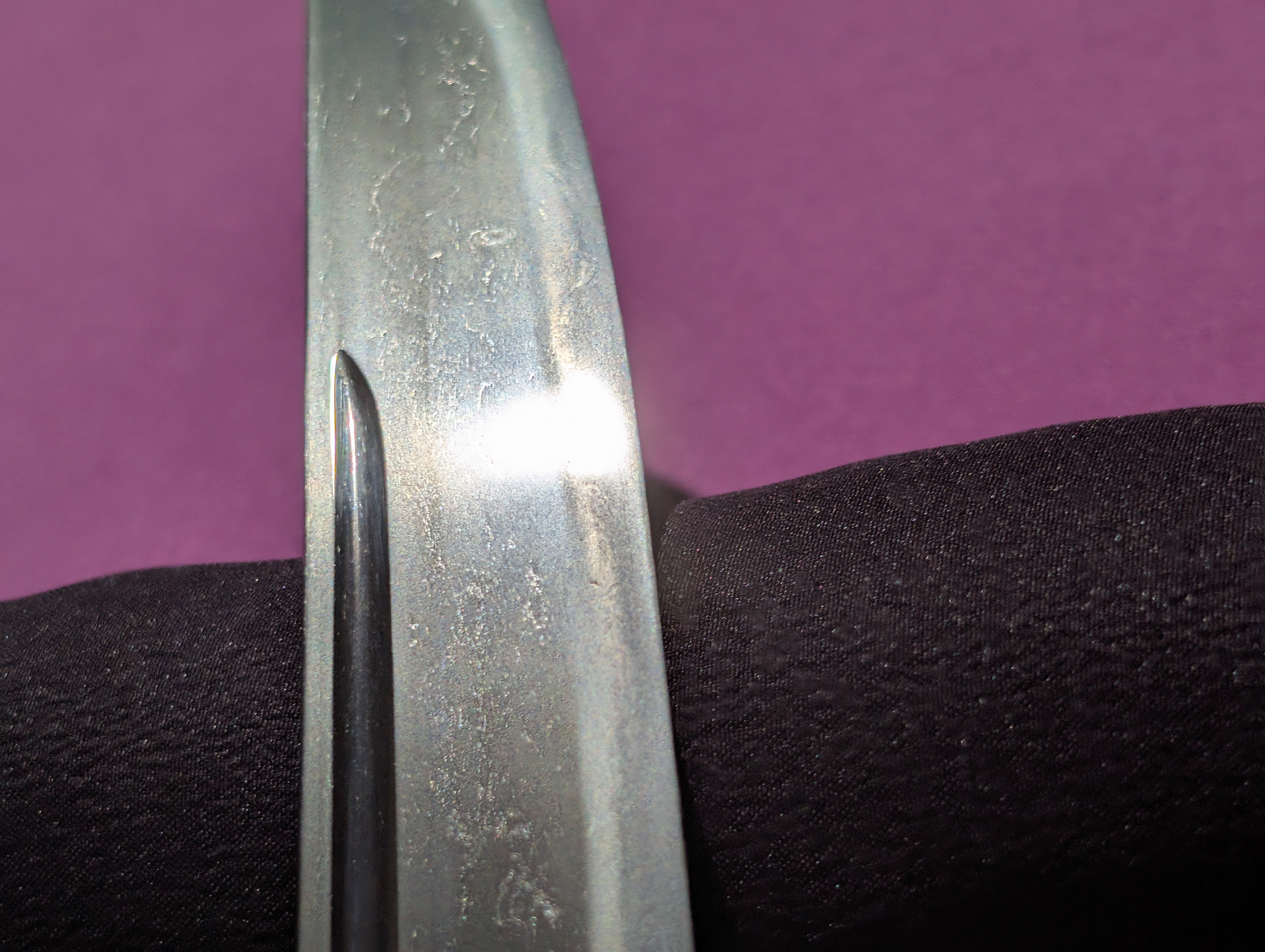
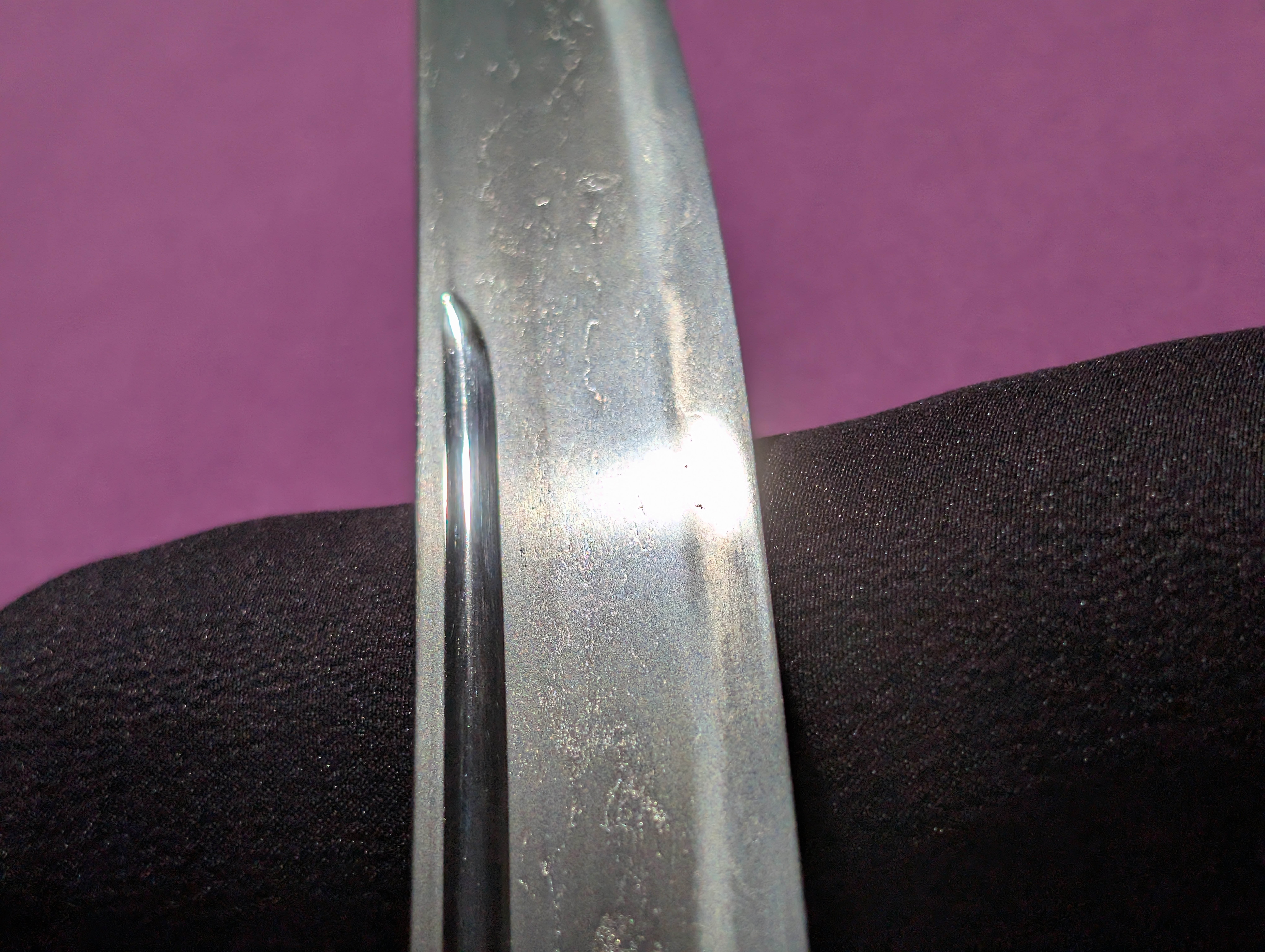
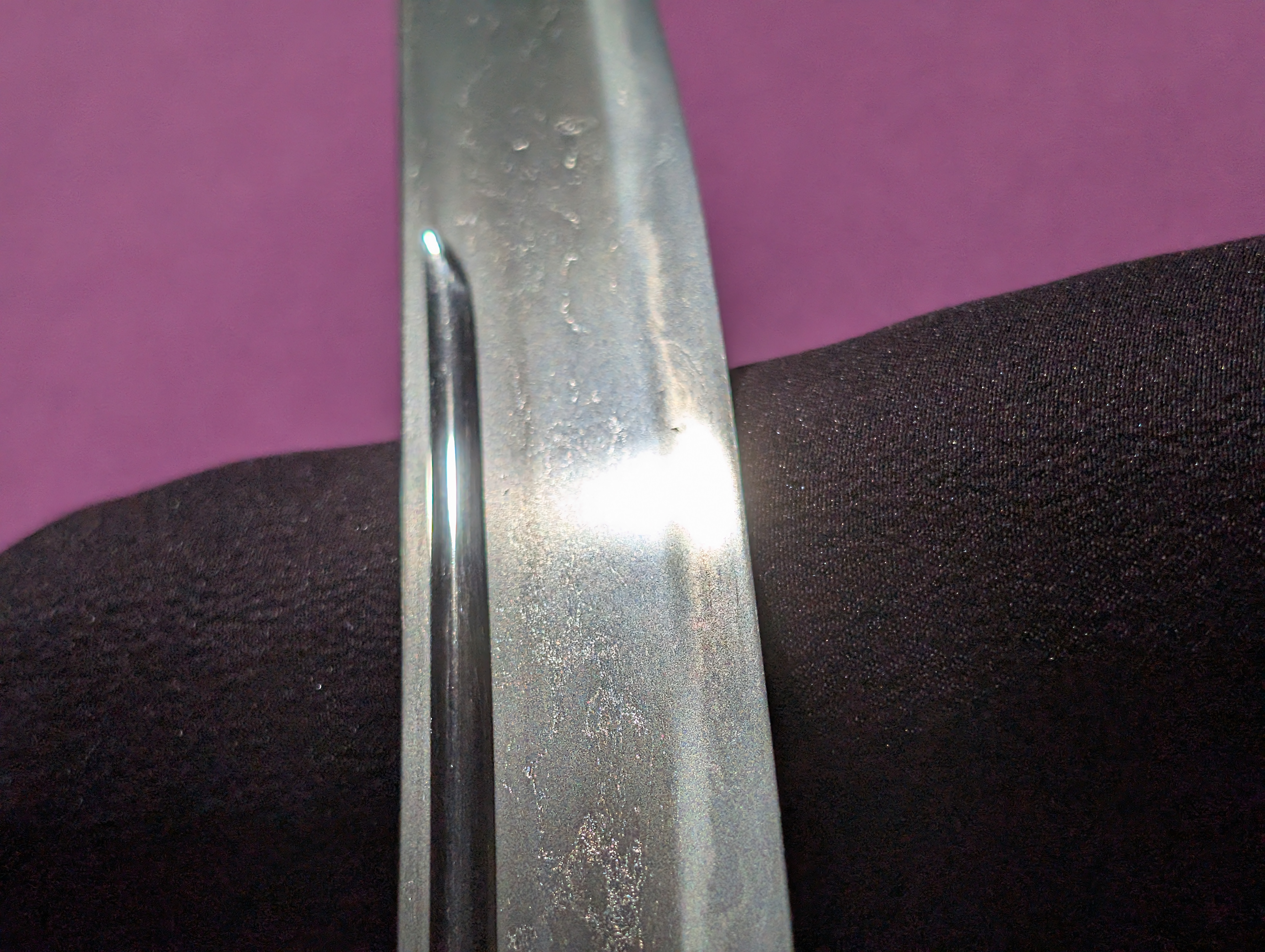
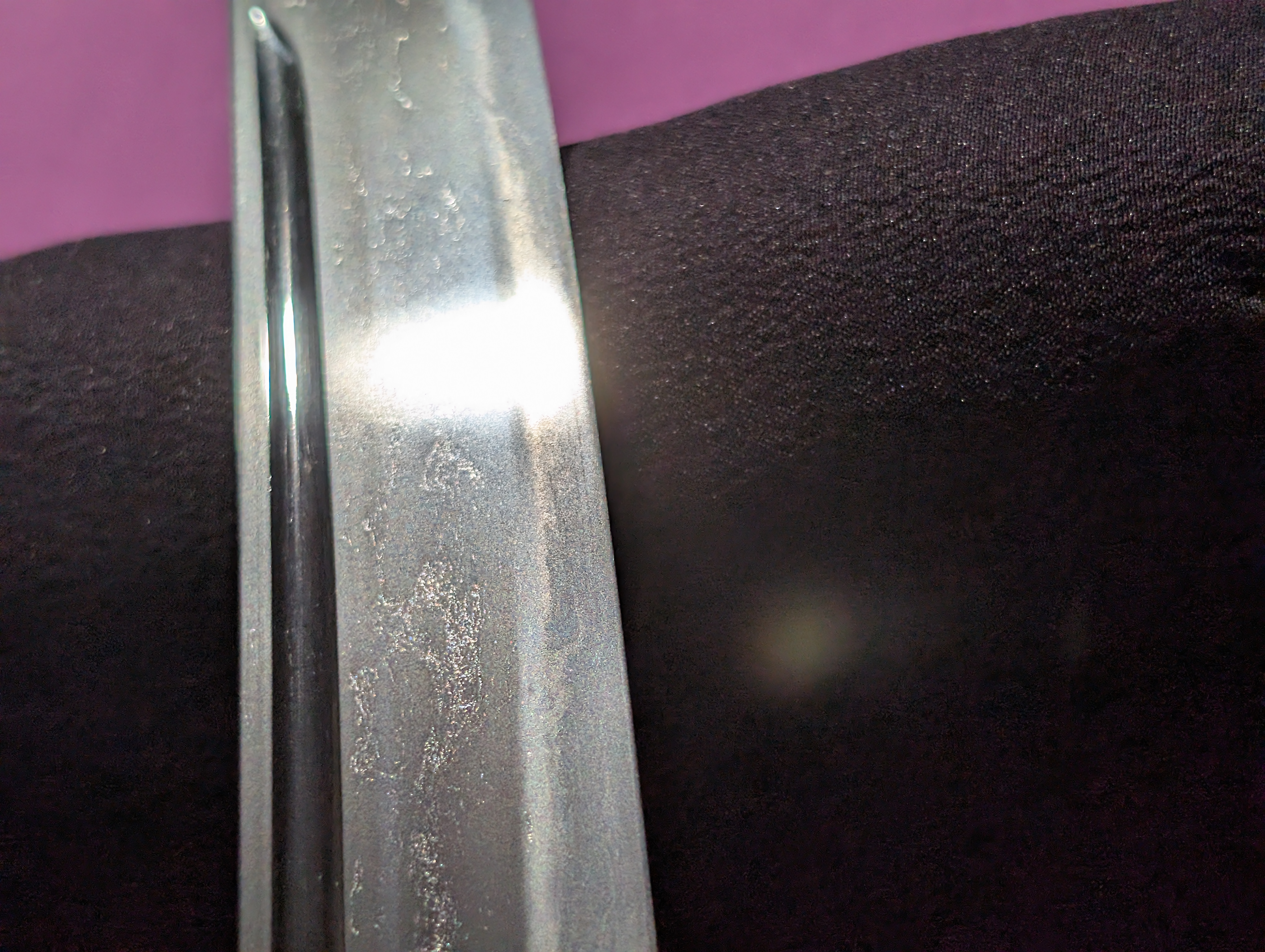
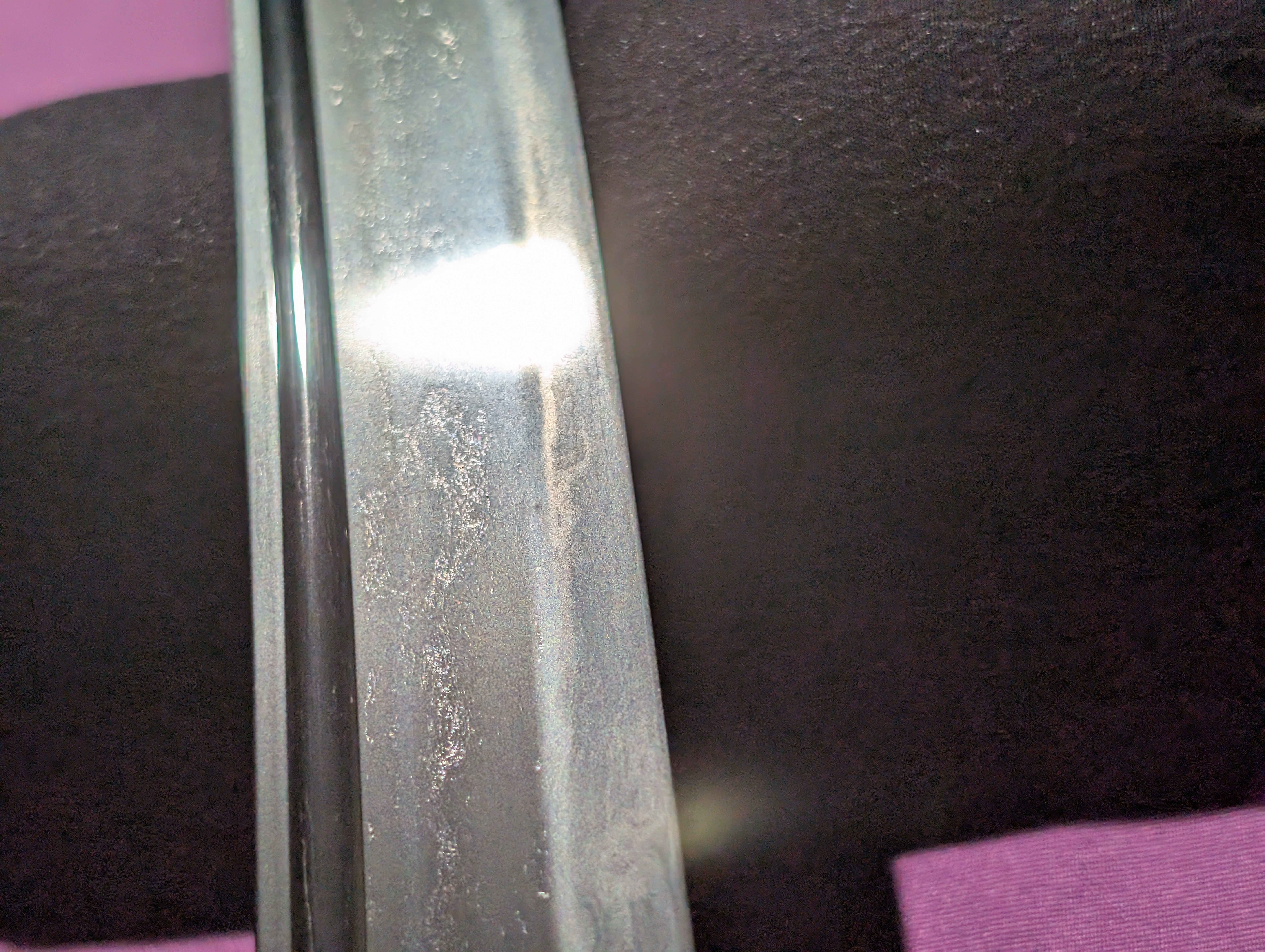
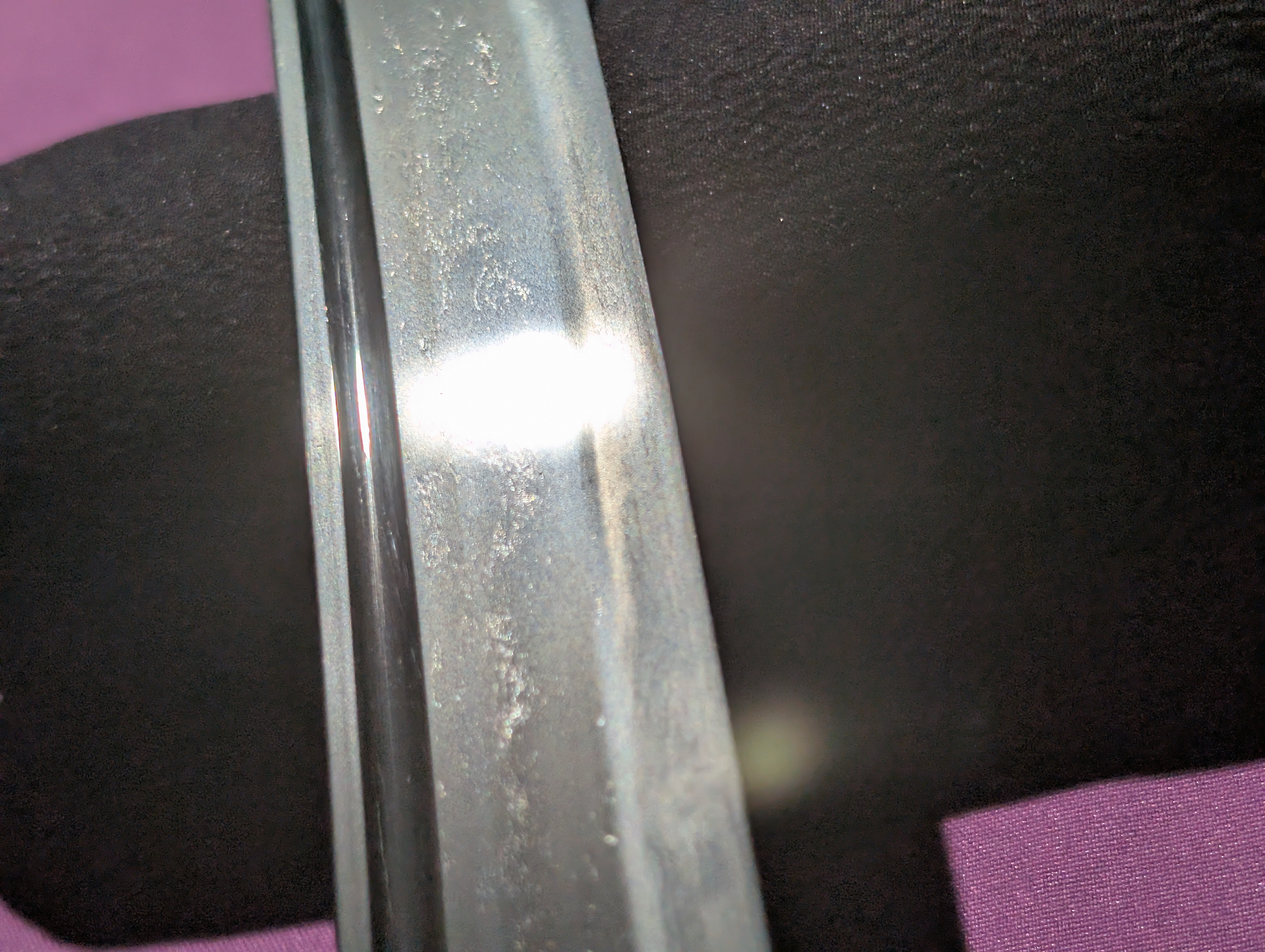
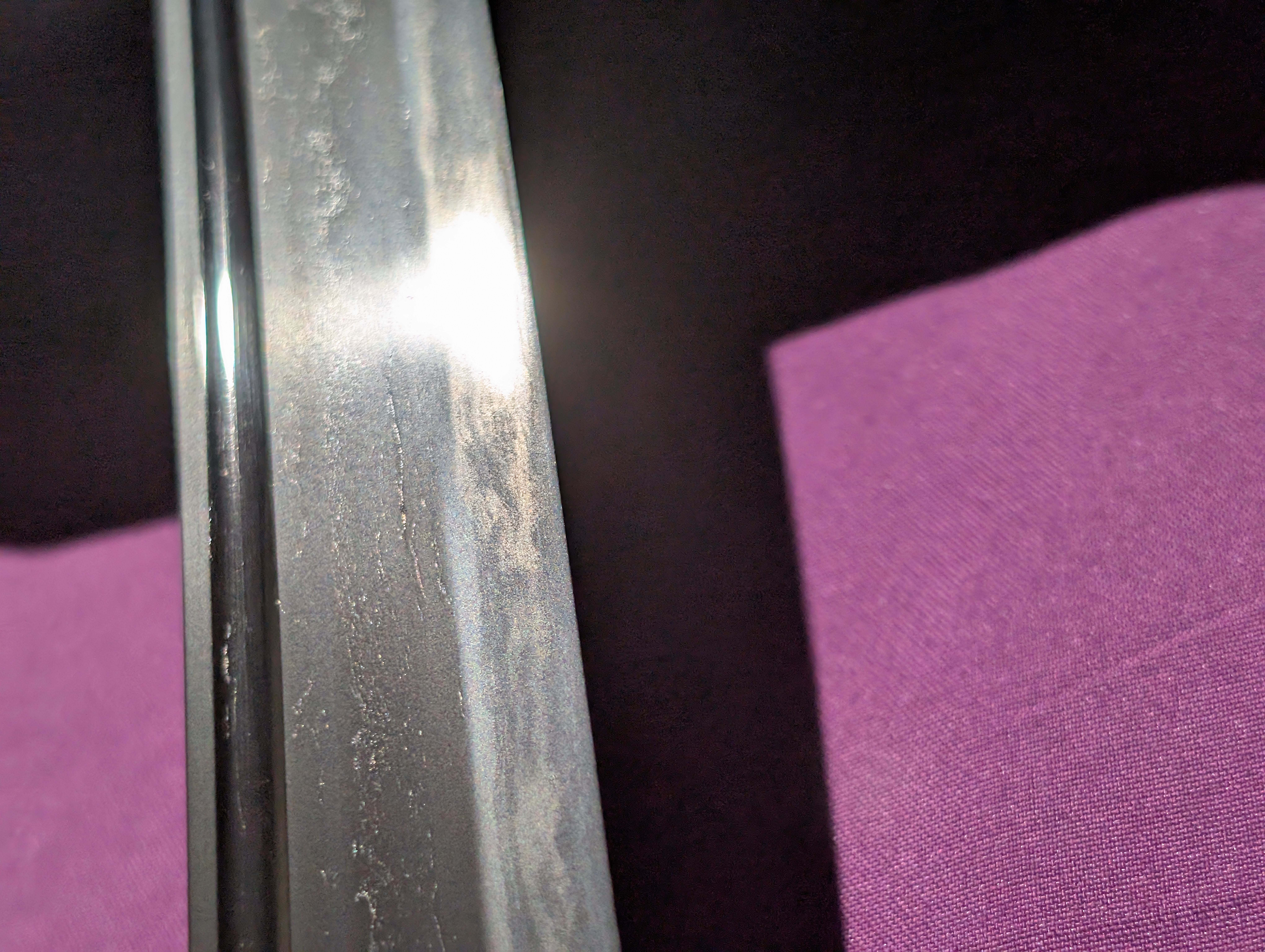
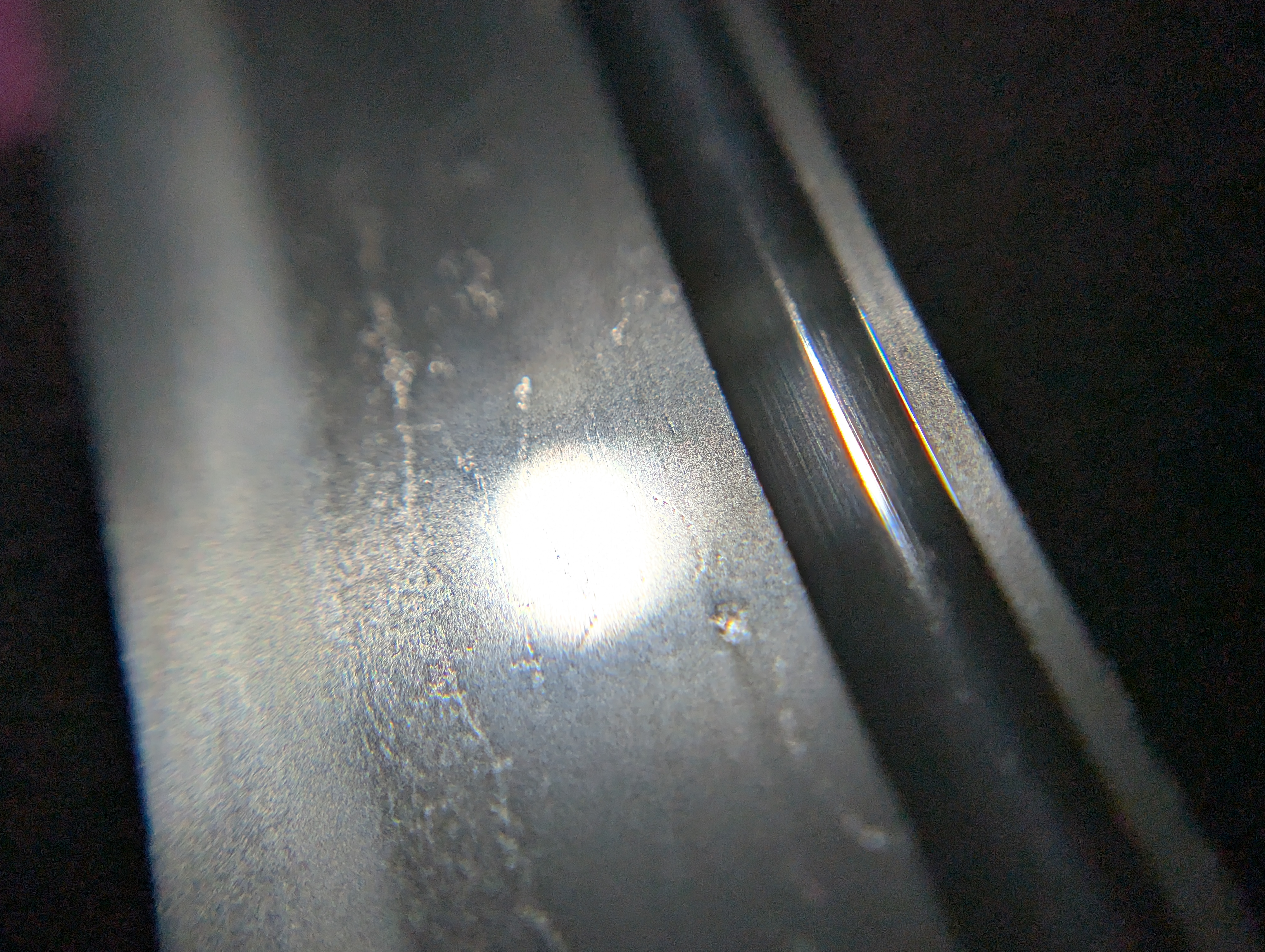
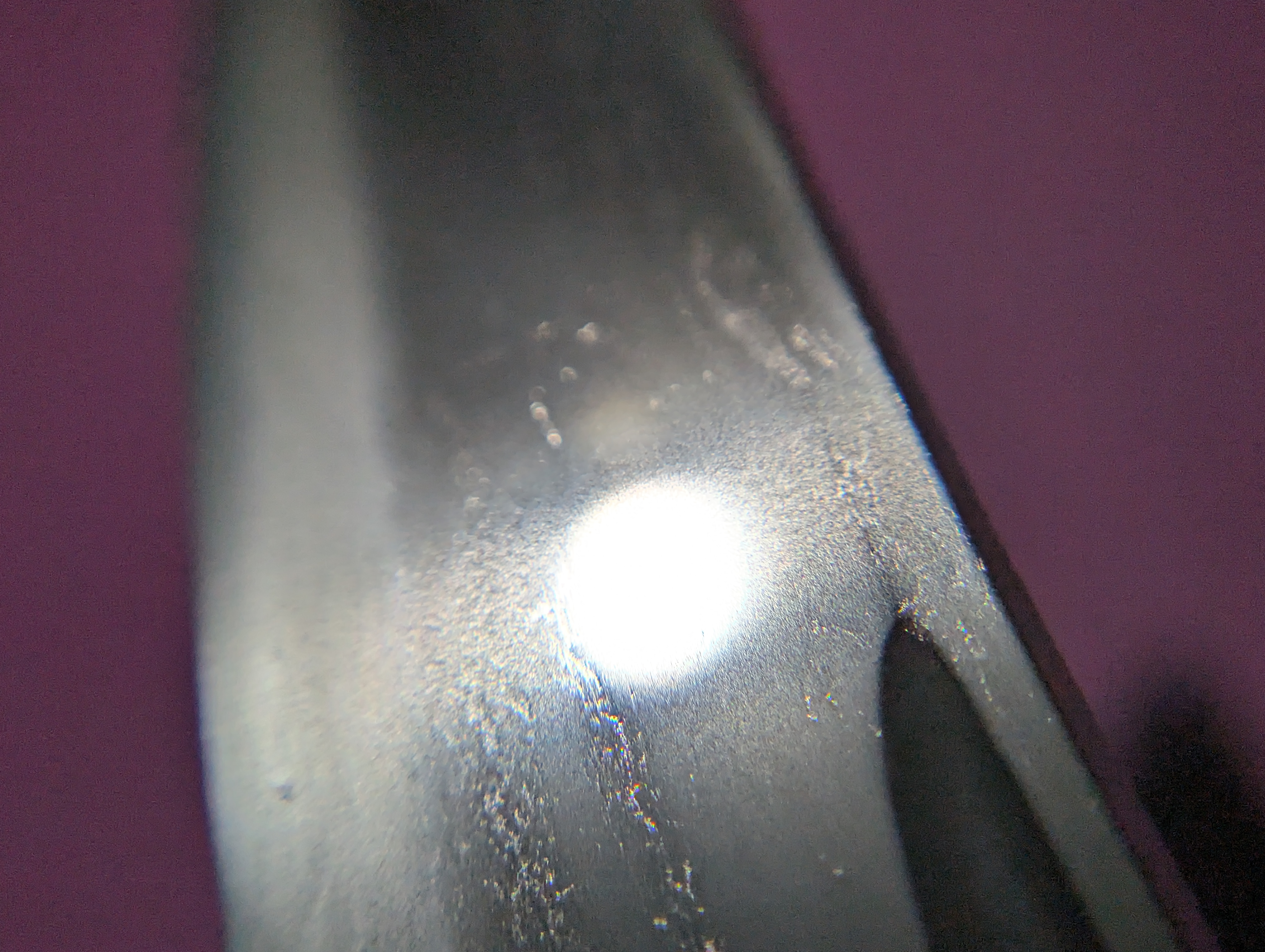
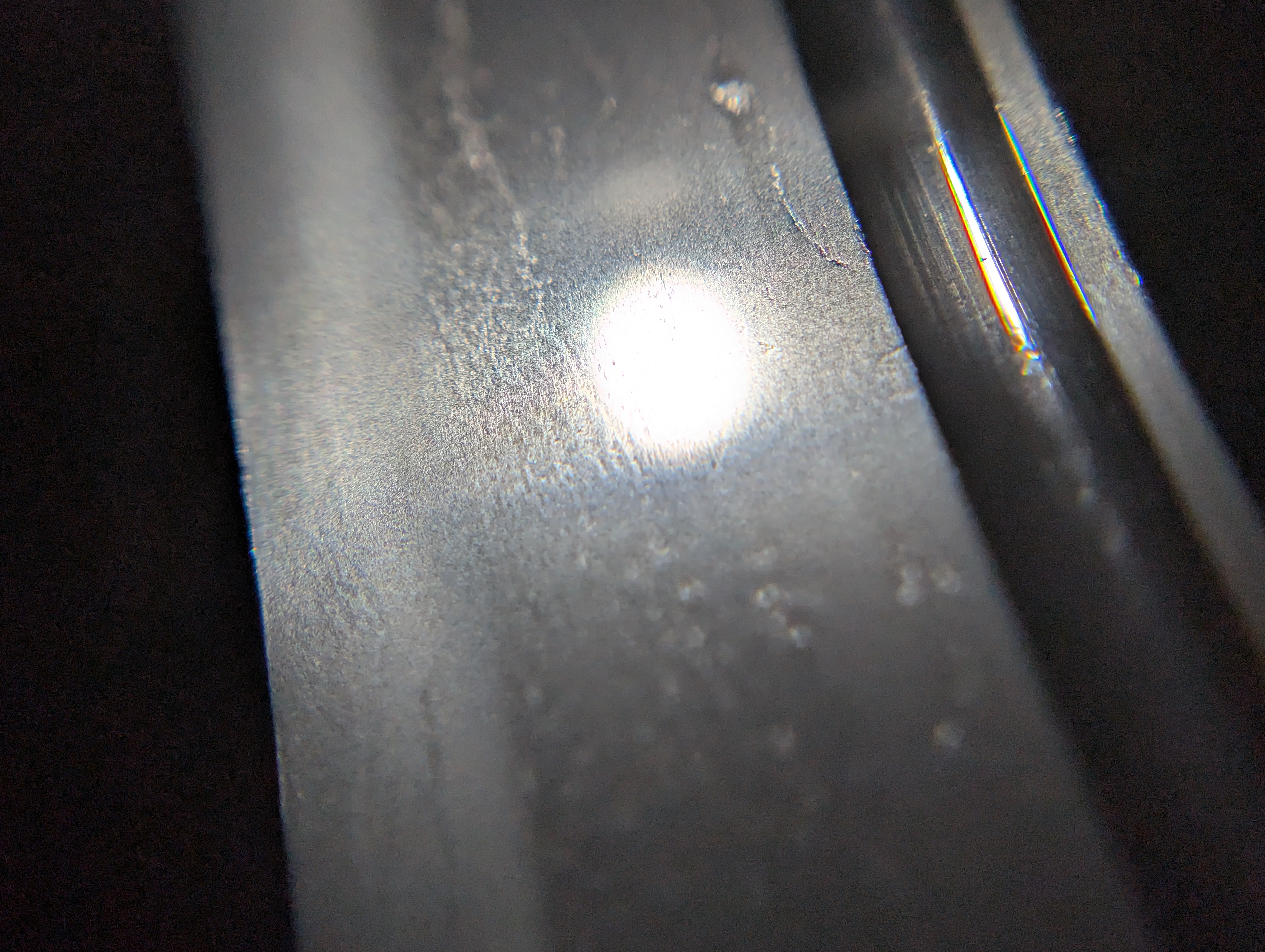
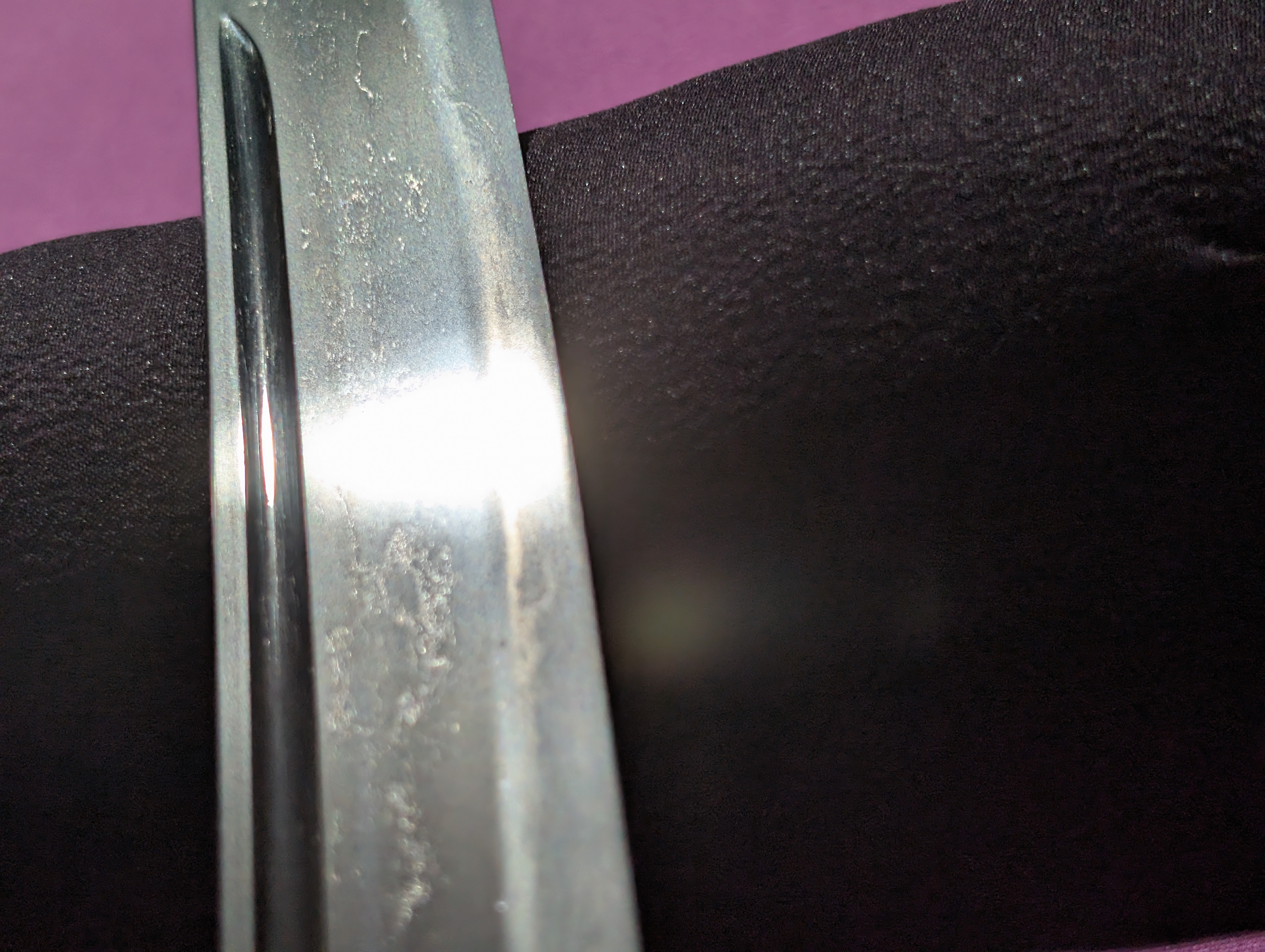
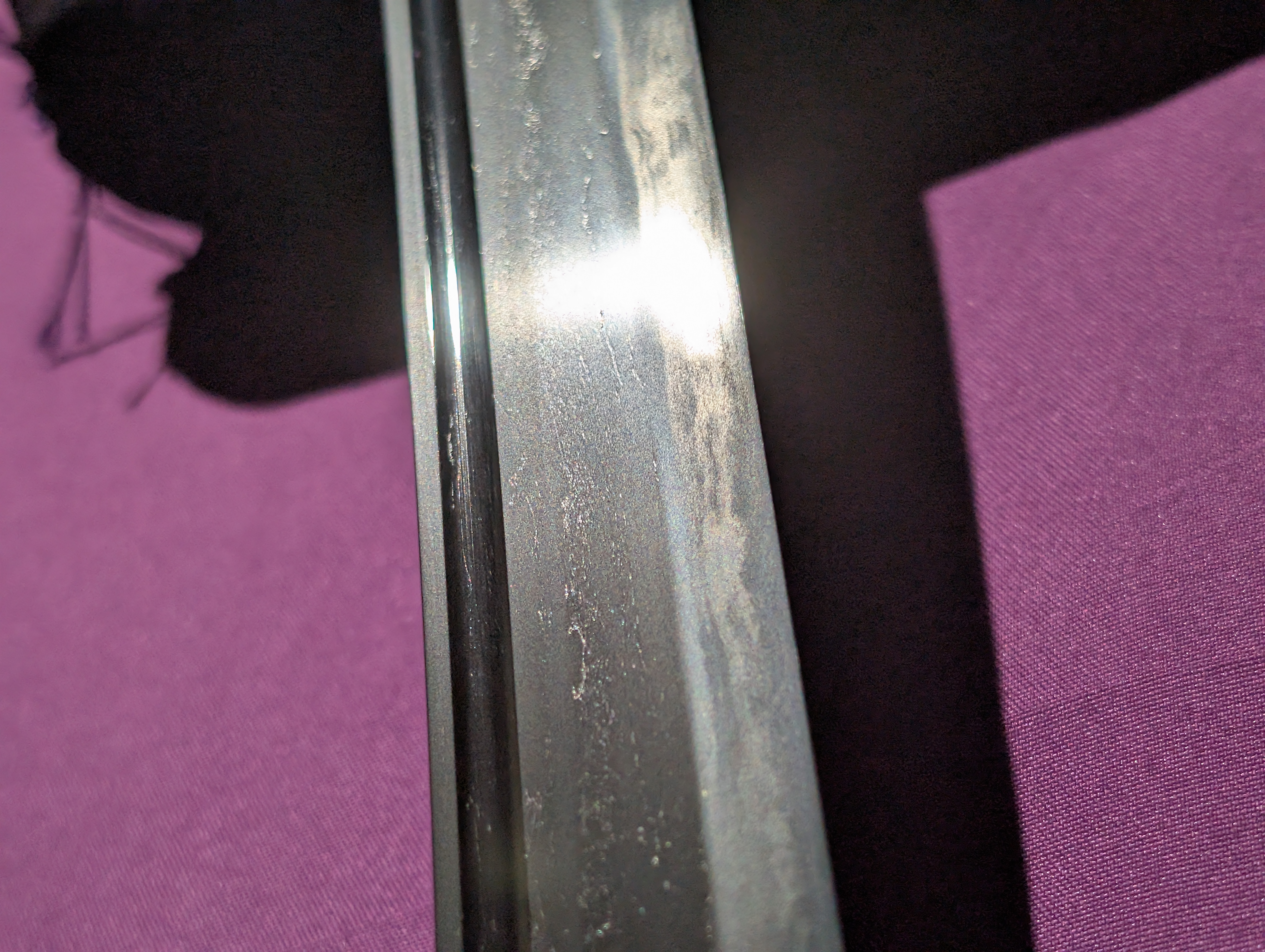
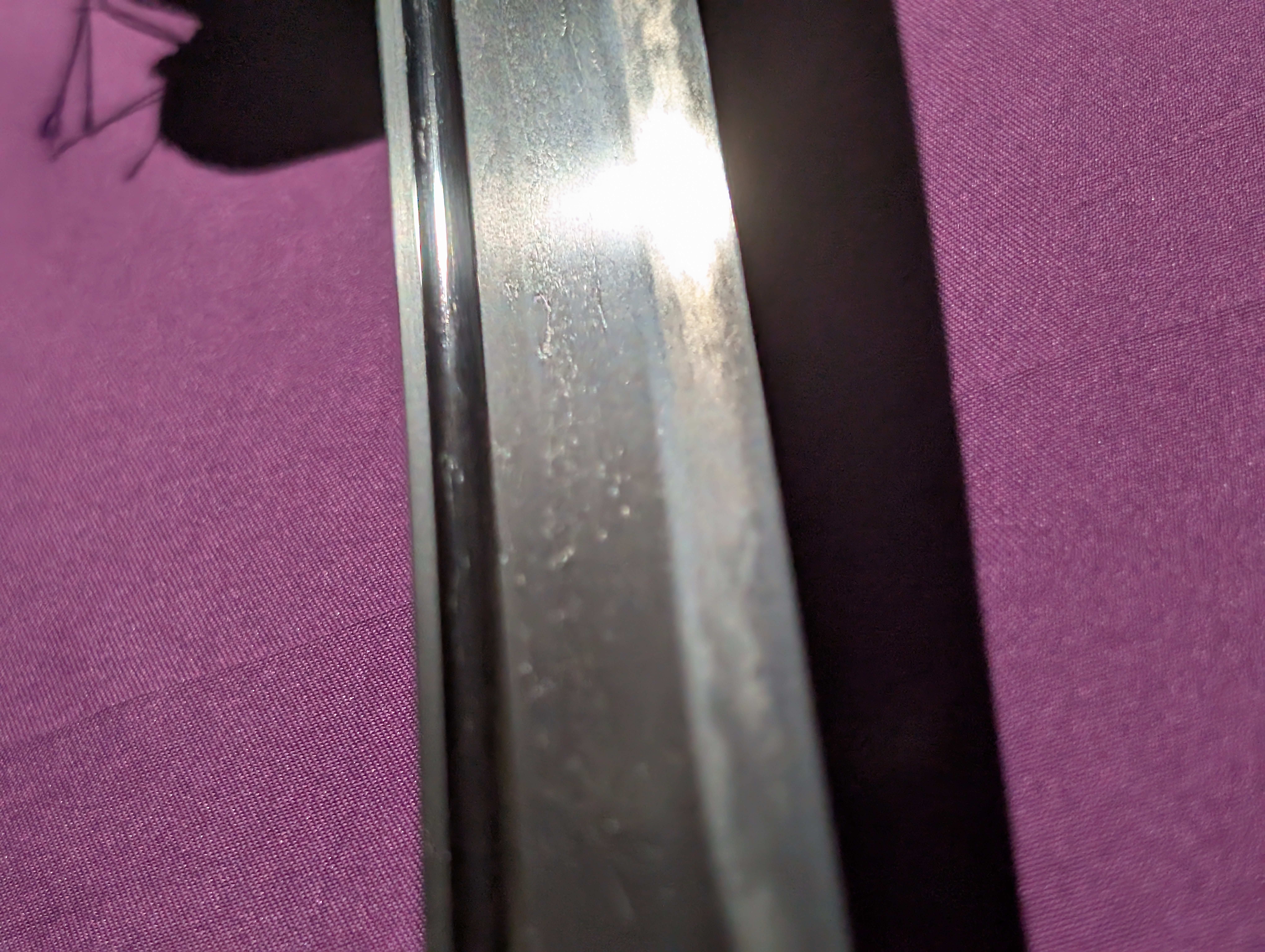
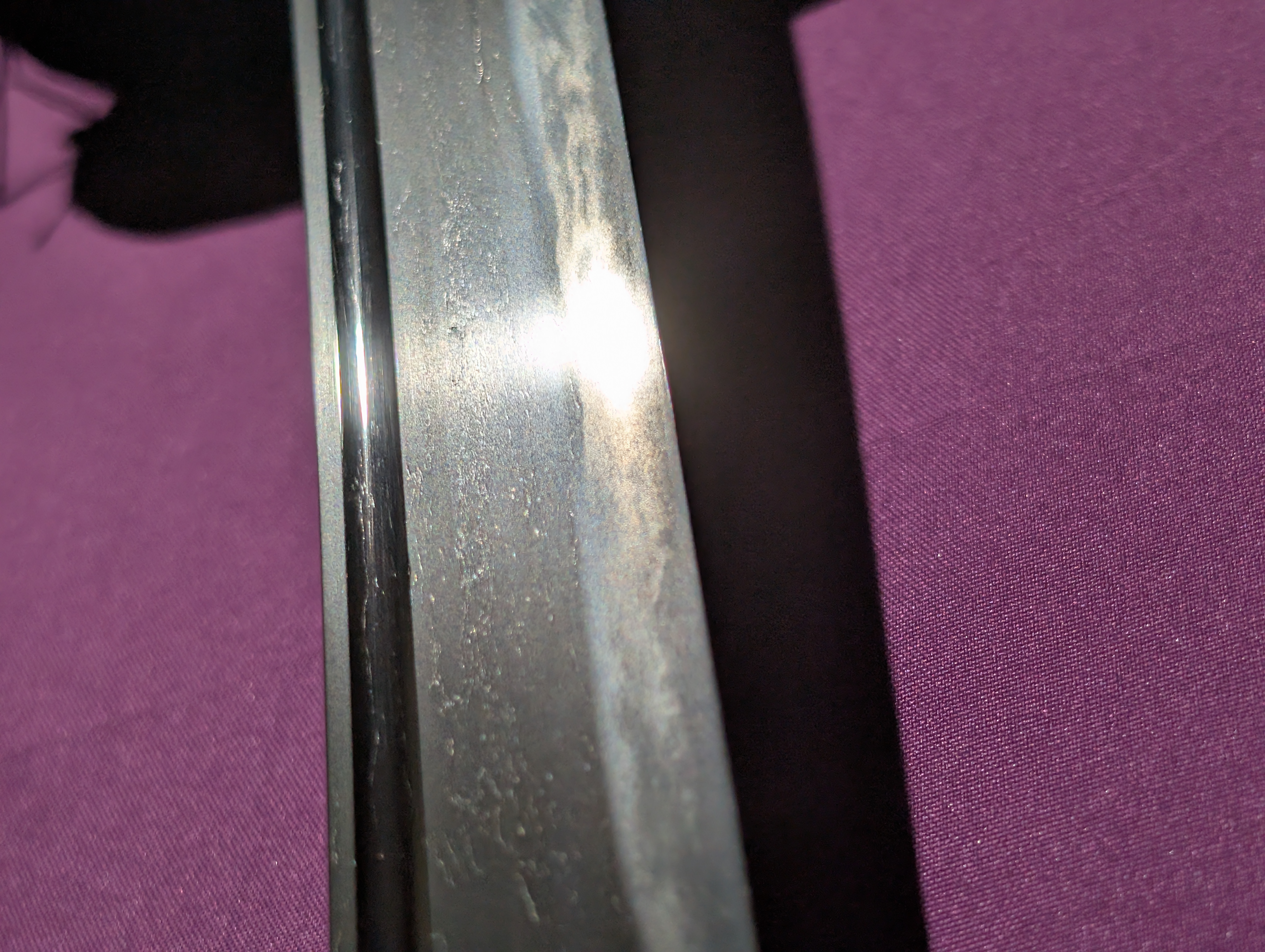
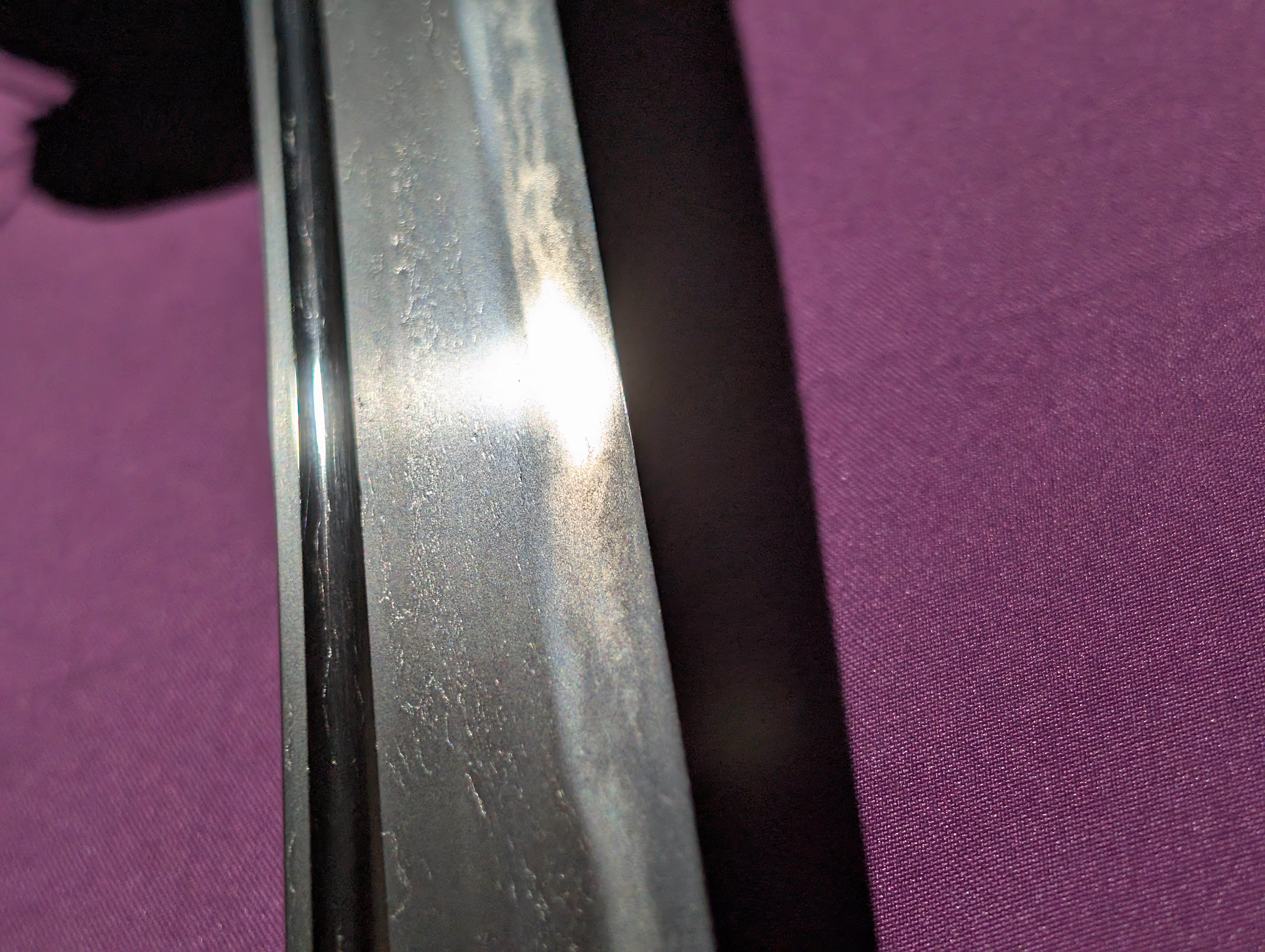
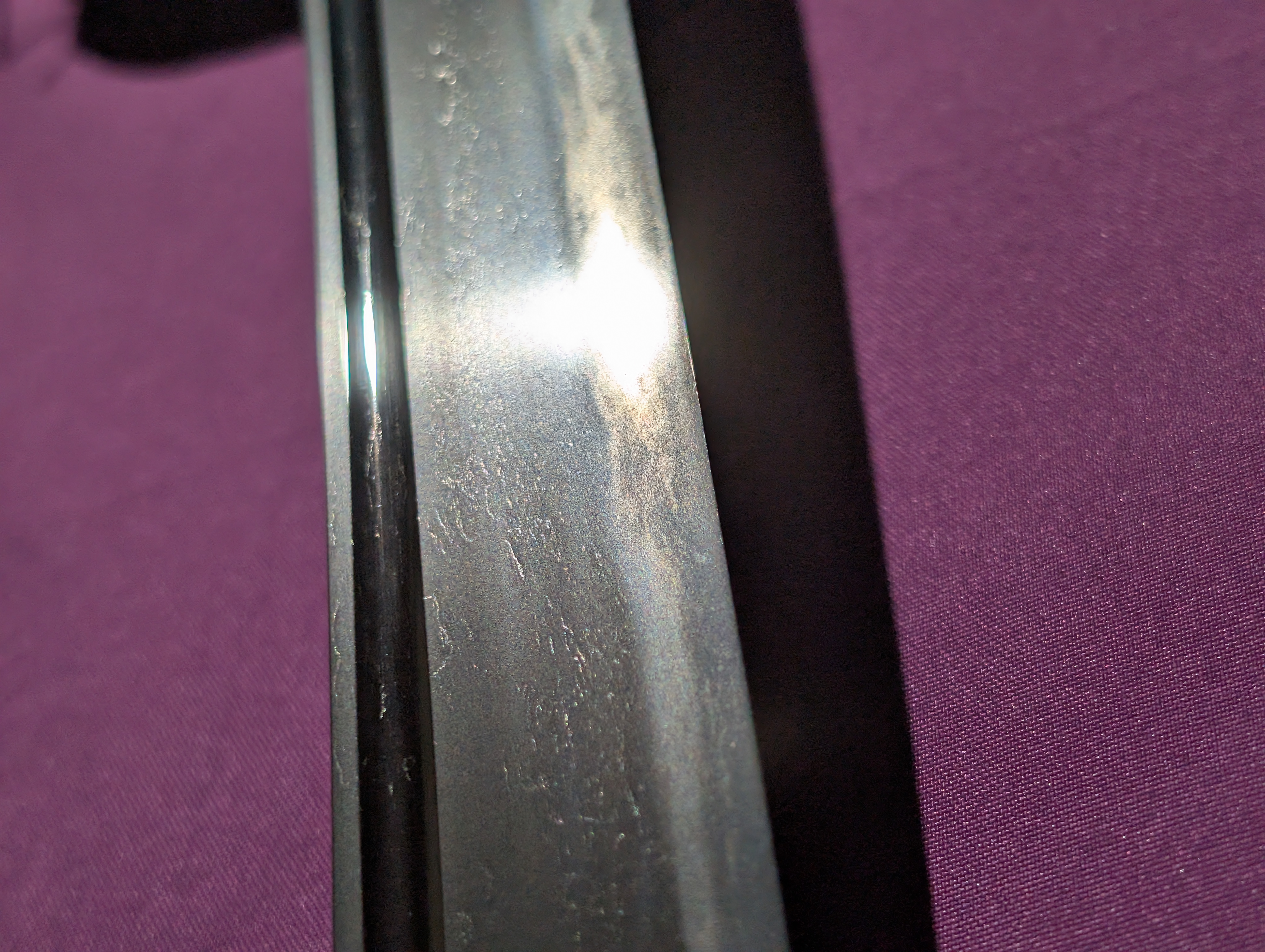
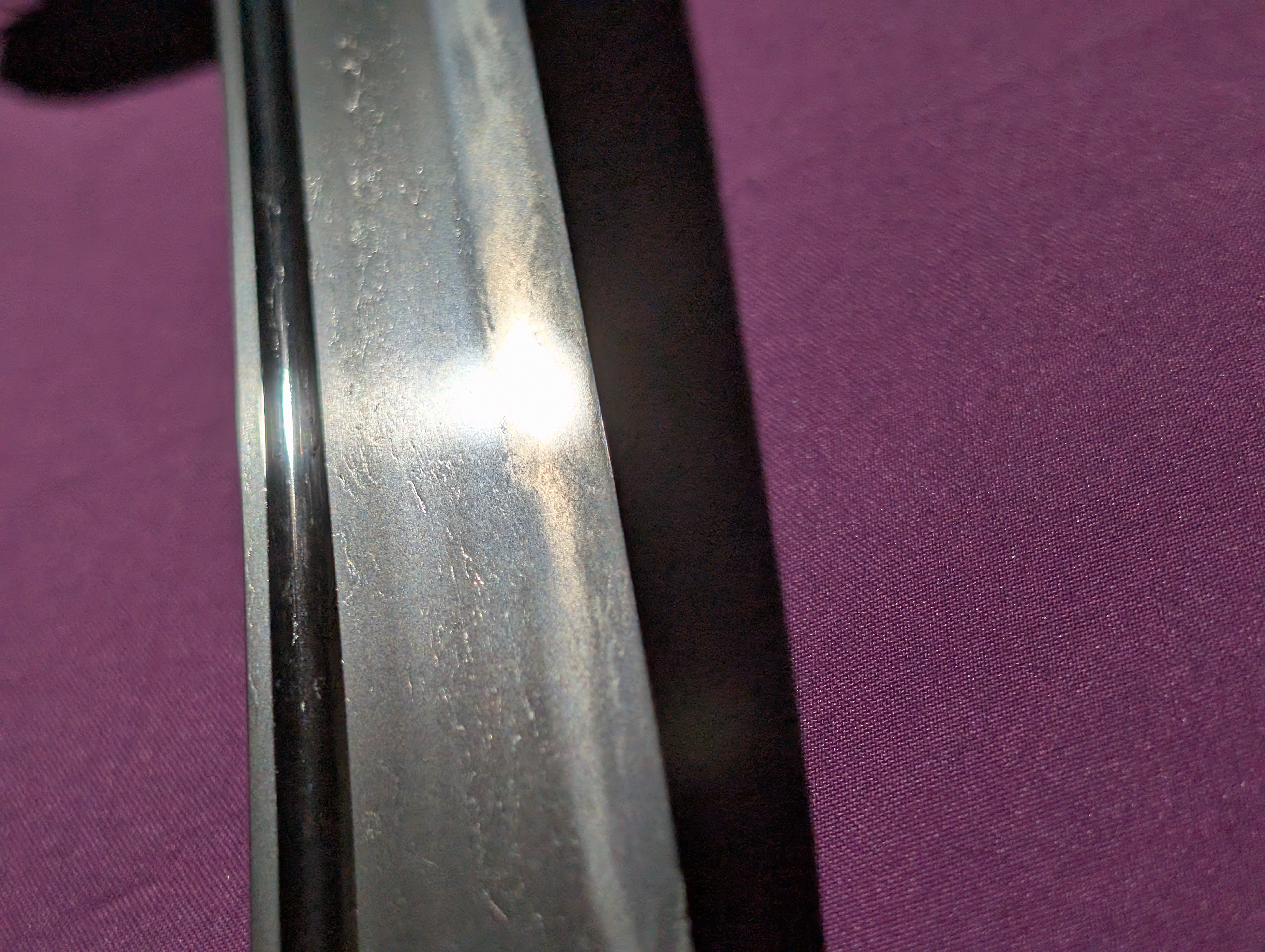
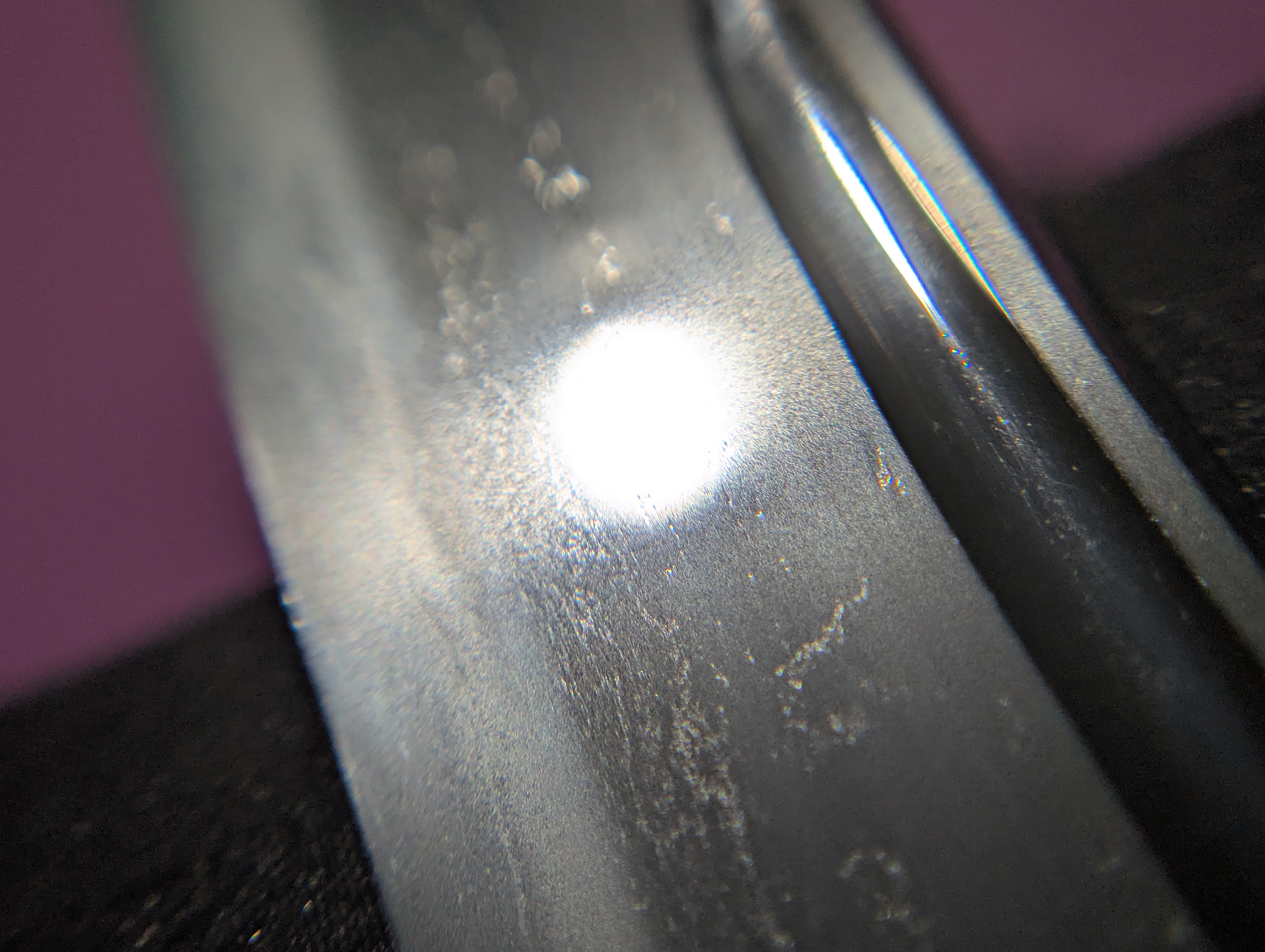
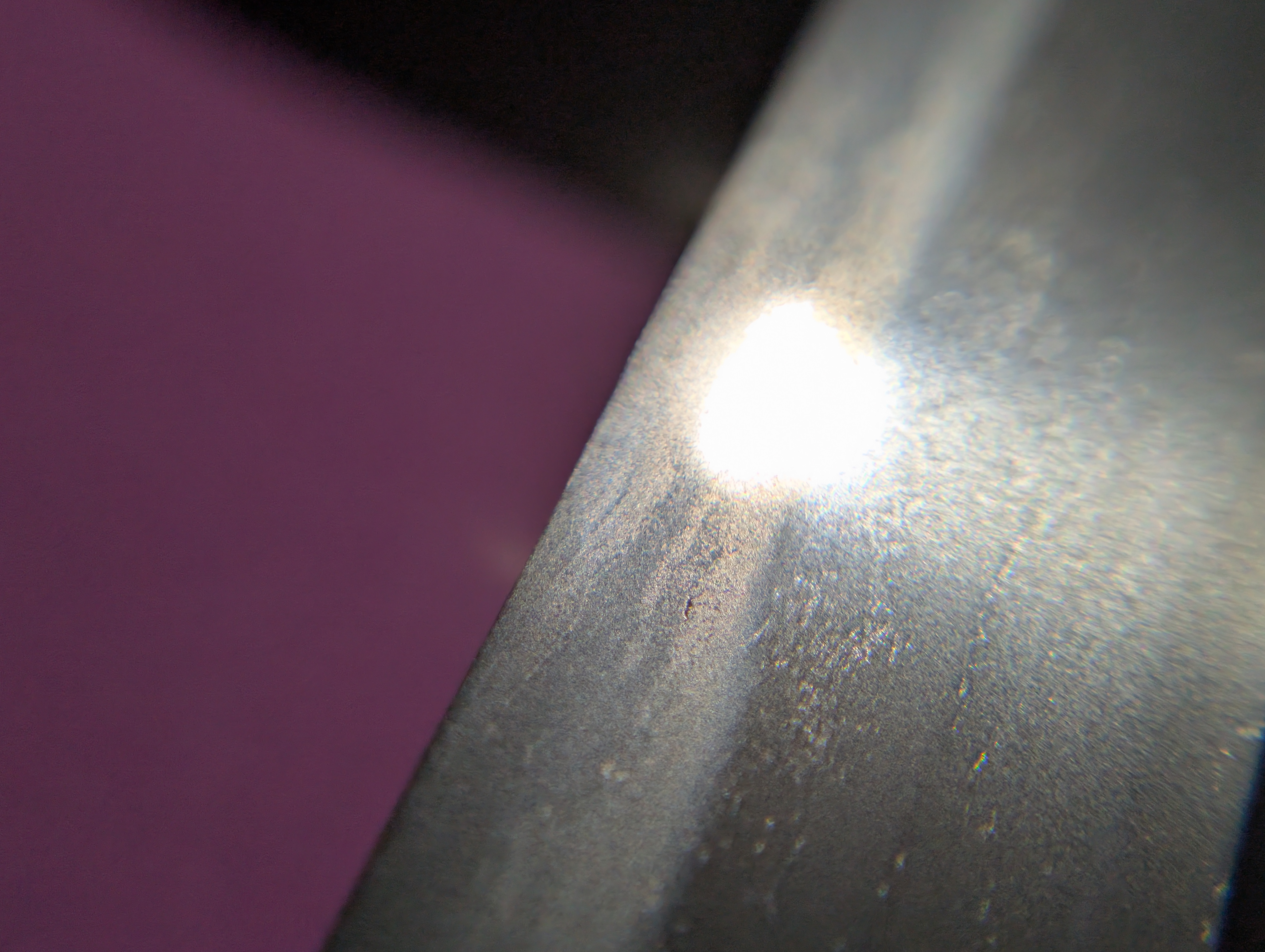
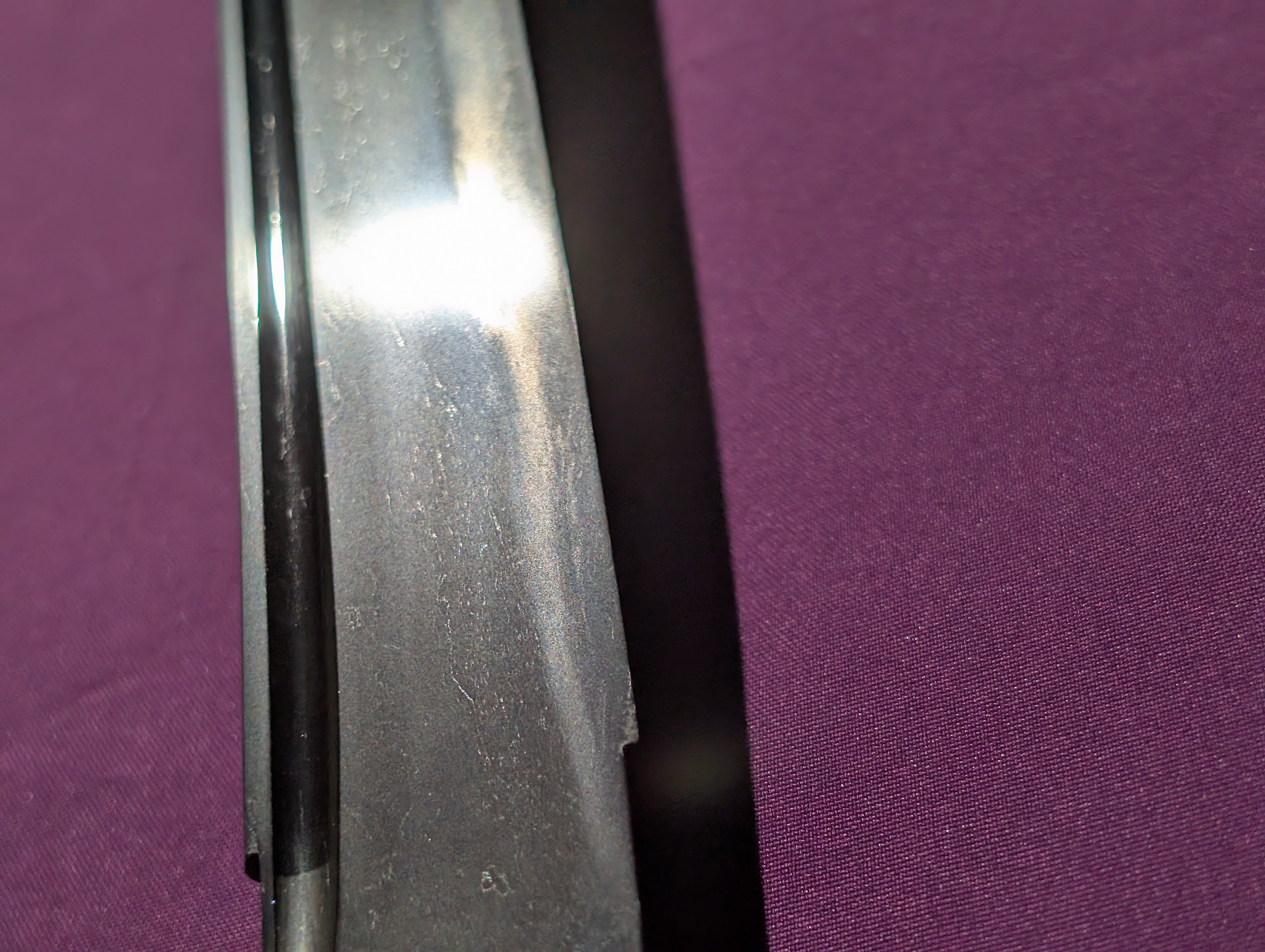
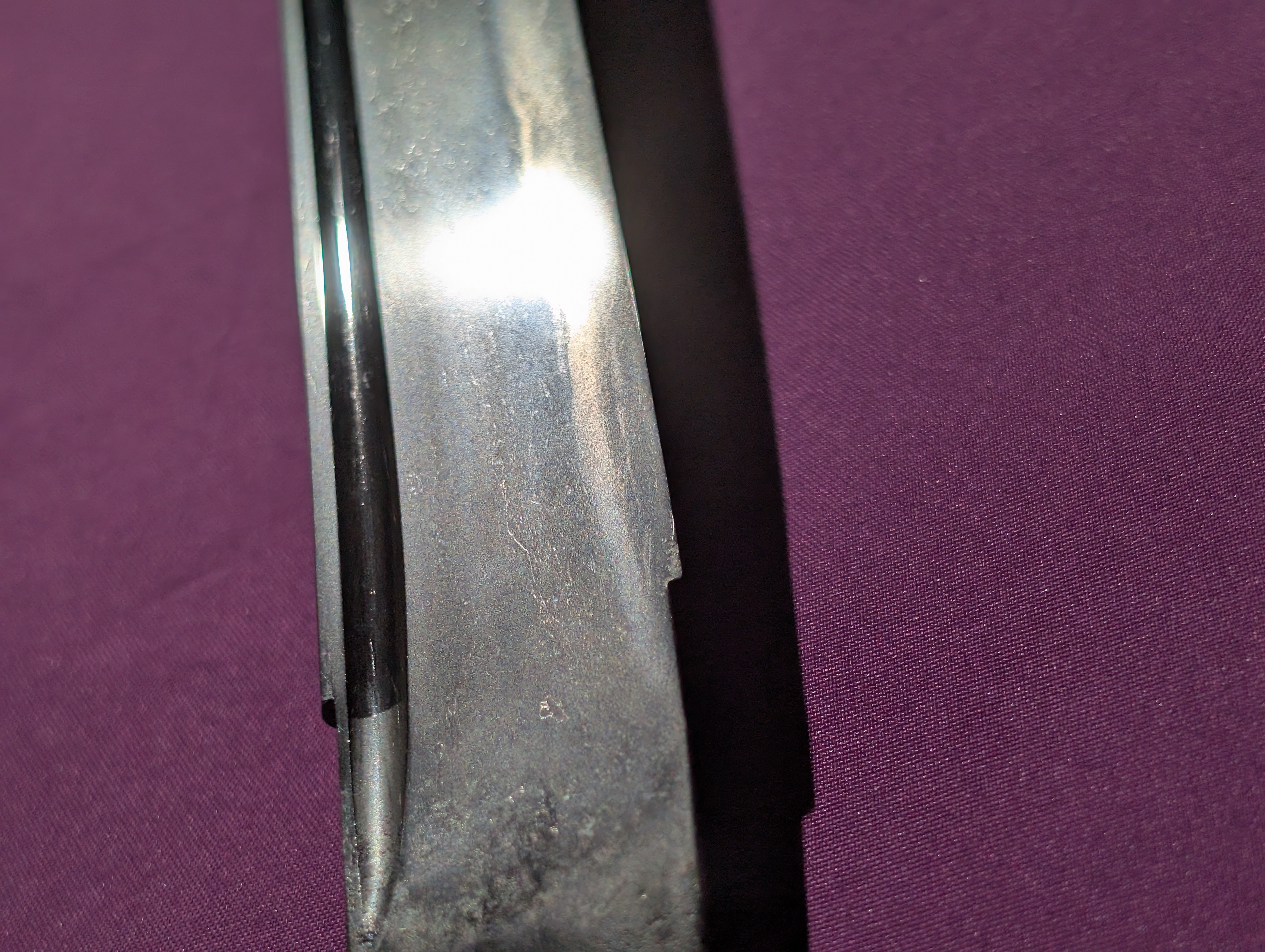
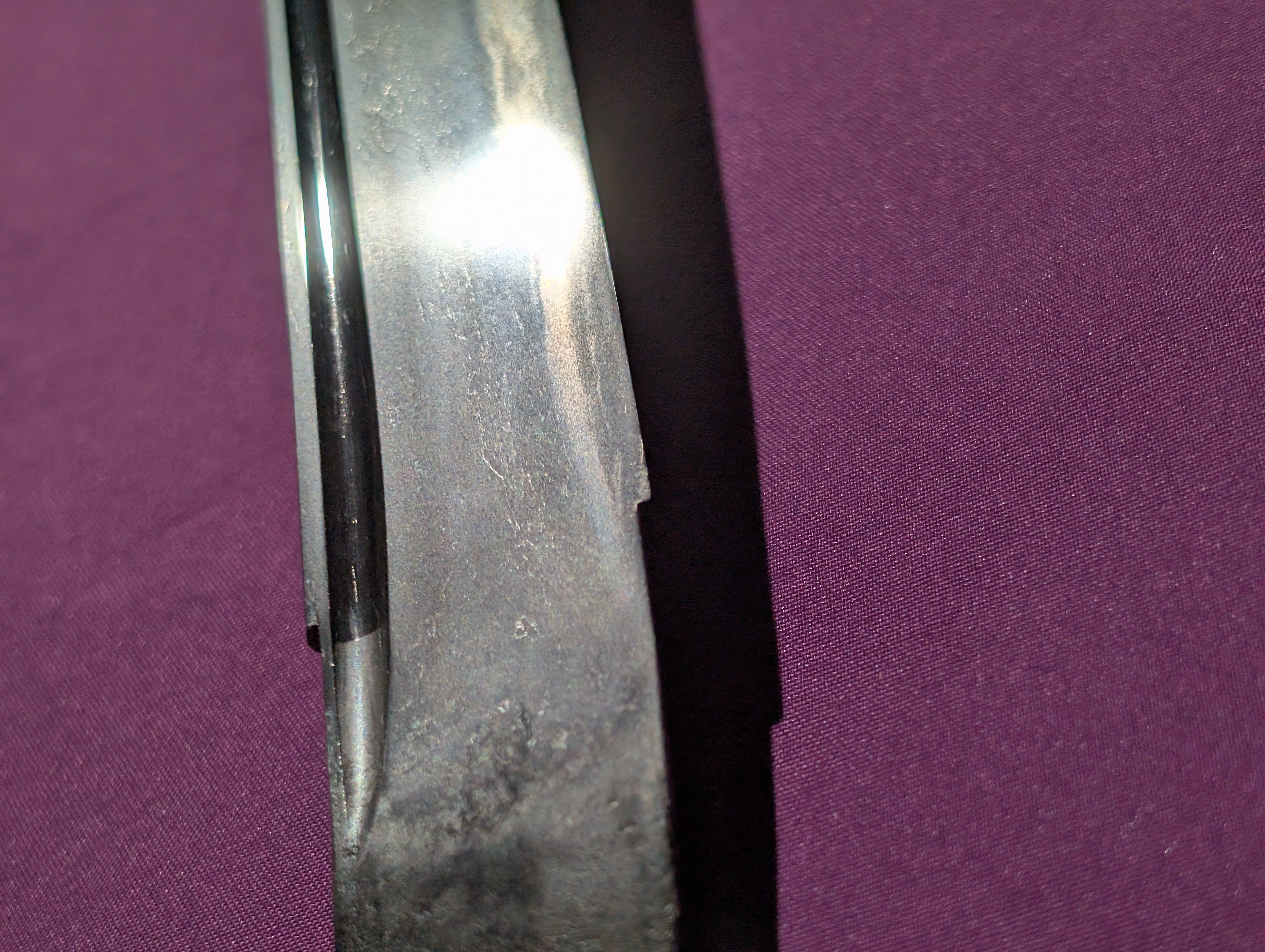
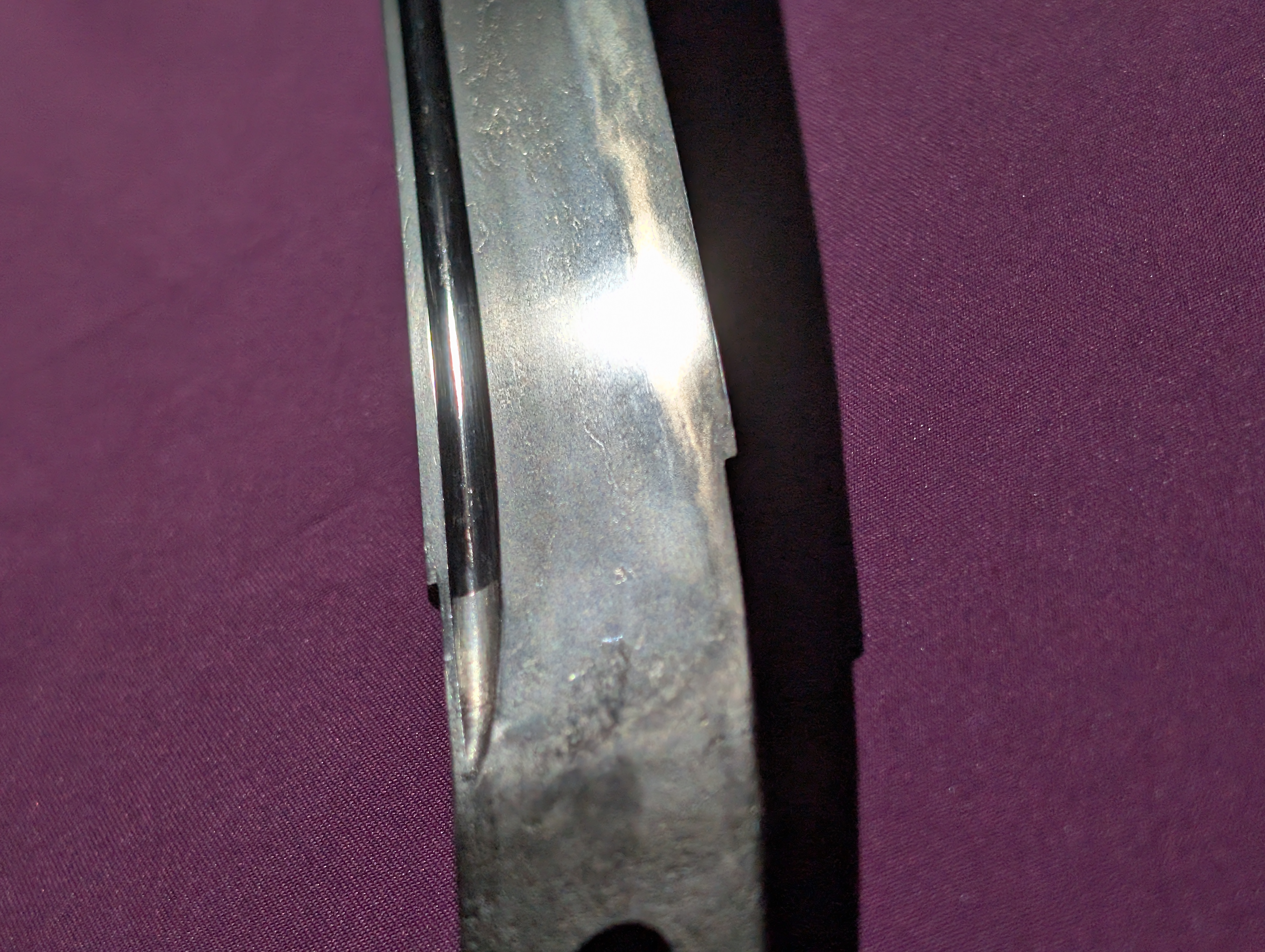
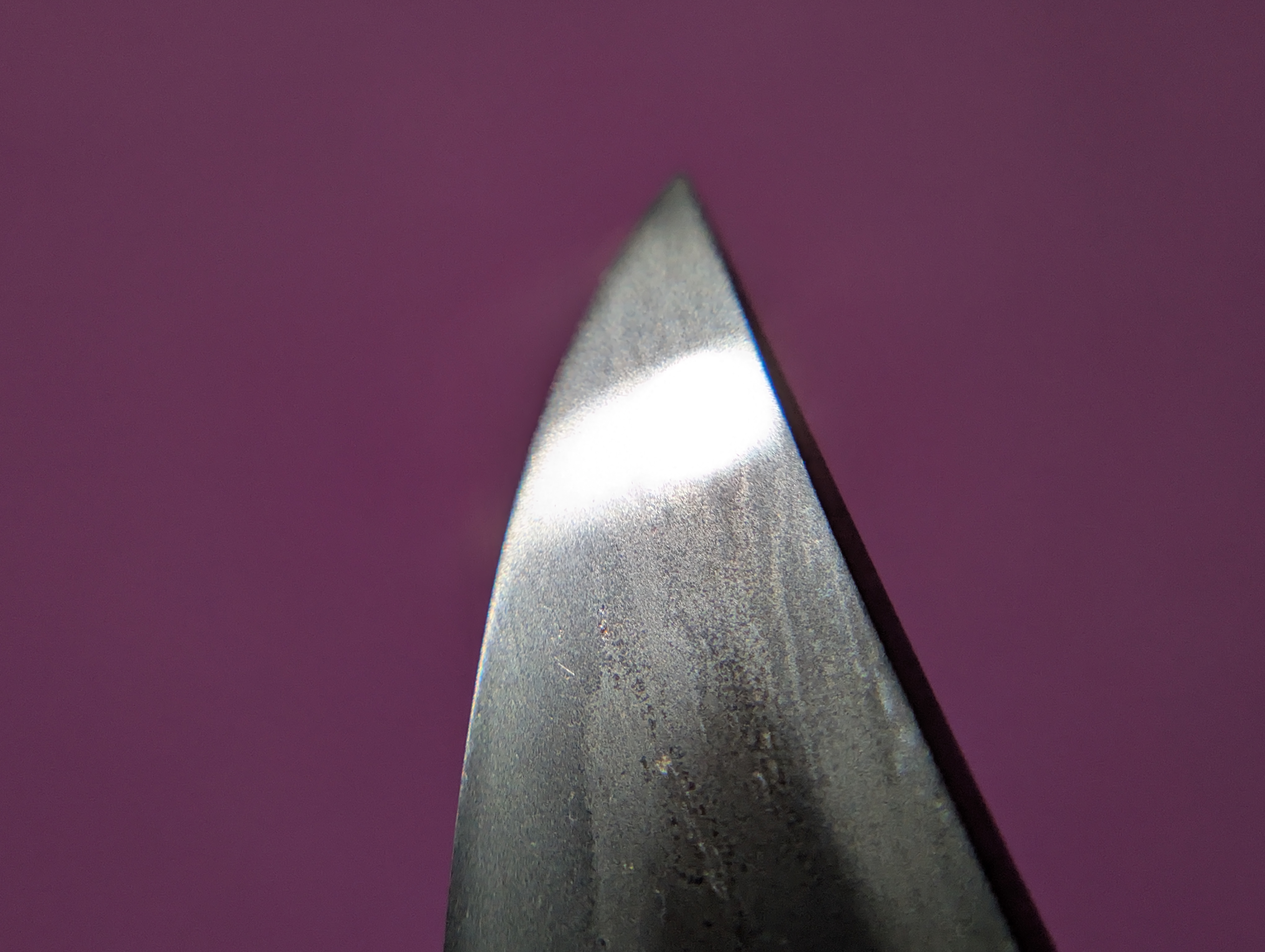
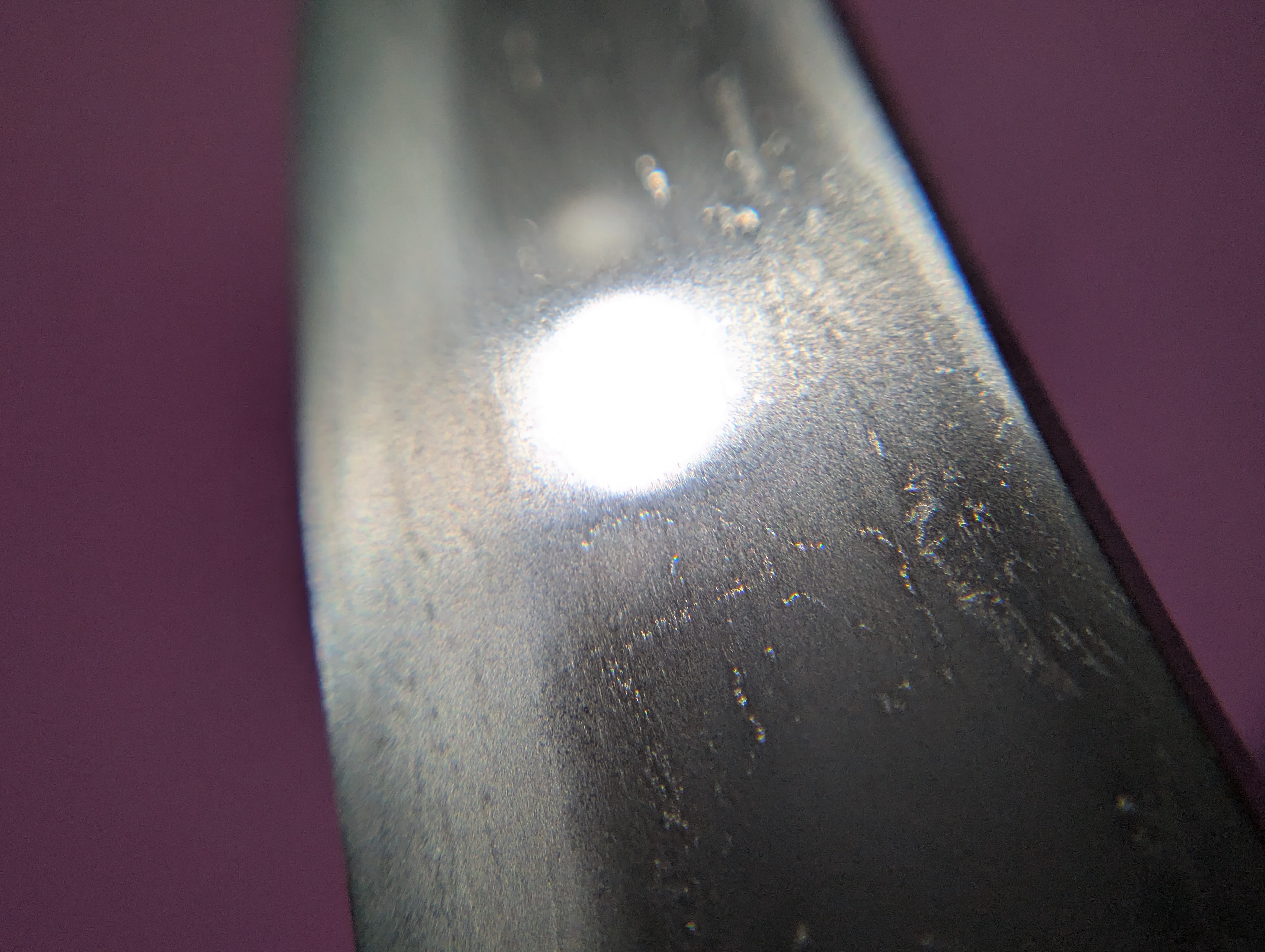
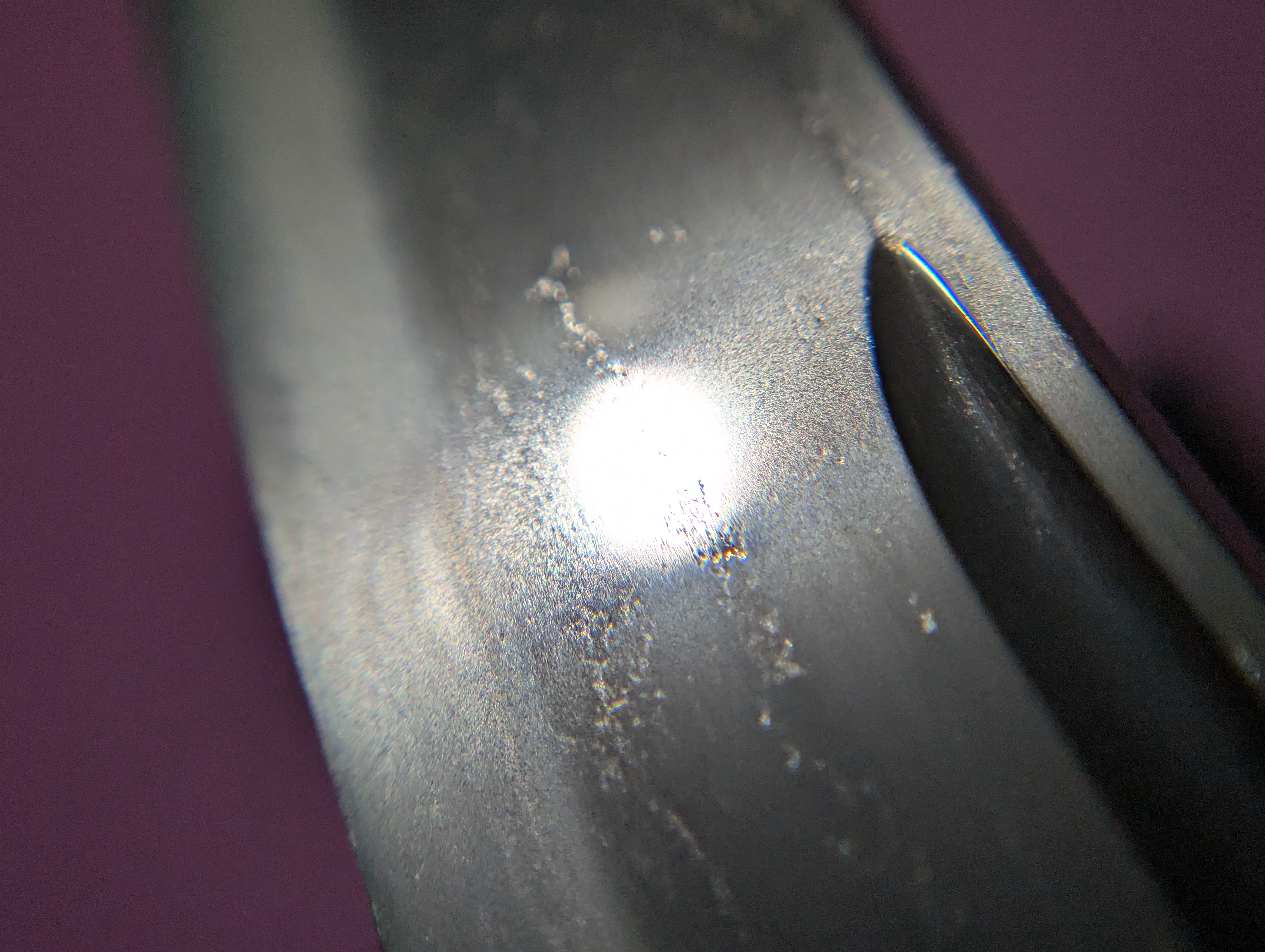
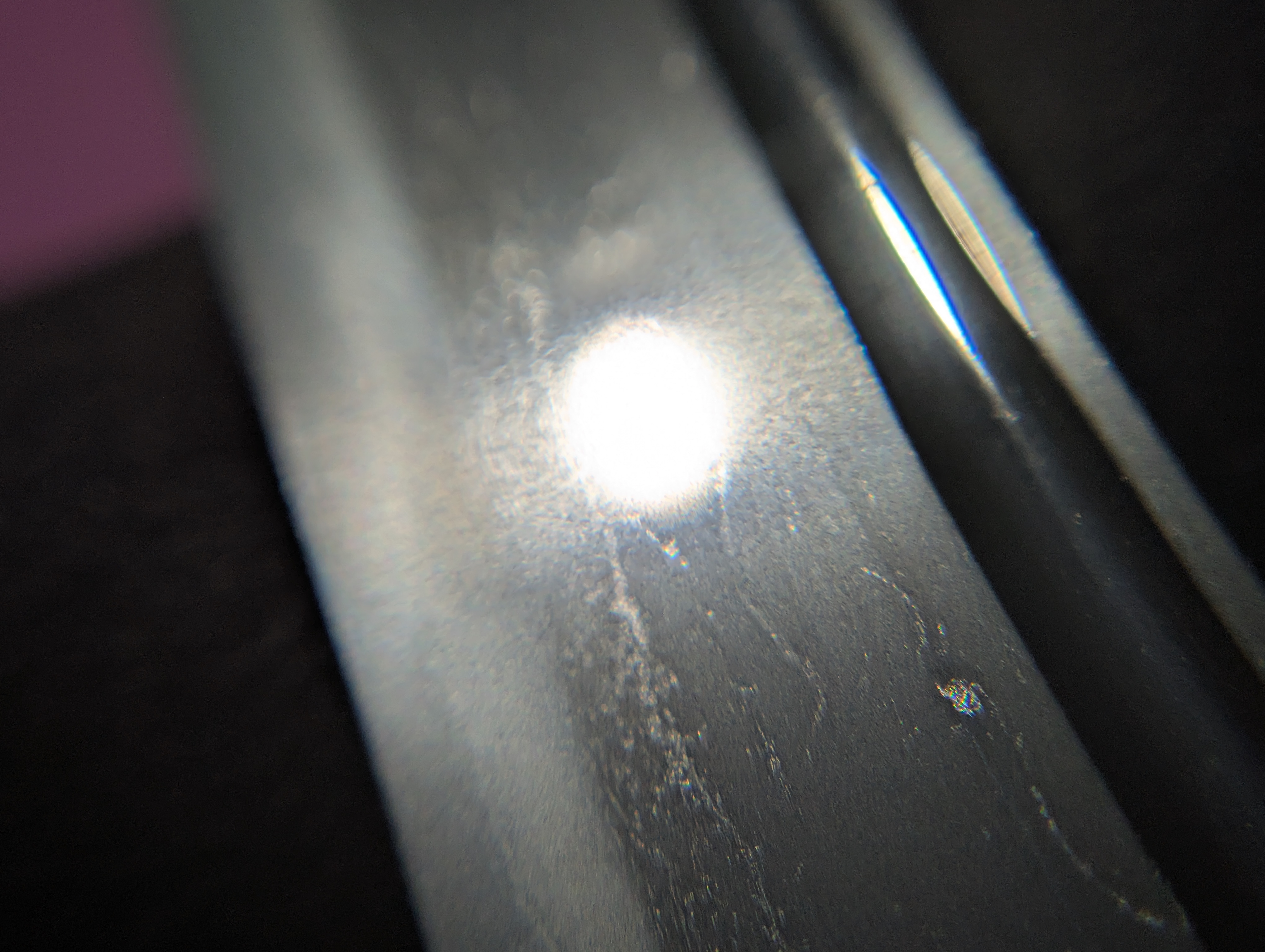
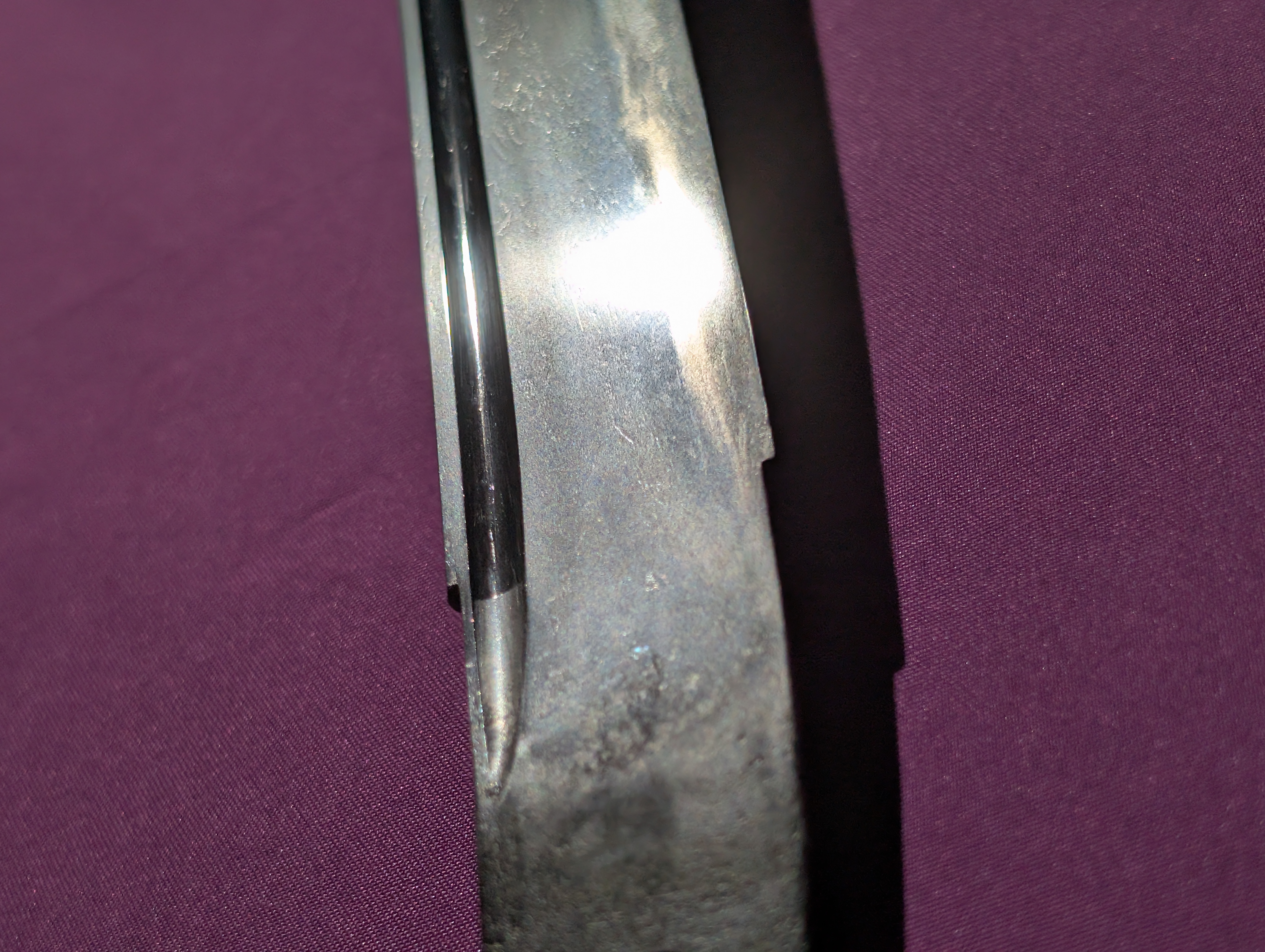
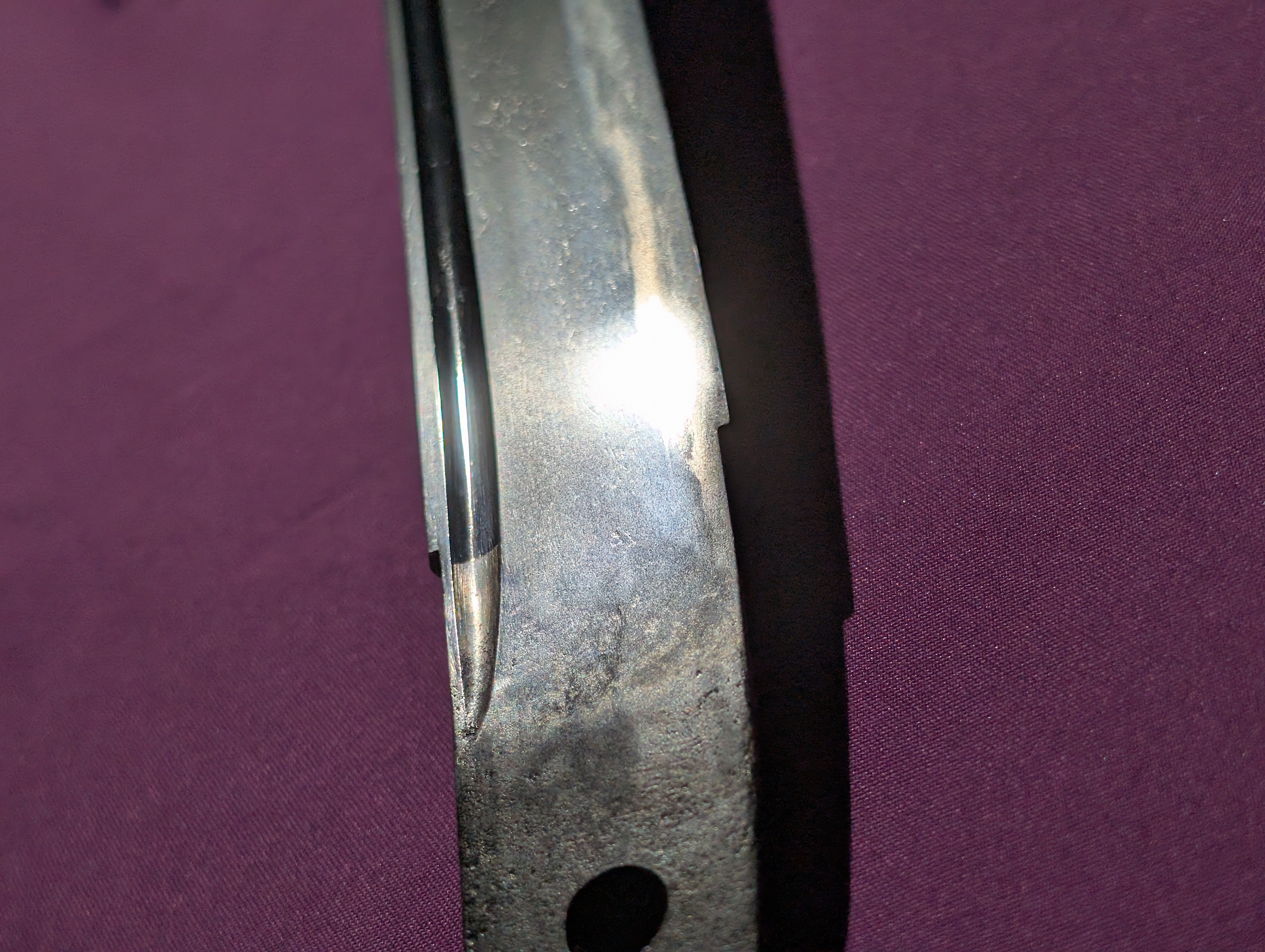
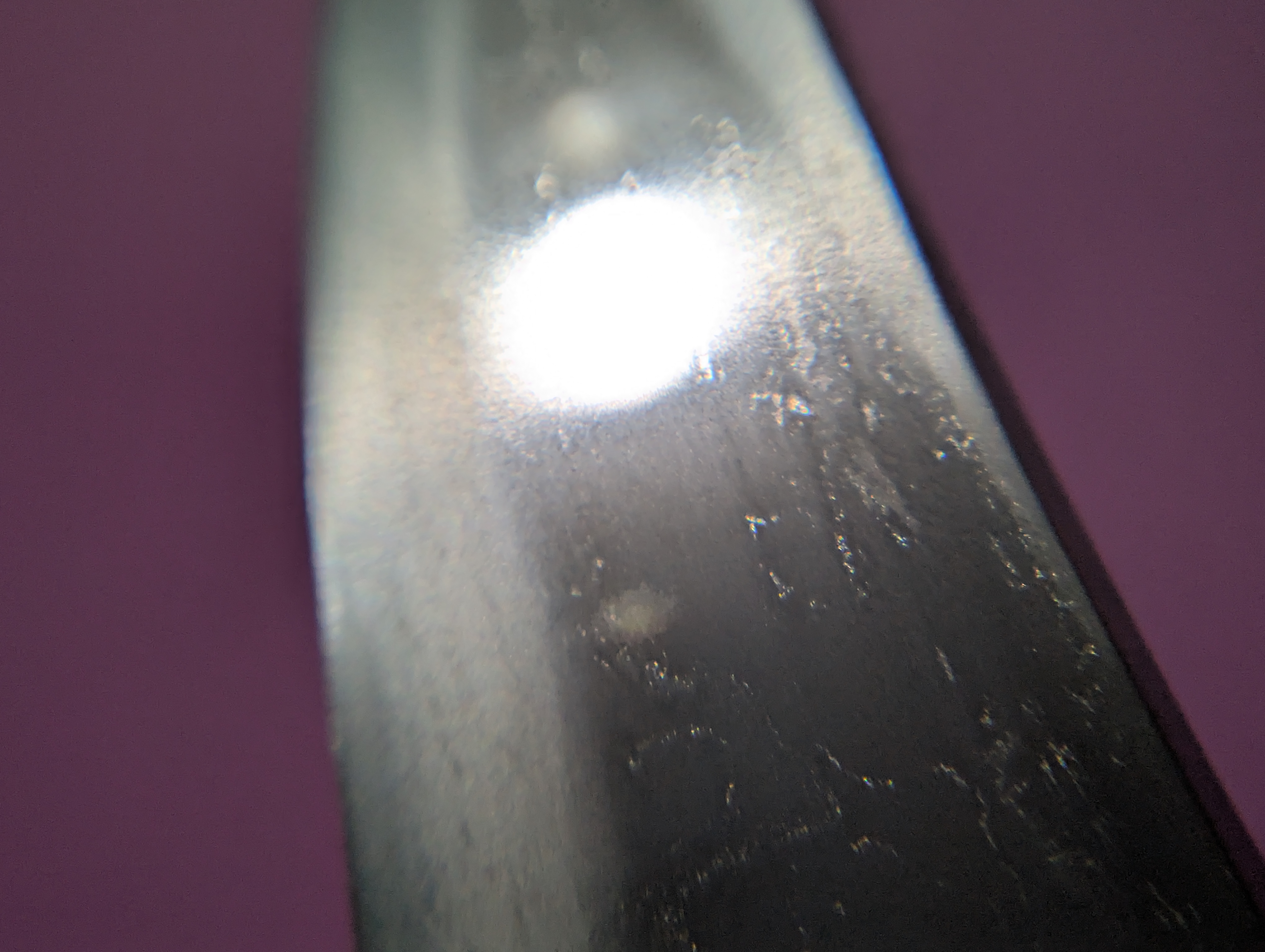
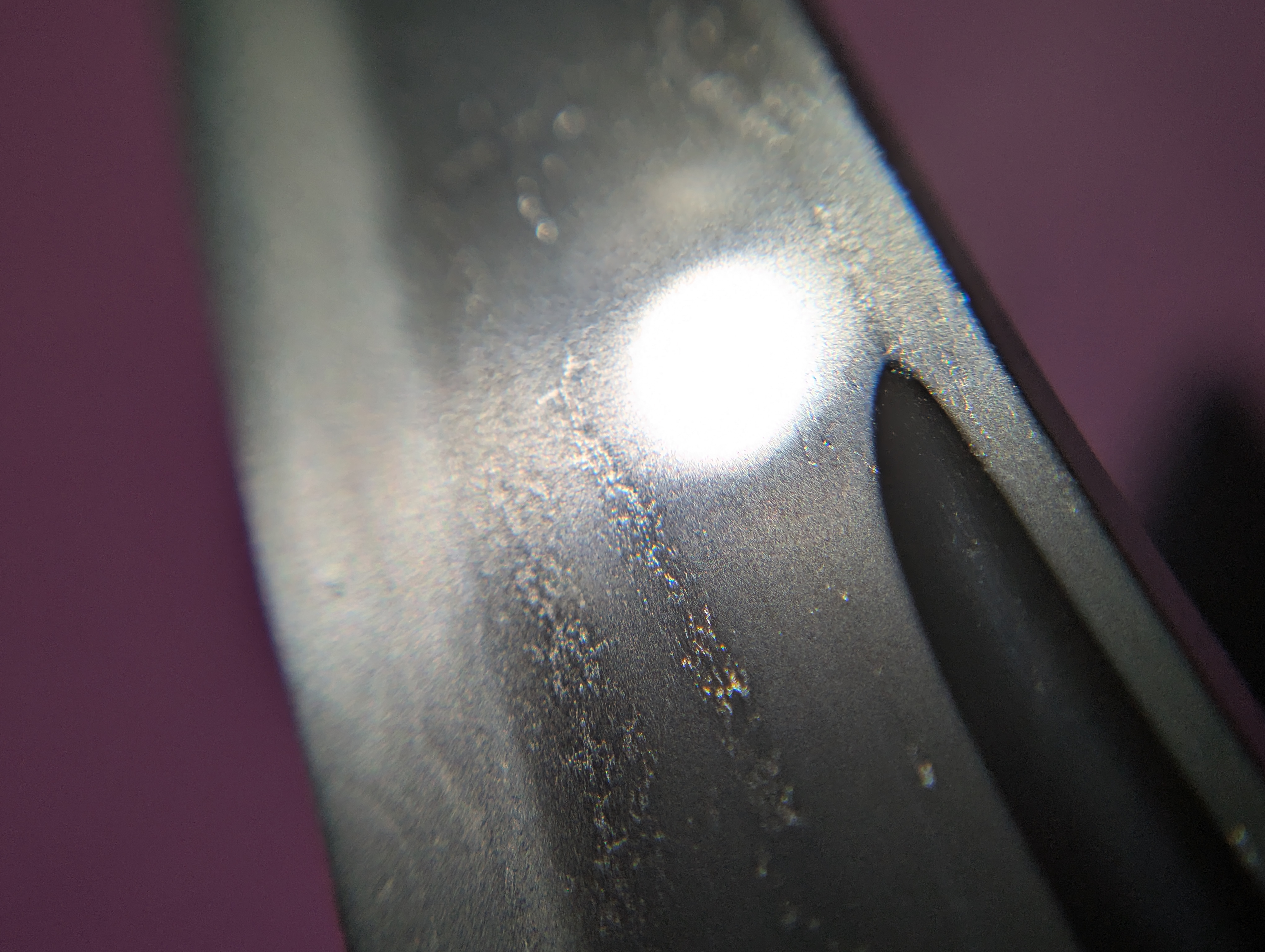
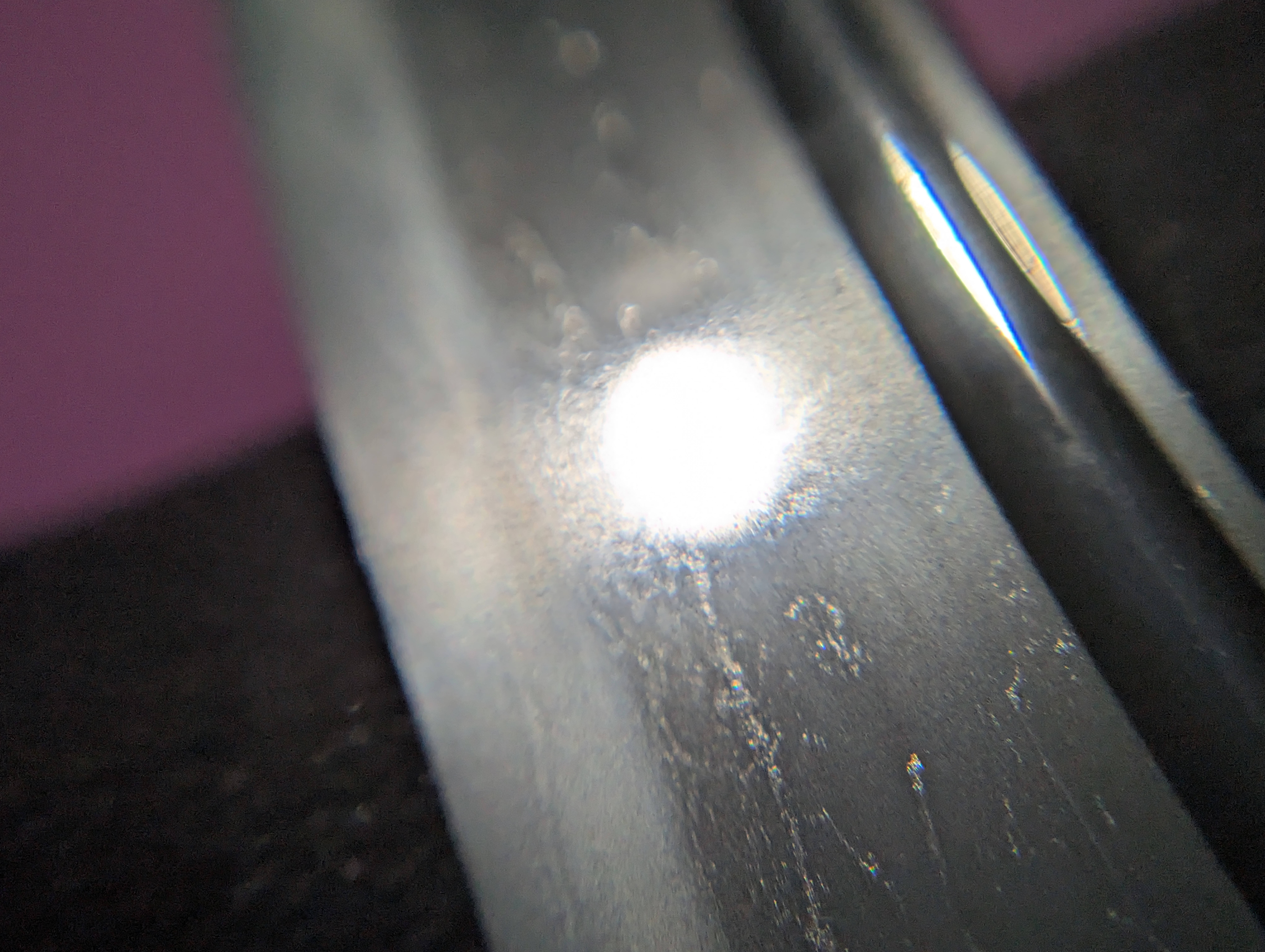
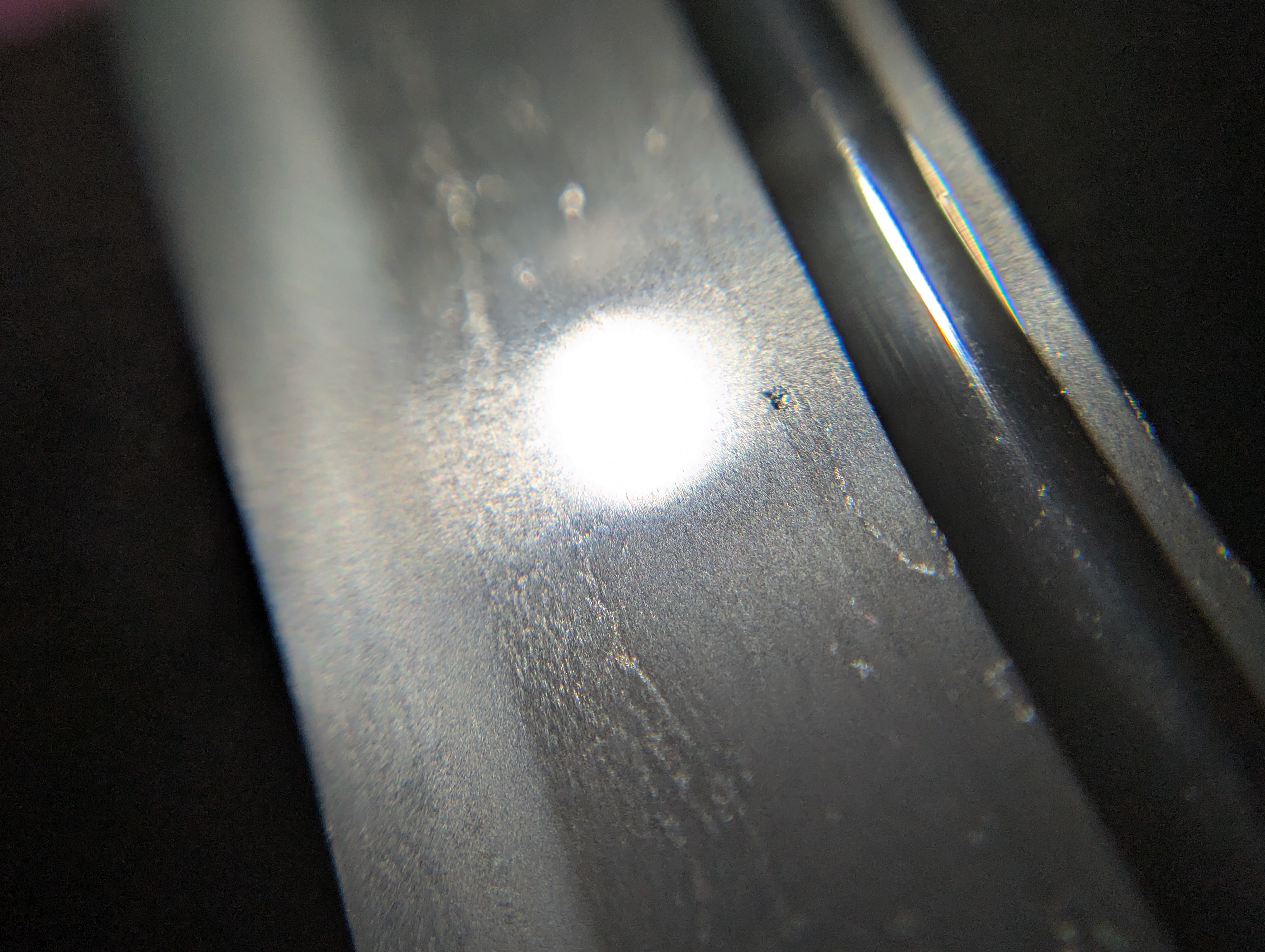
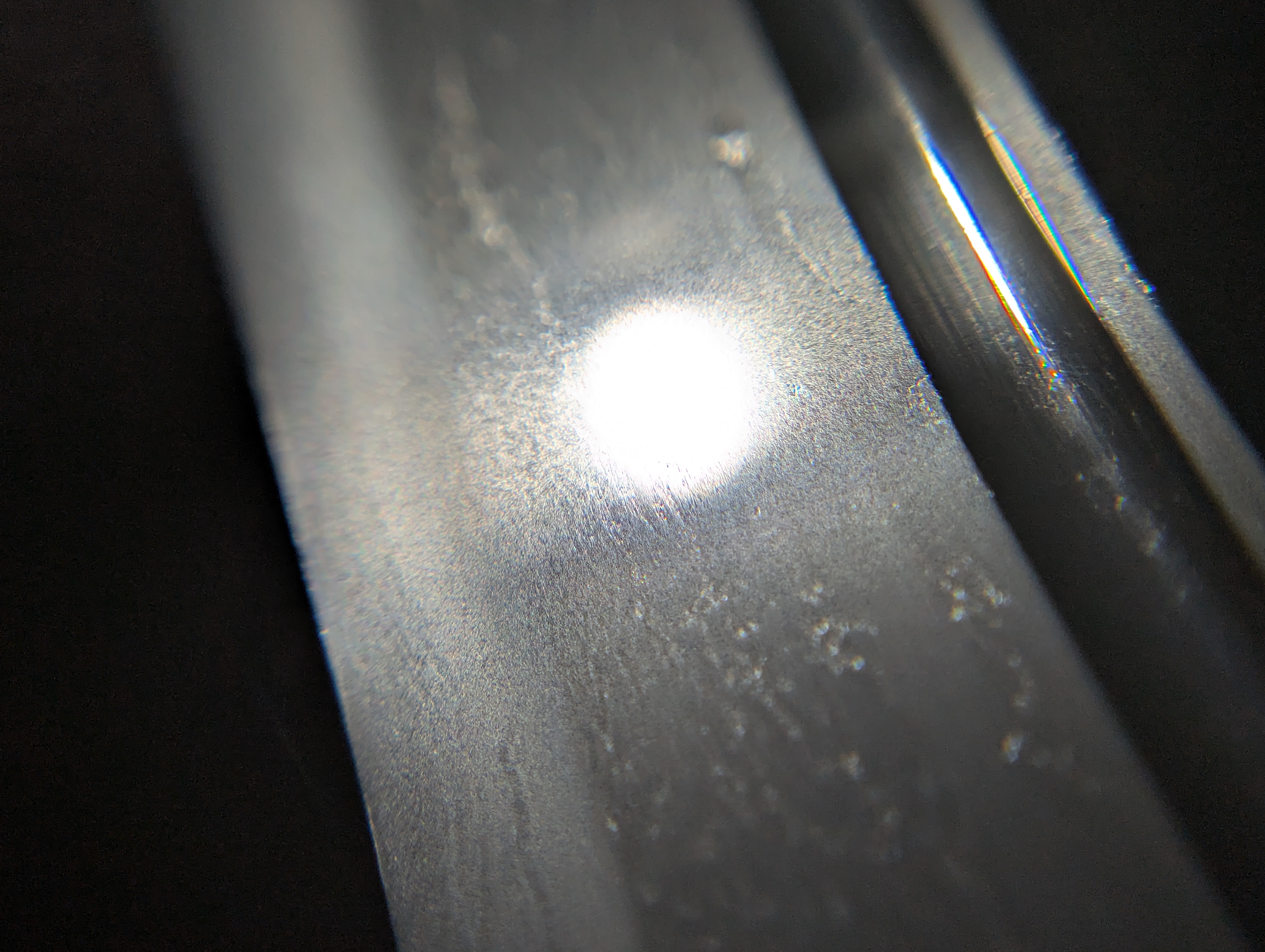
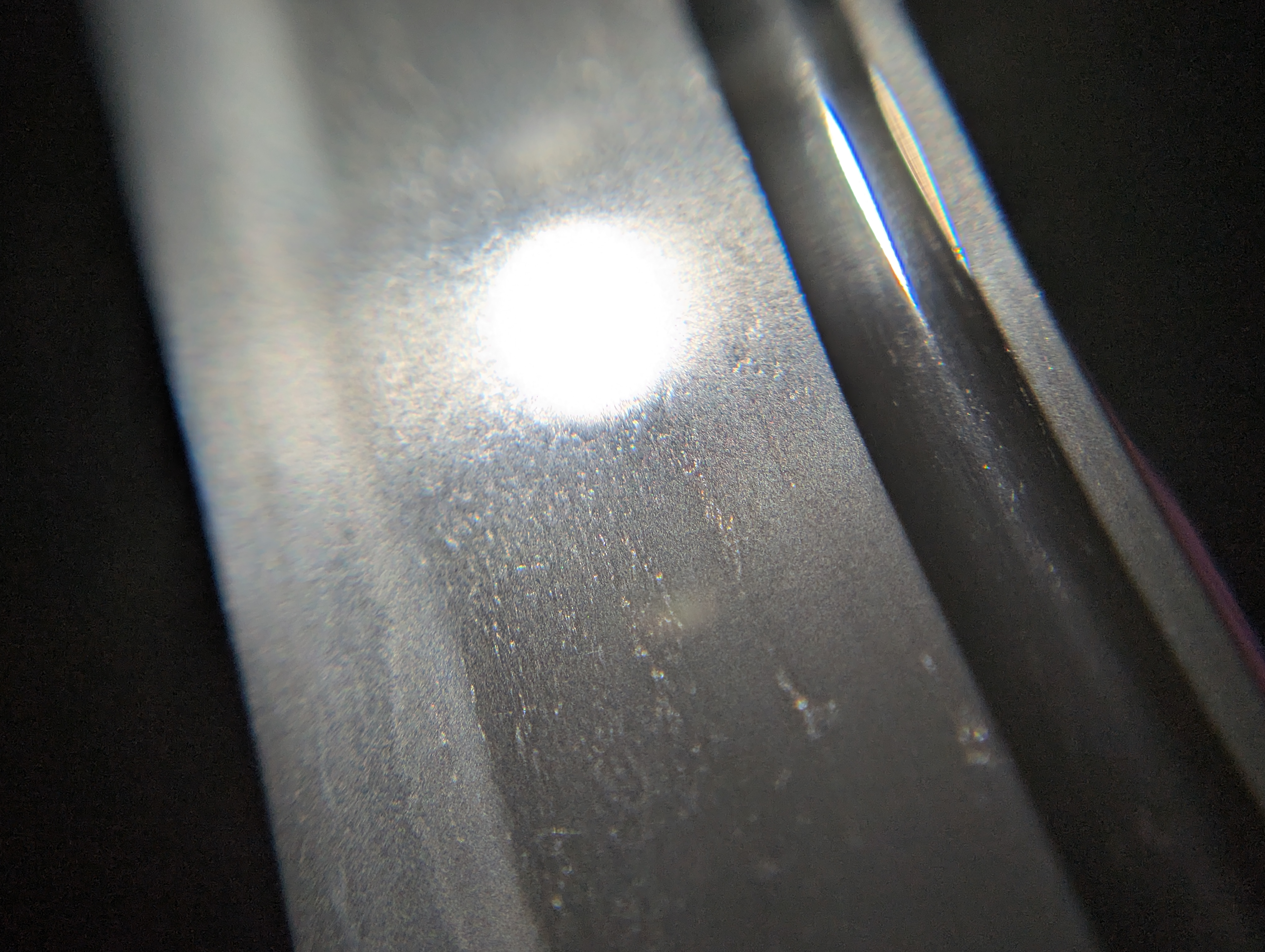
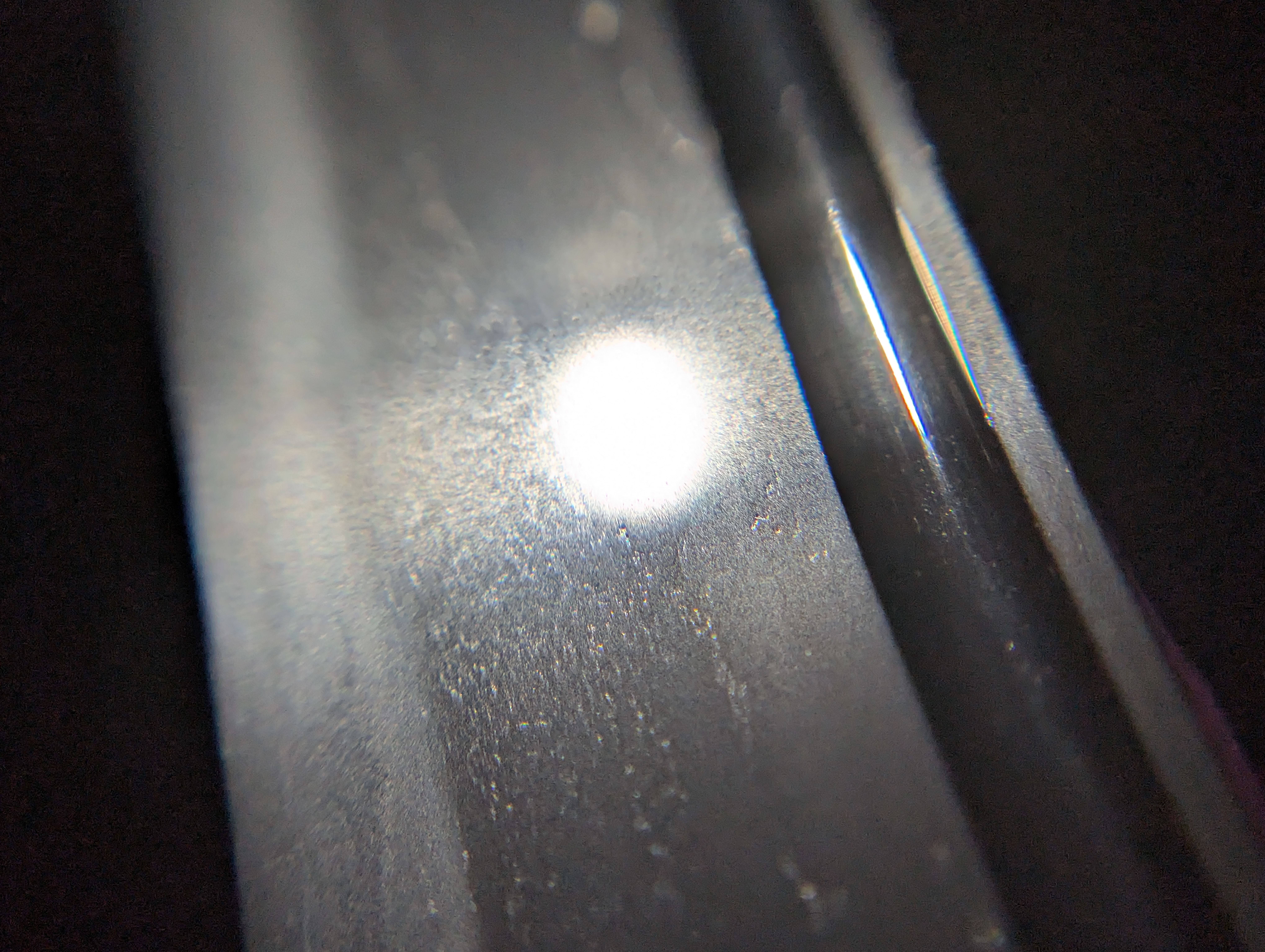
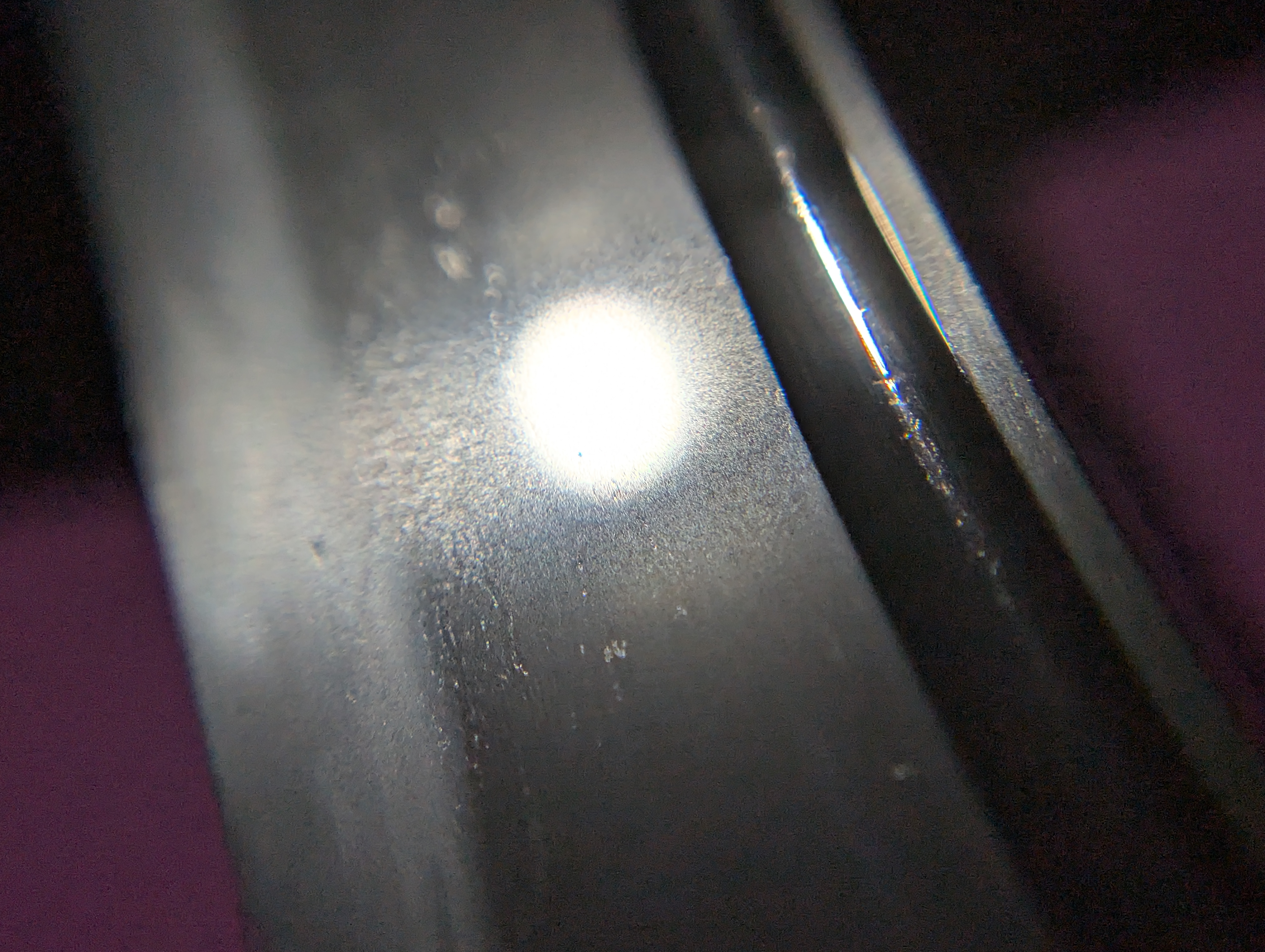
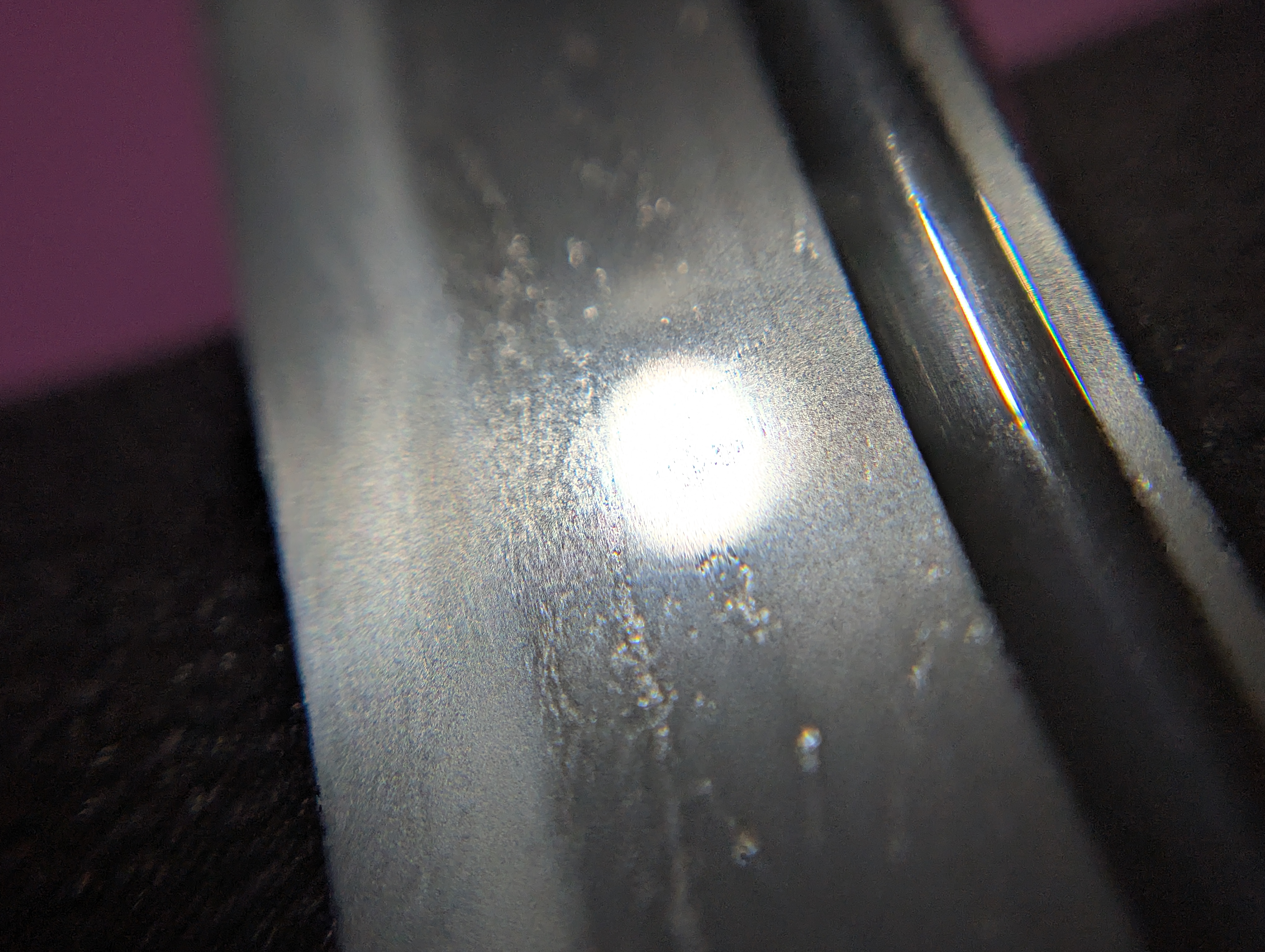
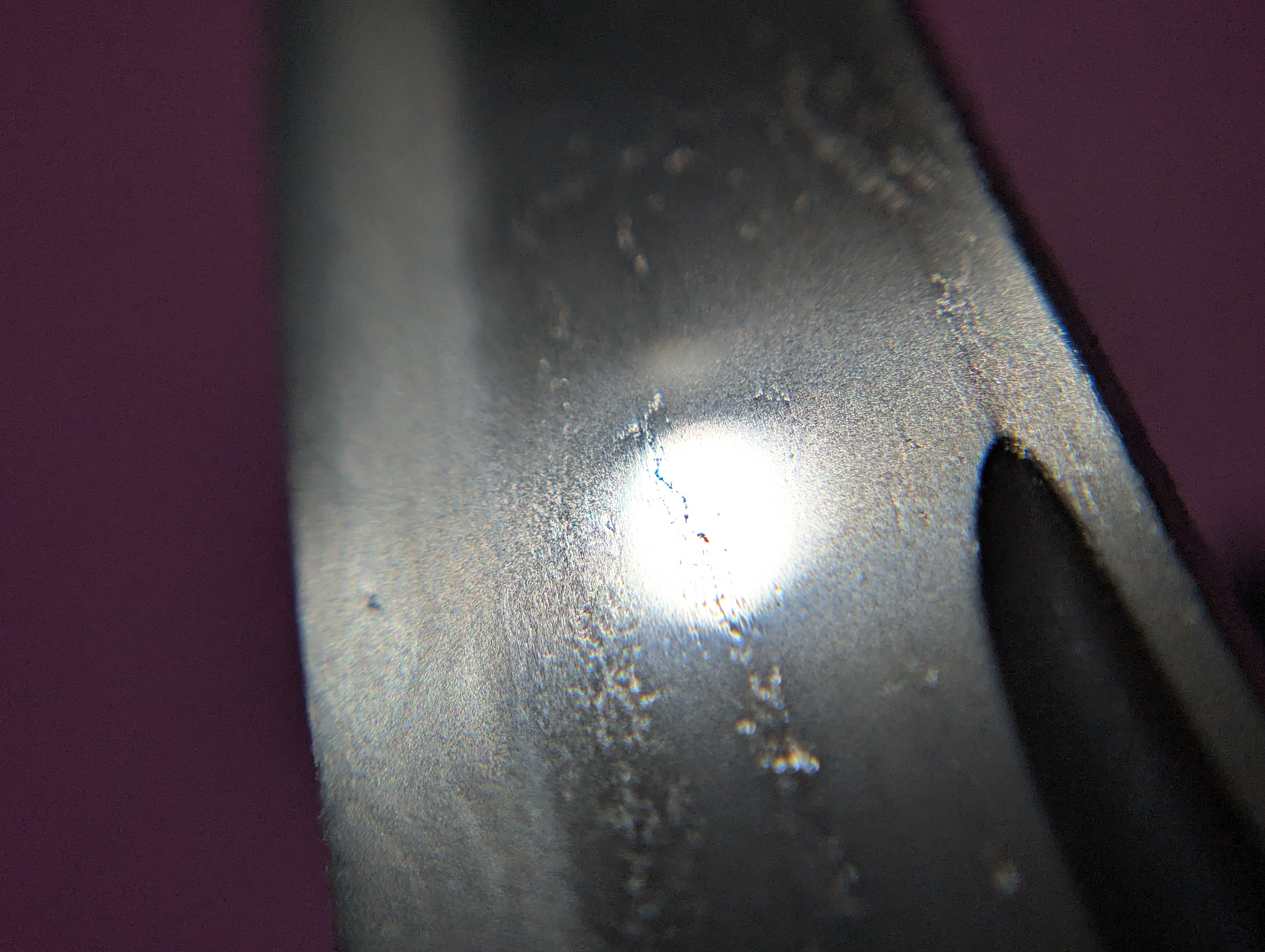
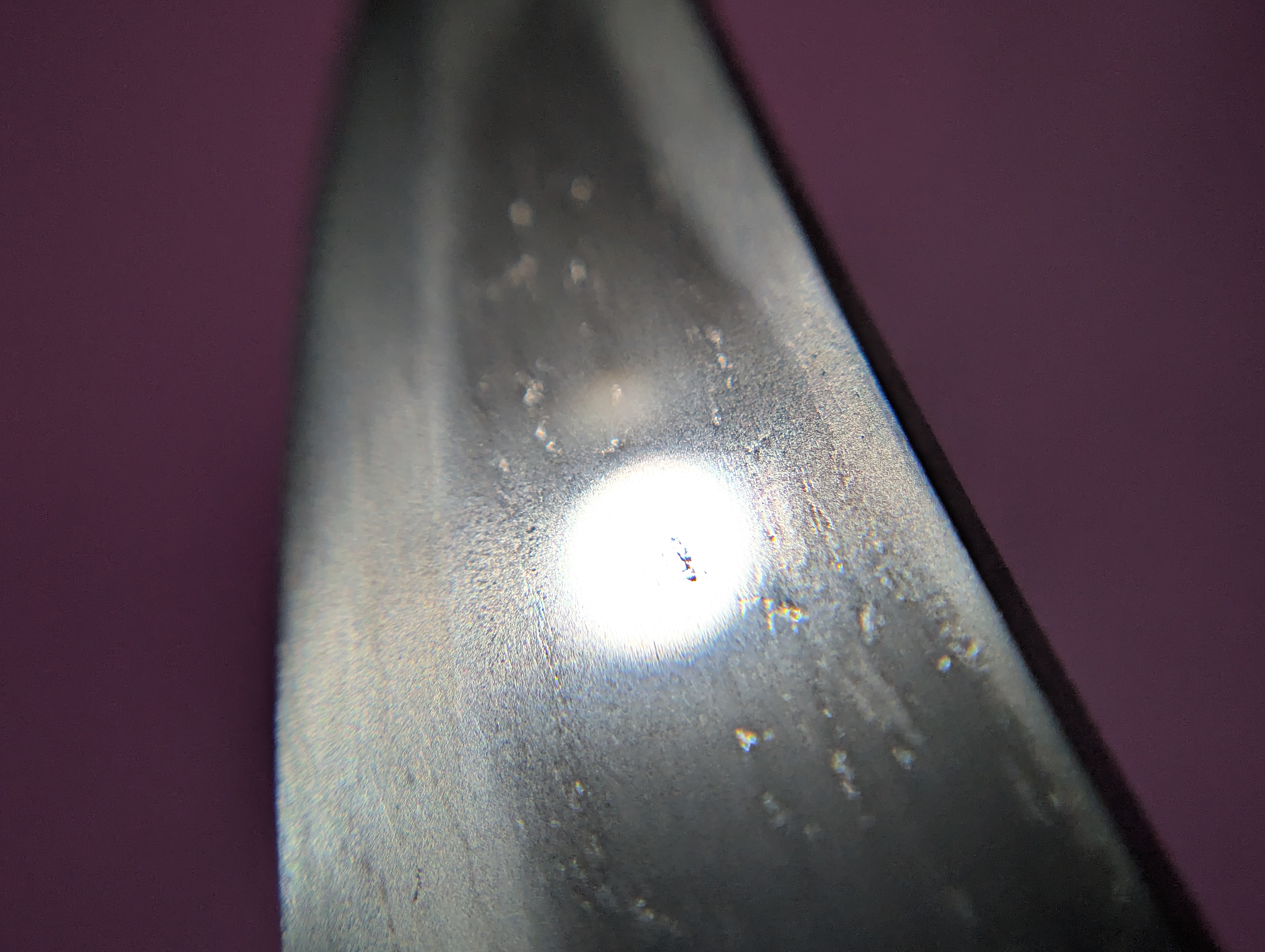
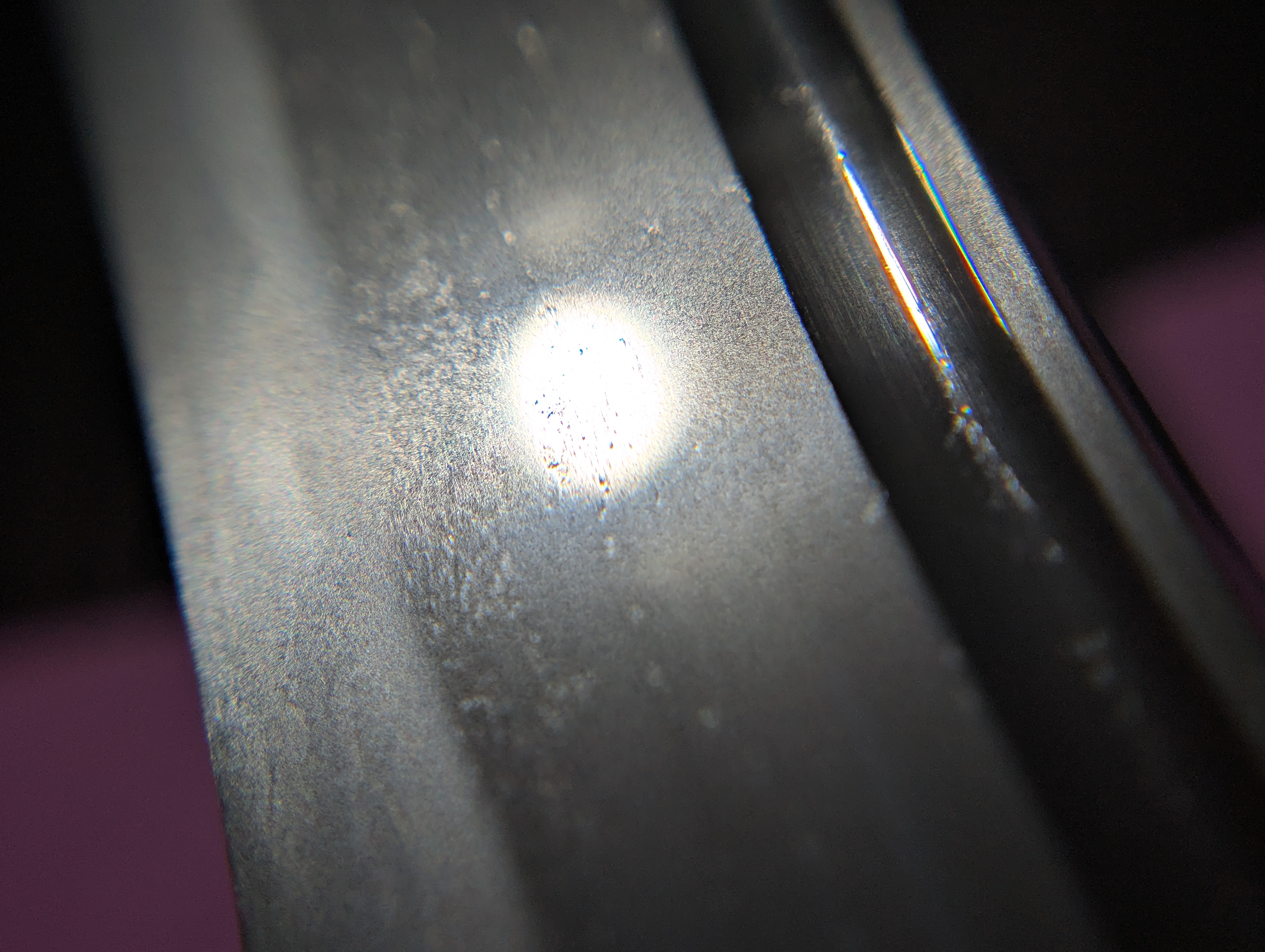
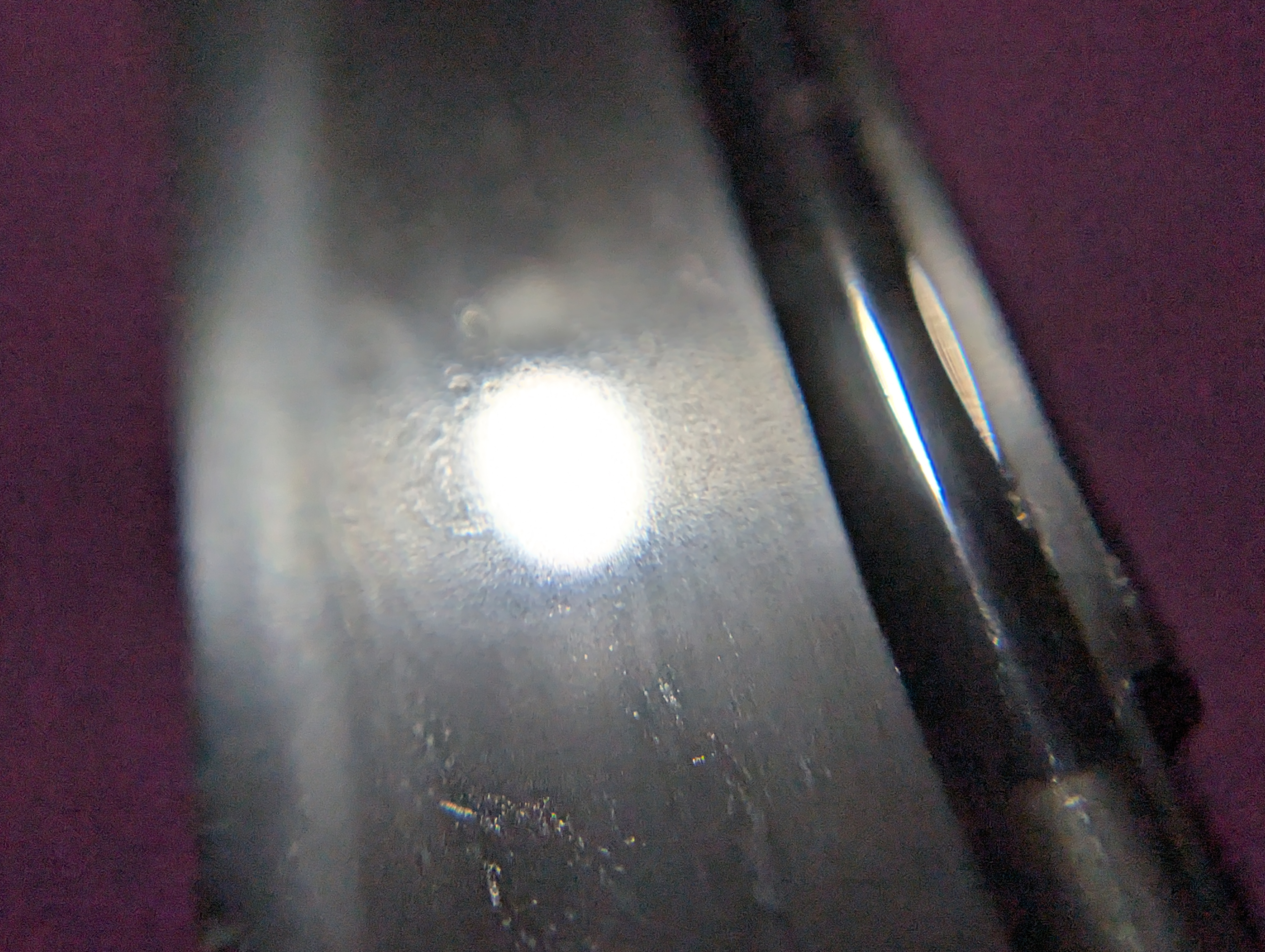
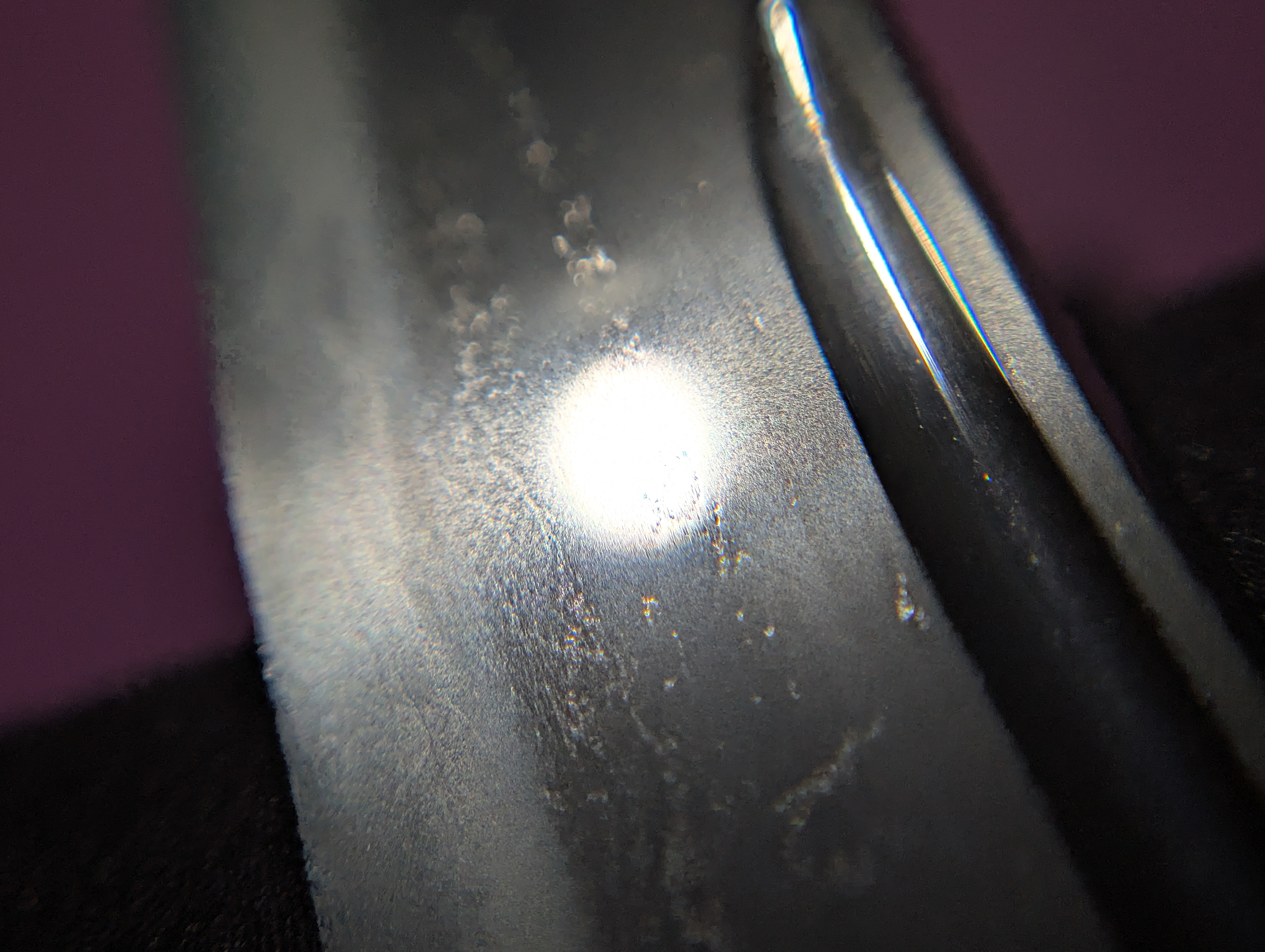
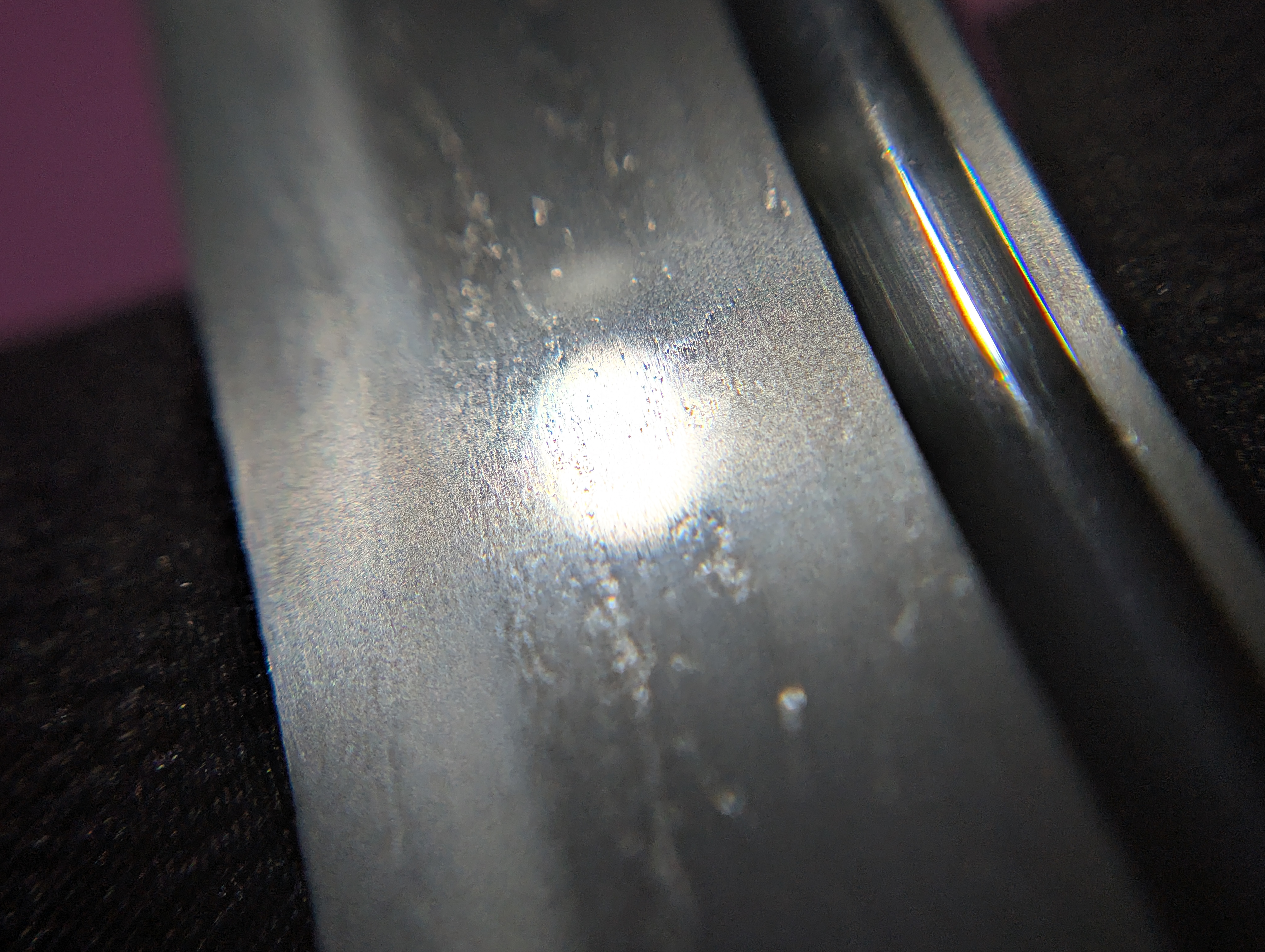
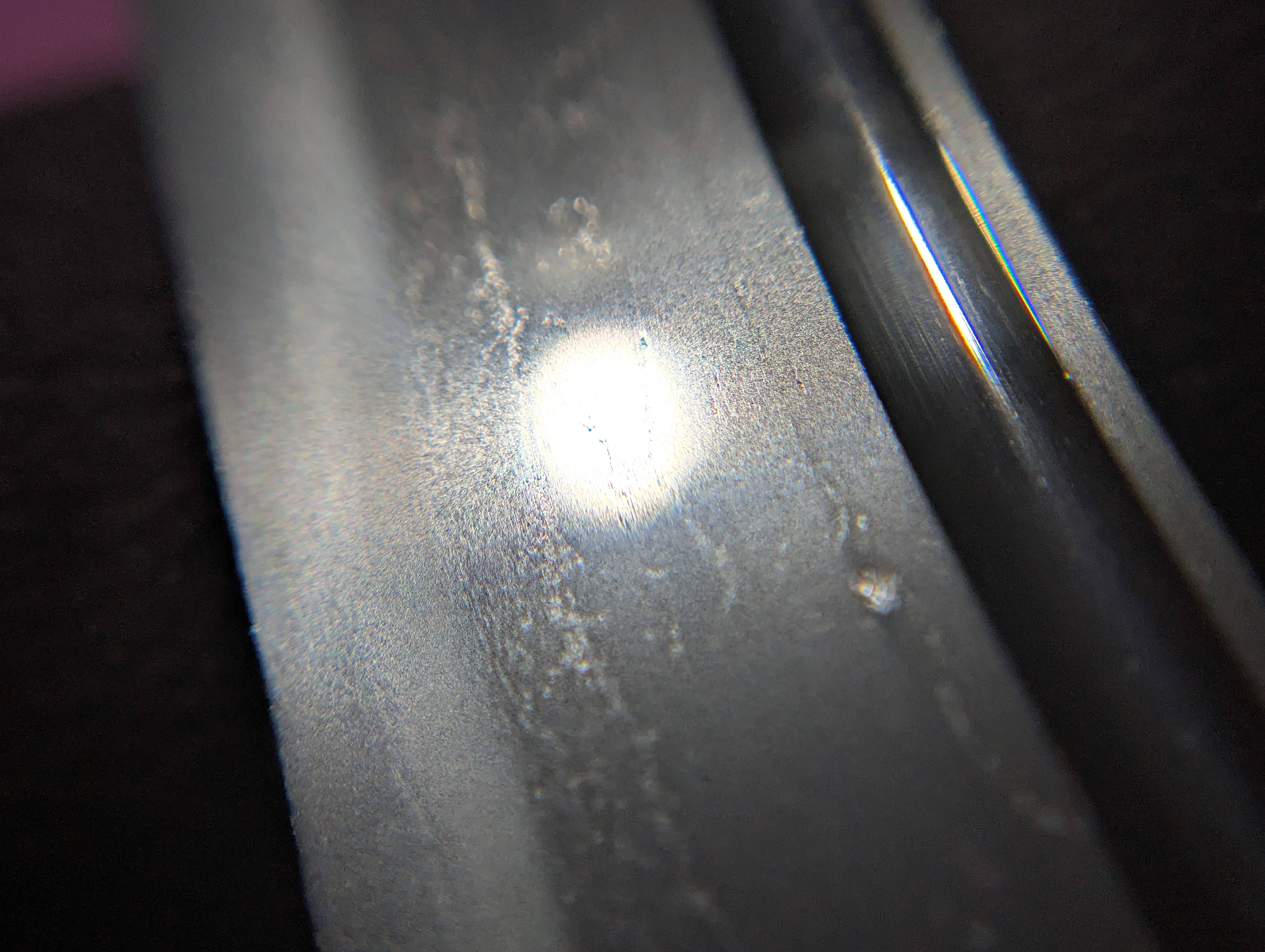
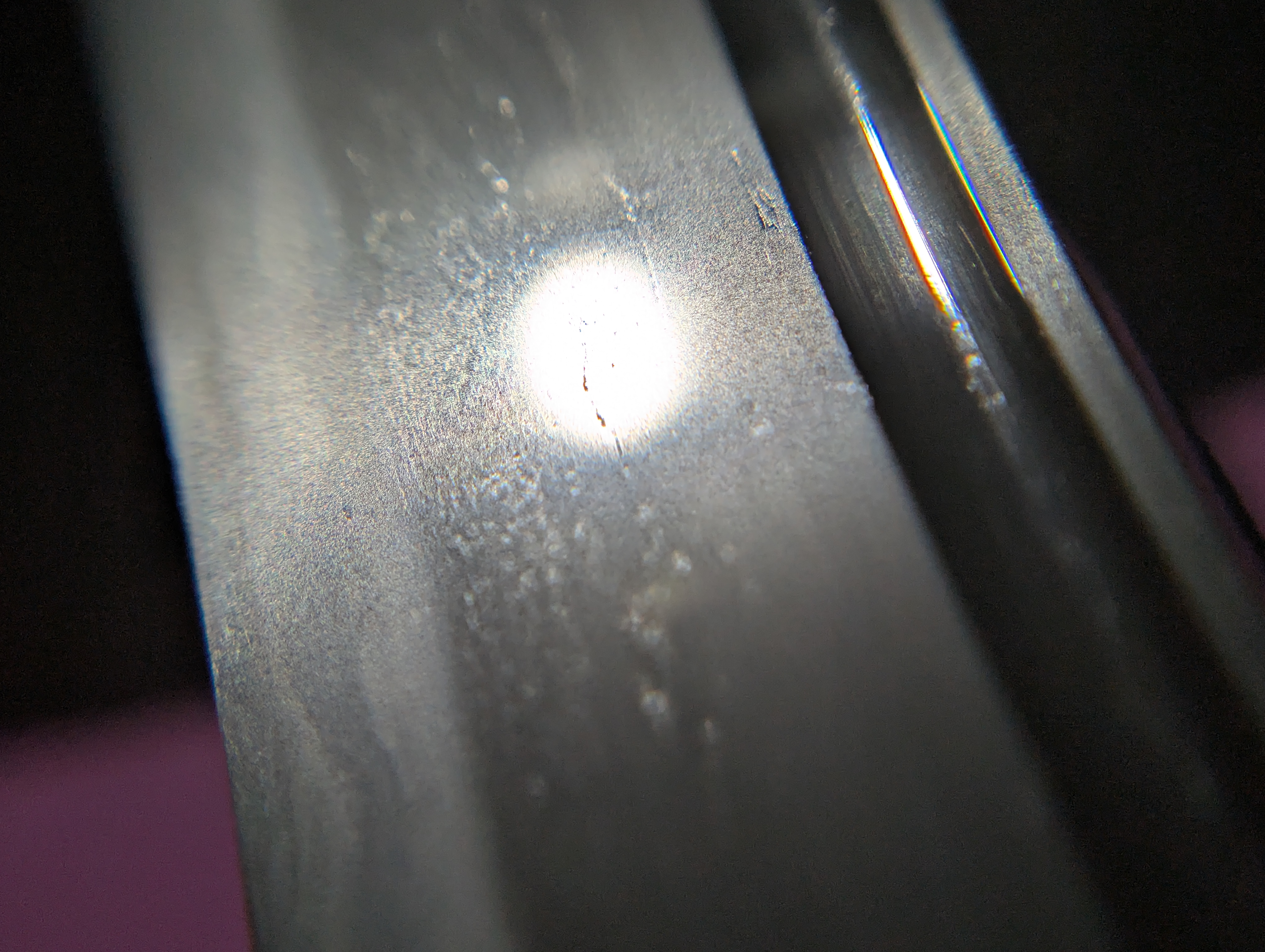
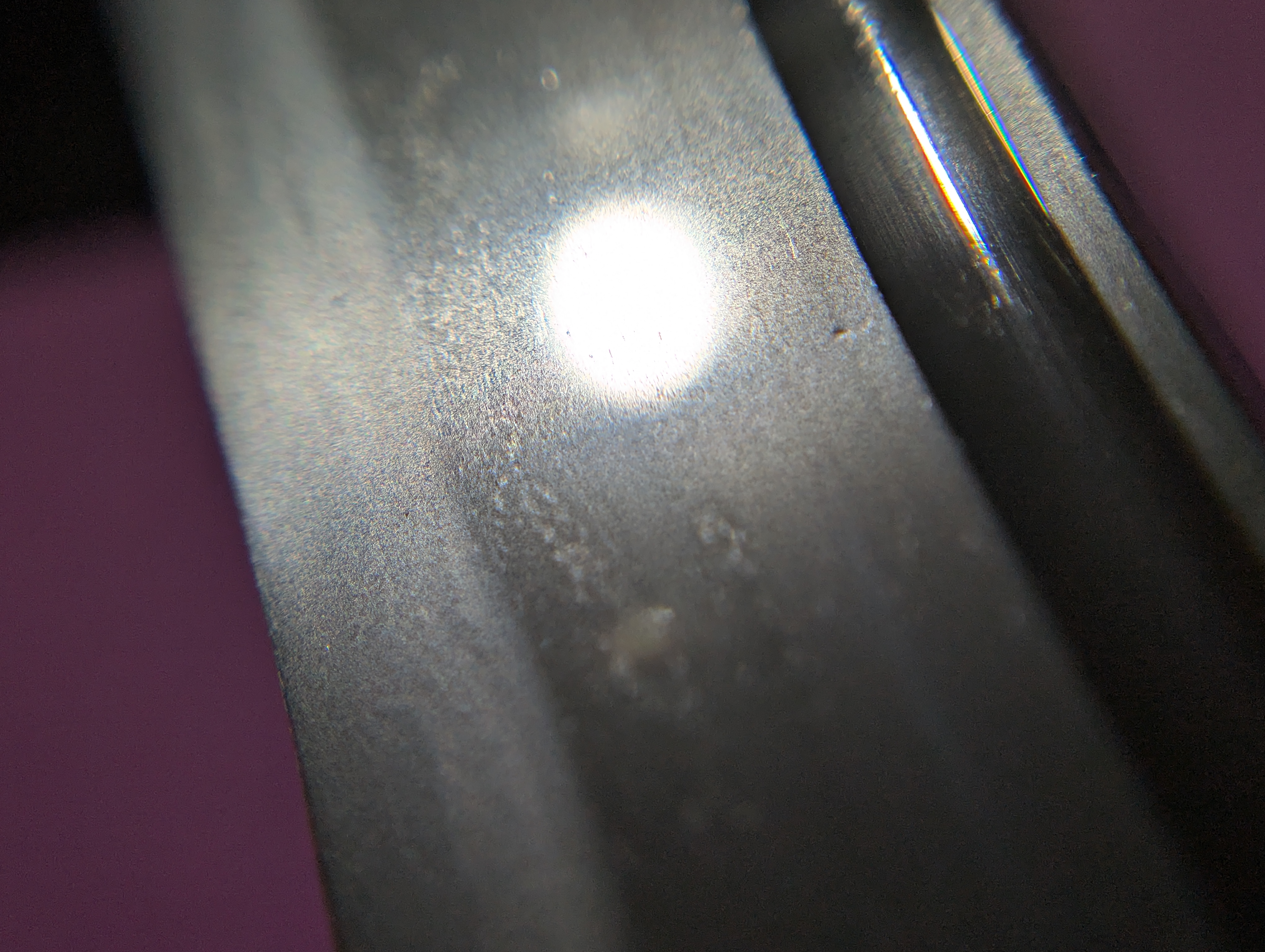

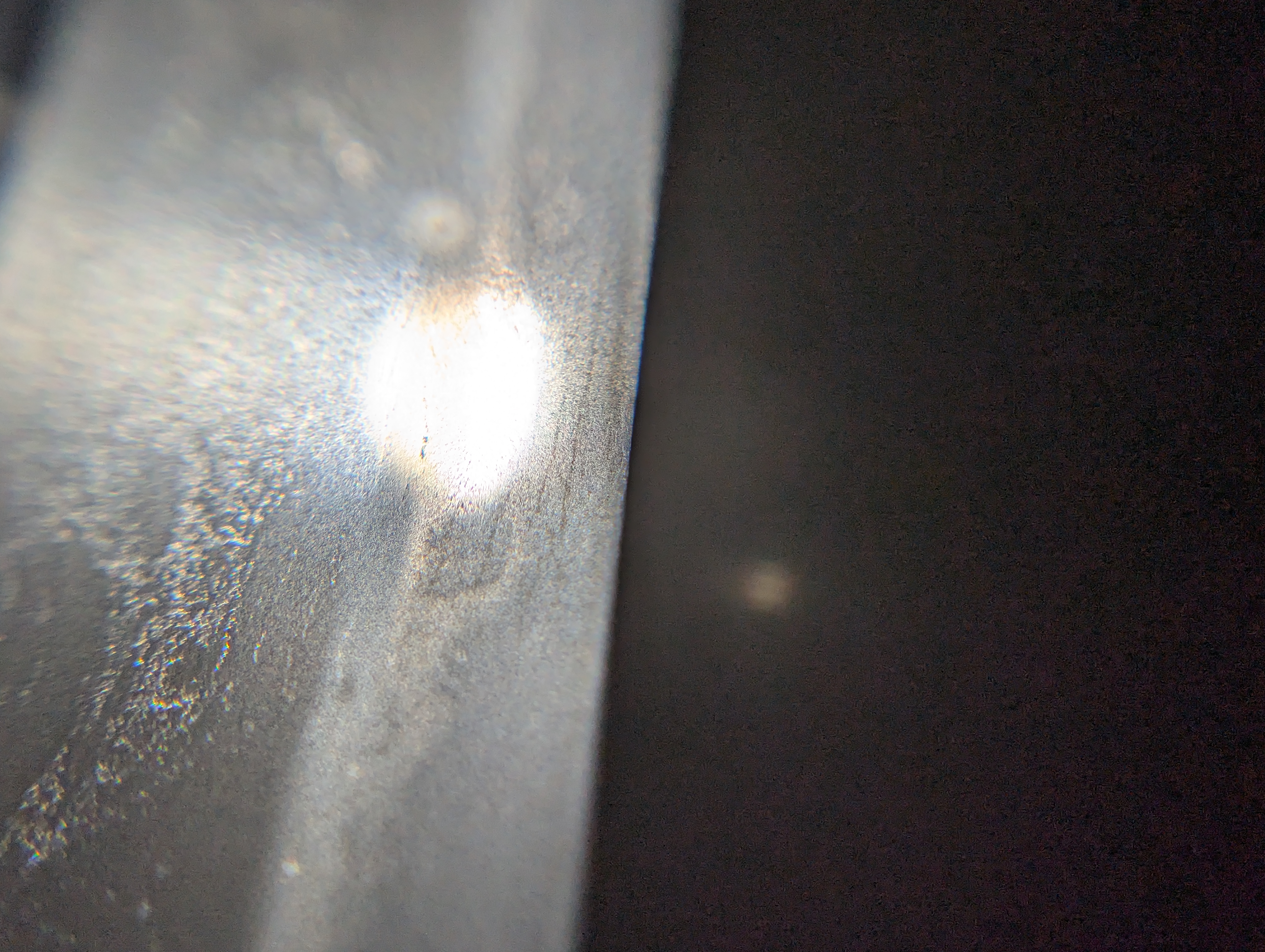
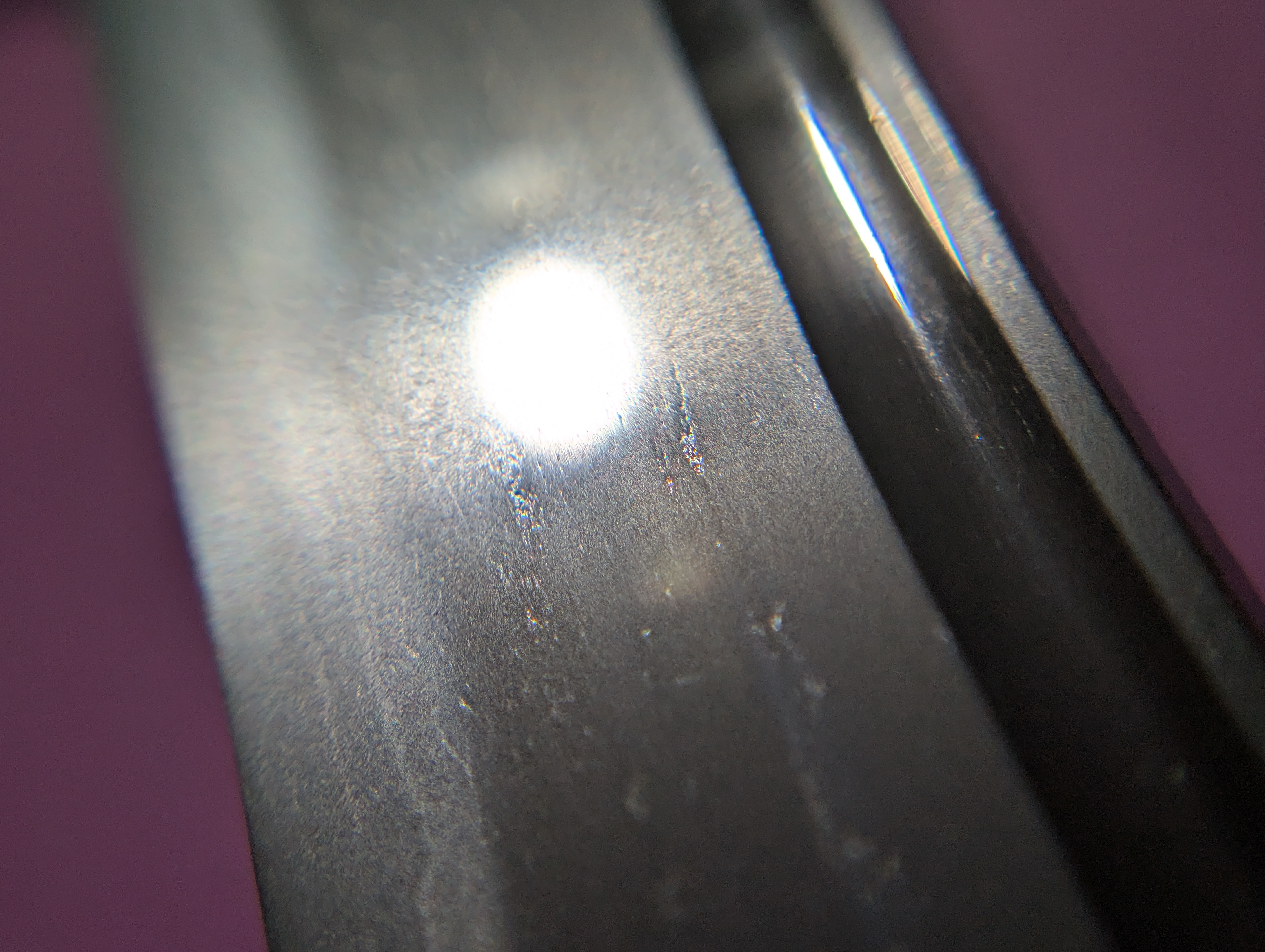
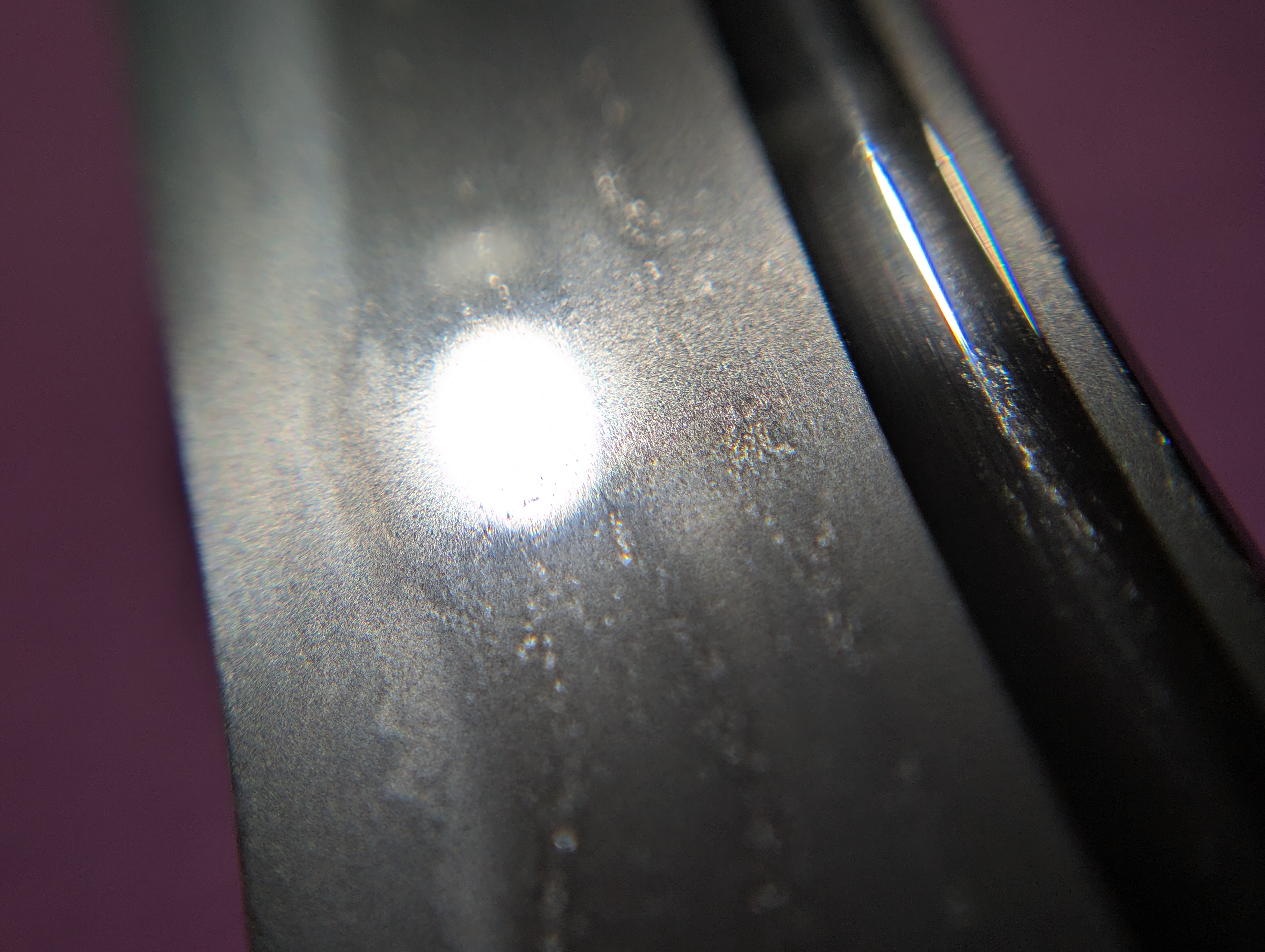
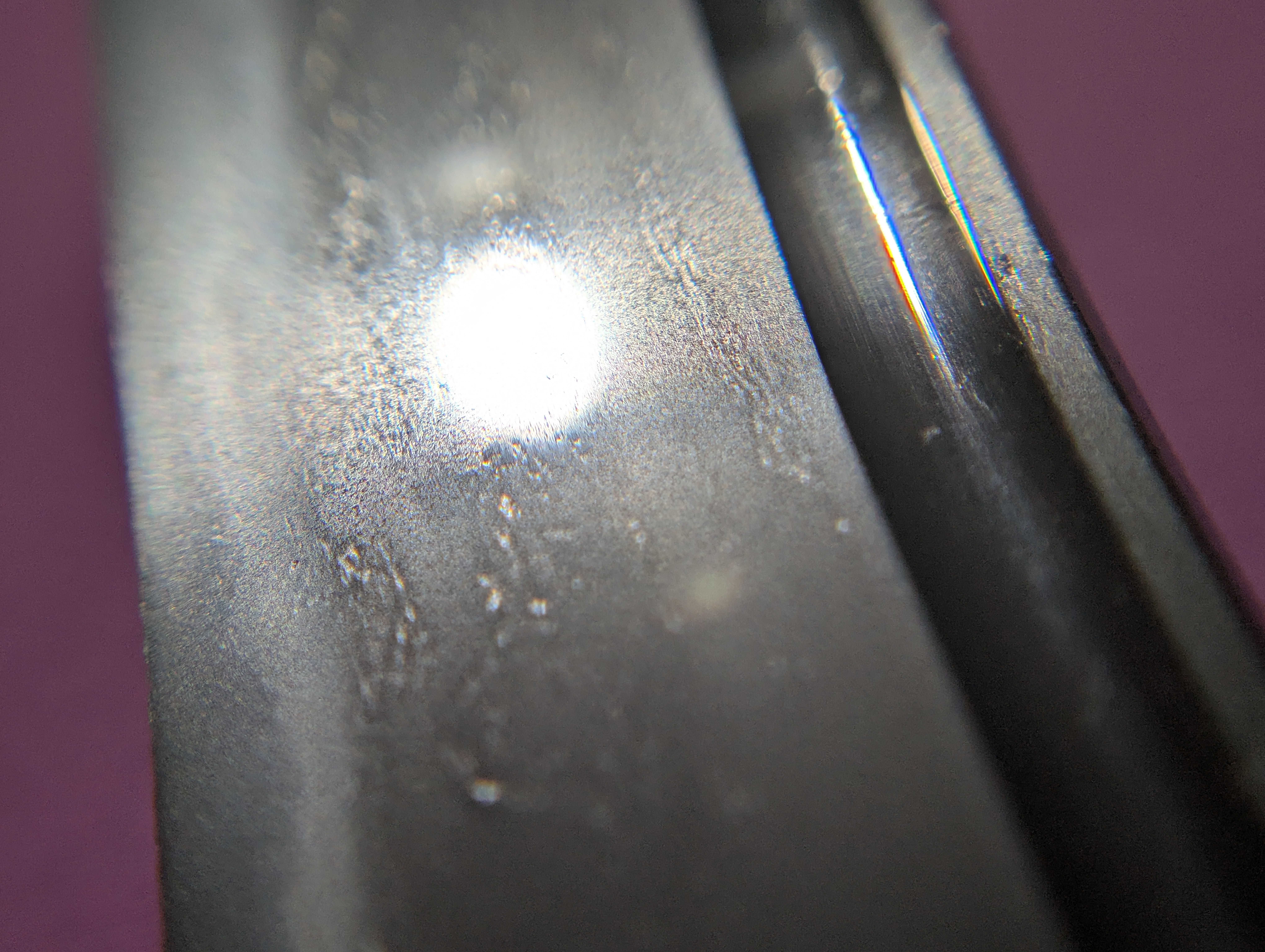
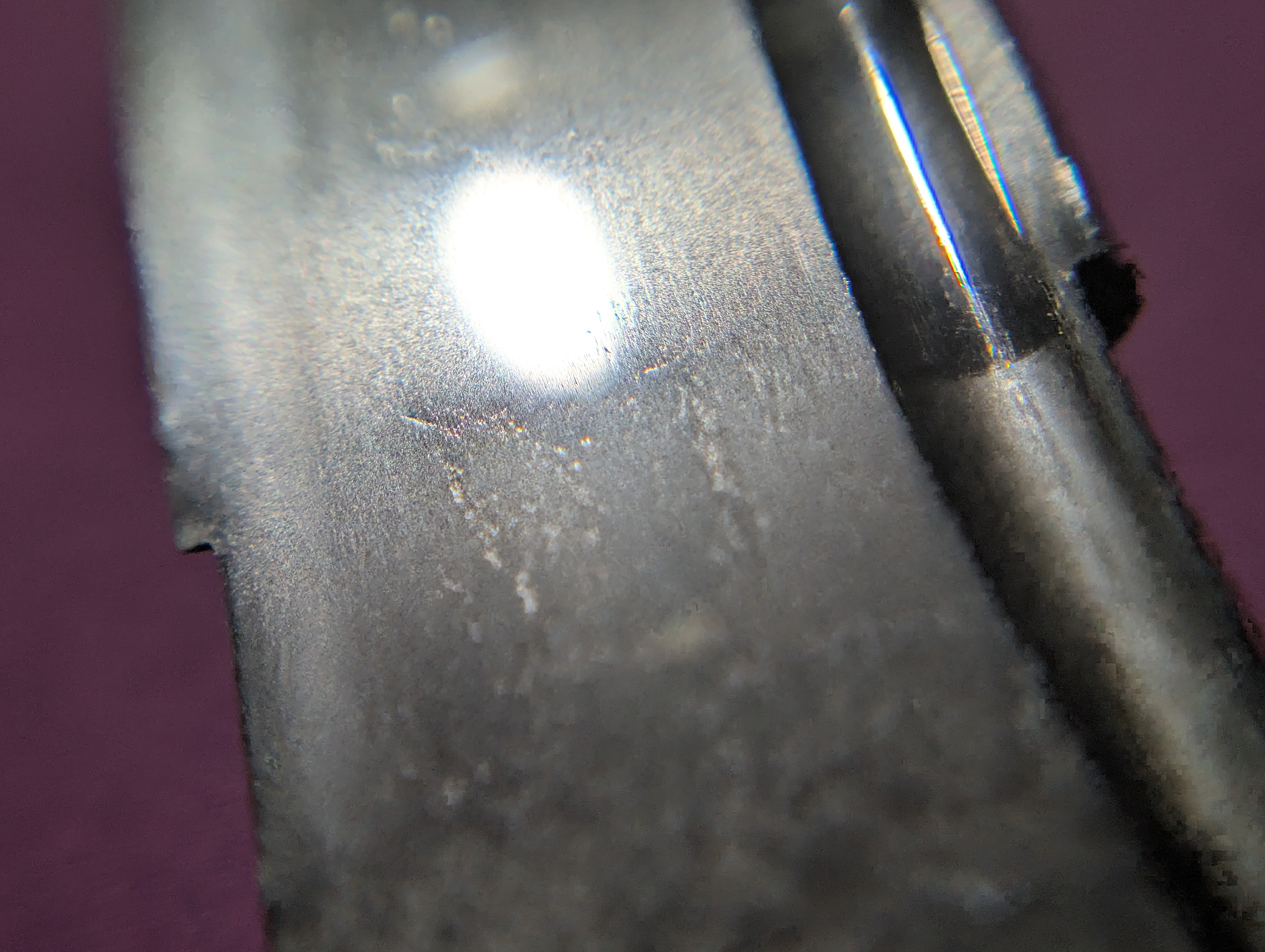
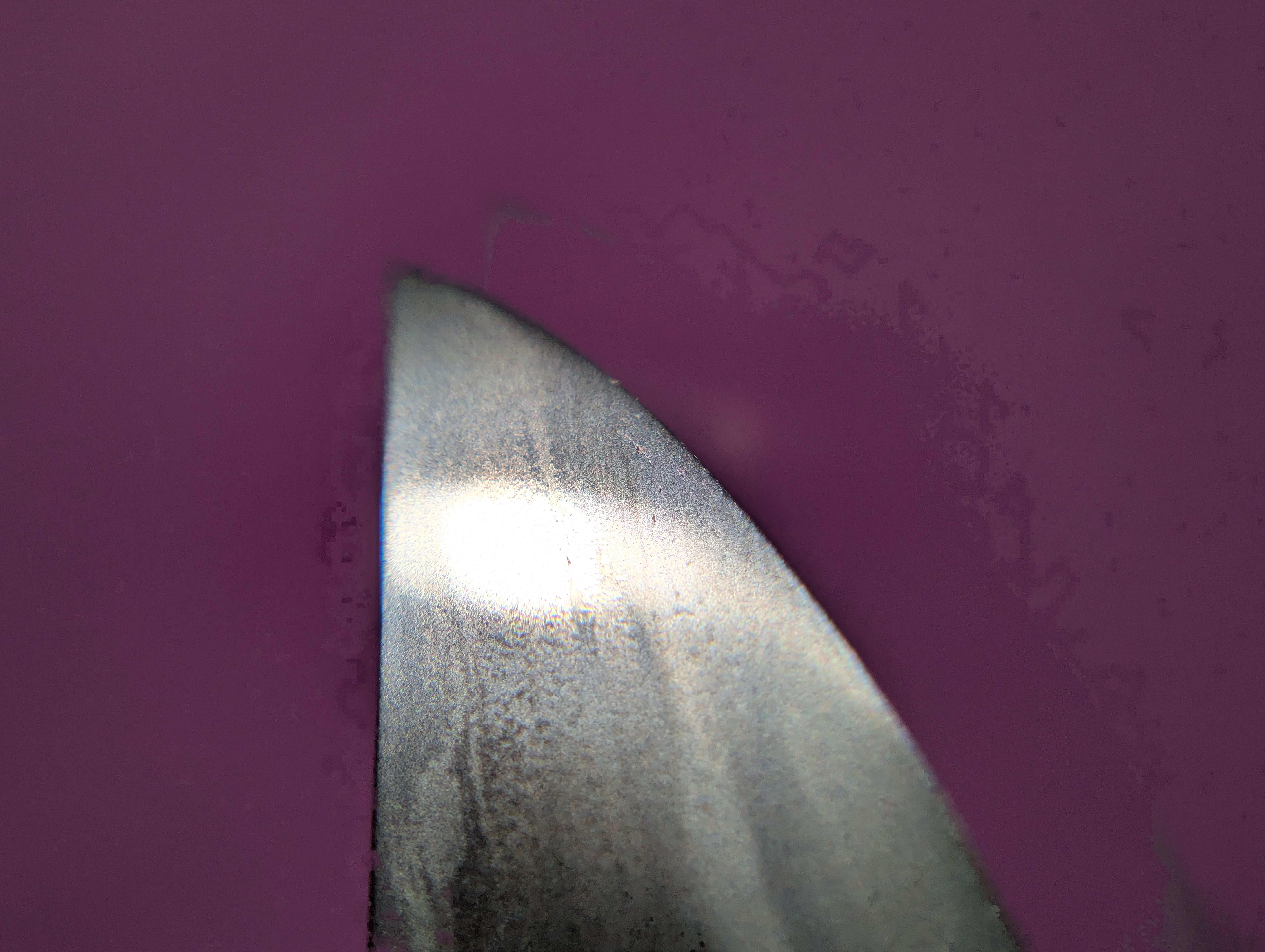
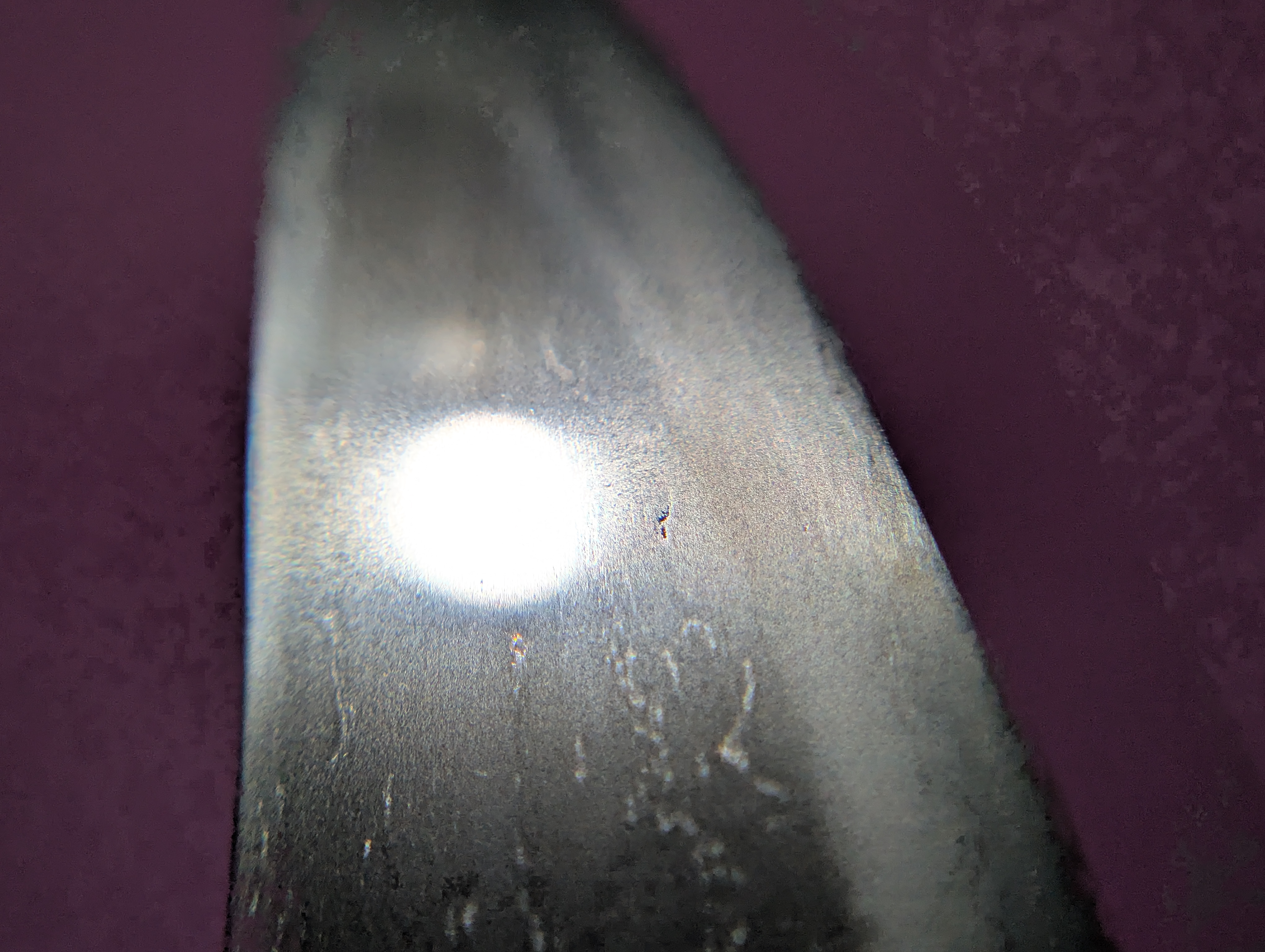
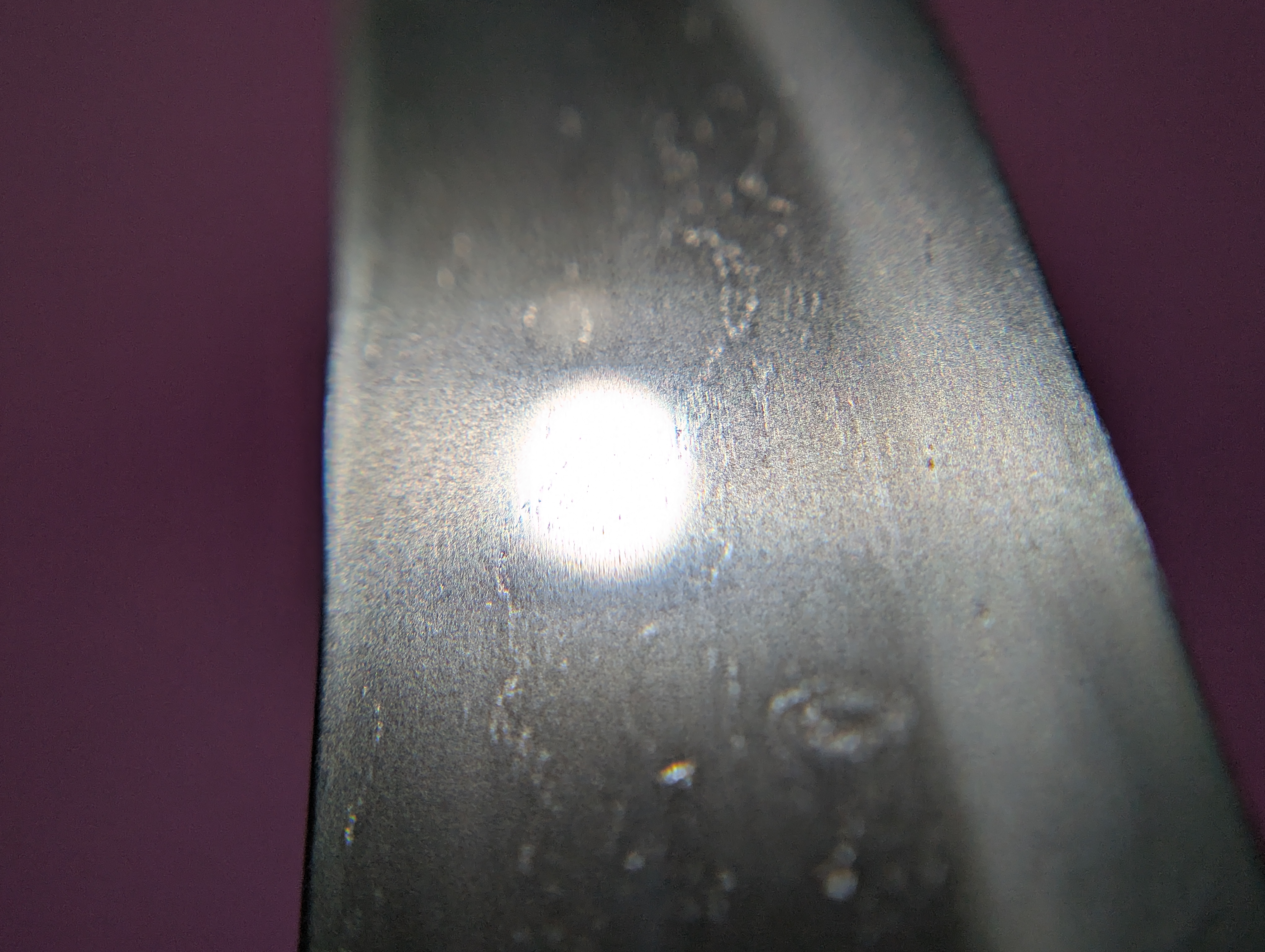

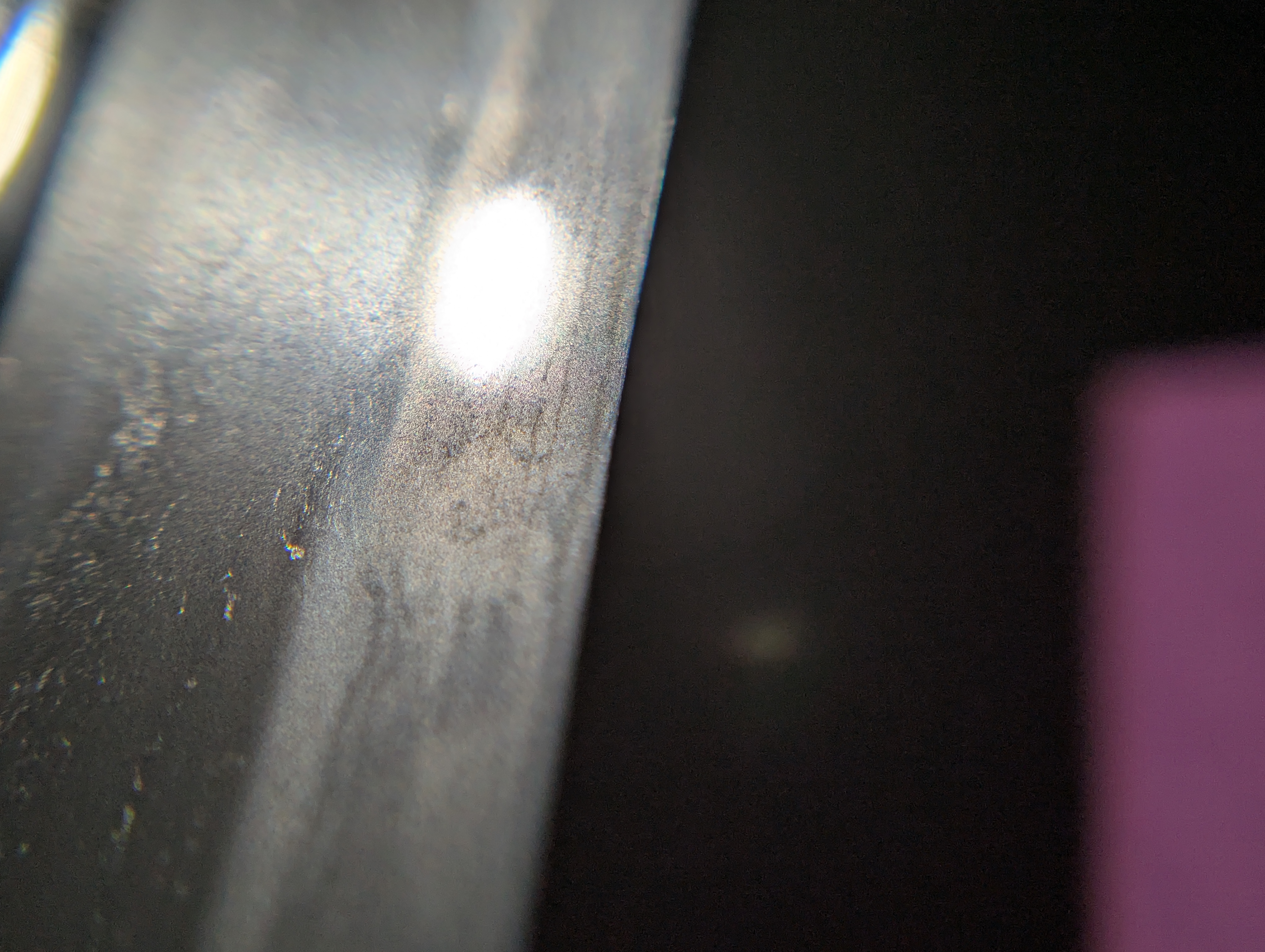
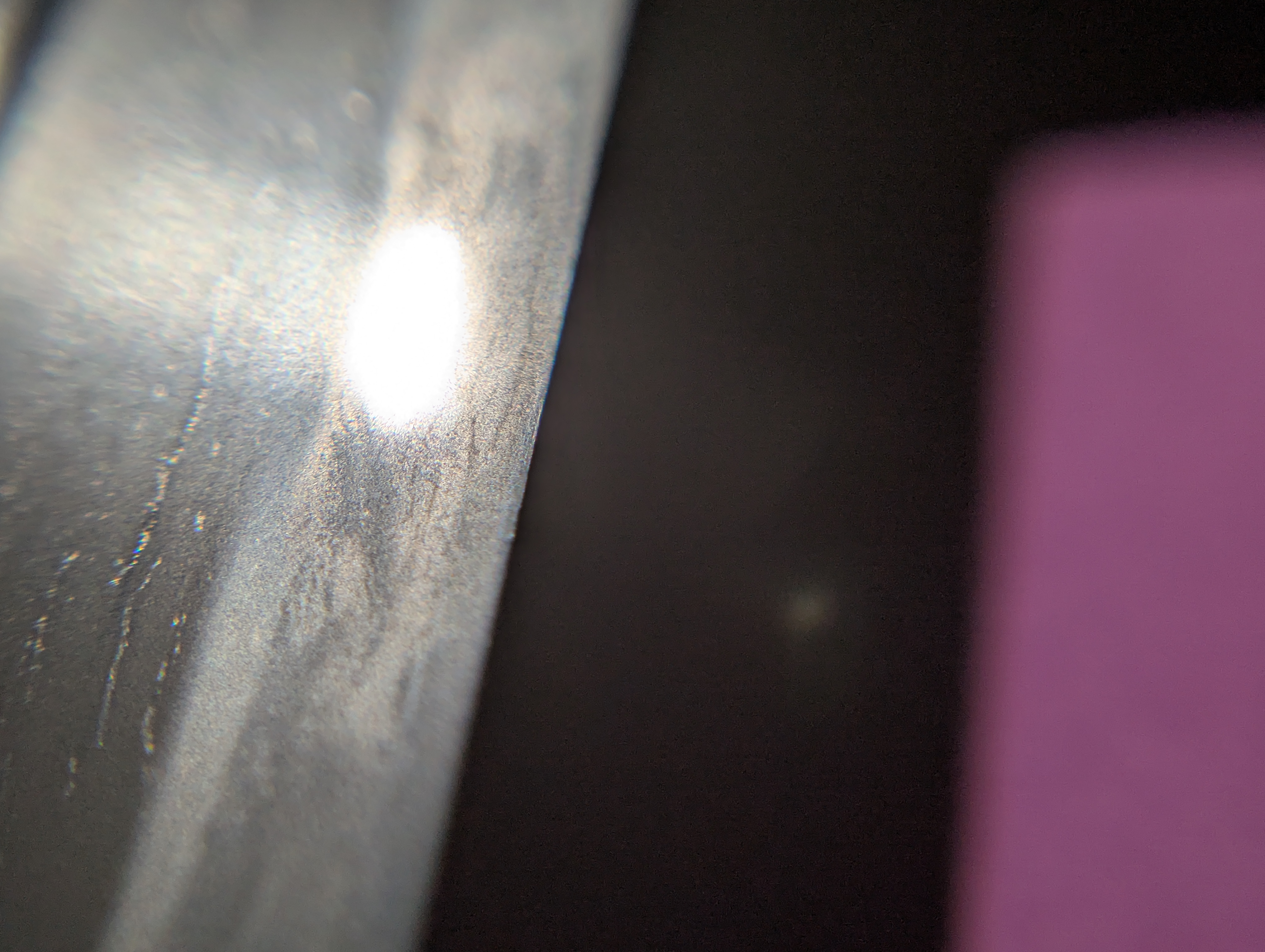
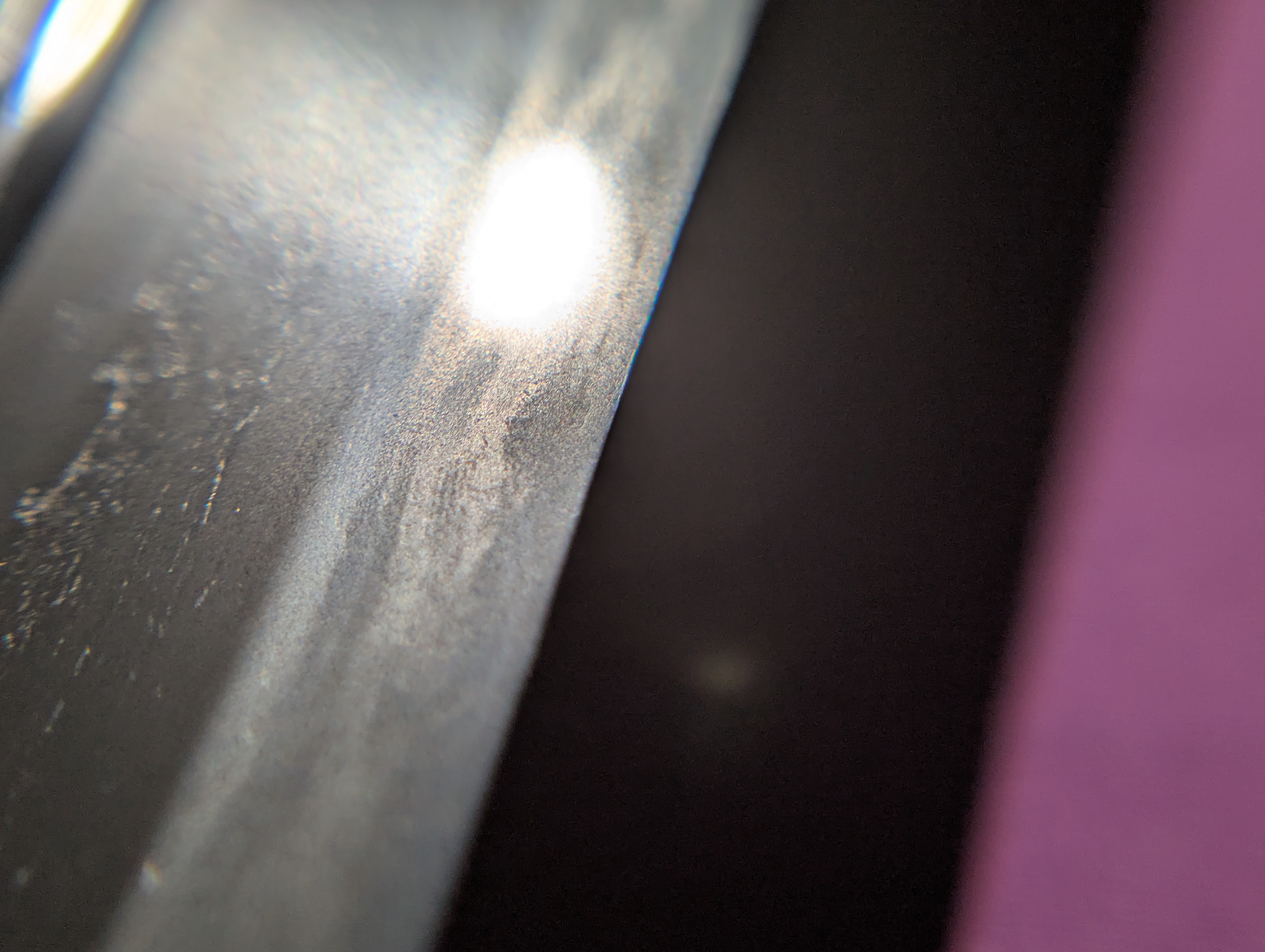
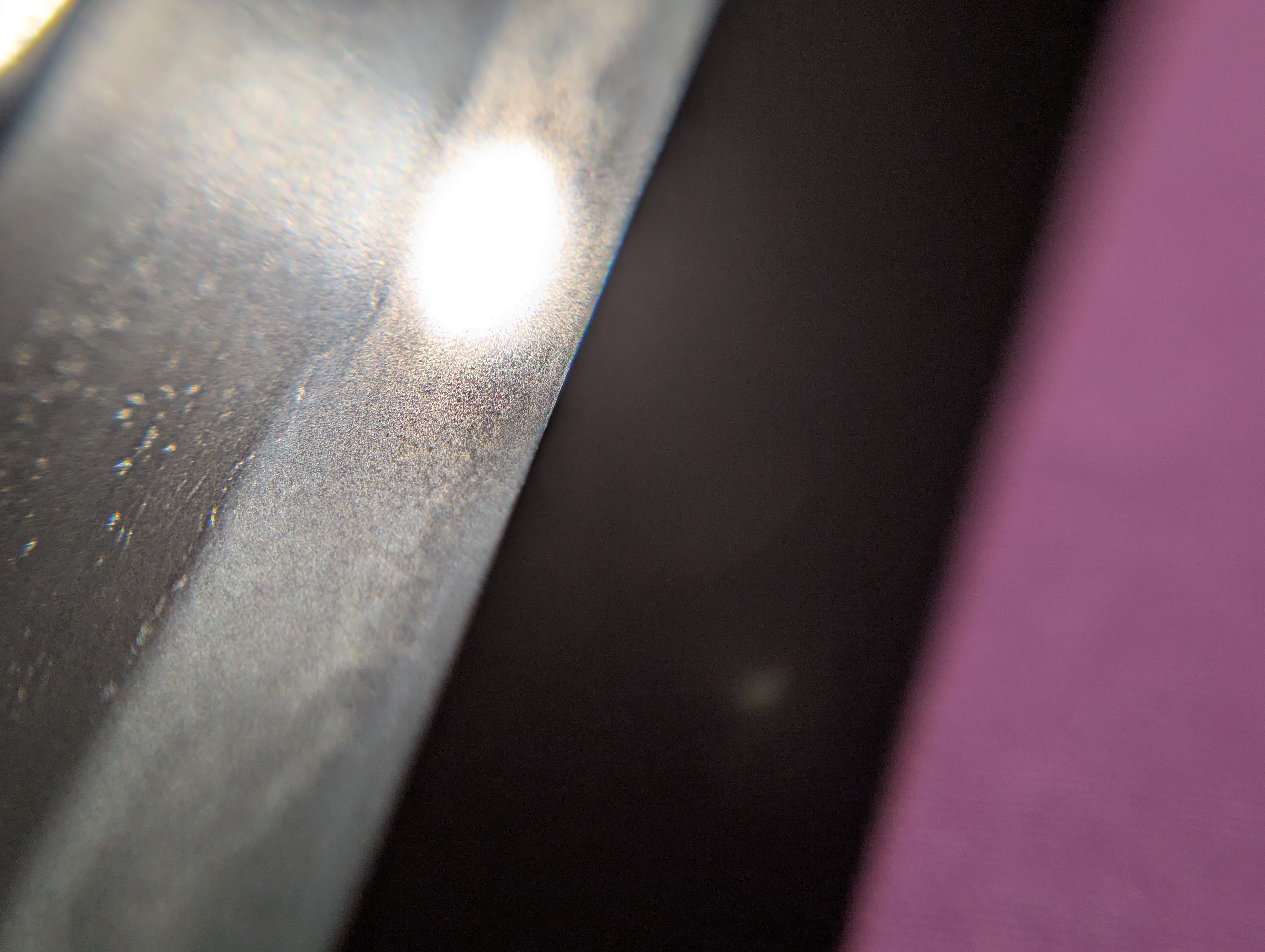
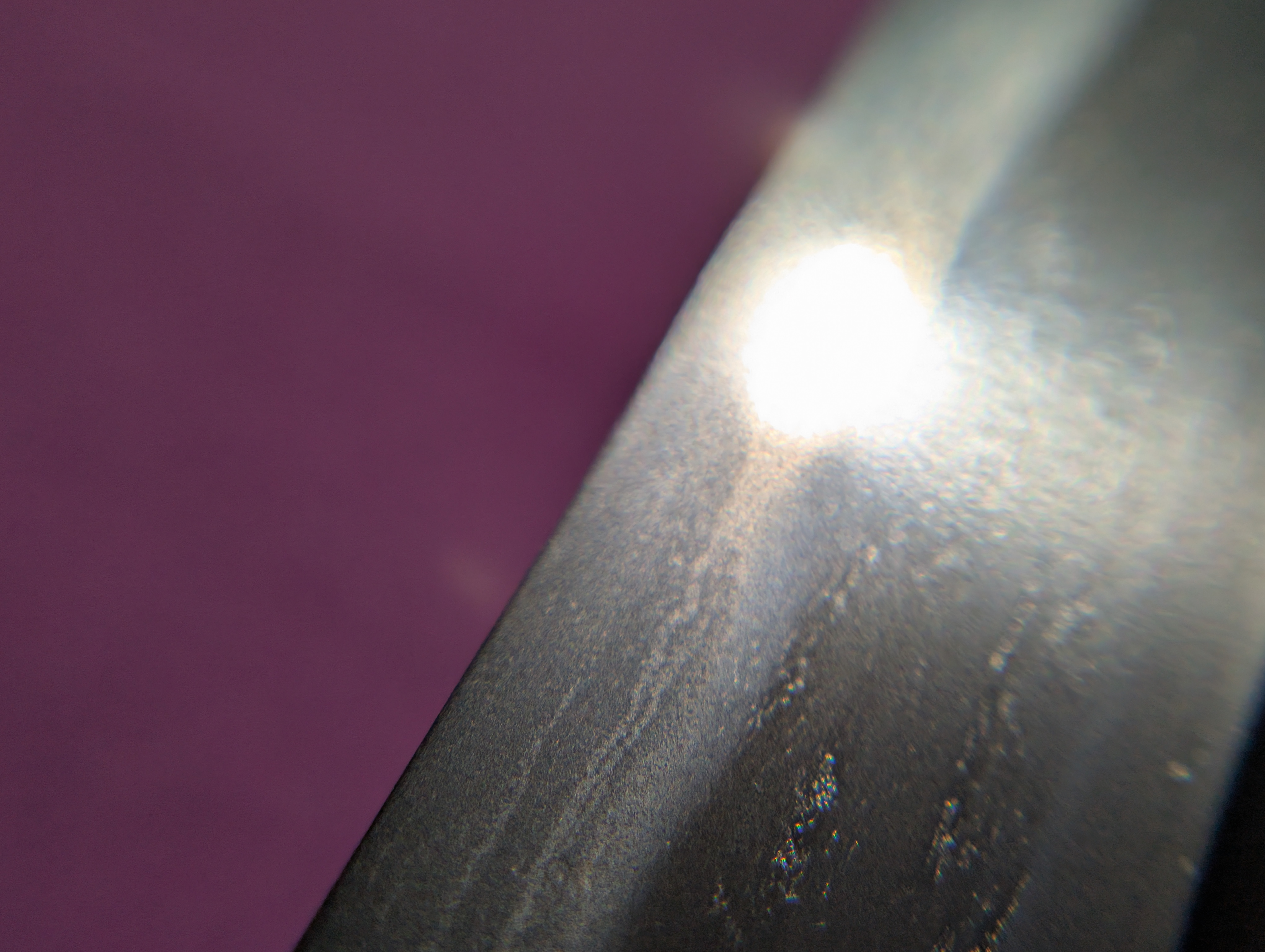
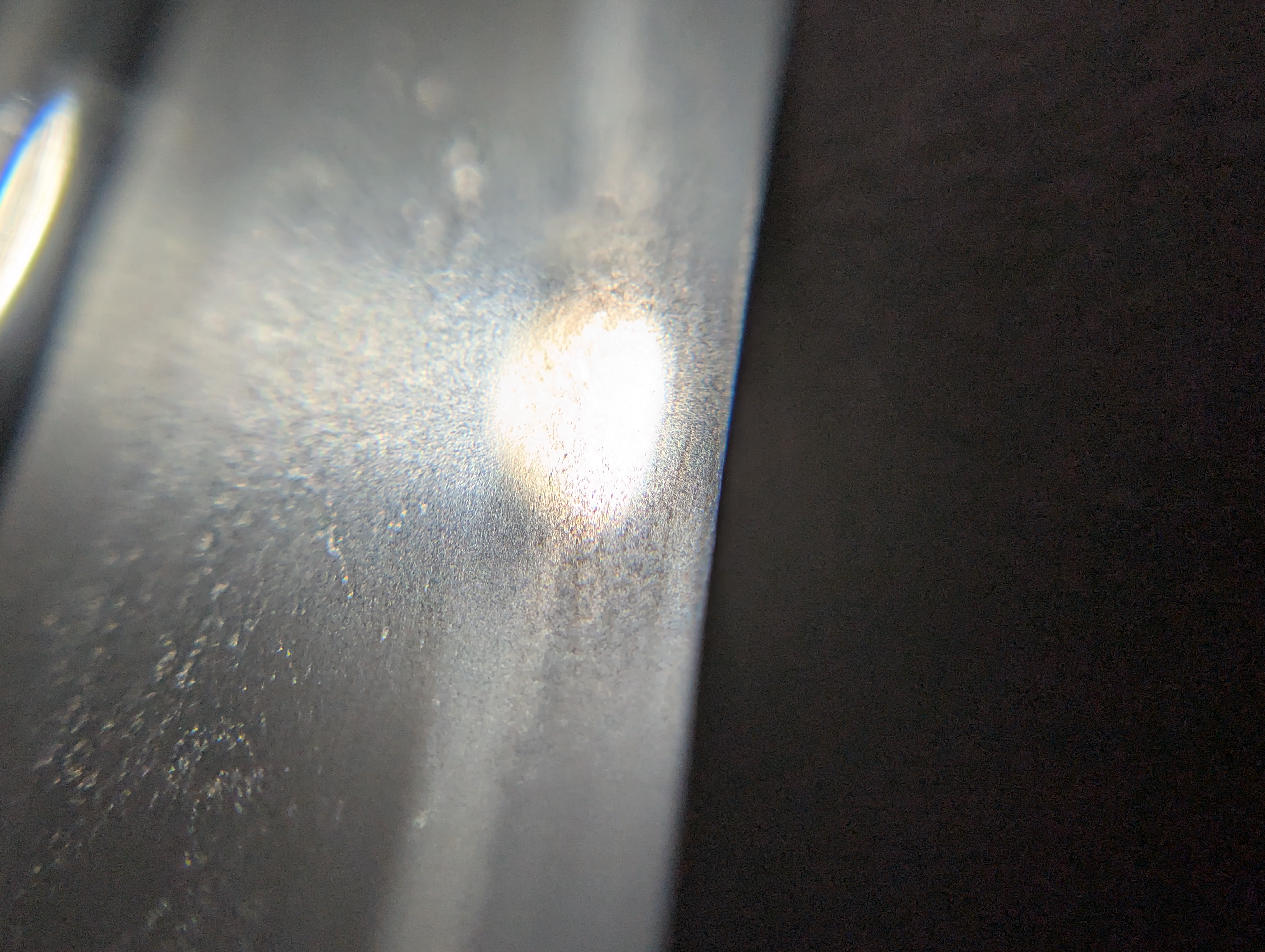
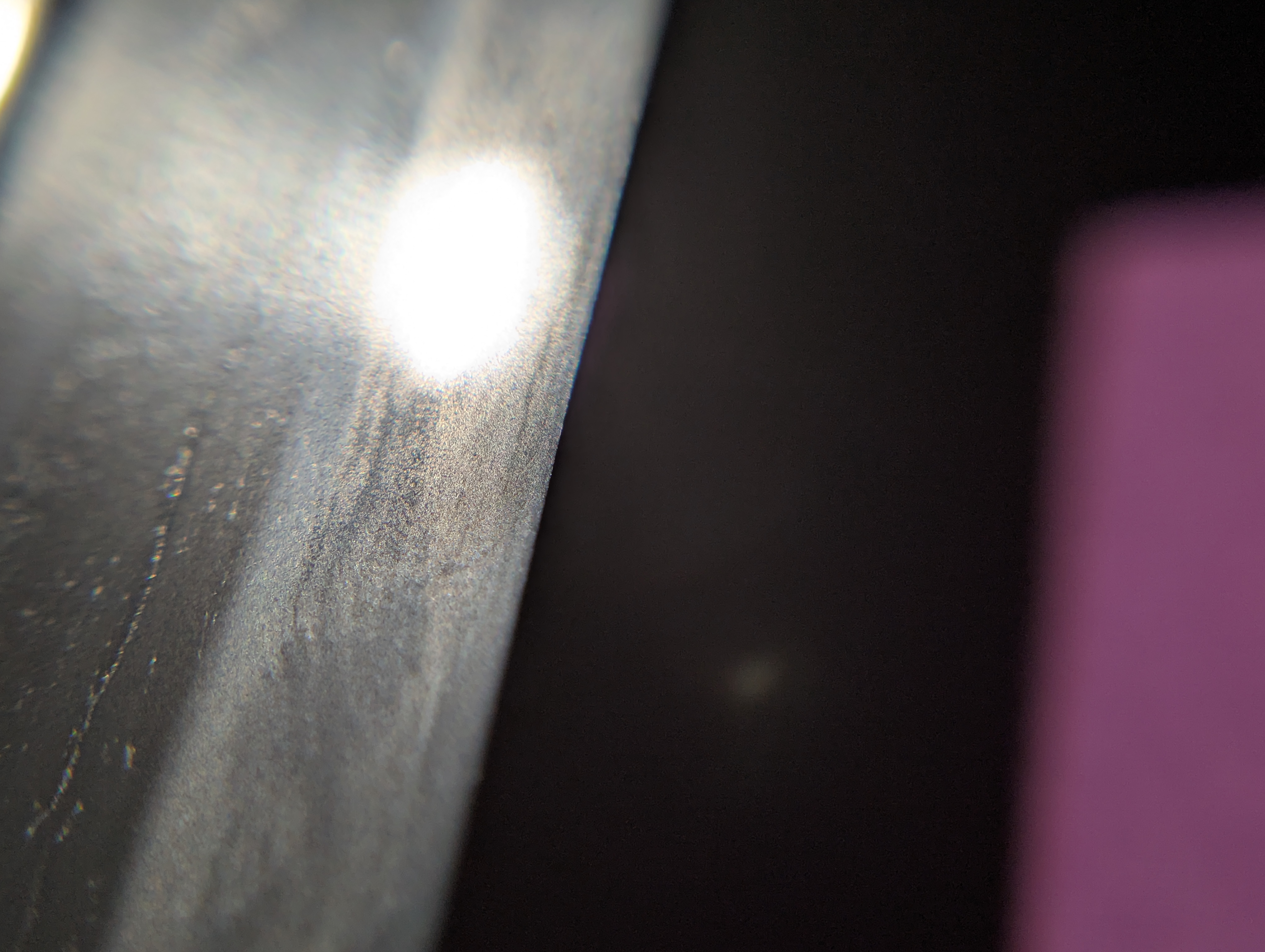
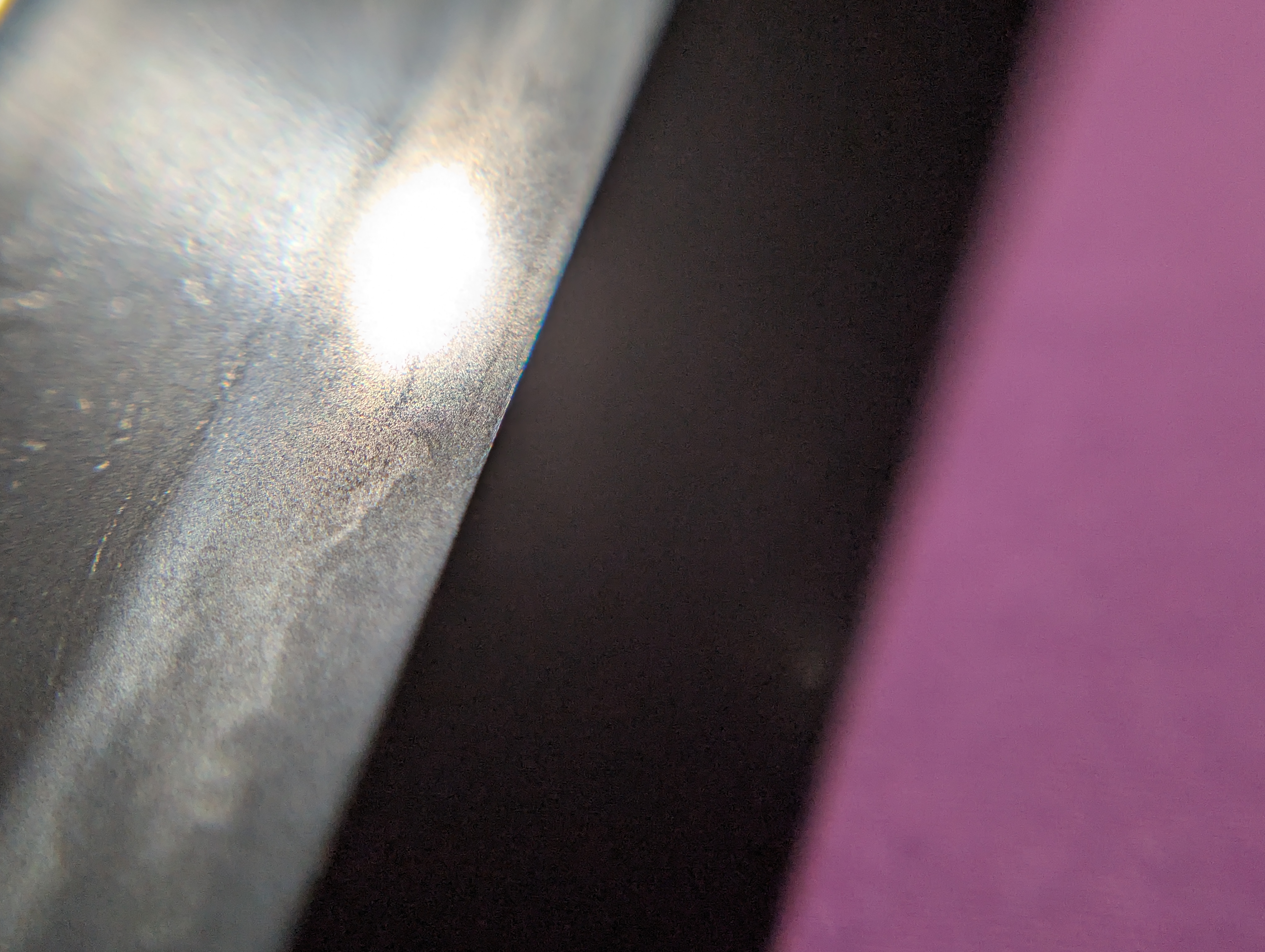
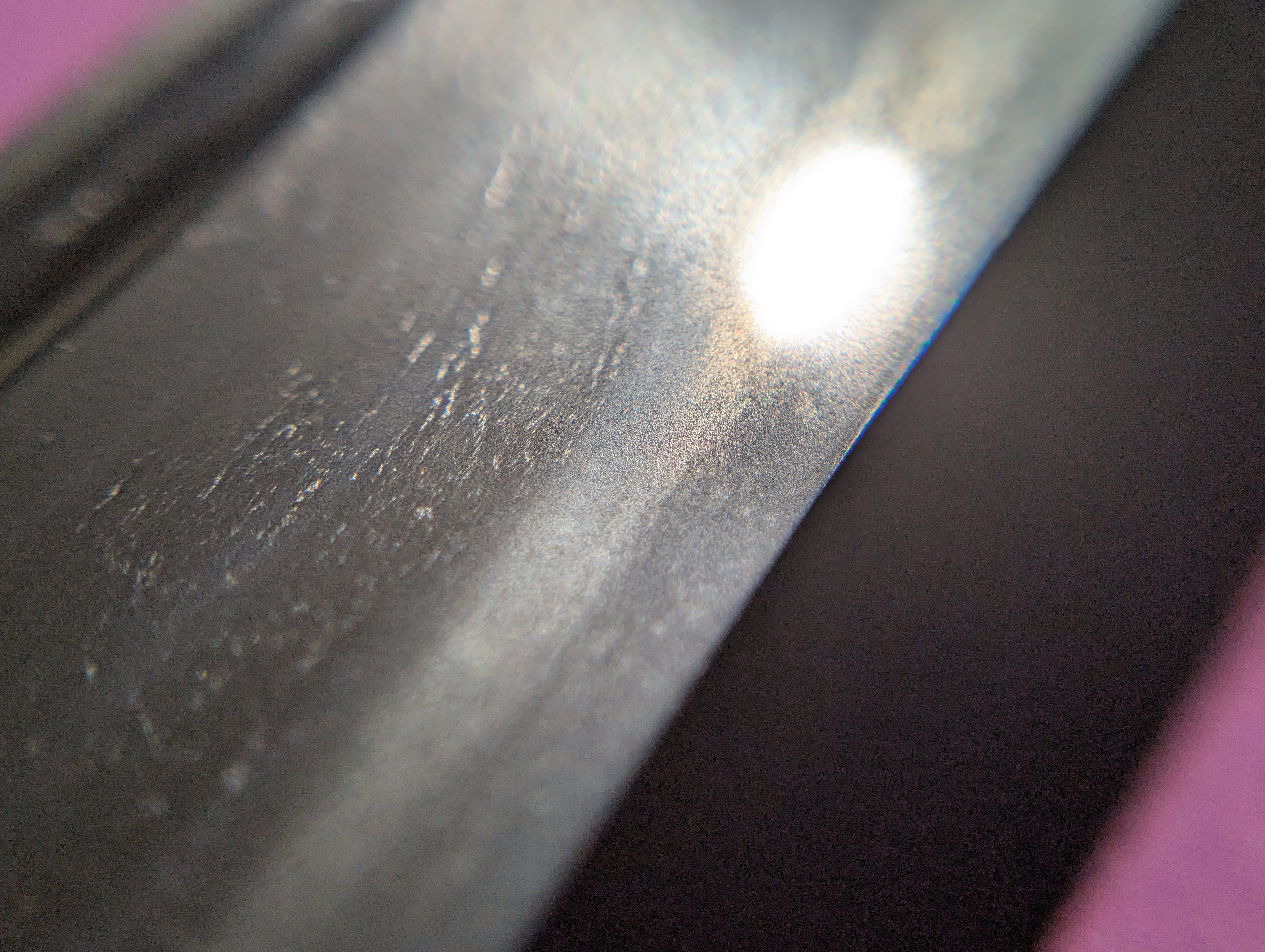
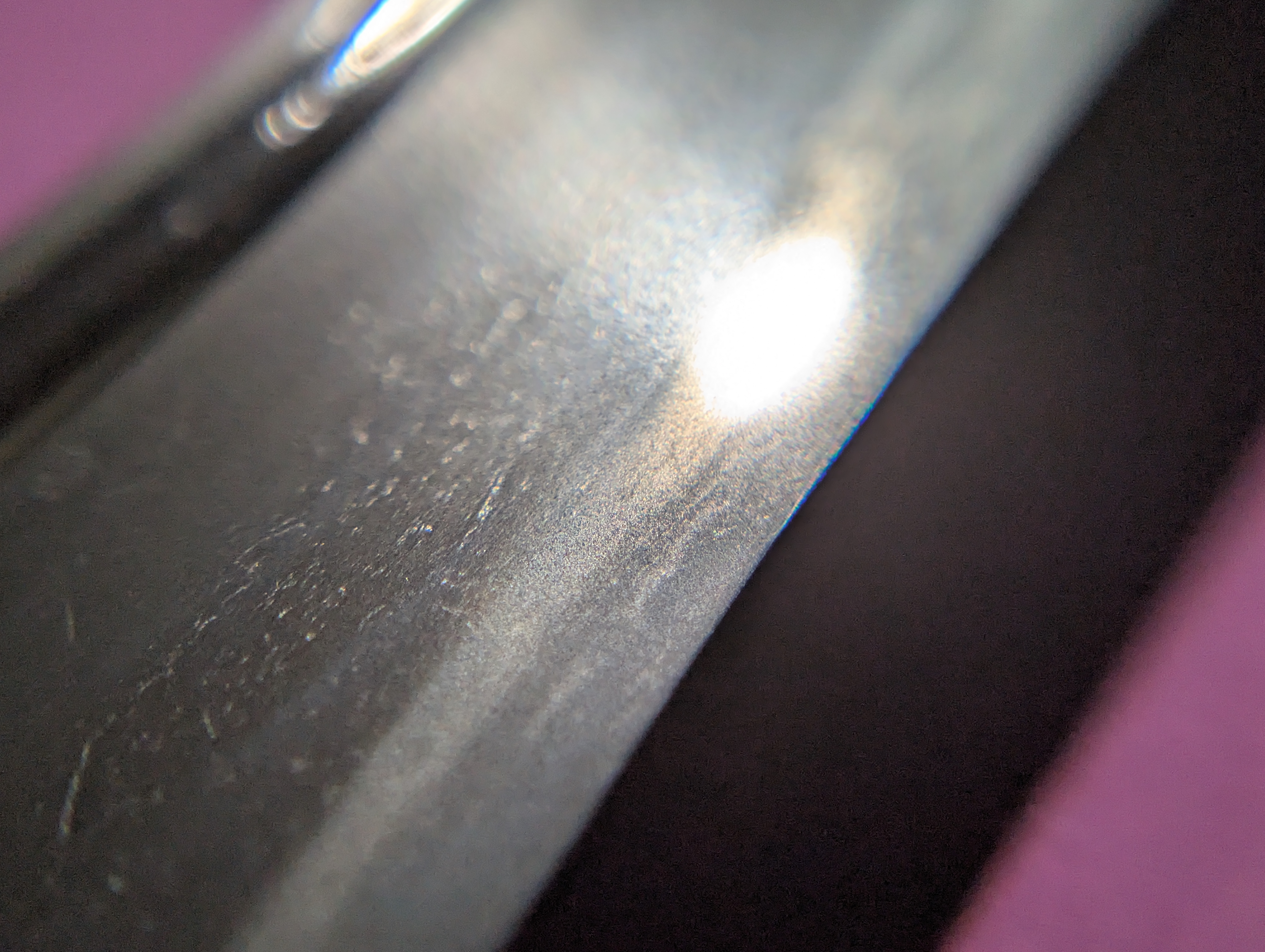
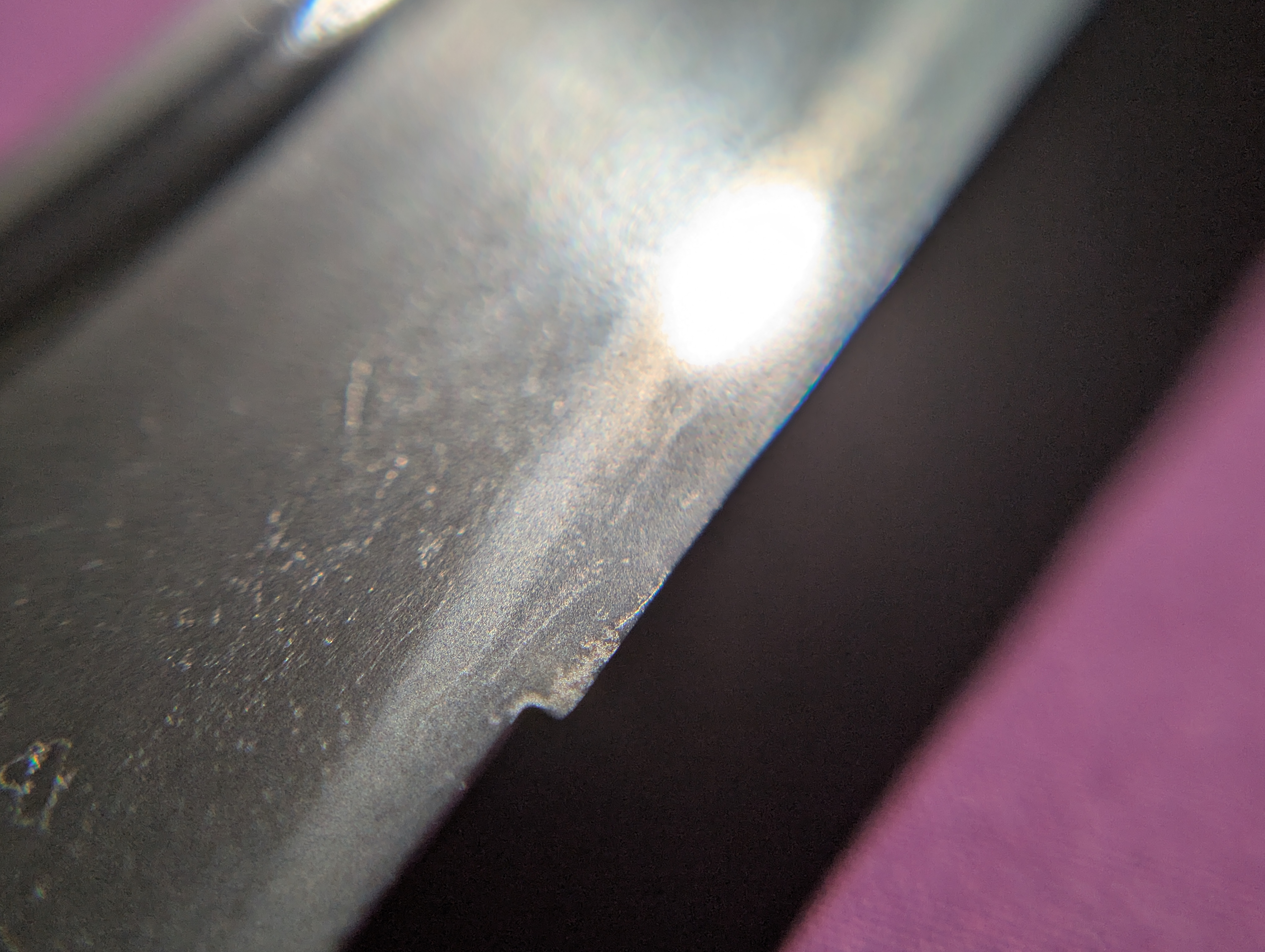
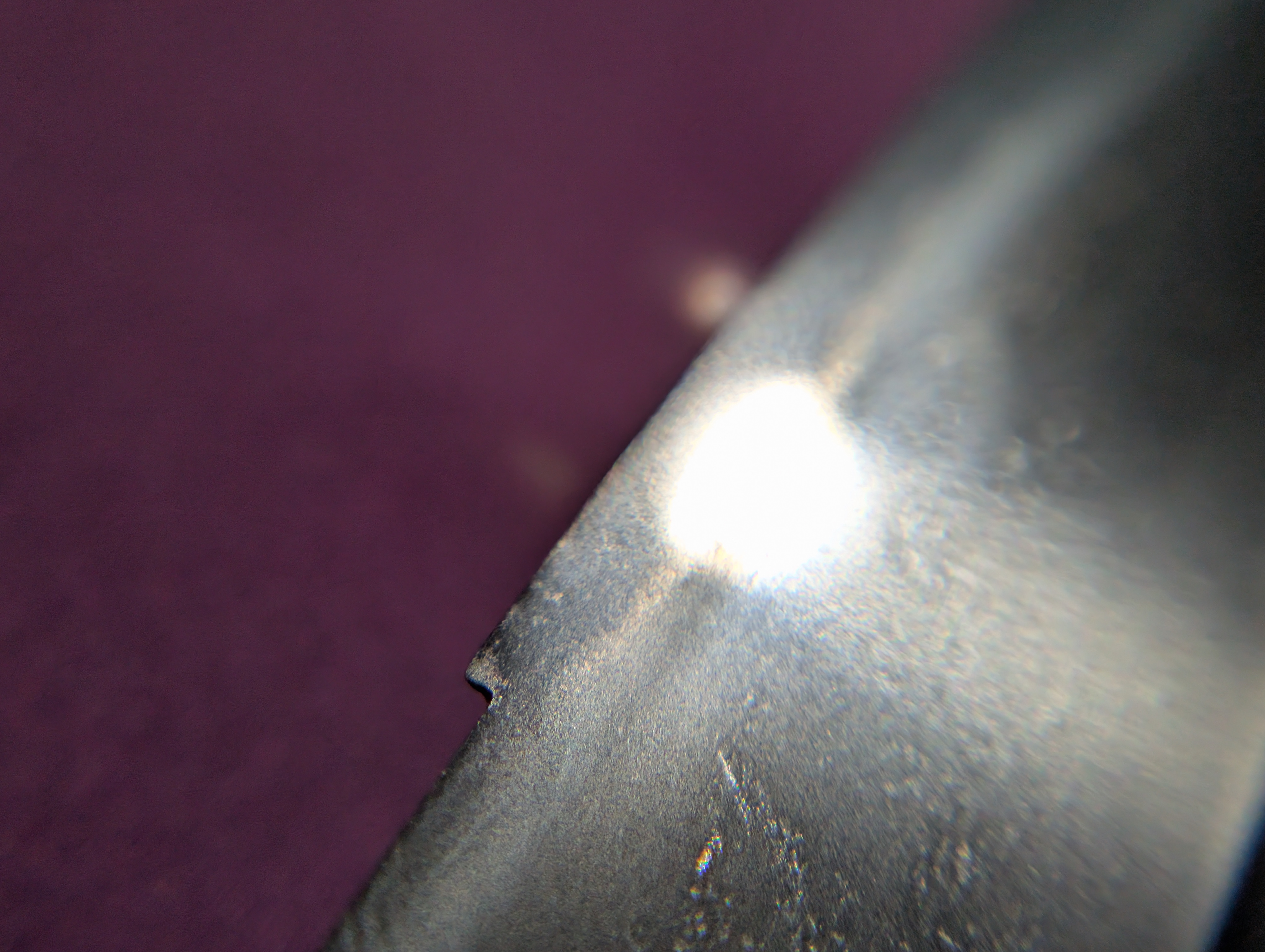

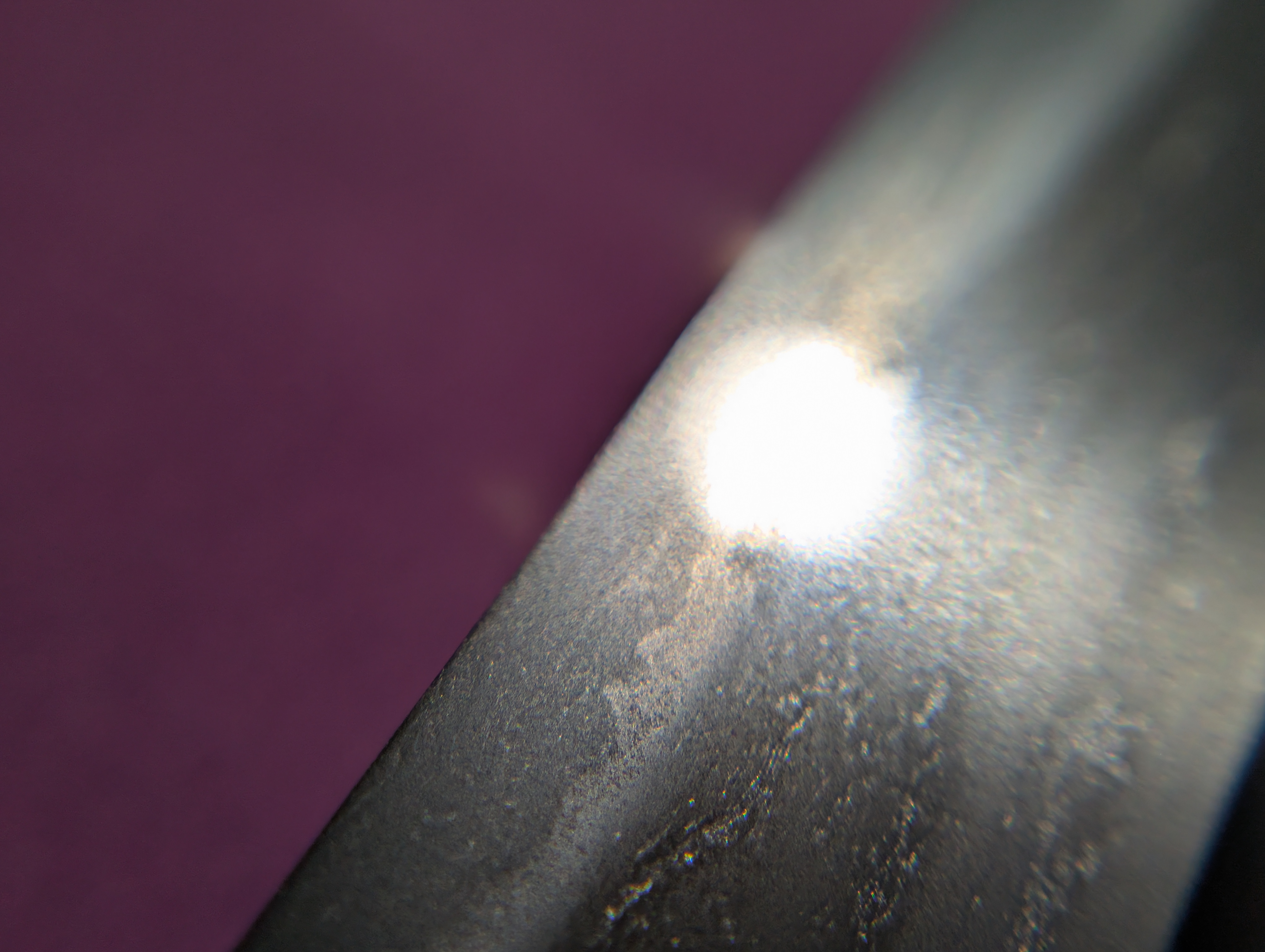
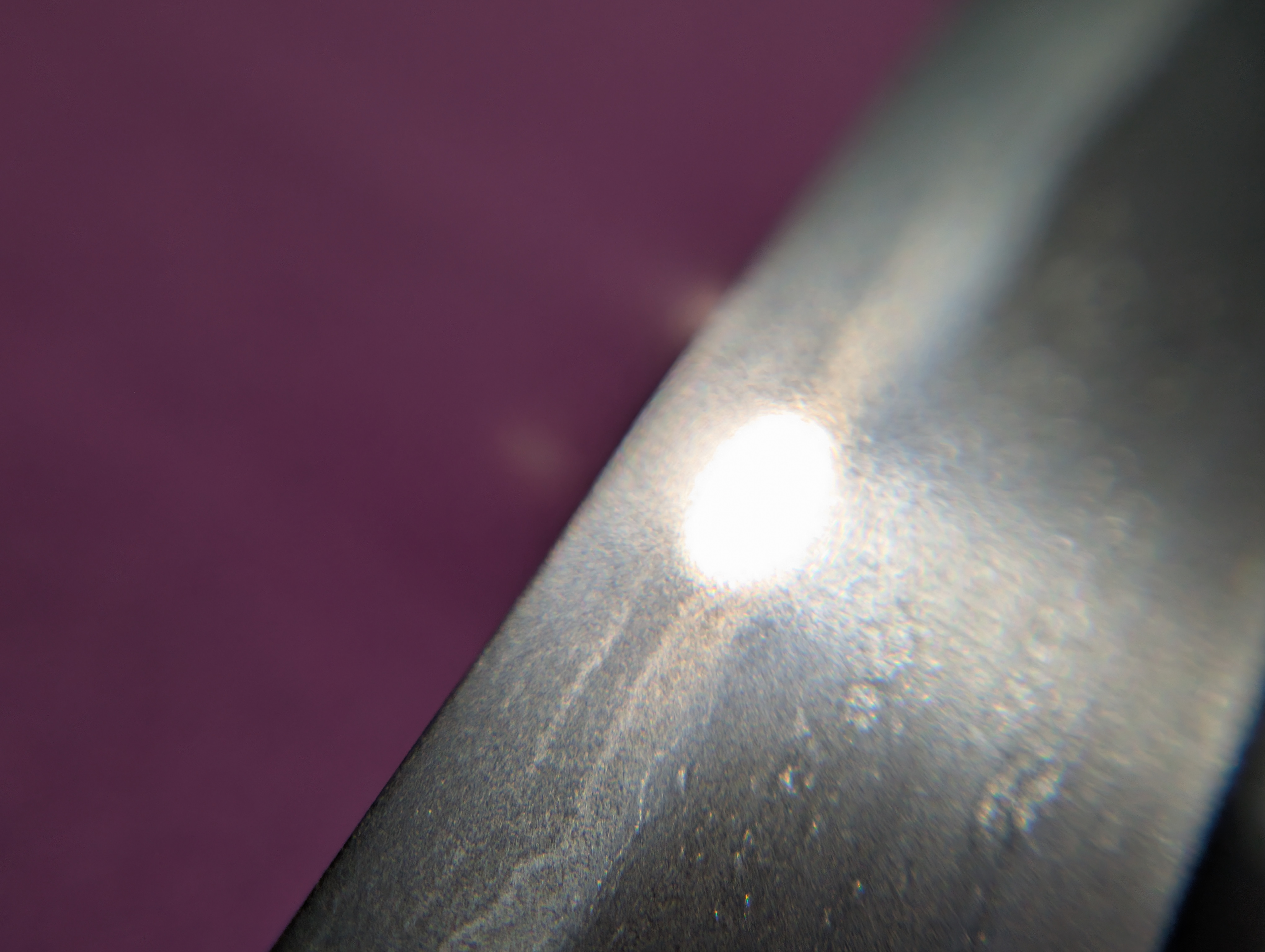
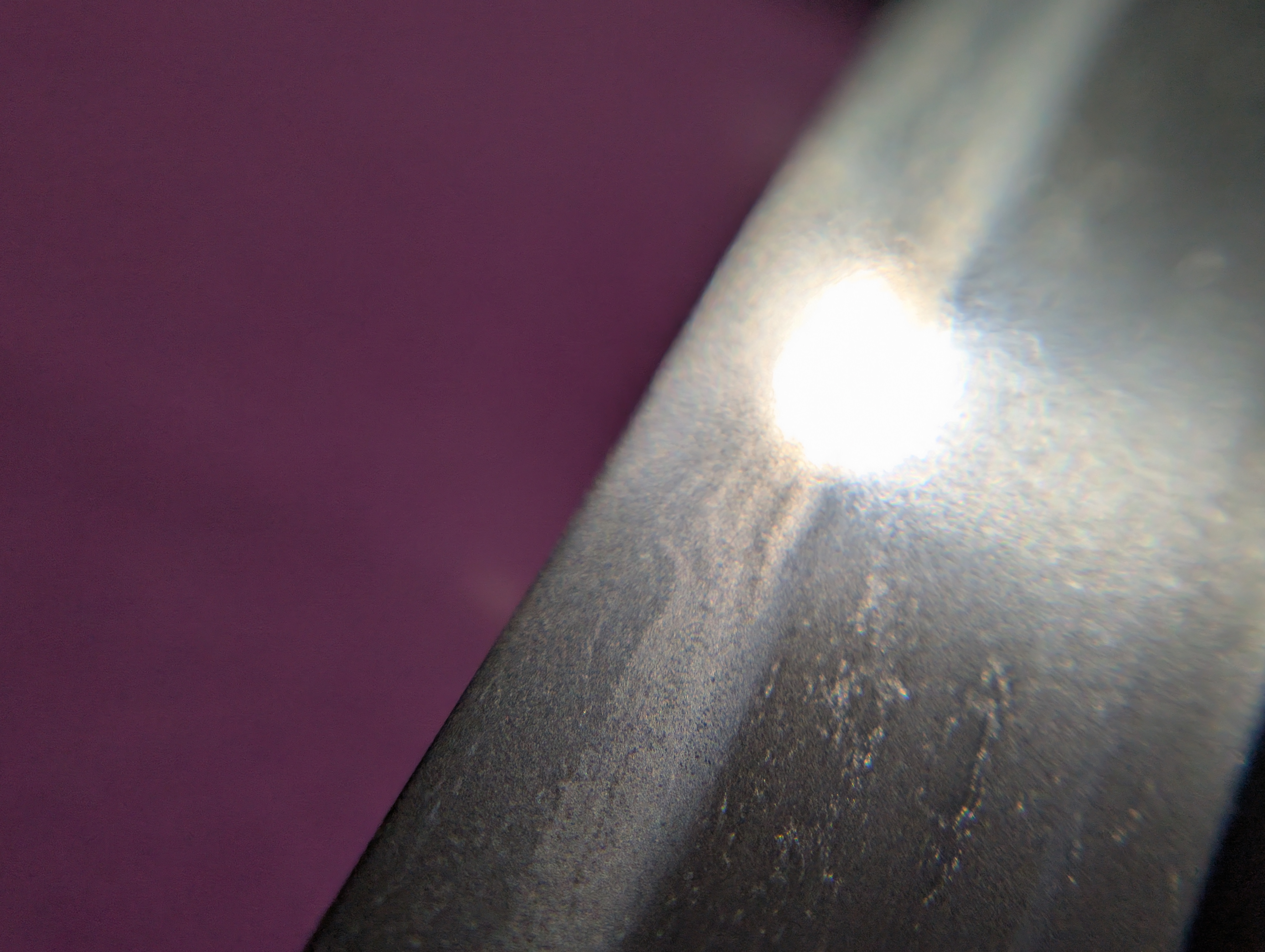
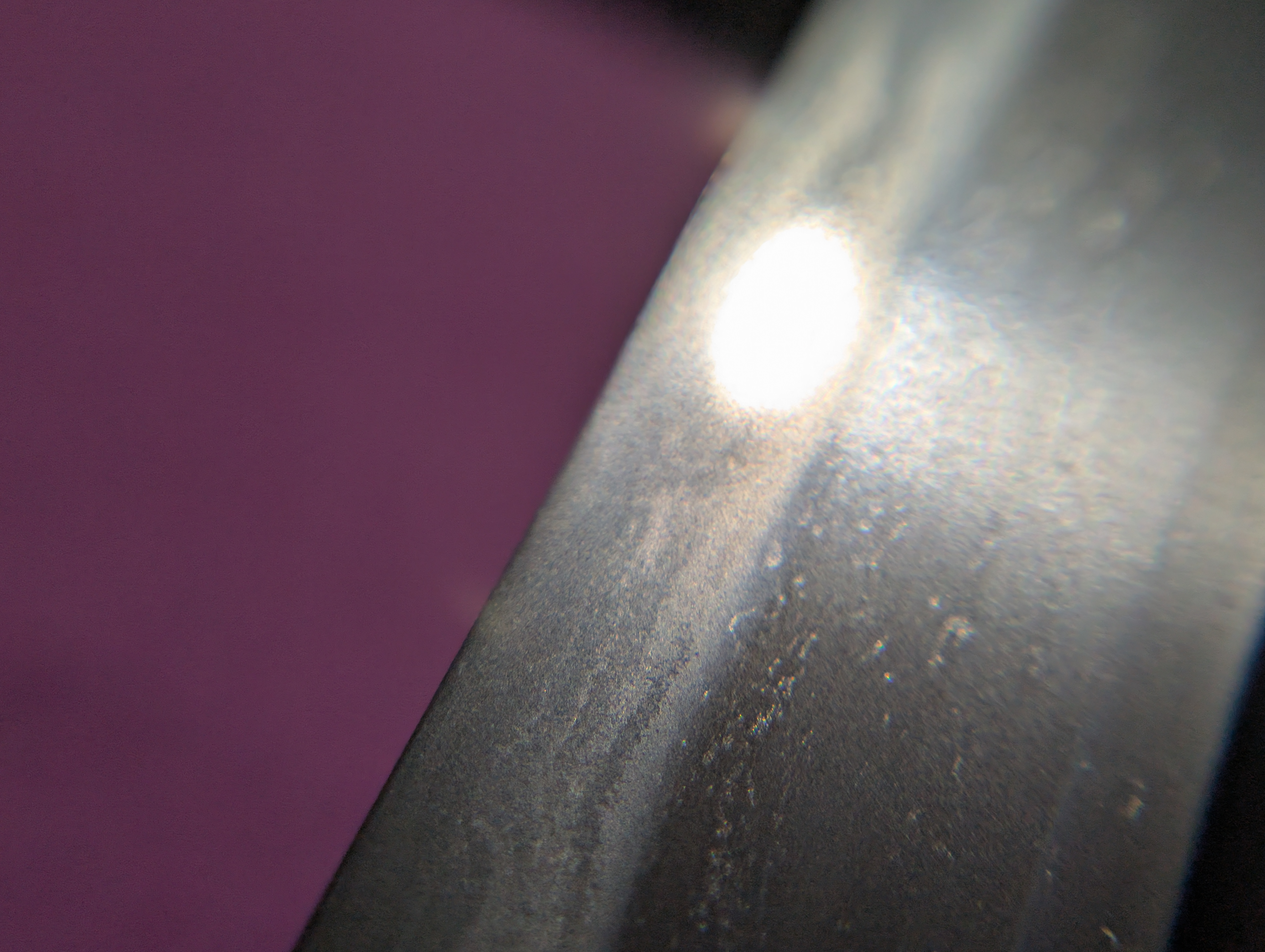
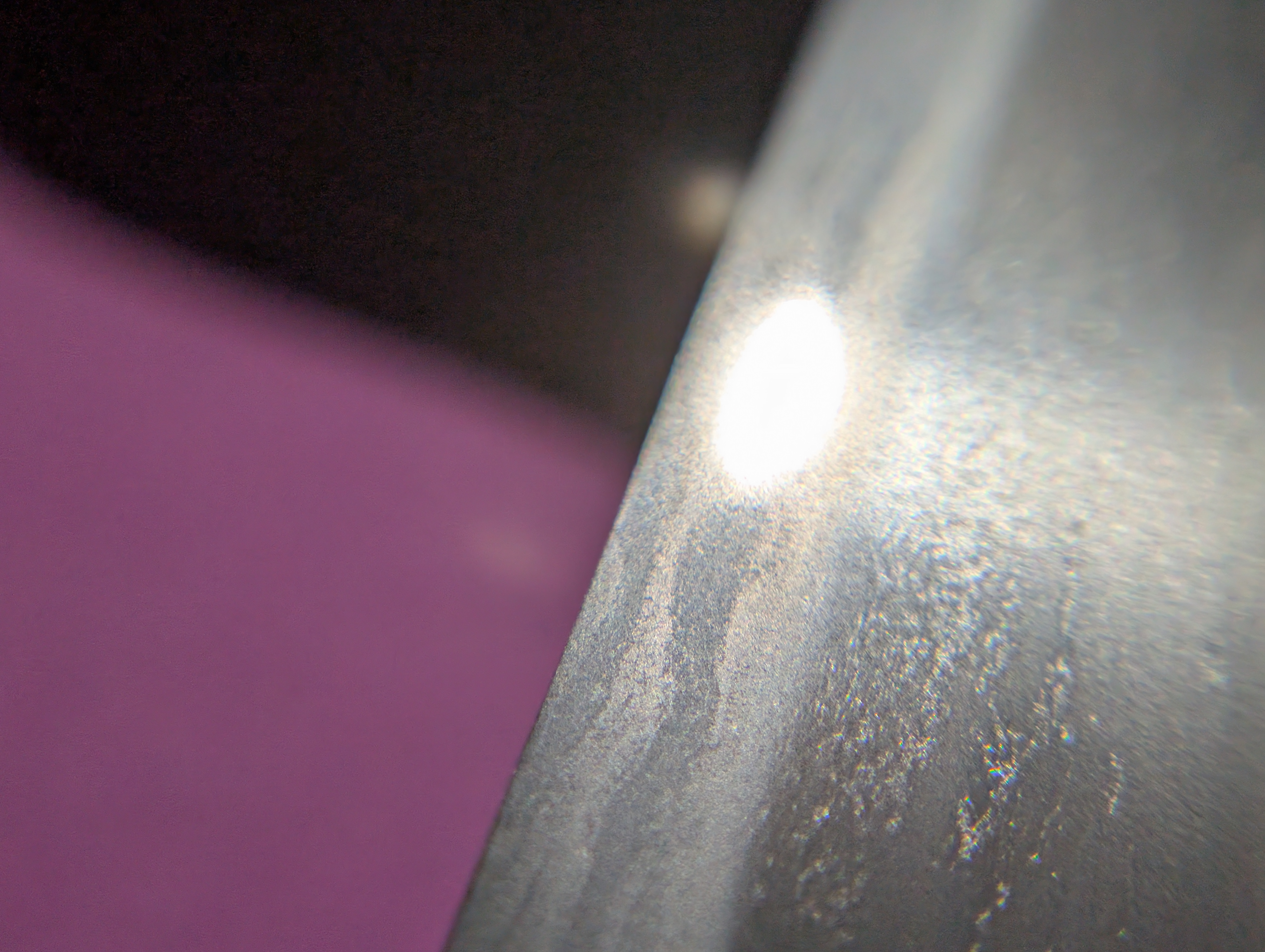
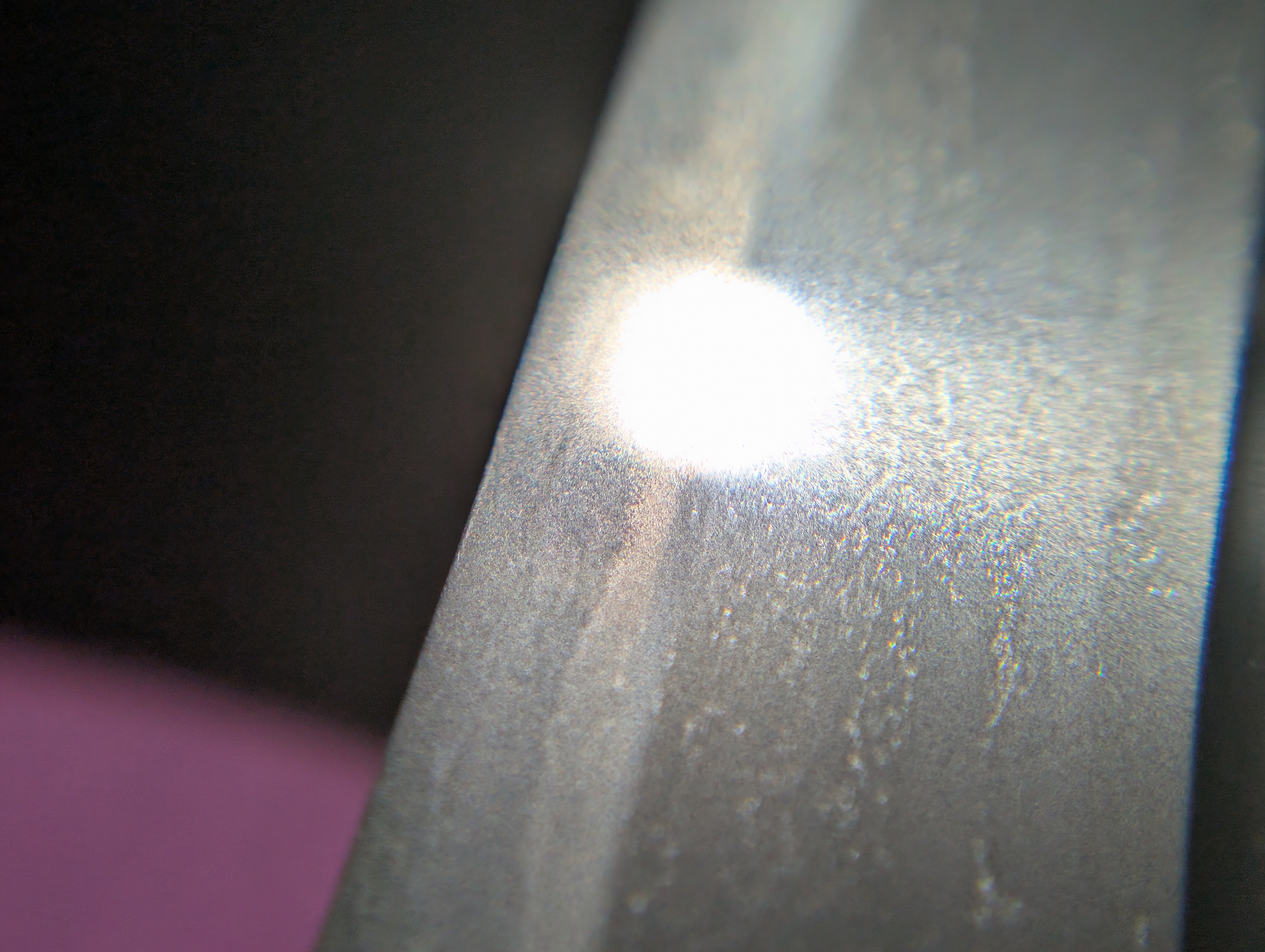
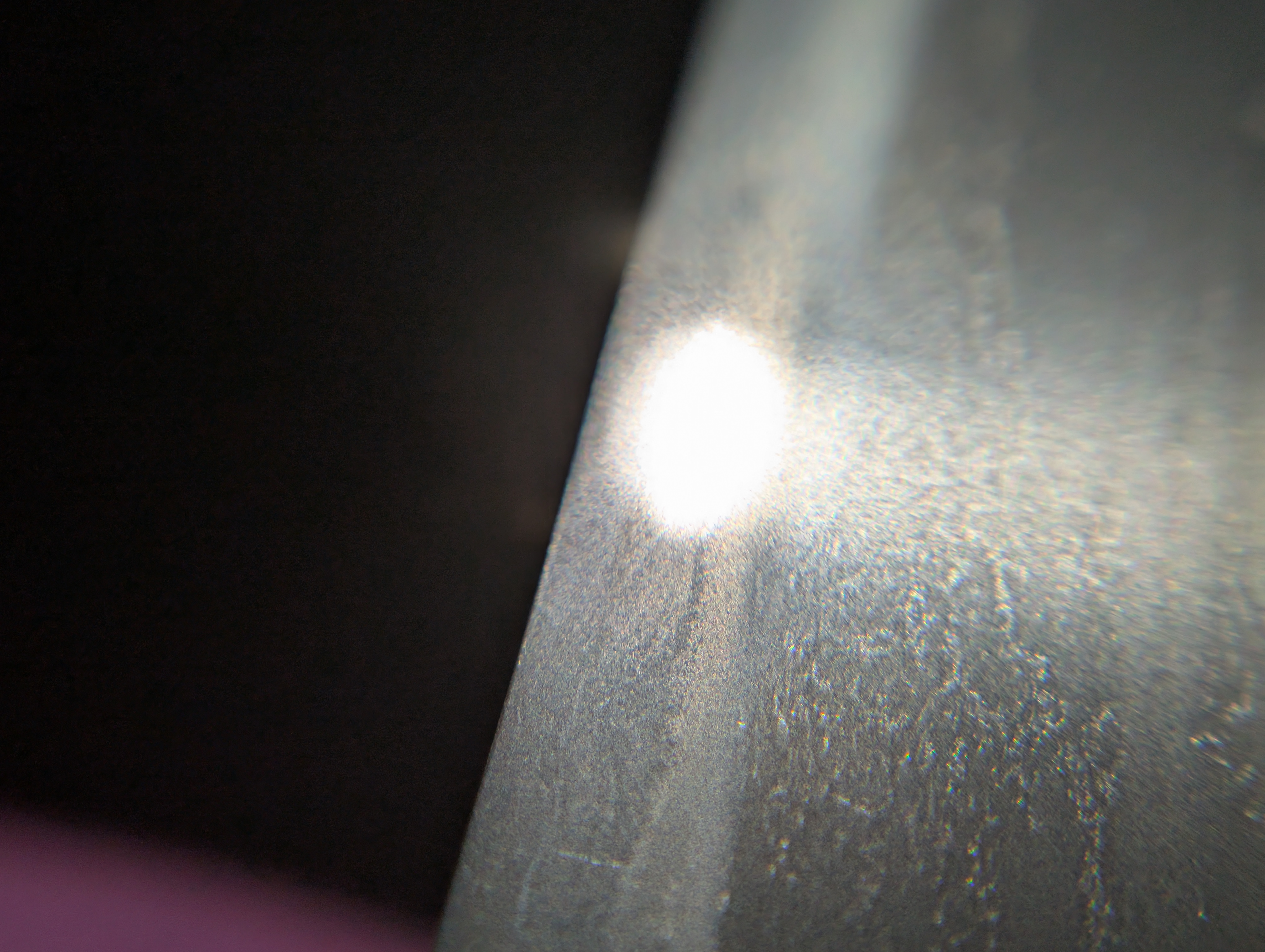
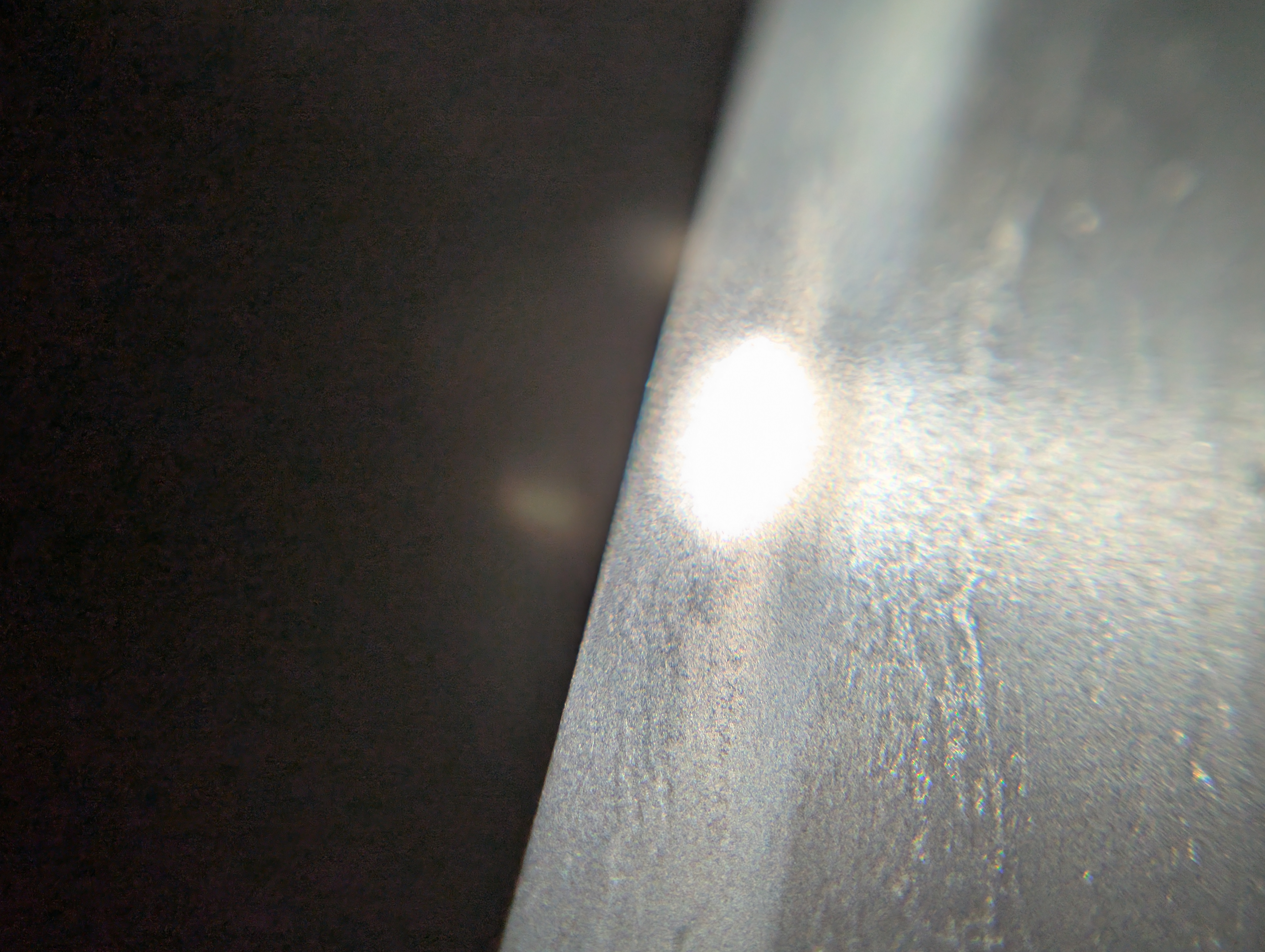
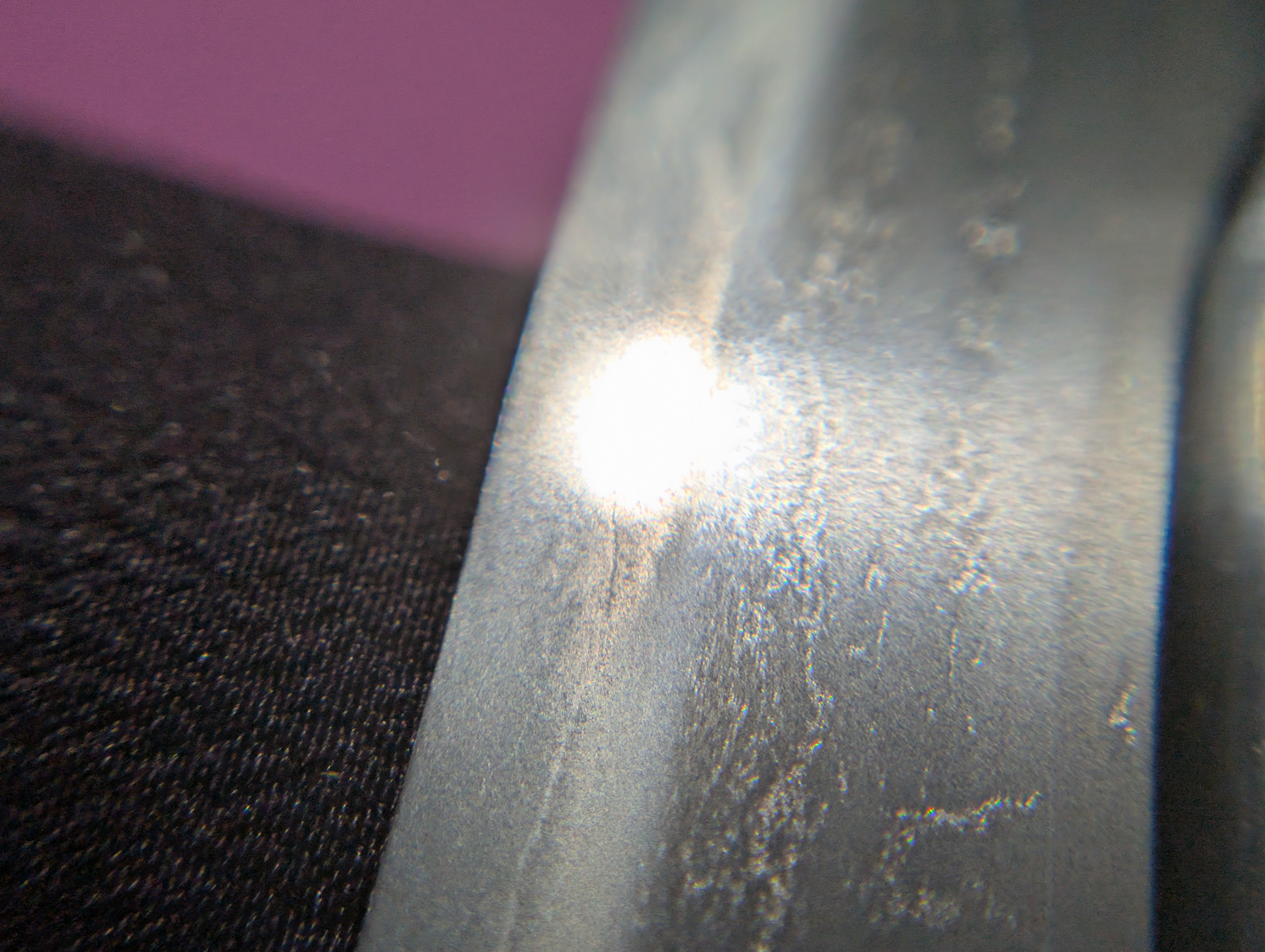
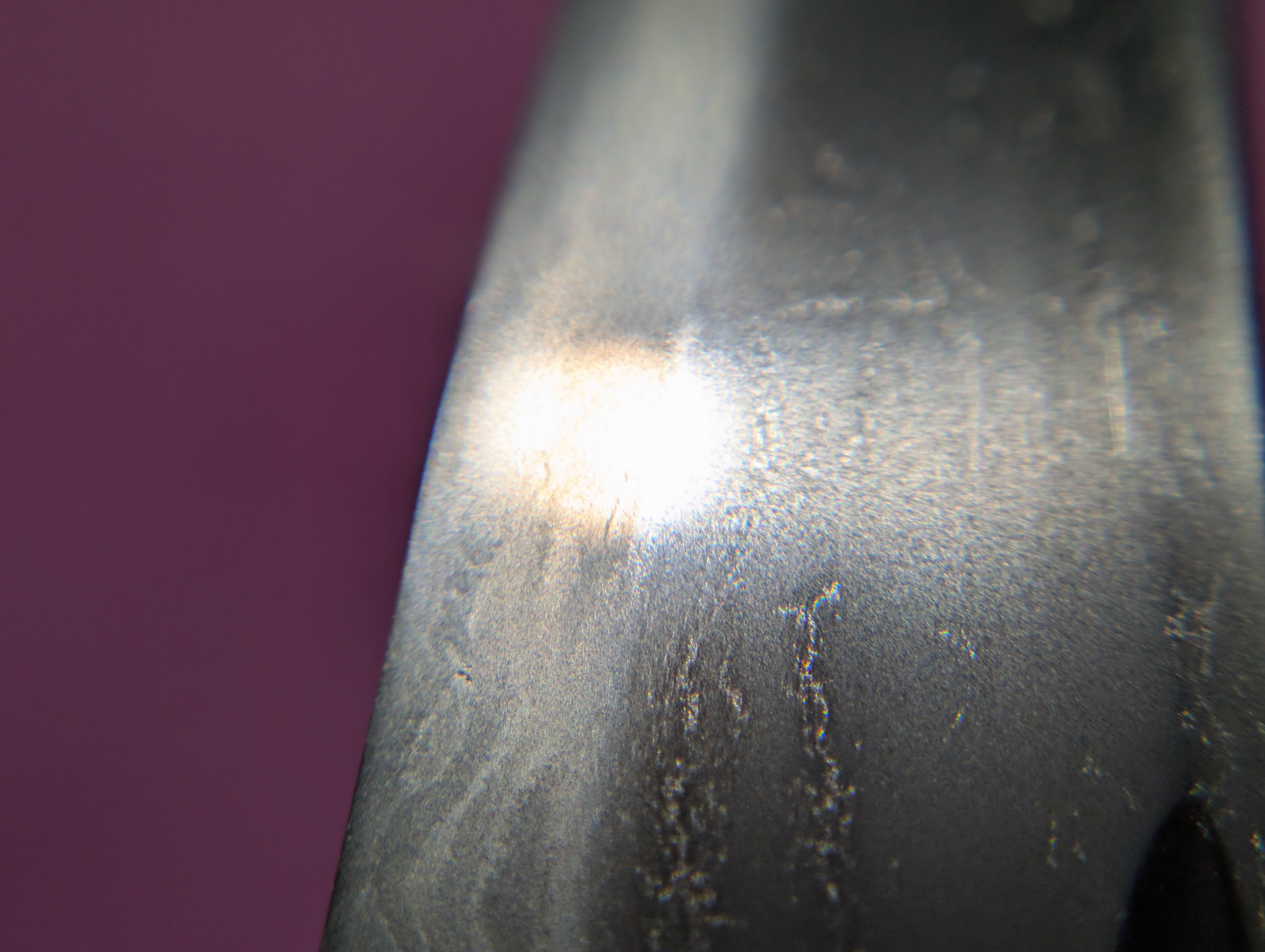
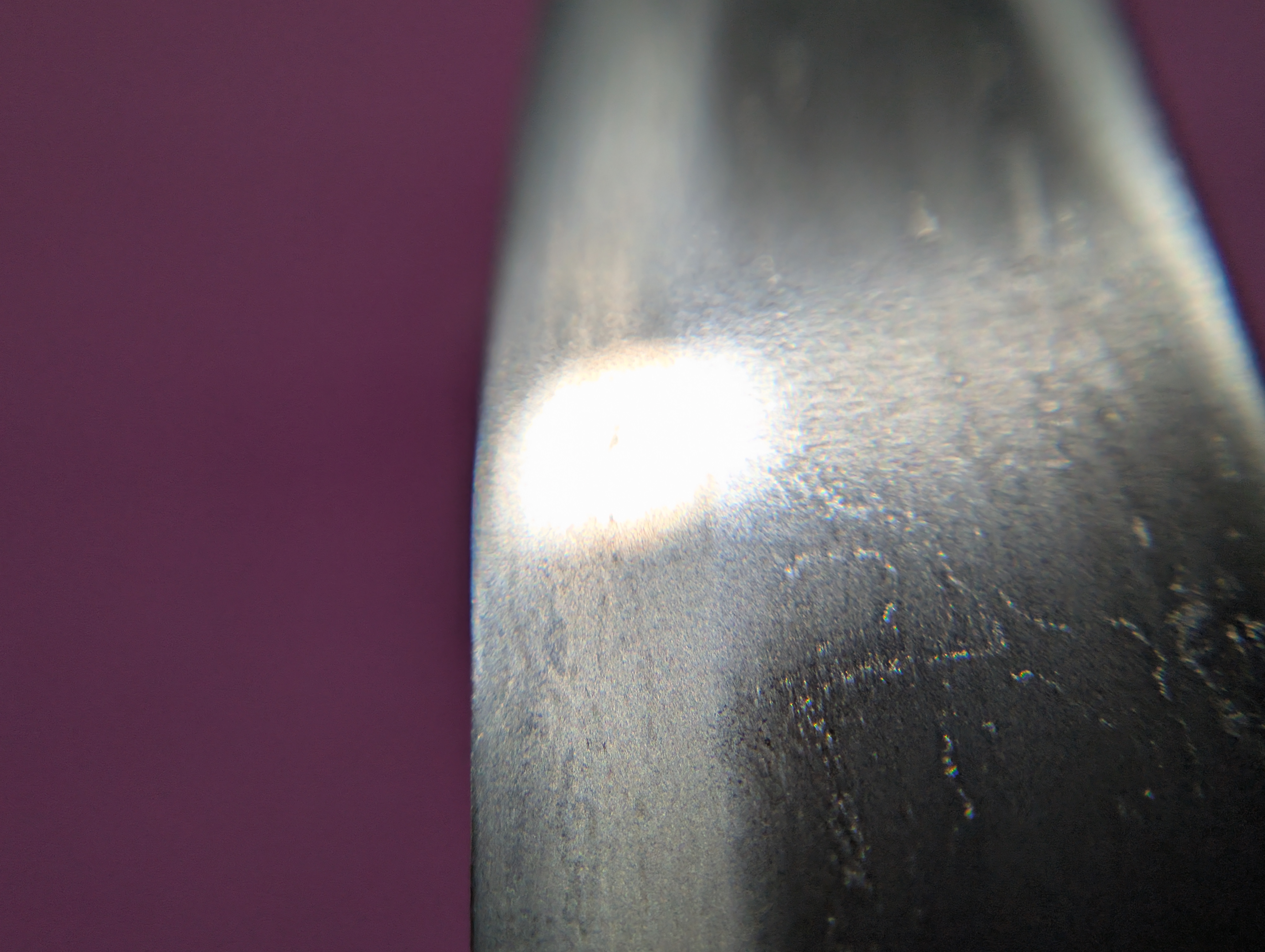
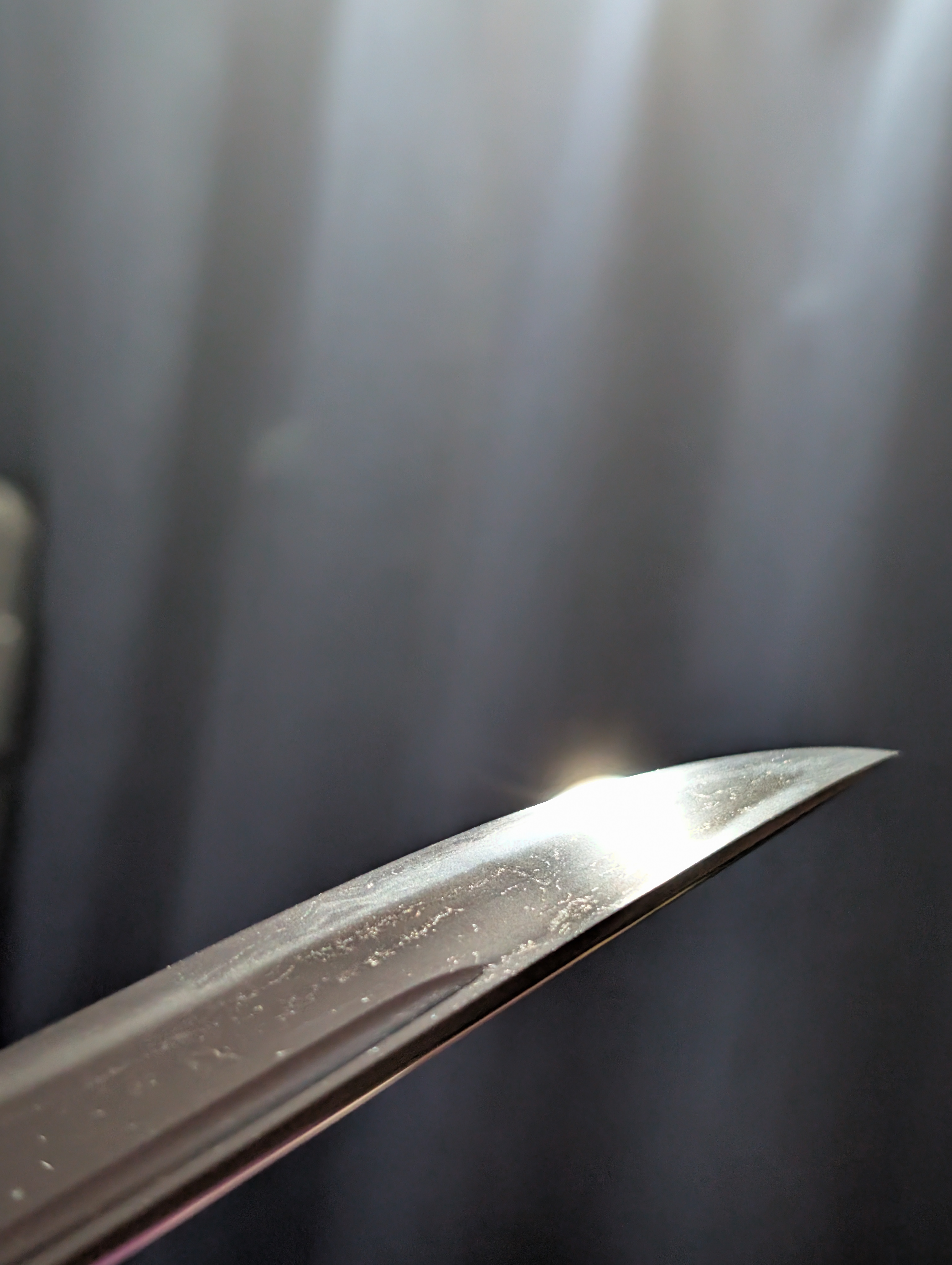
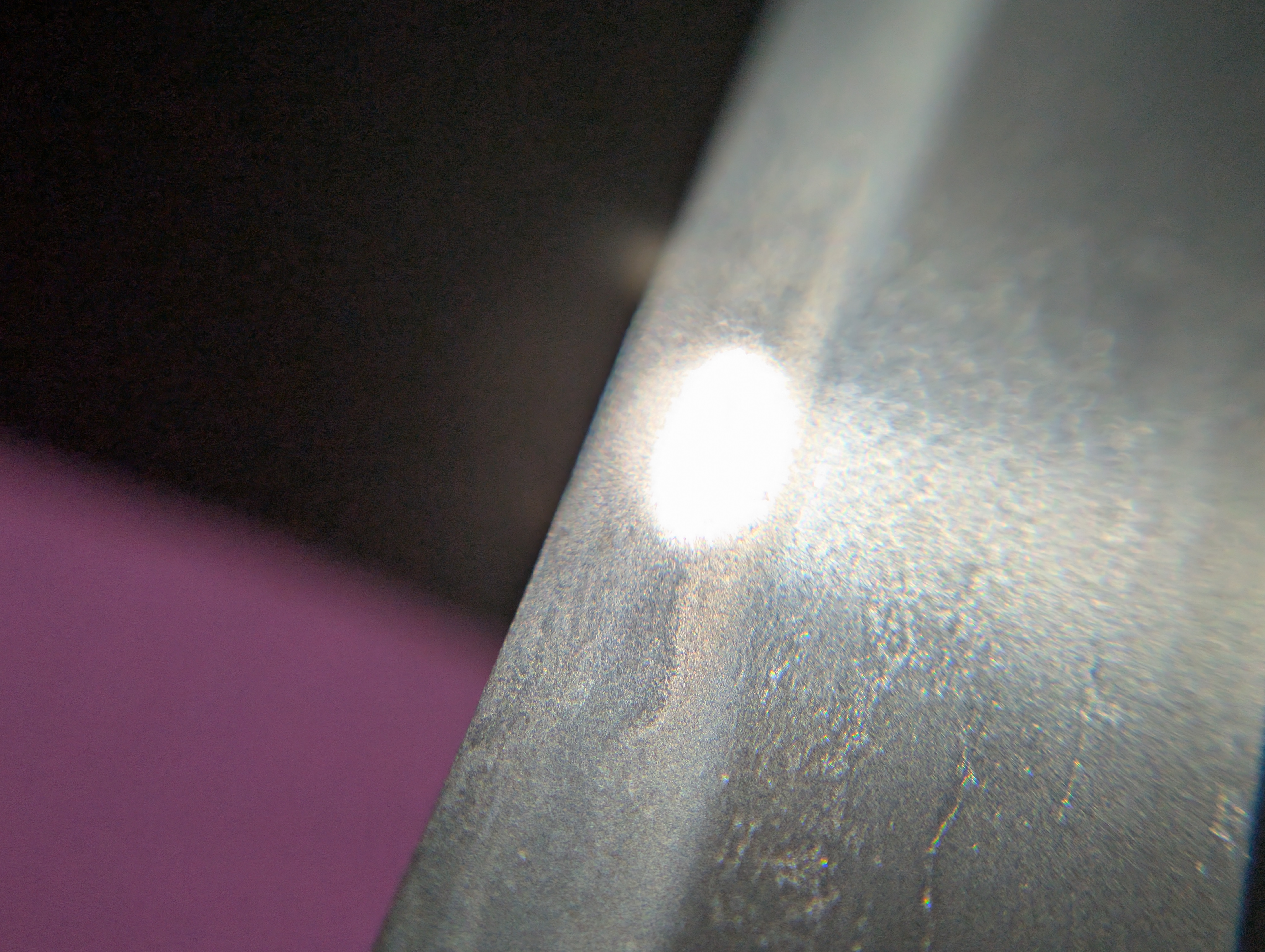
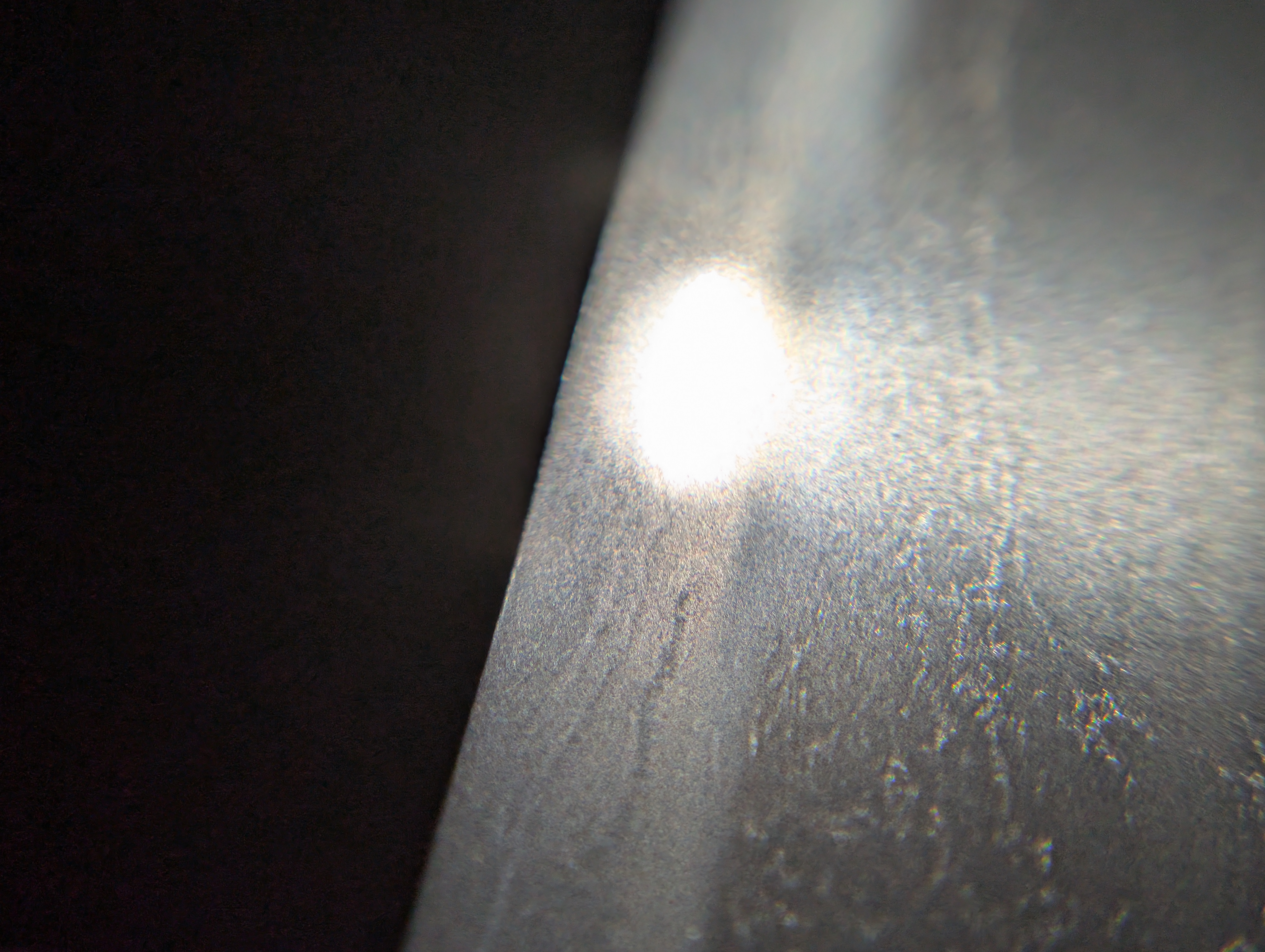
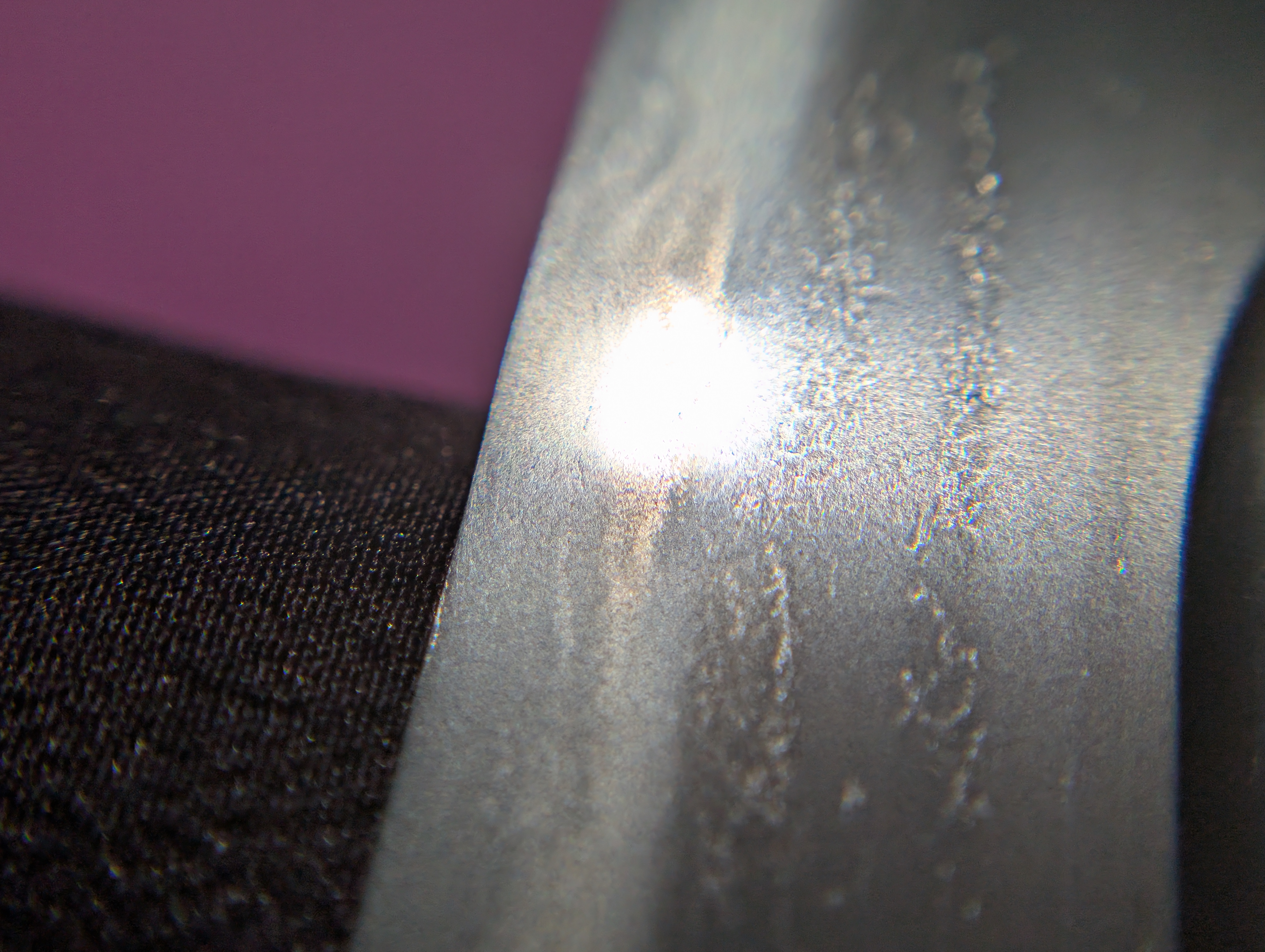
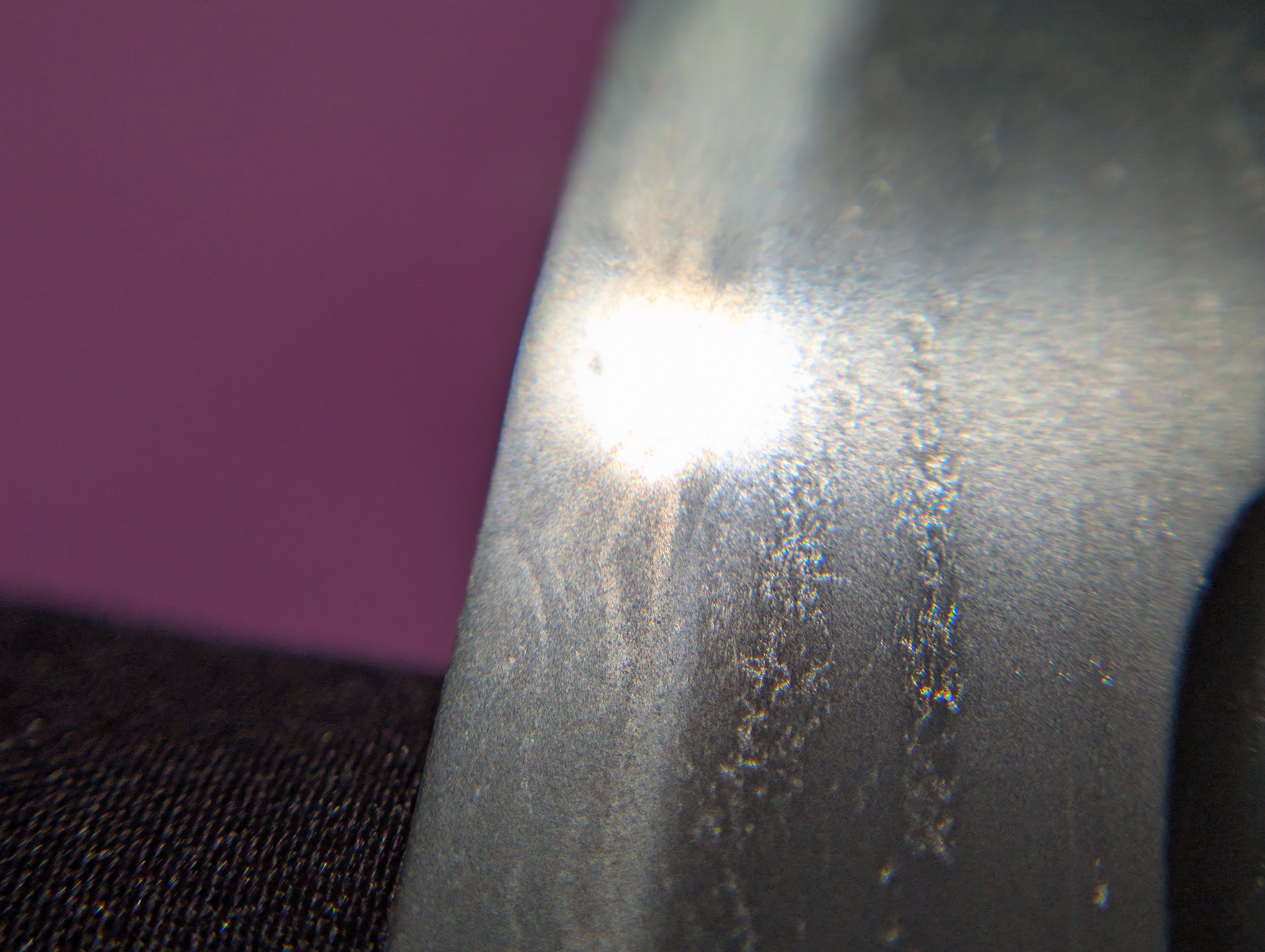
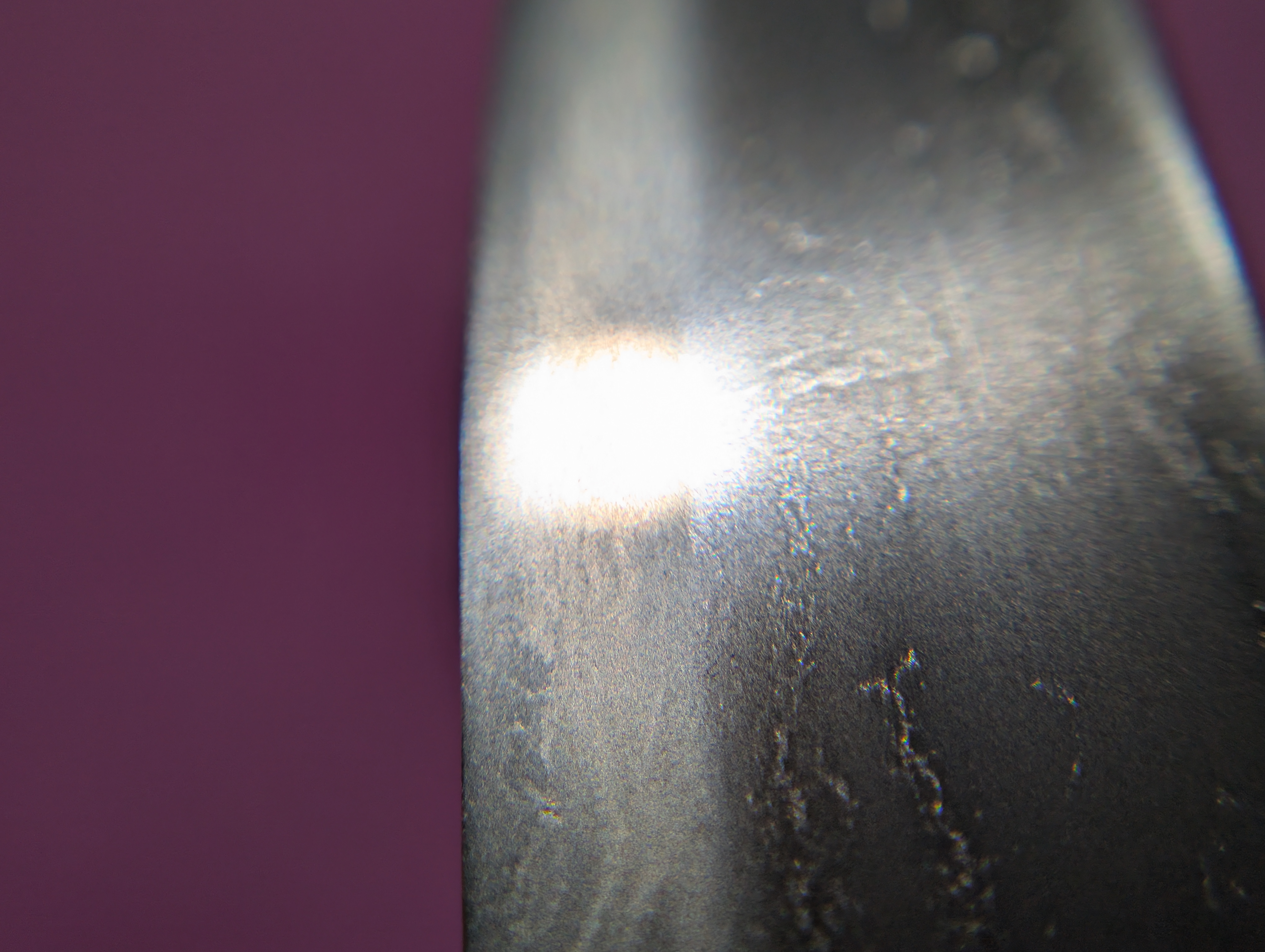
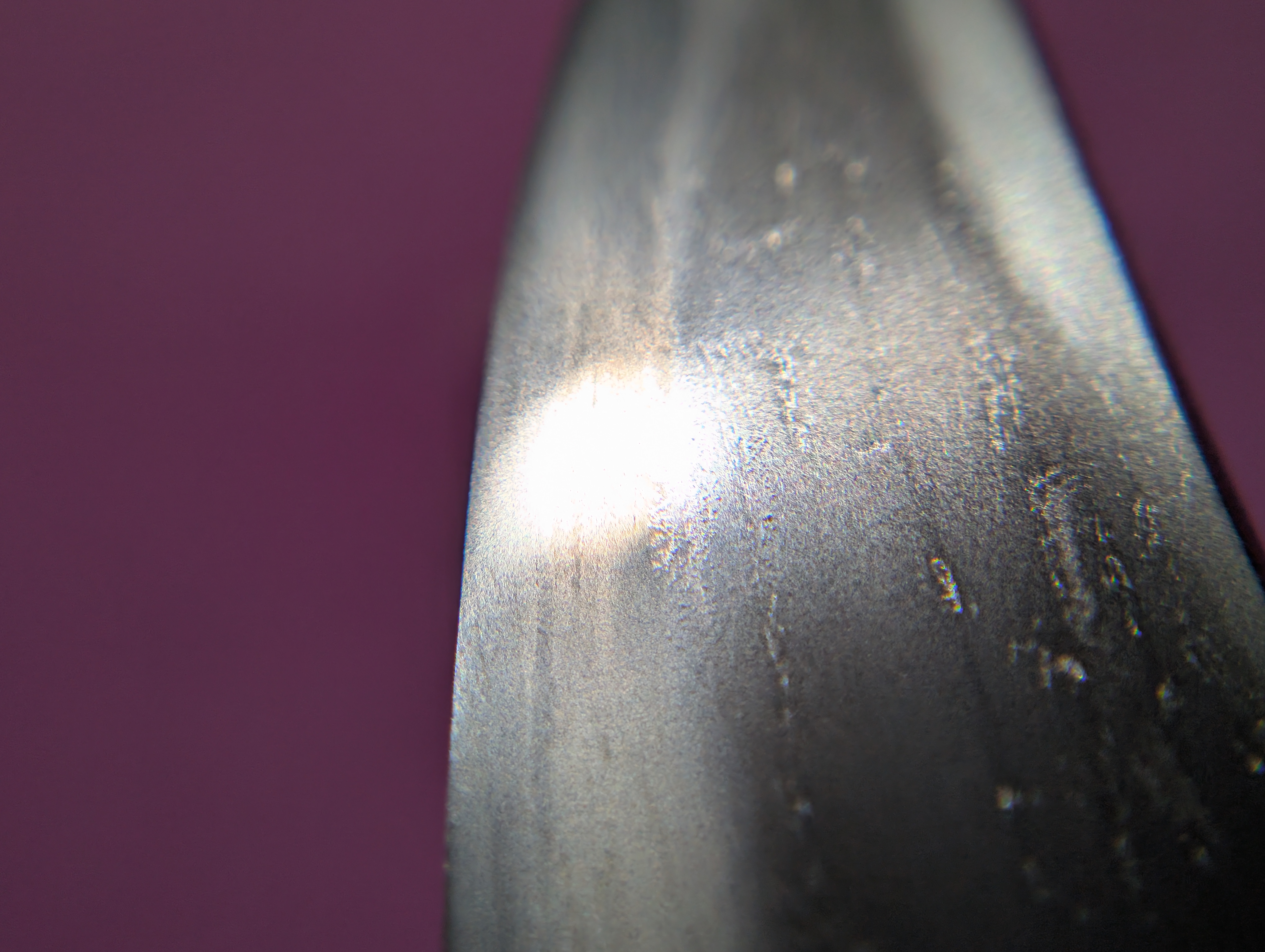
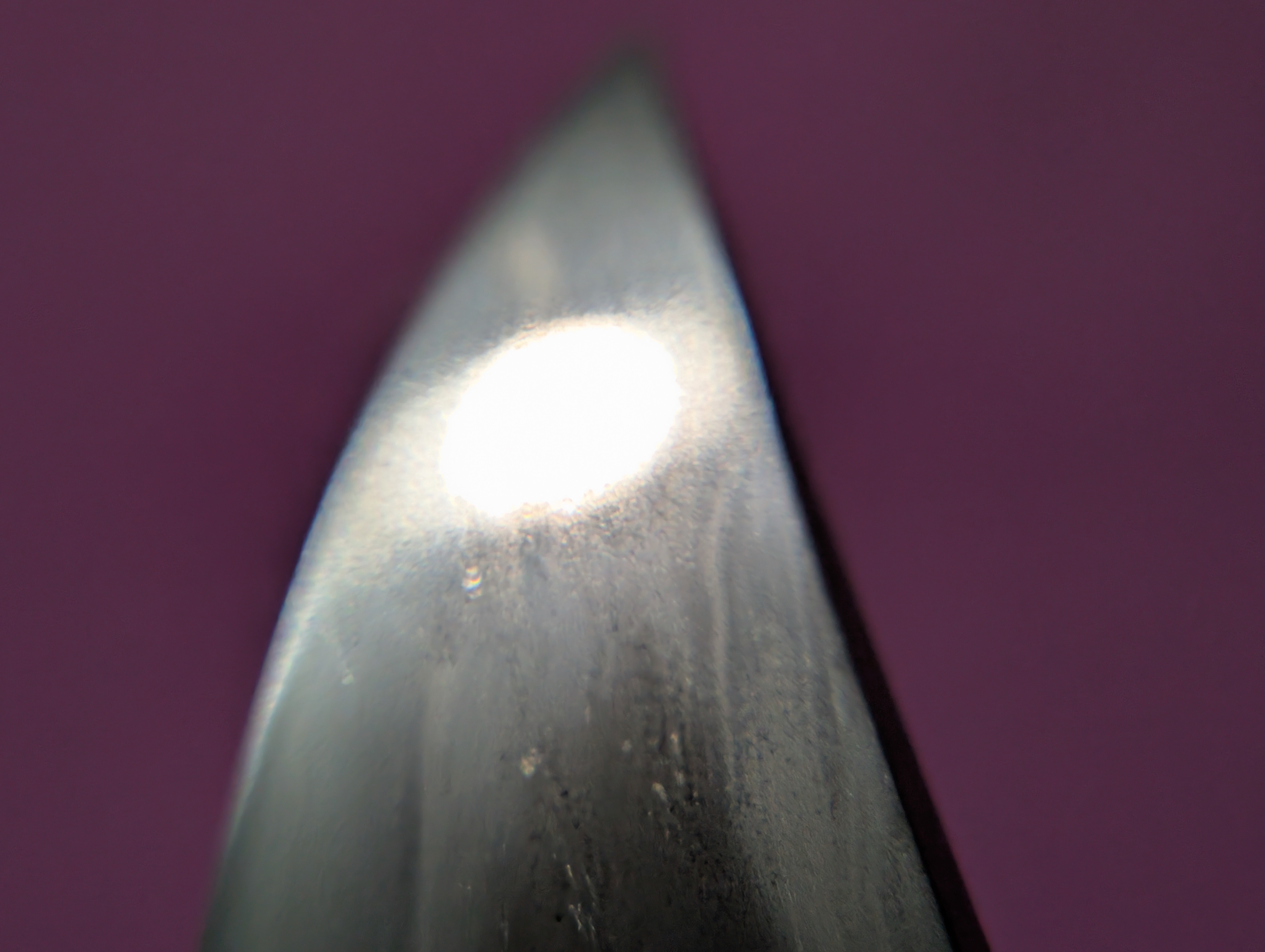
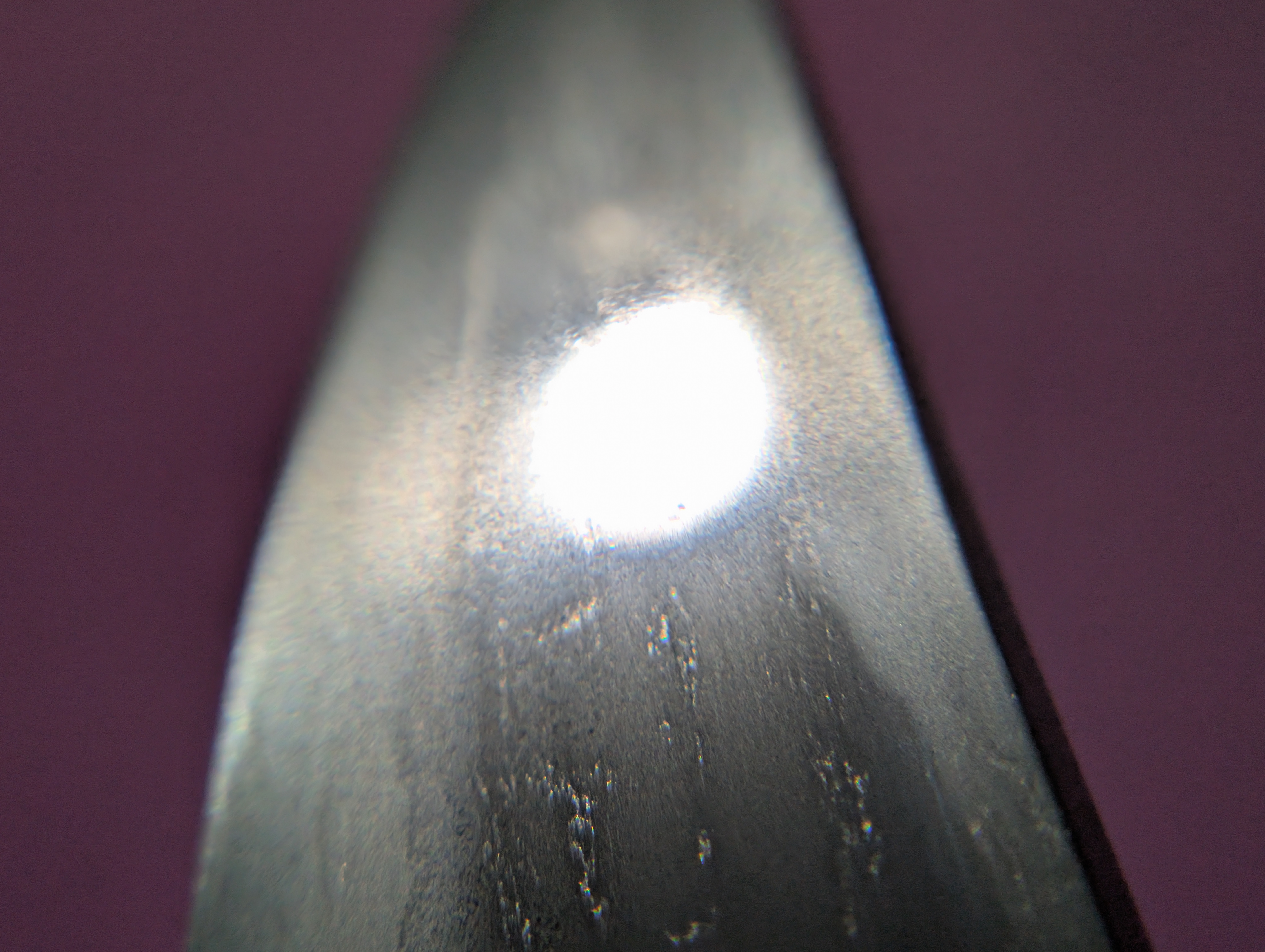
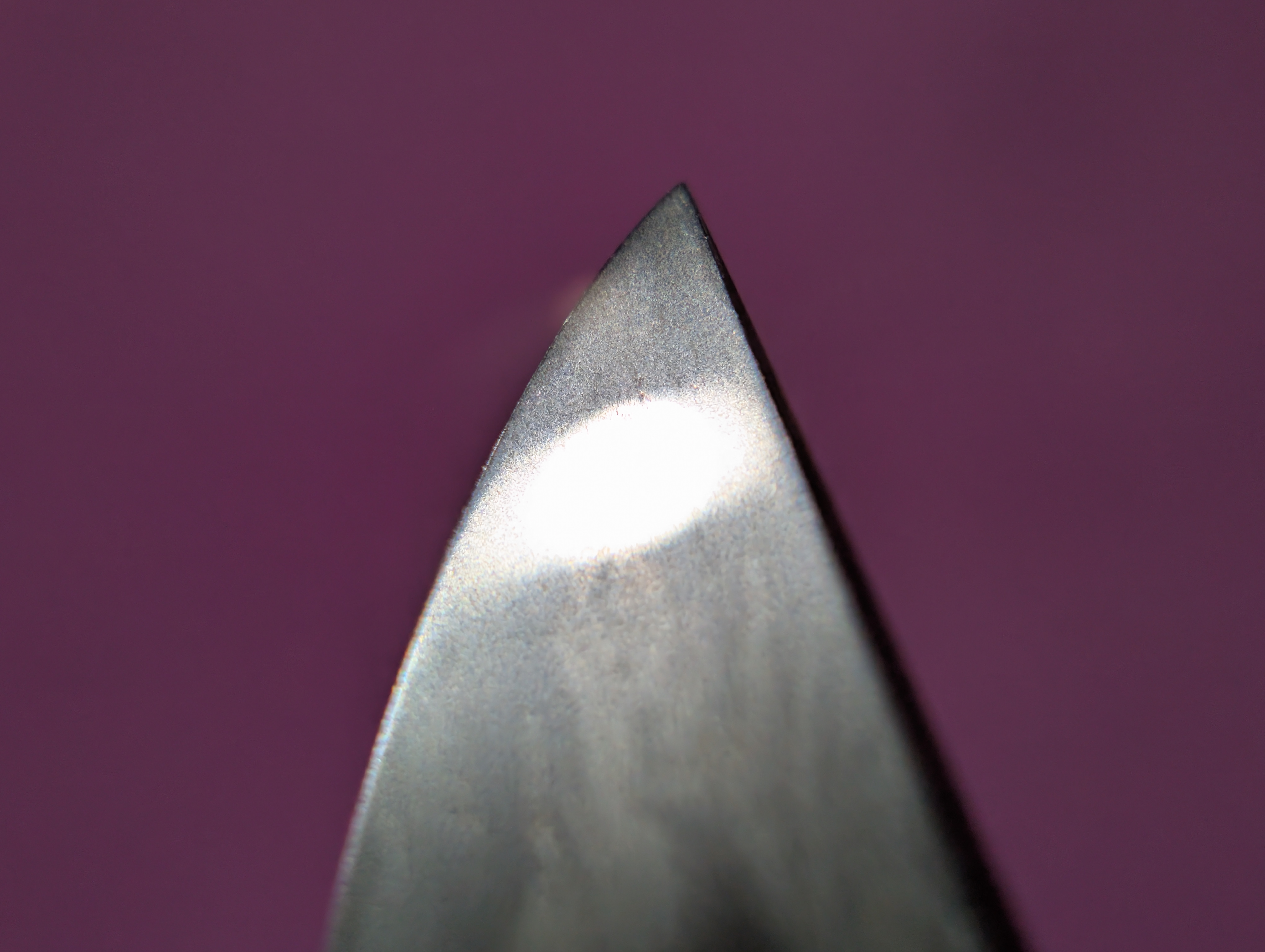
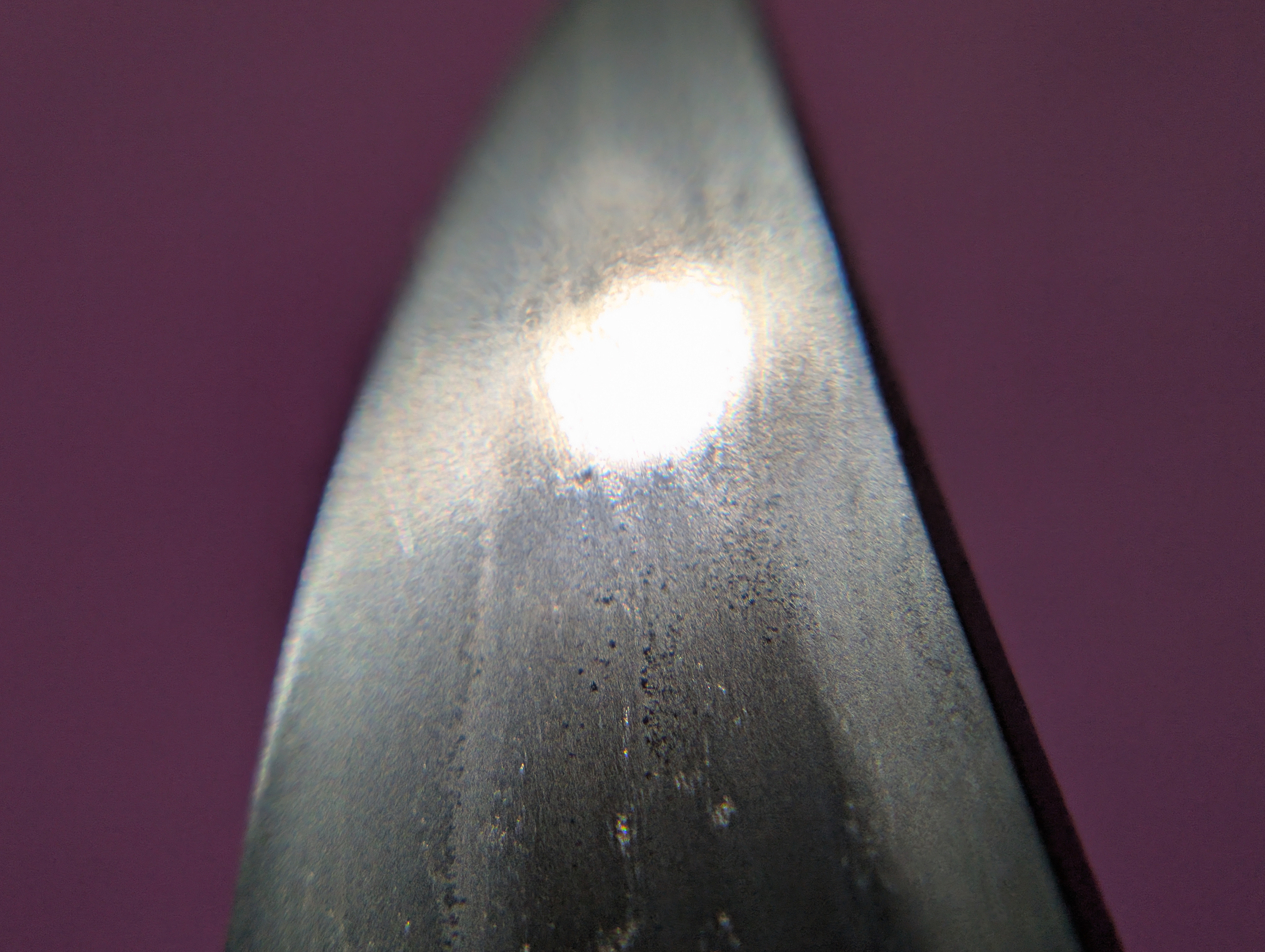
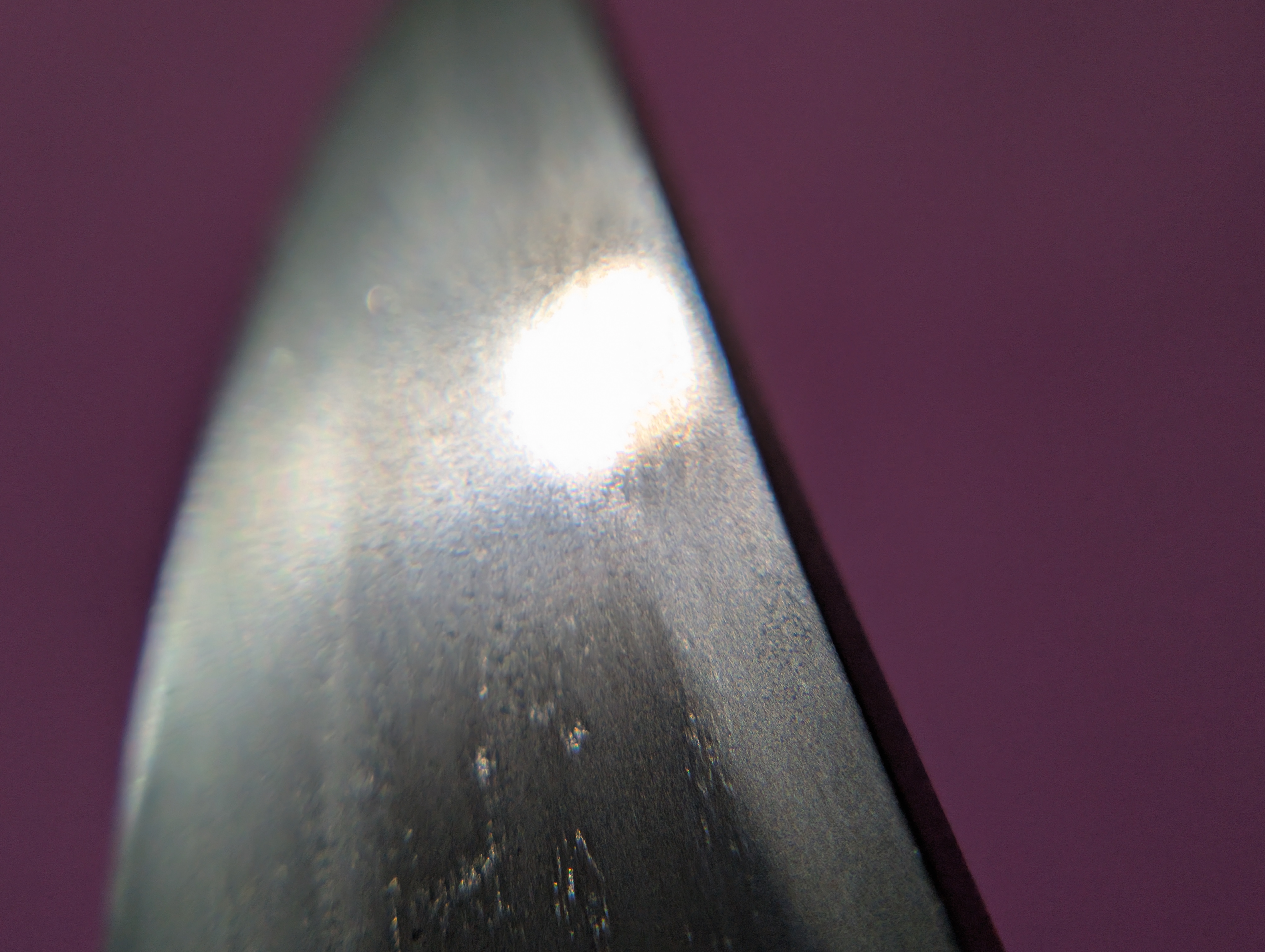
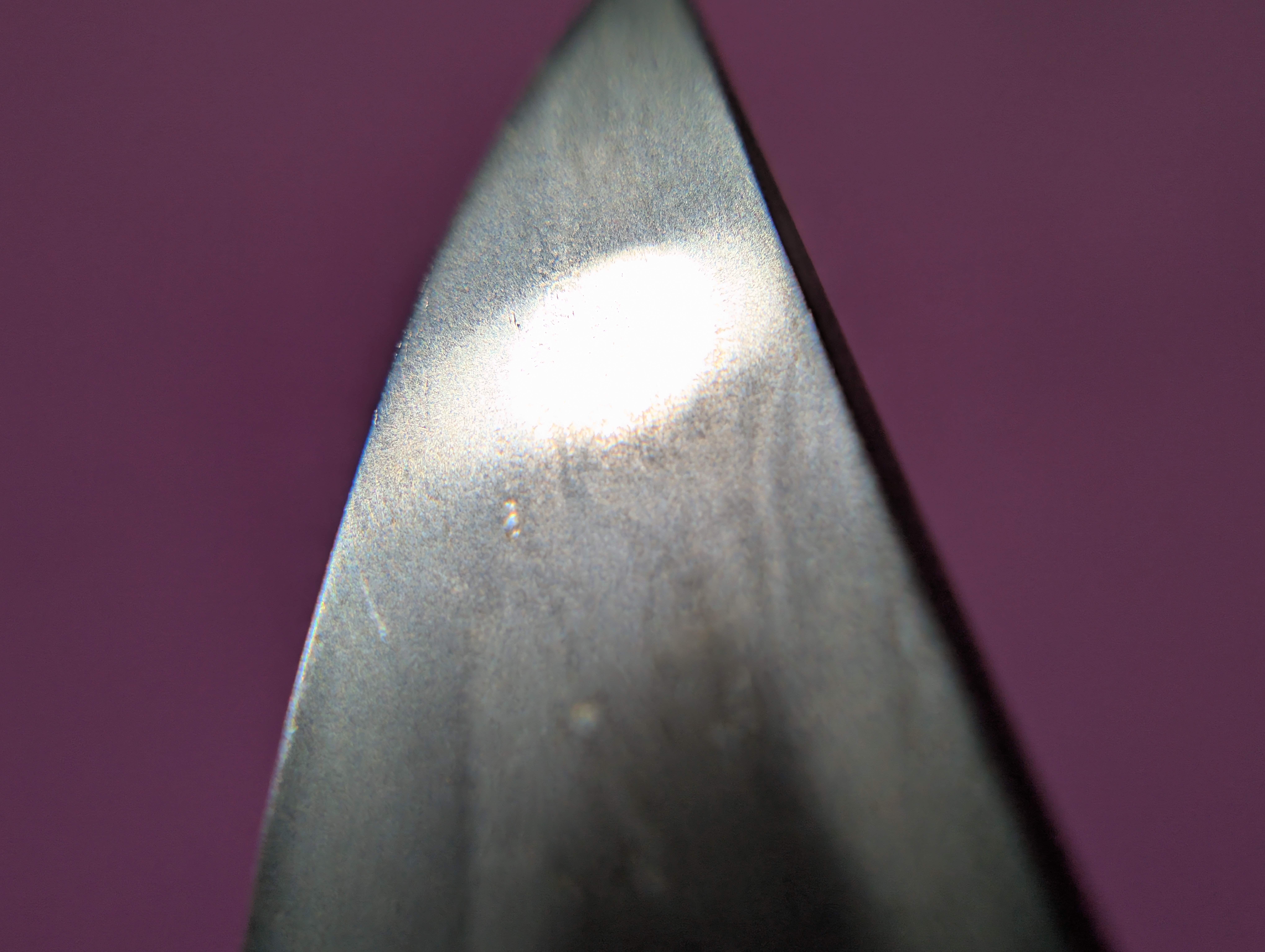
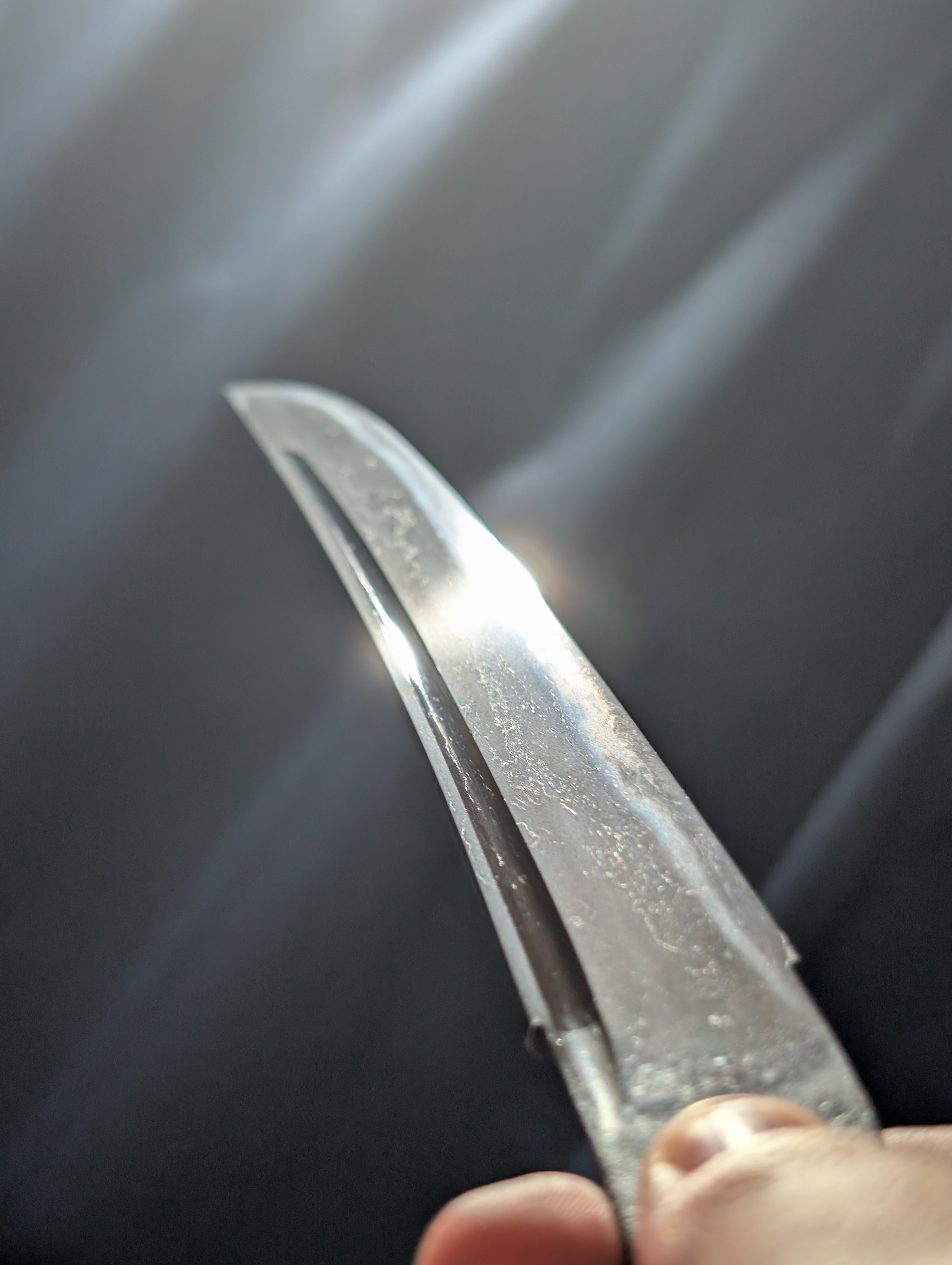
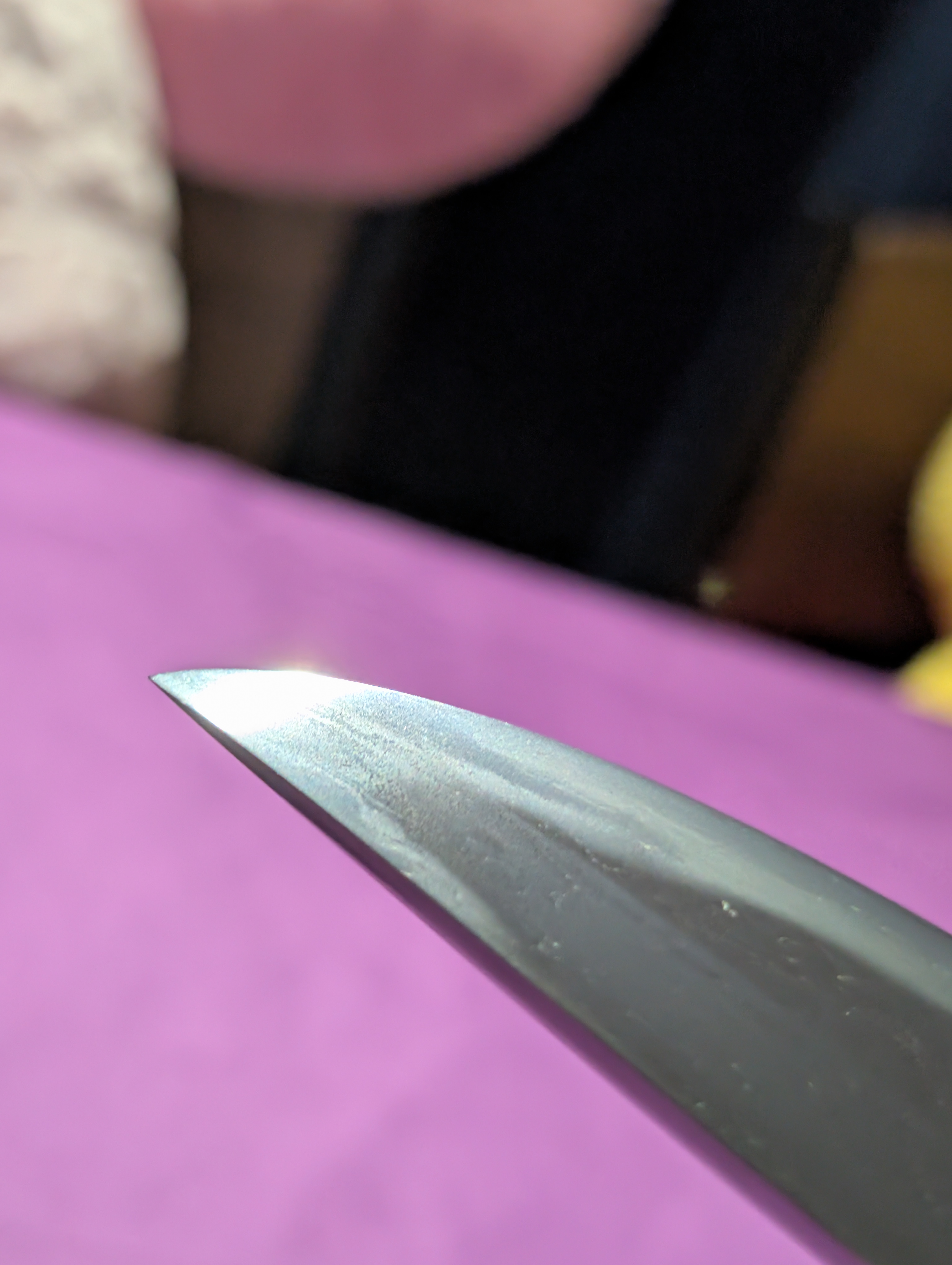
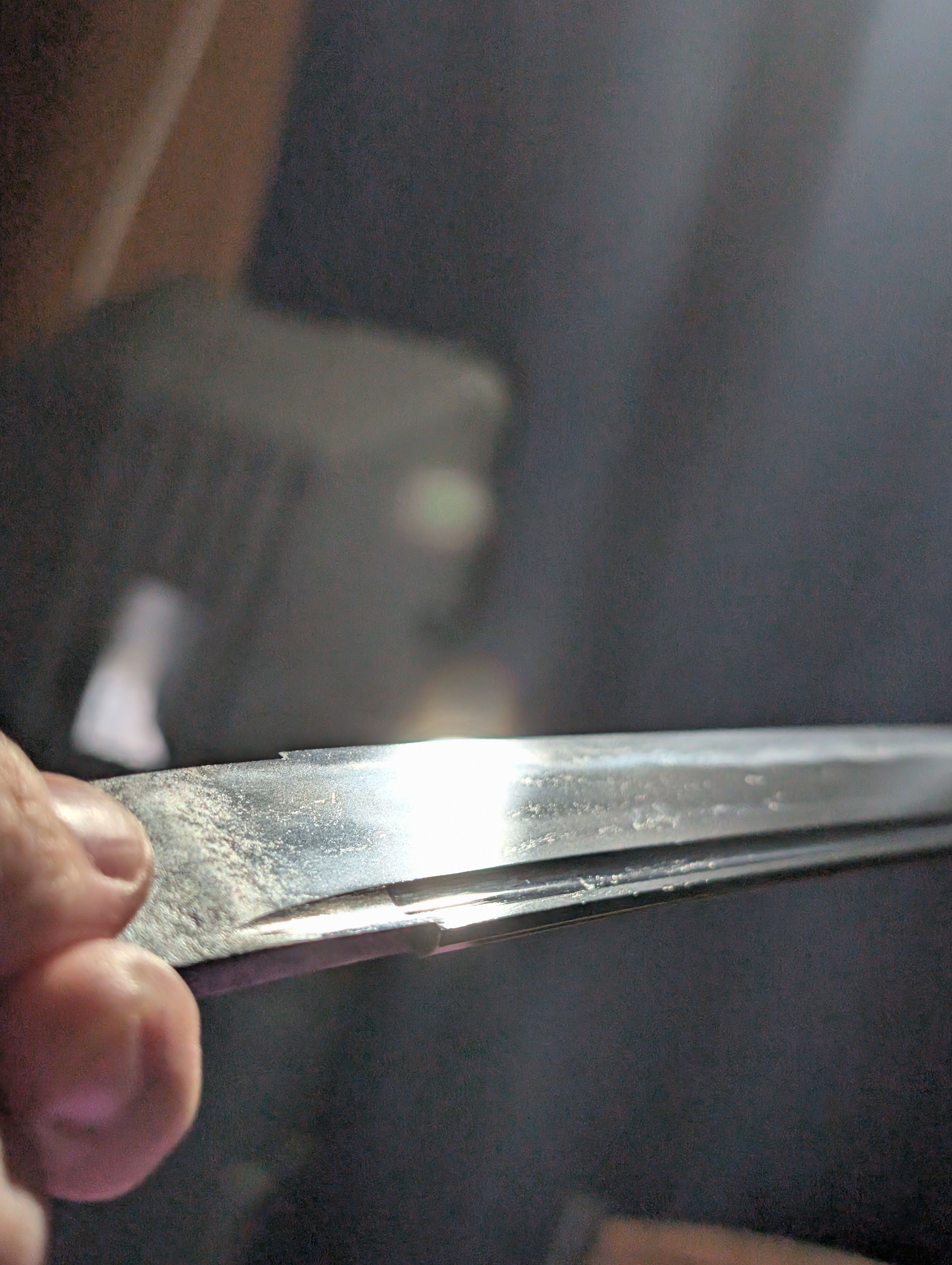
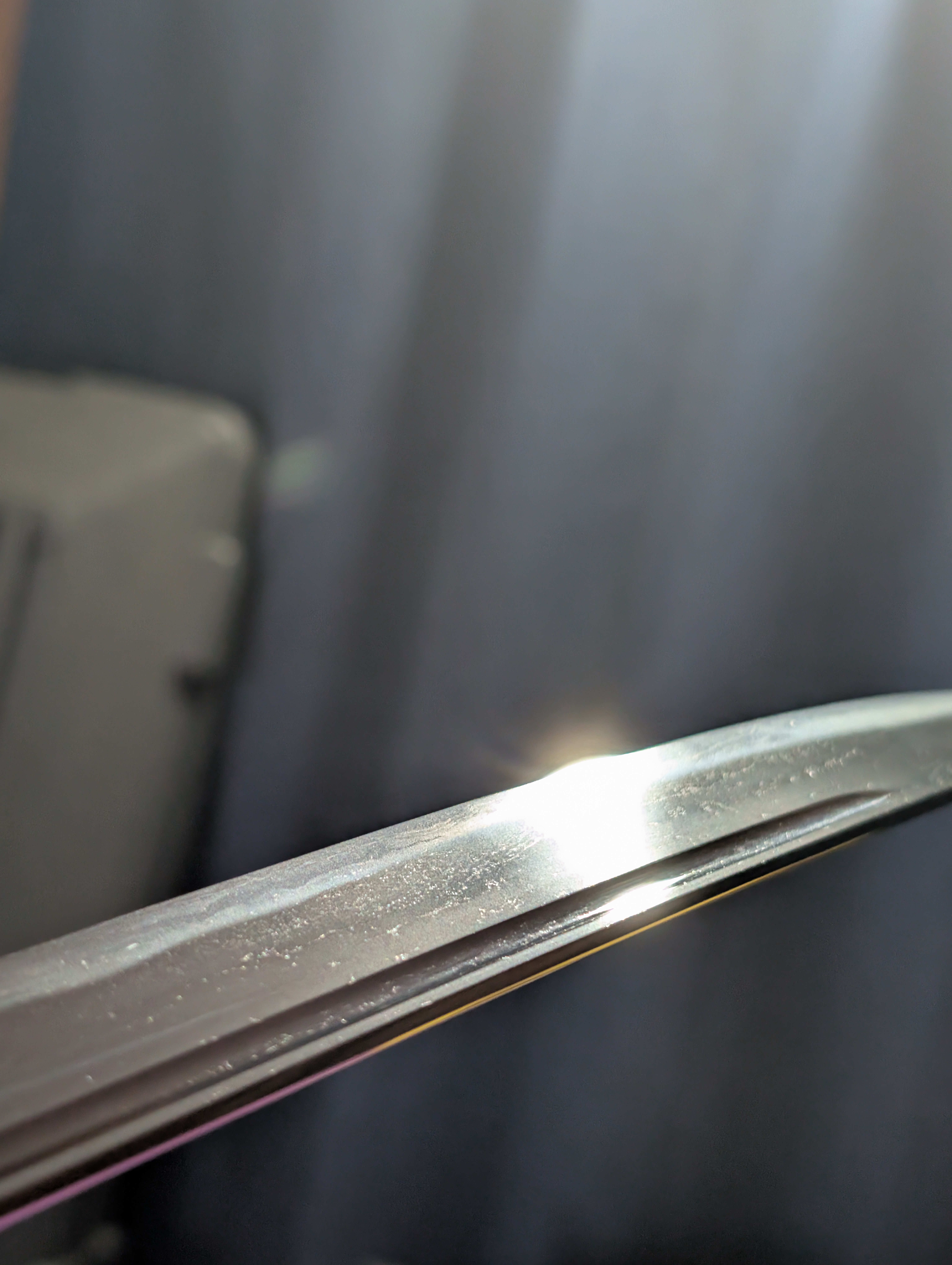
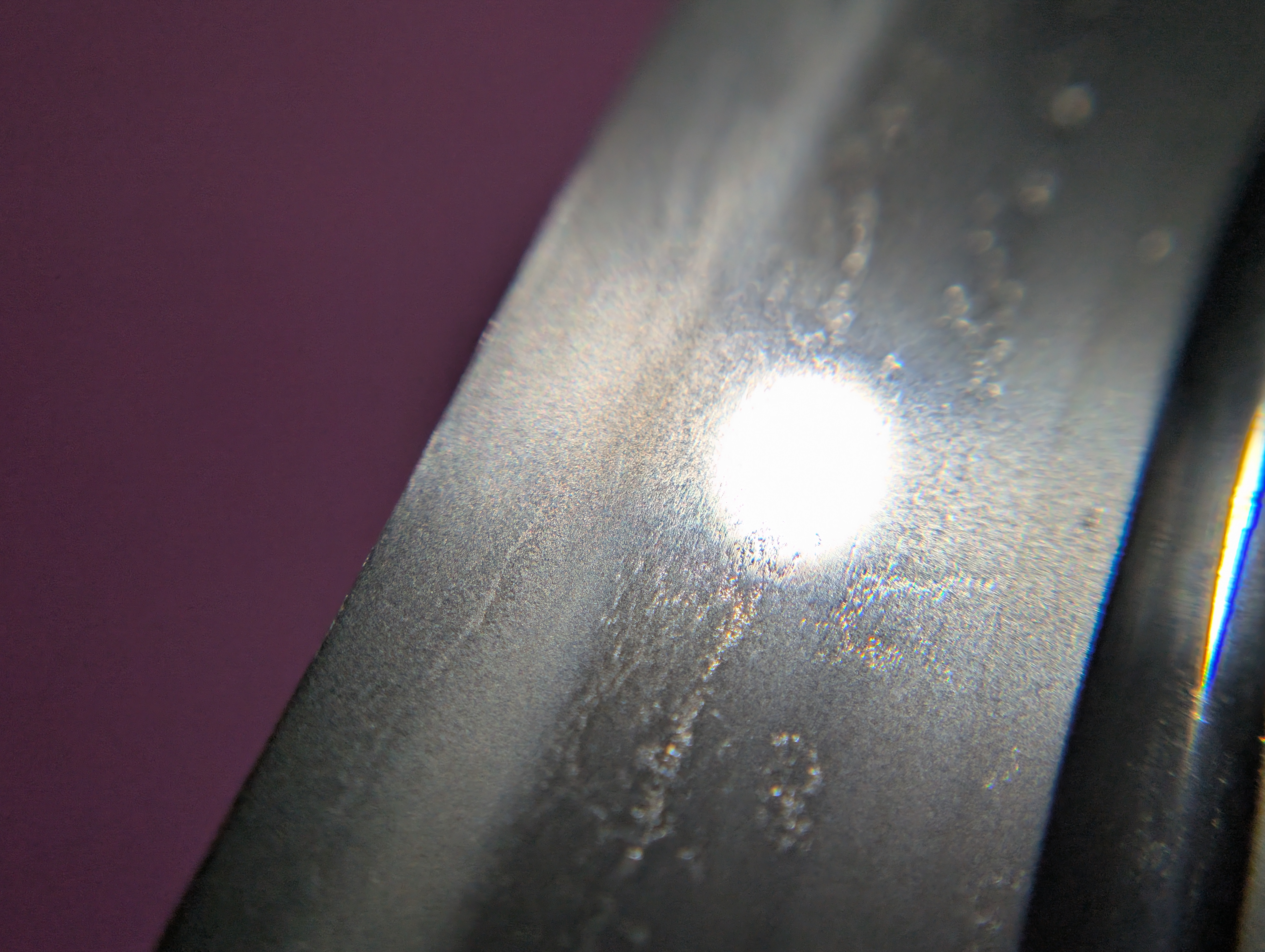
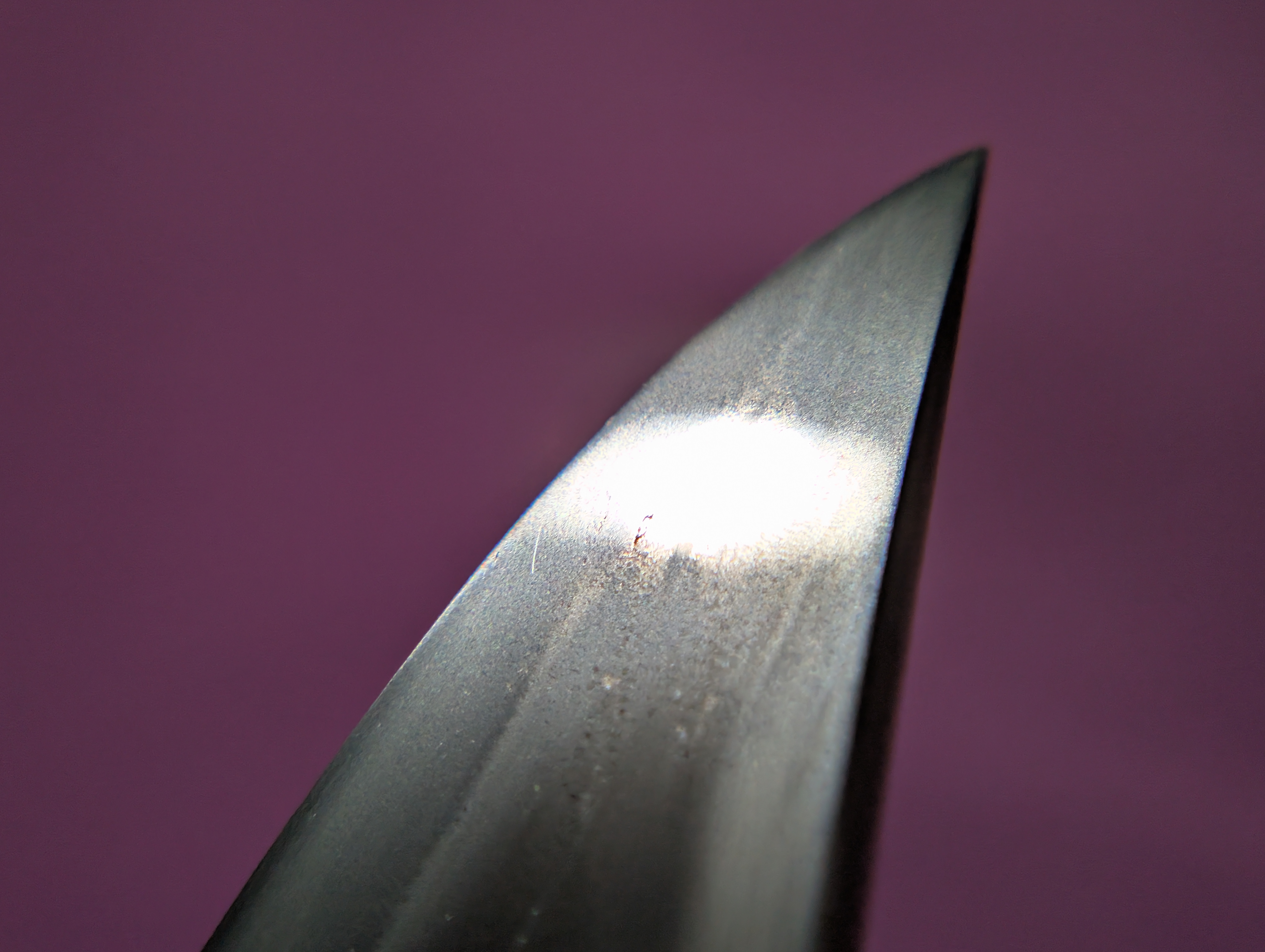
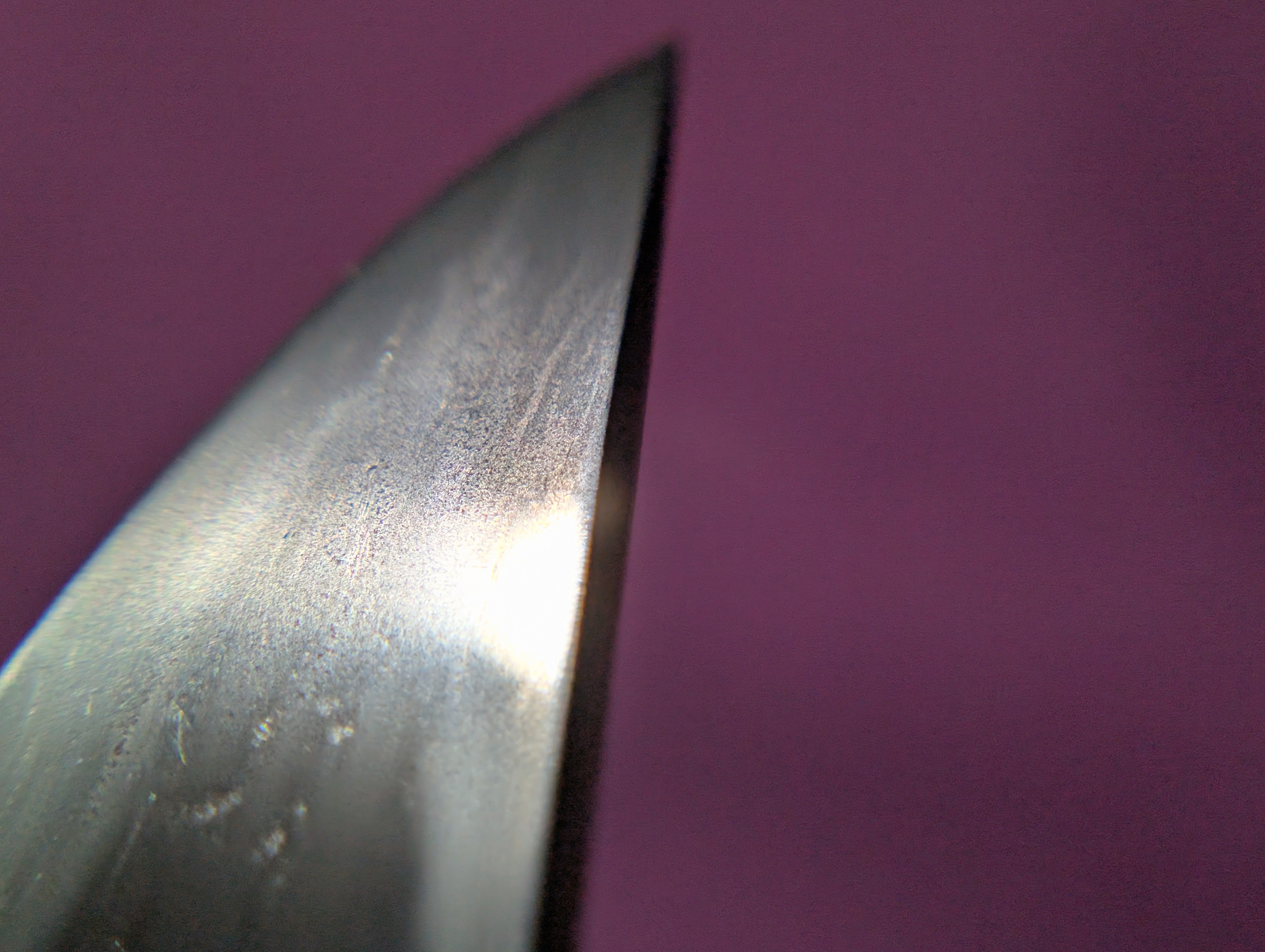
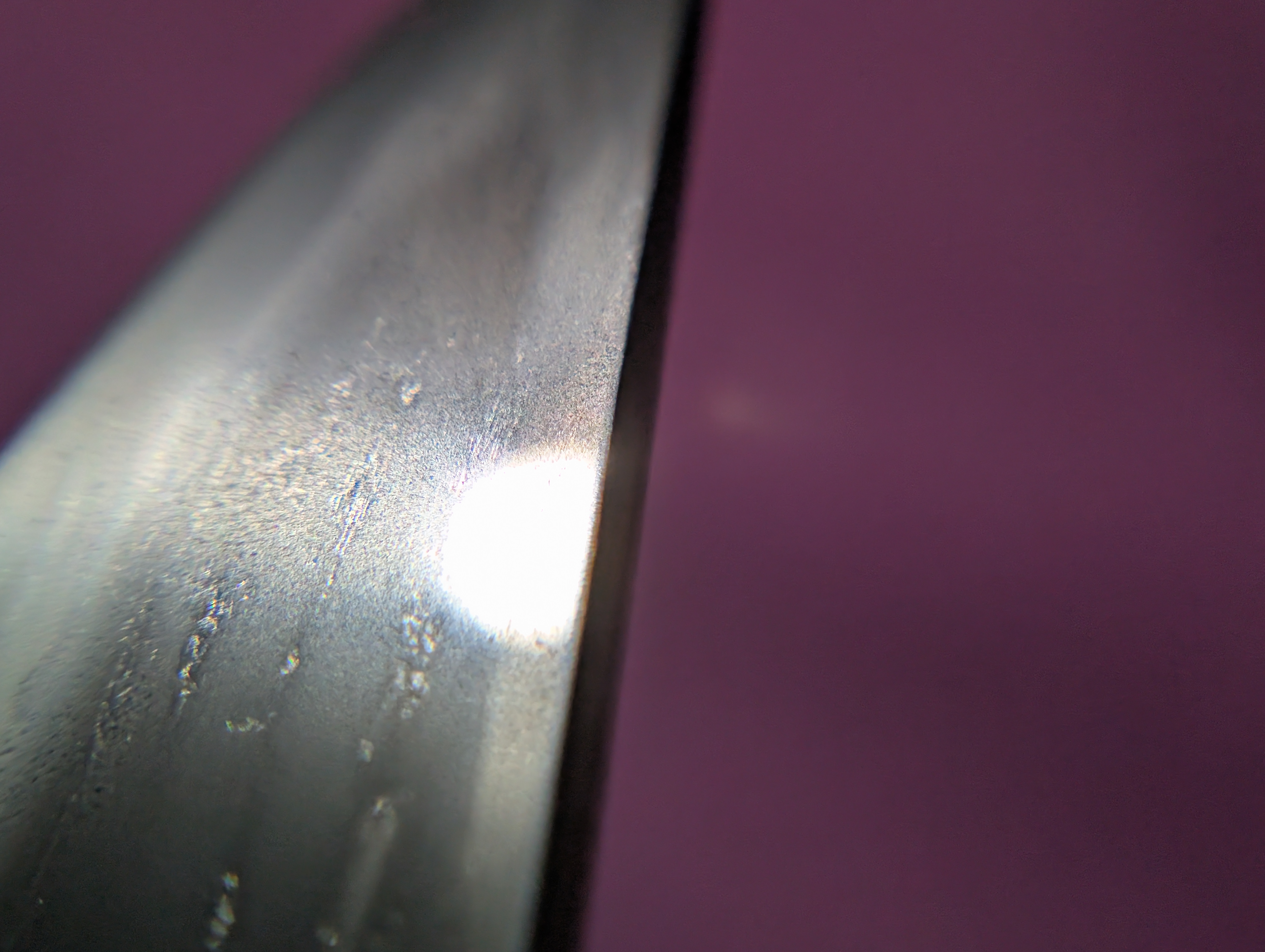
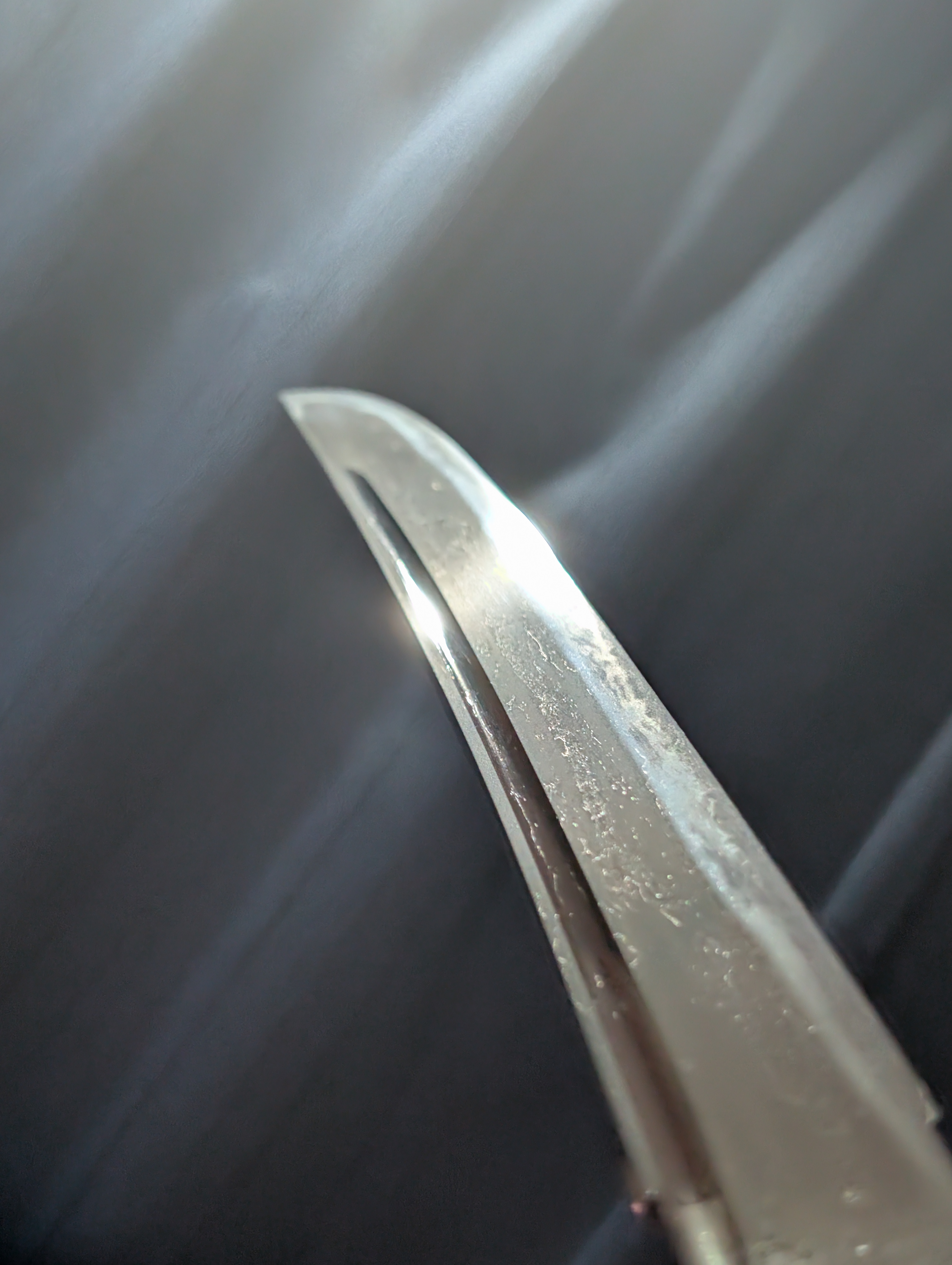
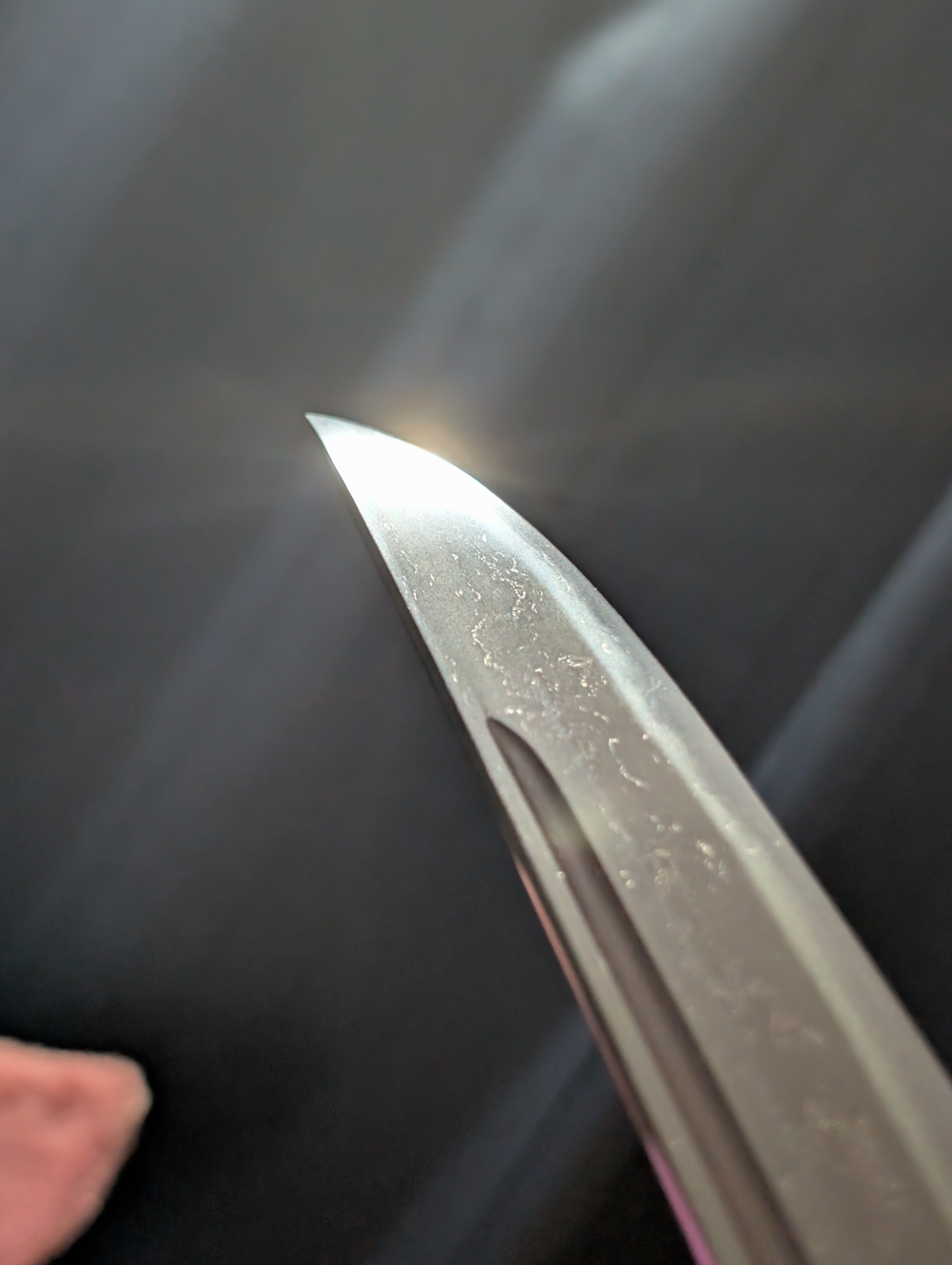
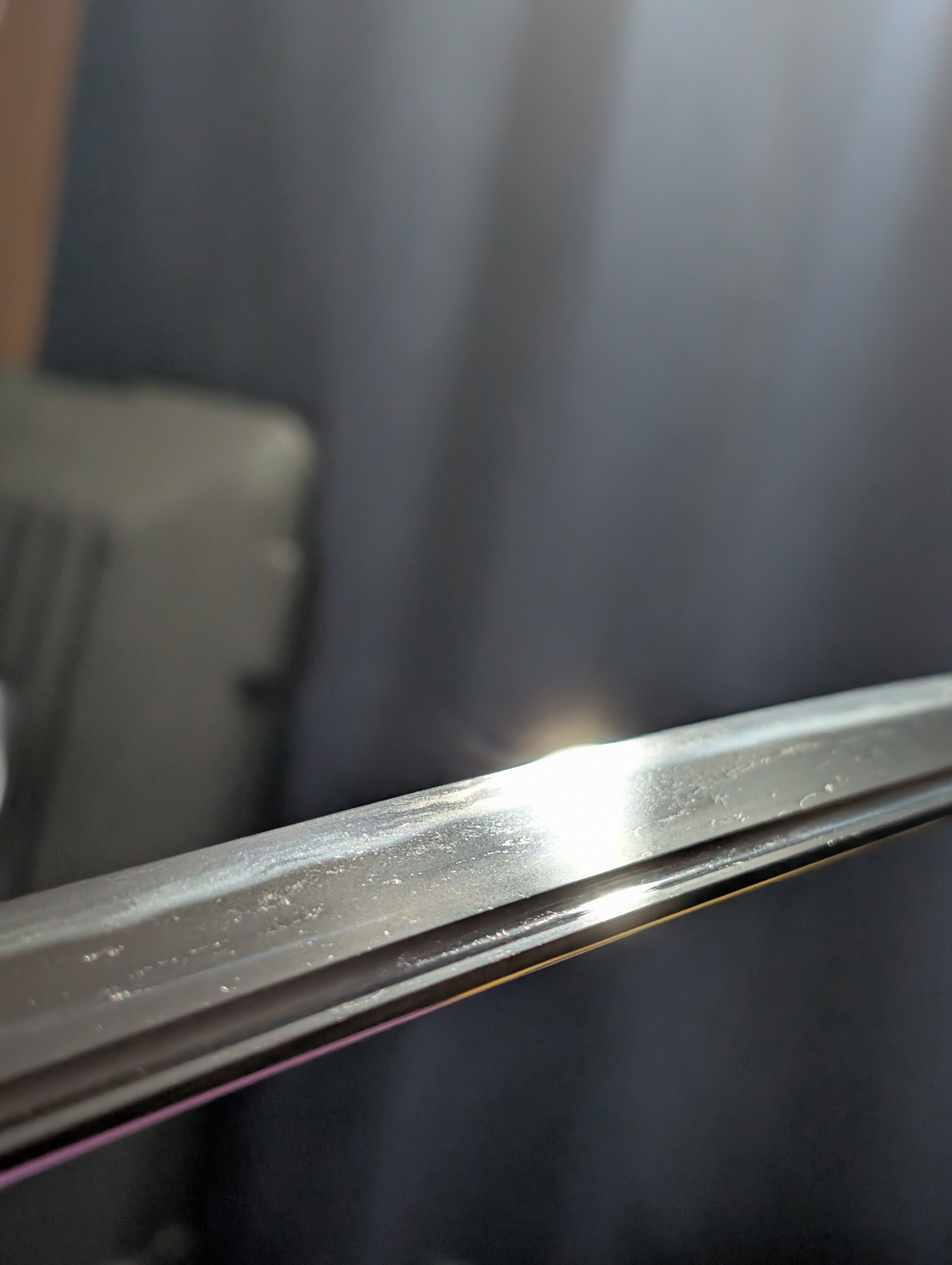
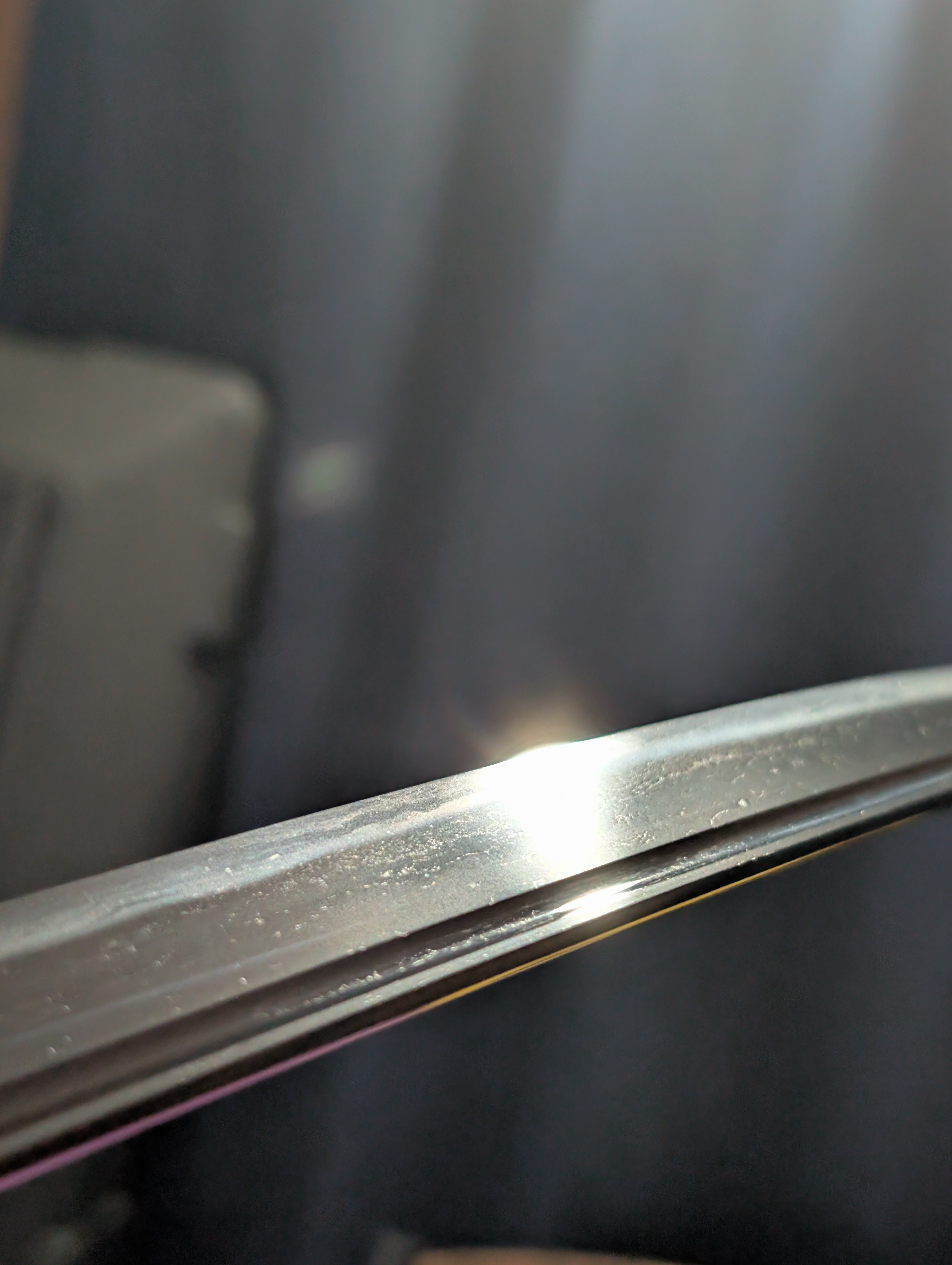
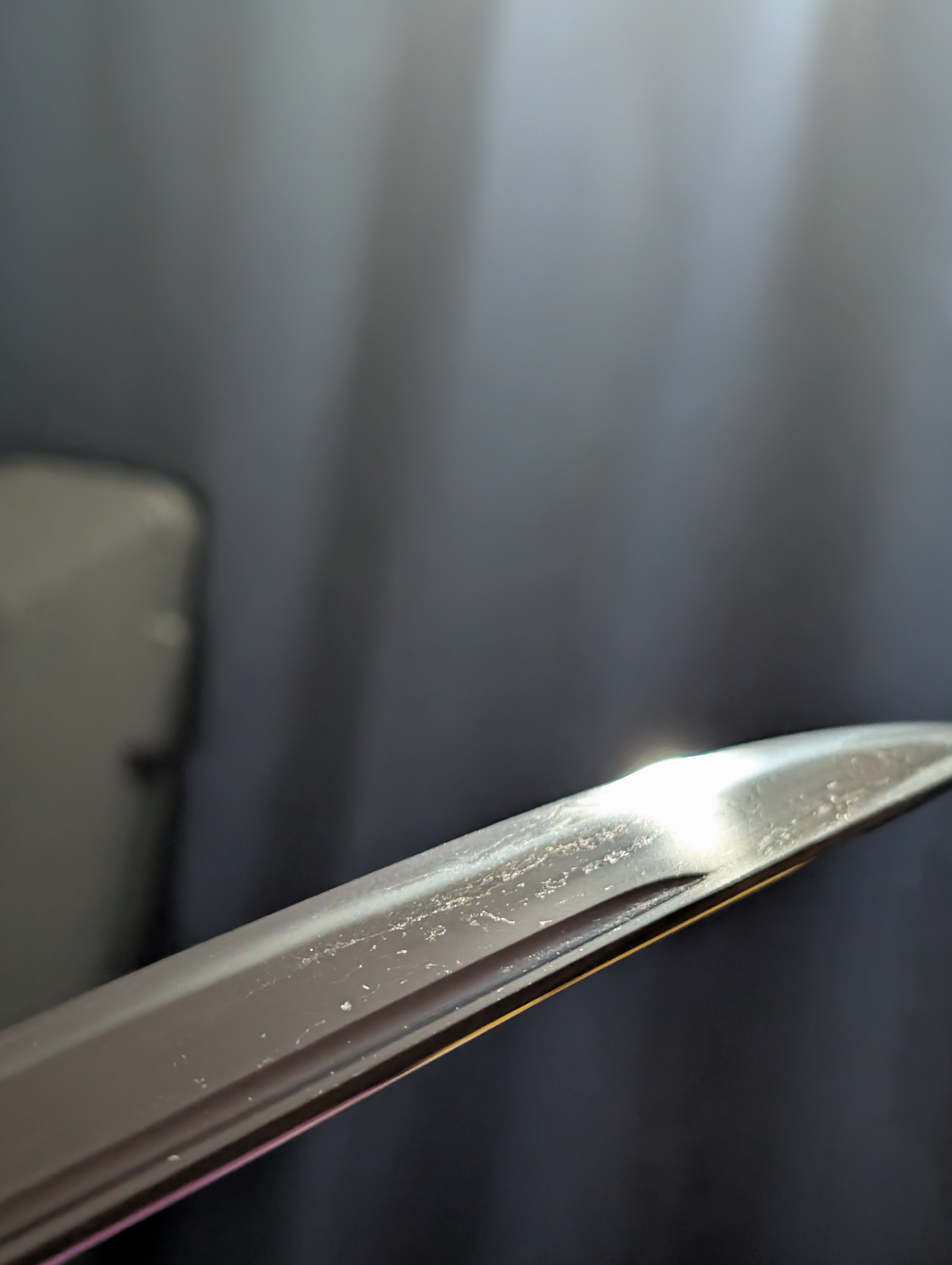
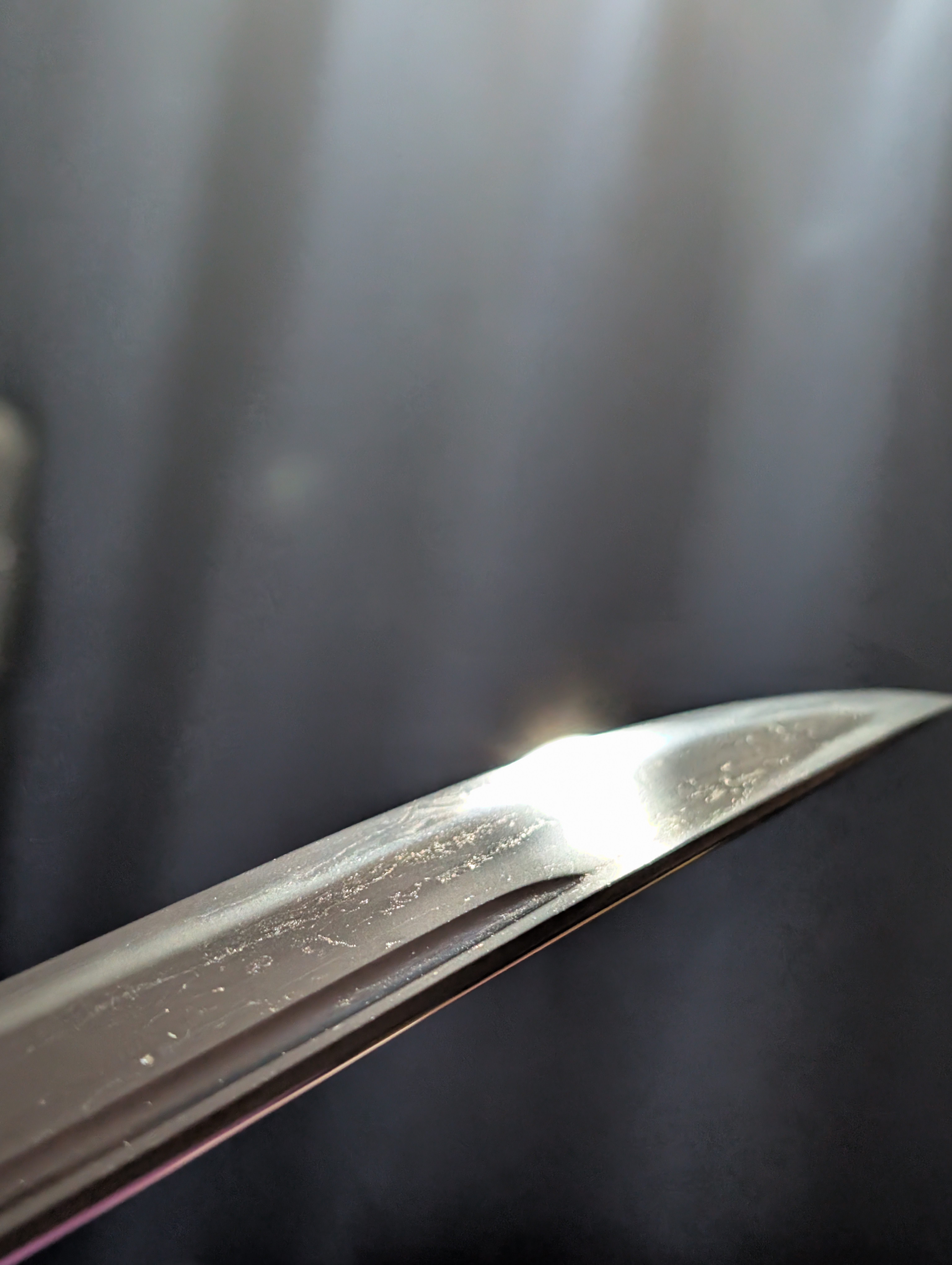
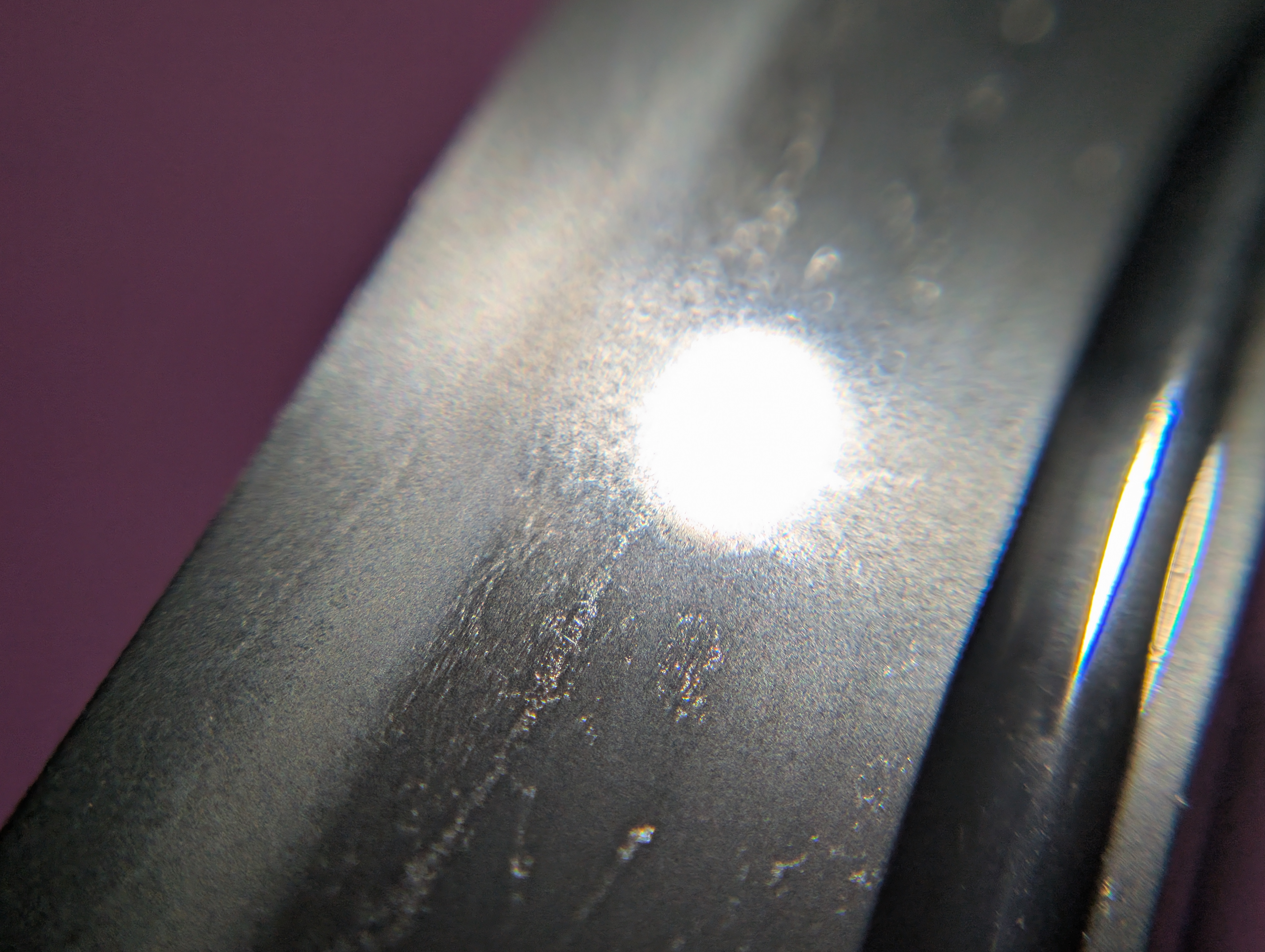
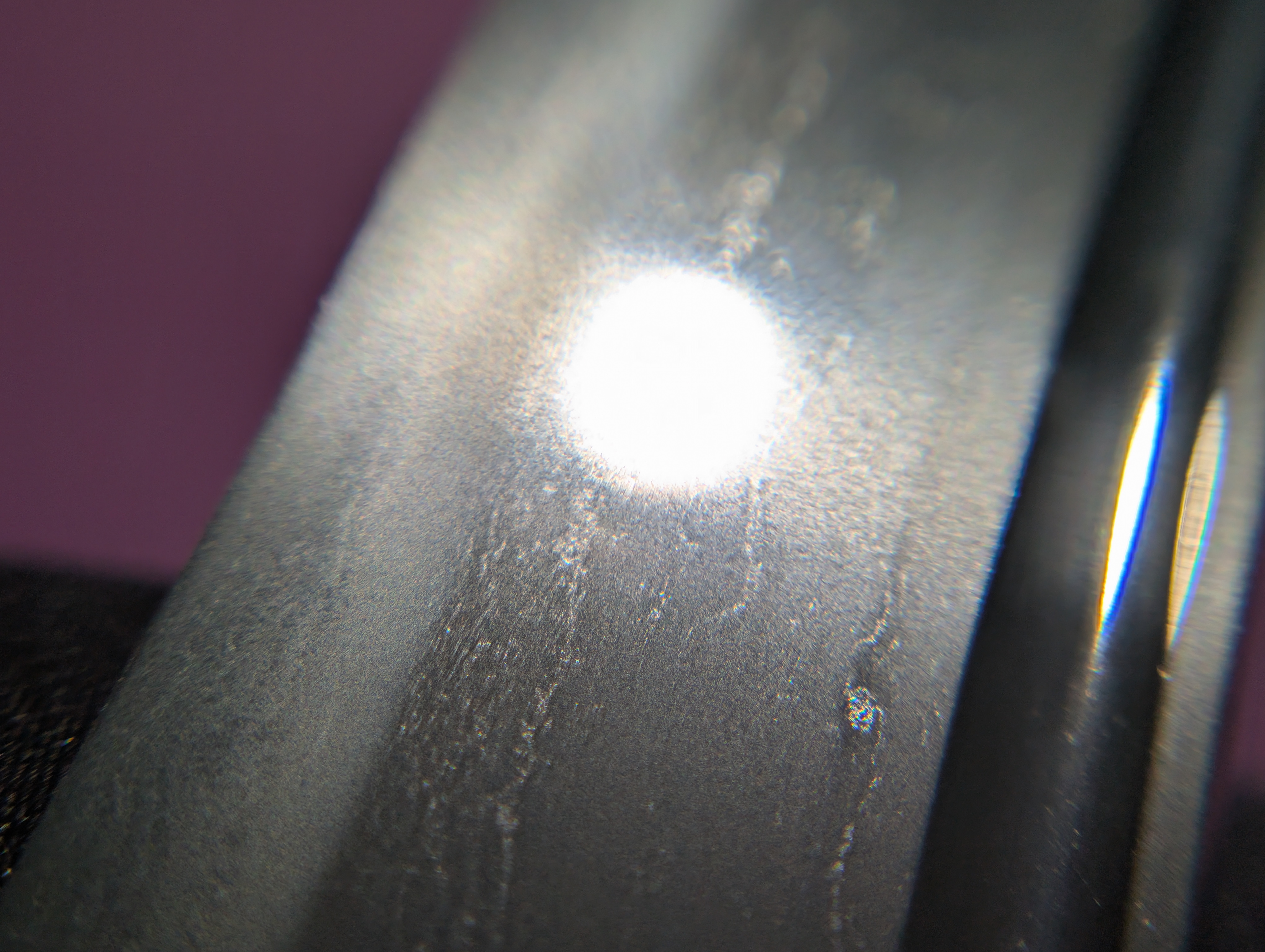
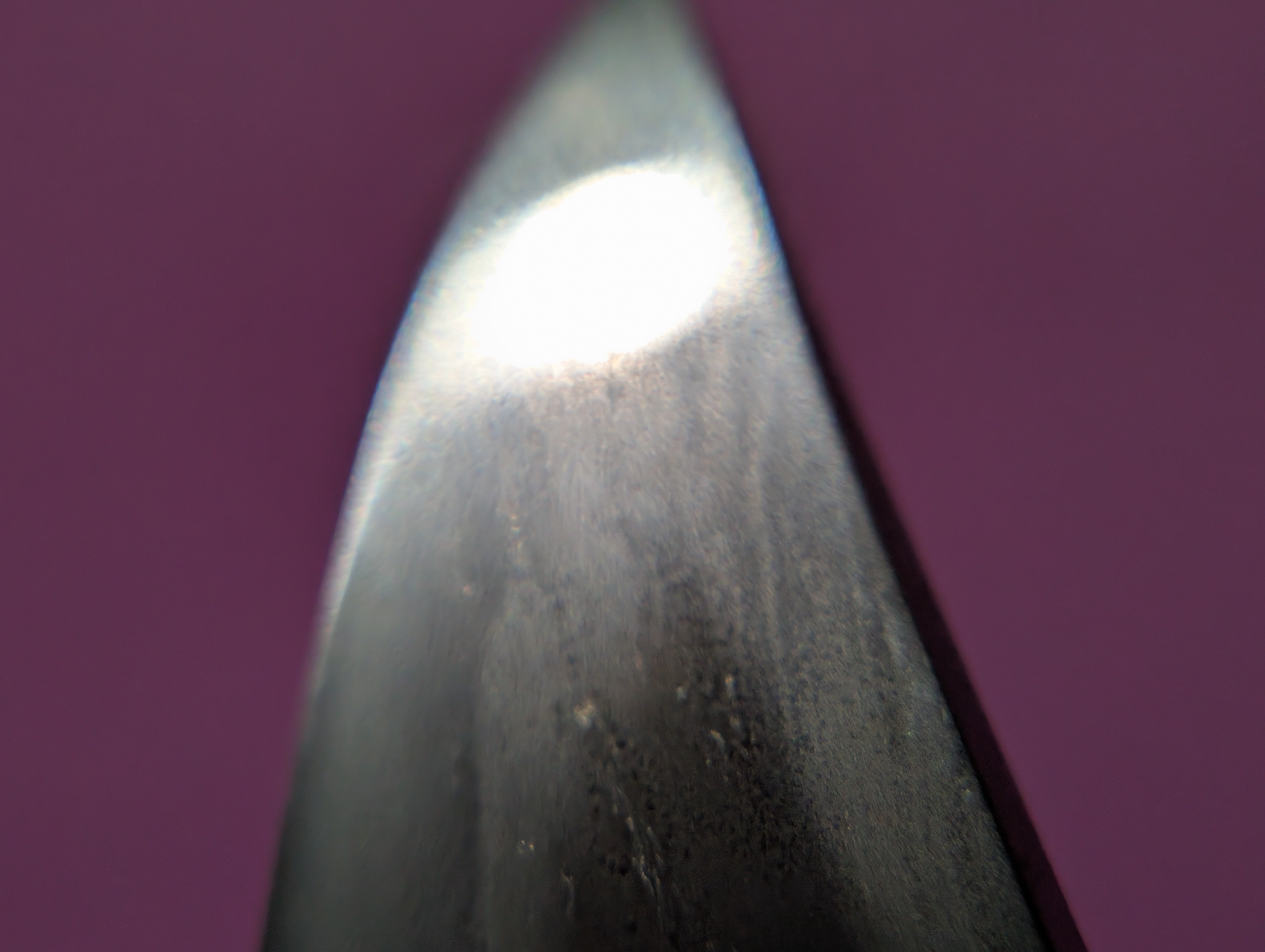
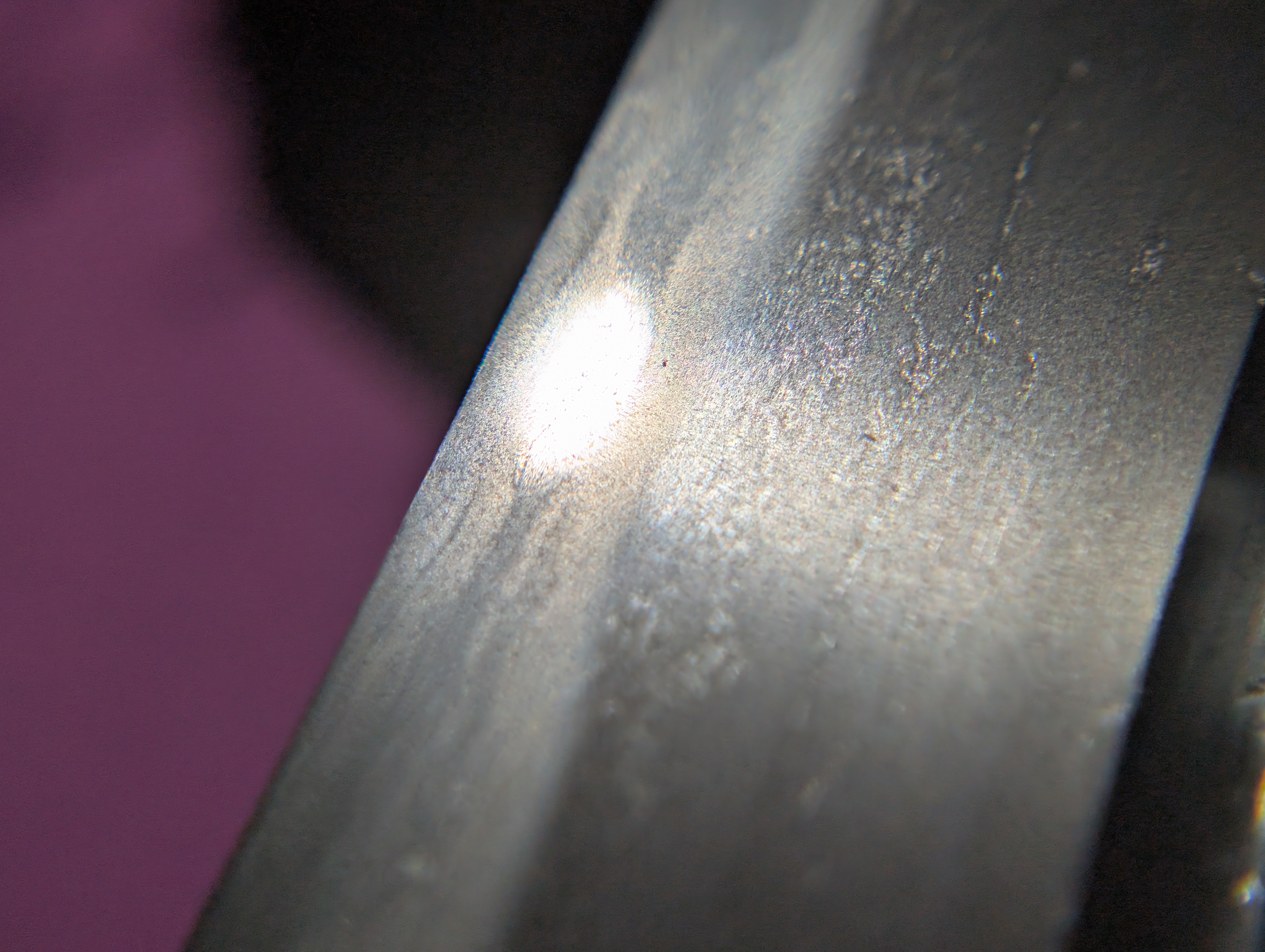
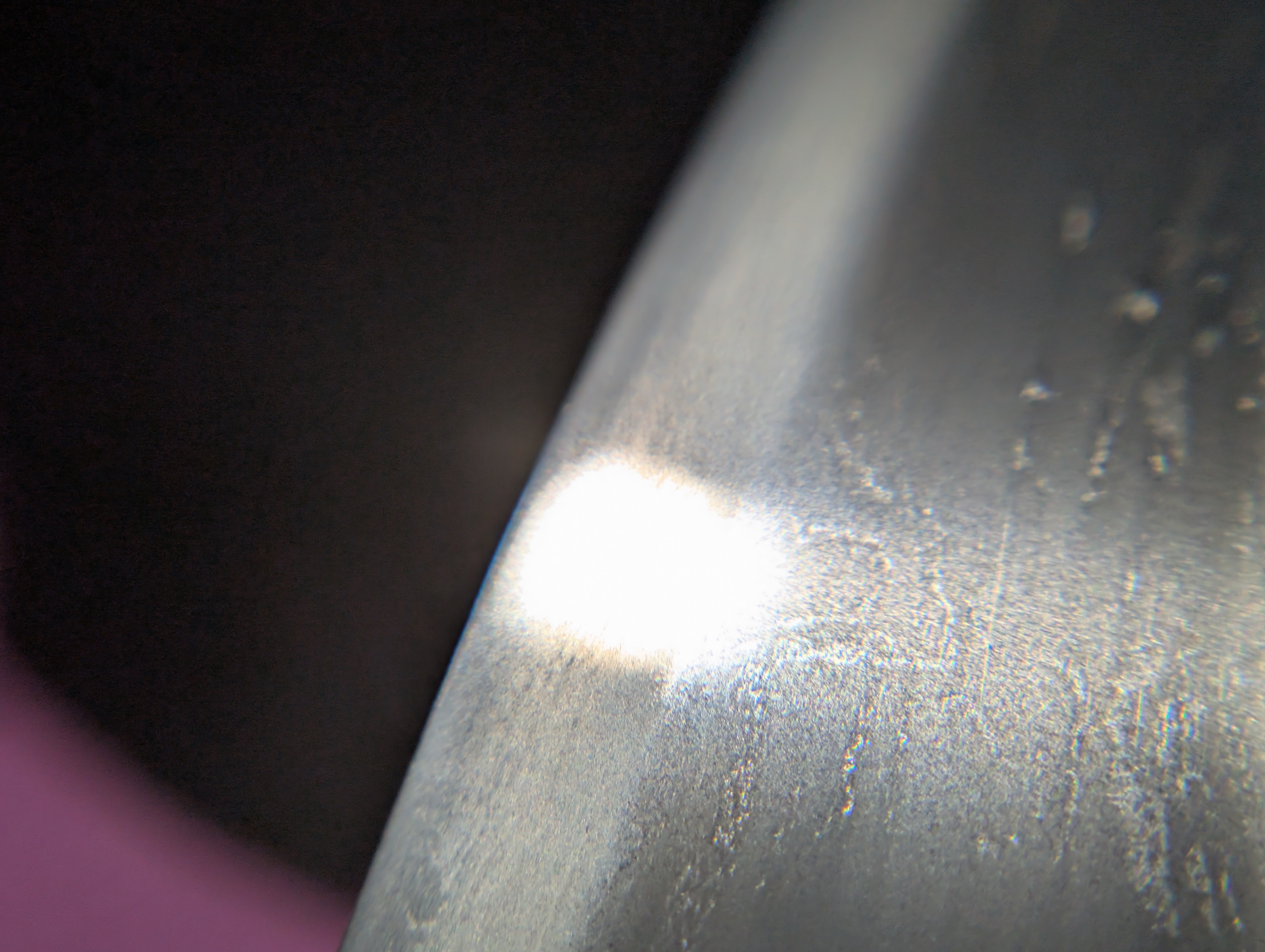

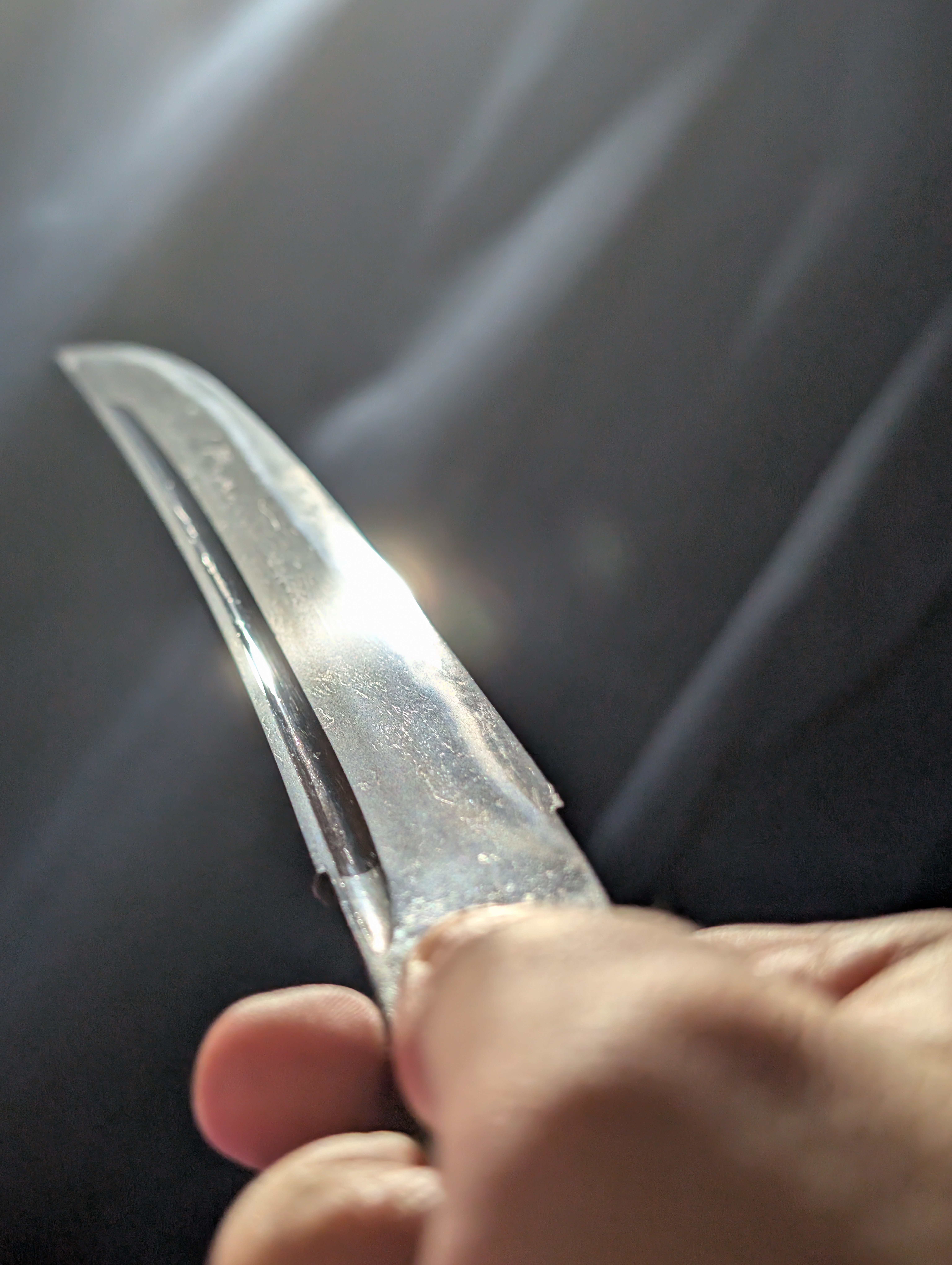
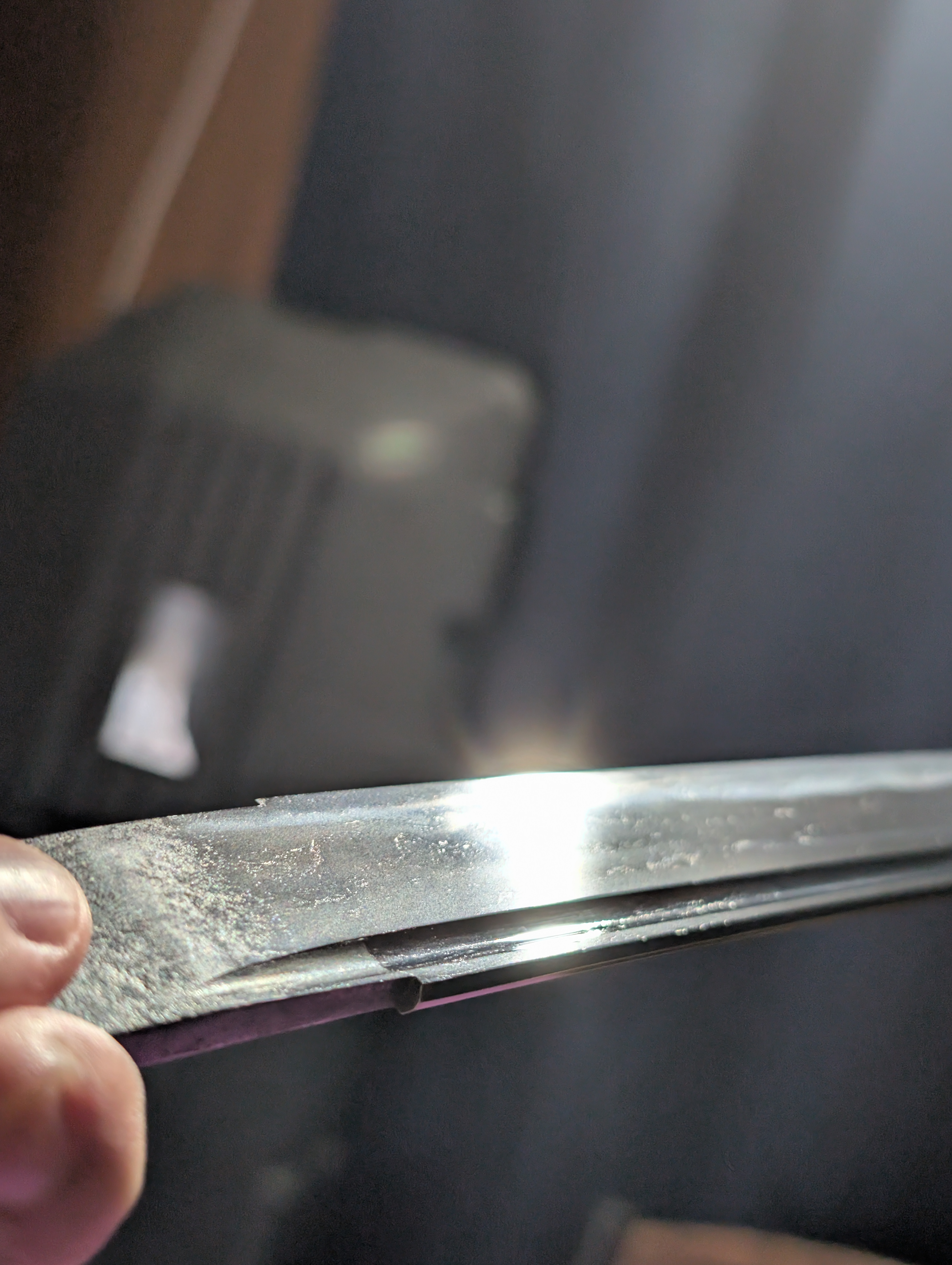

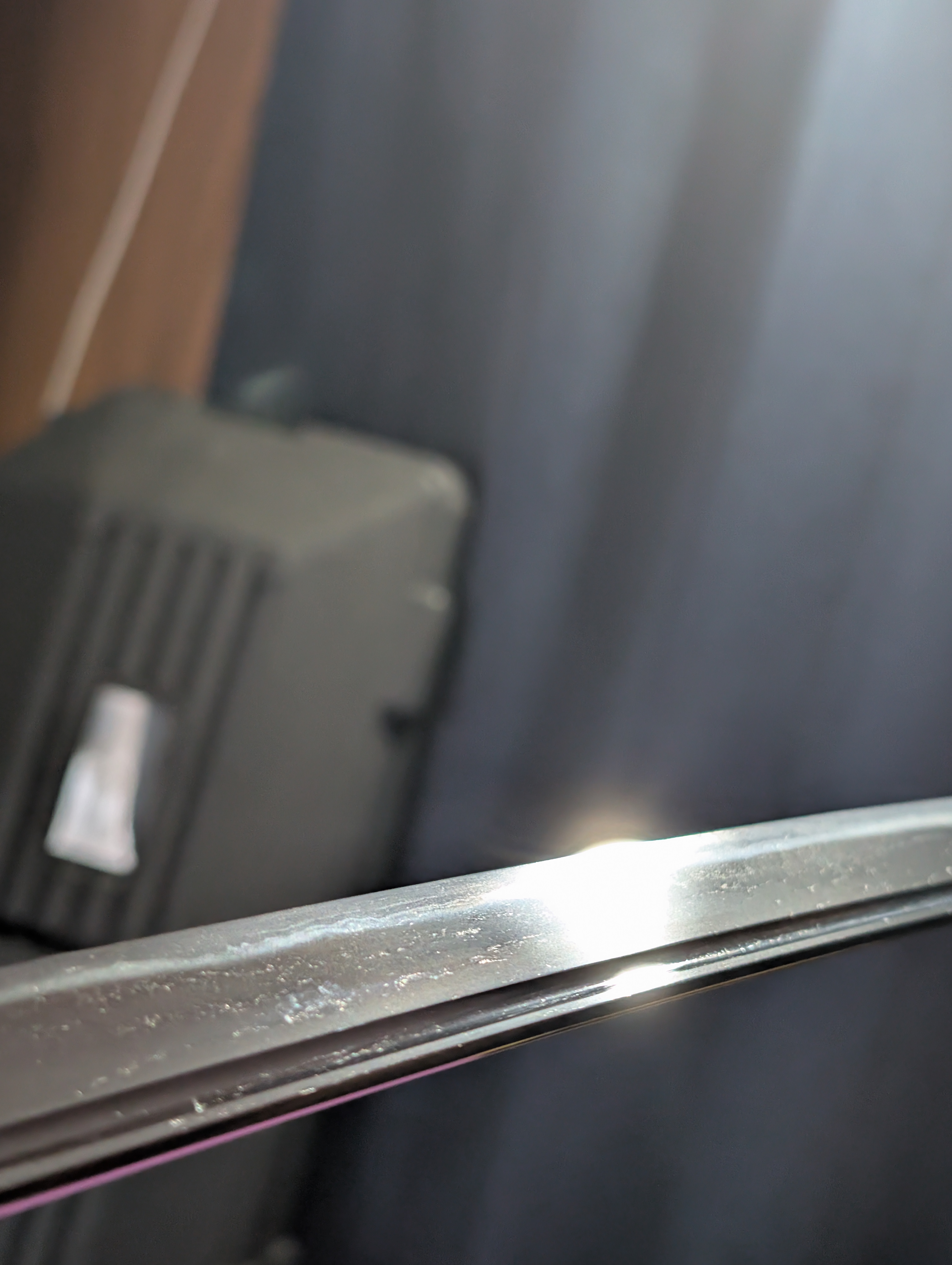
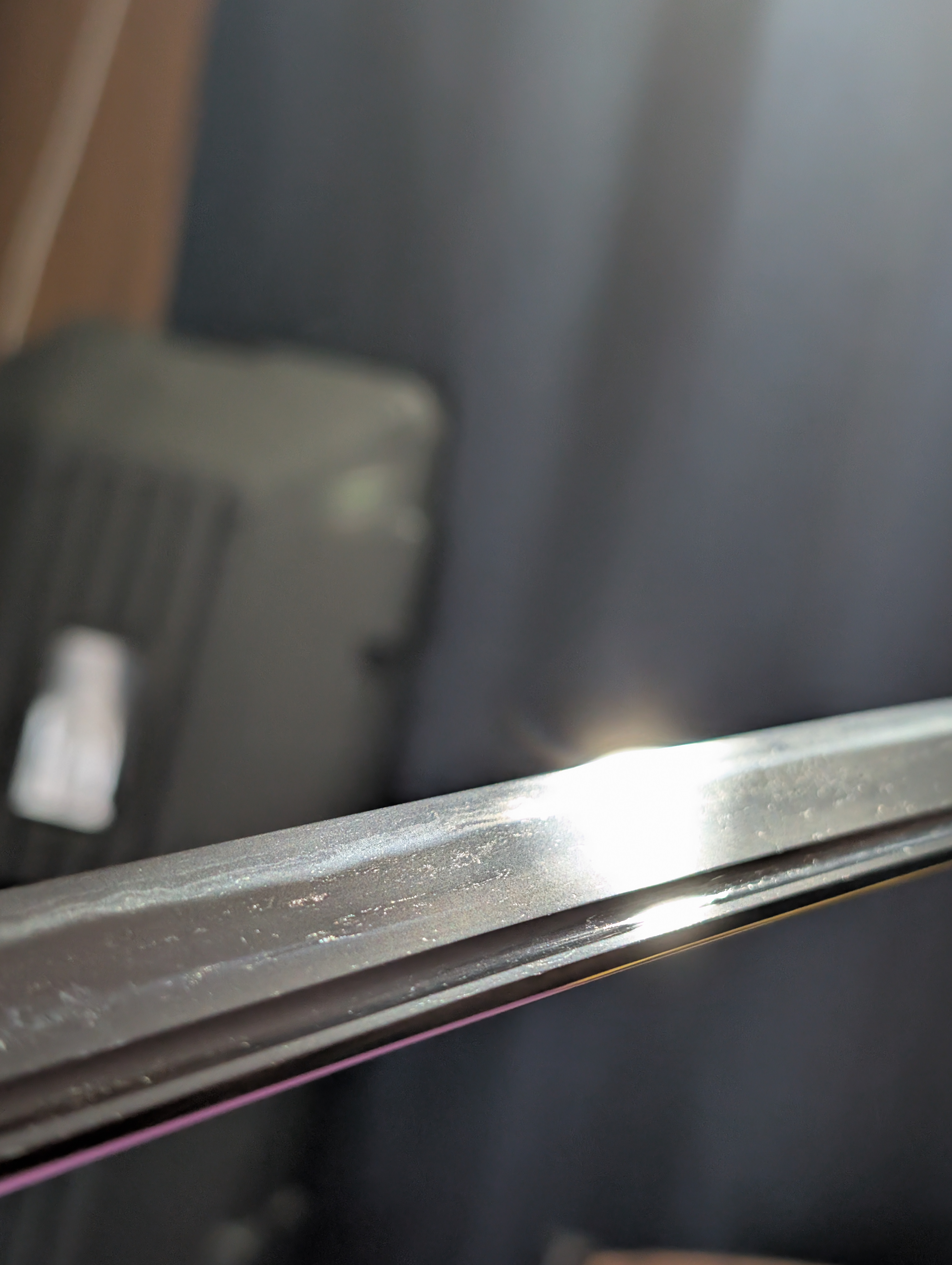
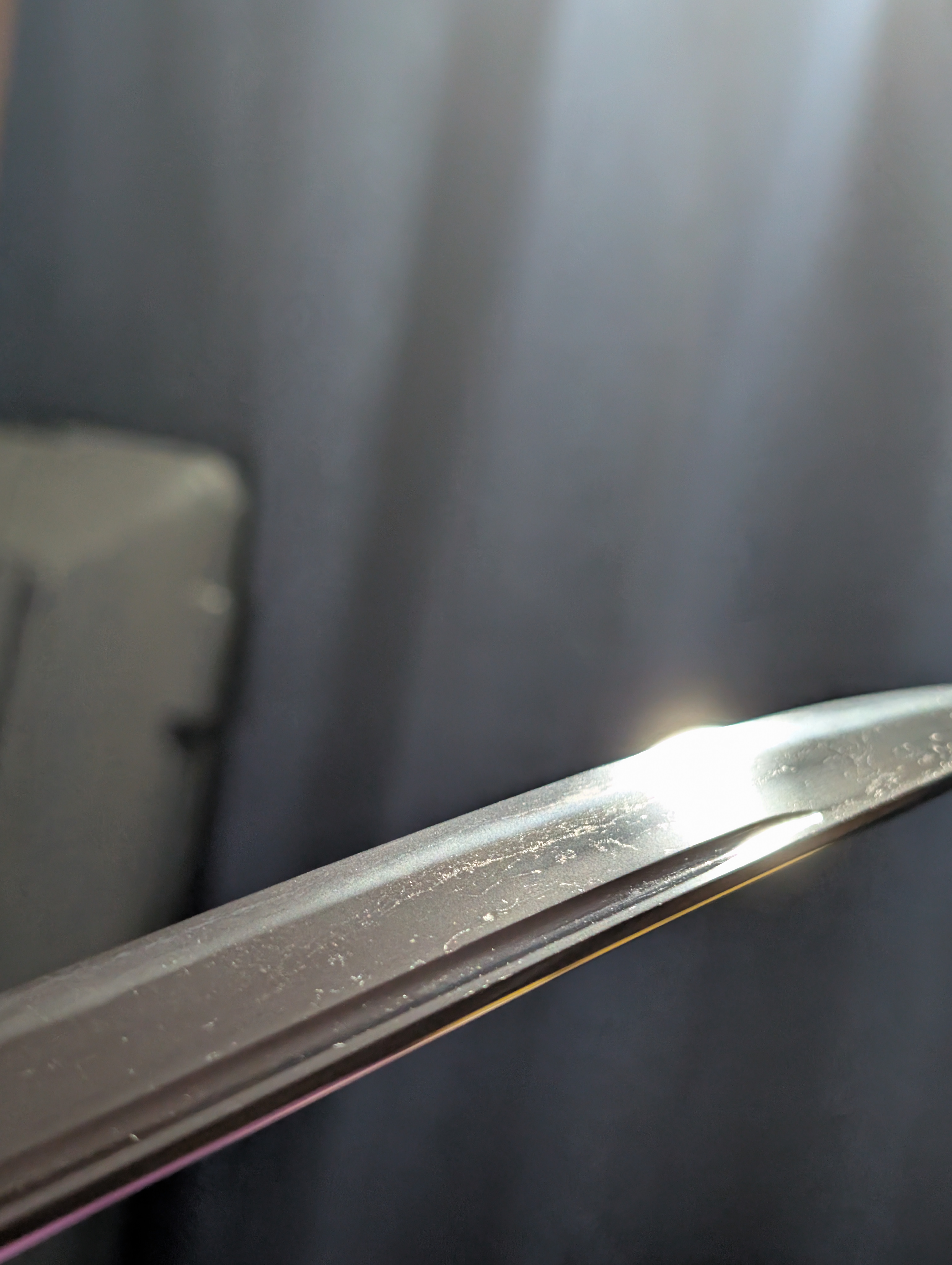
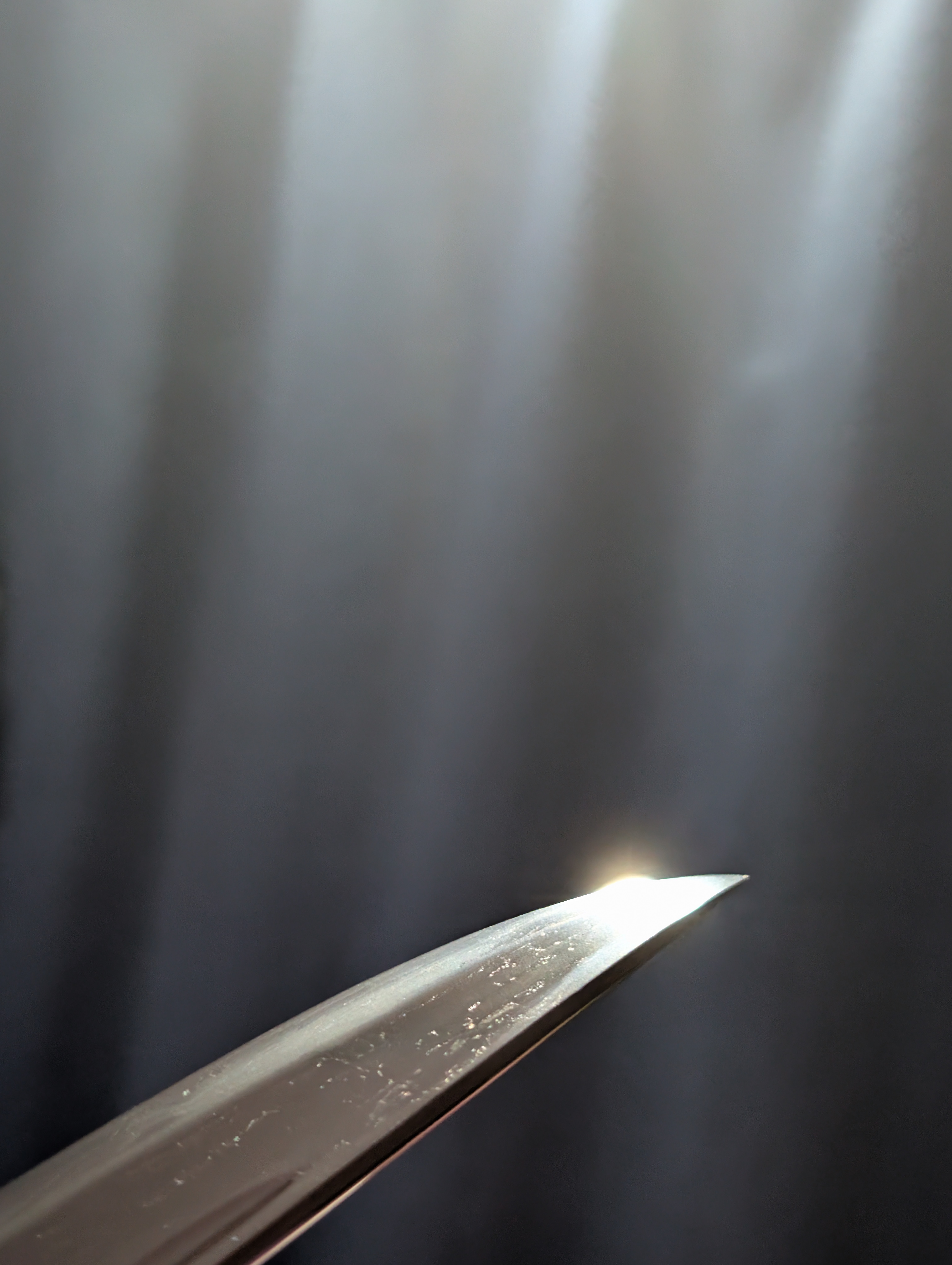
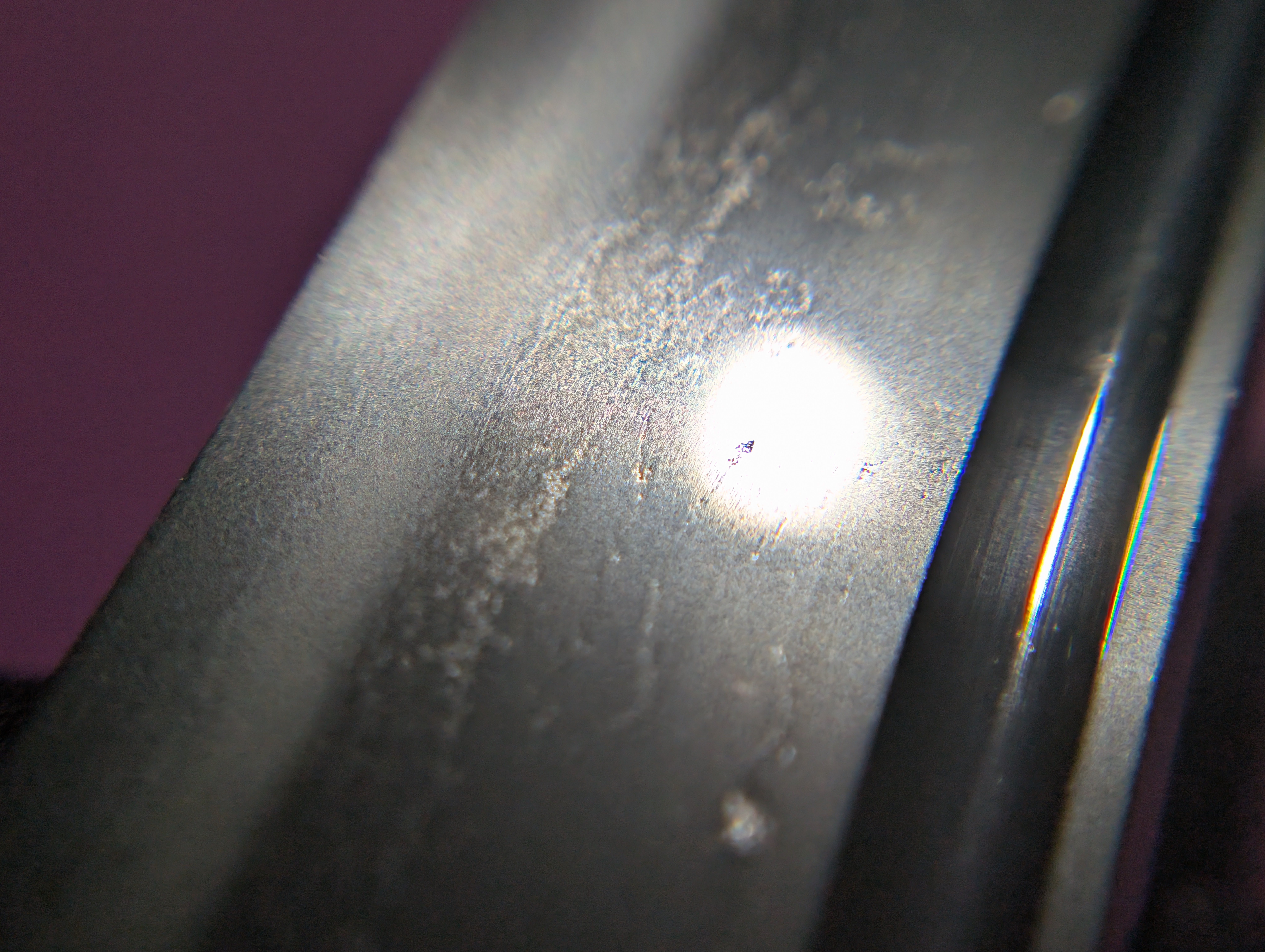
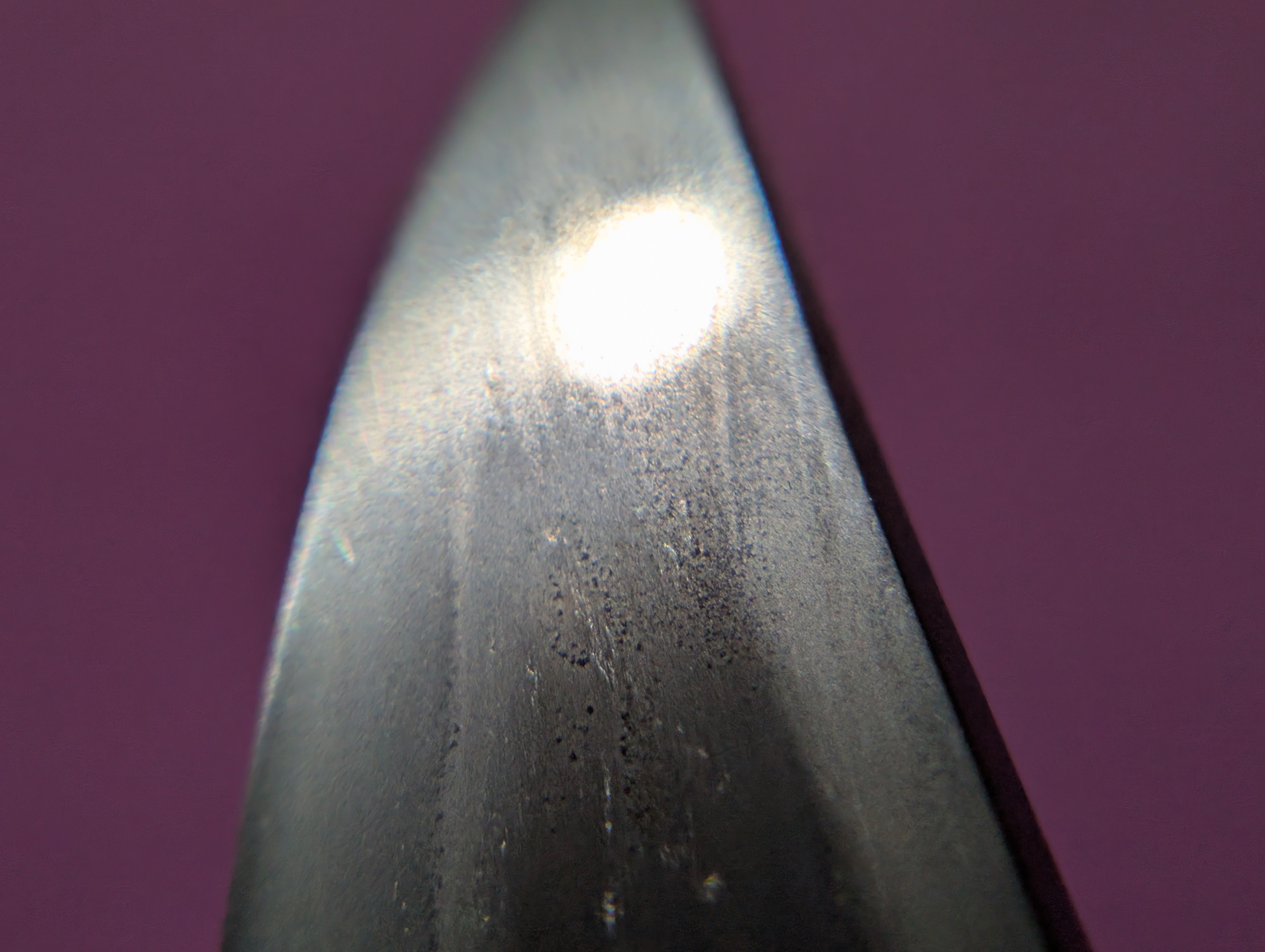
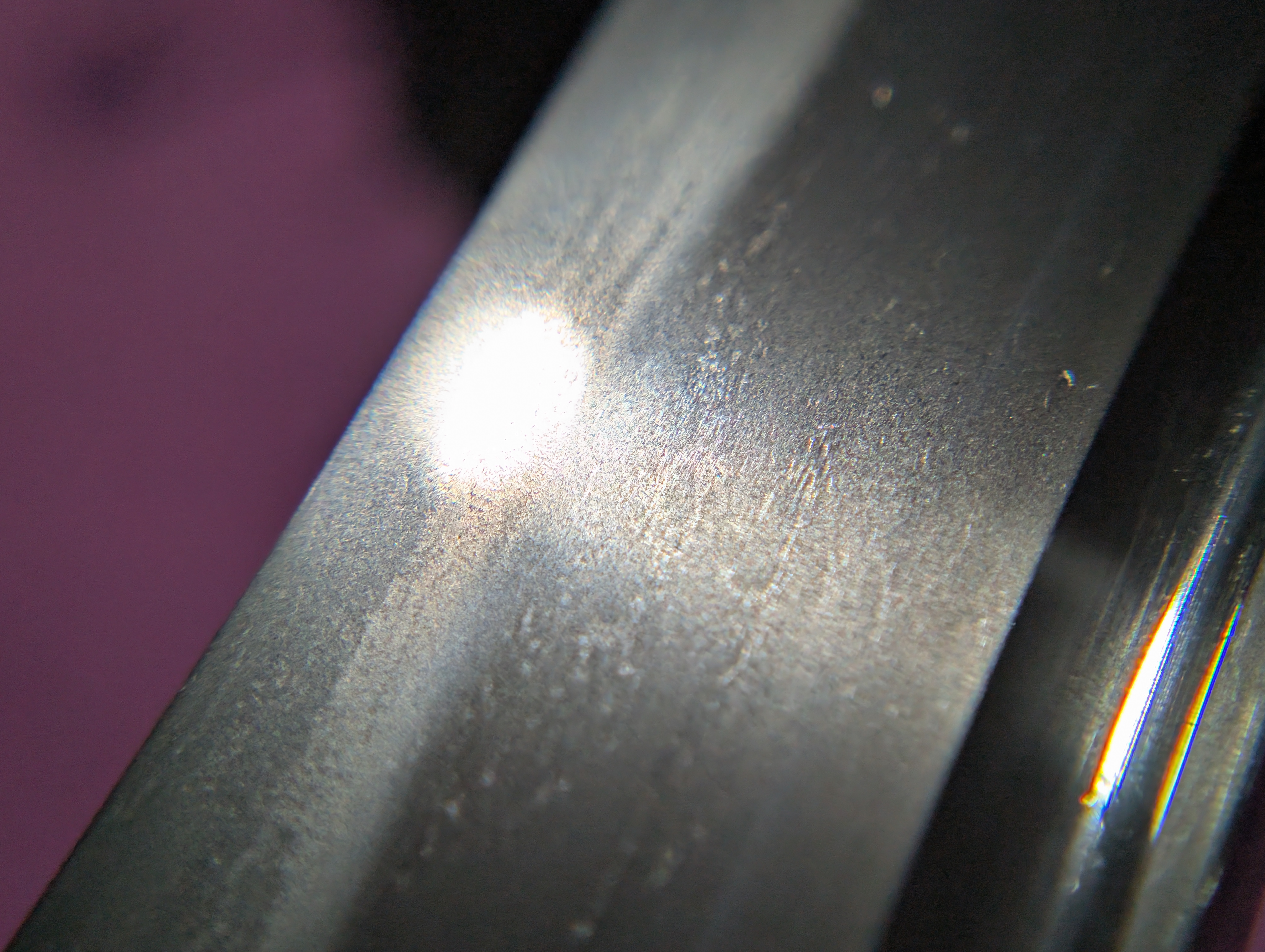
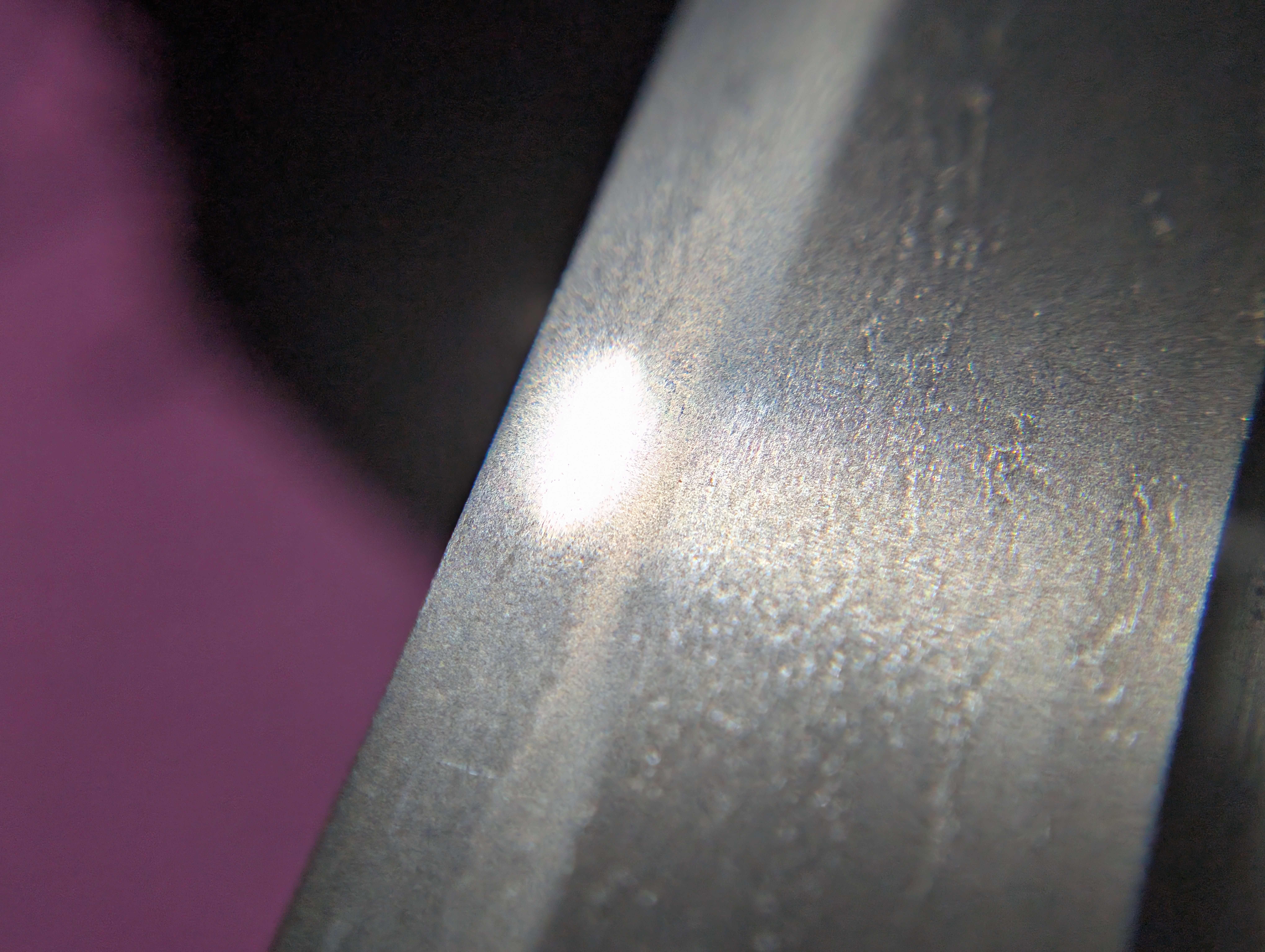
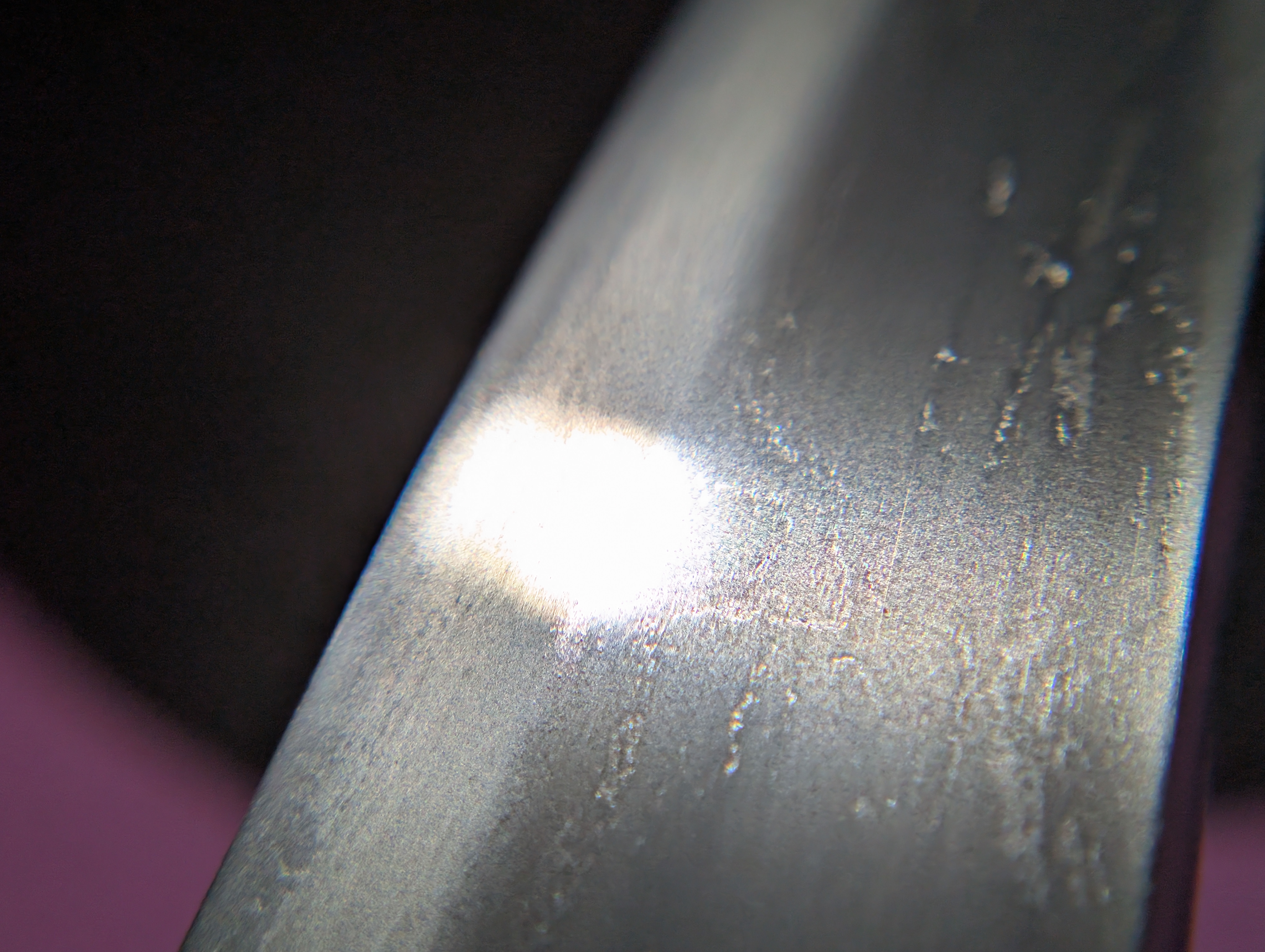
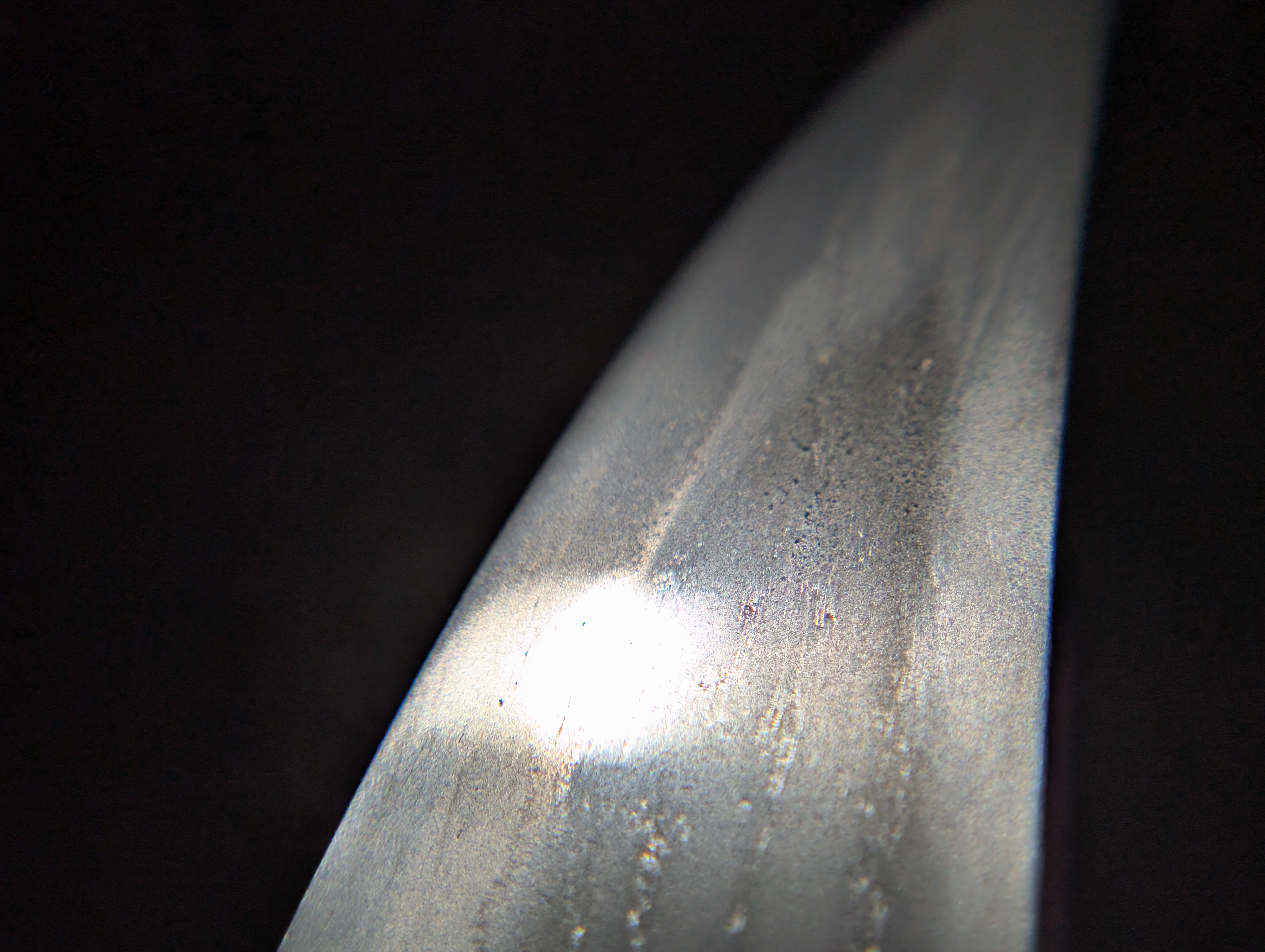
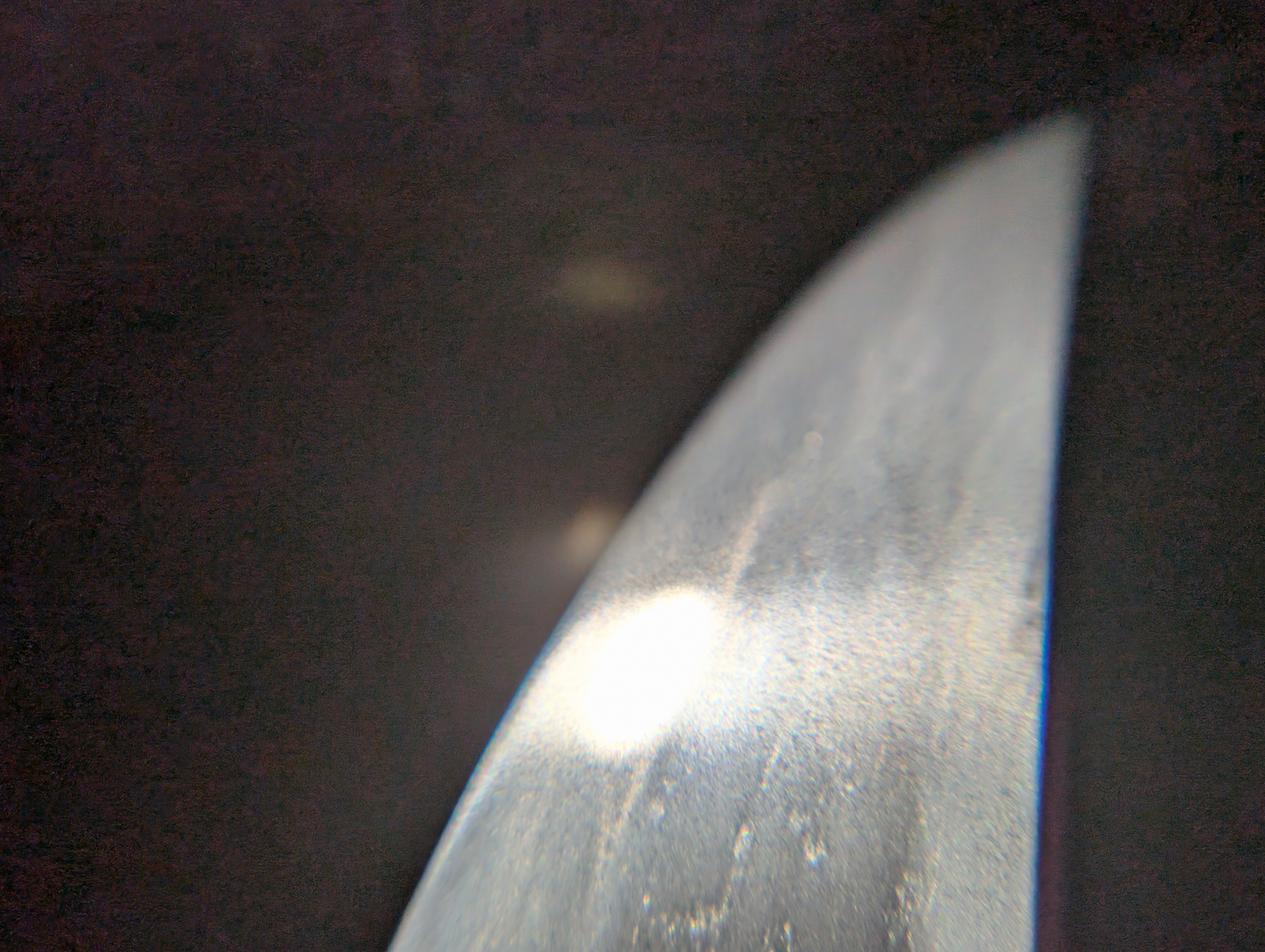
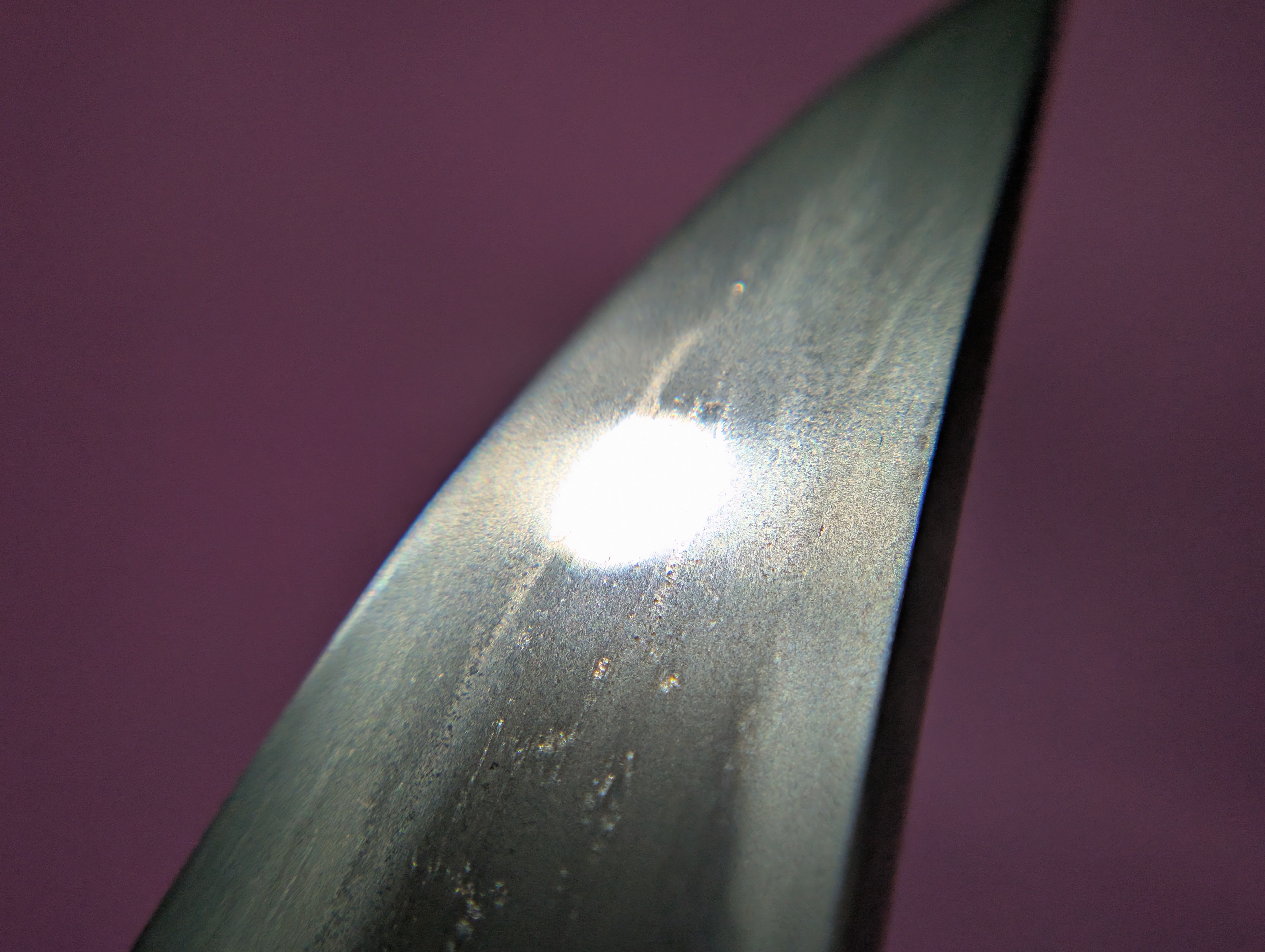
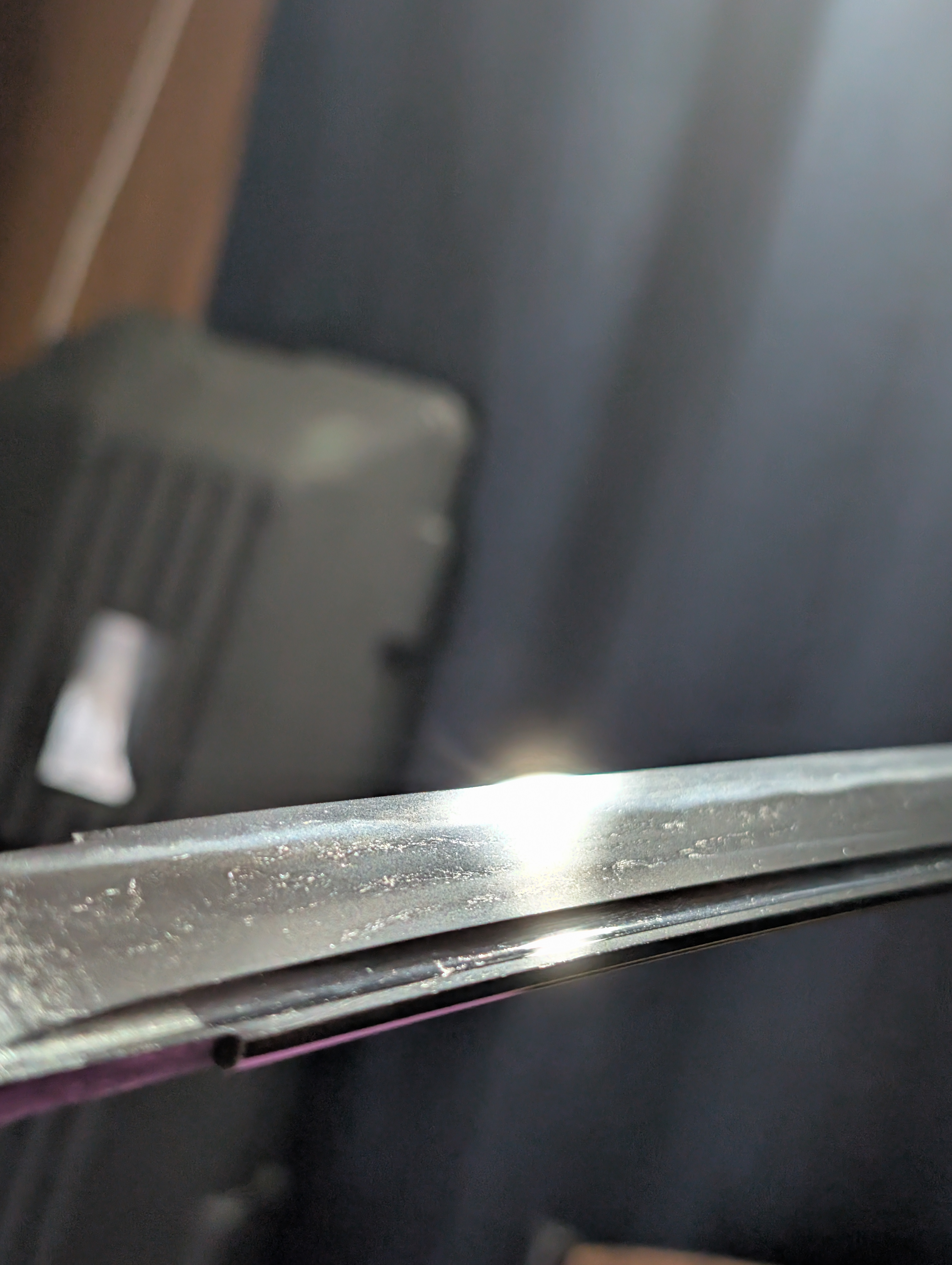
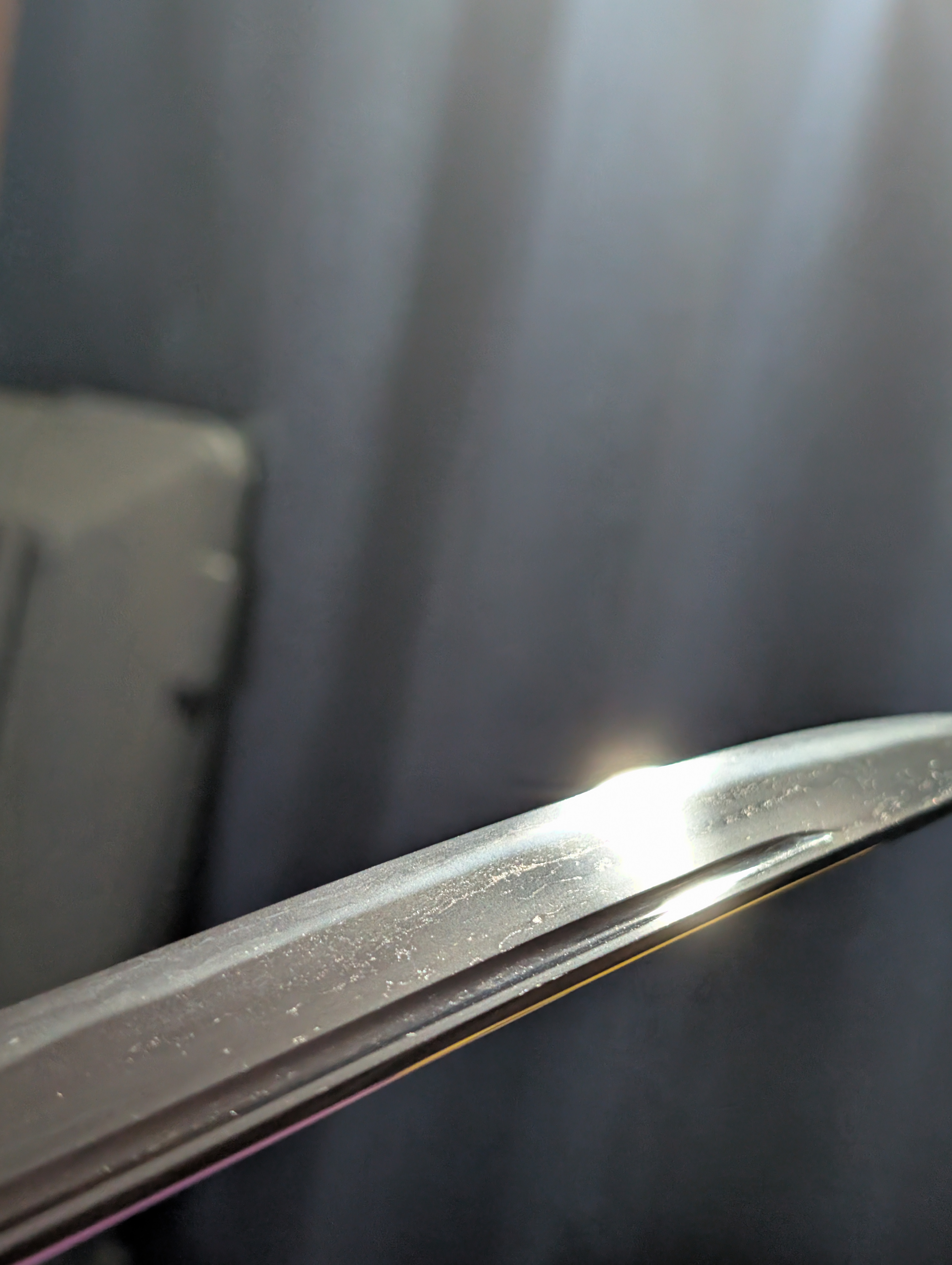
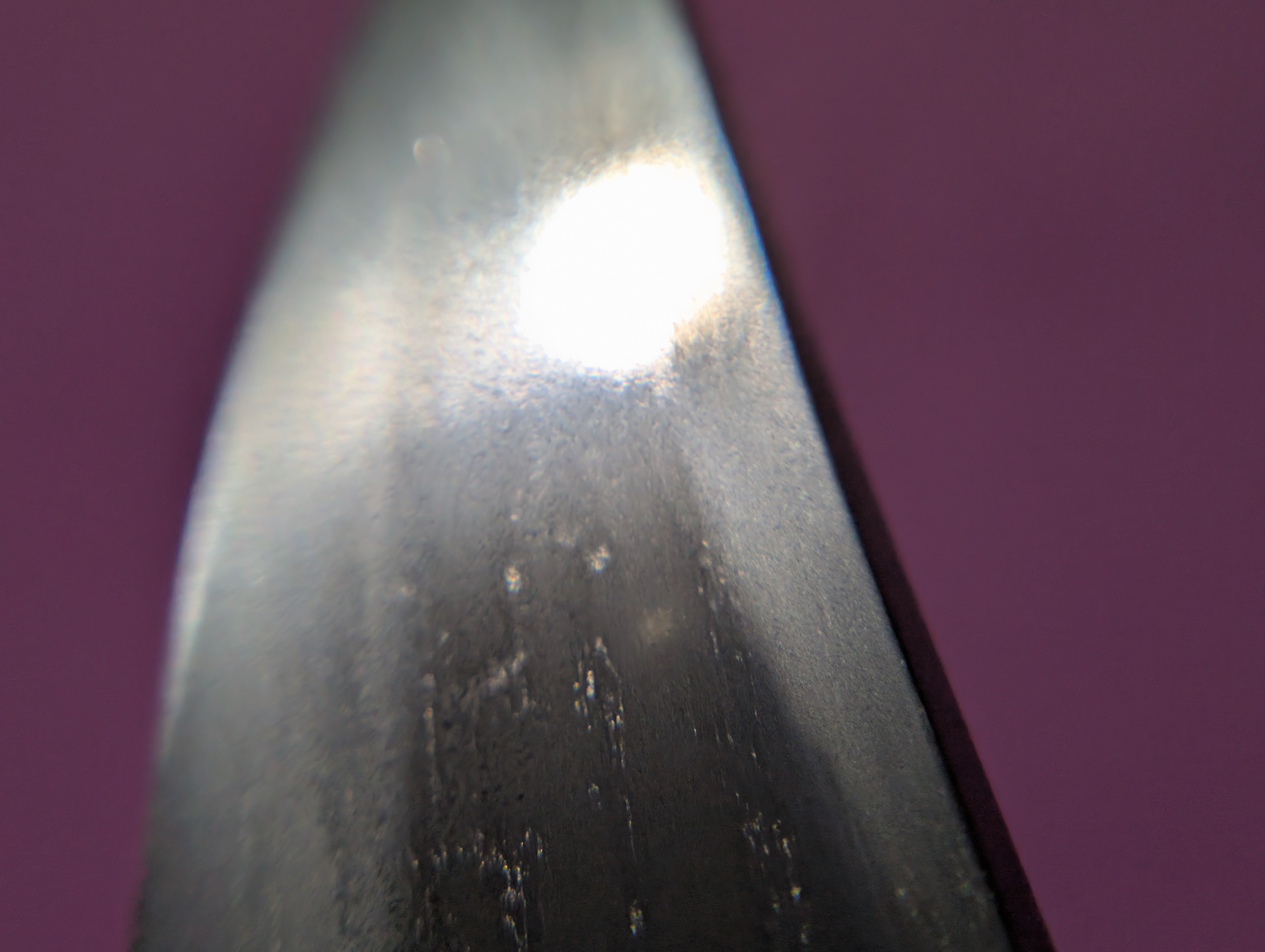
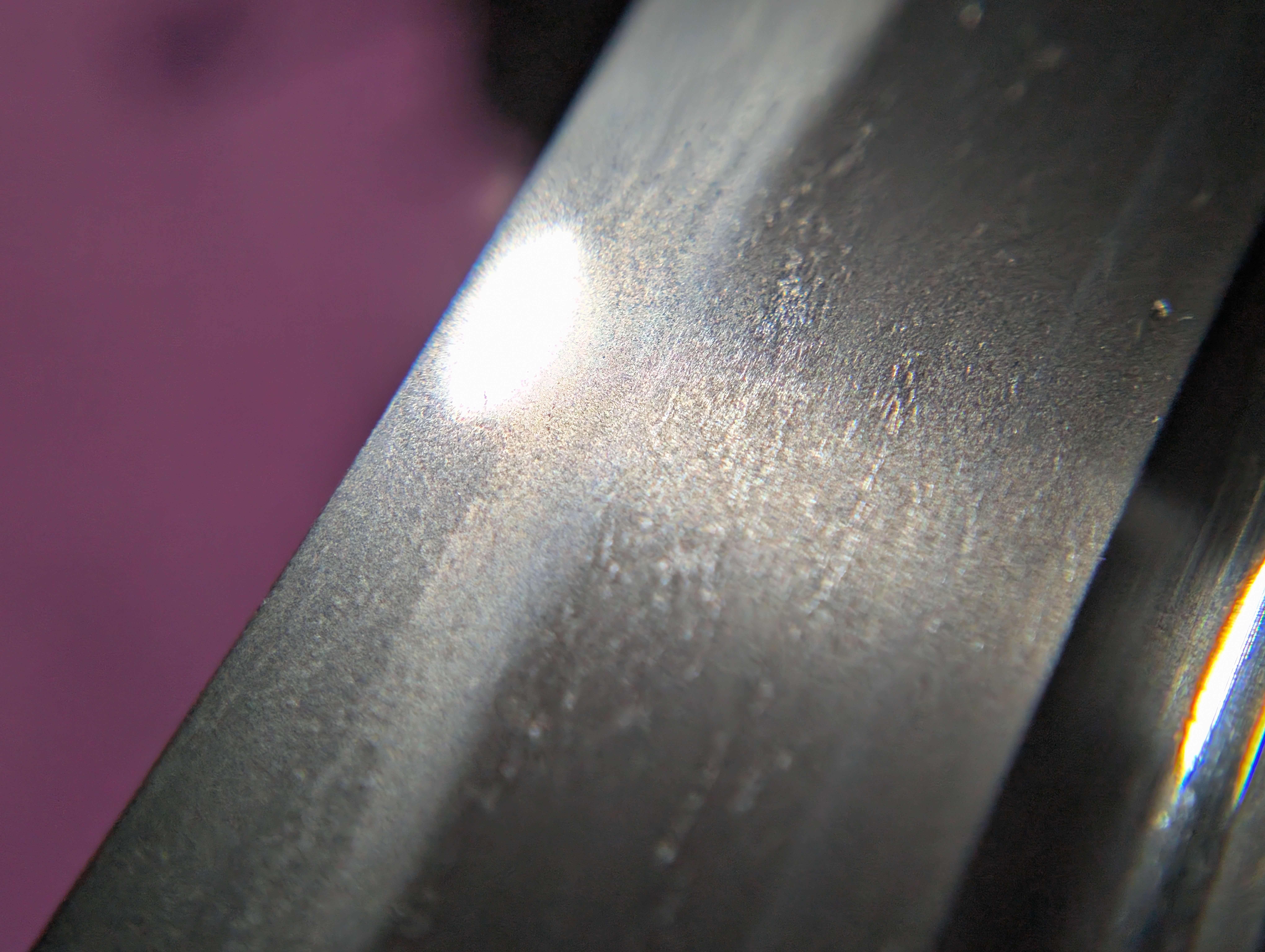
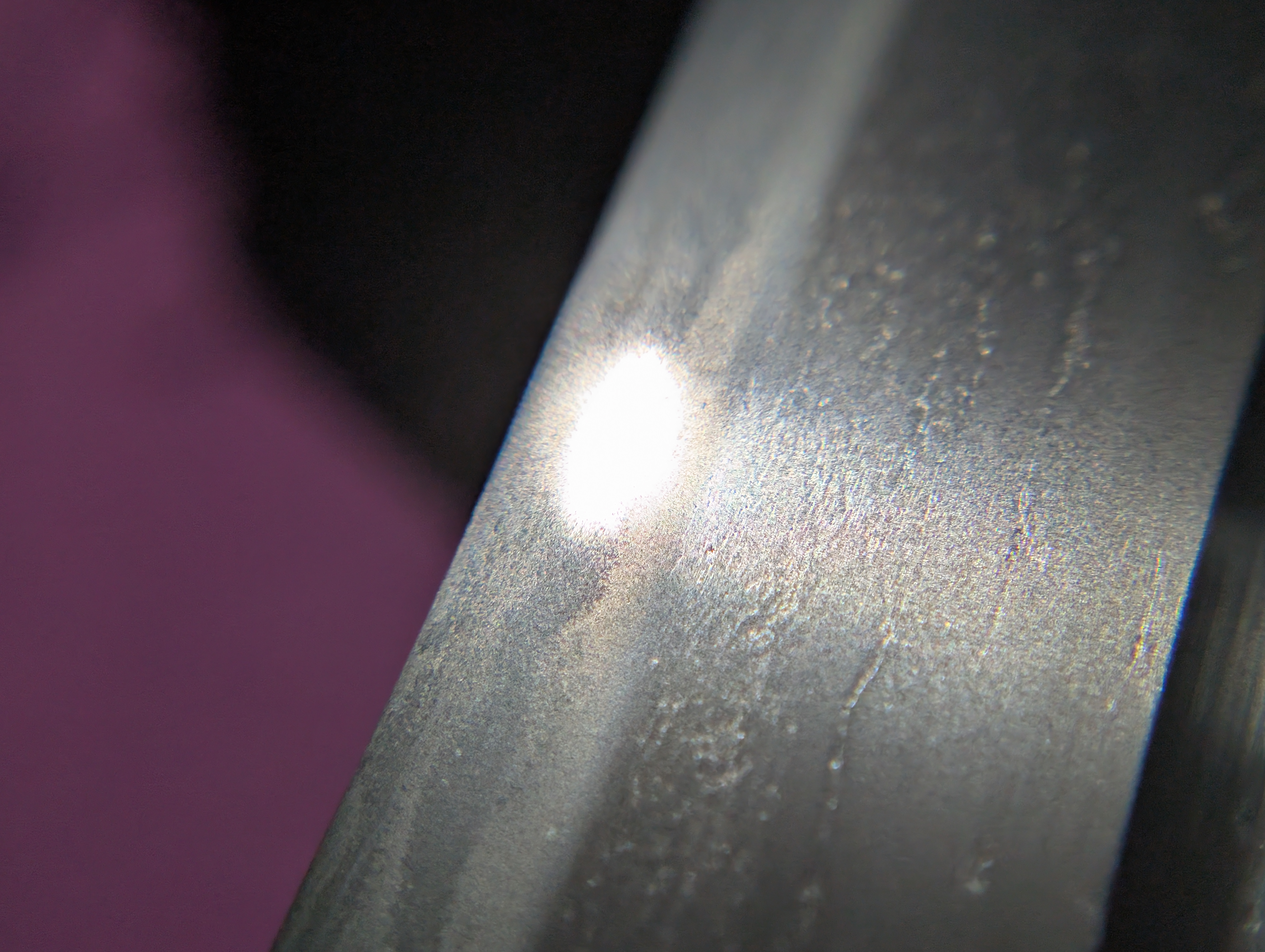
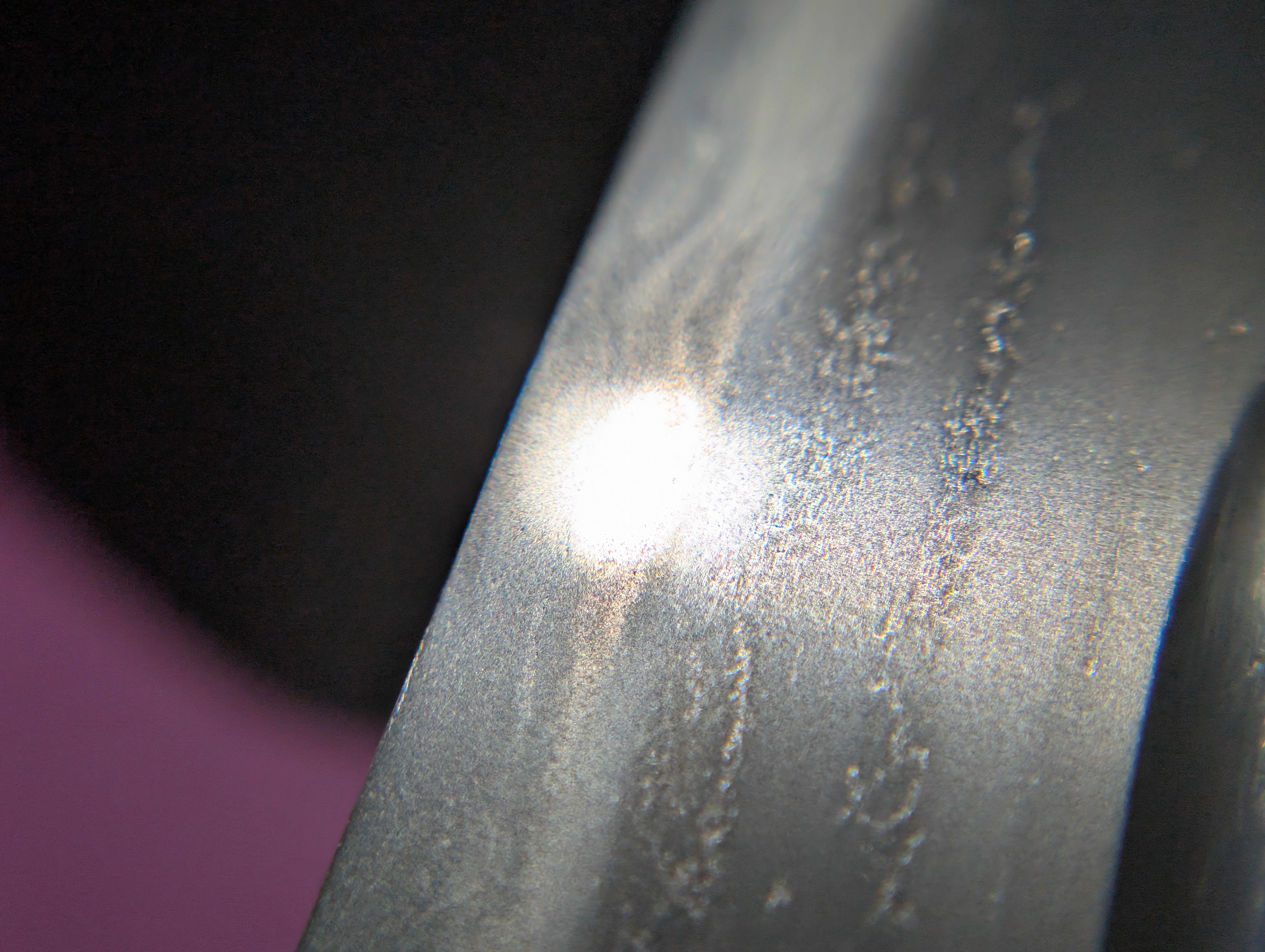

I am excited today to discuss a truly incredible dagger from one of the trailblazing smiths of the Nanbokucho Period. Meshing both Yamashiro and Soshu work, this sunnobi tanto by Rai Kuninaga remains truly fascinating not only due to its high-quality workmanship but also its historical significance. Metallurgically, the jigane consists of a fine itame with nagare, which is complemented by abundant chikei and ji-nie. The jiba is particularly bright, and this brightness is amplified with a powerful nie-utsuri following parallel to the hamon. The hamon expresses itself in the form of a suguha-cho filled primarily with ko-midare and ko-gunome. Most pronounced in the hataraki are kinsuji and sunagashi, which line the nioi guchi as it ends in a ko-maru kaeri boshi. For clarity, relevant measurements will be listed below alongside their historical significance
Measurements:
Nagasa: 29.8 cm (This length is rather long for tanto, approaching wakizashi length) Motohaba: 2.66 cm
Sakihaba: 2.16 cm
Motokasane: 3.5 mm (The thickness is greater than earlier tanto, which is emblematic ofNanbokucho Period works)
Sakikasane: 3mm (The thickness at the tip is particularly wide, even for some Nanbokucho Period tanto)
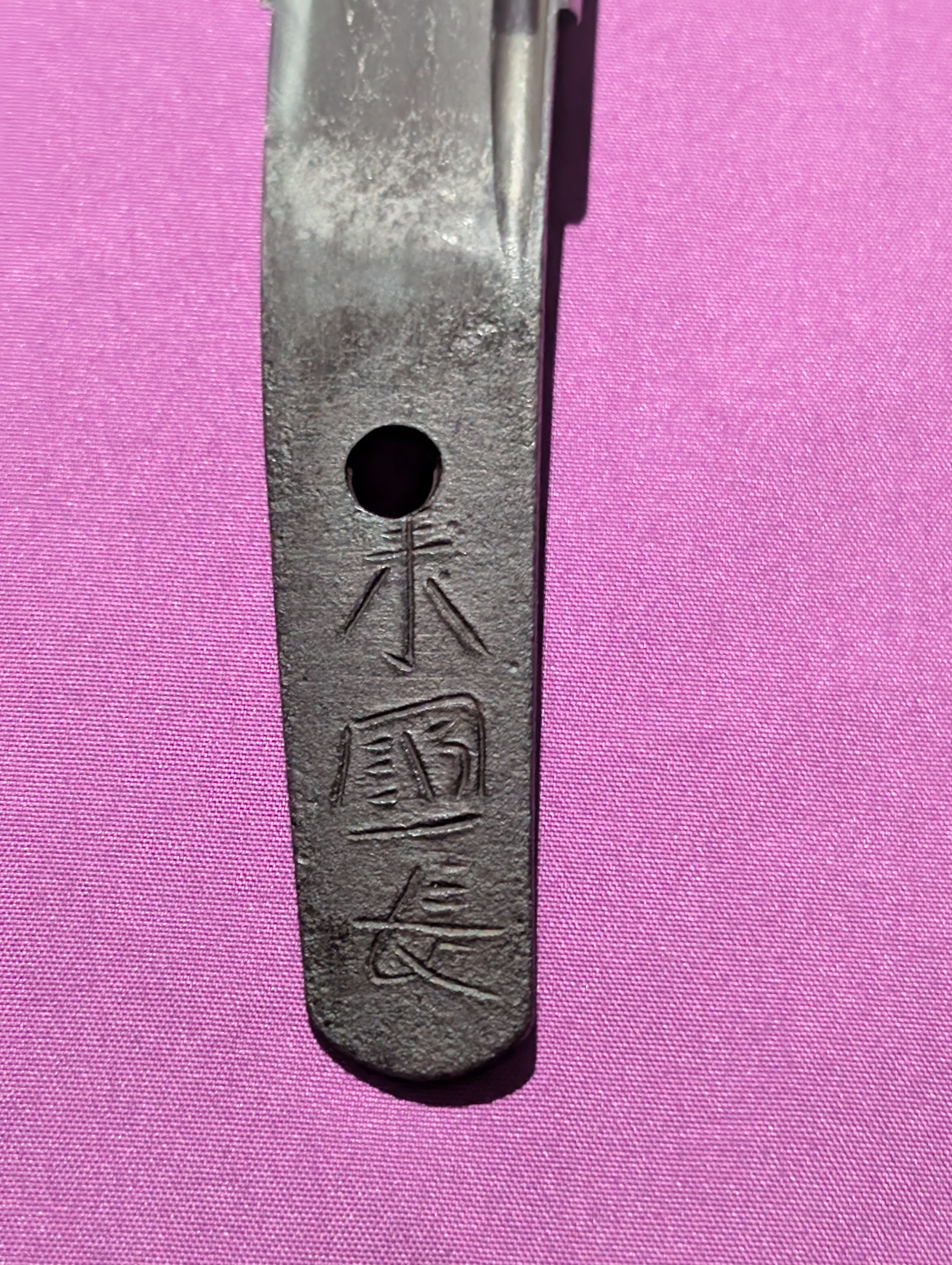
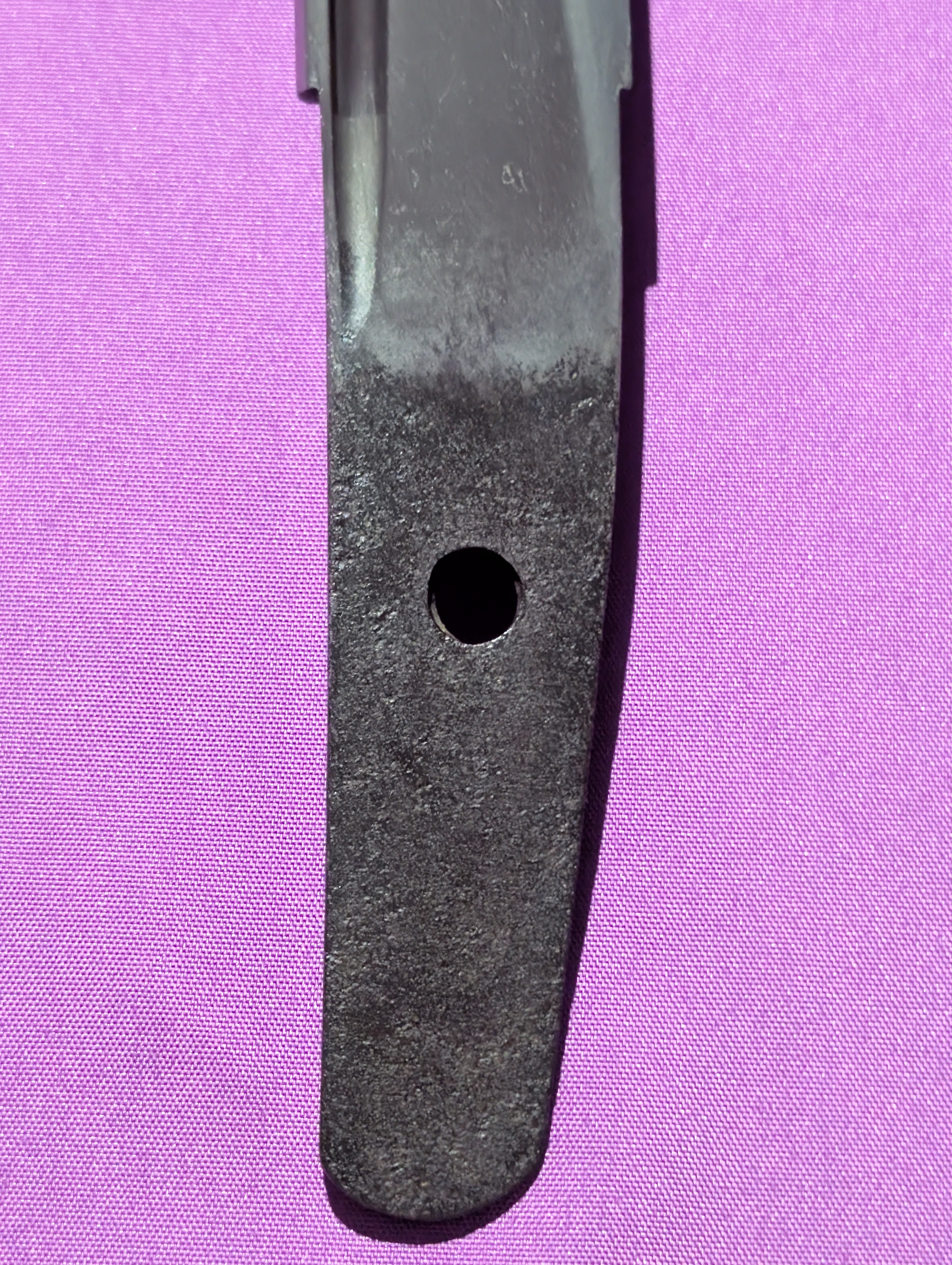
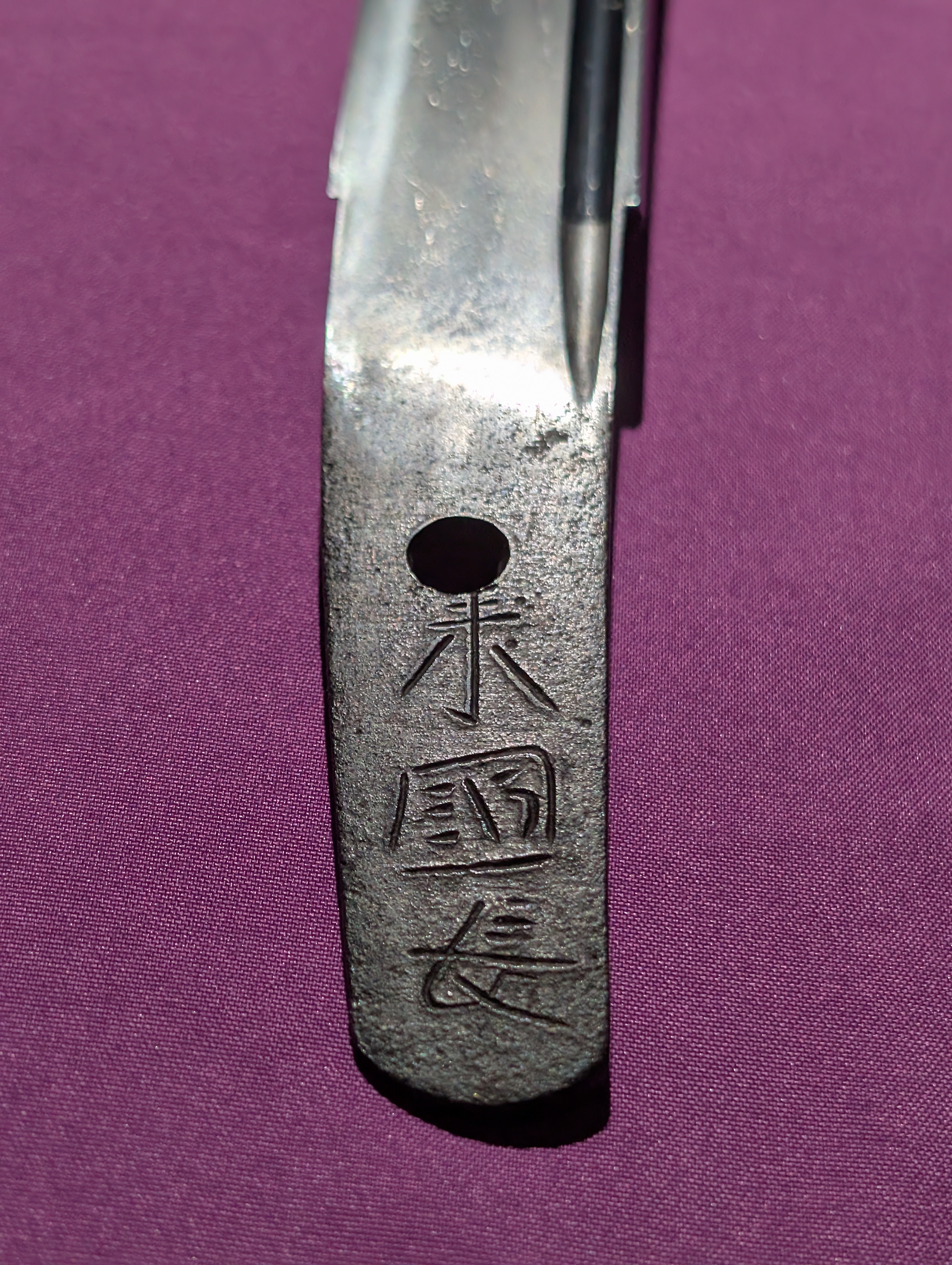
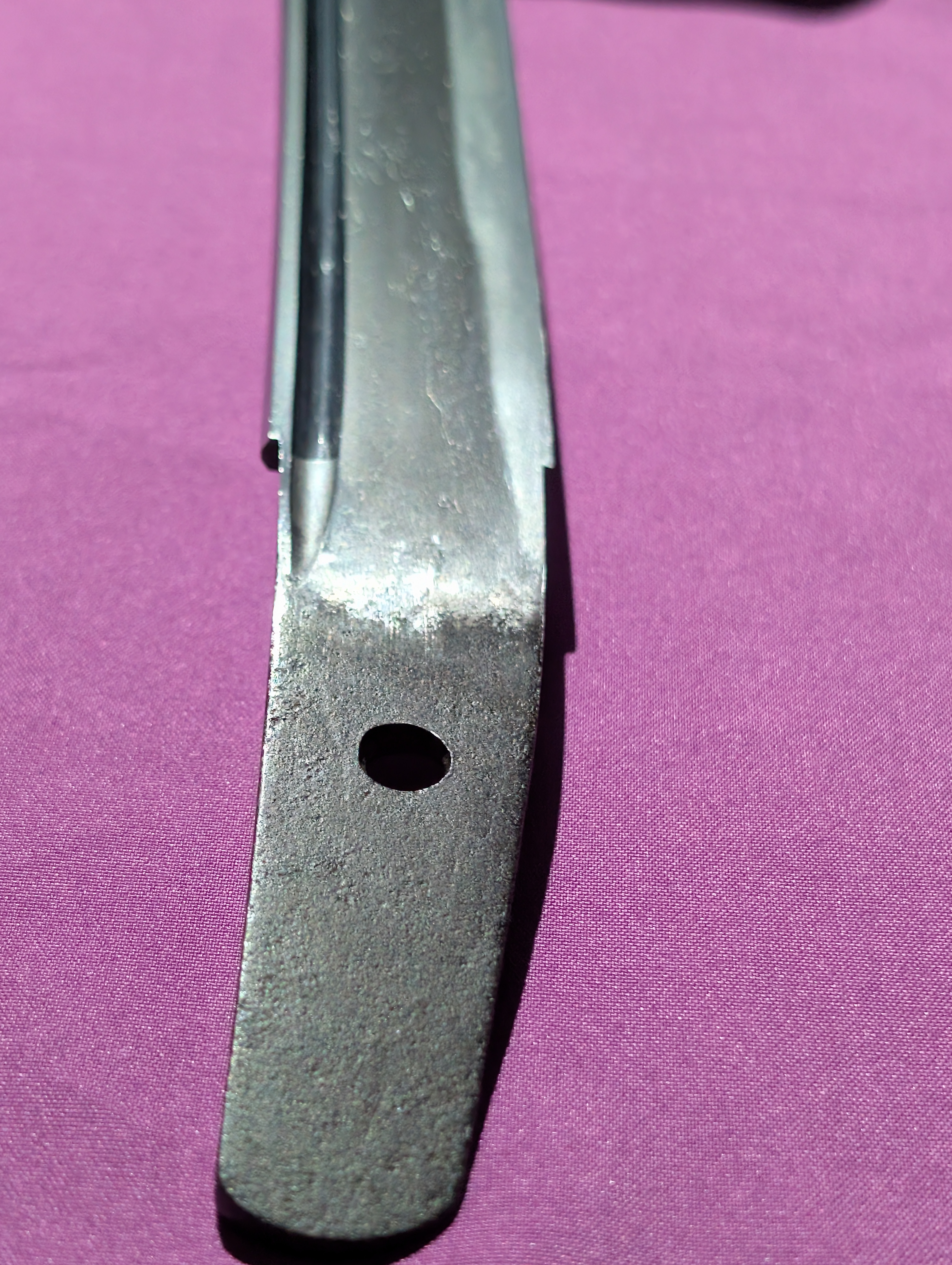
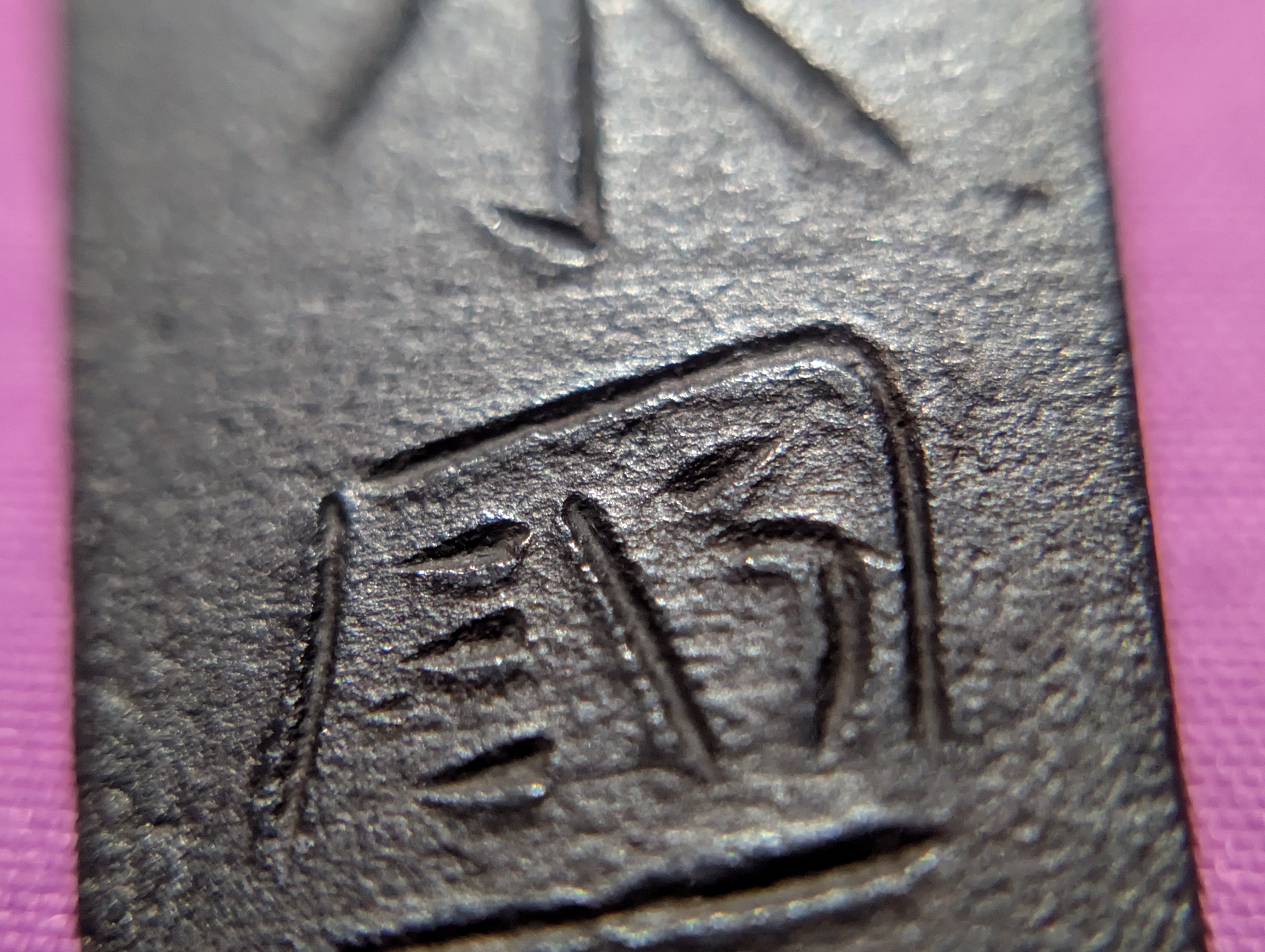
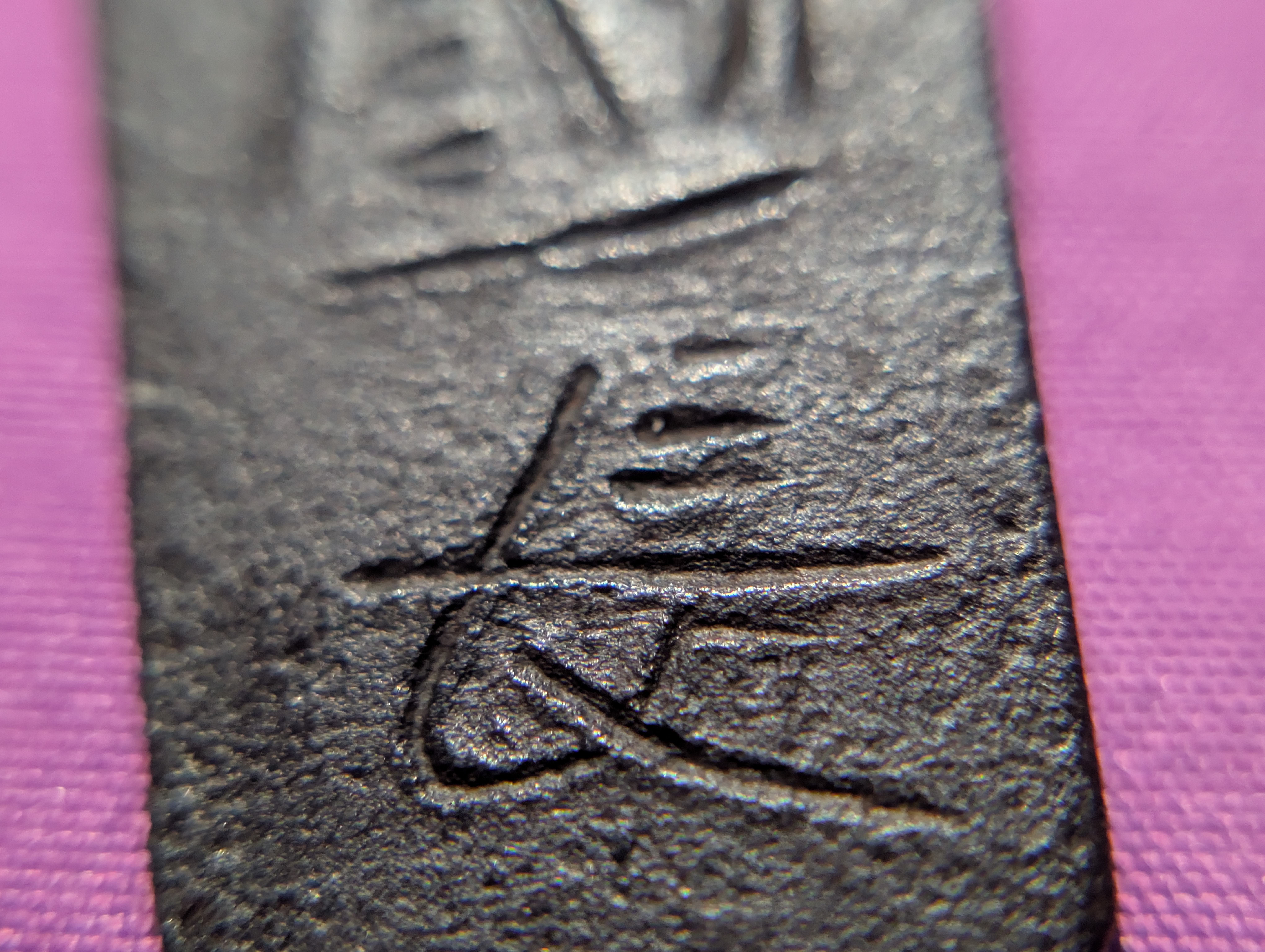
The nakago of the blade is ubu with a kurijiri tip. On the tanto-omote, the sanji-mei signature “Rai Kuninaga” (来国長) is finely chiselled. There is a single mekugi-ana.
The blade’s shape is in hira-zukuri with a mitsu-mune and a soft uchi-sori, which comprised the defining features of the tanto of the period. Although the Rai School was known for its practice of making fine tanto, post-Kunitsugu, smiths, including Rai Kuninaga began implementing Soshu School smithing practices into the school, resulting in a shift from their previously long and thin hira-zukuri tanto of the late Kamakura Period. Furthermore, in this particular example, the character of the blade is amplified through the inclusion of a simple bo-hi carving, creating depth to the tanto’s surface, which further contrasts the brightness of the hamon.
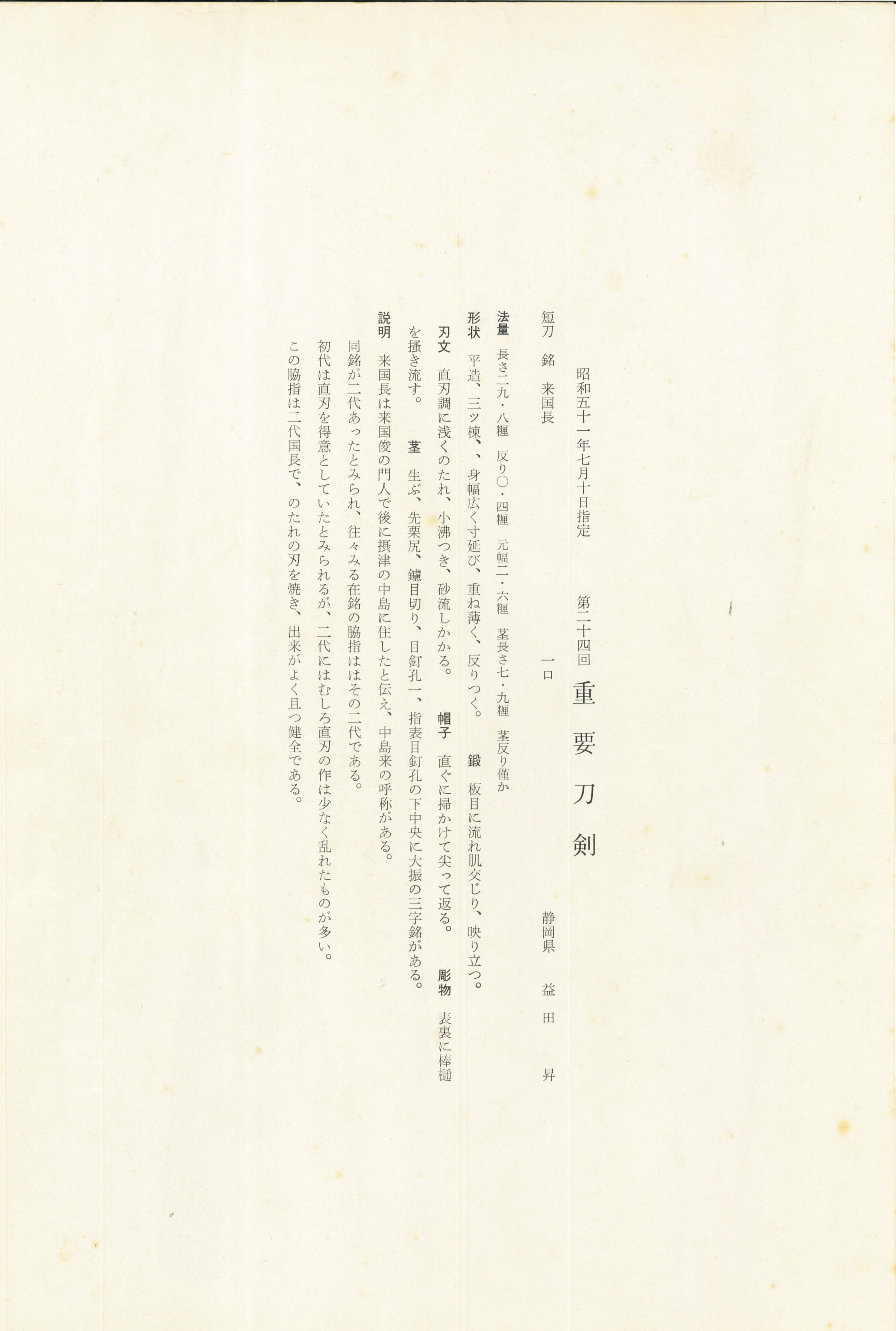
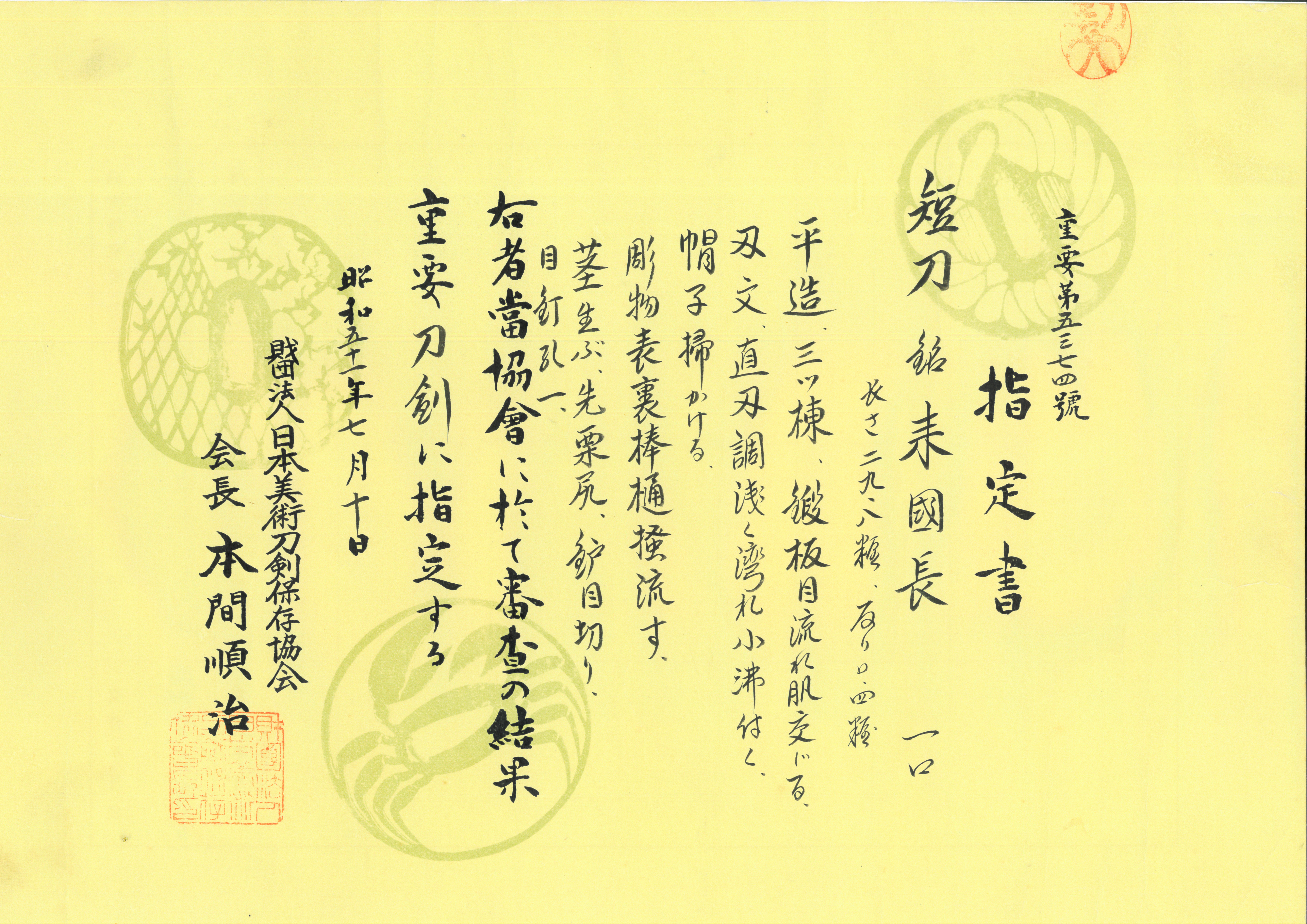
The blade is rated “Juyo” by the NBTHK, indicating not only extremely high craftsmanship and preservation over seven centuries, but also particular interest as a blade which contributes to the history of the Japanese sword through its existence.
Included with this blade is a modem set of aiguchi tanto koshirae crafted with accessories from the Meiji Period. The saya is coated with a gorgeous golden lacquer with black speckles. The gold lacquer swirls in a circular motion, overlapping in a pattern which mimics the ripples seen in water after a morning dew.
The black speckles complete this aesthetic, forming necessary negative space to sell this motif. This aquatic theme is only amplified by the use of specific, solid silver accessories. These particular examples are the kojiri, ko-tsuka, and kogai, which all are embossed with scenes of crashing waves. On the other hand, a more modest koiguchi, kurigata, kogai-hitsu ana, and ko-tsuka-hitsu ana are forged in the same material, but are instead embossed with floral arrangements. This floral pattern follows into the tsuka, where a similar fuchi-kashira set are attached, alongside a menuki in the style of an ikebana arrangement. The grip itself is tied in sepia leather in the katate-maki style, contrasting well with the bright scabbard. Finally, the already-luxurious fittings are completed with the inclusion of a tasteful rouge sageo in braided
silk tied loosely to the kurigata.
The Rai School was formed in the mid-Kamakura Period in the city of Kyoto by the smith Kuniyoshi. However, the lack of extant blades from this smith, besides two debated tachi, makes his son, Rai Kuniyuki, the de facto founder of the school. The direct origin of this school remains mysterious, but most theories attribute the rise of this school as a sub-branch of the Awataguchi School, being formed from independent swordsmiths who immigrated from Korea in the early Kamakura Period. This school quickly became the most prominent Yamashiro-based school at the time, quickly outpacing its predecessor and forming a large manufacturing workshop. This fame led to the training of numerous incredible swordsmiths, including Rai Kunitoshi, Rai Kunimitsu, and Rai Kunitsugu. Of these three, Kunitsugu went to Kamakura to train under the legendary swordsmith Masamune, eventually returning to Kyoto with knowledge of the Soshu tradition. This knowledge eventually spread throughout the
sub-branches of the school, with this implementation being exacerbated when Rai Kunisue, the father of this tanto’s maker, himself travelled to Kamakura, working in the district of Hikigayatsu. Operating from 1329 CE to 1346 CE, Kuninaga’s work seamlessly blended both the influences of Kyoto and Kamakura, becoming a staple ofNanbokucho Yamashiro work, leading to the smith eventually founding his own offshoot of the Rai School on the island of Nakajima. The blade itself is stunning, clearly displaying the majesty of Masamune’s influence in a powerful sugata while still maintaining many of the textbook features of Yamashiro workmanship in the metallurgy, resulting in a unique blend that captures both traditions while remaining uncompromising in the smith’s identity. In addition, the sword’s signature is in excellent condition, remaining in better condition than even a Tokubetsu Juyo example recorded by the NBTHK. Most importantly, this tanto is reflective of a unique point in swordsmithing history, displaying on its surface the tremendous impact and dominance that Masamune had on the aesthetic and cultural norms of the sword world, even during his lifetime. In essence, this is a beautiful tanto, not only due to its excellent quality and level of preservation but also because of its larger implications on the Japanese sword in its totality.
~Photographs from Charlie Whites Facebook page; Blade in Possession of Charlie White~