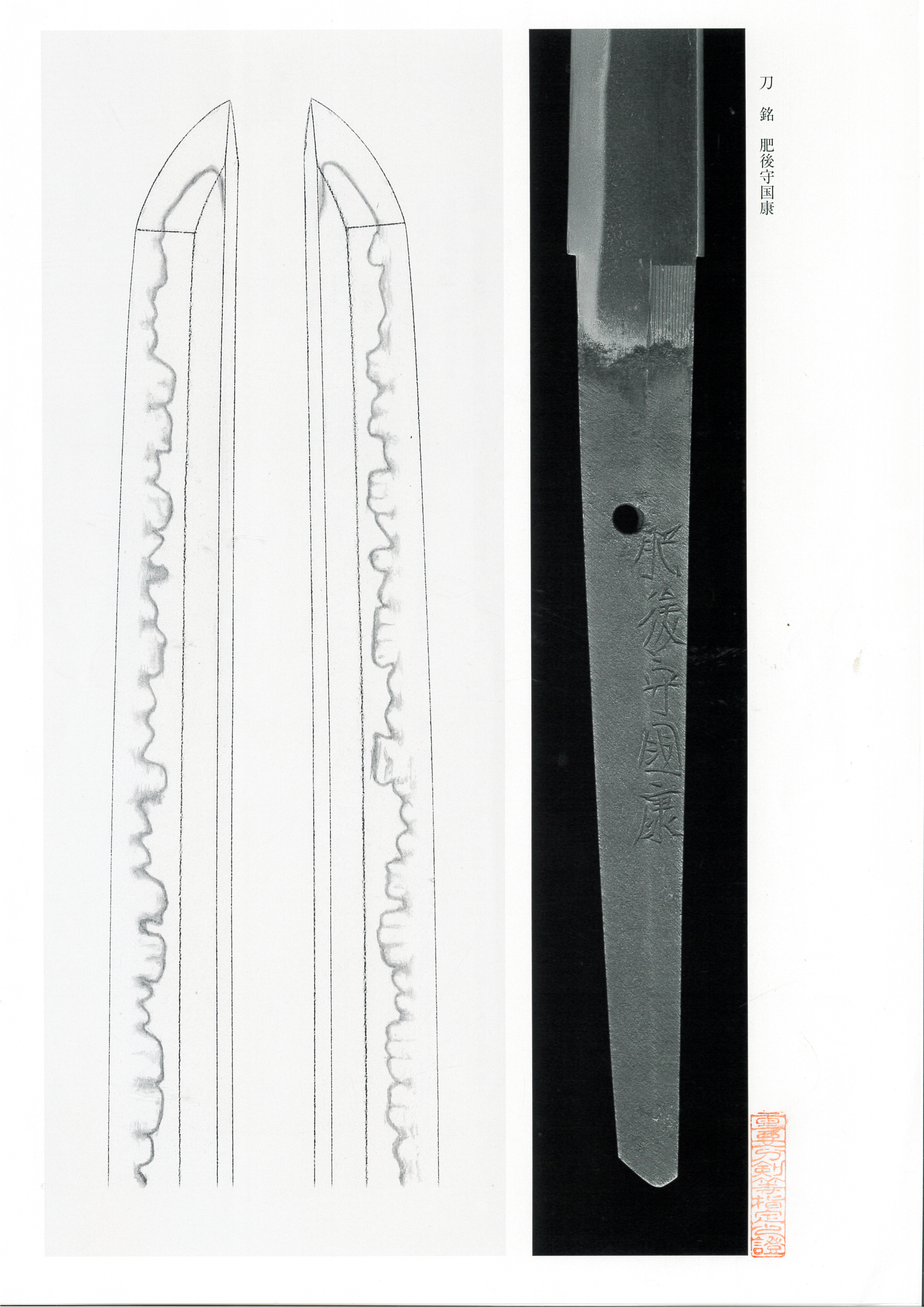
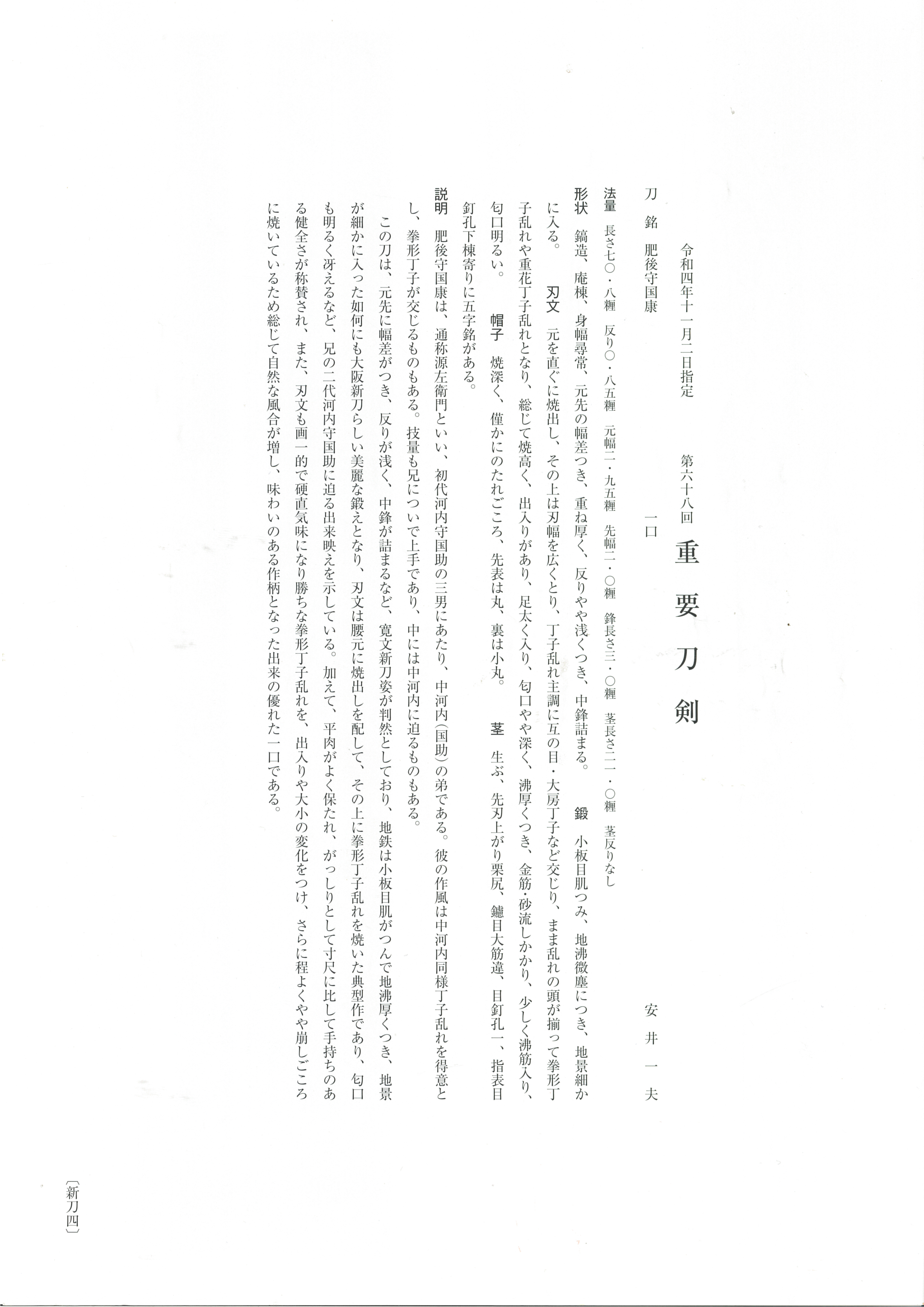
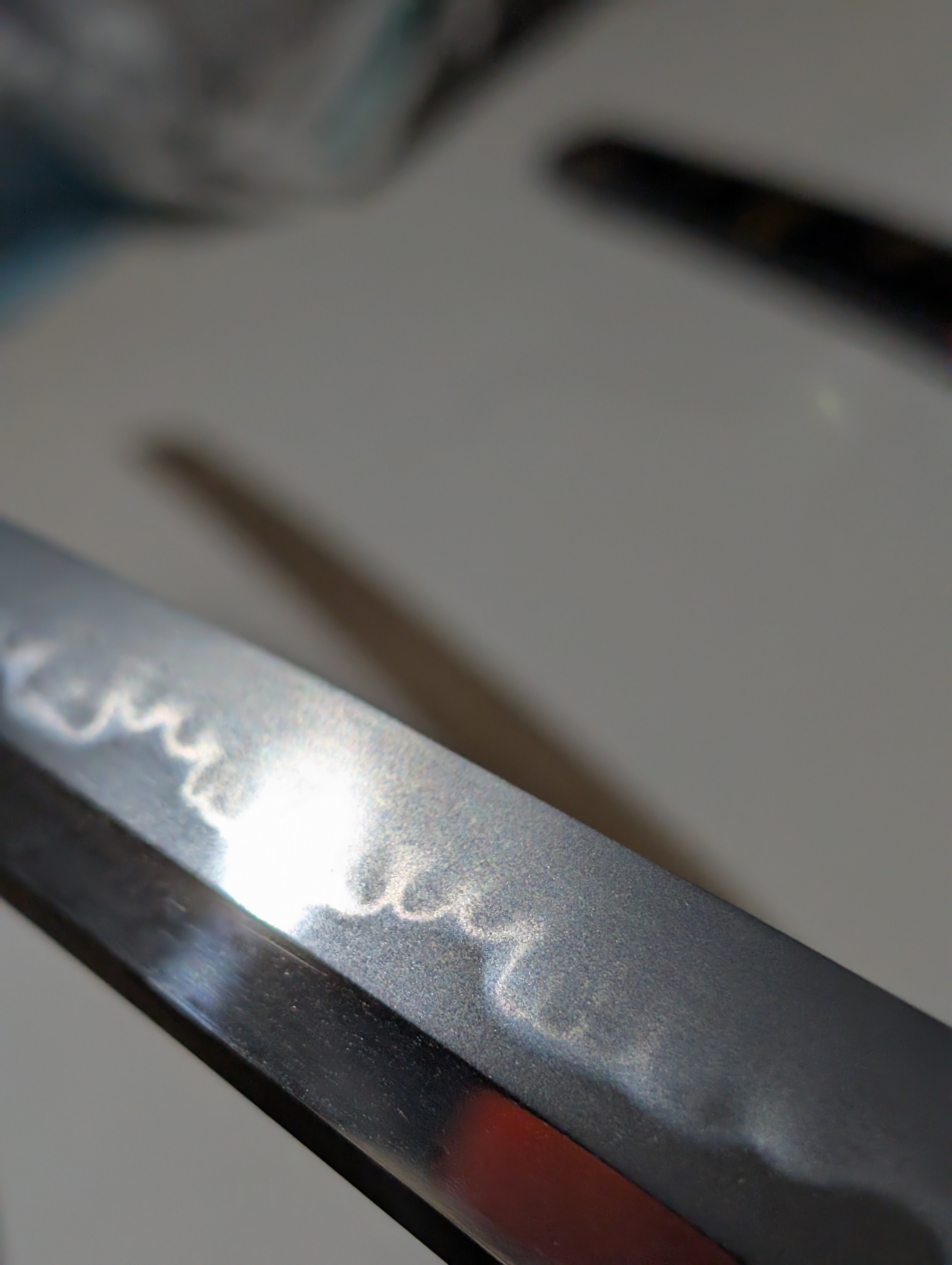
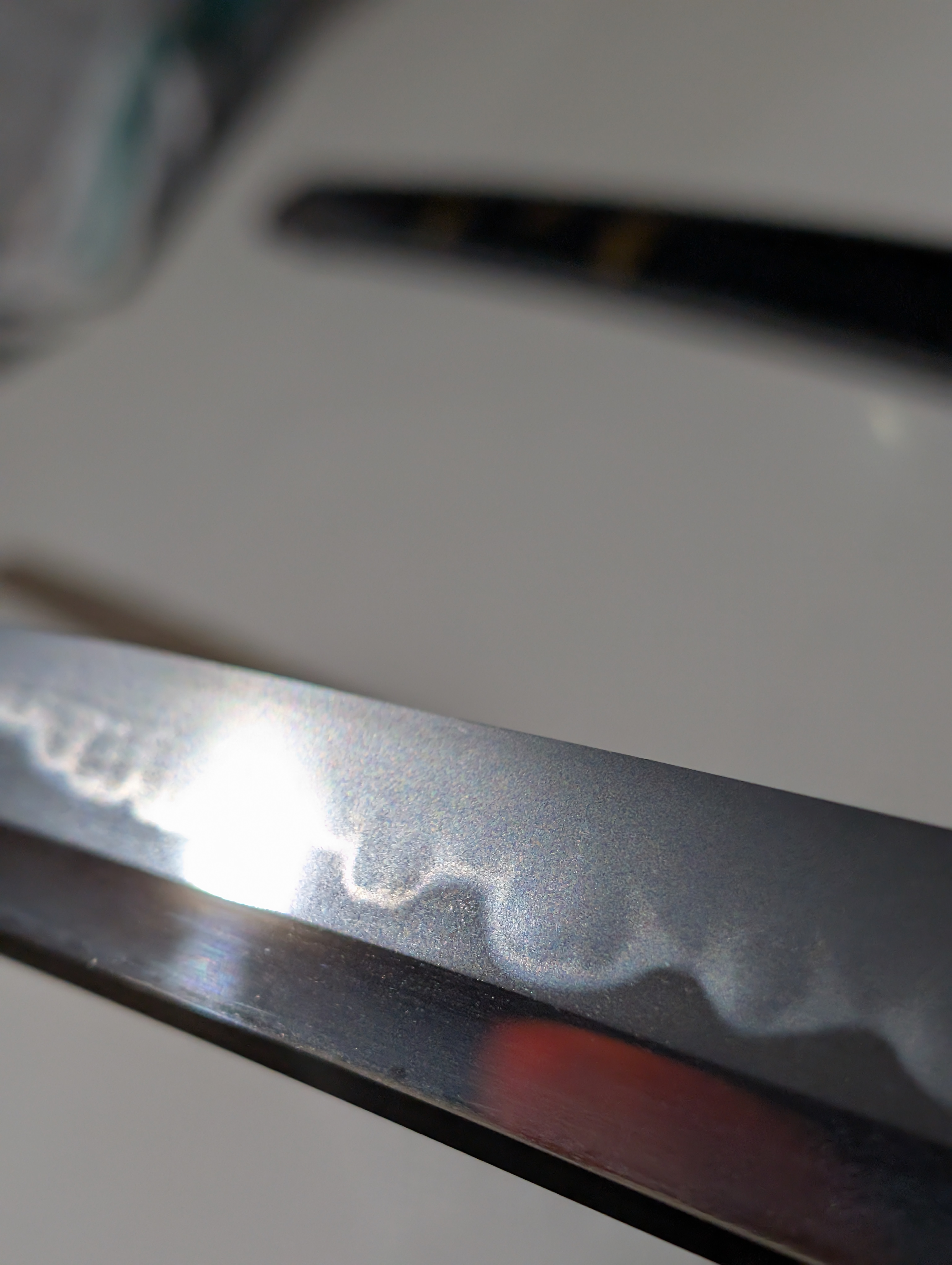
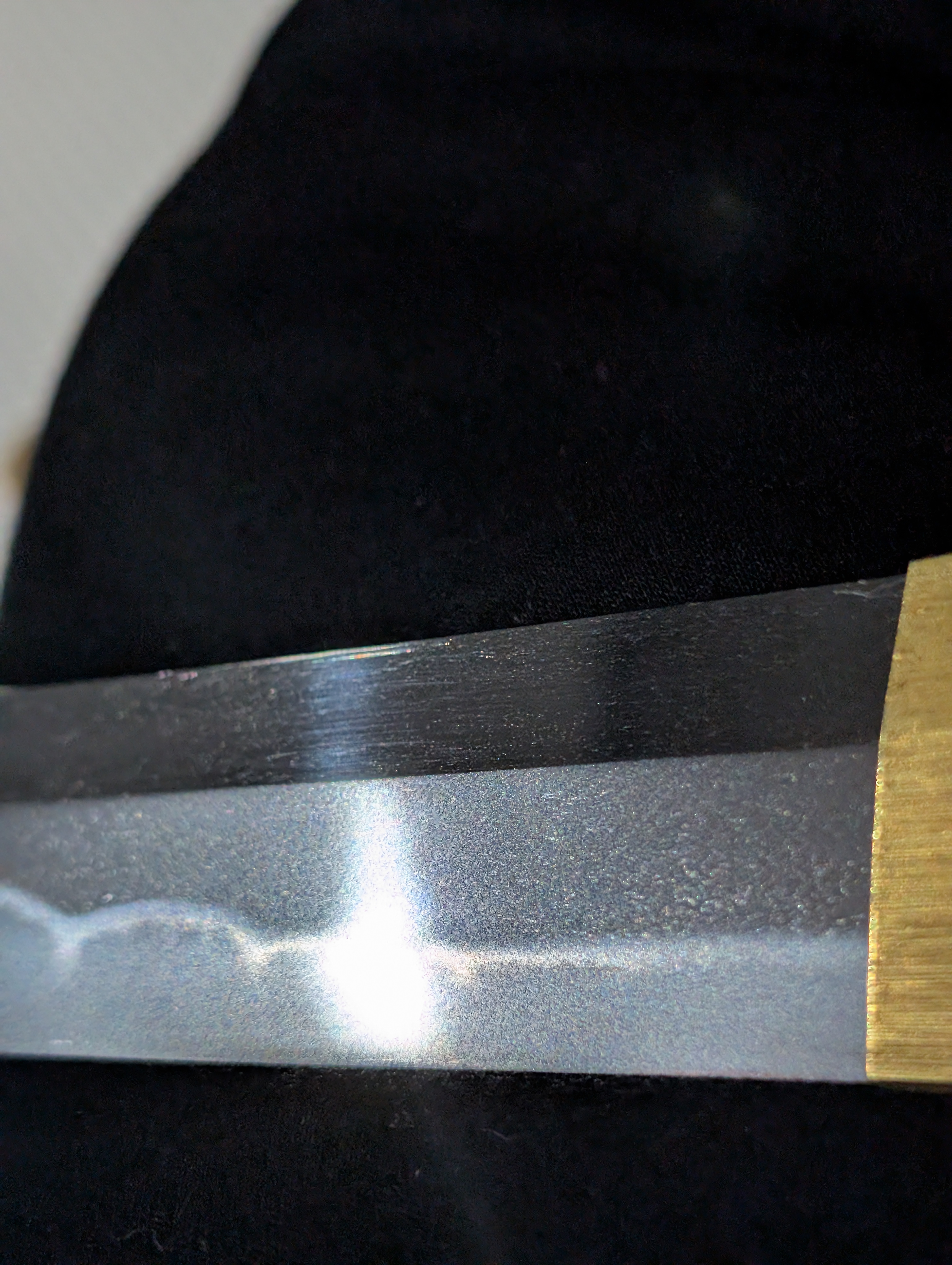
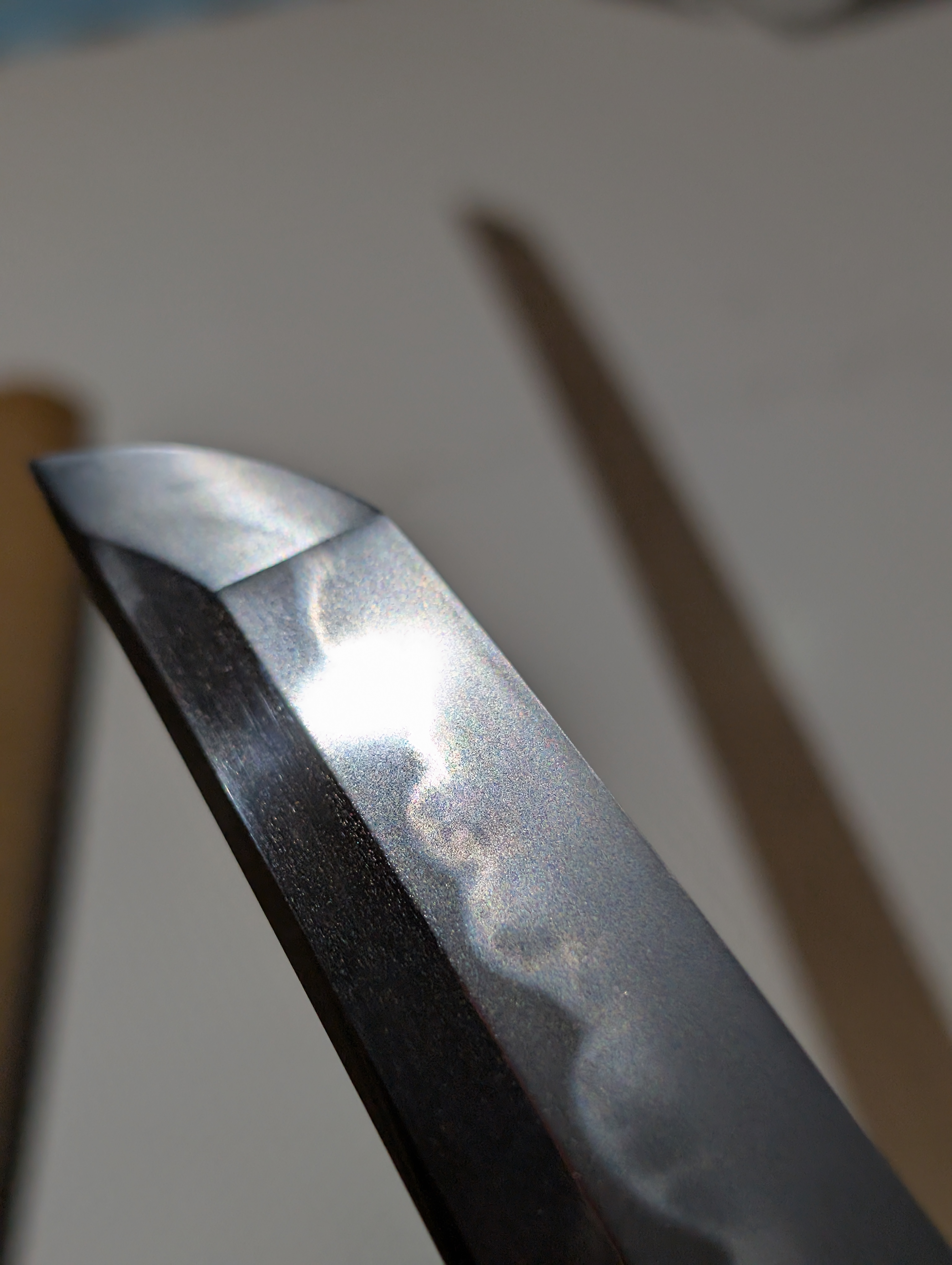
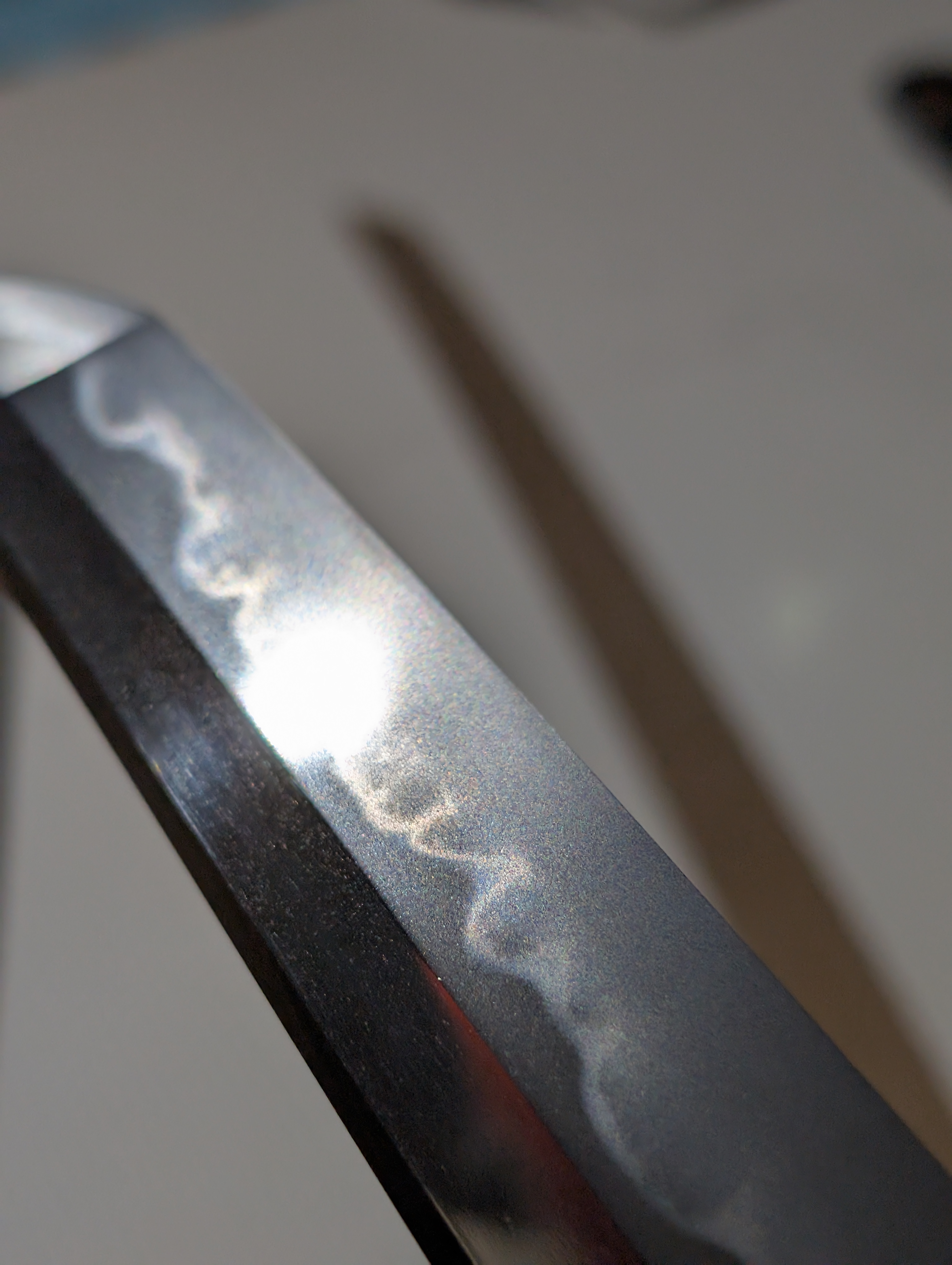
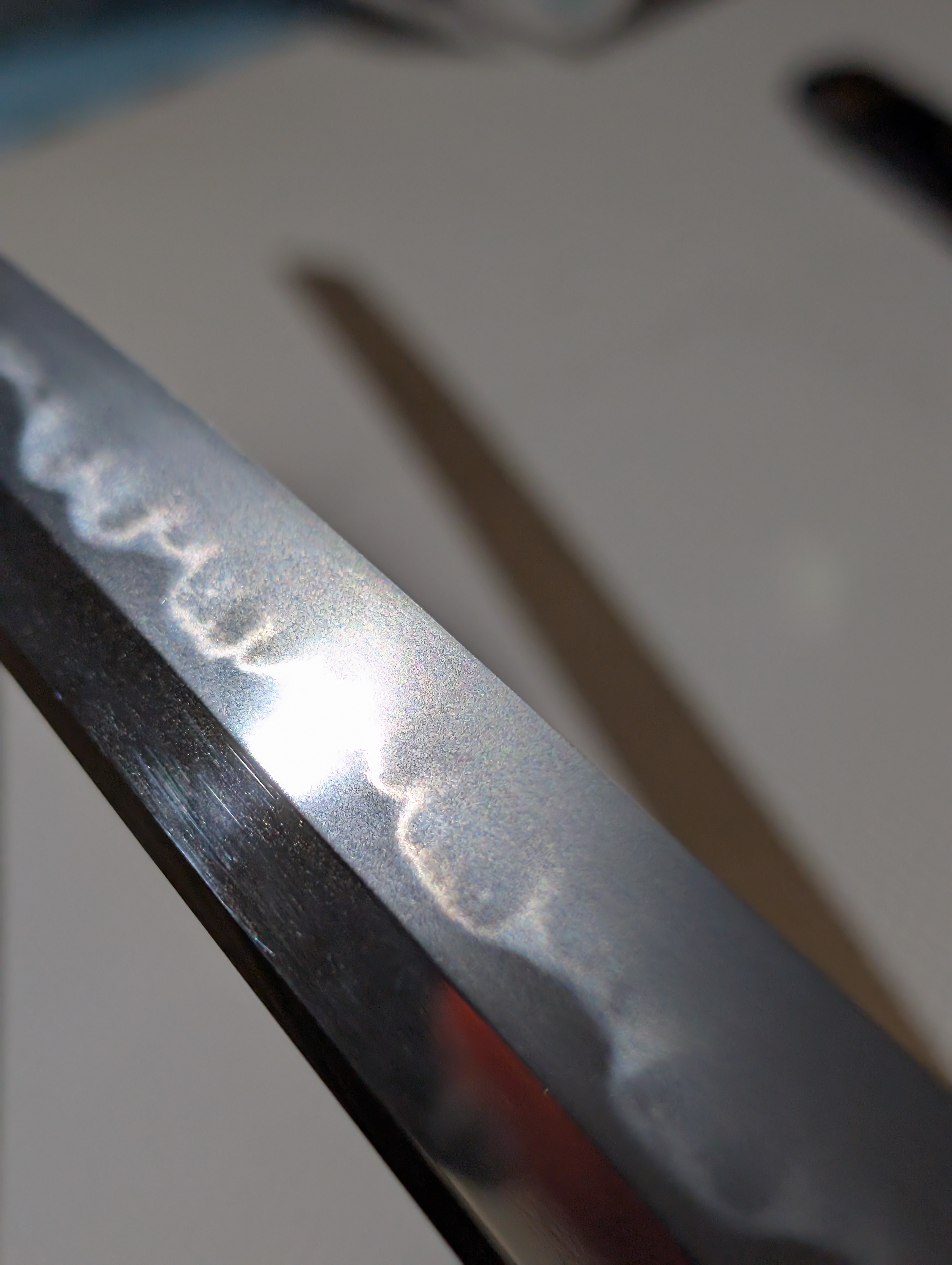
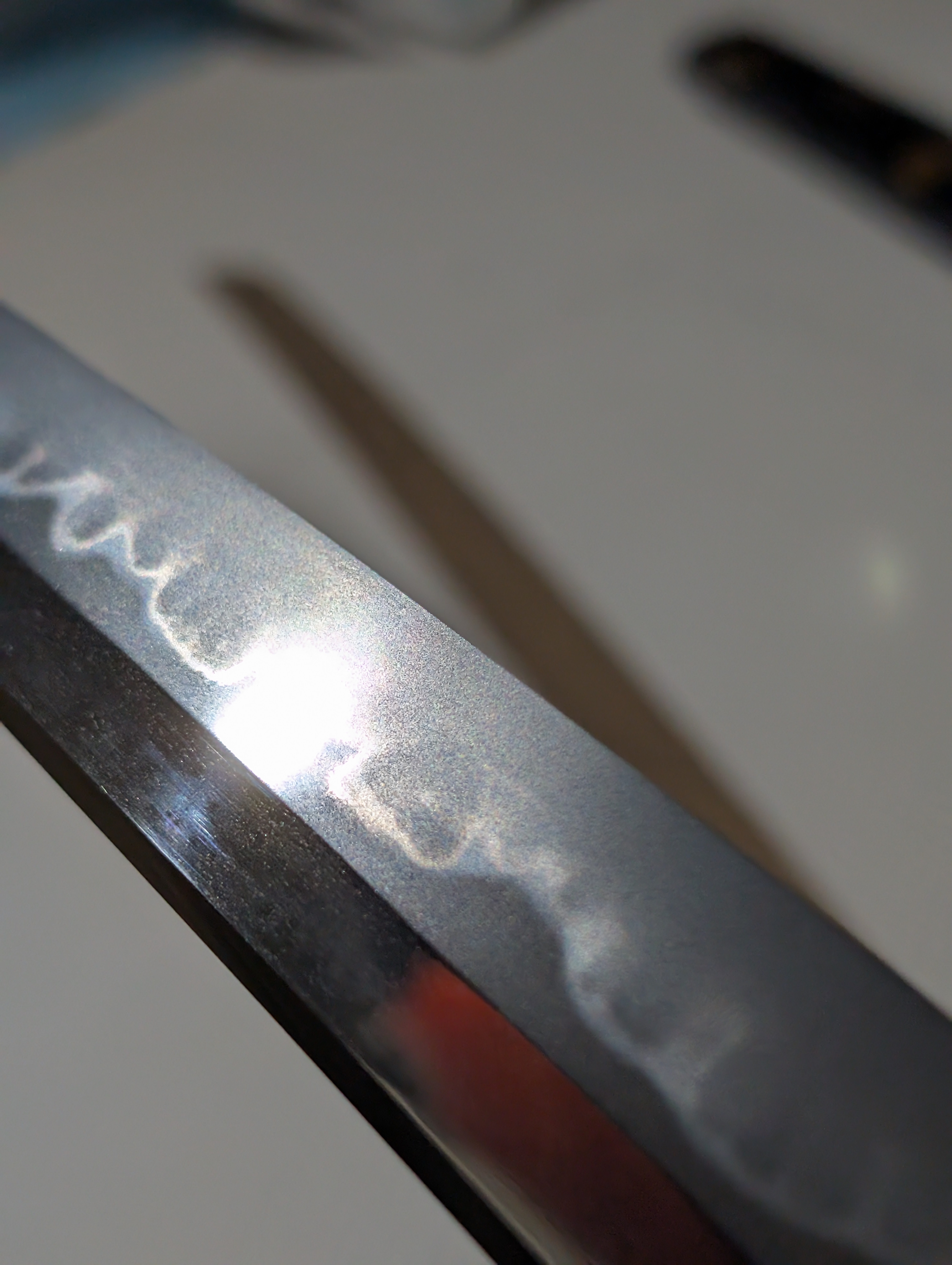

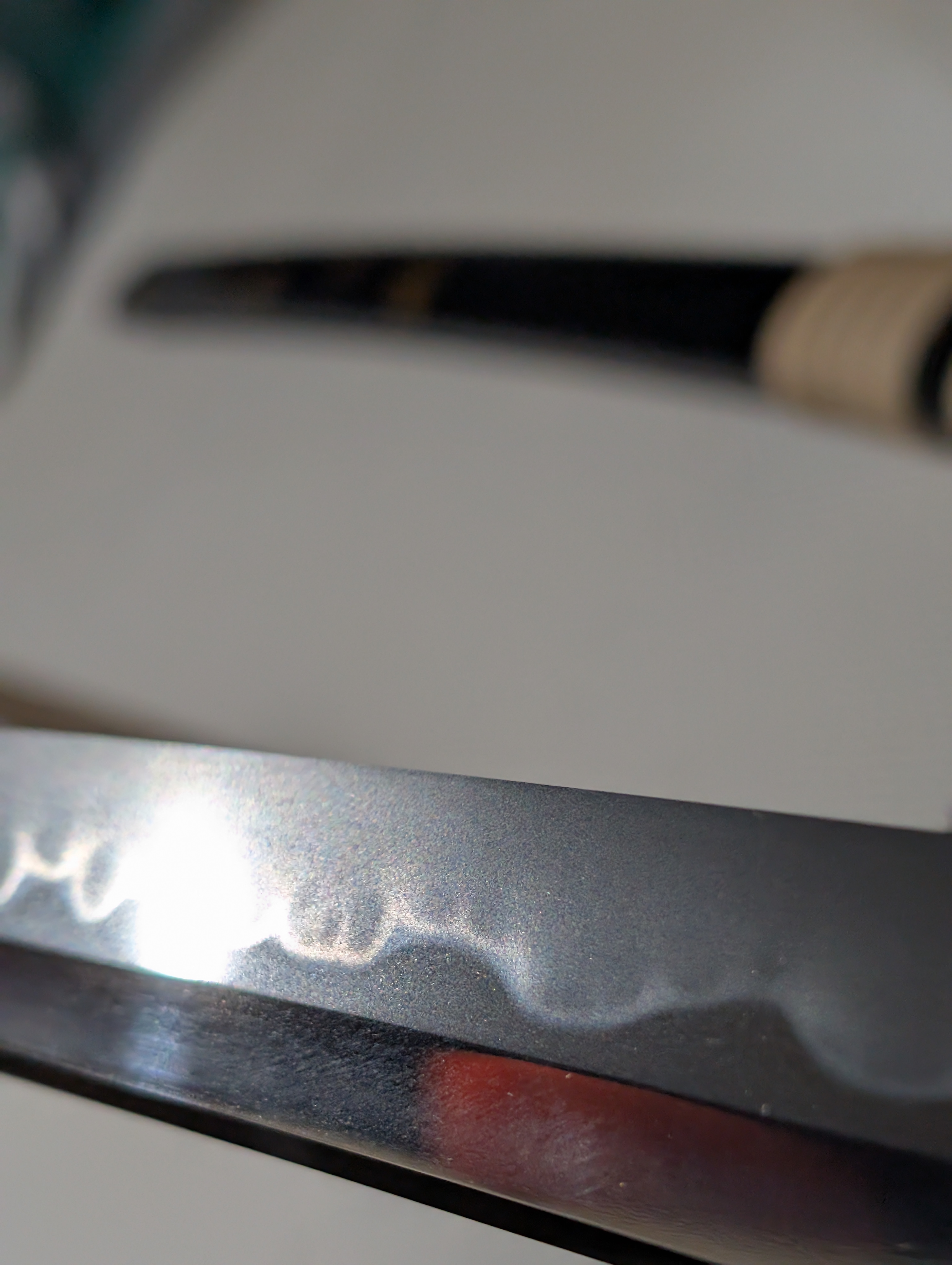
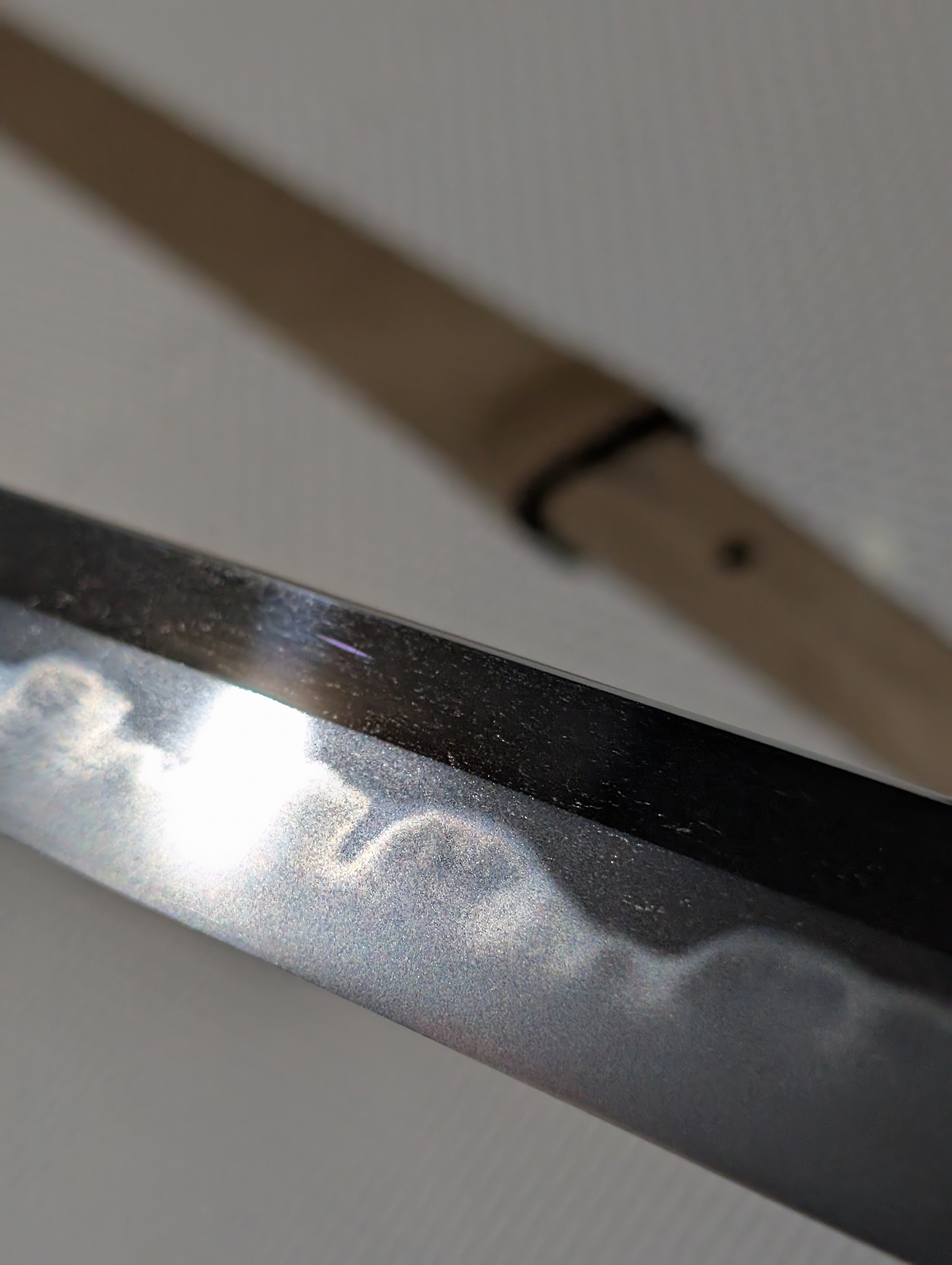
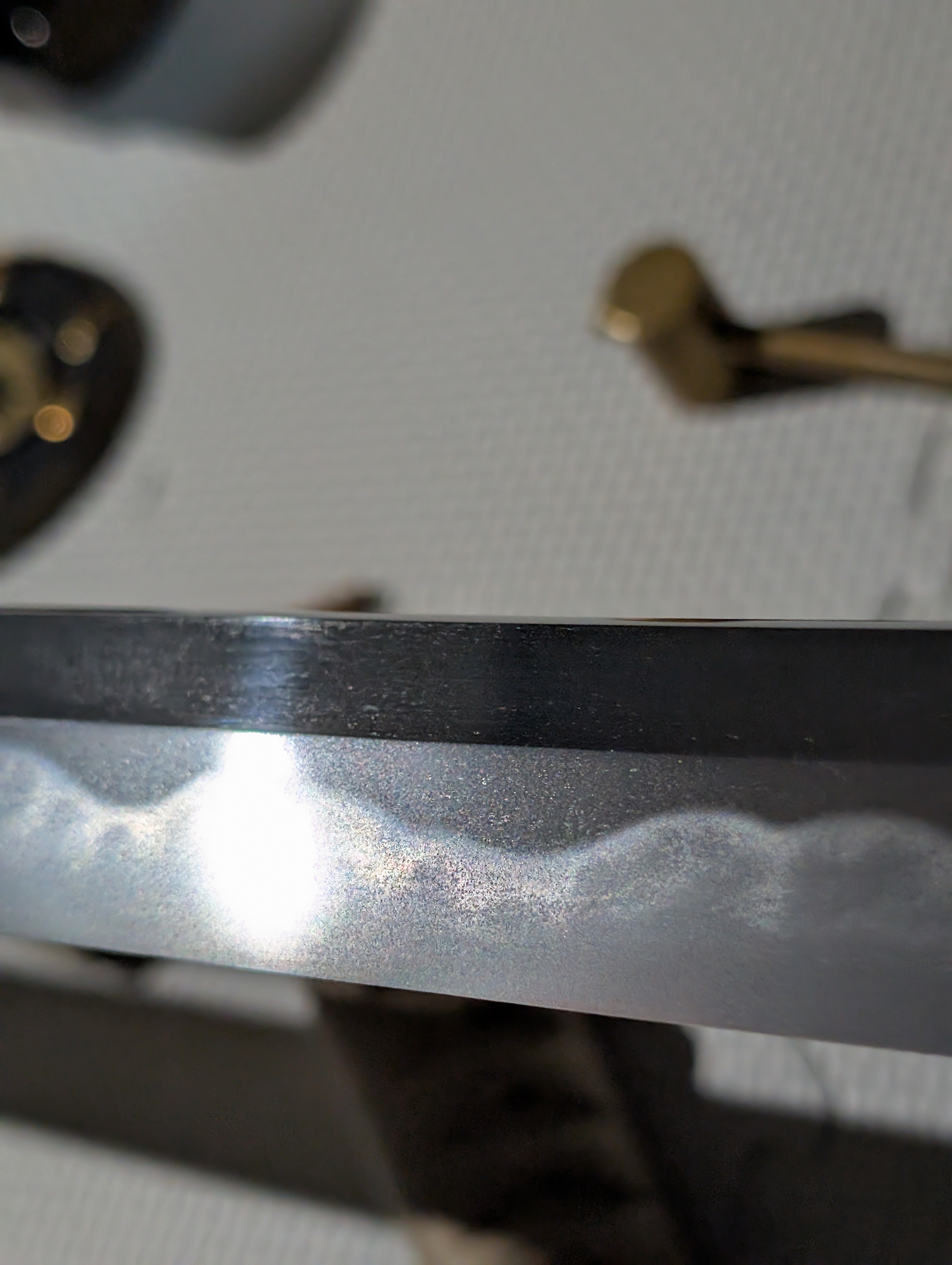

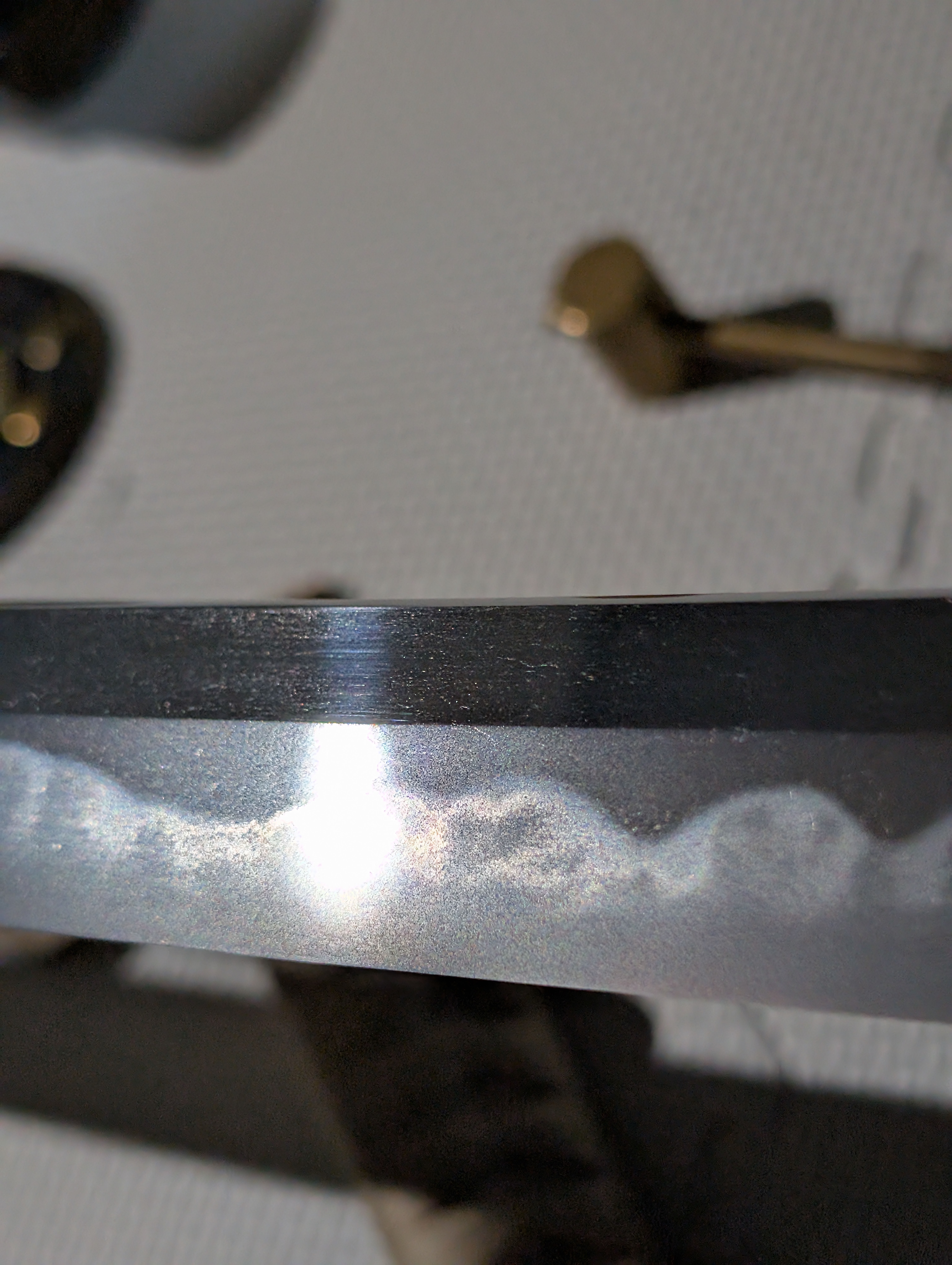
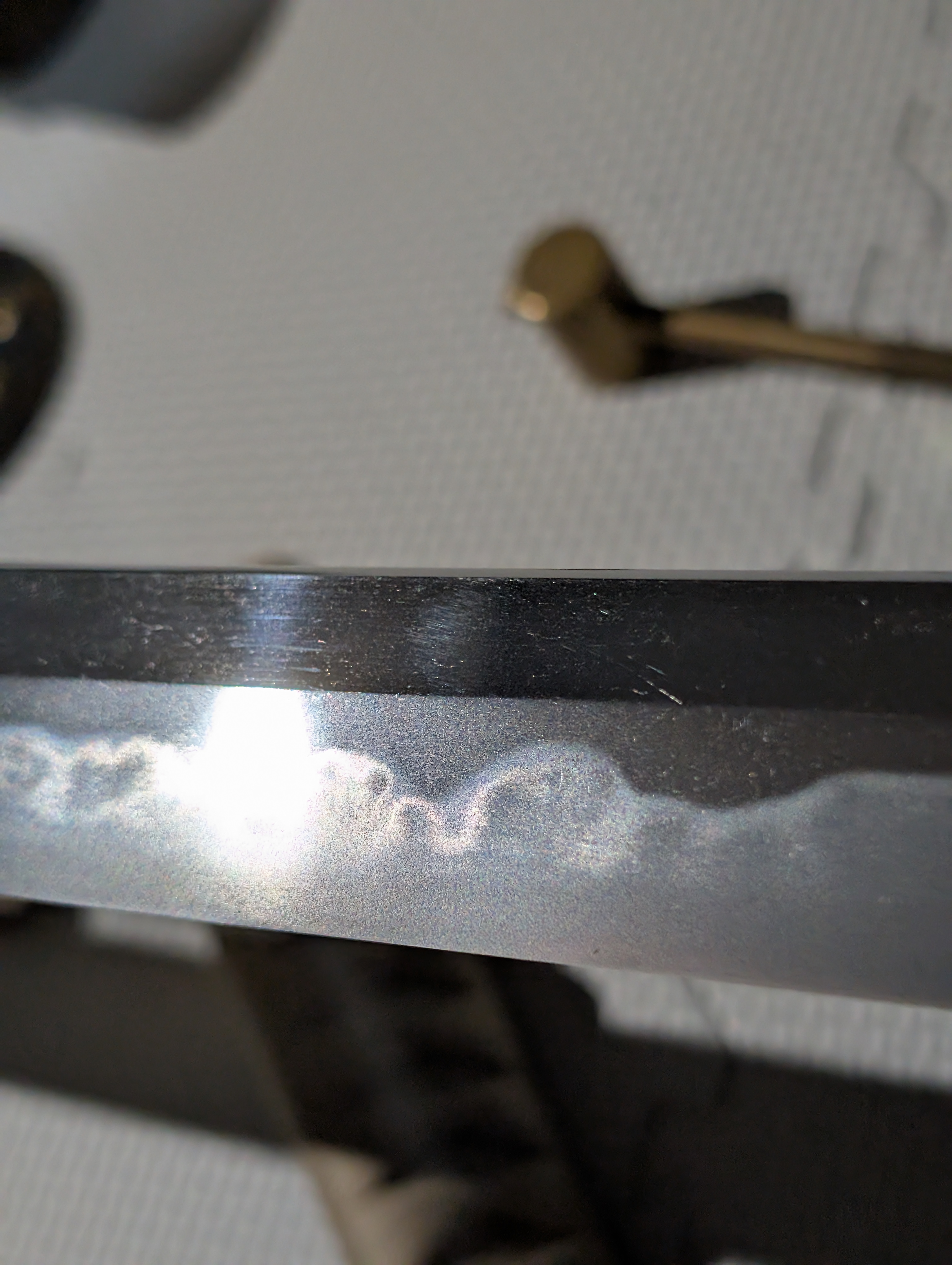
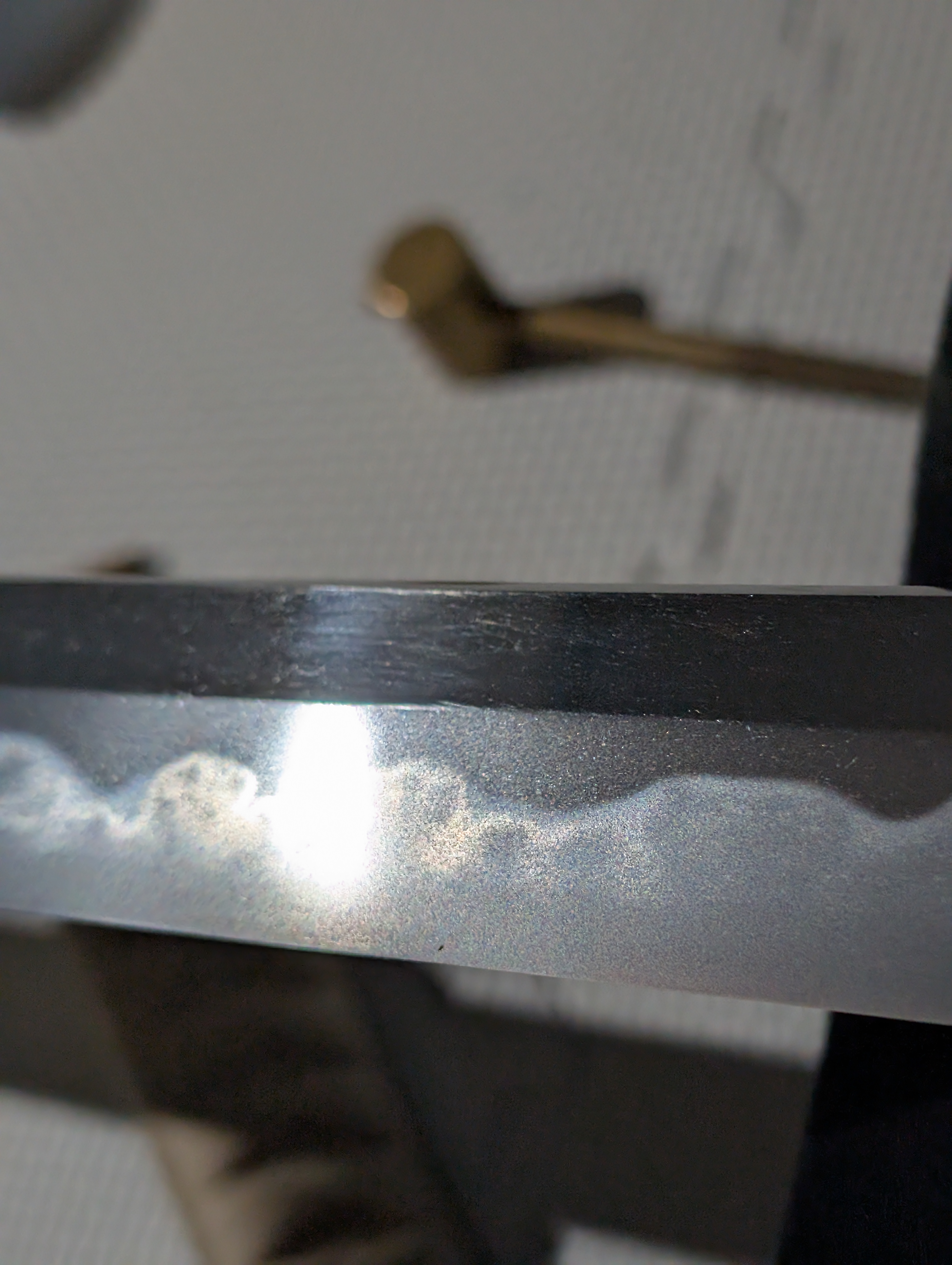
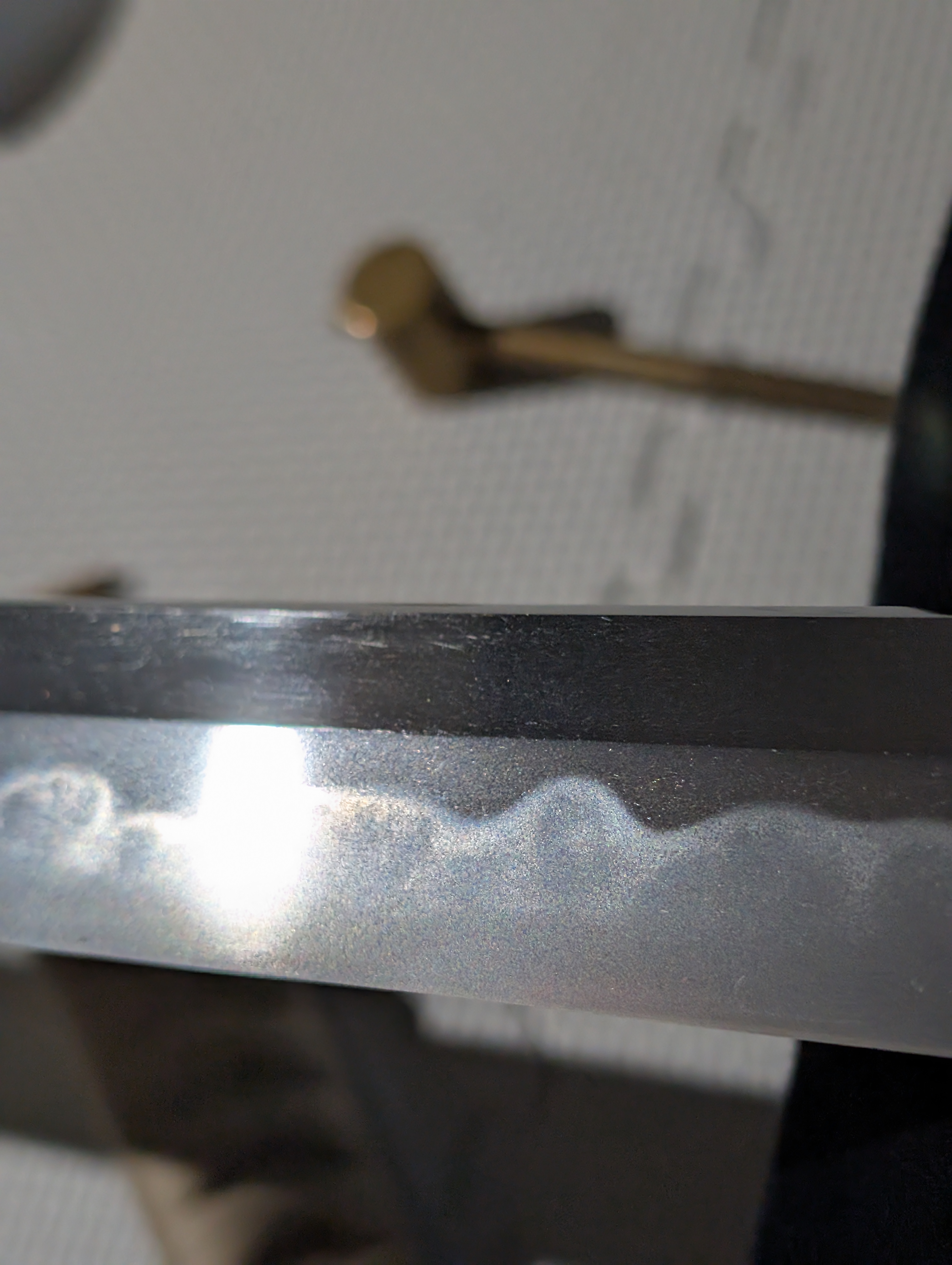
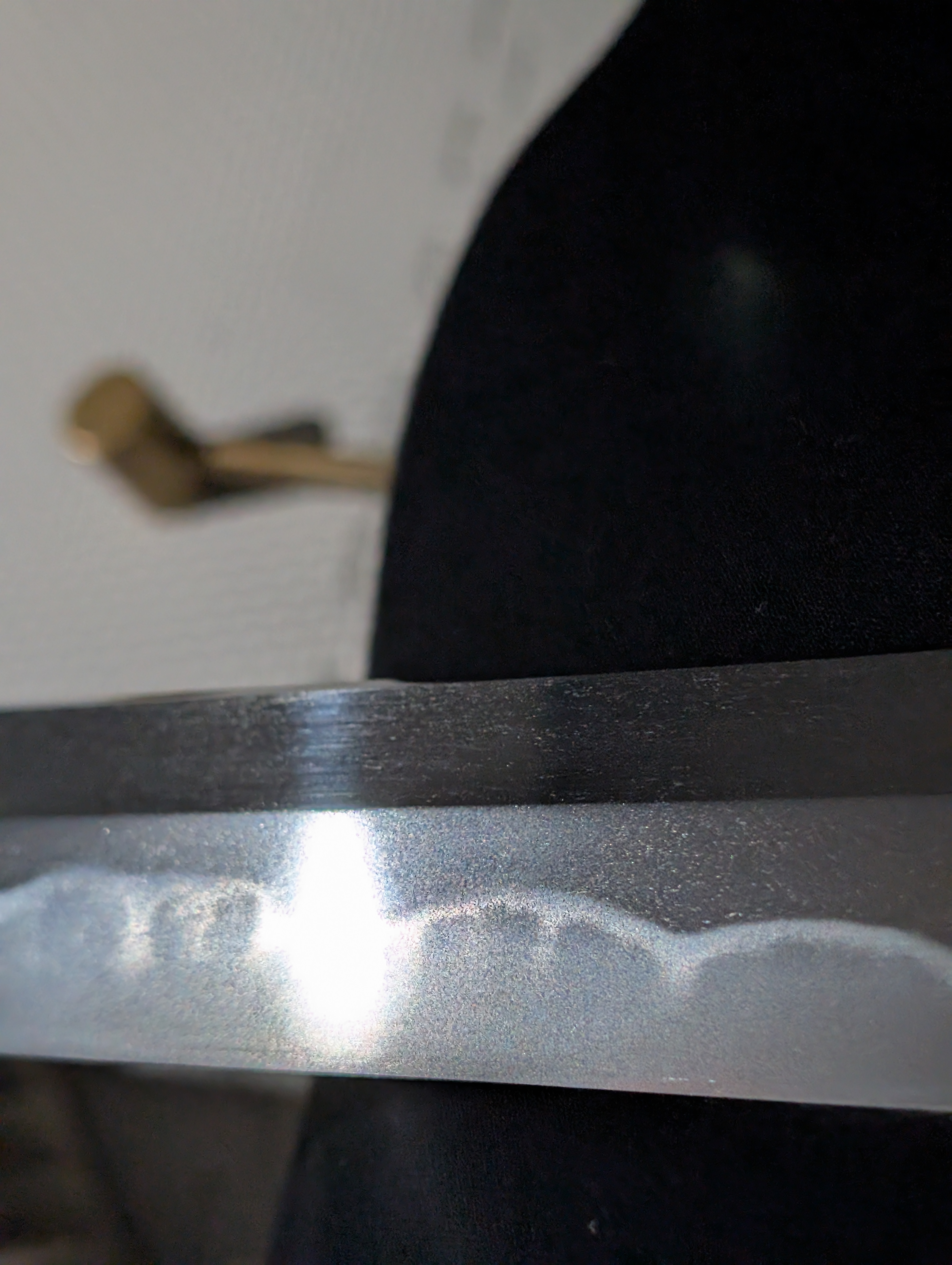
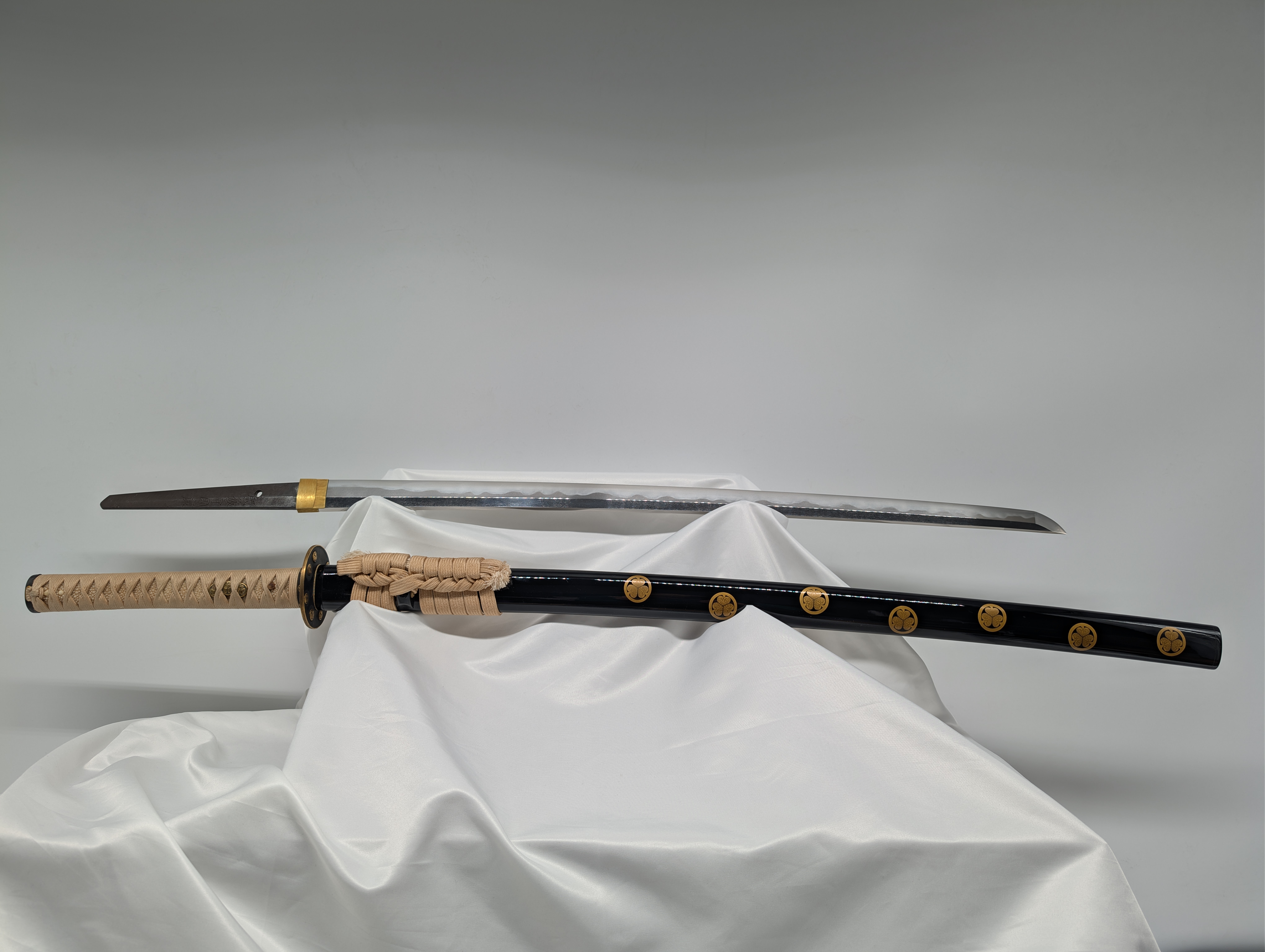

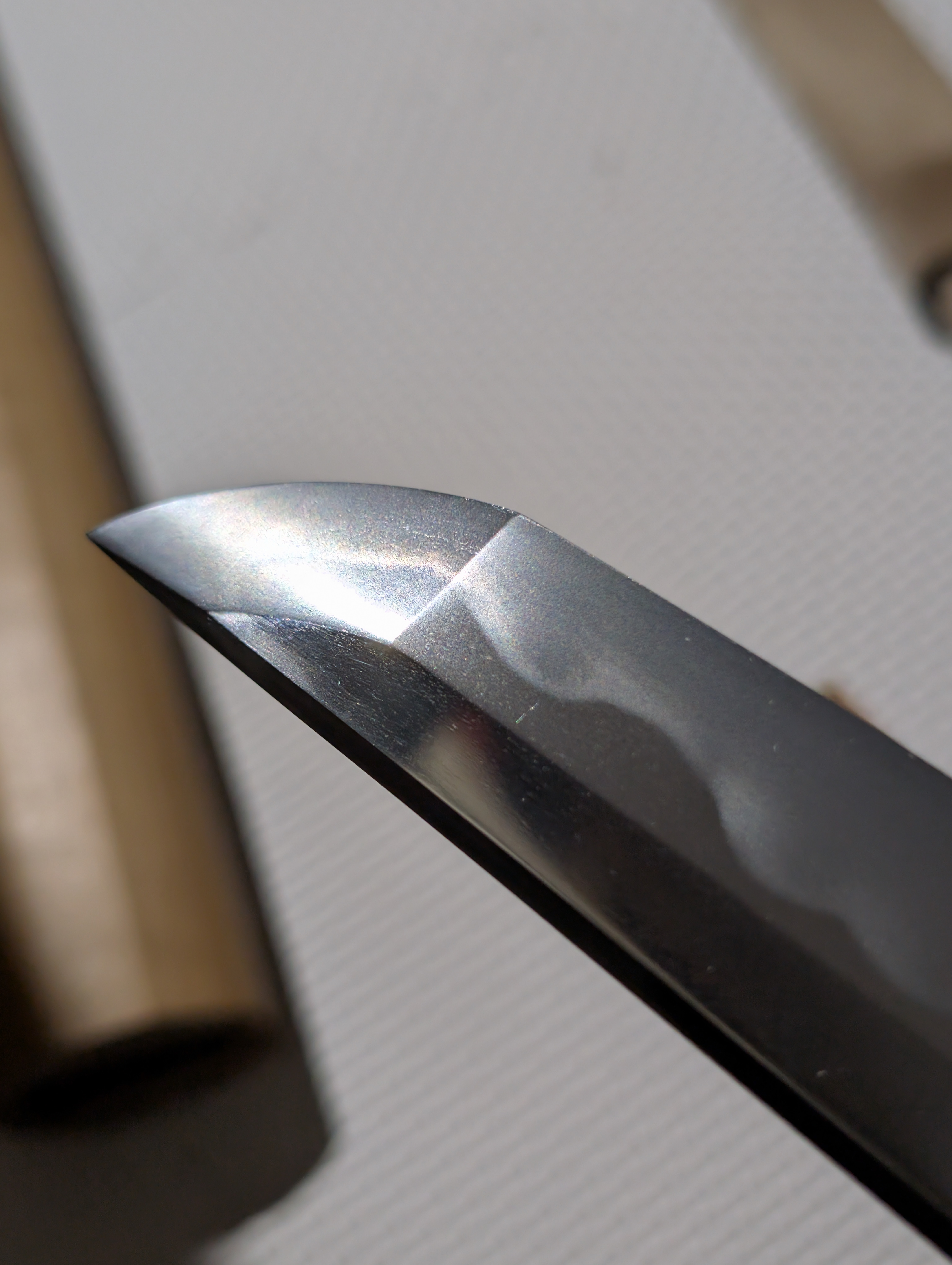
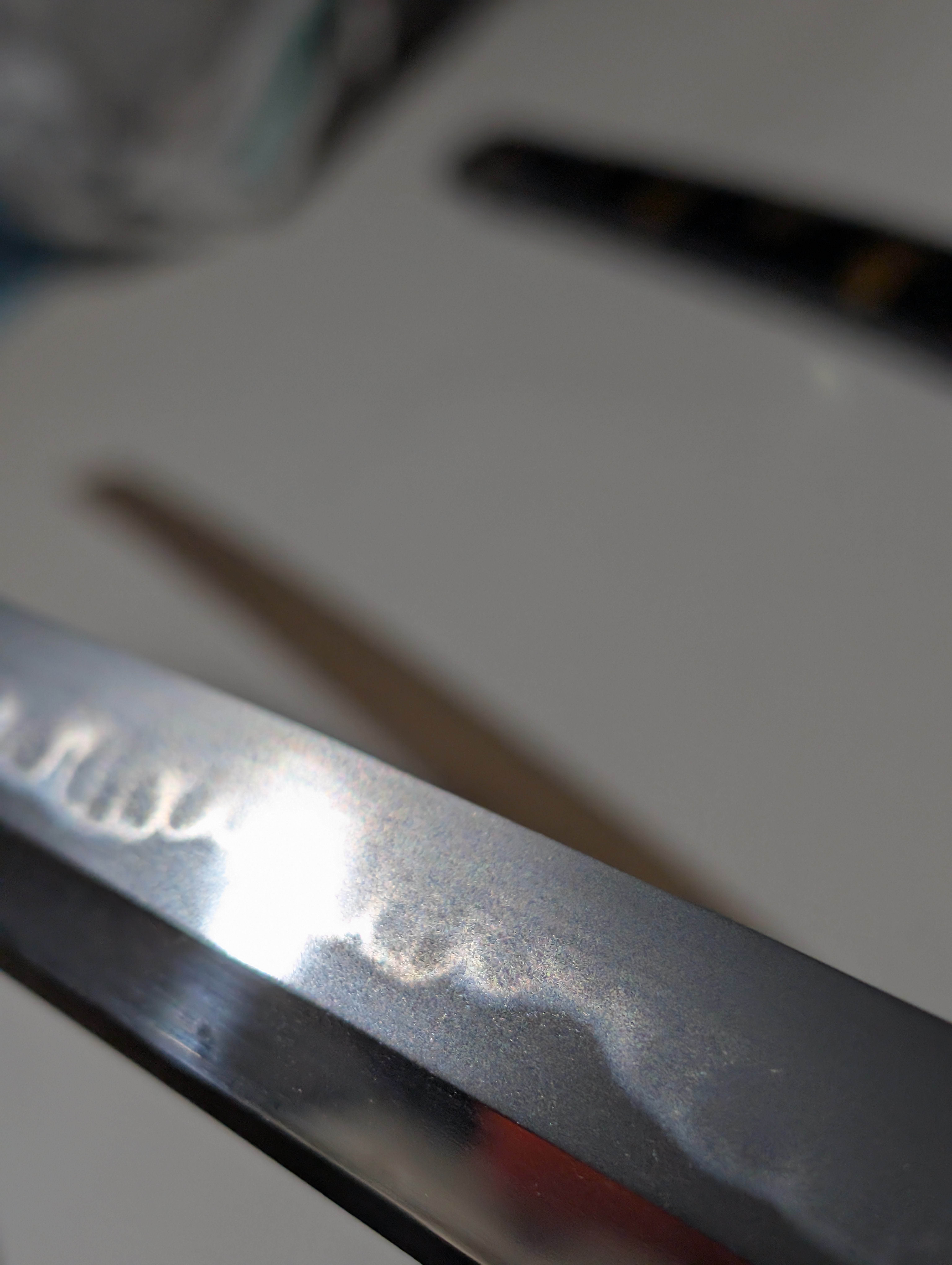
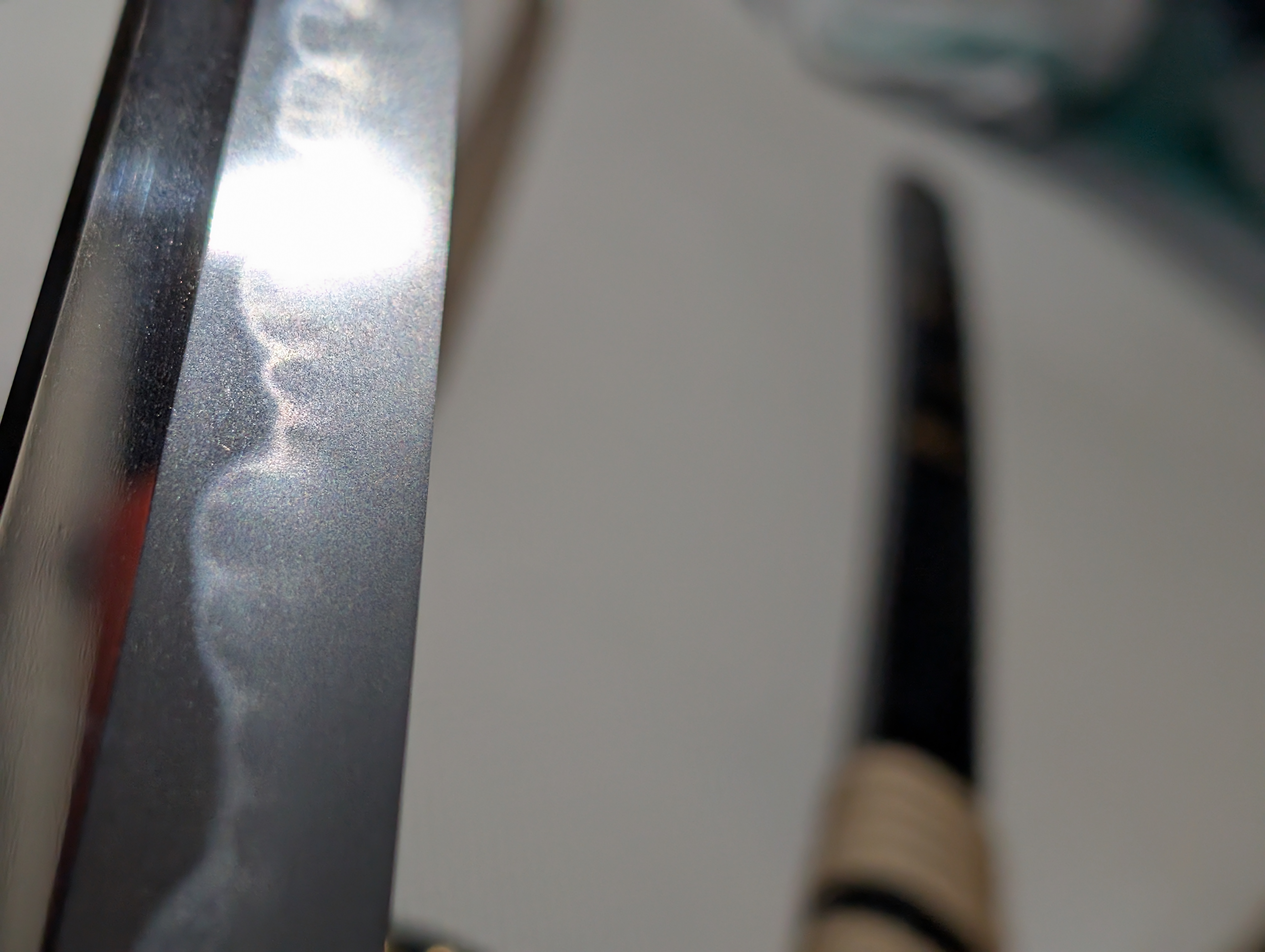
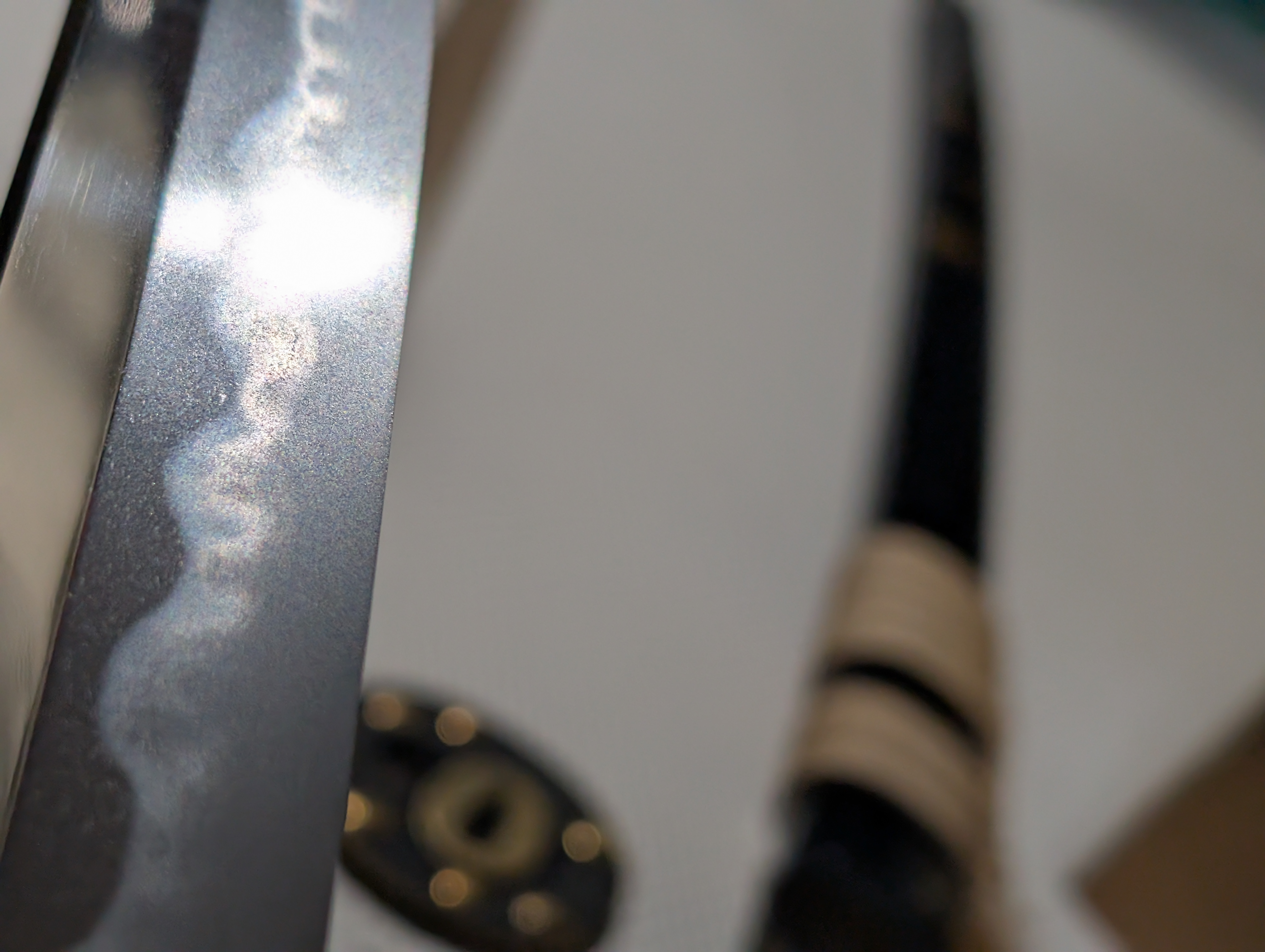
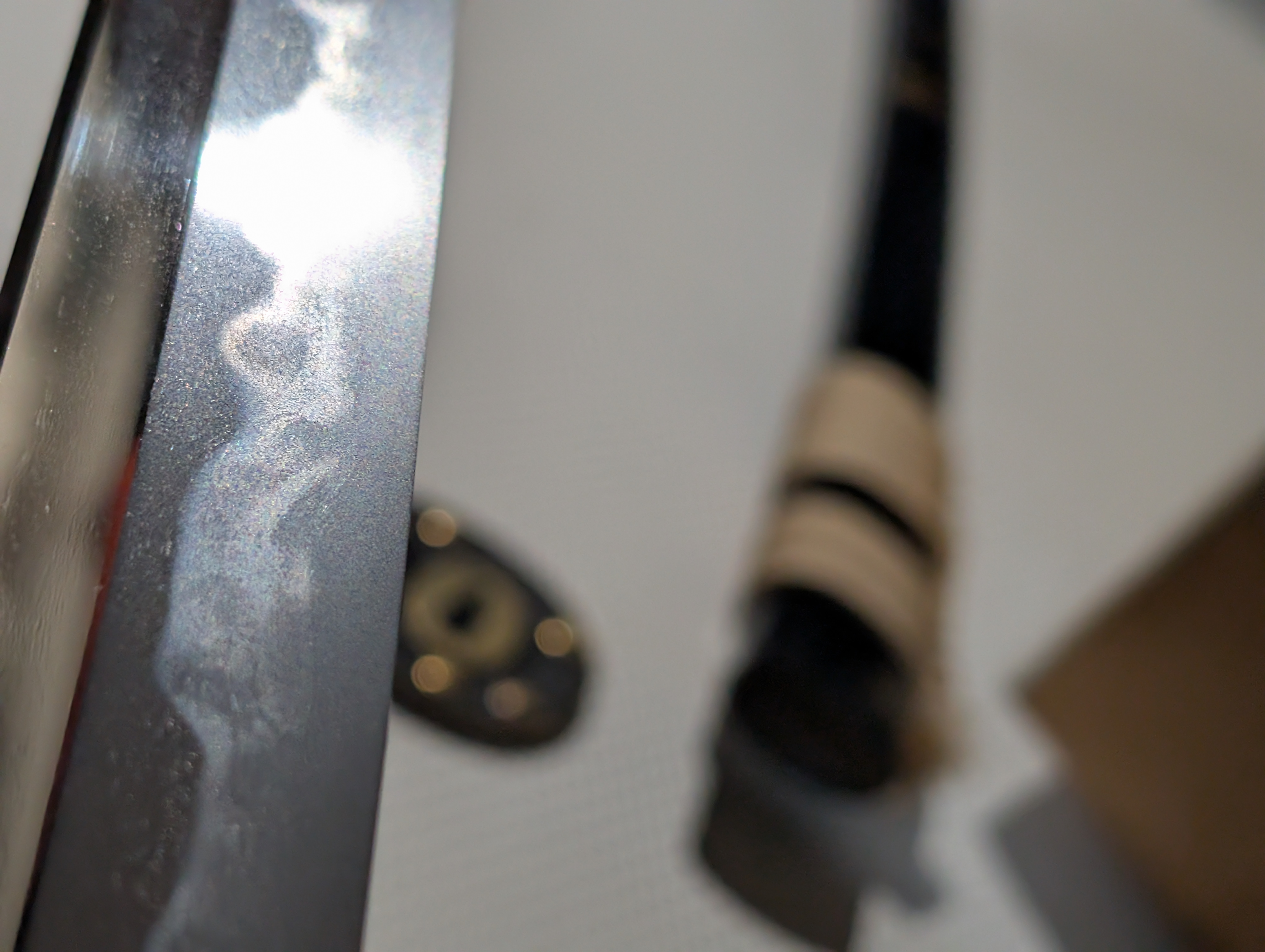
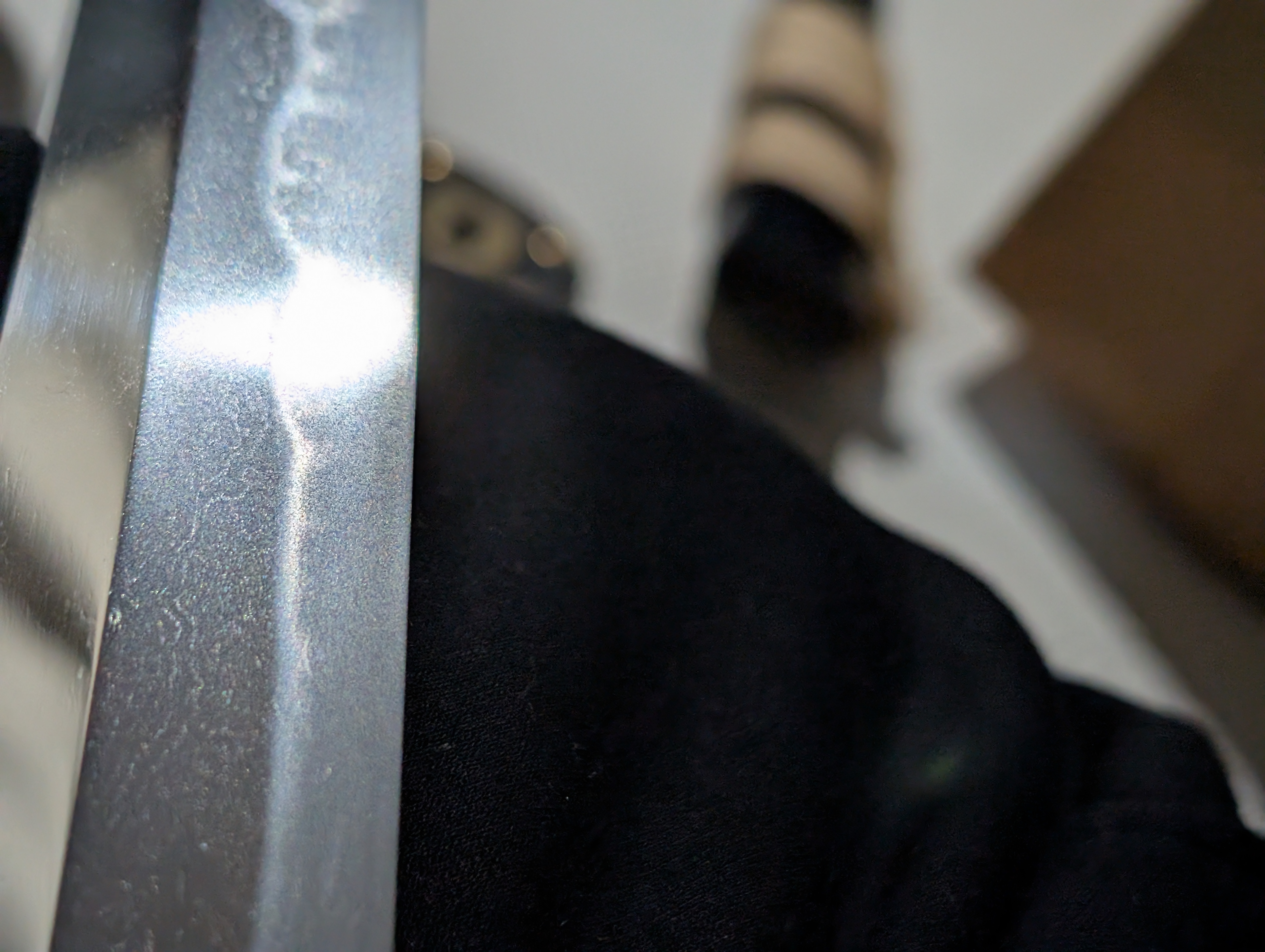
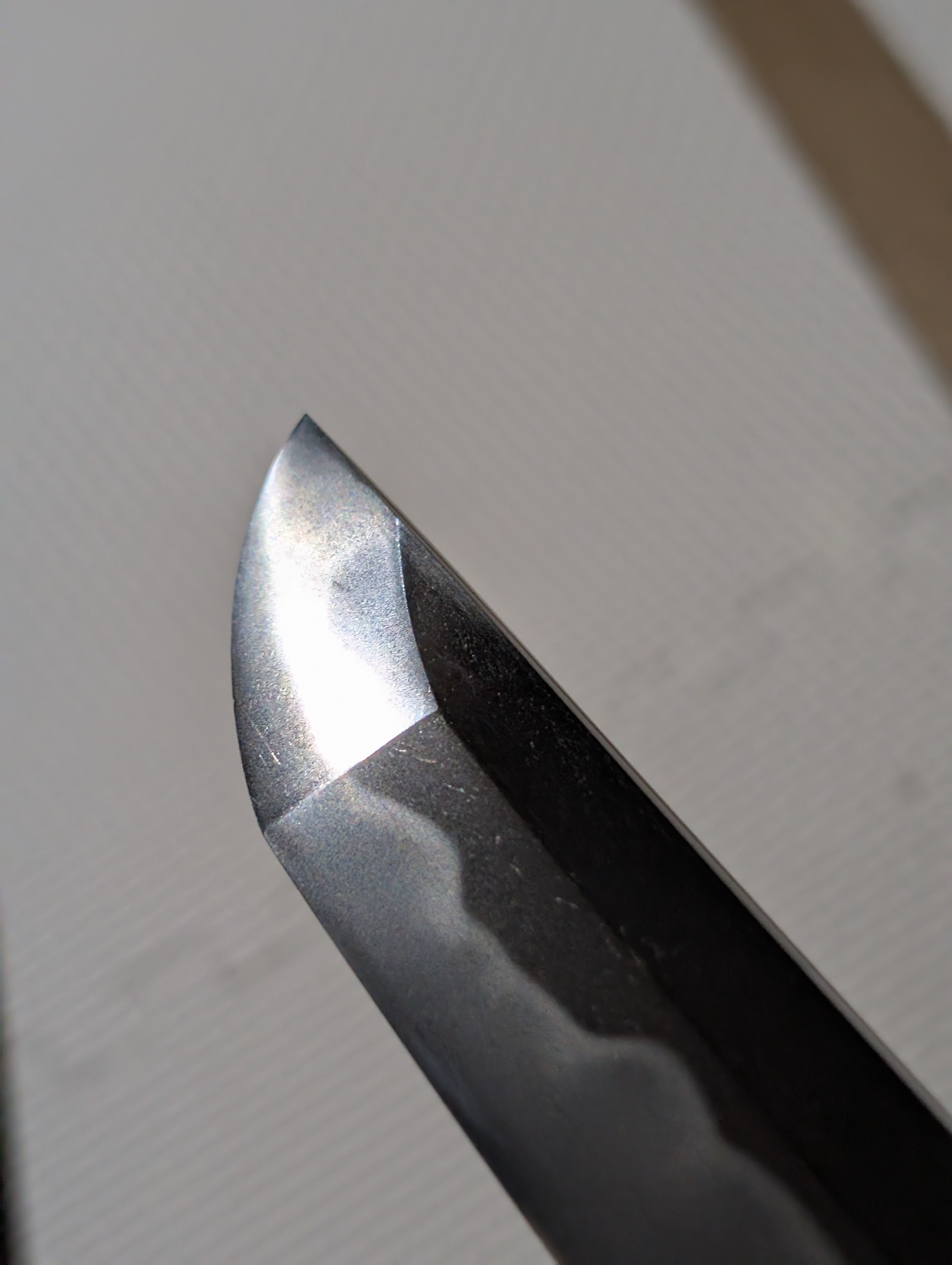
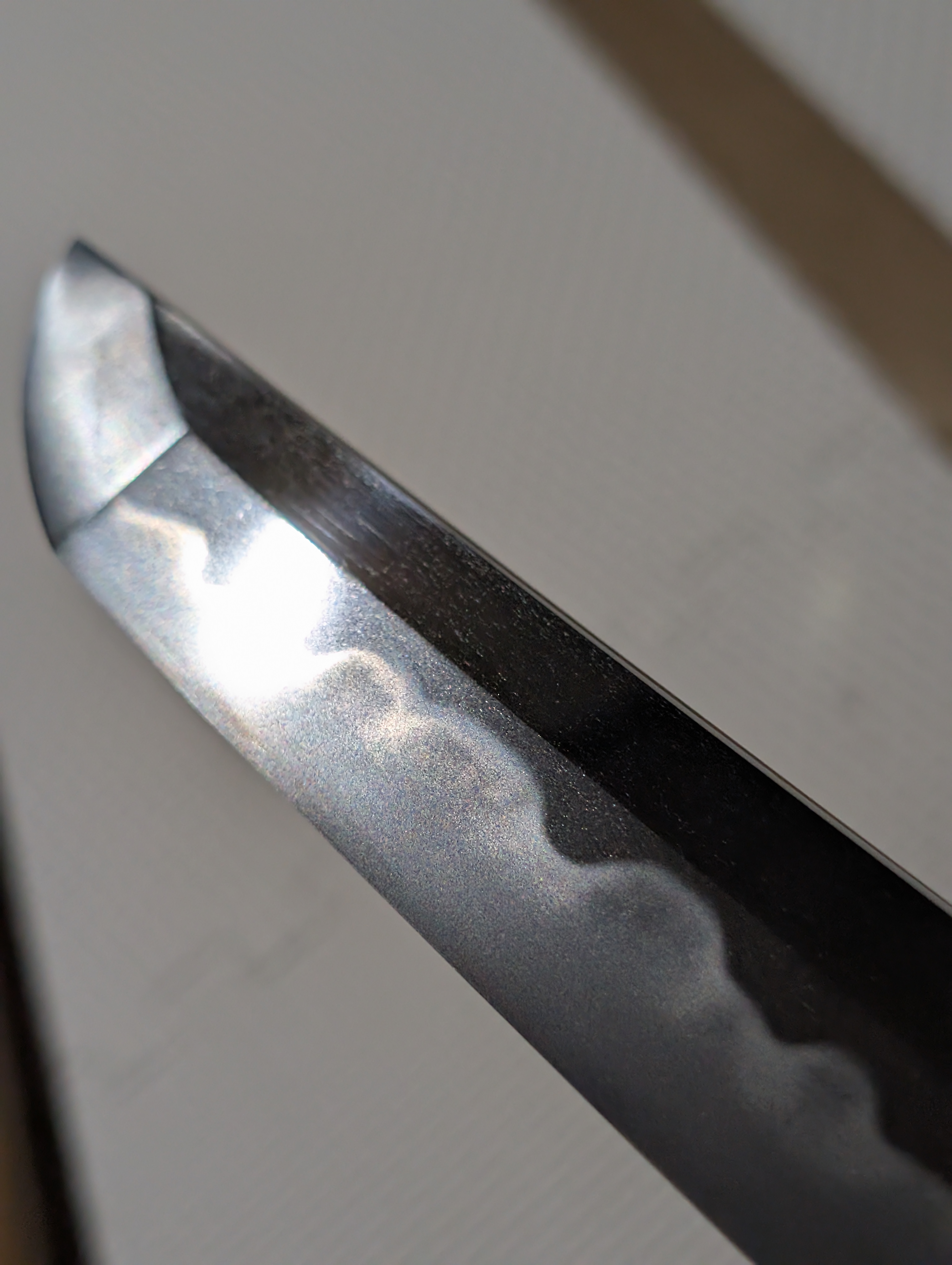
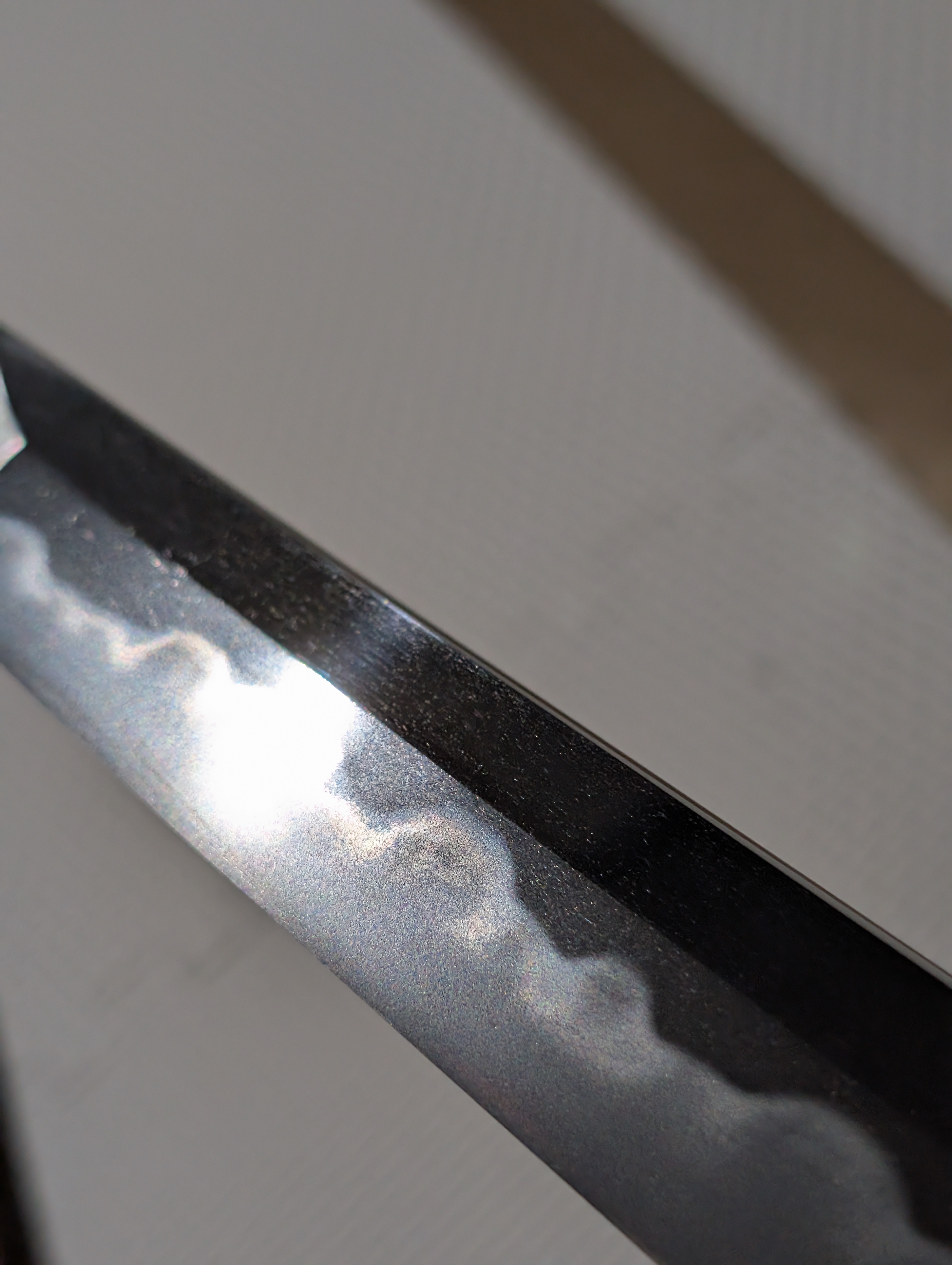
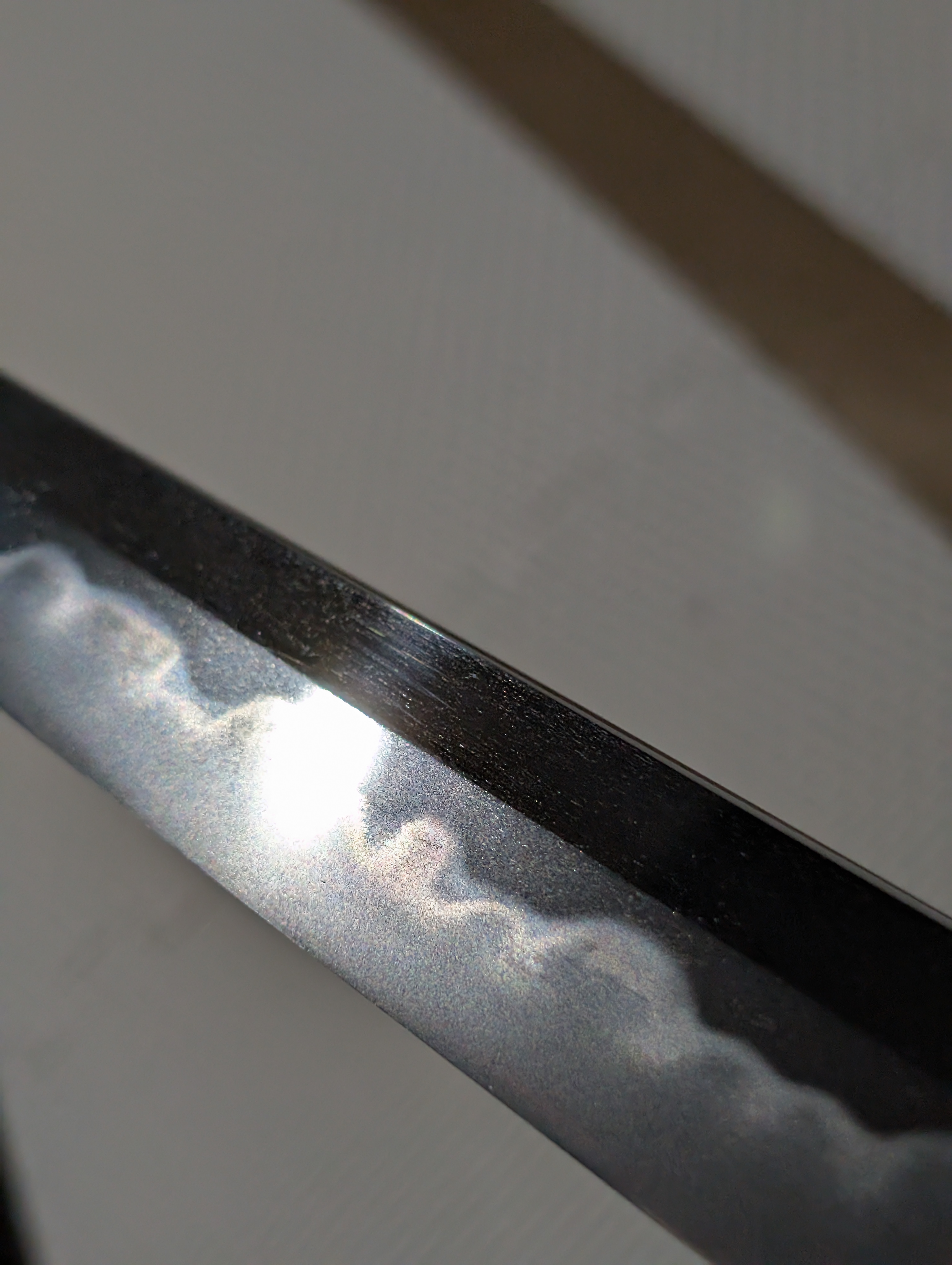
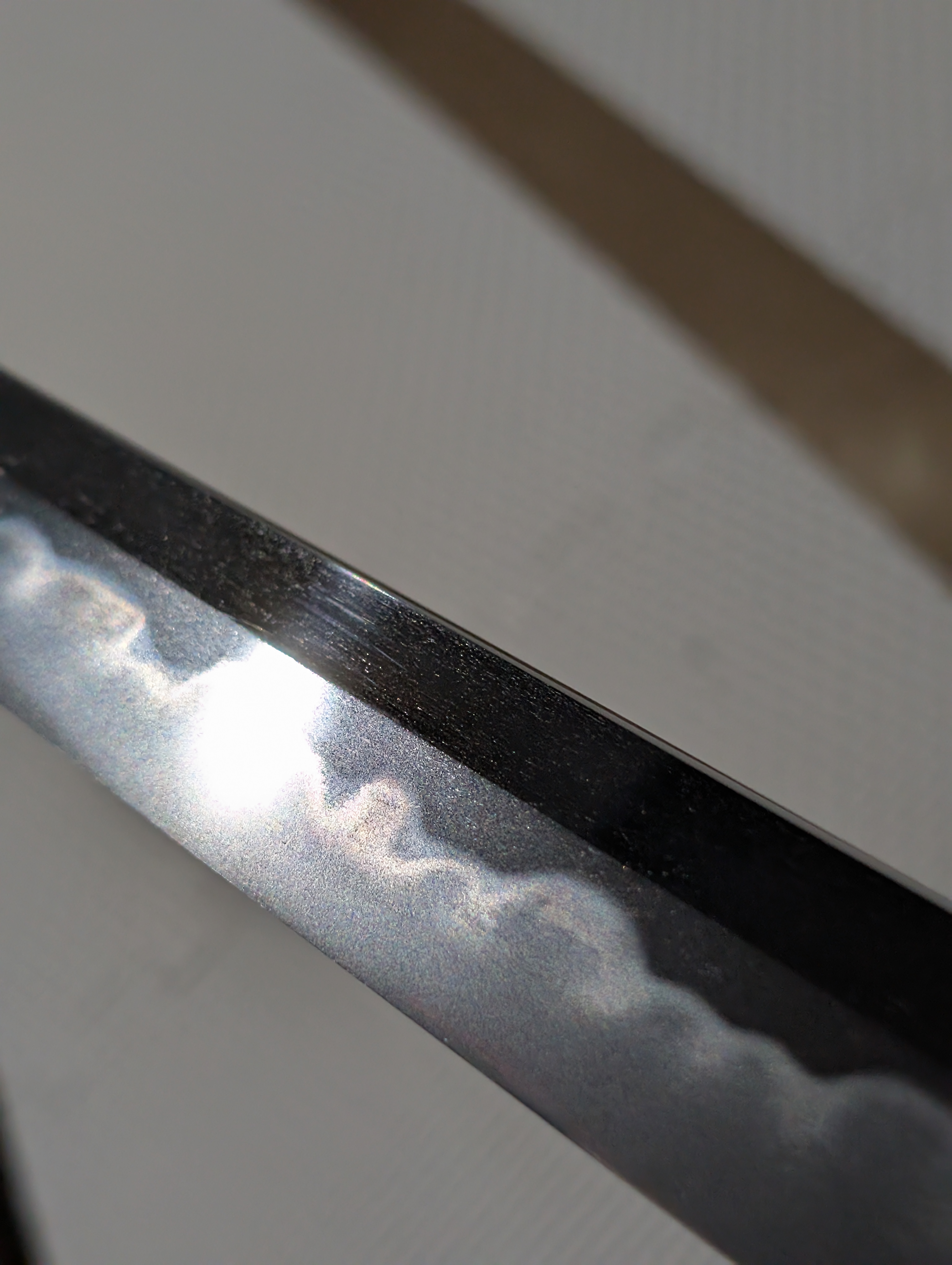
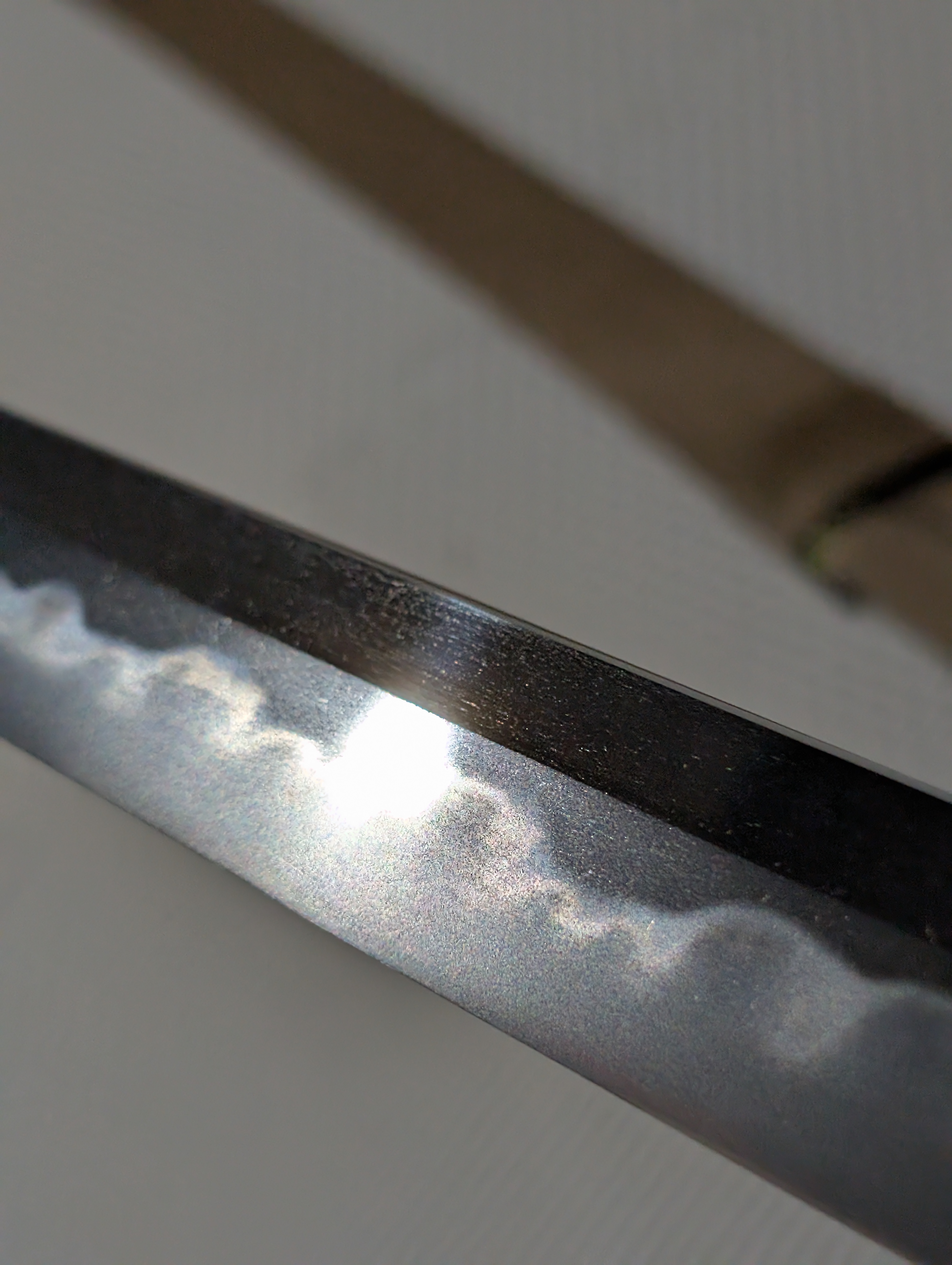
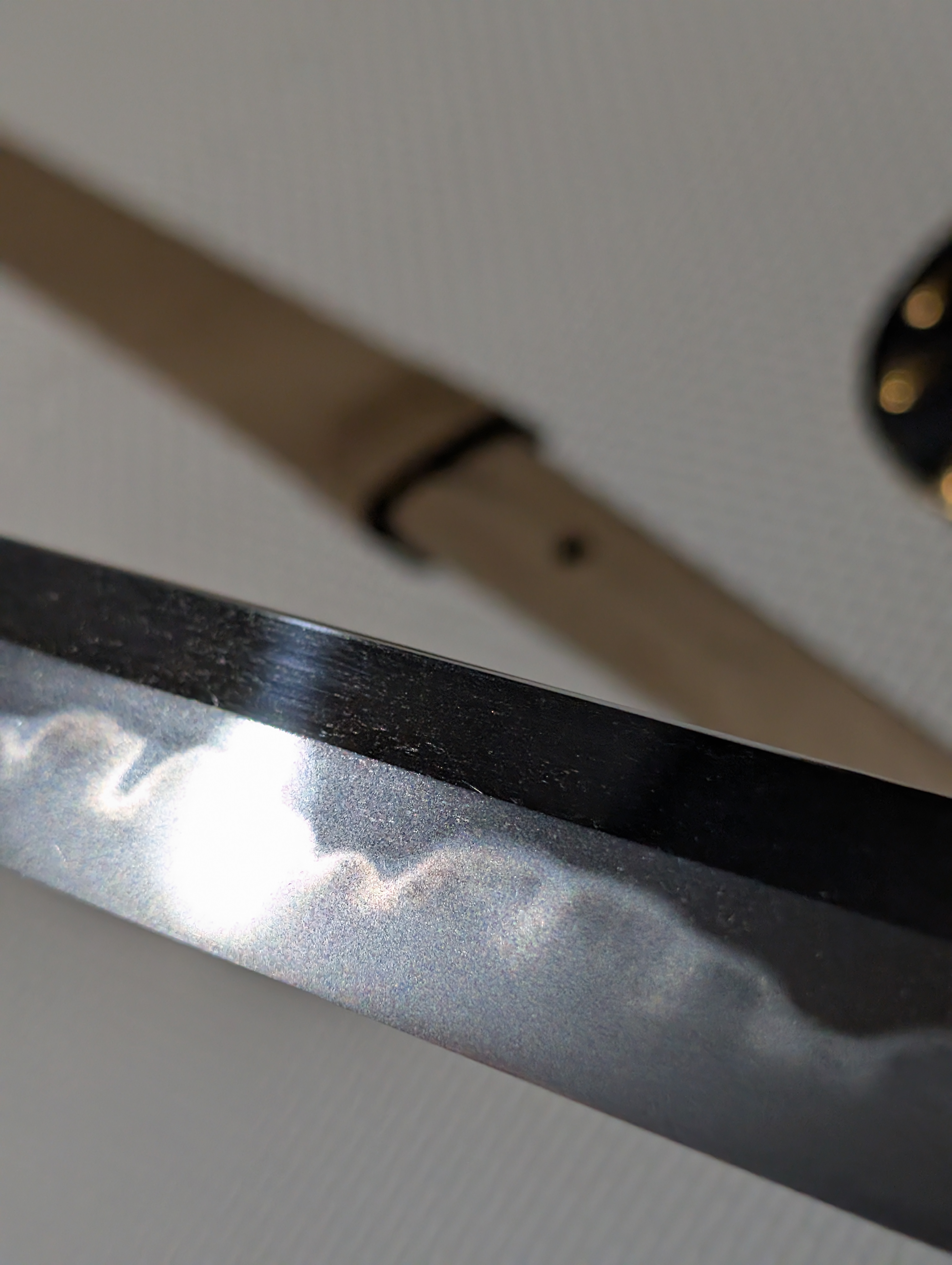
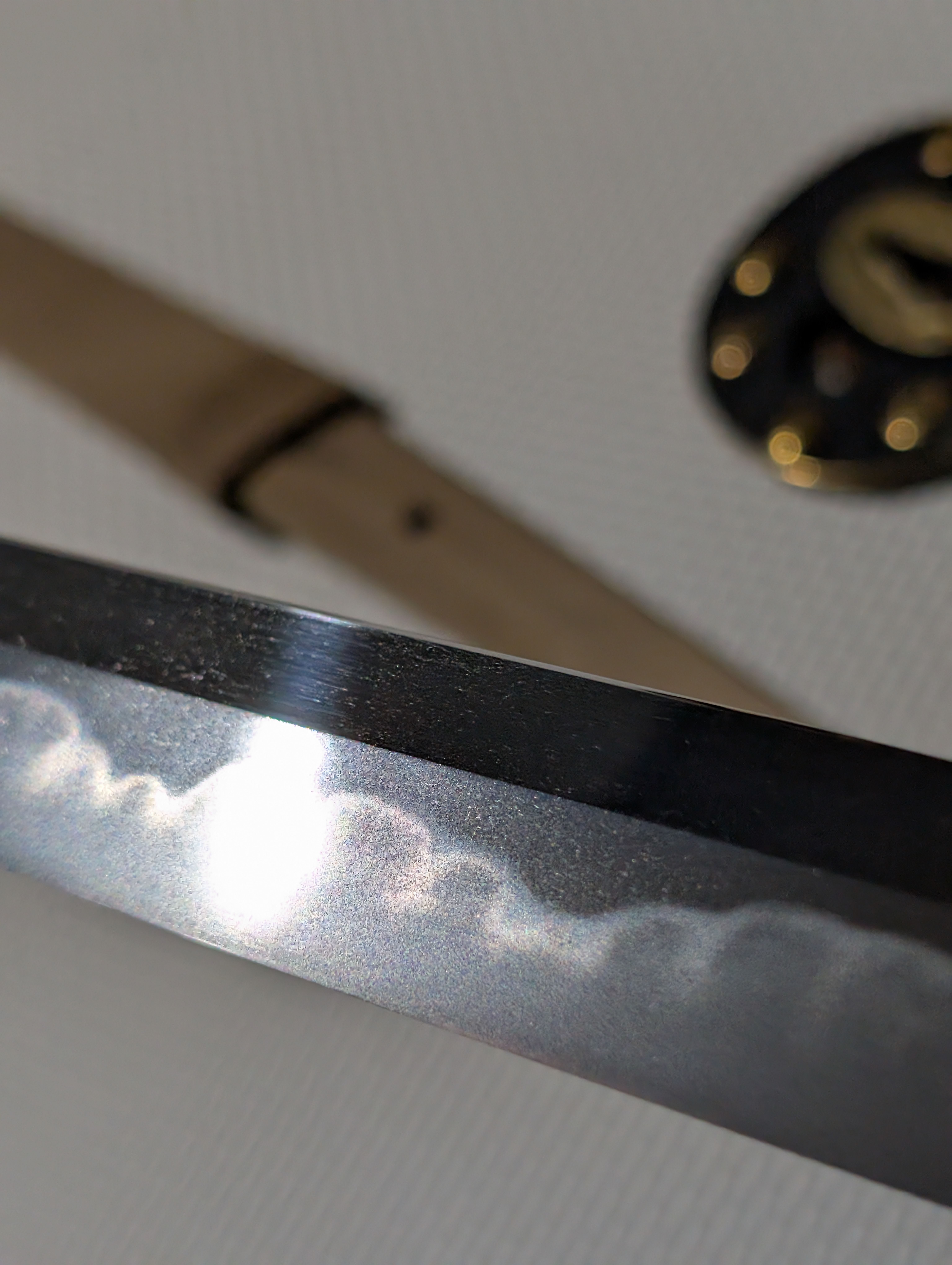
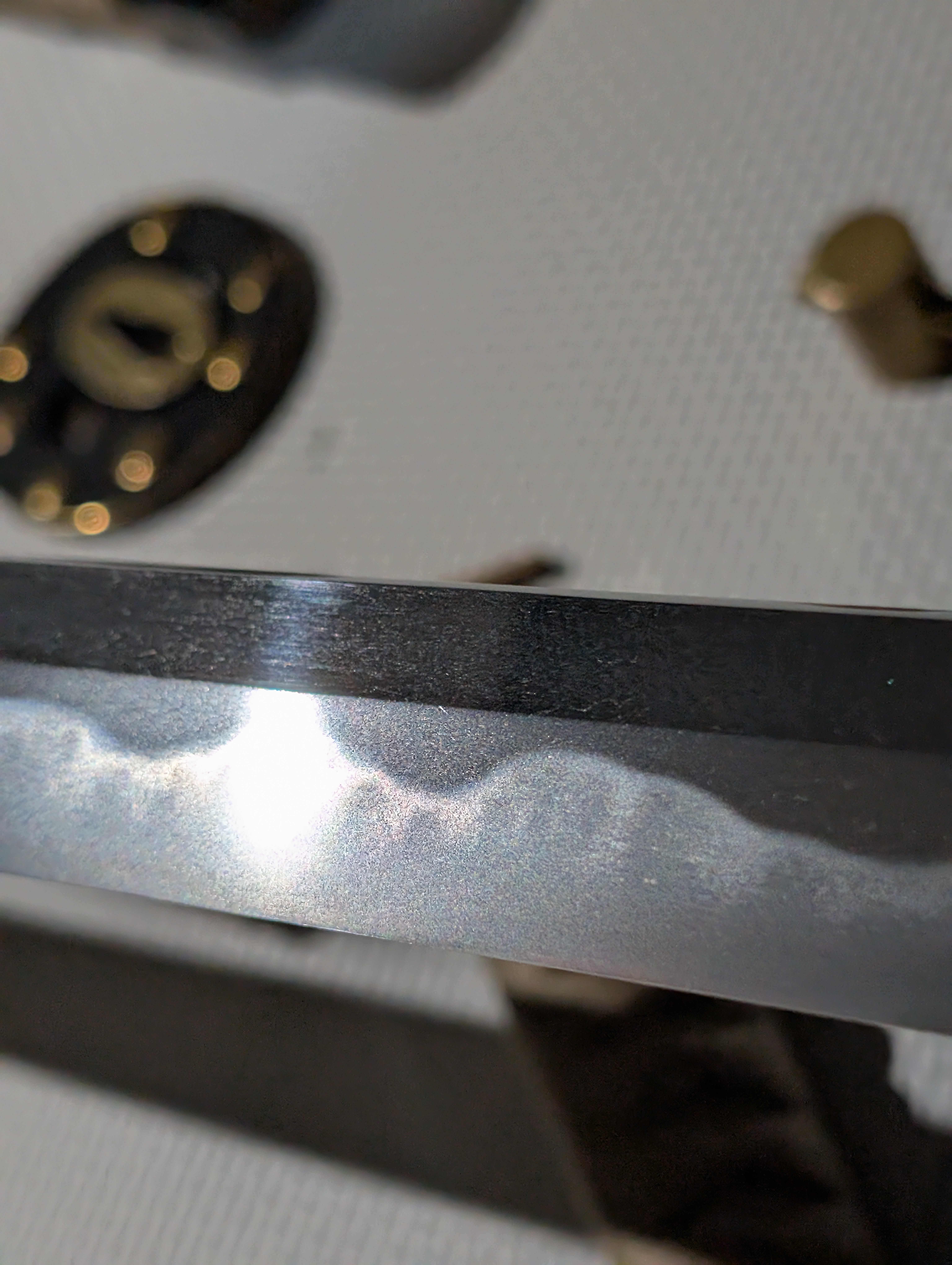
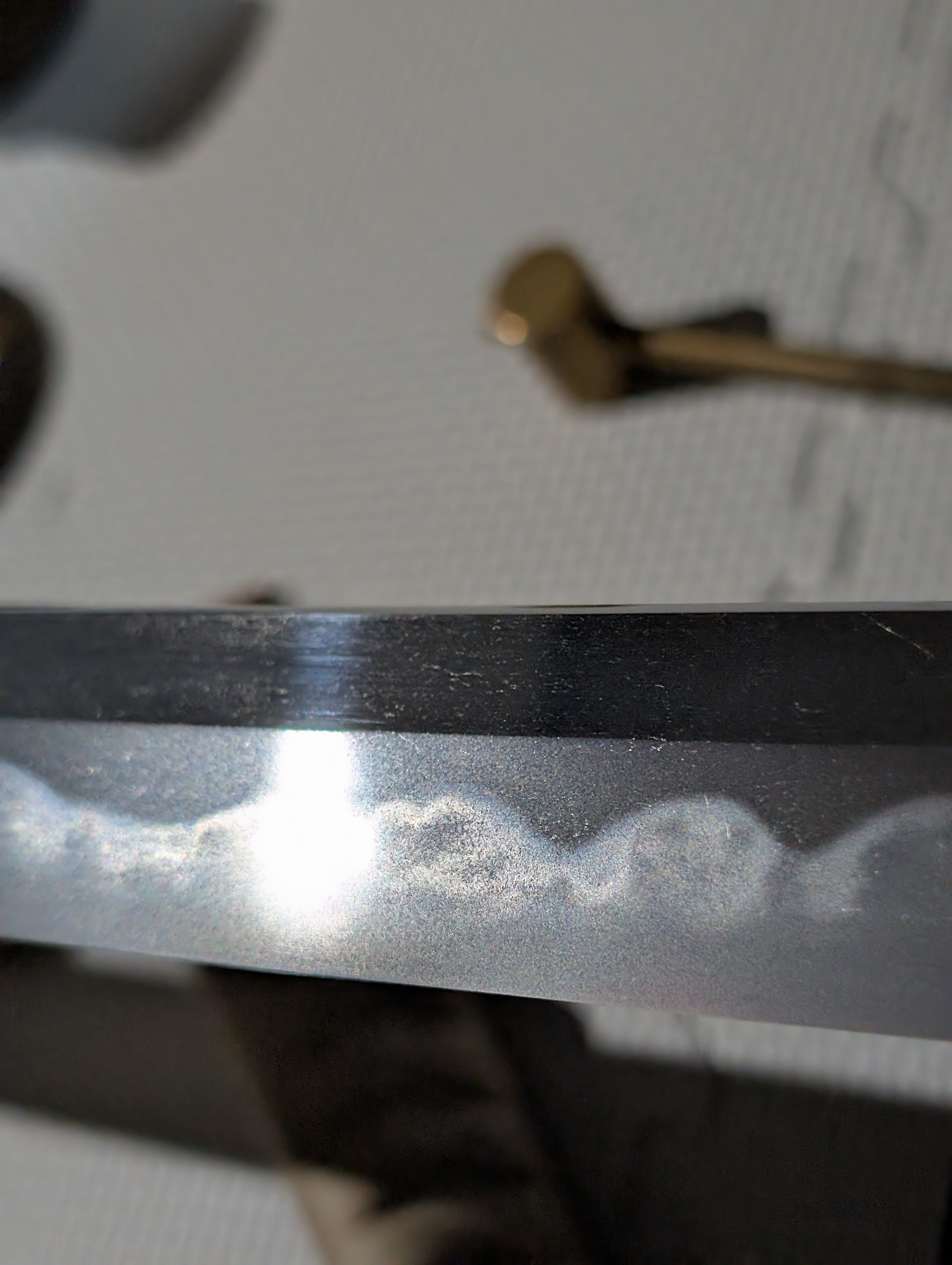
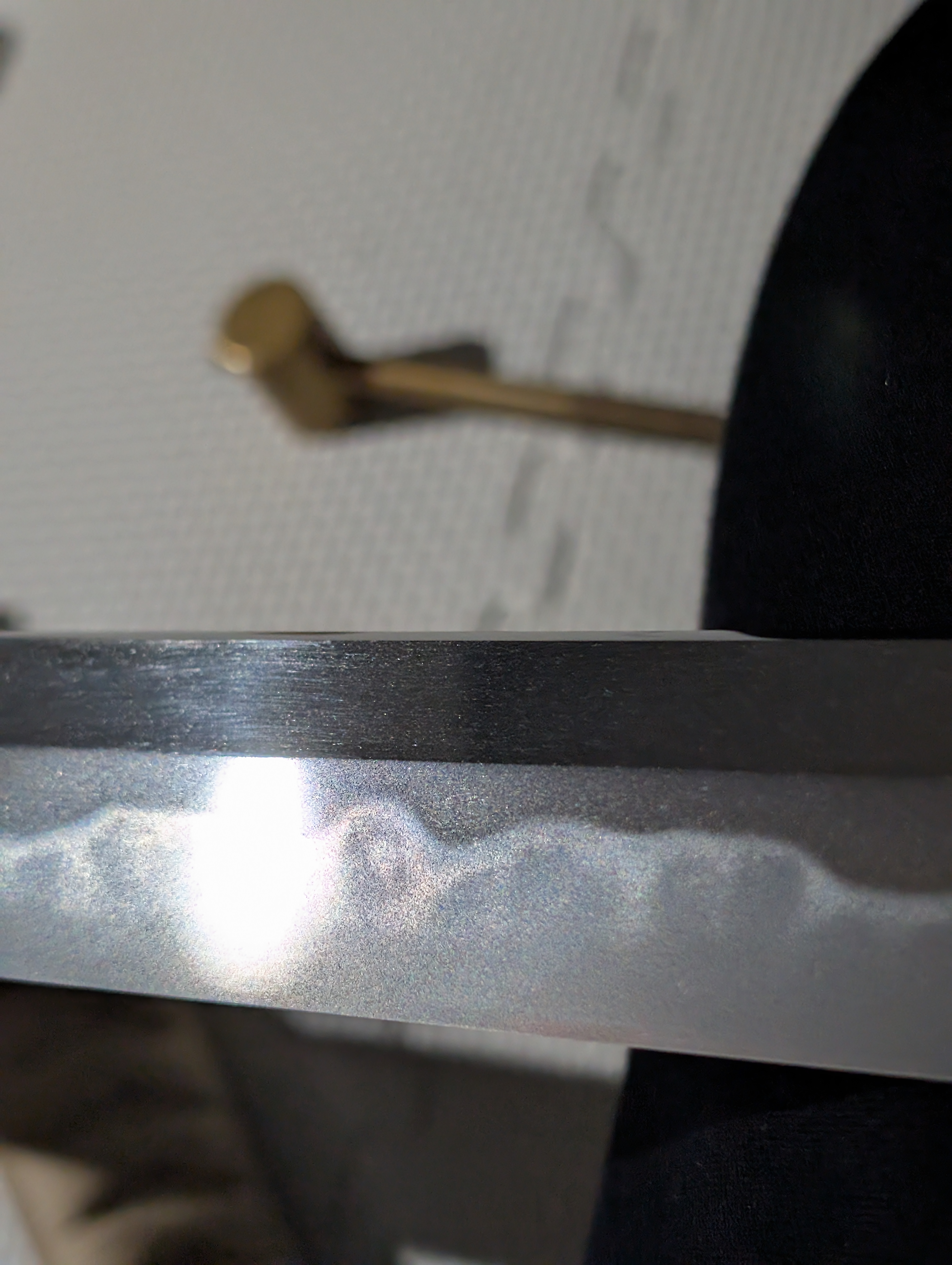
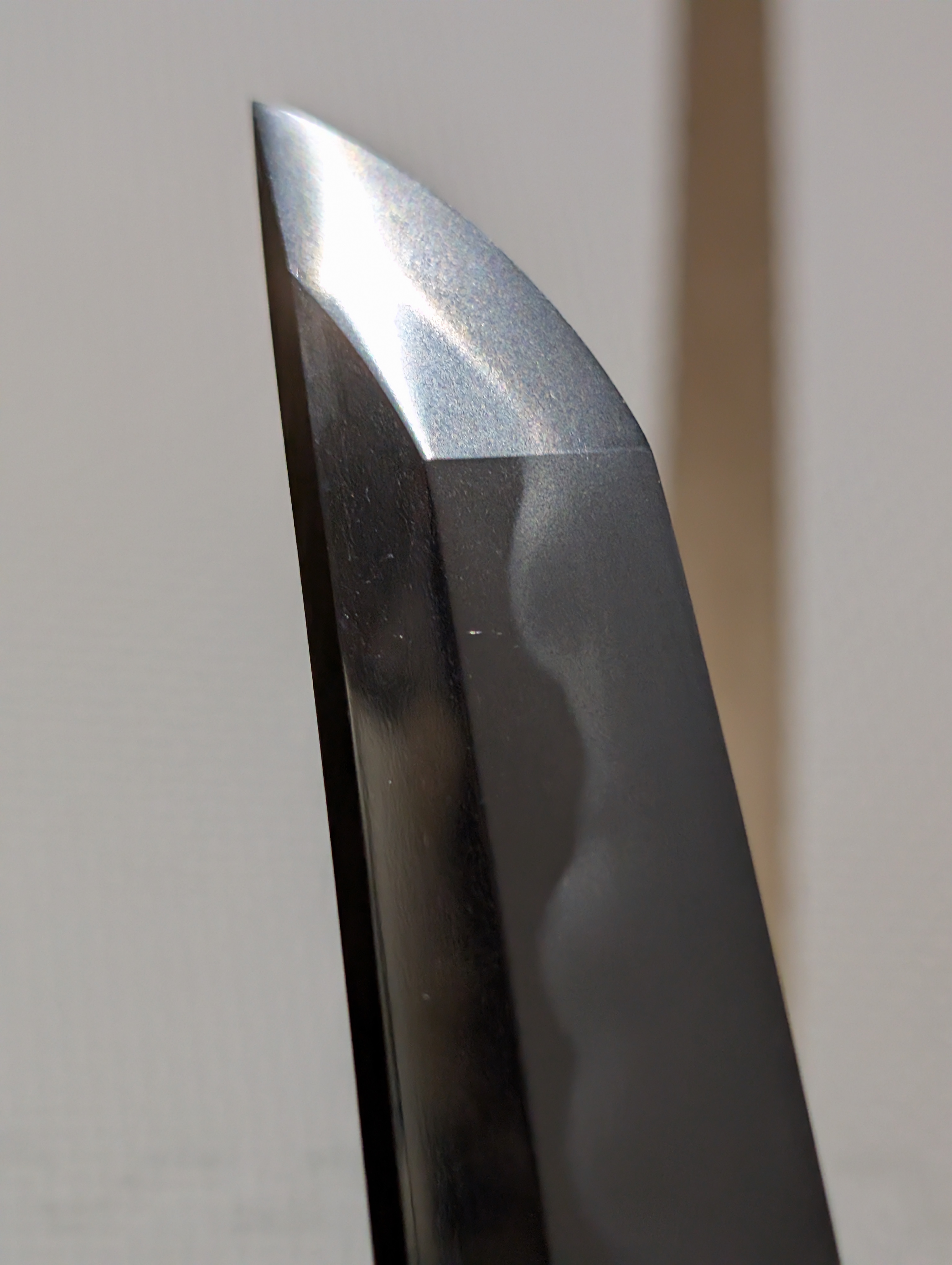
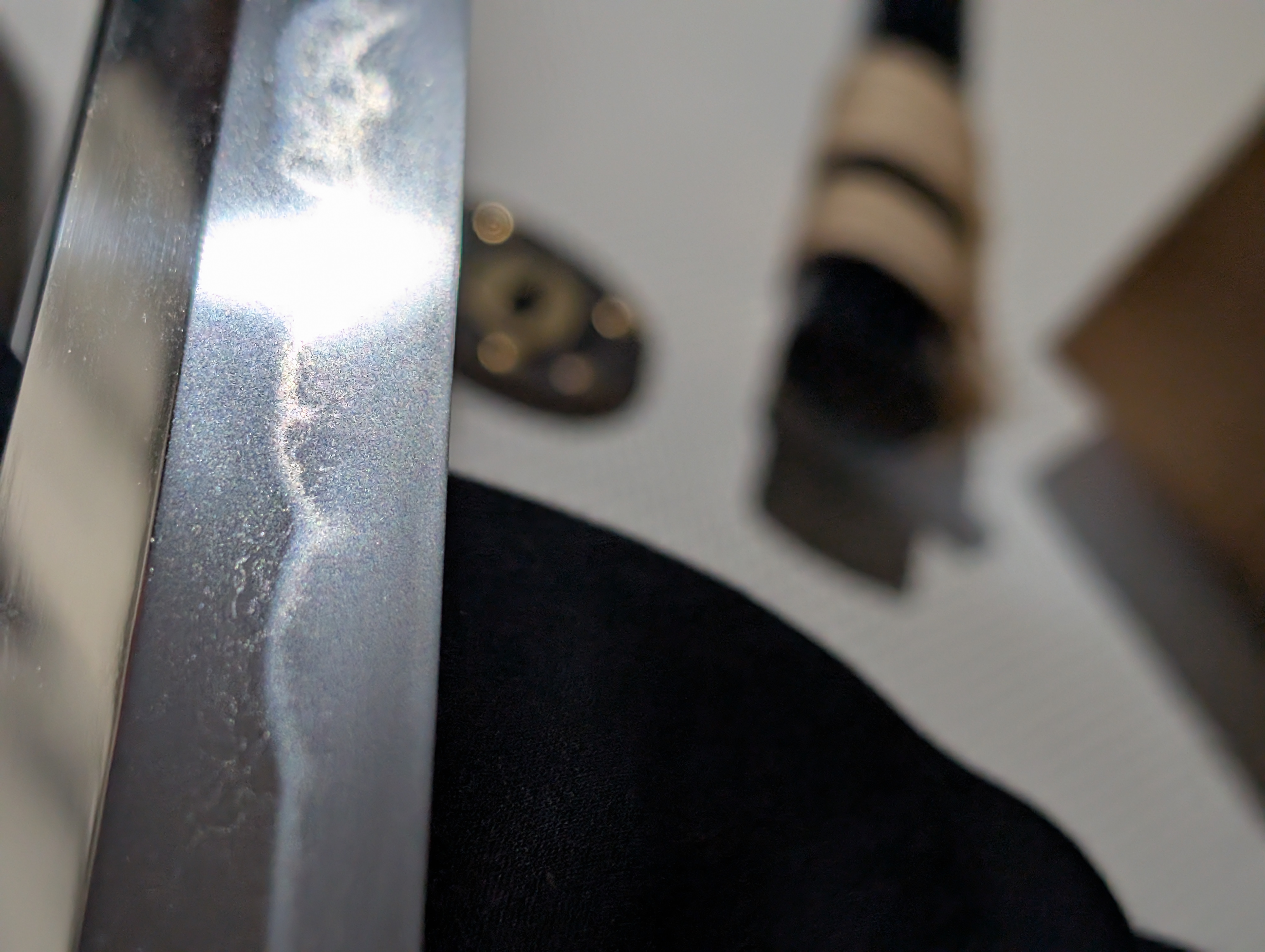
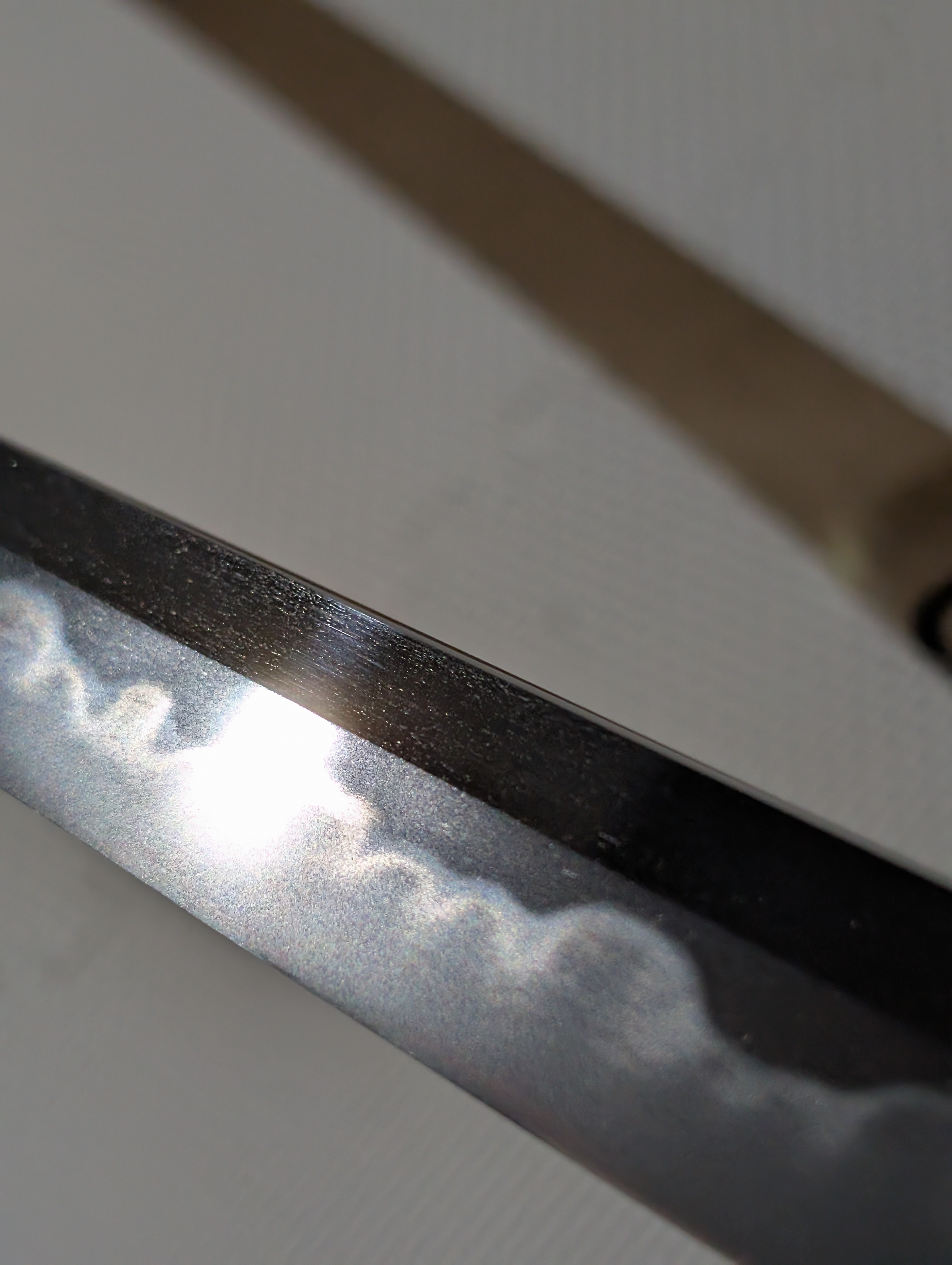
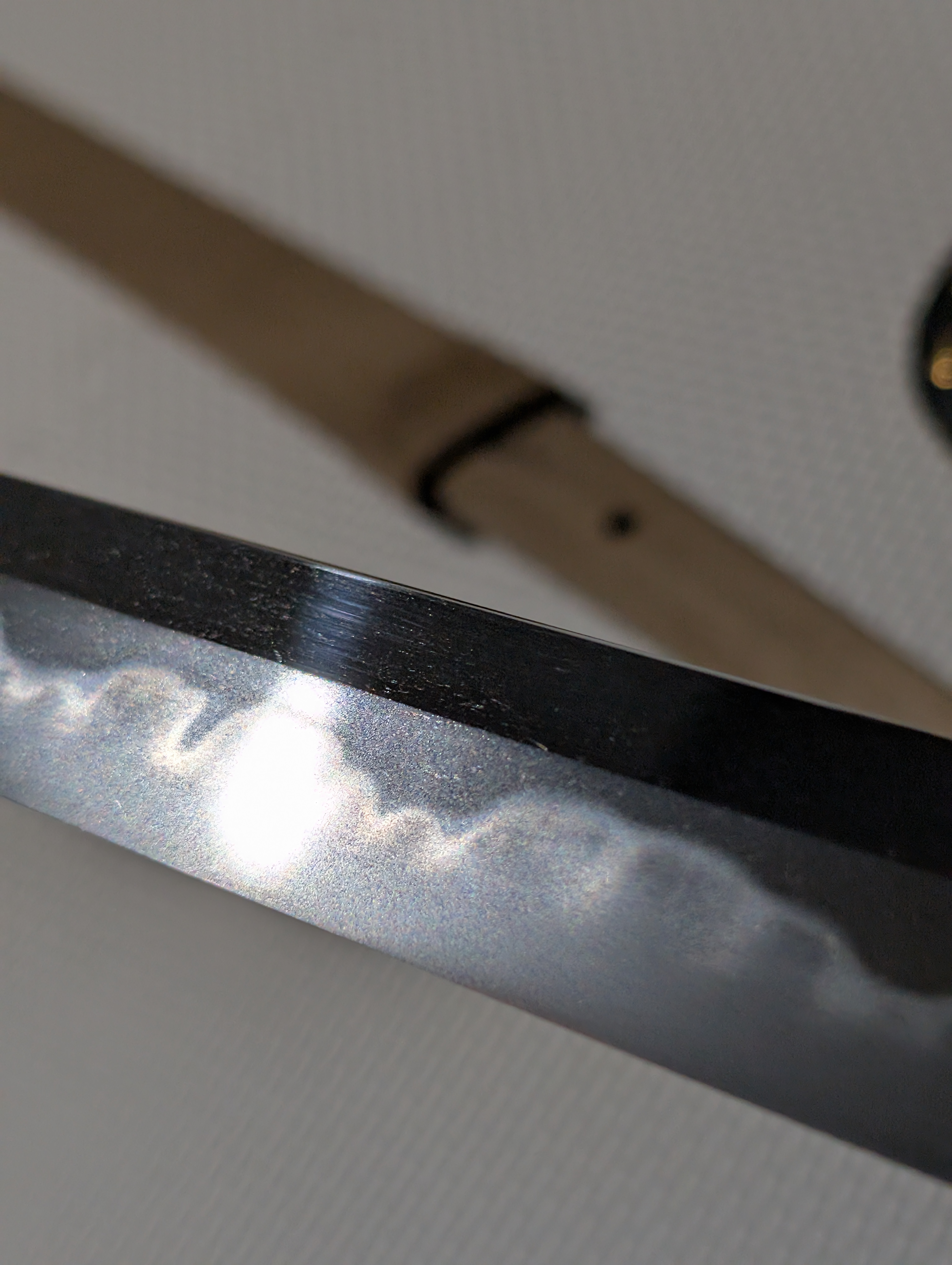
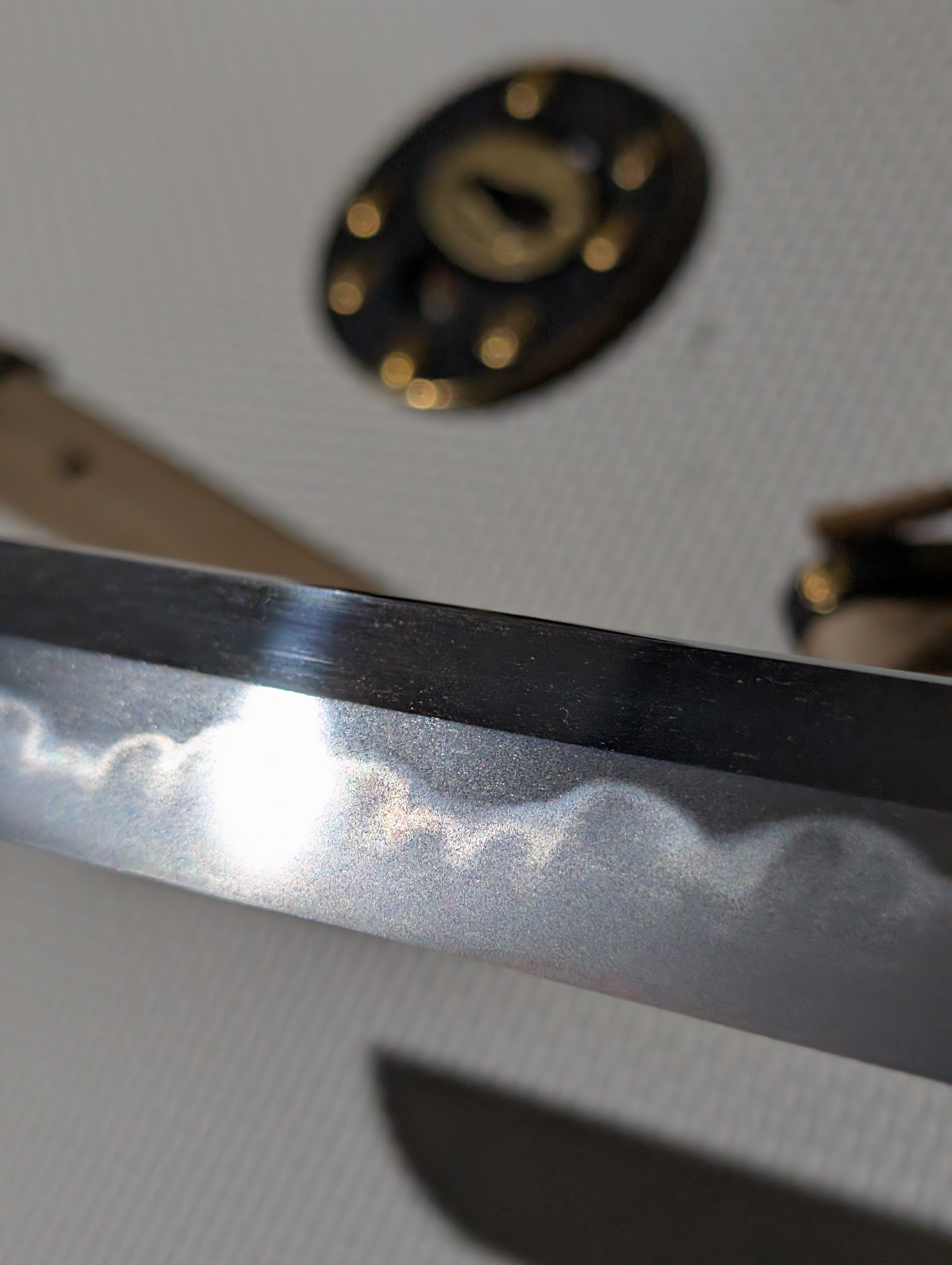
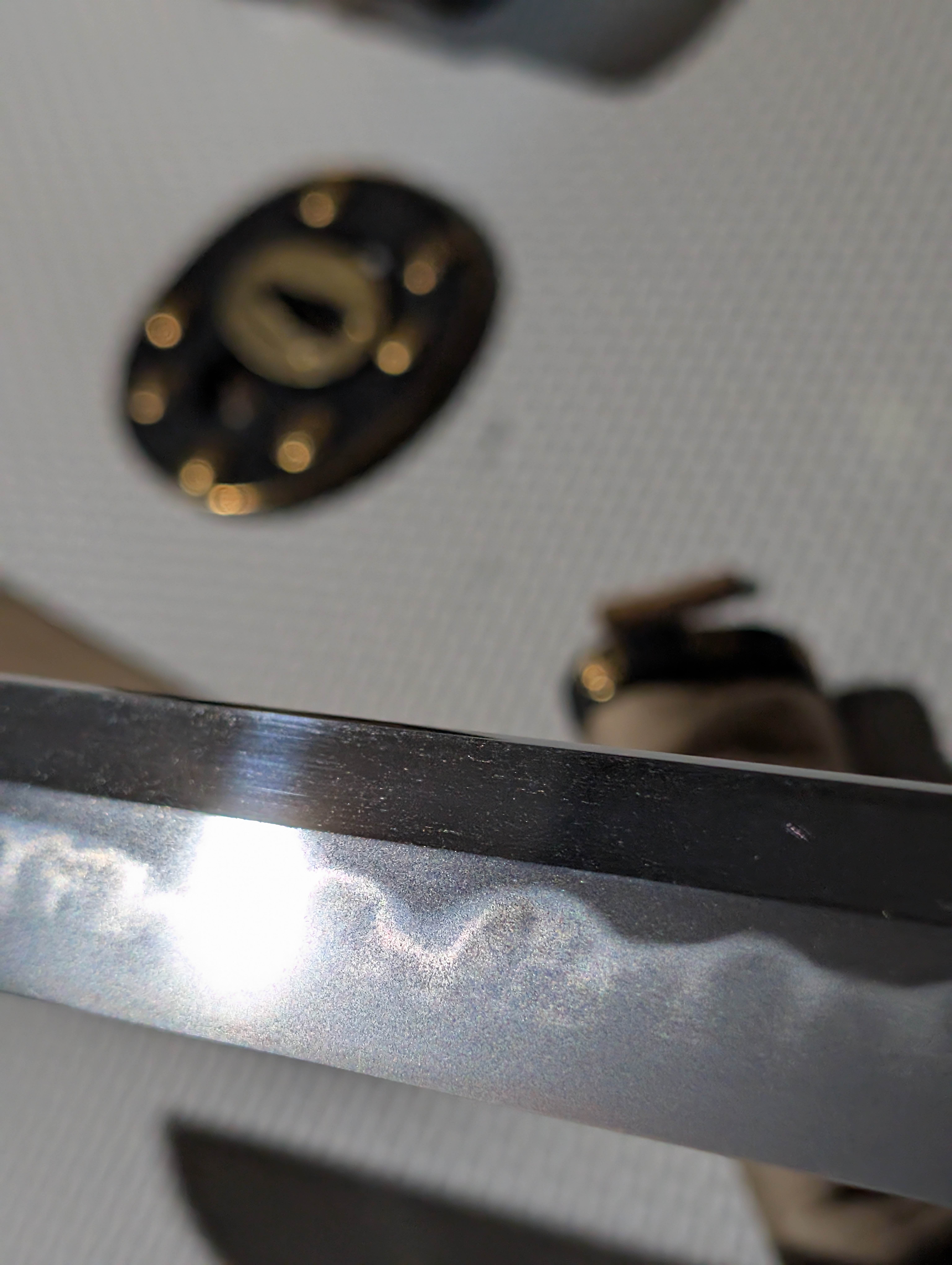
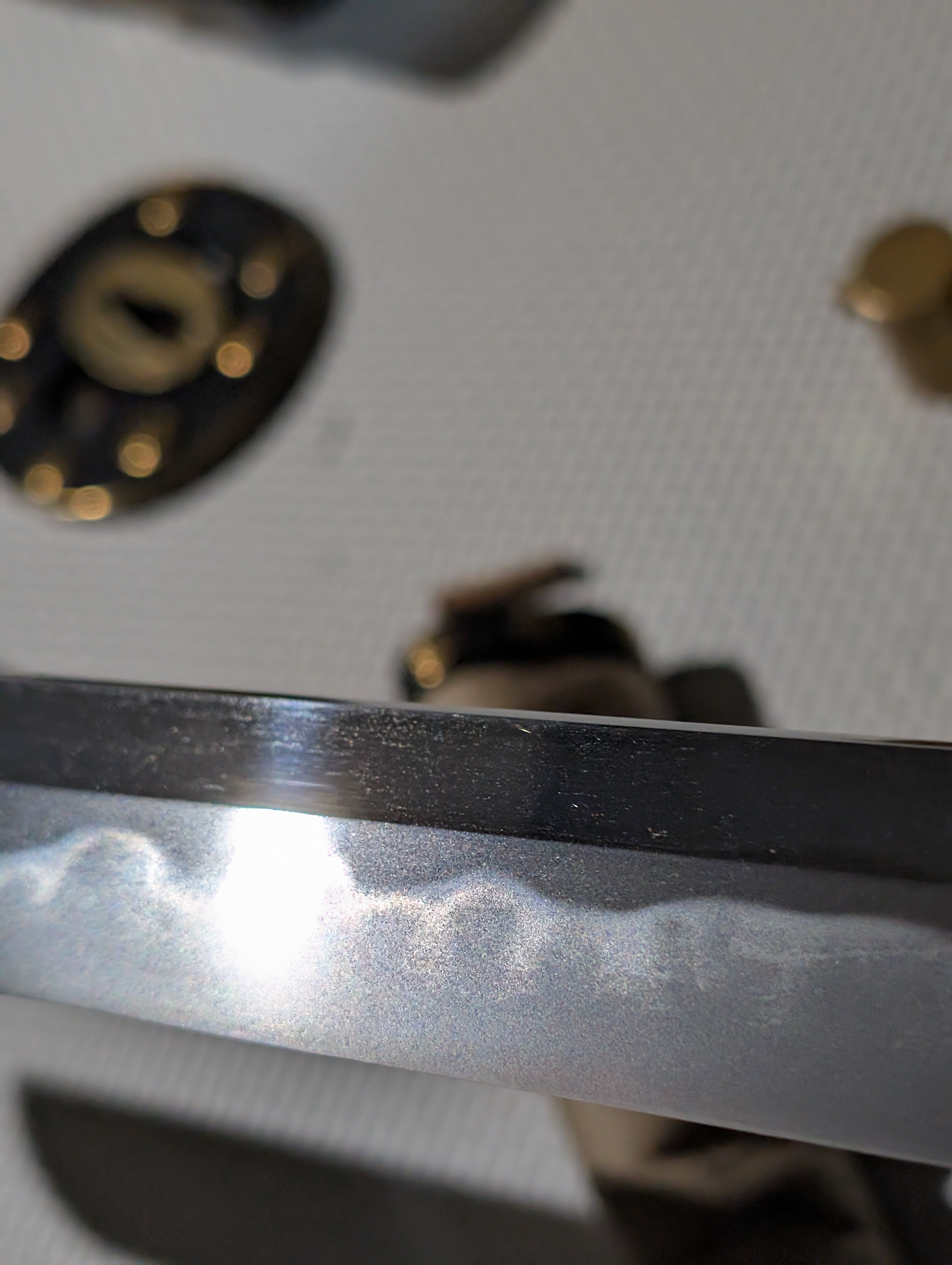
As the Azuchi-Momoyama Period came to an end and the Tokugawa Shogunate aggressively wrestled power from the Toyotomi at the Battle of Sekigahara, the unification of Japan under one banner brought about a 250-year-long period of widespread peace. A fortunate byproduct of this was the revival of artisanal Japanese swordsmithing, seeing two major eras, being the Keicho Shinto and Kanbun Shinto times. Today’s article will analyze one of the greatest smiths of the latter era through an uchigatana by a direct descendant of Kawachi no Kami Kunisuke’s pedagogy, Higo no Kami Kuniyasu. The blade itself is stunning, displaying the typical dimensions ofKanbun Shinto works, those being a more stout geometry, robust width, and a shallow, forward-facing saki-sori. Looking to the metallurgy of the blade, the grain formation is a tight ko-itame hada throughout the blade. Ji-nie is abundant, resulting in an extremely bright jiba, as is seen in Shinto era swords. The temper follows the flamboyance of the era, starting suguha near the hamachi, but quickly shifting to tall gunome and, most prominently, kobushigata choji midare along the center of the blade to the monouchi, which is a major feature of Kunisuke School blades. The hamon is in nioi deki, causing nie-based hataraki, including ashi, kinsuji, and sunagashi to appear more clearly. This more grandiose hamon travels into the kissaki, where it ends in a similarly pronounced midare-komi boshi. With the discussion of the sword’s workmanship concluded, relevant measurements are listed below for the sake of clarity.
Measurements:
Nagasa: 70.8 cm (shorter than previous swords, as is typical for blades inspired by suriage works) Sori: 0.85 cm (particularly shallow, as is seen in Kanbun Shinto works)
Motohaba: 2.95 cm
Sakihaba: 2.0 cm (intermediate width, suggesting a shape designed for cutting)
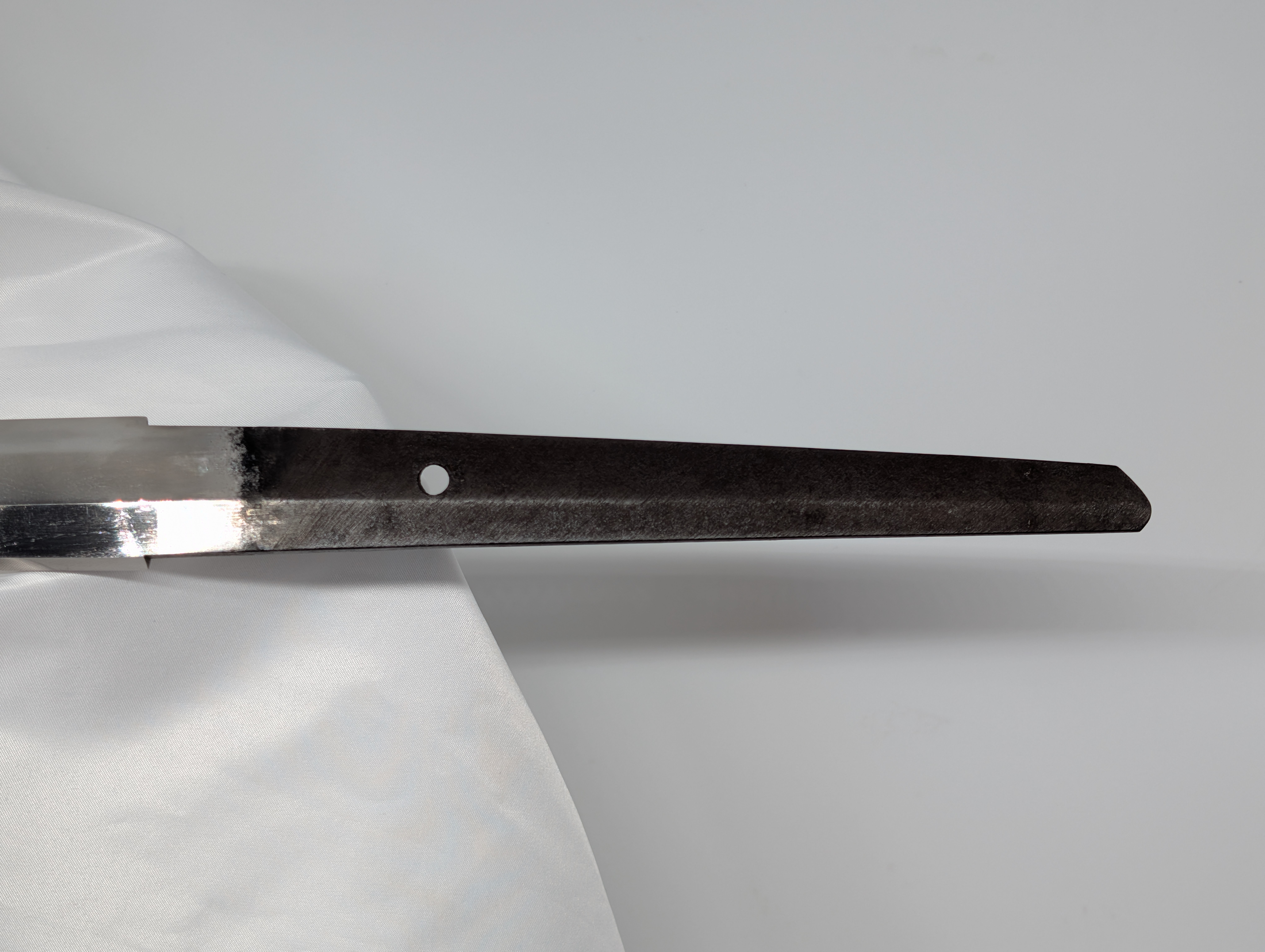
The nakago of the blade is ubu with a kashuu-jiri tip. On the katana-omote of the tang, the goji-mei signature “Lord of Higo, Kuniyasu” (肥後守国康) is finely inscribed. There is a single mekugi-ana, indicating that the blade has been unaltered since its construction in the late 17th century up into the modern day.
The blade’s shape is in shinogi-zukuri, with an iori-mune. This is the most prevalent blade geometry in Japanese swords, originating in the early Heian Period and remaining in use today. Unlike many of the blades of the early Edo Period, this blade maintains a more classical style, foregoing elaborate carvings to instead allow the workmanship of the steel to speak for itself.
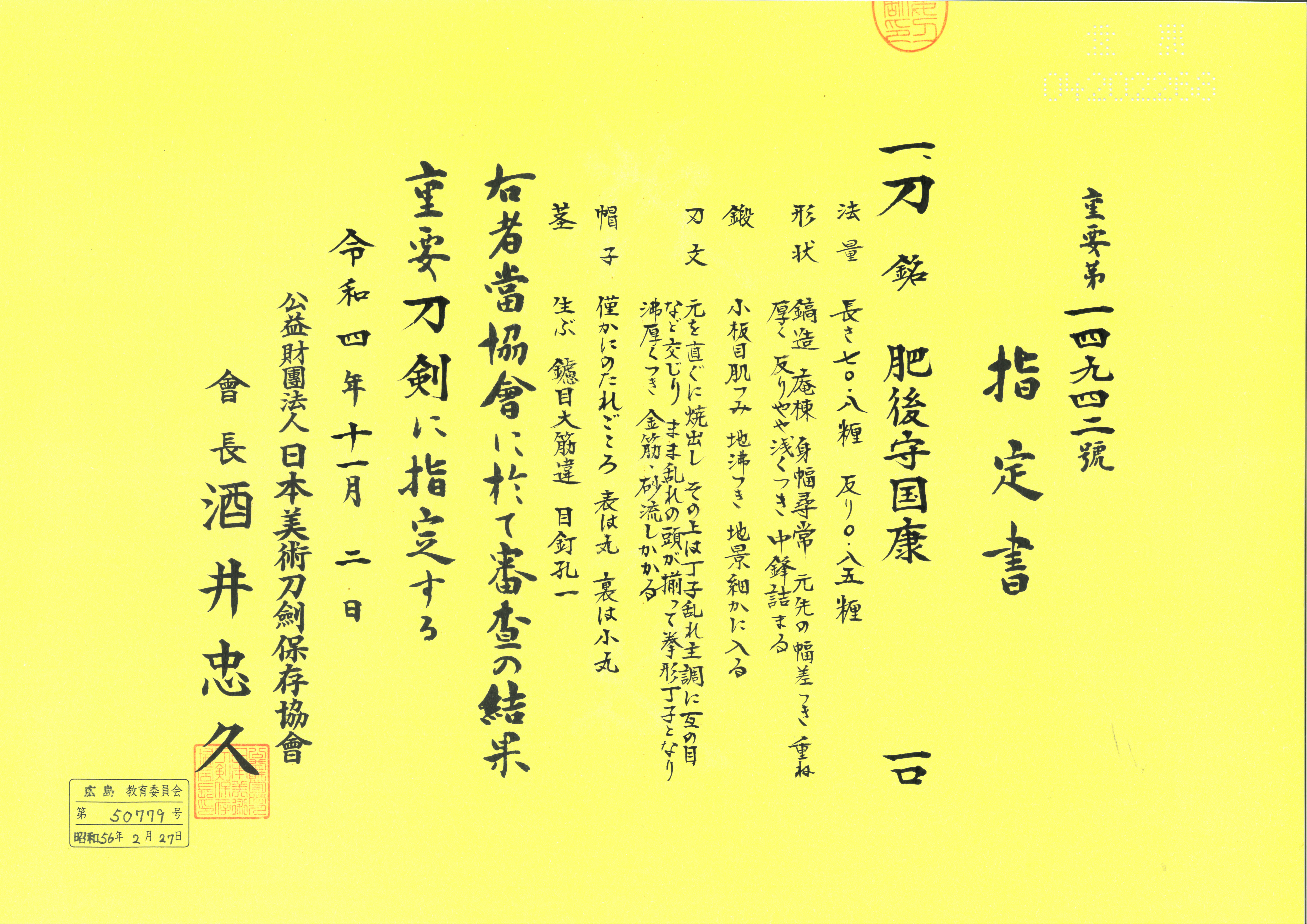
The blade is rated “Juyo” by the NBTHK, indicating high craftsmanship beyond what is expected for a typical Japanese sword, warranting historical importance as a noteworthy example from Kuniyasu. This is a testament to four centuries of maintenance, alongside a high honor for a Kanbun Shinto blade, as most blades of the era see a consistent level of high artistry.
Included with this blade is a set of late Edo Period uchigatana fittings. The saya is coated in a gloss-black lacquer, providing a clean, professional look similar to presentation koshirae between samurai lords. This black lacquer is complemented by an off-white sageo tied tightly to the scabbard. This braided silk knot matches the silk of the tsukamaki on the hilt, which is formed of an aged, white samegawa. The scabbard is finished with horn accessories, primarily the kojiri, kurigata, and koiguchi, creating a smooth transition between the separate parts making up the saya. Finishing the look of the scabbard are gorgeous gold
lacquer depictions of the “Aoi” (three-leafed hollyhock) crest used by the Tokugawa Clan, implying that the previous owners of this blade held a close relationship with the shogunate. This is only reinforced when looking at the kodogu of the tsuka, which are luxurious shakudo-nanako fittings with gold inlaid outlines of the same crest, besides the menuki, which are instead cast from solid gold. Finishing the already gauche set of fittings is a tsuba in the same shakudo-nanako as the fuchi and kashira, including multiple examples of the same Aoi crest in gold.
Following the unification of Japan, a period of free trade was brought on by the decreased worry of military campaigns or skirmishes closing off supply lines. As such, it became possible for goods and services to become centralized, with similar goods being bought and sold across the provinces of the Japanese mainland. As a result, a consistently high quality of tamahagane (iron sand) could be acquired by swordsmiths throughout the country, resulting in a style devoid of the significant regional differences that came from local mining operations. This style became known as the “Shinto Toku-den,” which primarily forged “waki-mono” (blades formed in mixed traditions), often formed over a long period of time to express grandiose physical characteristics, as were the tastes of the period. Of these schools, many found great success in the merchant city of Osaka in Settsu Province. Included in this set of swordsmiths is the Kawachi no Kami Kunisuke School, which settled in the region and took hold as prolific smiths in their own right. Higo no Kami Kuniyasu was the third son of the school’s founder and took the civilian name Kobayashi Genzaemon. Operating from 1661 CE to 1671 CE, the swordsmith made a name for himself for producing quality blades with the ability to cut bodies nearly effortlessly. This gained the attention of the shogunate’s family of executioners, particularly Yamada Asaemon Yoshimutsu, who tested the smith’s blades and awarded them the rank of “o-wazamono” (great sharpness). This popularity continued, resulting in Kuniyasu being granted the title of Higo no Kami for his consistently excellent workmanship, contributing to both the fame of the Kunisuke School while simultaneously marking his name in the history books. Such a work stands out as an excellent example of near-modem swordsmithing, completed in a beautiful set of fittings suggesting a noble disposition. In addition, the high rank of the smith as both a creator of sharp blades and as an honored smith through official titles, elevates this blade into a noteworthy example of the survival of functionality in a time of aesthetic priority.
-Photographs from Charlie Whites Facebook page; Blade in Possession of Charlie White-