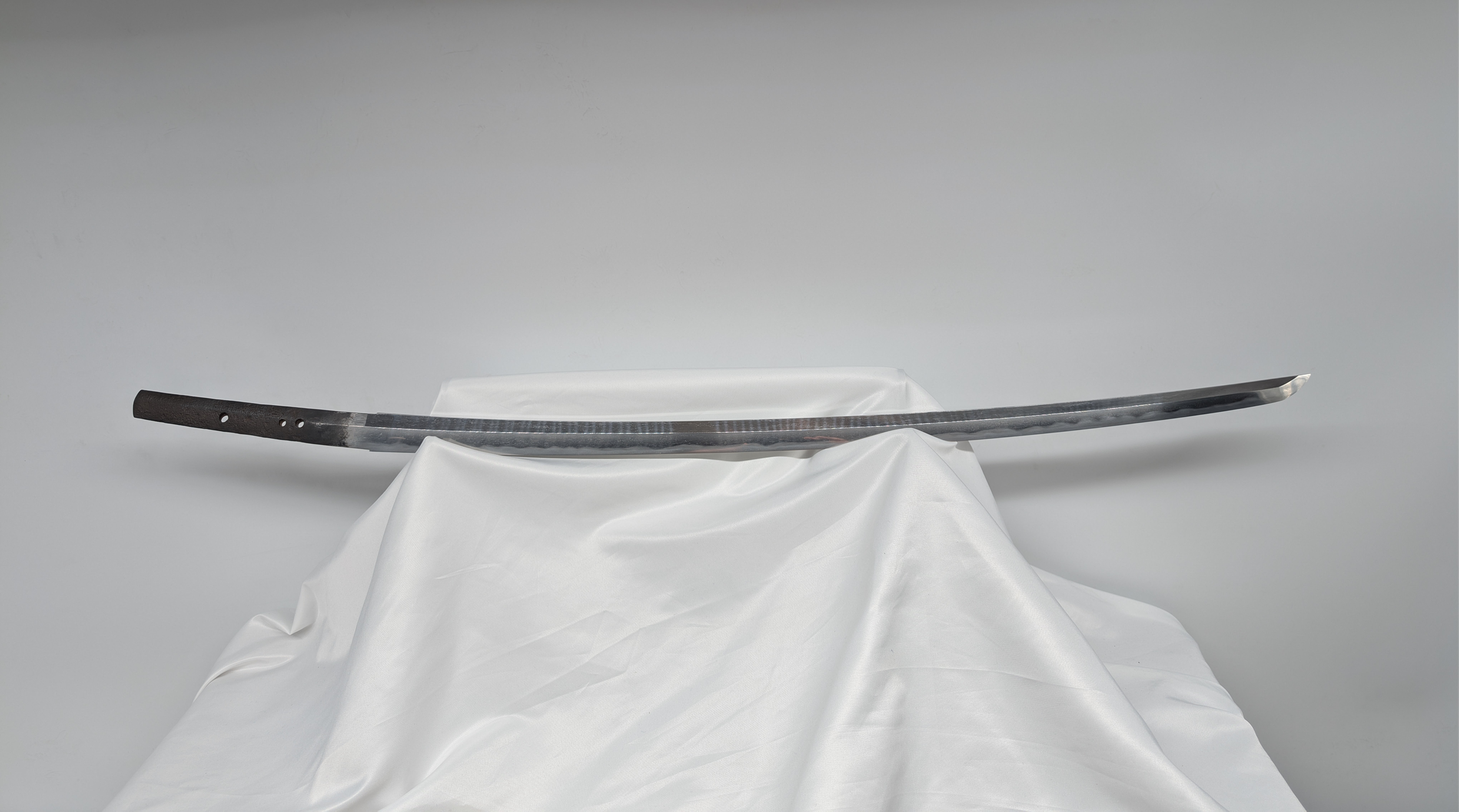
With the adoption of the Soden-Bizen practice, various branches and sub-schools formed from the need to seek out greener pastures following the rise of the fledgling Soshu School. Branching from the Hatakeda derivatives, such as Motoshige, up to the Omiya School, which is believed to have sprouted from Kagemitsu’s peer, Chikakage, various sub-groups of the Osafune School came to be. Of these schools, the closest in style to earlier Bizen was the Ko-Sori School, of which a daito by its later smith, Moriyuki, will be assessed.
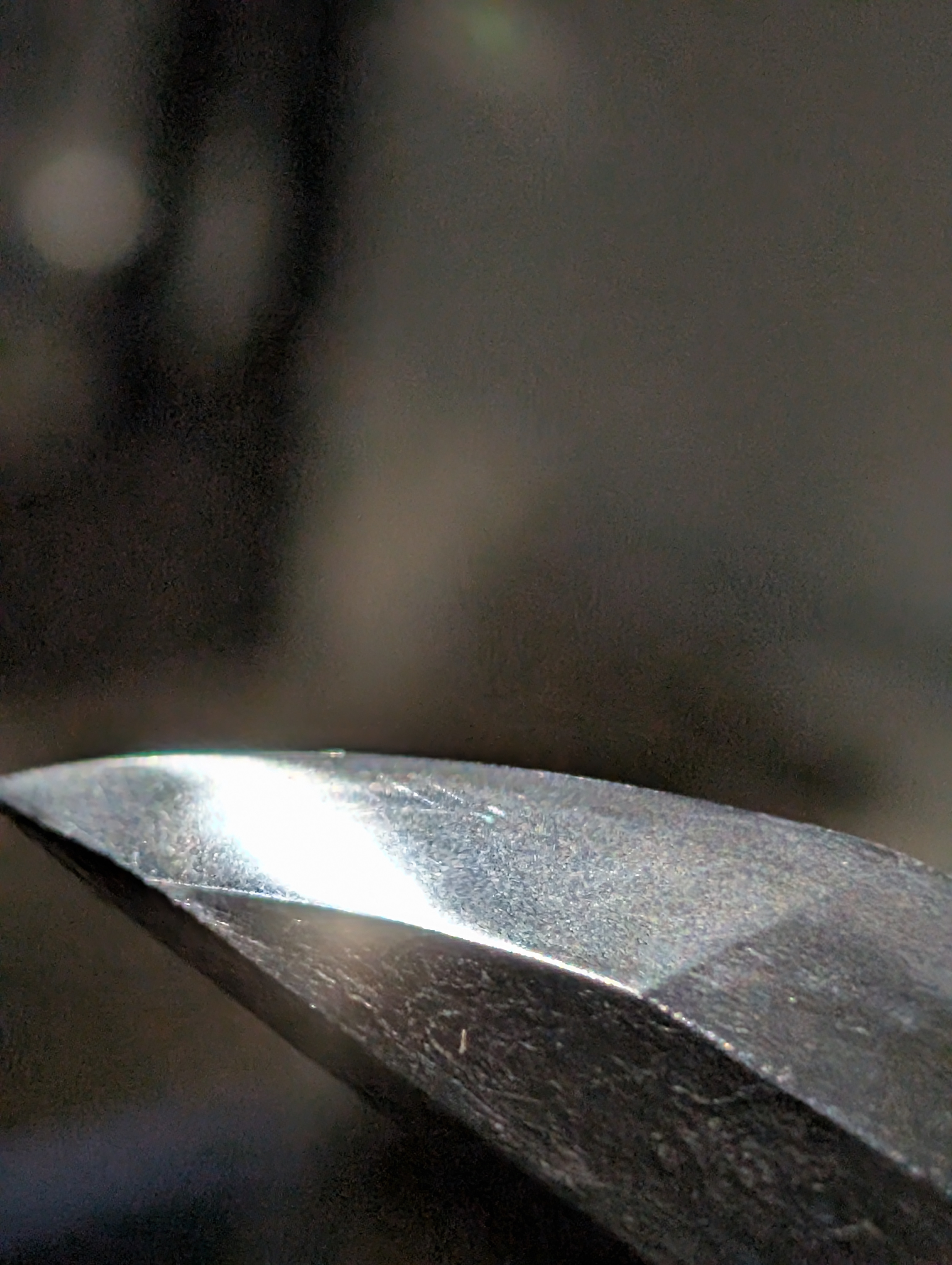
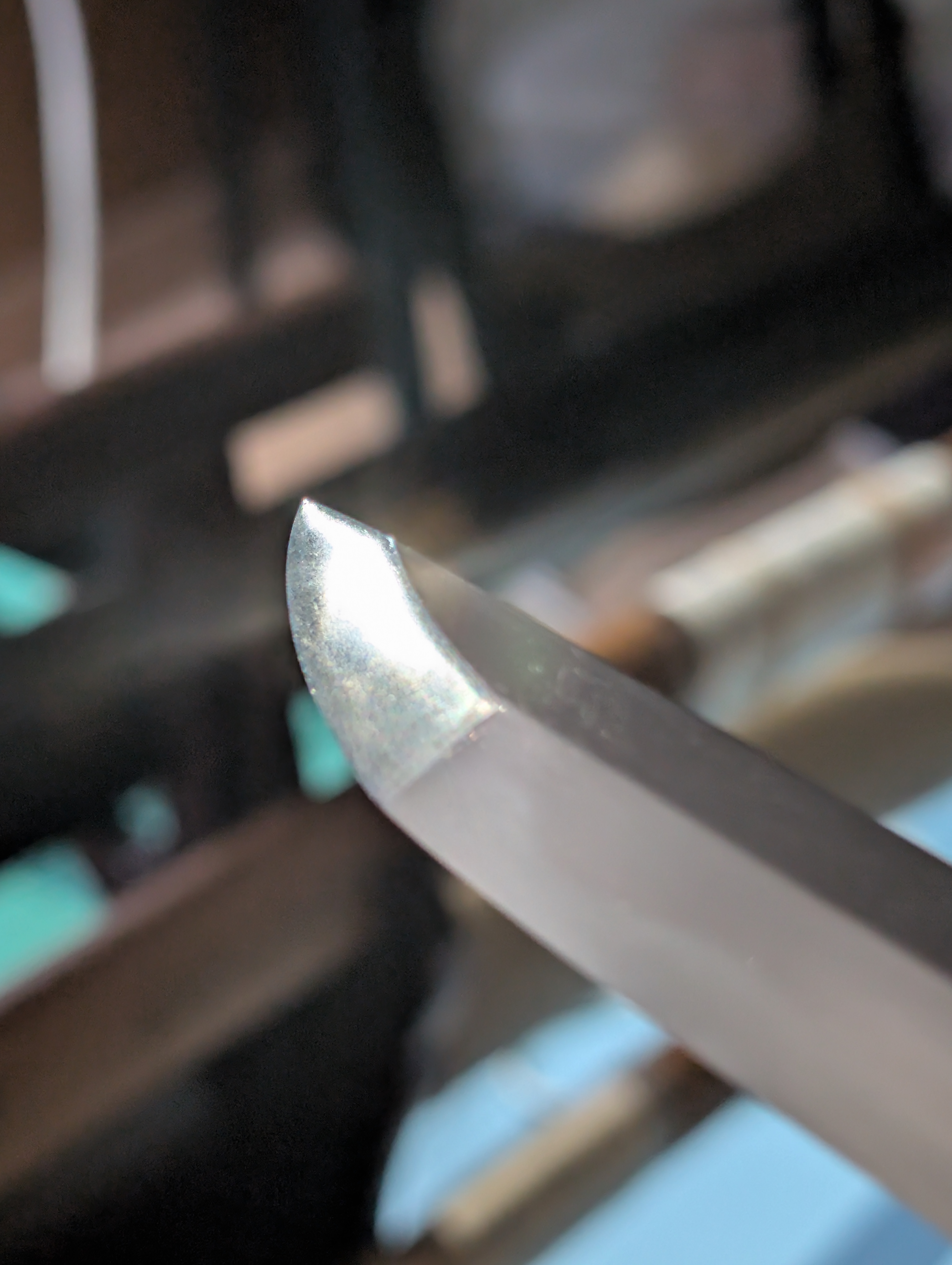
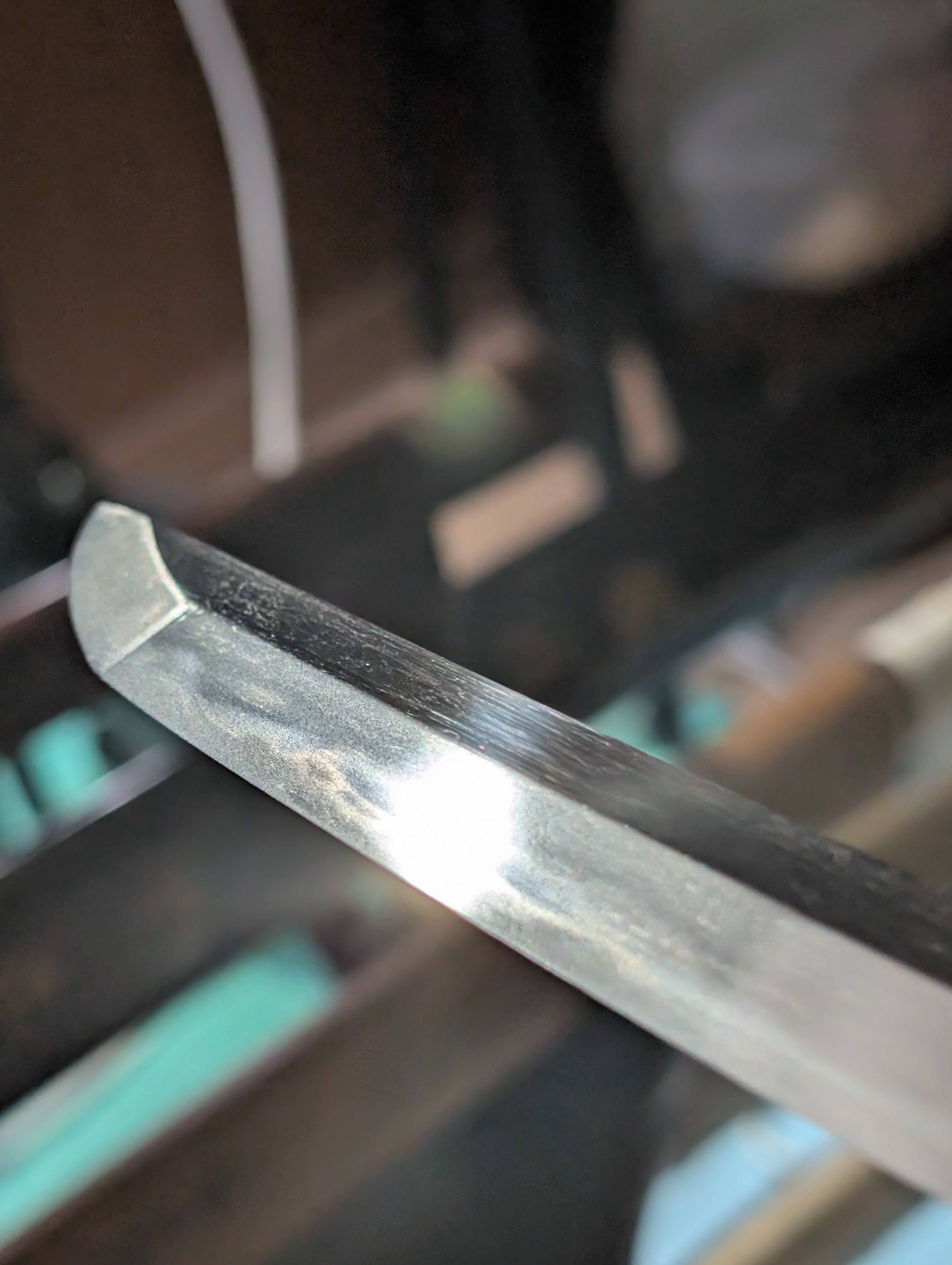
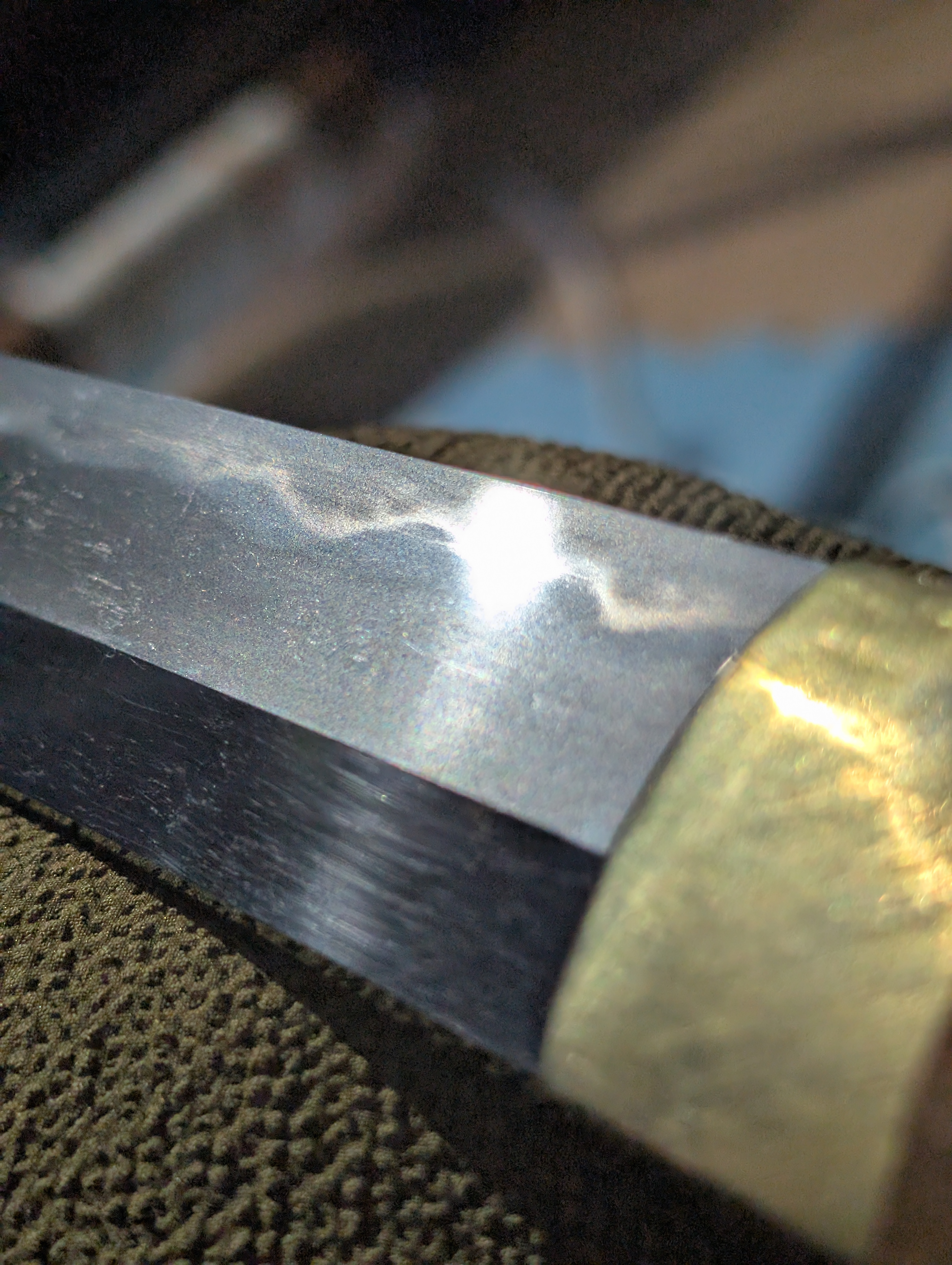
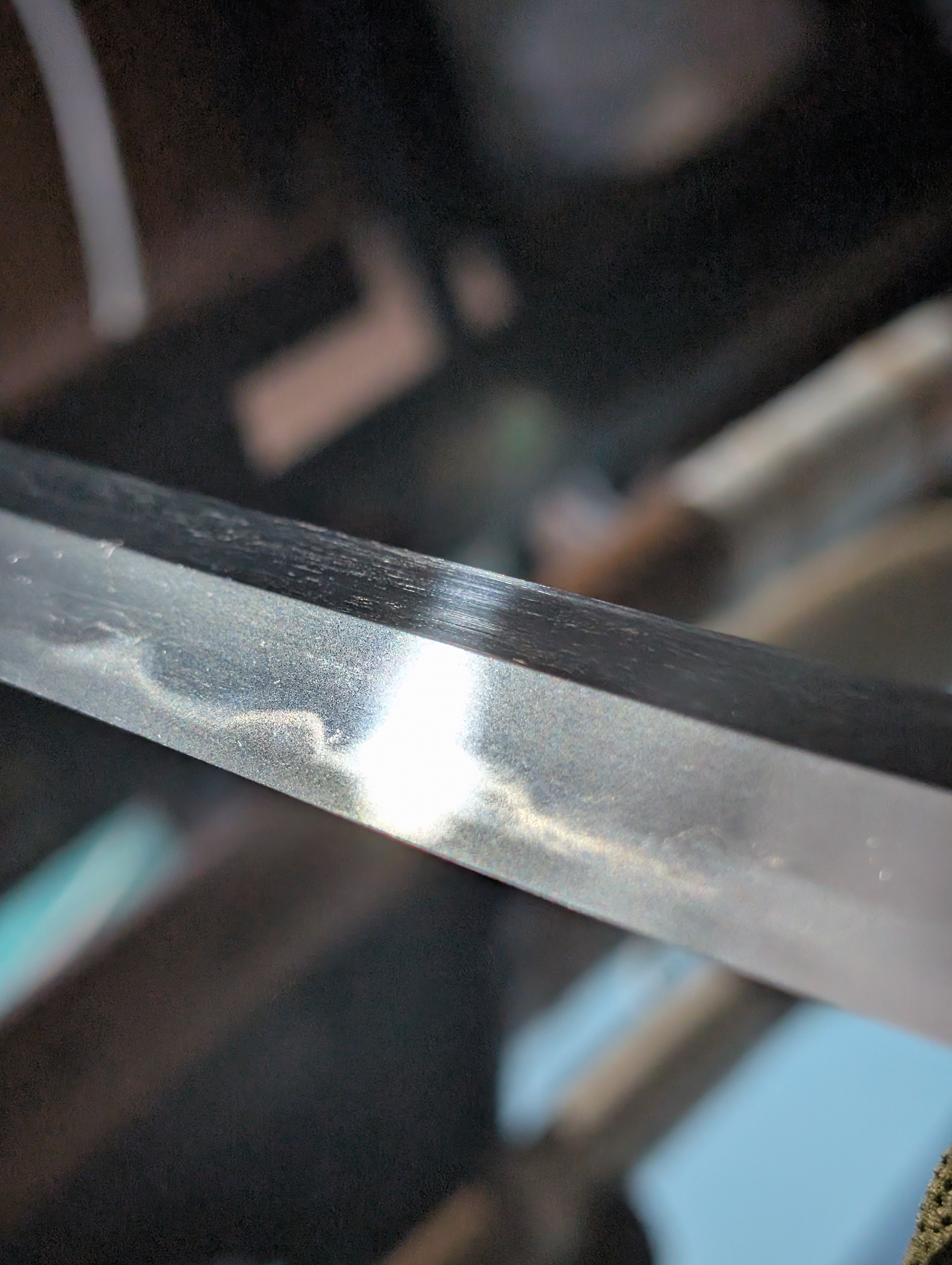
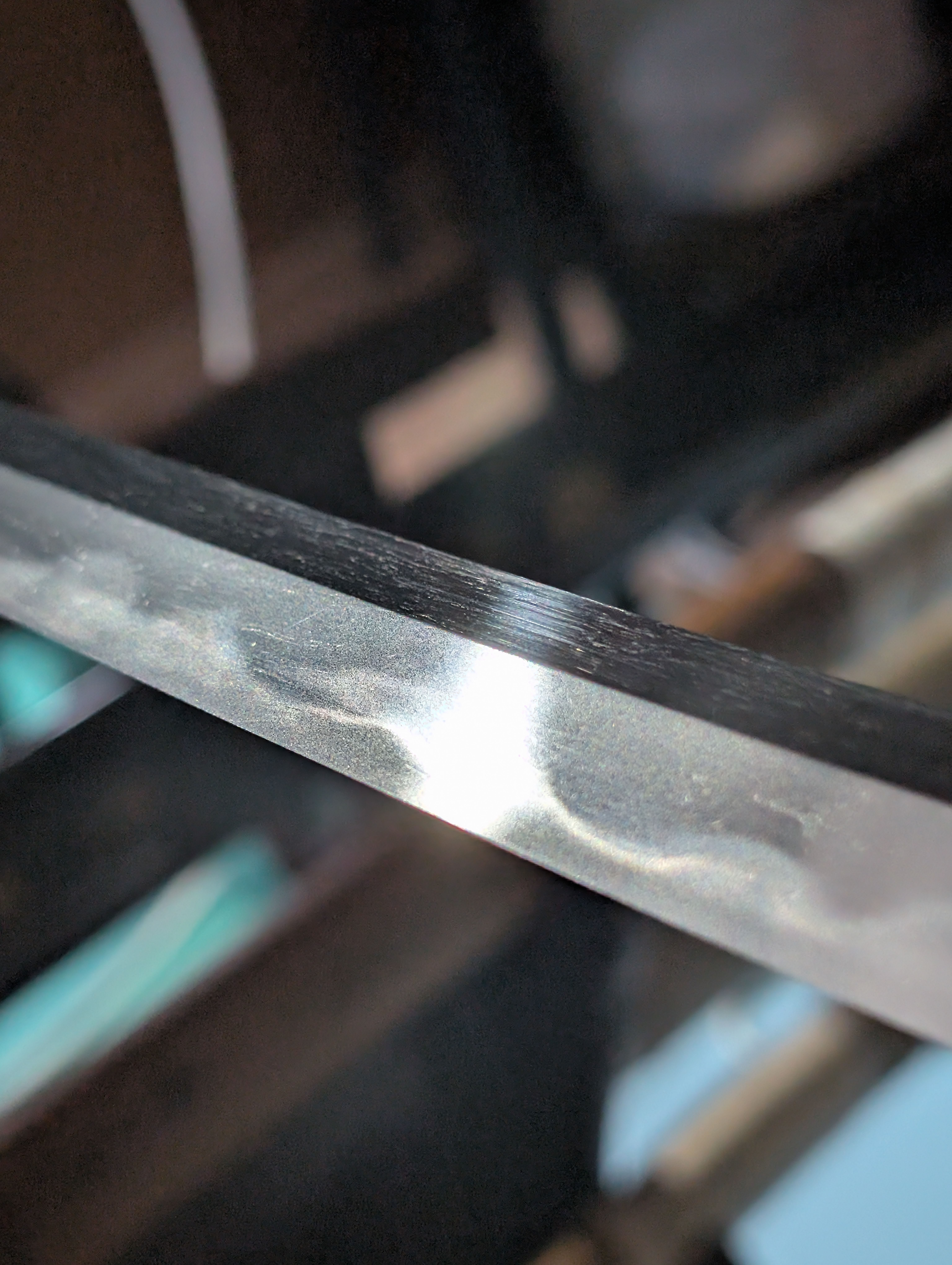
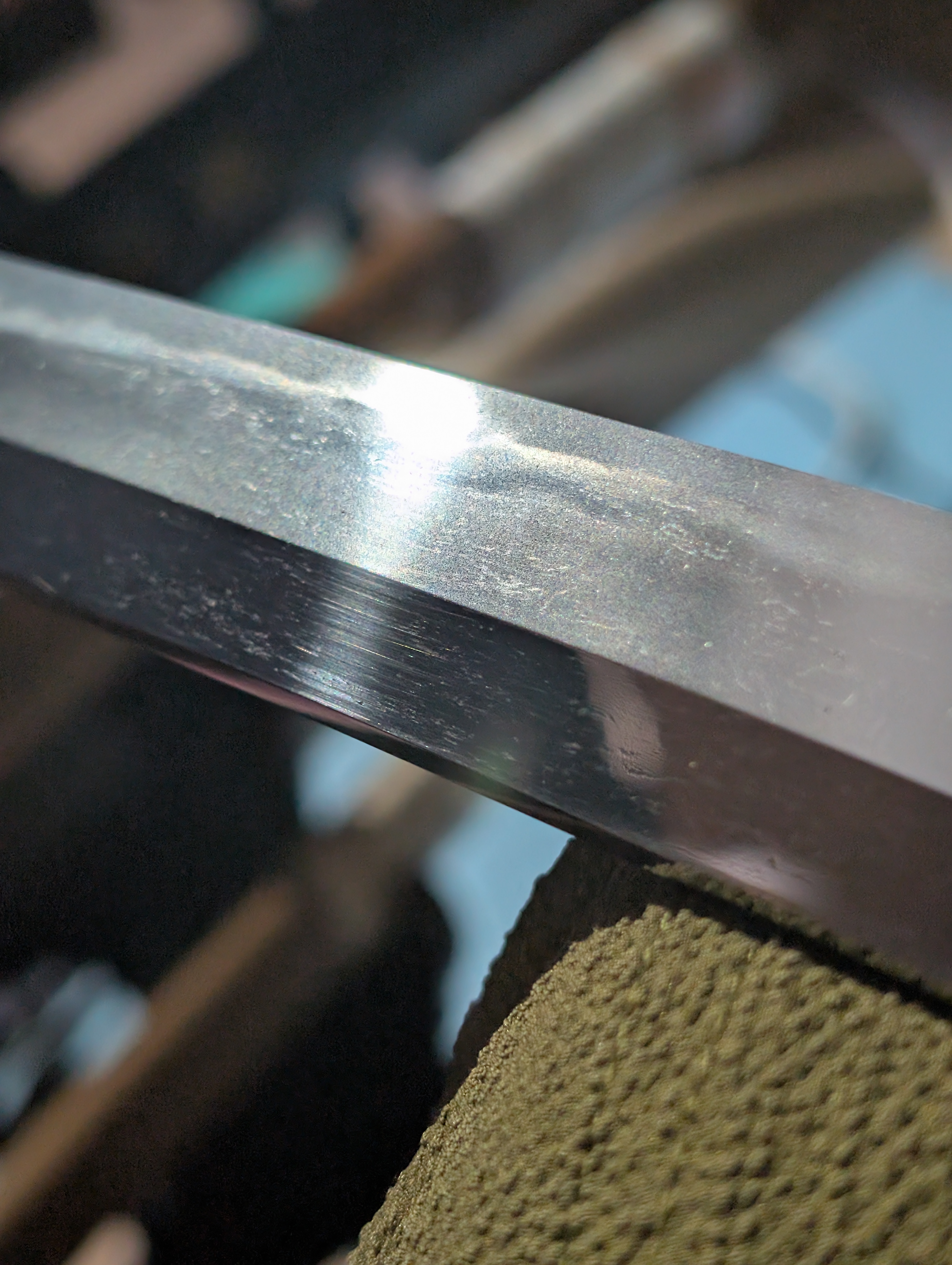
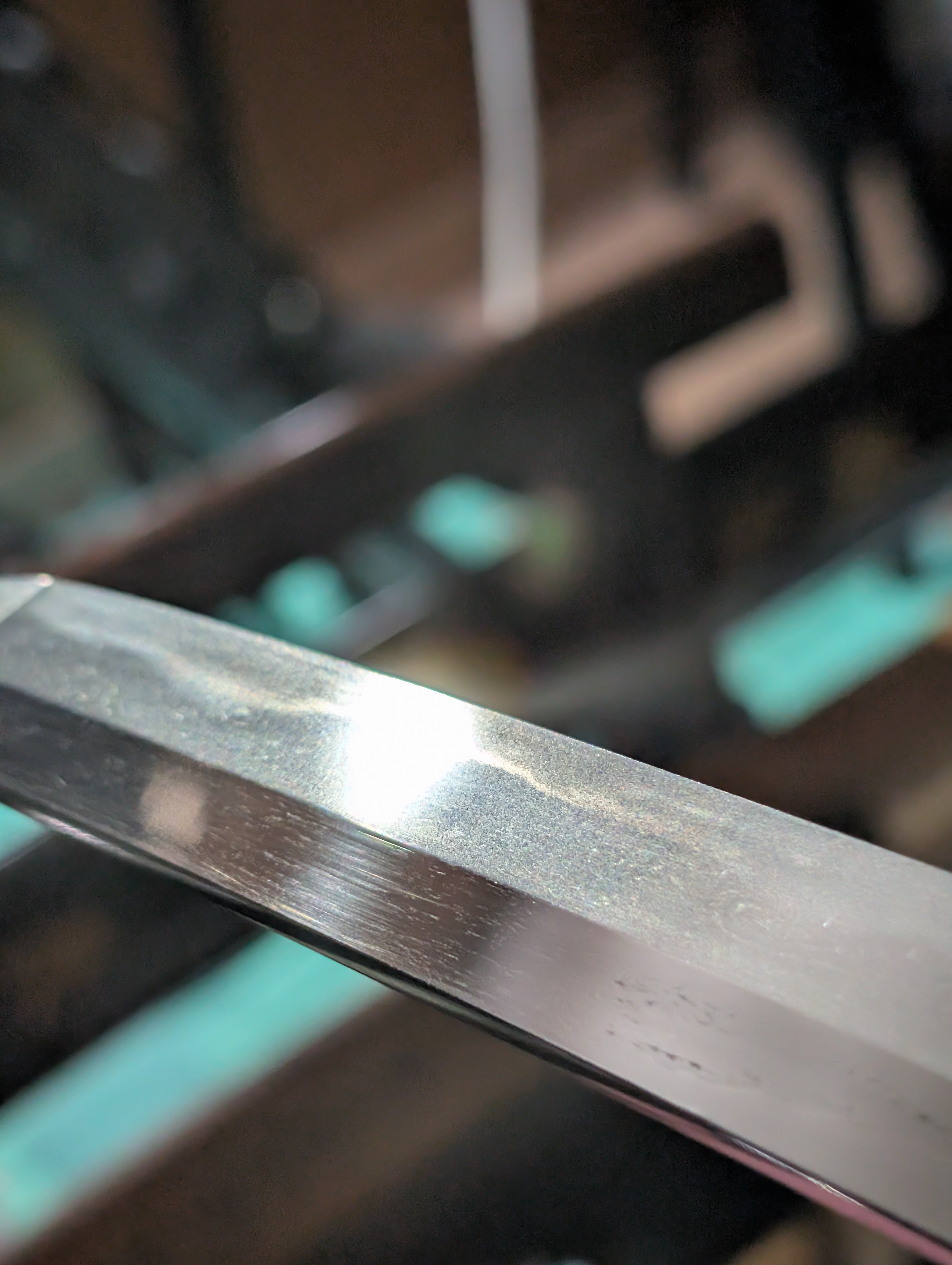
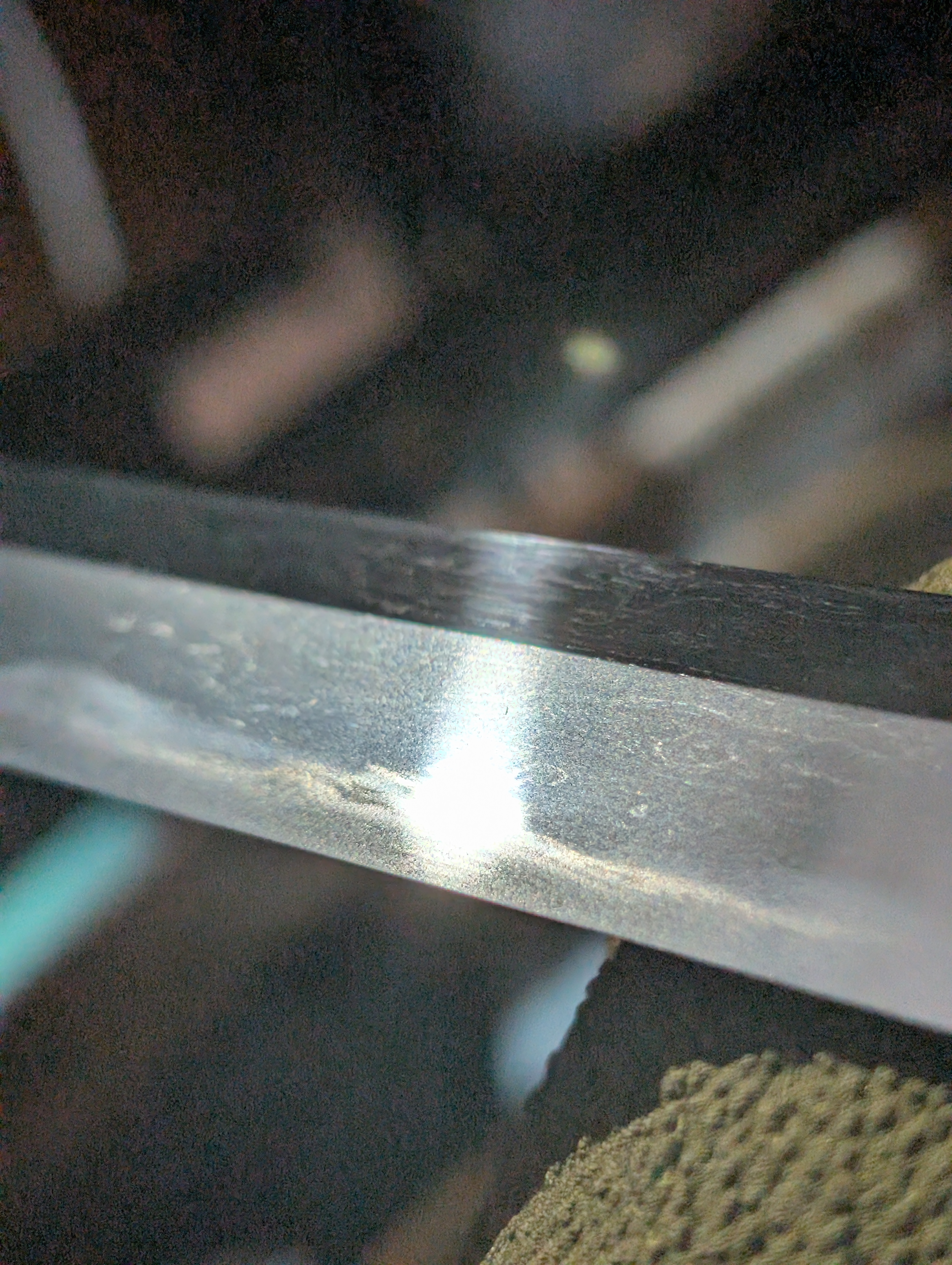
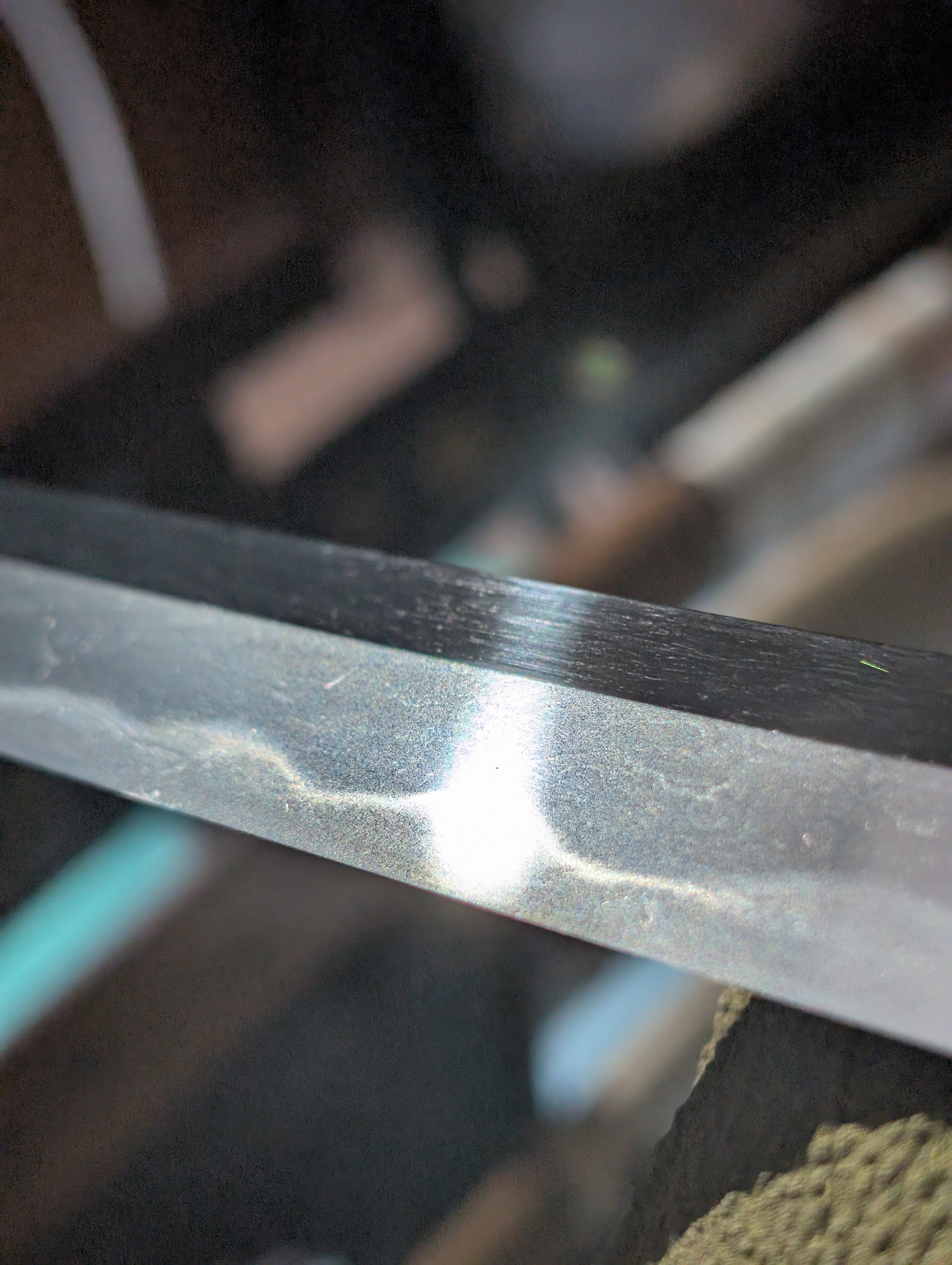
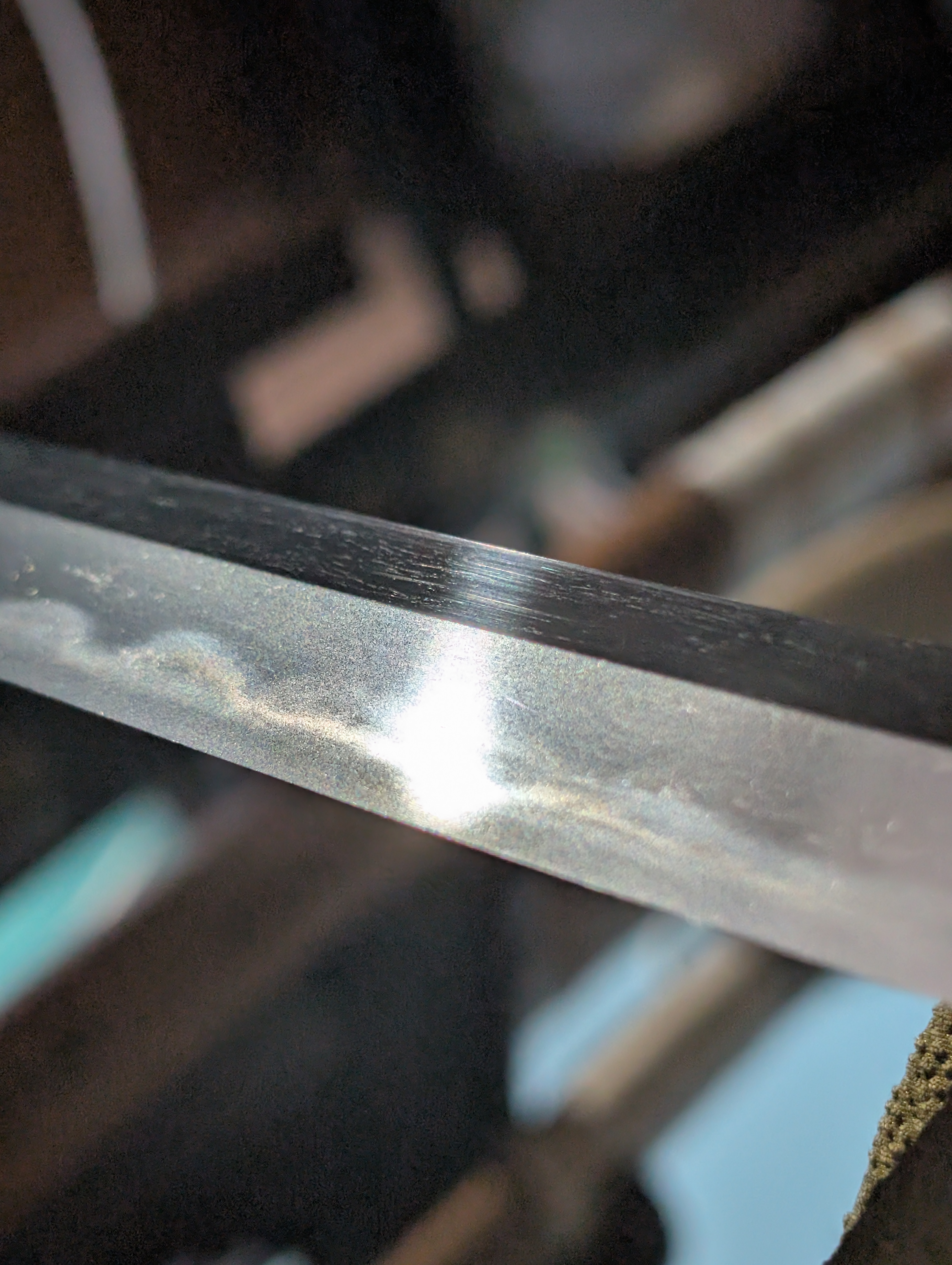
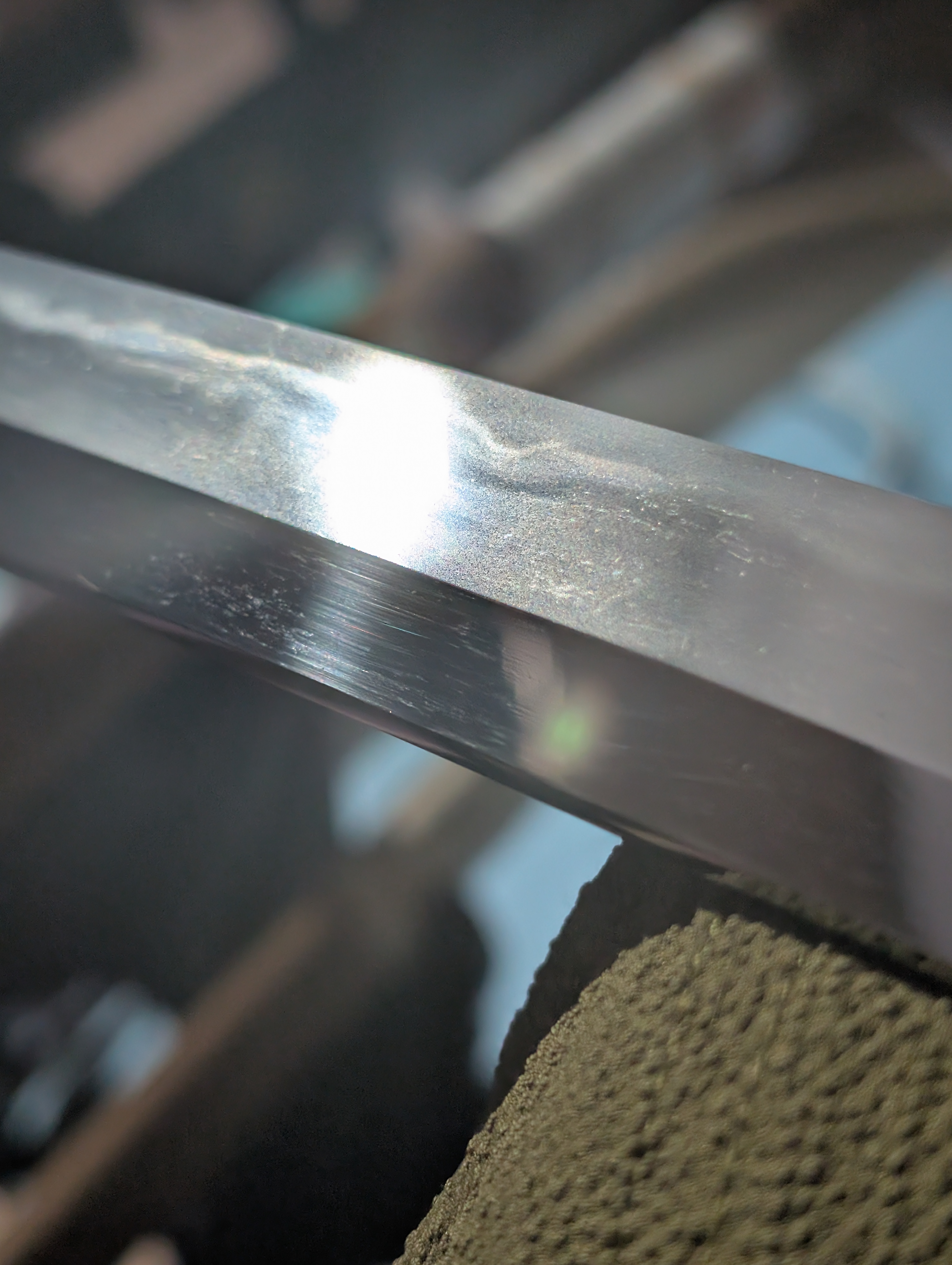
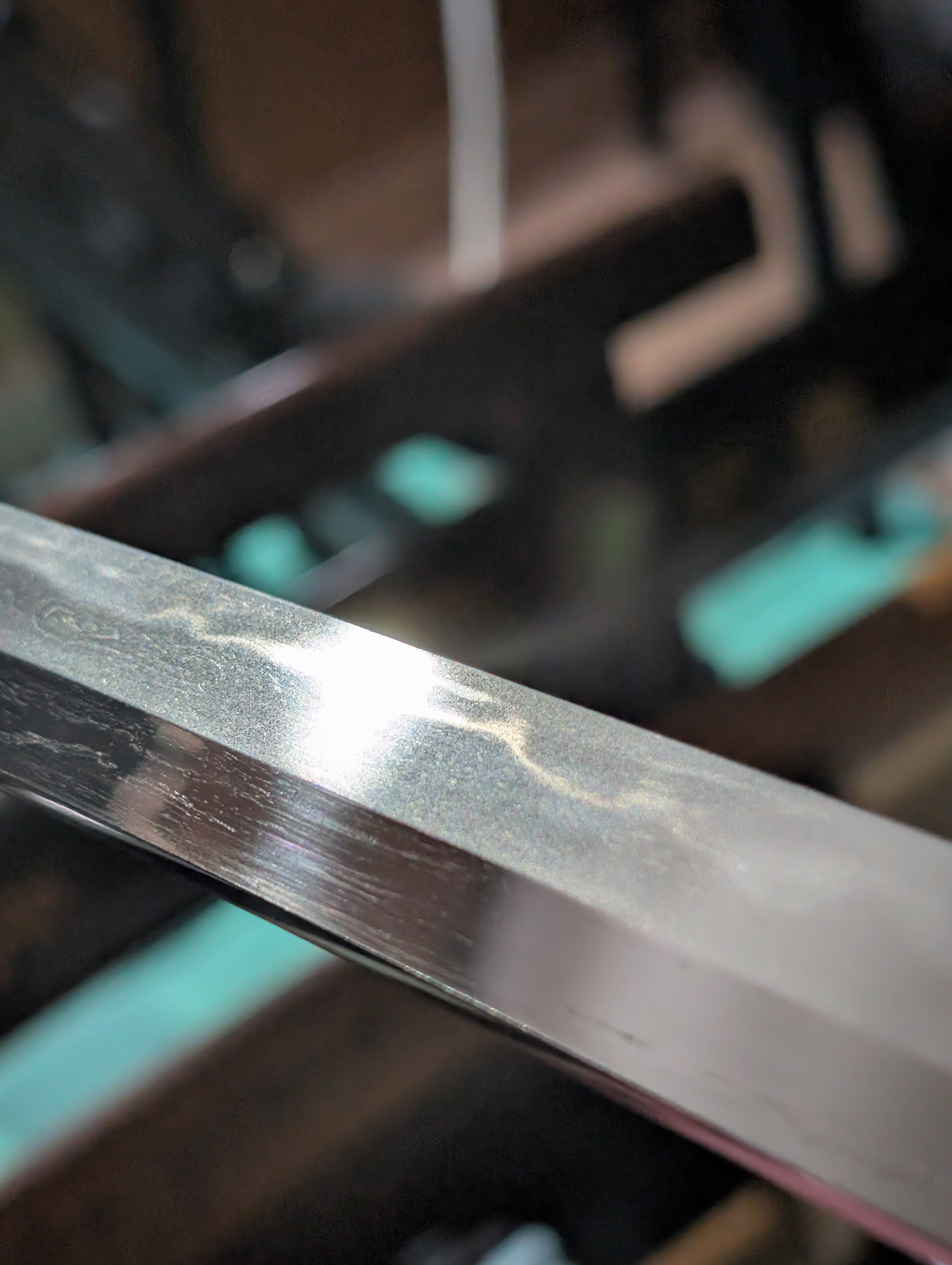
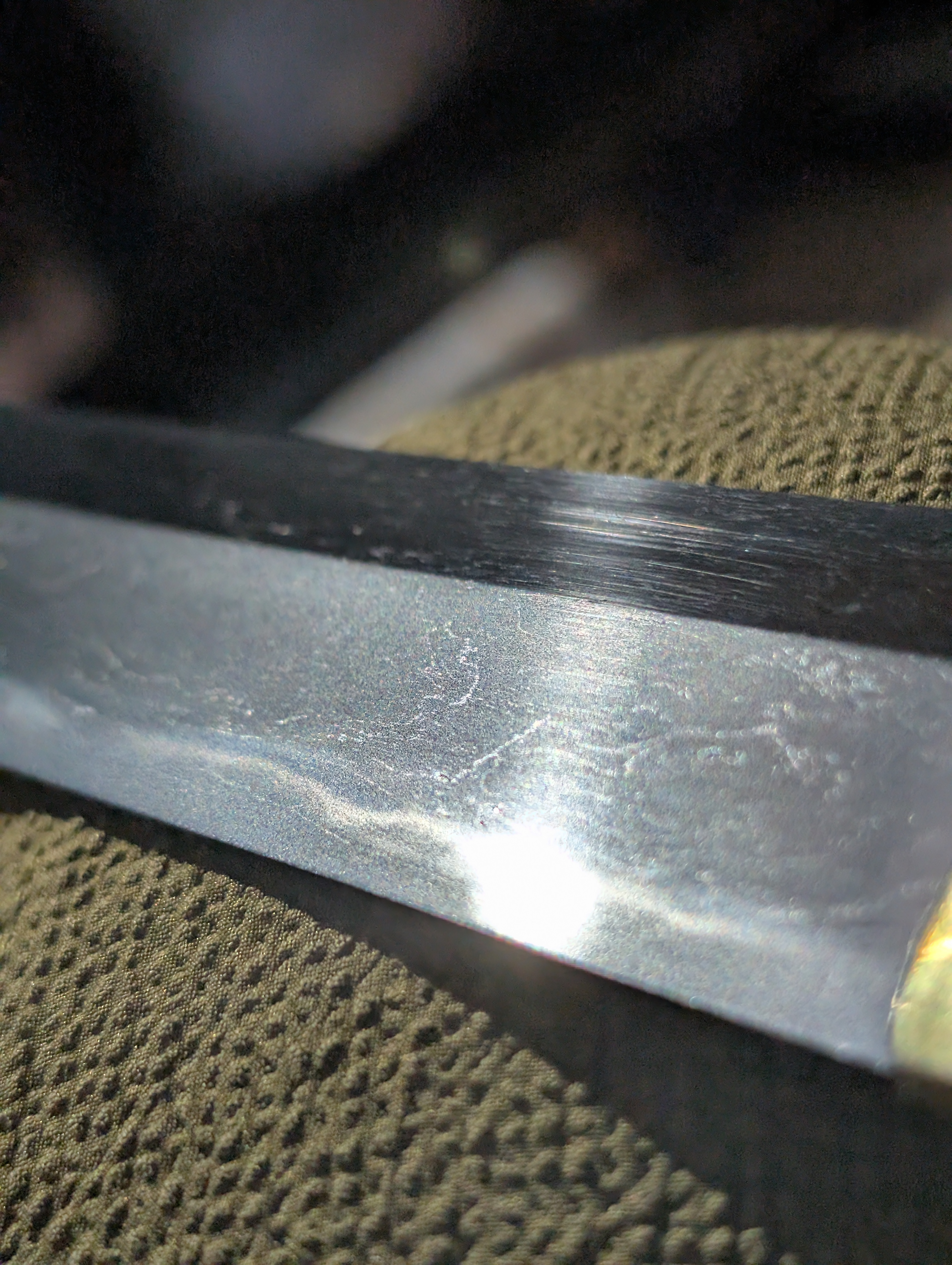
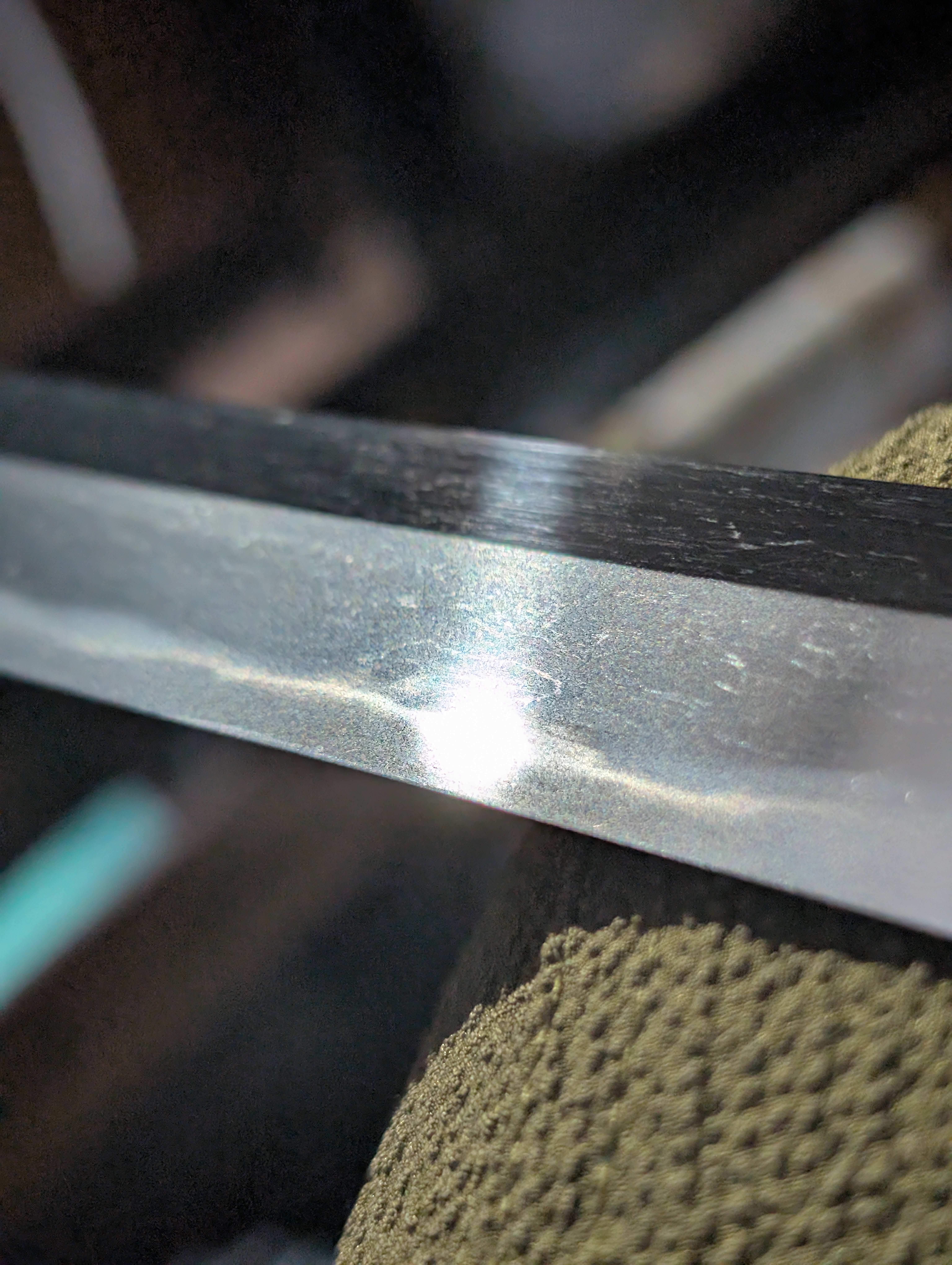
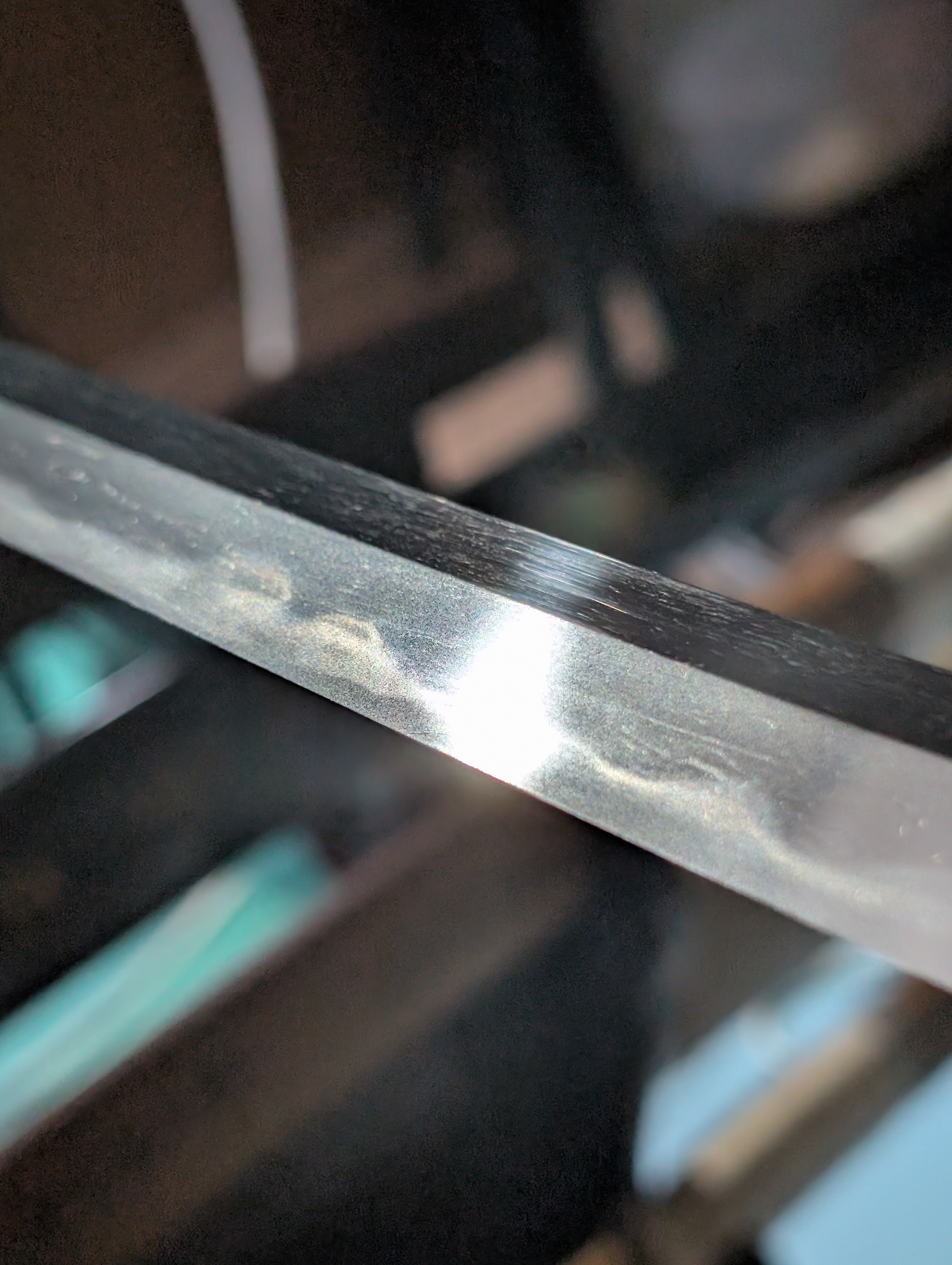
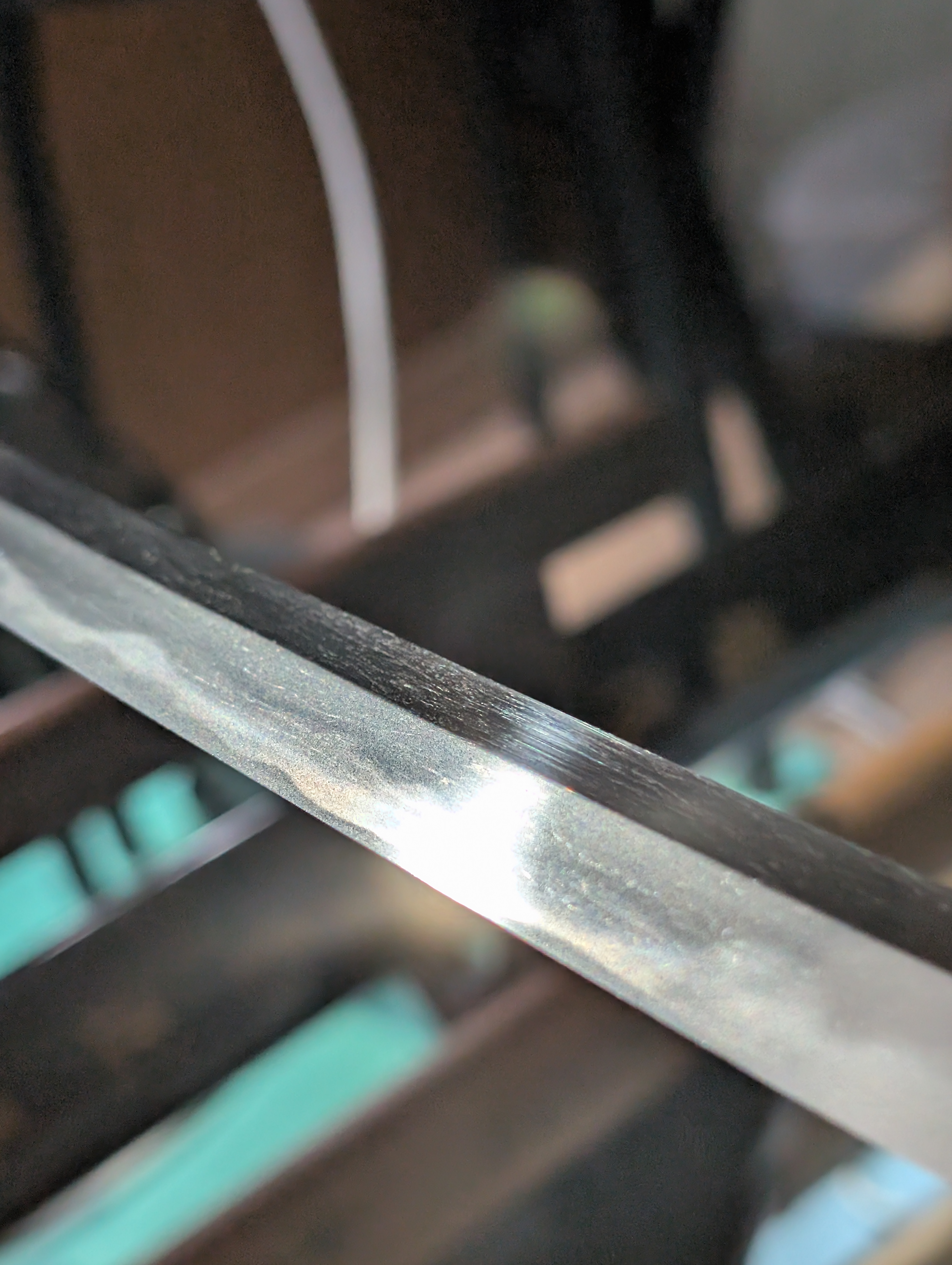
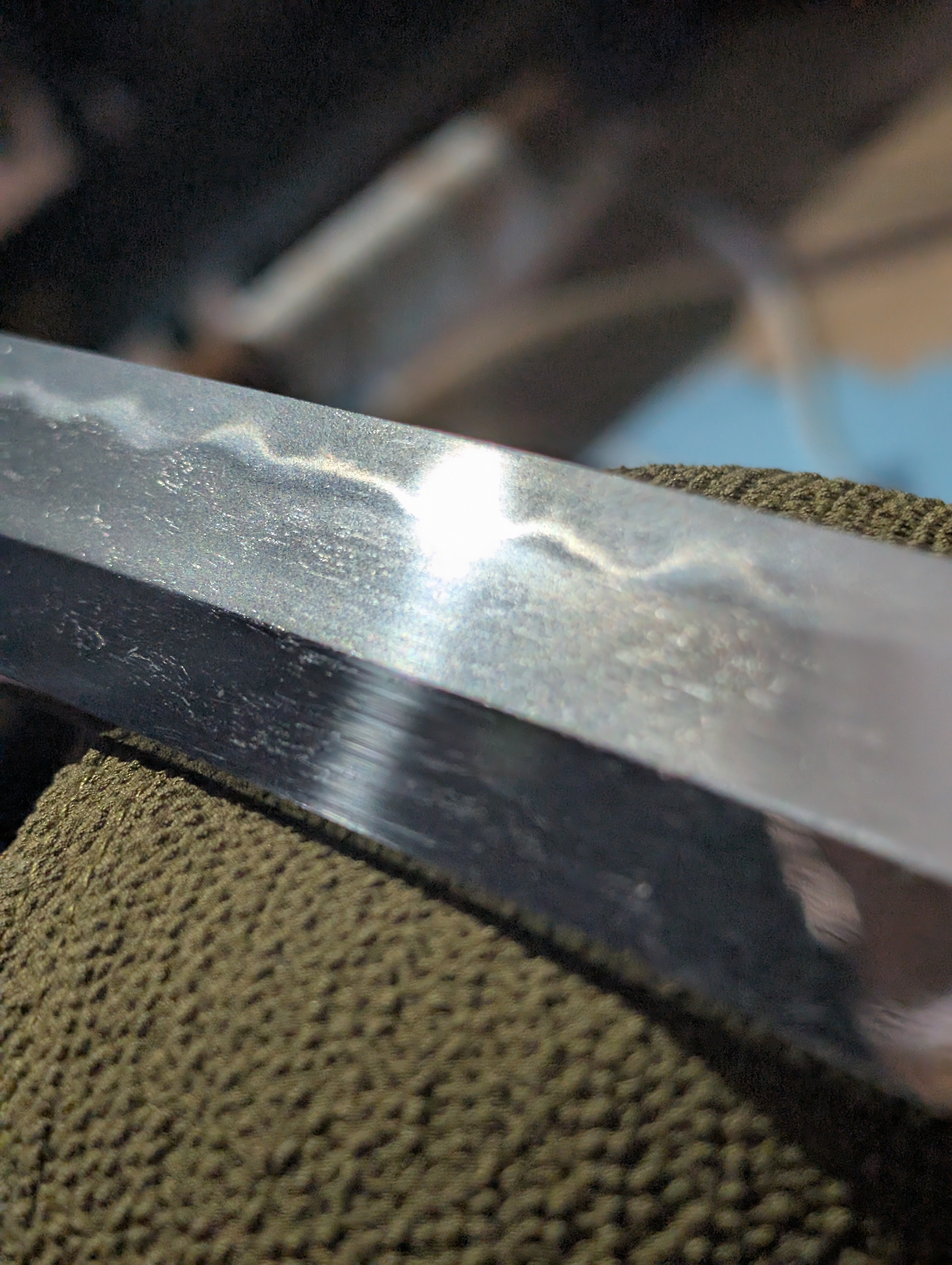
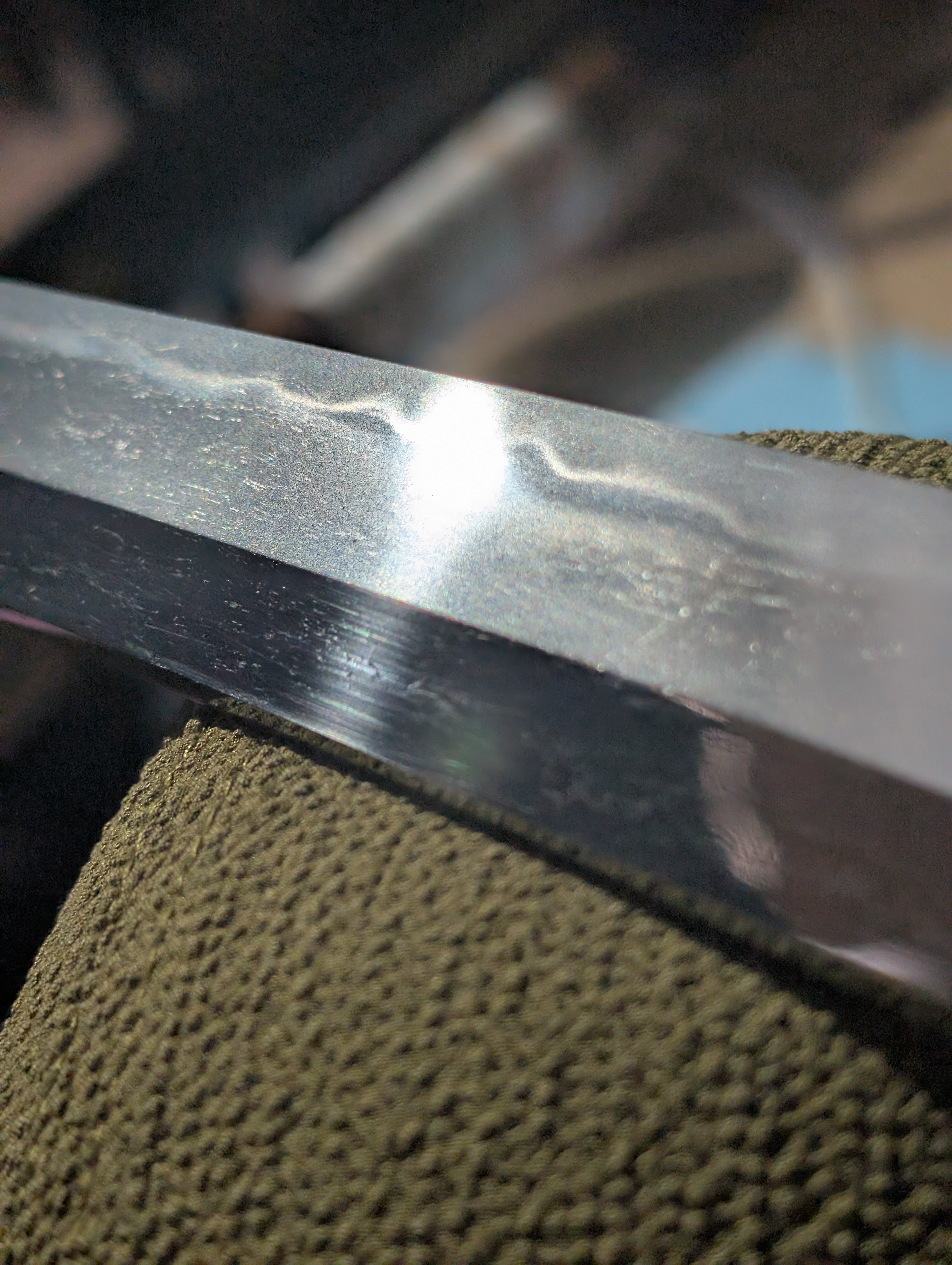
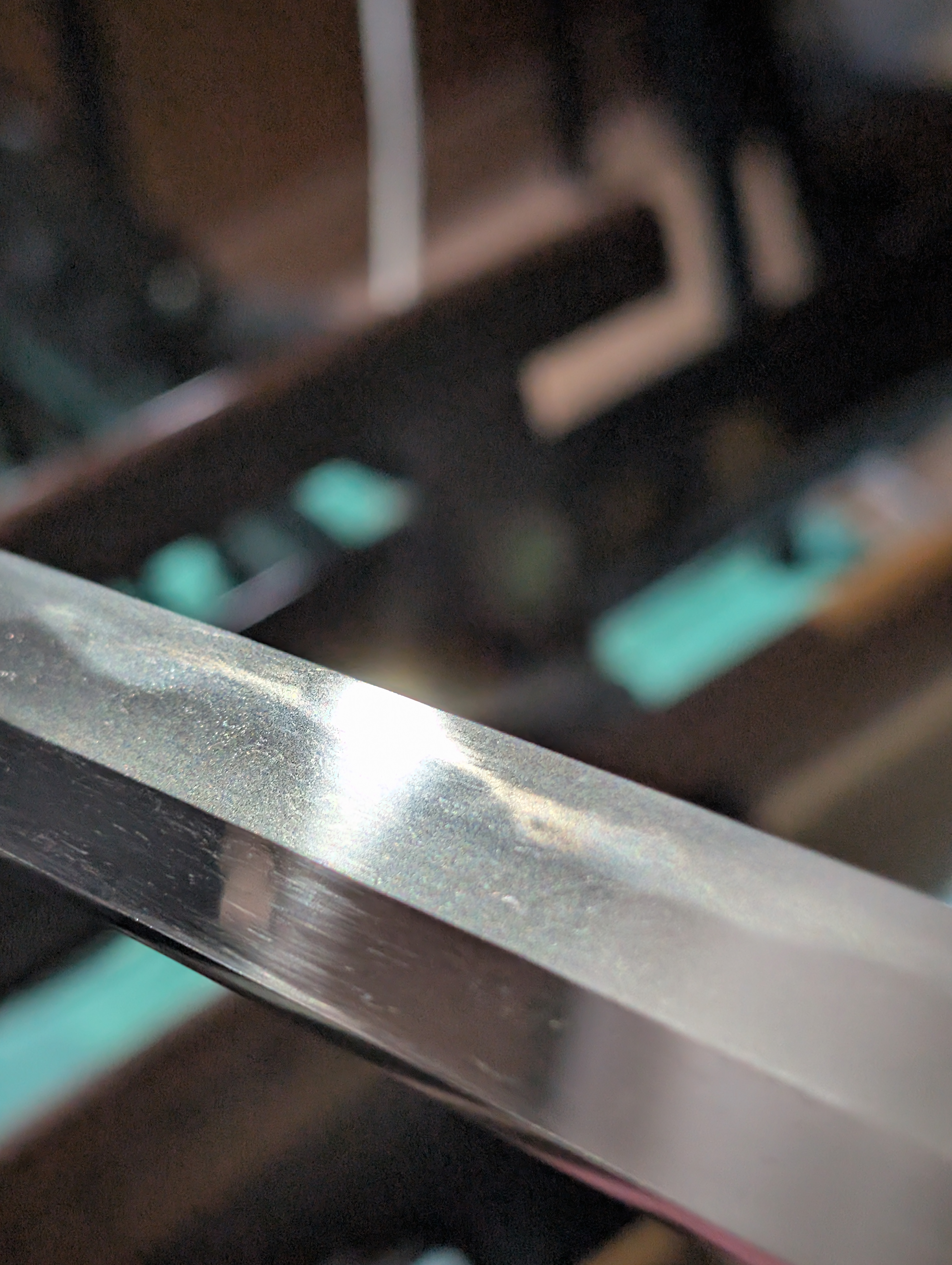
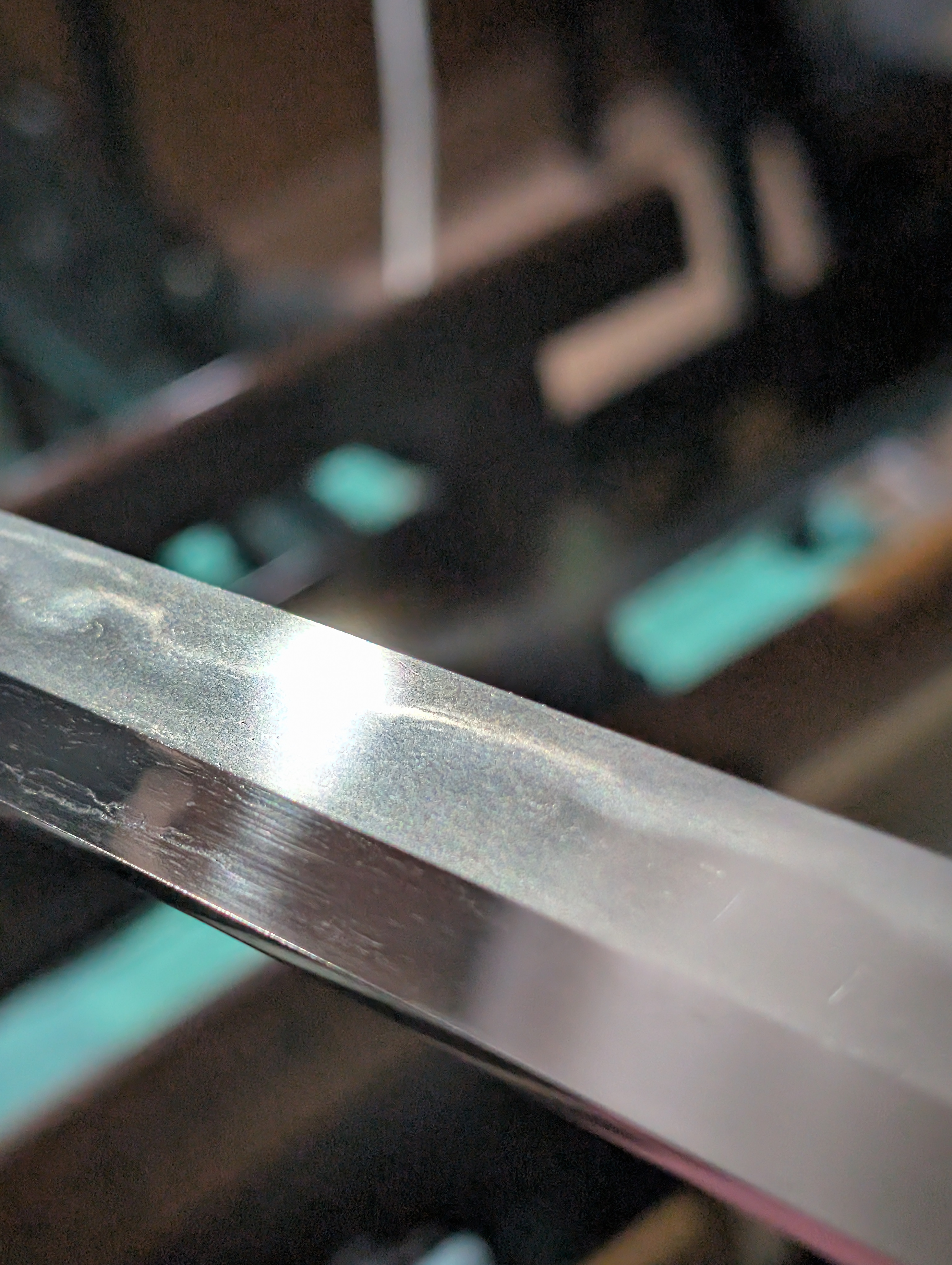
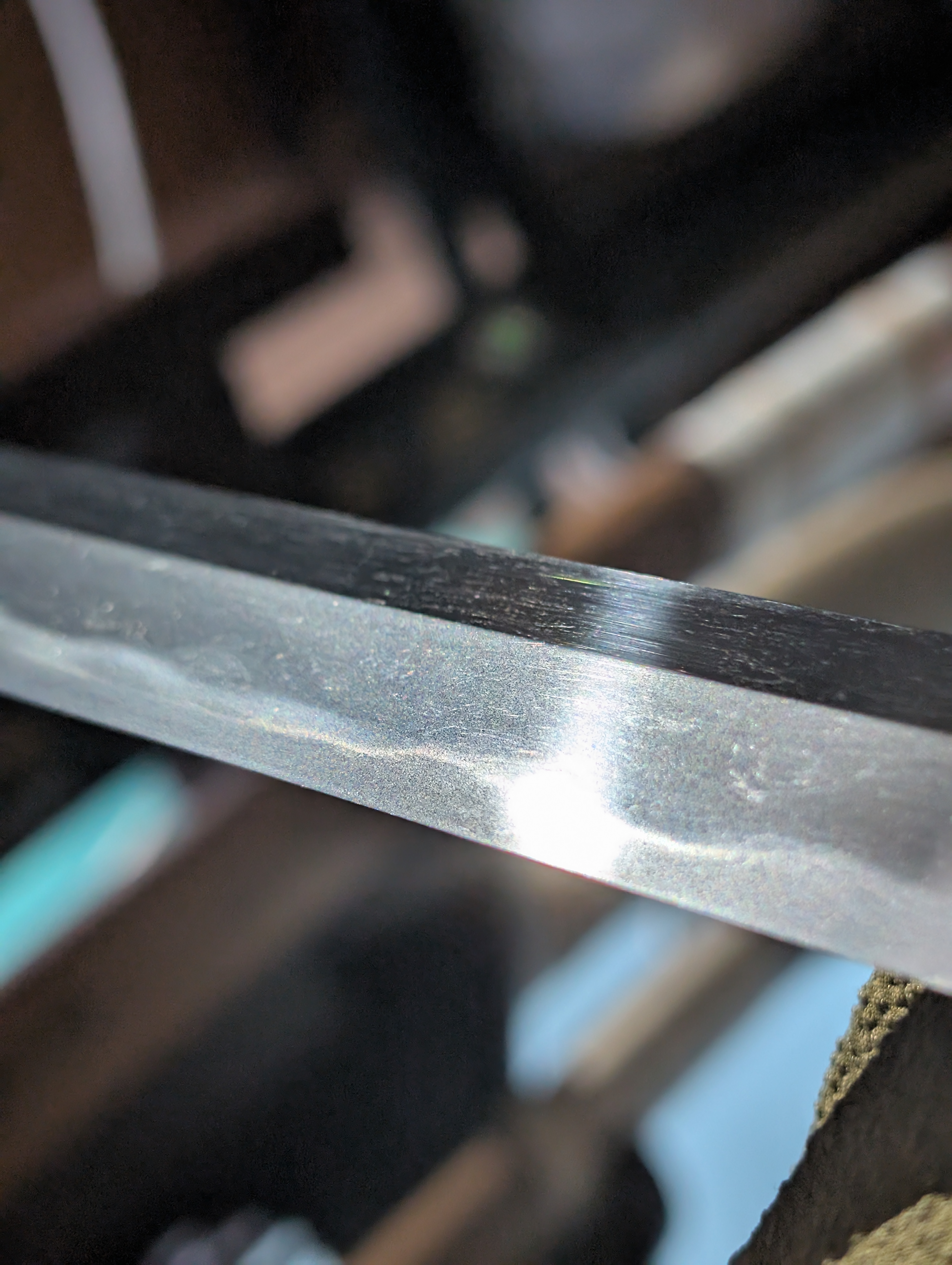
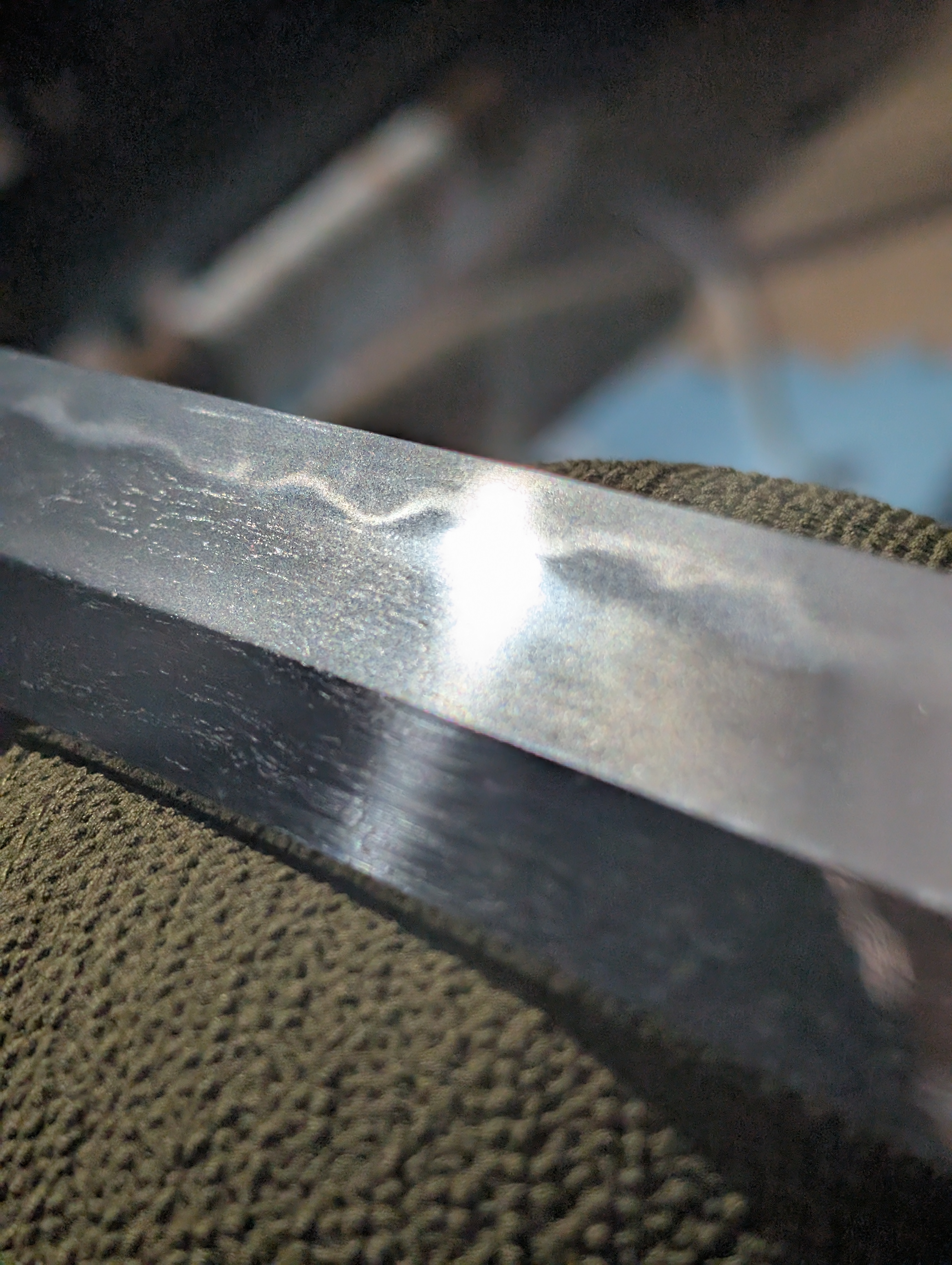
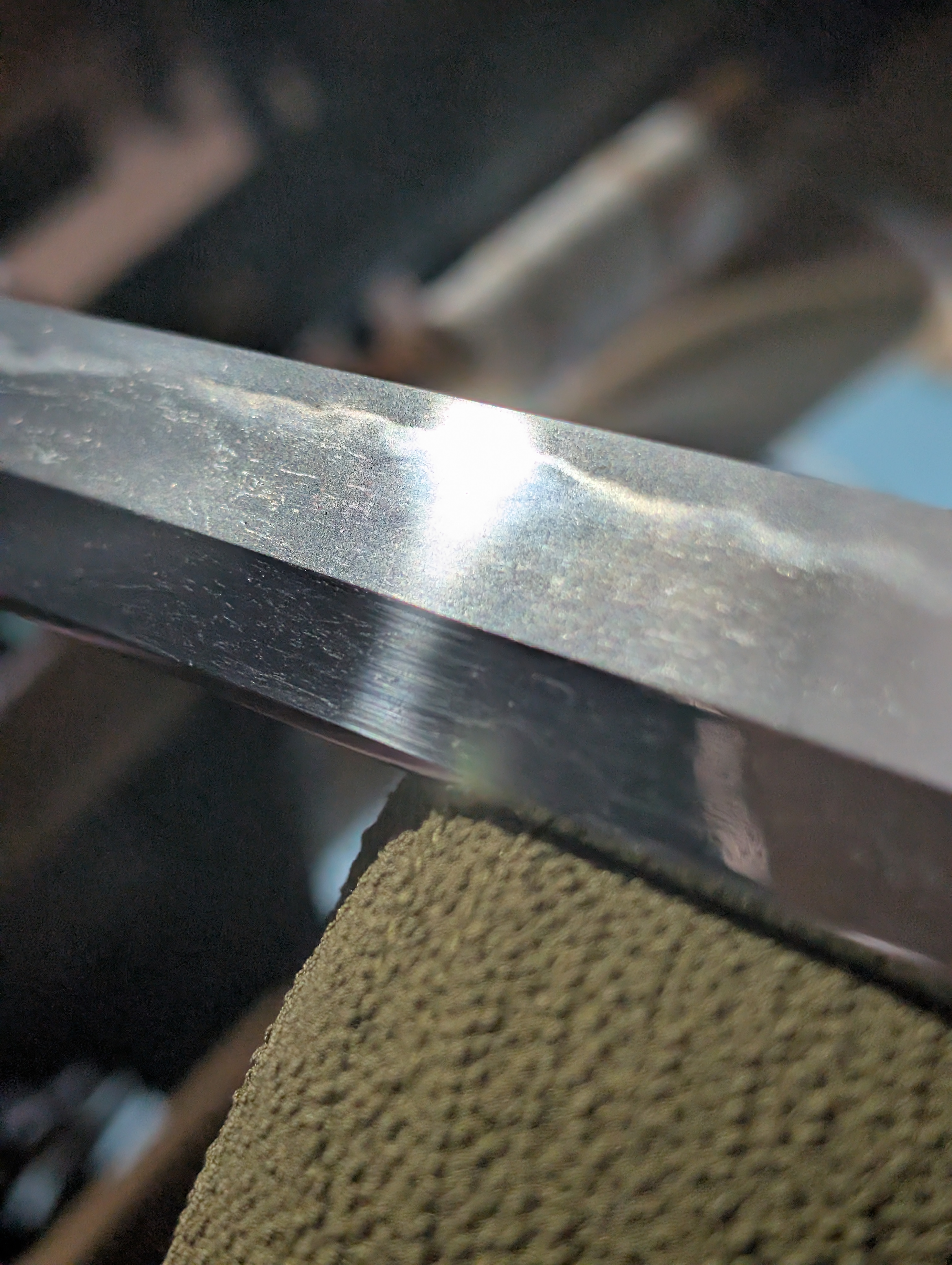
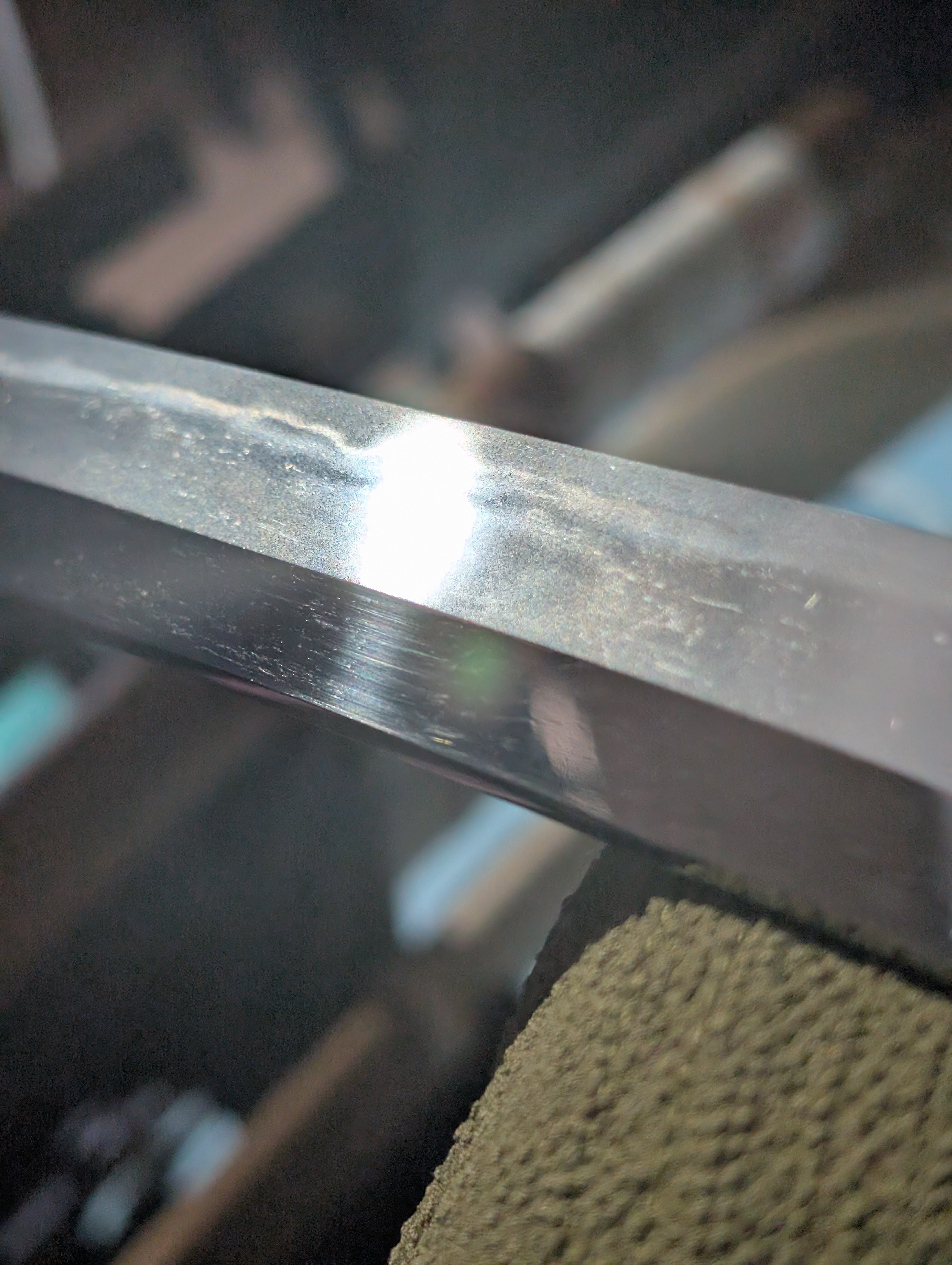
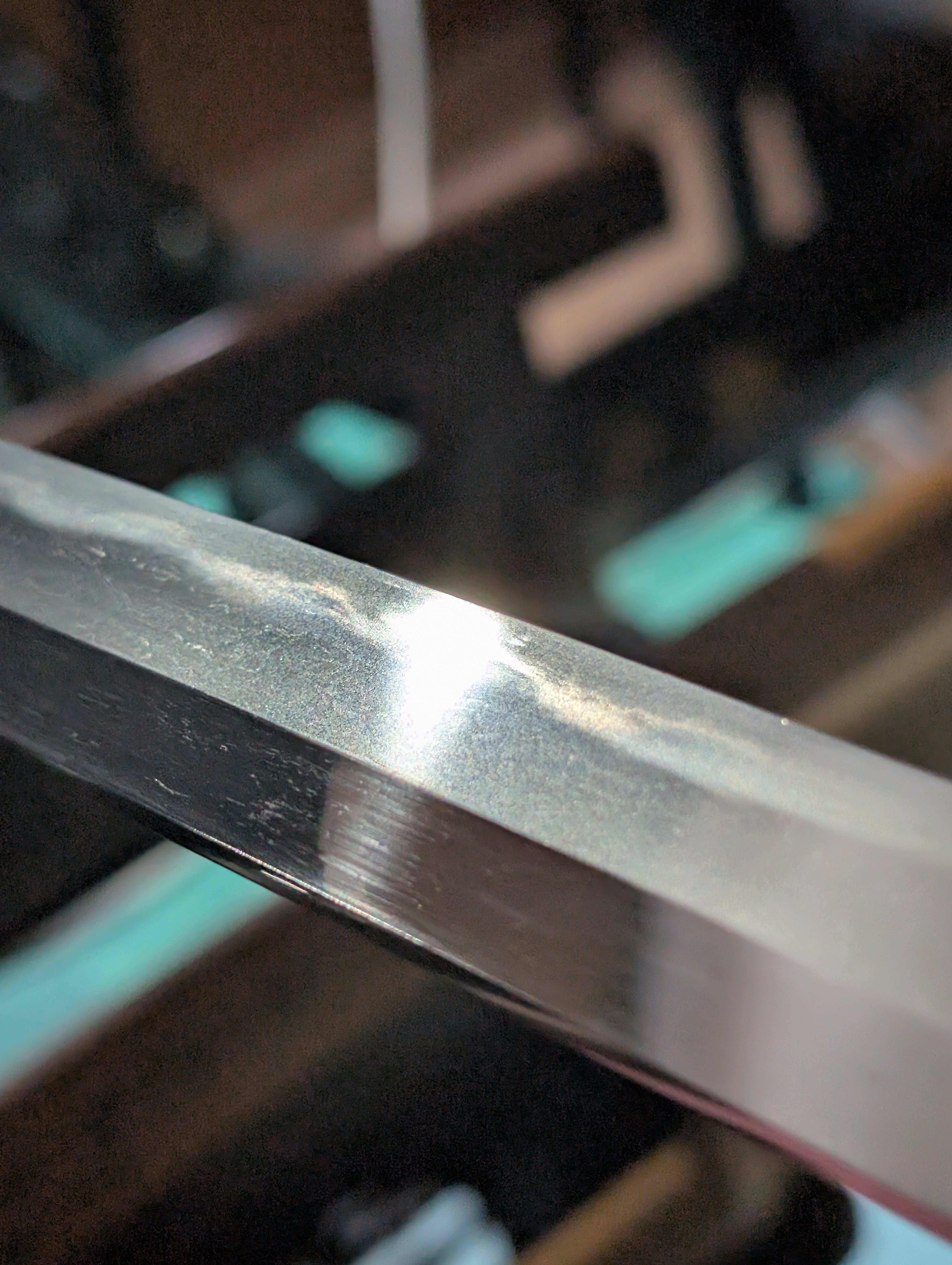
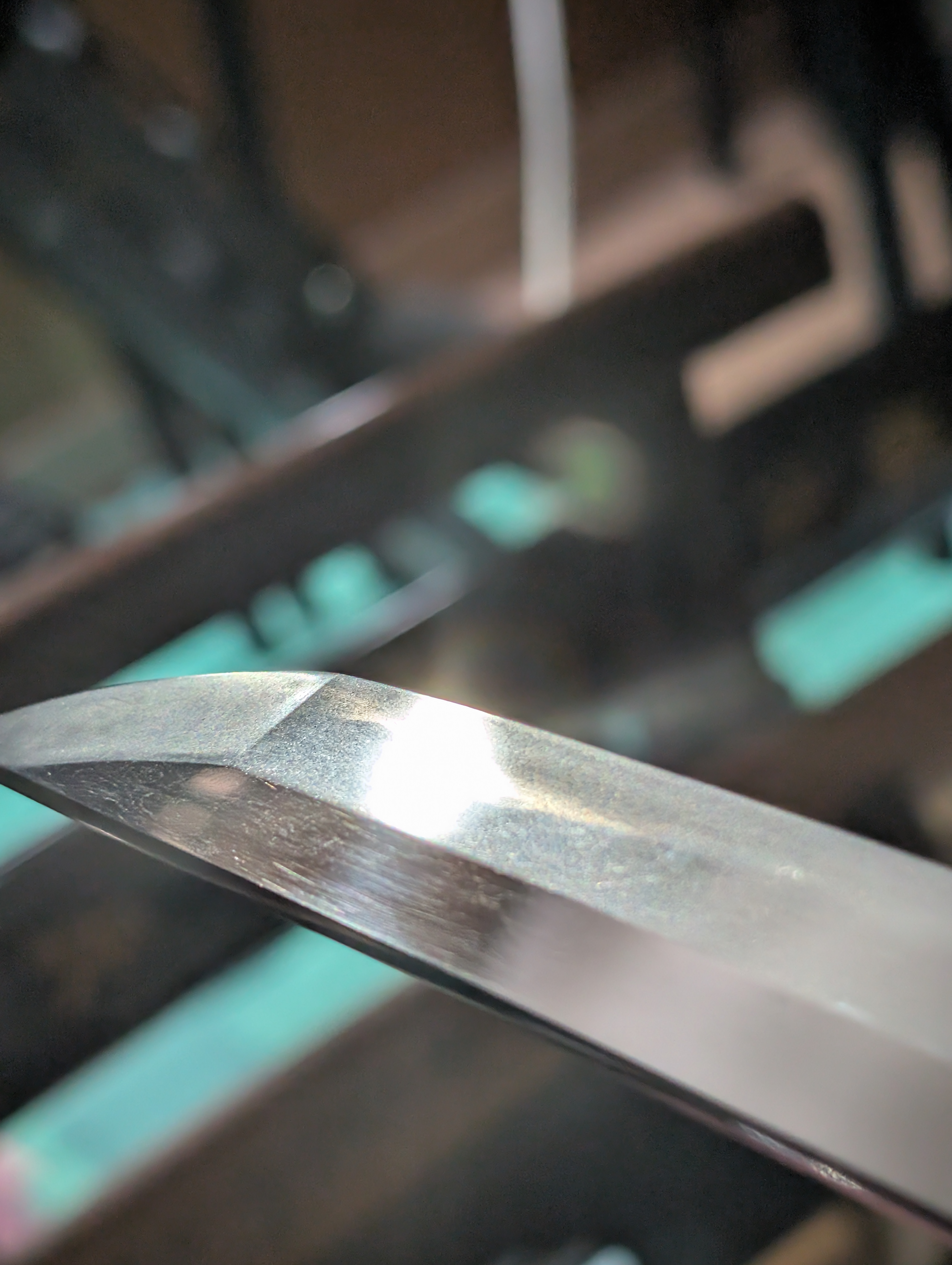
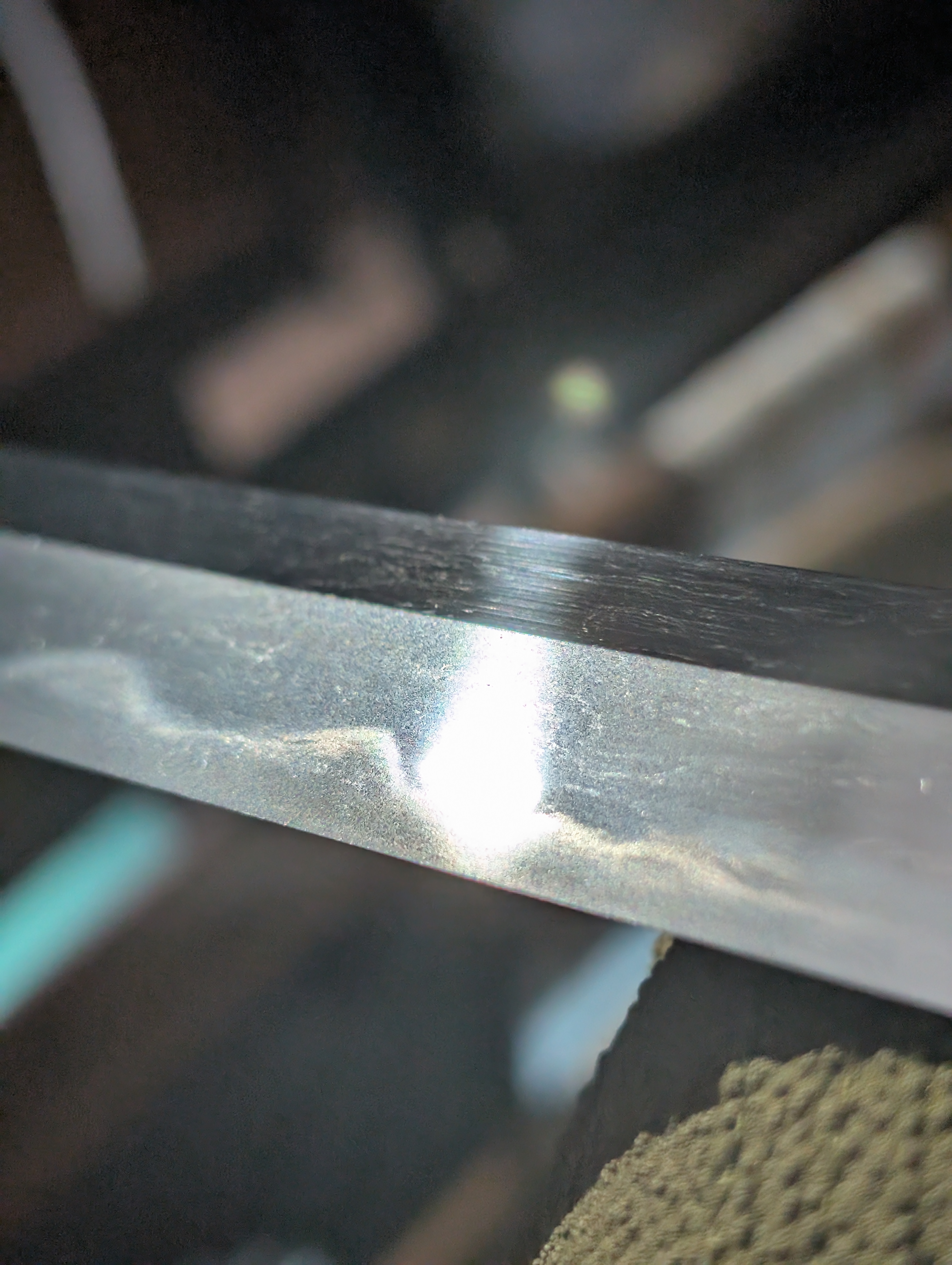
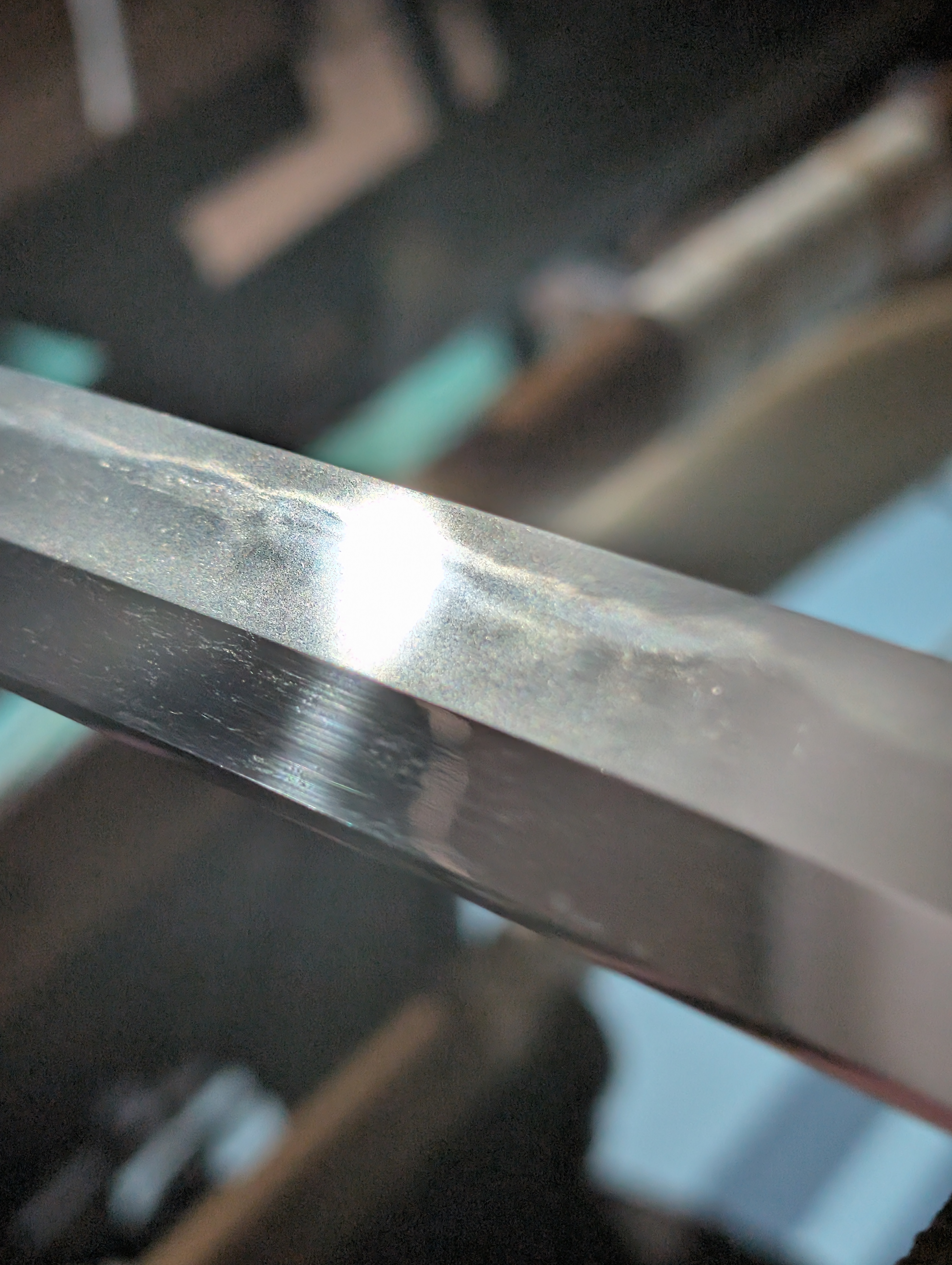
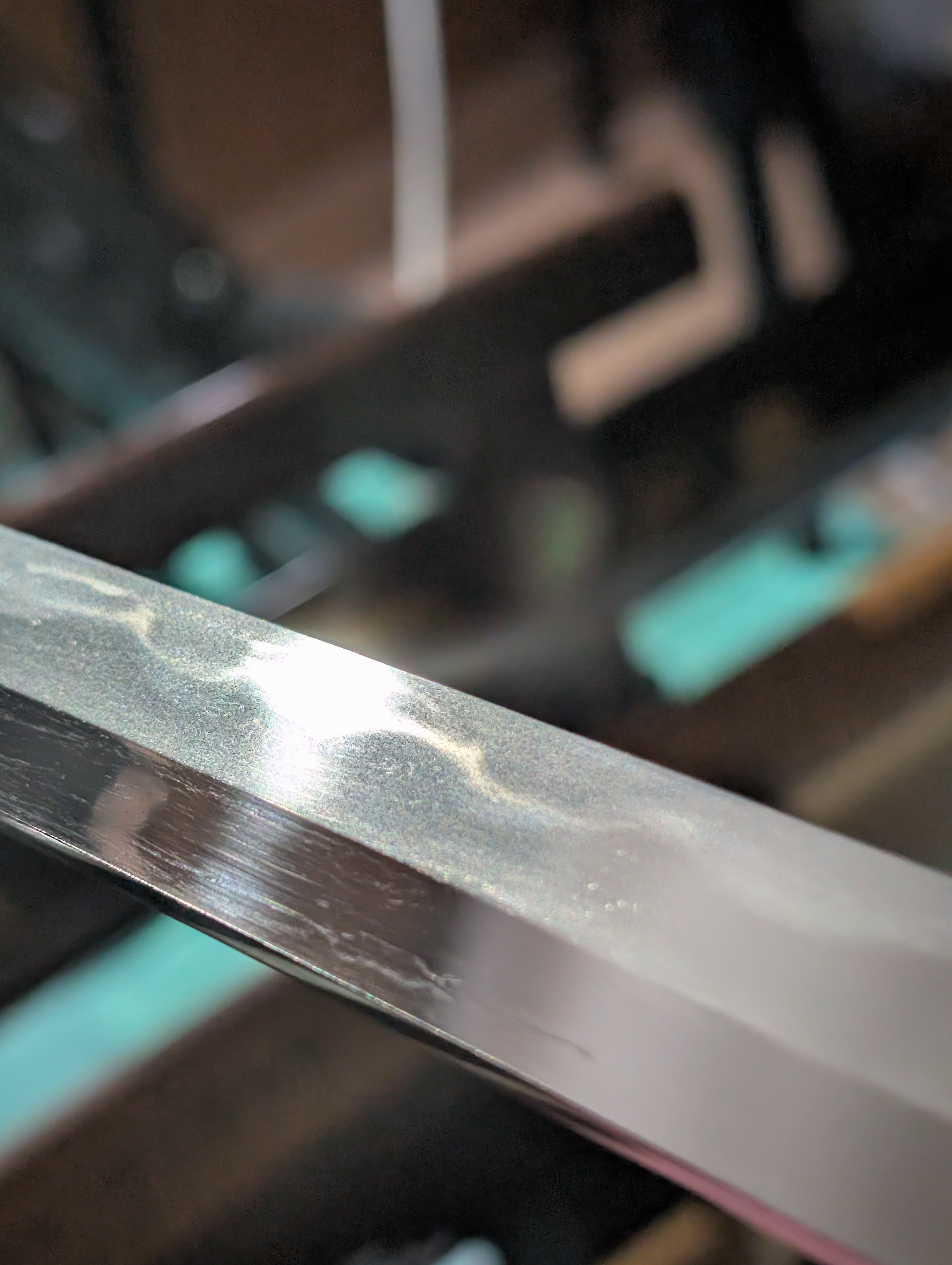
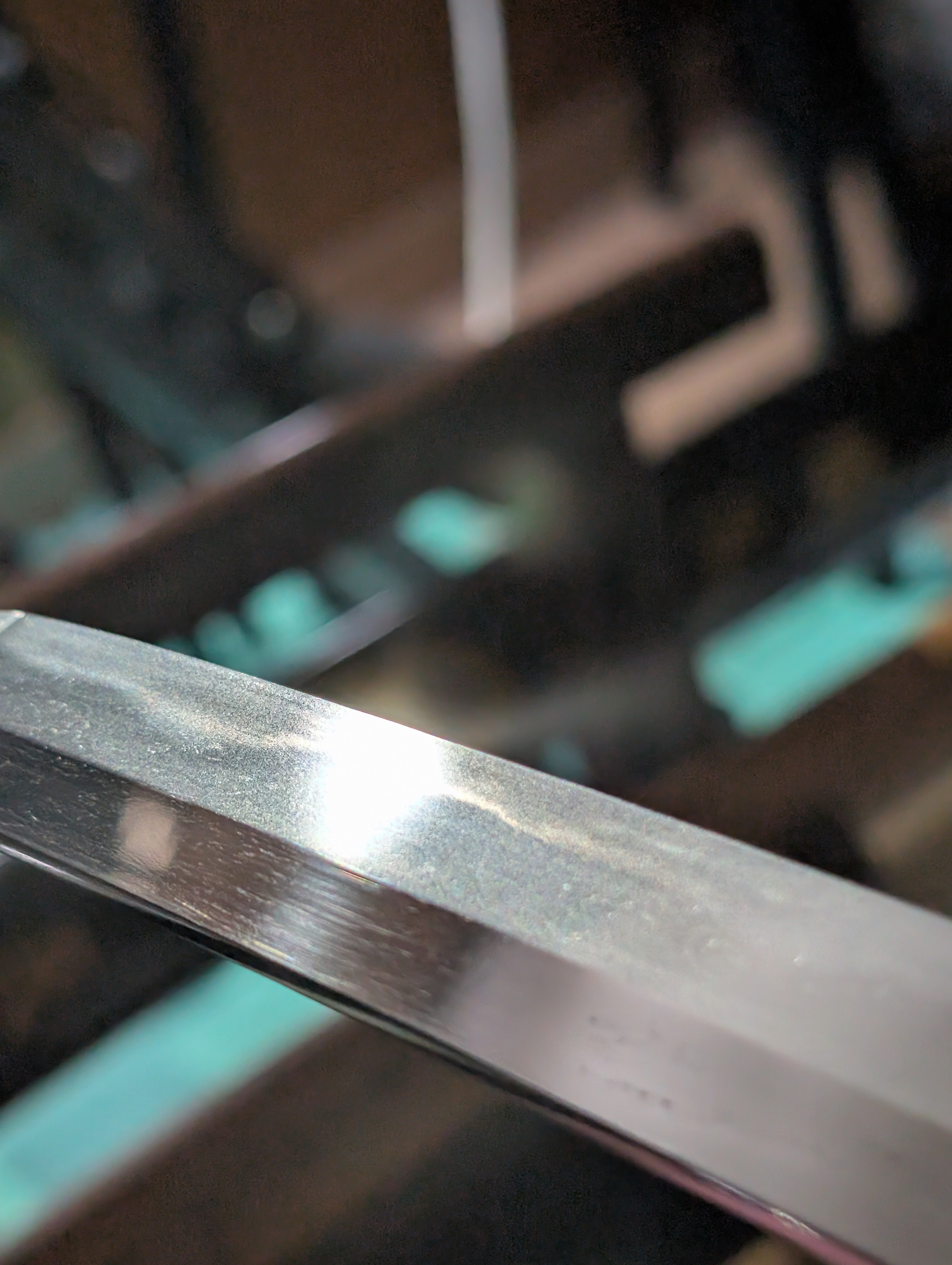
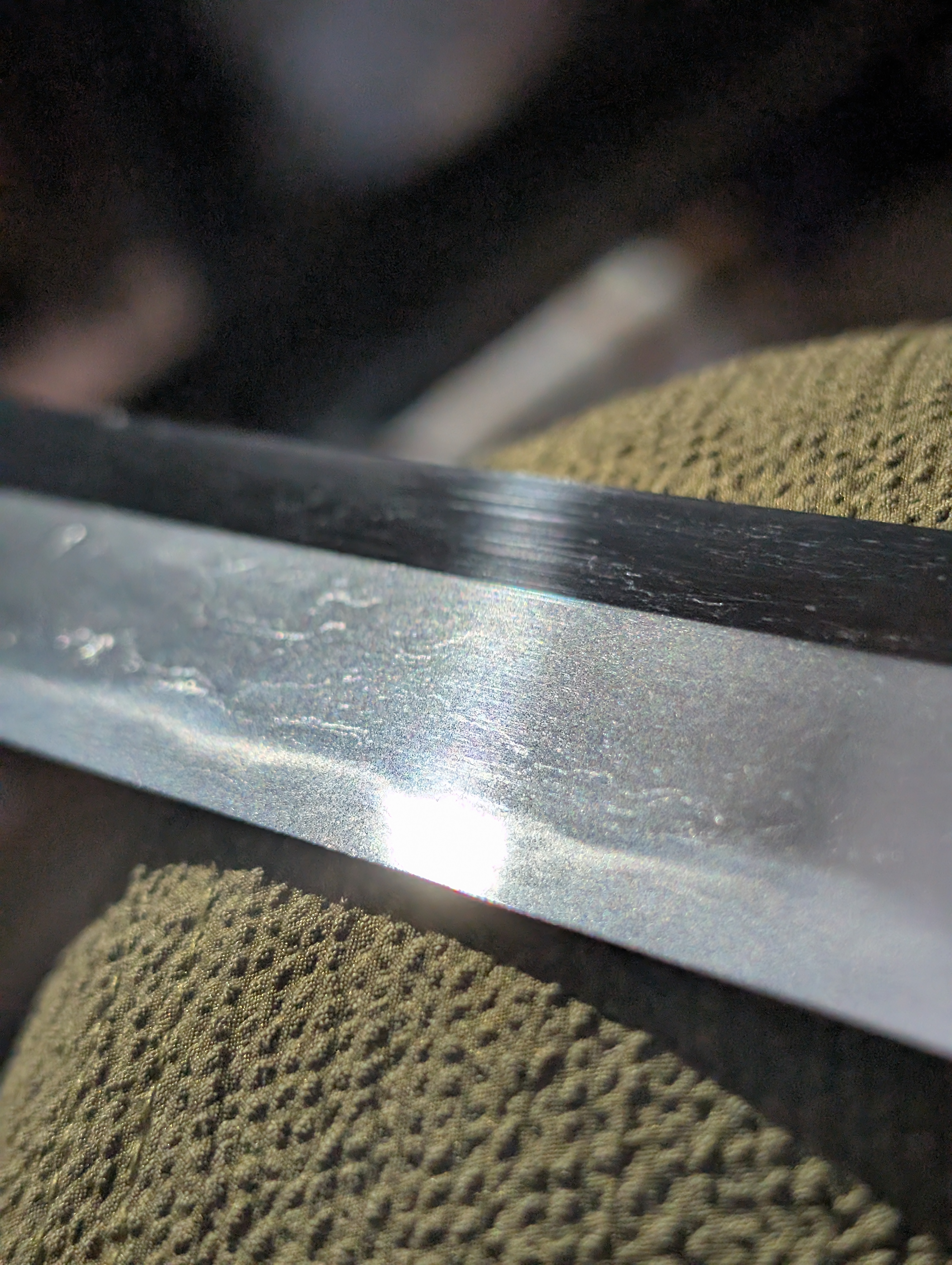
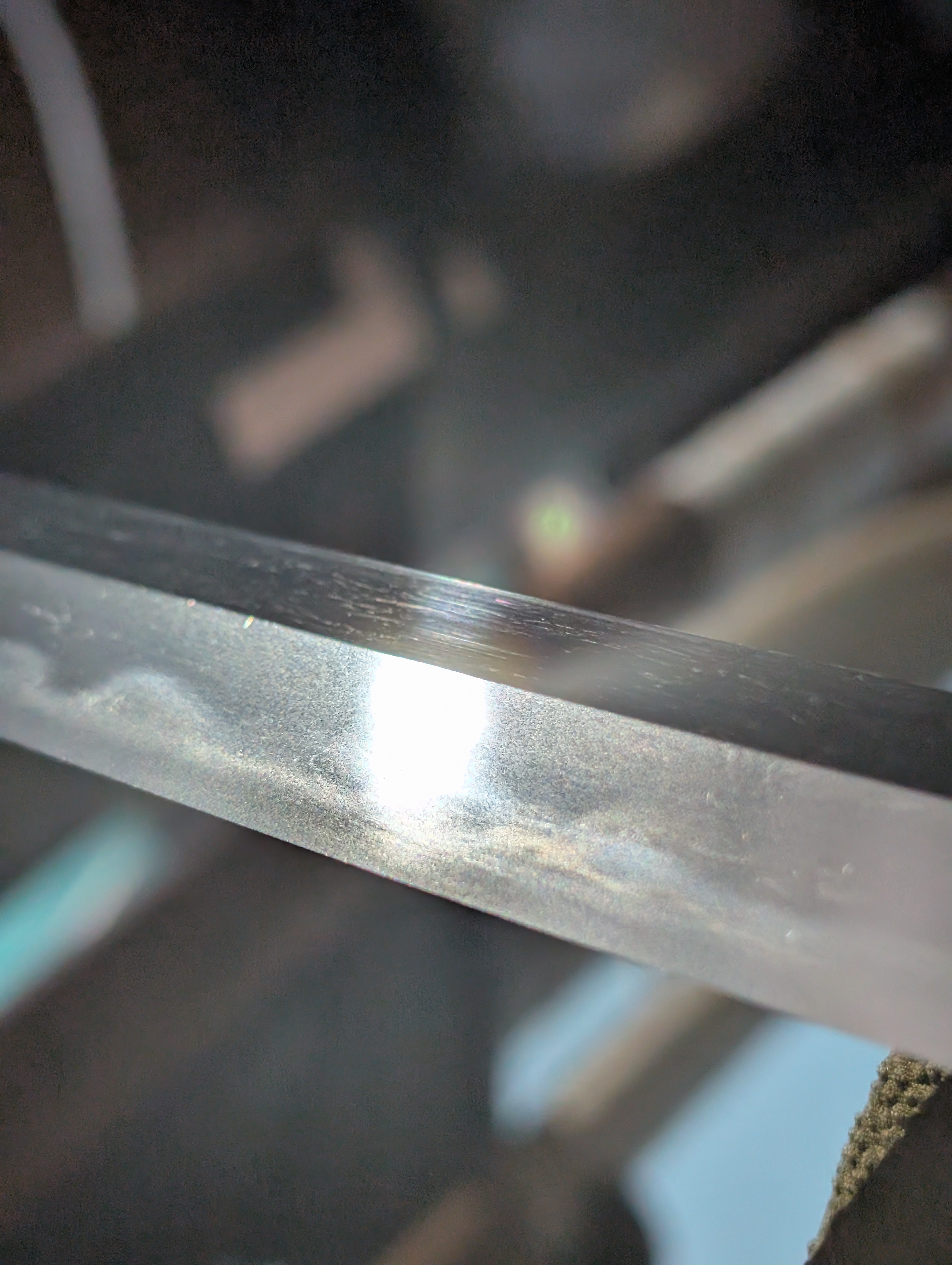
The blade itself has a classical sugata, with a pronounced curve, slight funbari, and a gentle tip, echoing earlier works of the Kamakura Period, rather than the wider, more masculine shape seen in the period of the sword’s forging. The surface grain is composed of a looser itame-hada blended with interspersed mokume. The jiba is bright, primarily due to the sparkling ji-nie found throughout the blade. Looking toward the hamon, it is composed of a ko-gunome midare in ko-nie deki. Choji formations, however restrained, are also interspersed throughout the temper, adding a controlled chaos to the nioi guchi that mimics the nearby Ko-Yoshii School. Activity is highly present throughout the blade, including ashi of various sizes, kinsuji along the nioi guchi, and sunagashi, adding depth throughout each layer of the hamon. The temper is closely followed by a midare-utsuri up to the kissaki, where the hamon ends gently in an undulating ko-maru boshi with a slight kaeri turnback. With metallurgical details pointed out, relevant measurements are listed below.
Measurements:
Nagasa: 69.3 cm (Particularly short for a tachi of the Nanbokucho Period)
Sori: 2.1 cm
Motohaba: 2.98 cm (Extremely wide, producing a stouter, more masculine form)
Sakihaba: 1.72 cm
Motokasane: 5.5 mm (Thinner than earlier blades, as was expected for steel distribution on wider blades)
Sakikasane: 3.0 mm
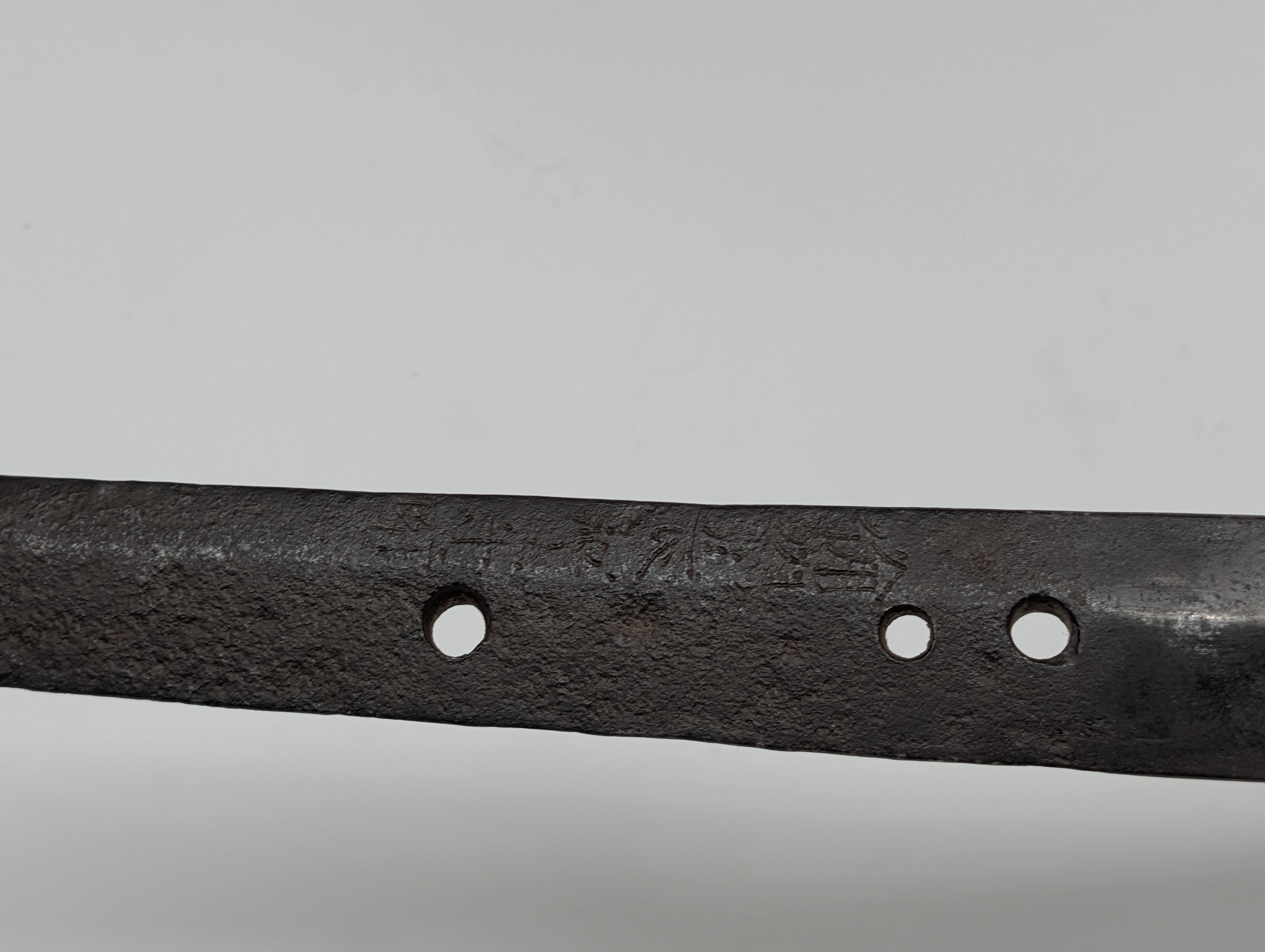
The nakago of the blade is ubu with a kuri-jiri tip, although machi-okuri has been performed to shorten the blade length. Along the tachi-omote, the naga-mei signature “Moriyuki of Osafune in Bishu”(備州長船守行) is delicately inscribed, falling in-line with other Osafune sub-branches. Three mekugi-ana have been punched into the tang, inferring a long history of alternating fittings with various conflicts and owners.
The blade’s shape is in shinogi-zukuri, with an iori-mune. This is the most common shape associated with the Japanese sword, originating from the conception of the nihonto with the kenukigata-tachi and continuing up into the present day. By the time of this sword’s forging, various masters, including the Osafune School, of which Moriyuki descended, had gained mastery of this geometry, with Moriyuki himself continuing in these footsteps. This is reinforced by the smith foregoing the use of any elaborate horimono in this work, allowing the style of his forefathers to shine through in the steel itself.
The blade is rated “Tokubetsu Hozon” by the NBTHK, implying a higher level of quality than is typically expected for a Japanese sword. This appraisal is a testament to the high-level craftsmanship of an excellent smith, alongside an acknowledgement of centuries of meticulous maintenance by custodians from all social classes and regions of Japan.
The Ko-Sori School was formed from a minor exodus of the swordsmith Shigeyoshi, who studied under the grandmaster Kanemitsu, a swordsmith who studied under Masamune and brought his traditions to Osafune. There, the smith took on works inspired by the Sagami Tradition, eventually bringing on the age of “So-Den Bizen” works, which took close inspiration from the Soshu grandmasters. Following his tutelage of Shigeyoshi, the student eventually departed from the mainline Osafune School, opening up a local workshop along the Yoshii River. There, he took on new students, forming the Ko-Sori School, which he had named after his own personal name, Ko-Sori Kuzaemon, continuing up into the late Nanbokucho Period. This school often worked alongside both the mainline Osafune branch and the Omiya School, leading to great overlap between the Osafune-based Bizen masters.
Most notably, this can be seen in the case of the “Oei San-Mitsu”, a set of three grandmasters of the early Muromachi Period, which are believed to have originated in either the Omiya or Ko-Sori branches of the Osafune School. Although definite conclusions are not possible in the modern day, Yasumitsu is often believed to be a Ko-Sori-based master, studying under the third-generation Shigeyoshi. Slightly before the time of Yasumitsu, Moriyuki gained prominence as the school’s final “official” grandmaster, operating from 1390 CE to 1394 CE. Due to their shared family line, Moriyuki is likely a sibling or cousin of Yasumitsu’s (indirectly through the merging of the Hatakeda Branch into the Ko-Sori School), continuing the Ko-Sori School until its eventual decline as the Osafune School consolidated, requiring greater manpower to produce large swathes of blades for the new armies that defined the conflict-ridden Muromachi Period.
As such, this work stands as a final example of pre-war opulence from a more delicate line of the Osafune School. In addition, their proximity and similarity in workmanship to the Ko-Yoshii School open up new avenues of research, especially due to the possibility of influences from the Ichimonji School via continuous interactions between these two competitors, making this blade an odd transition not only between works of a peacetime and wartime economy, but also one between the classical style of the Ichimonji School and the more forward-thinking Osafune lineages.
Article by Nicholas Zogu
-Photographs from Charlie White’s Facebook page; Blade in Possession of Charlie White-