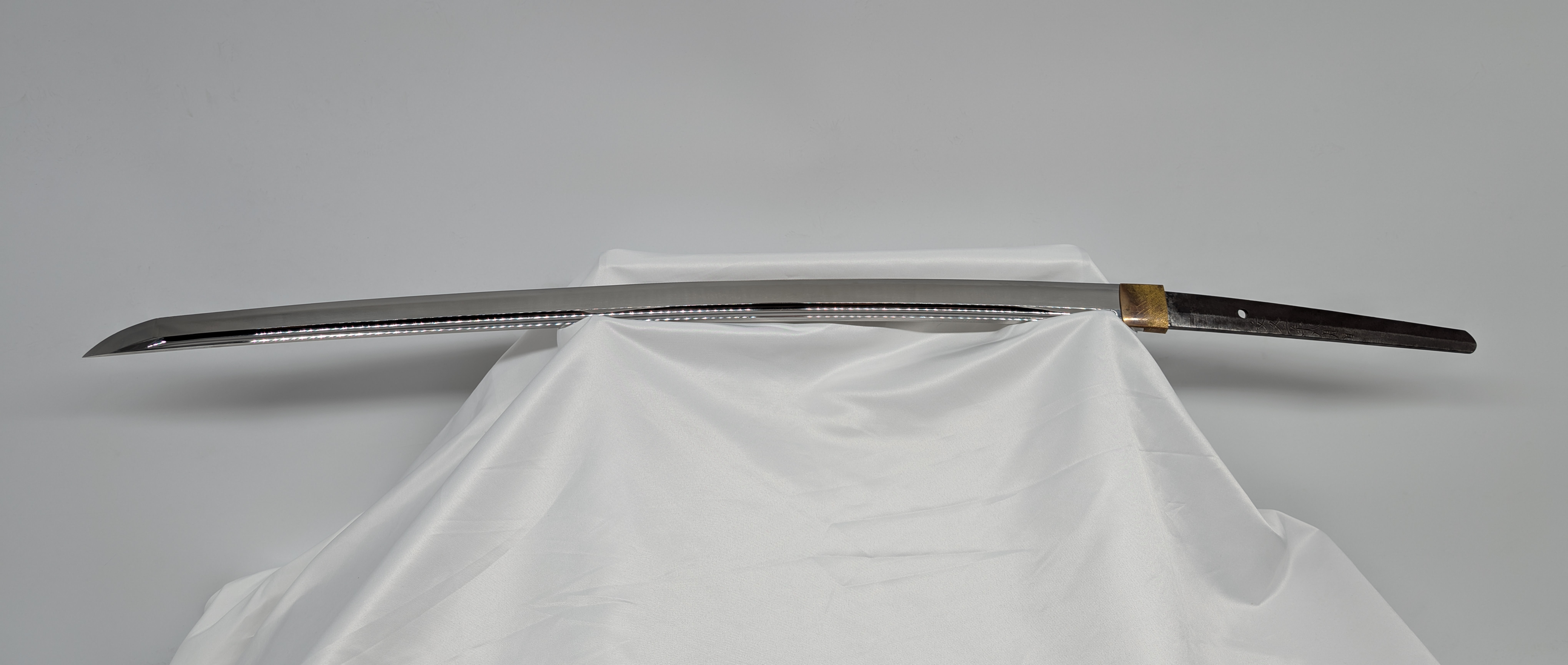
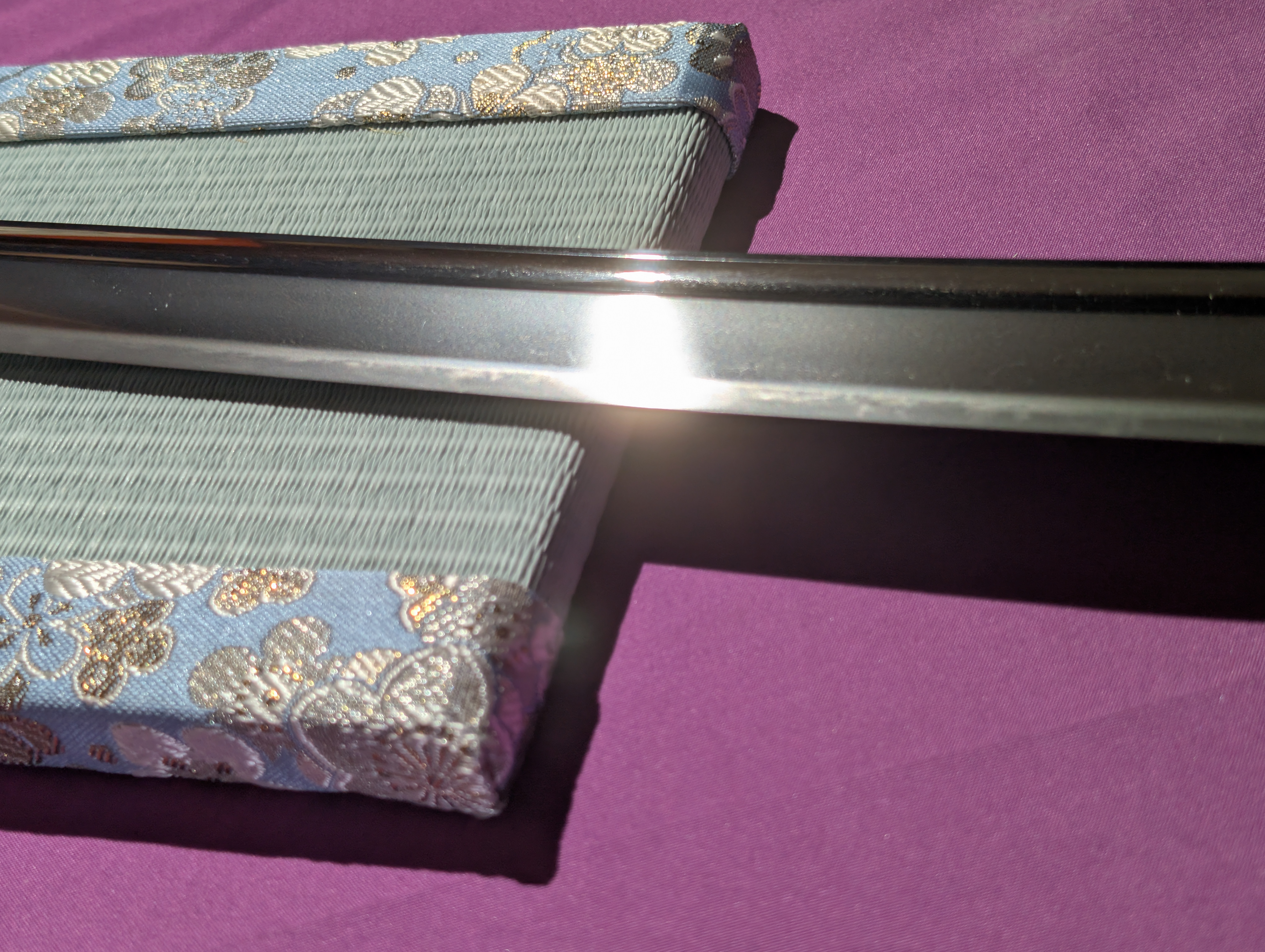
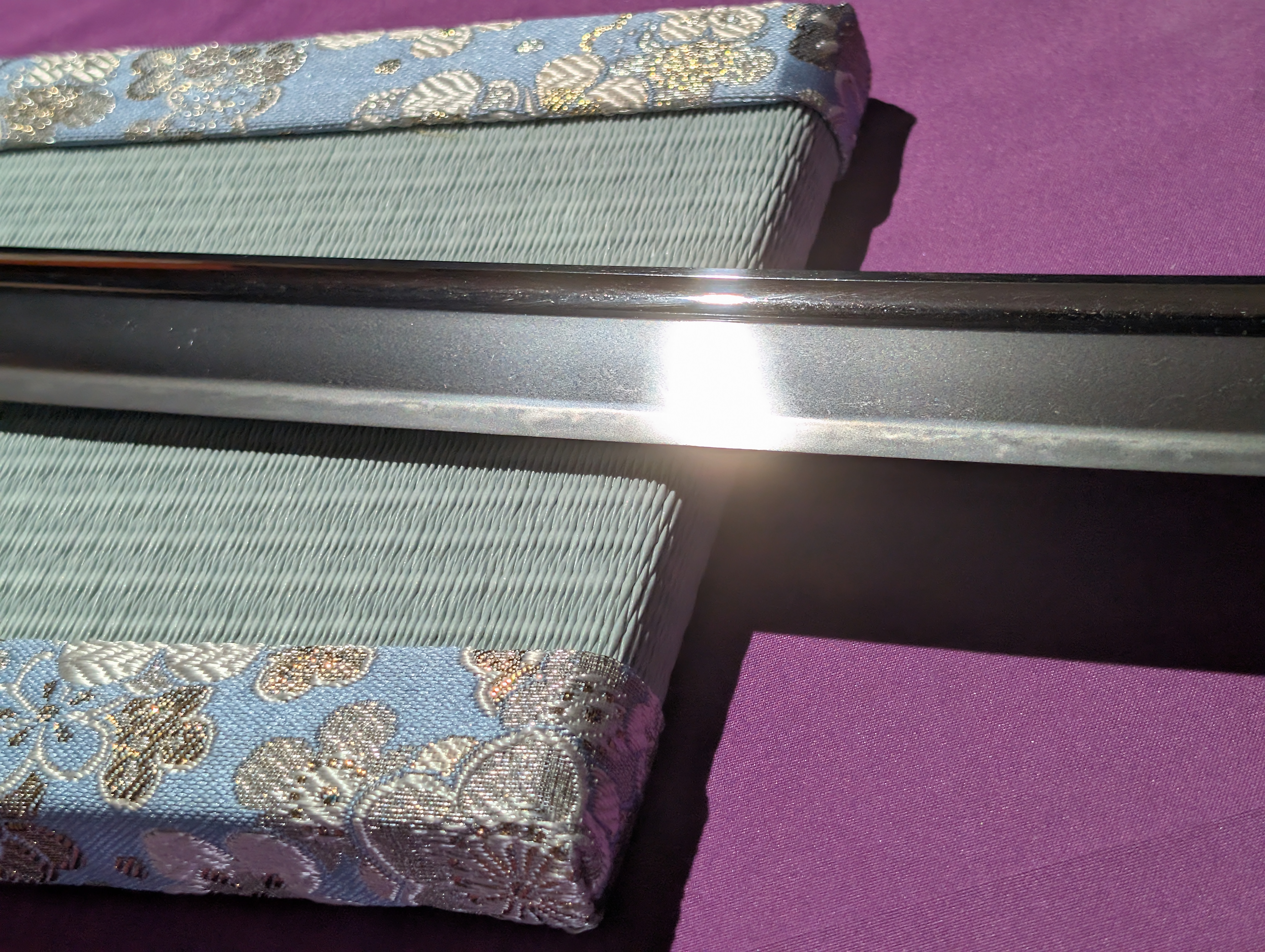
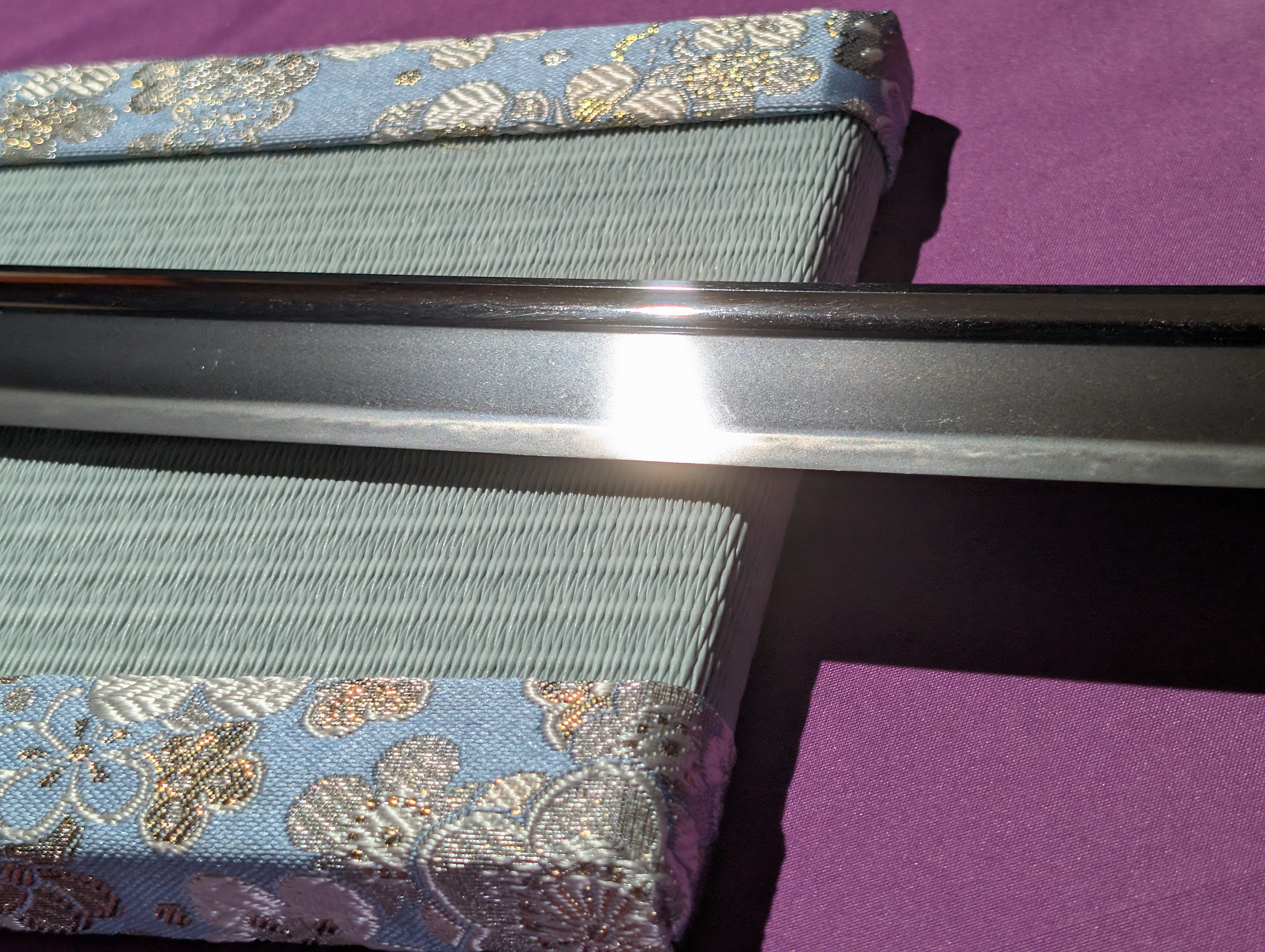
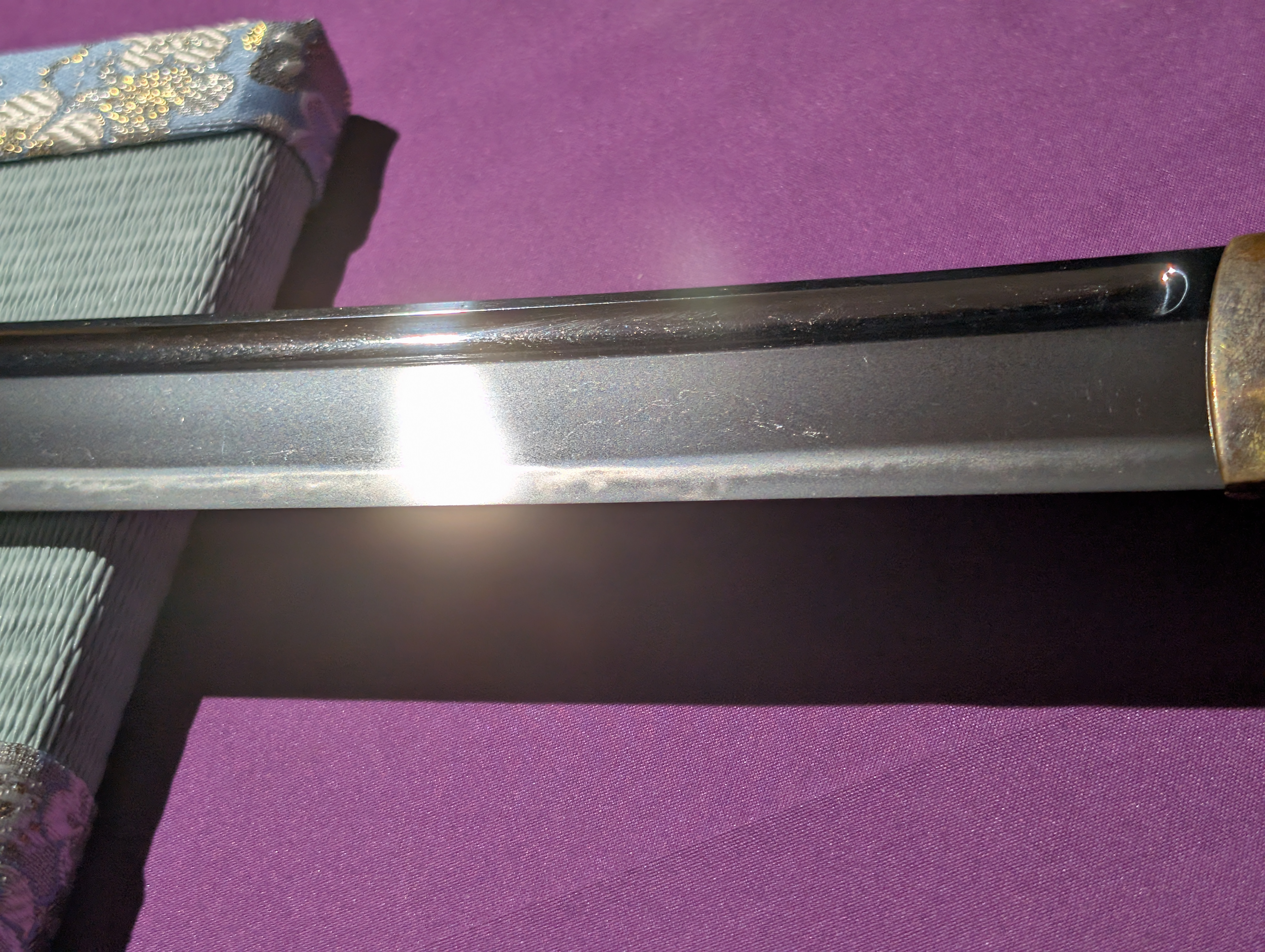
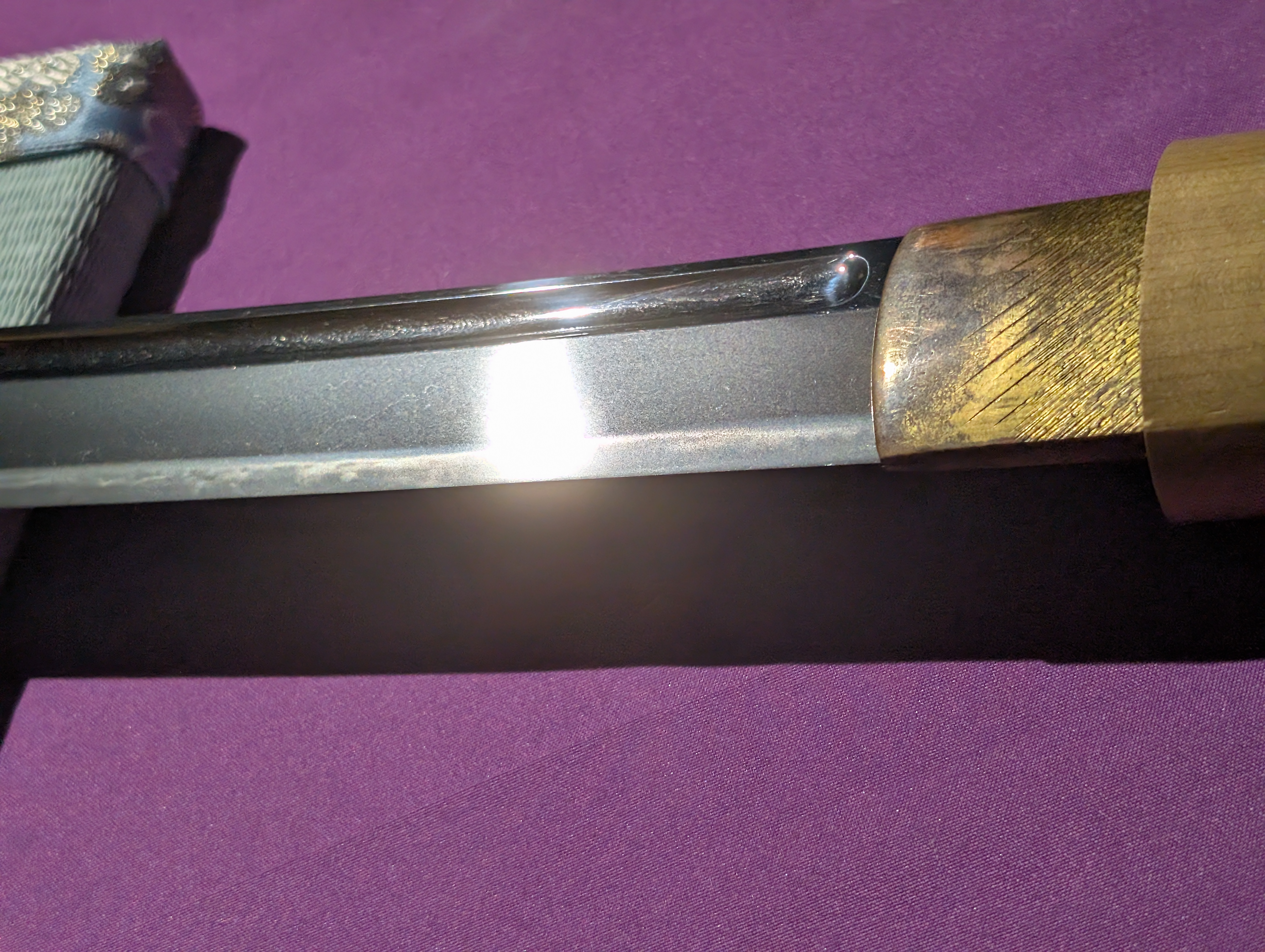
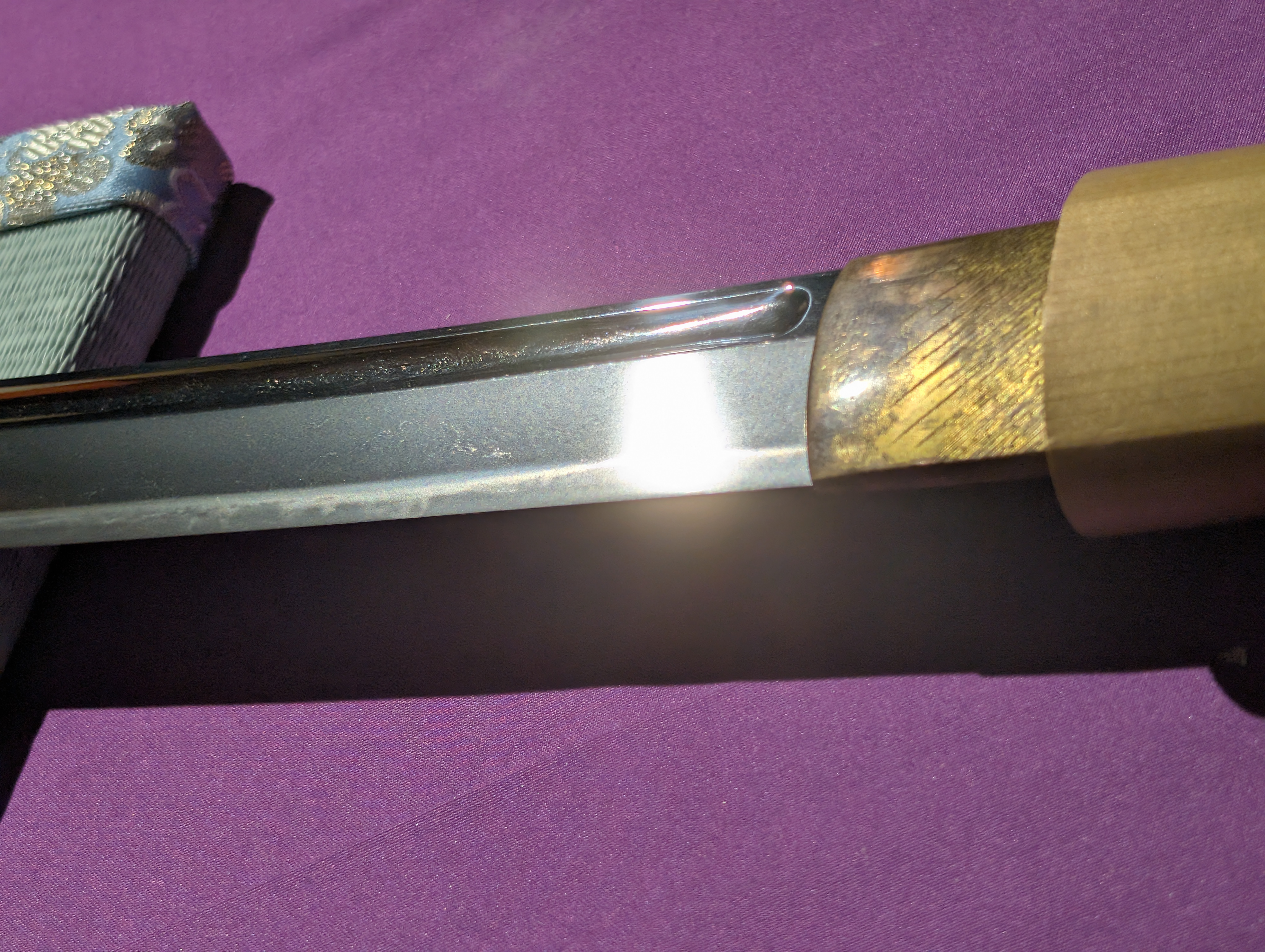
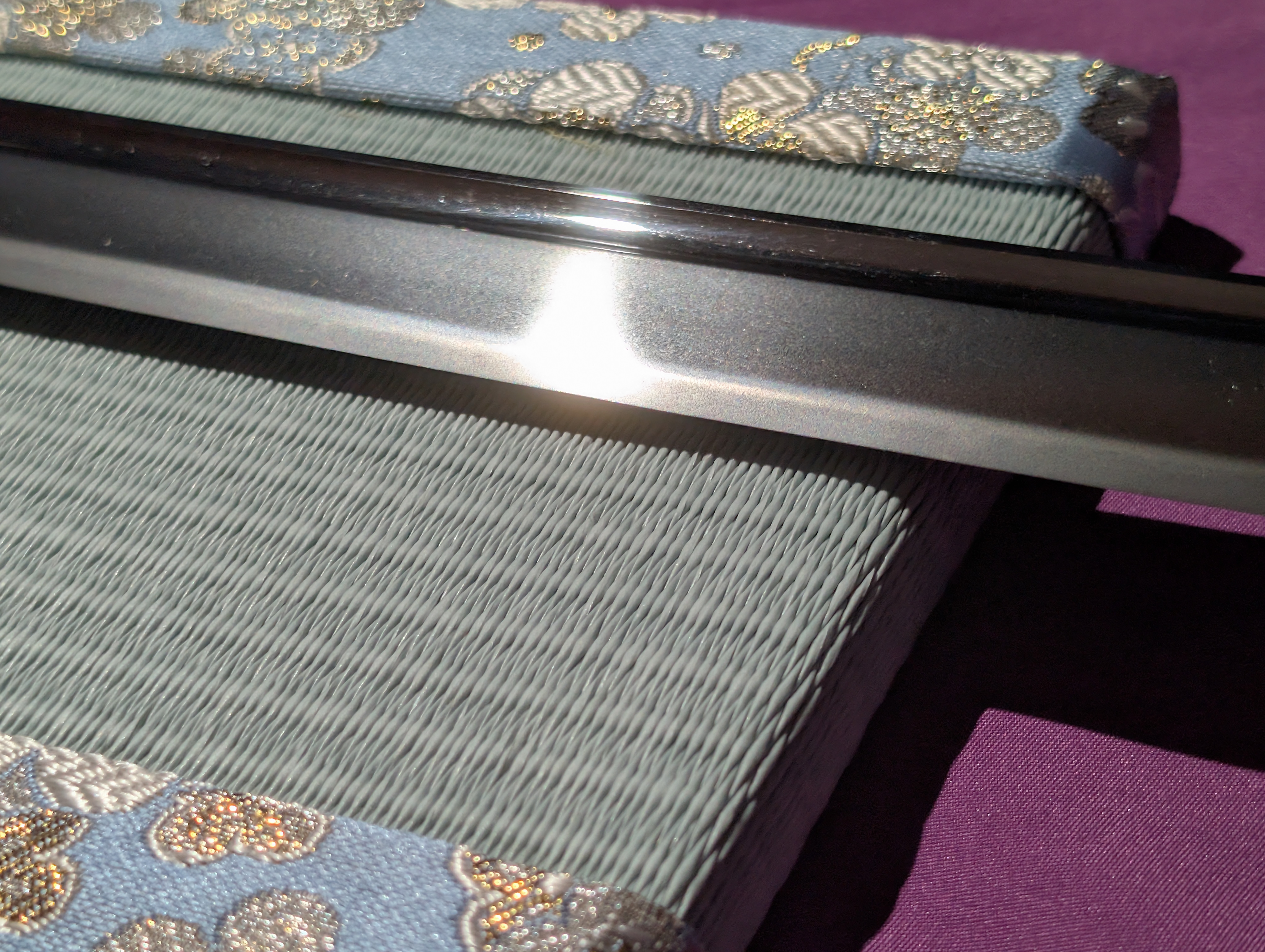
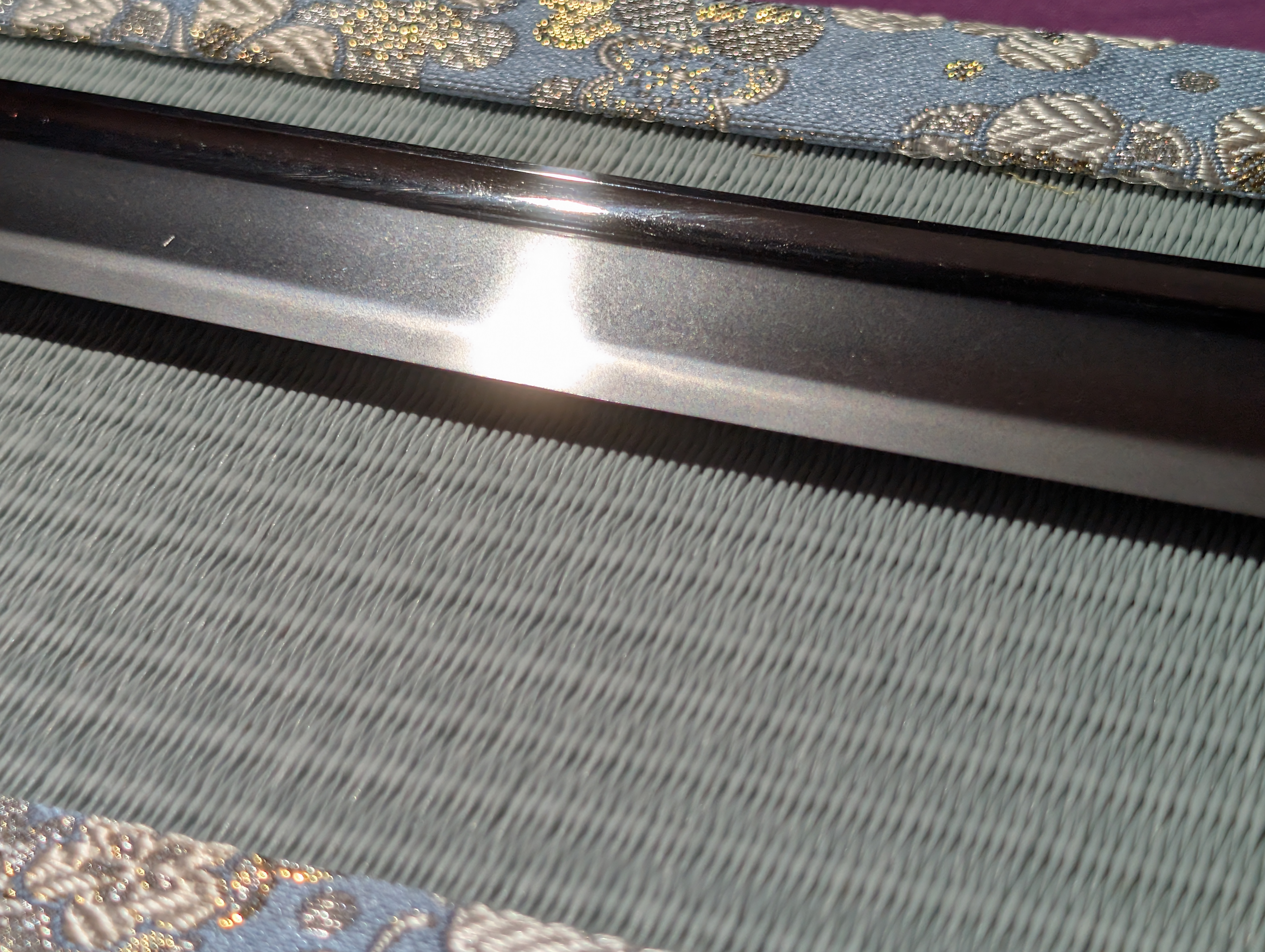
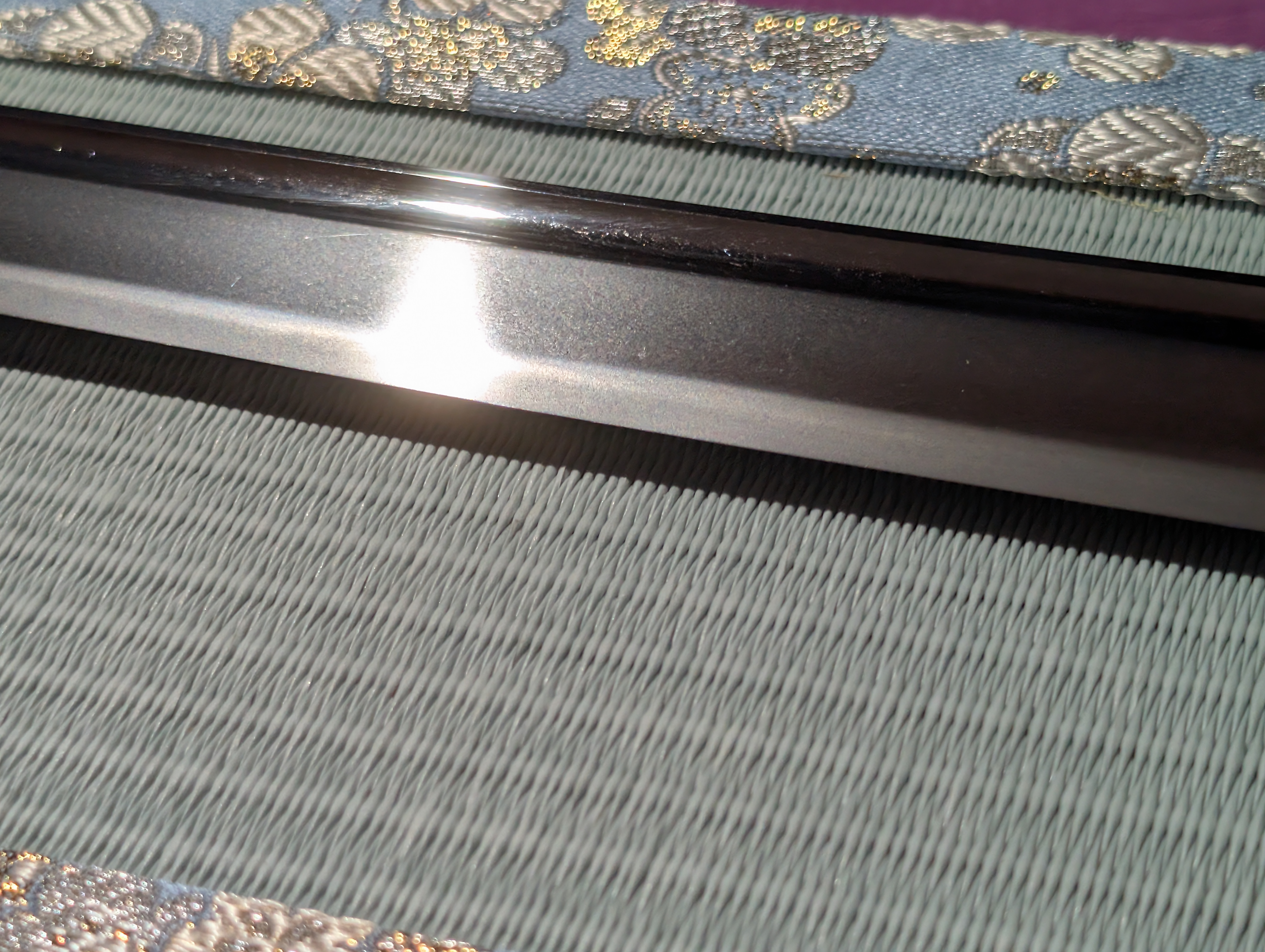
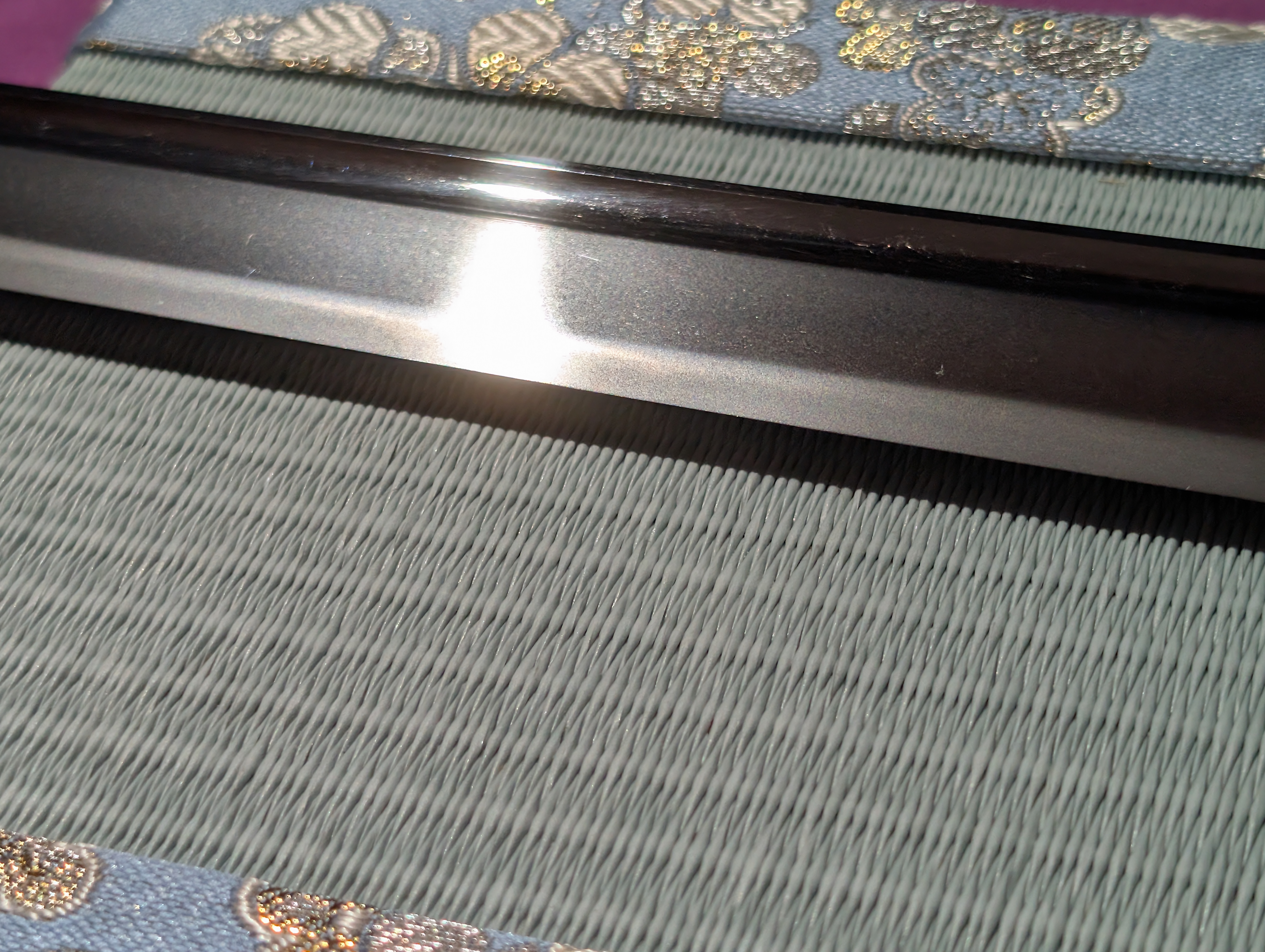
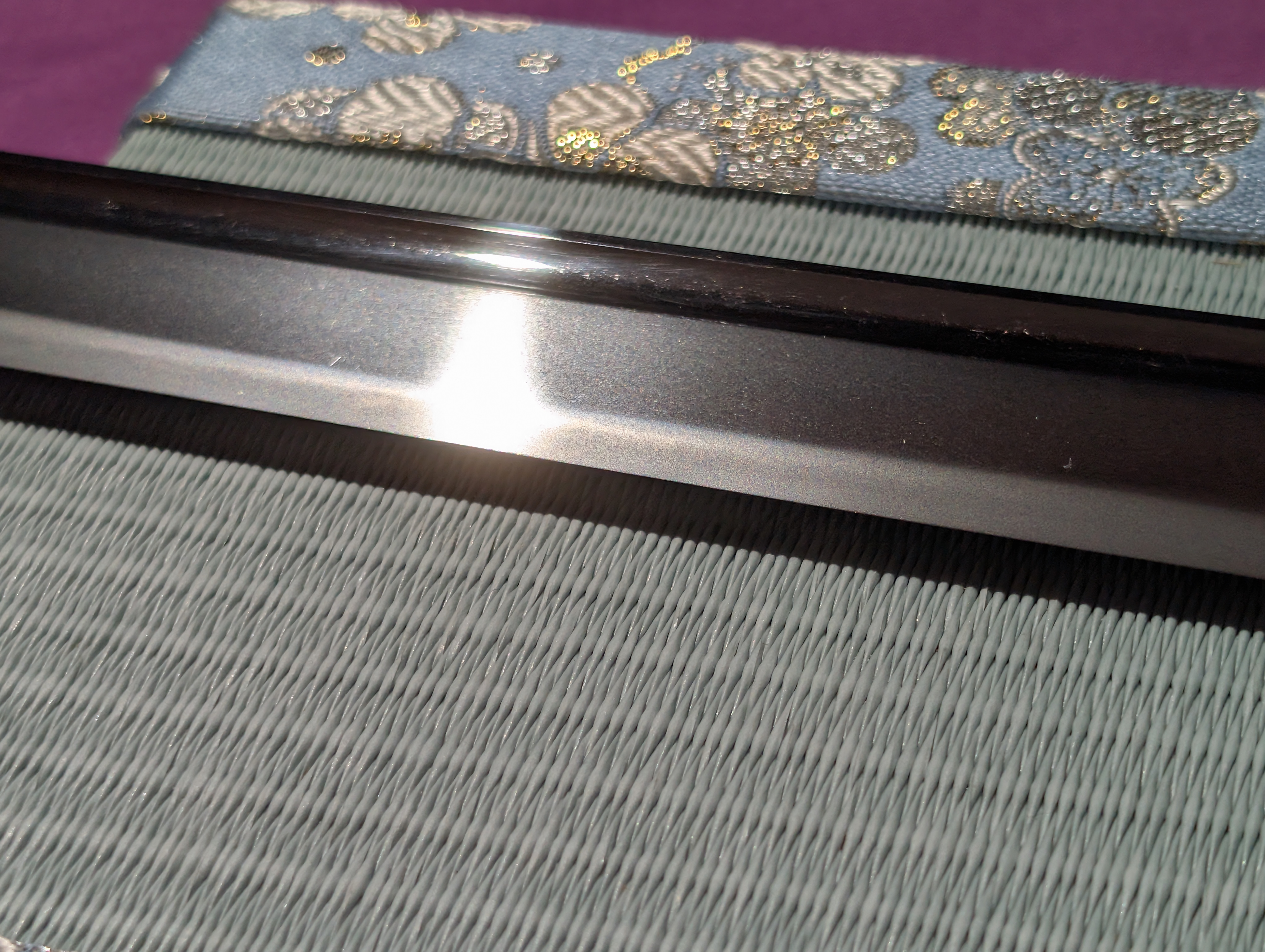
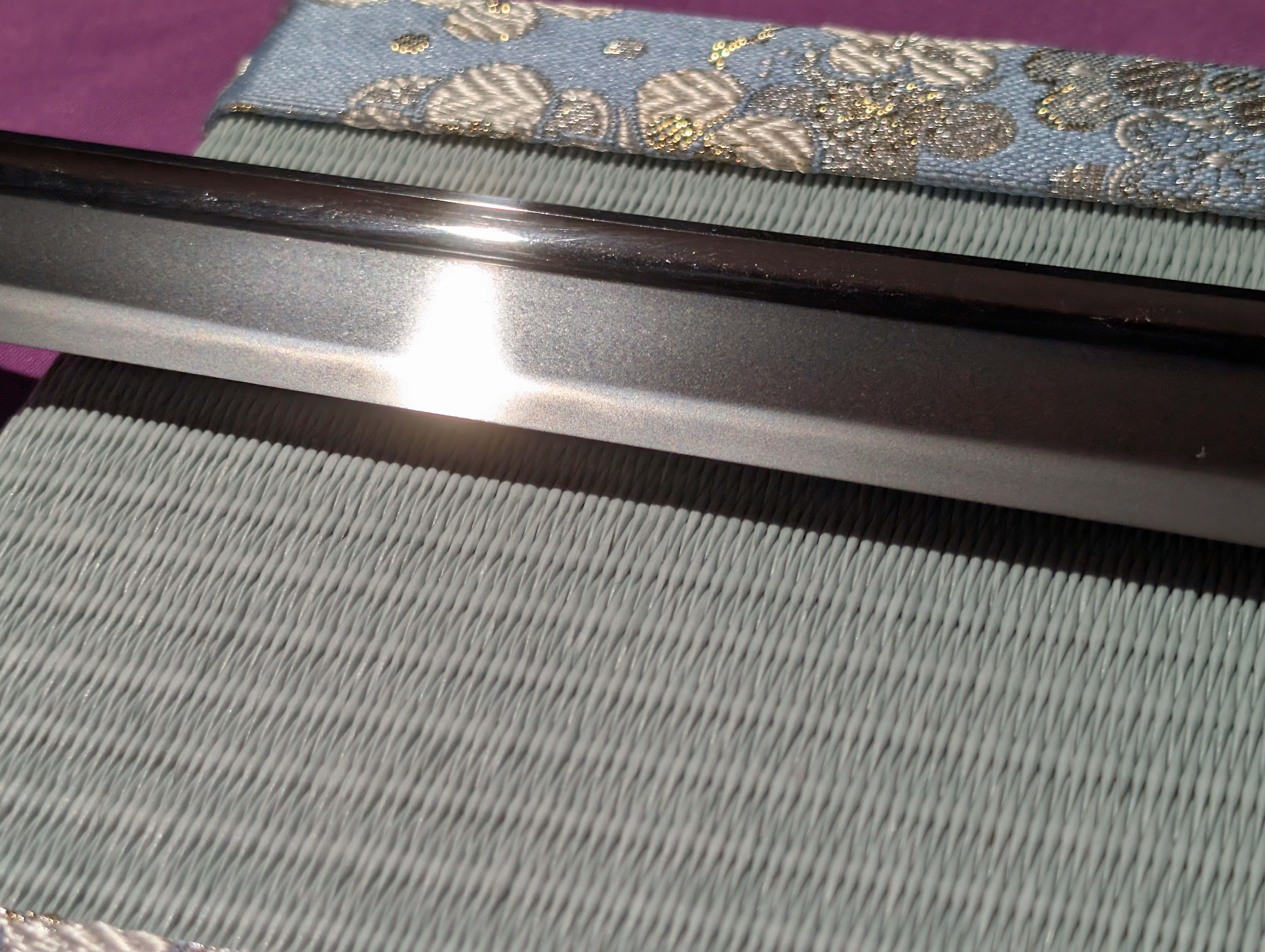

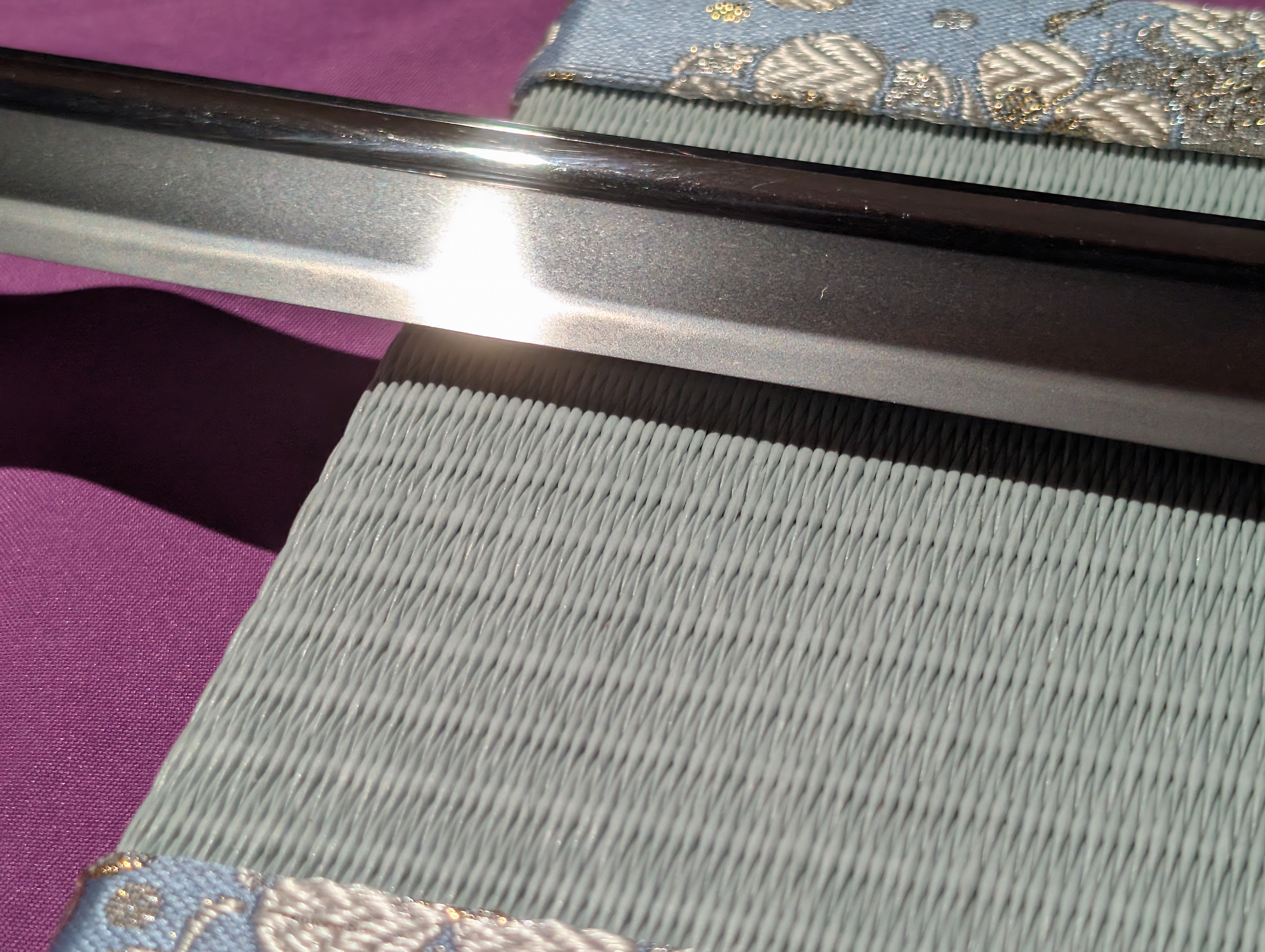
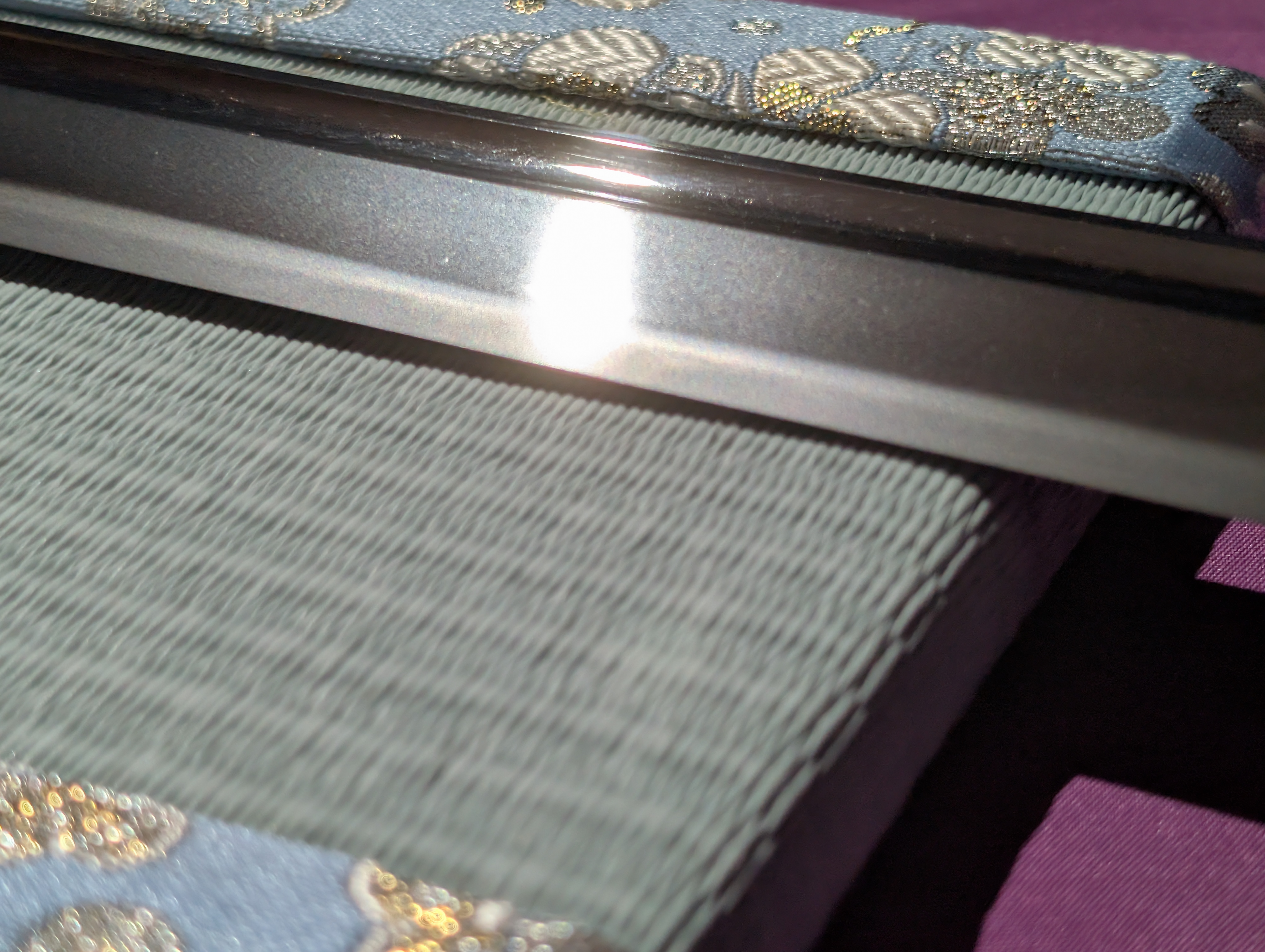
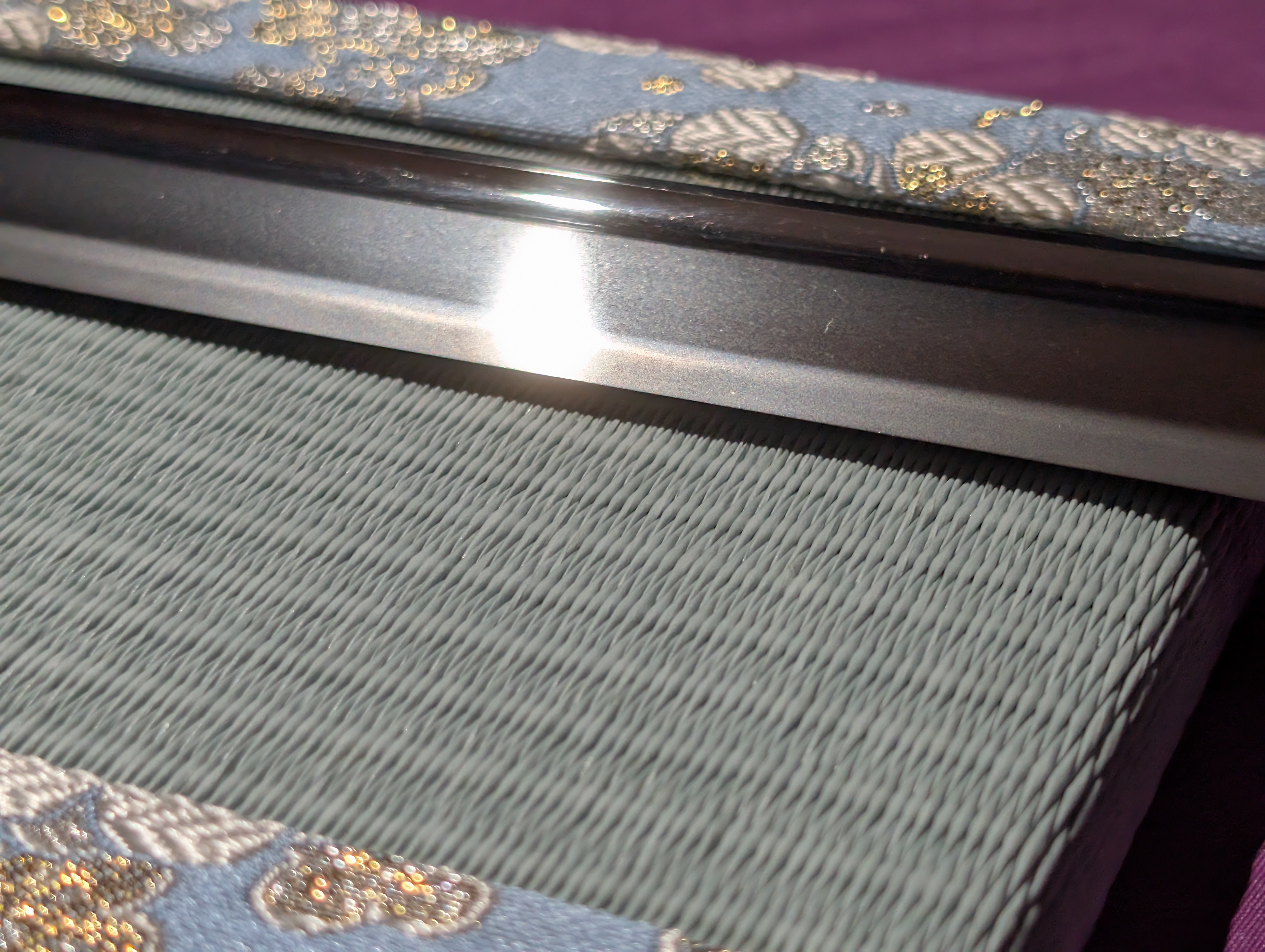
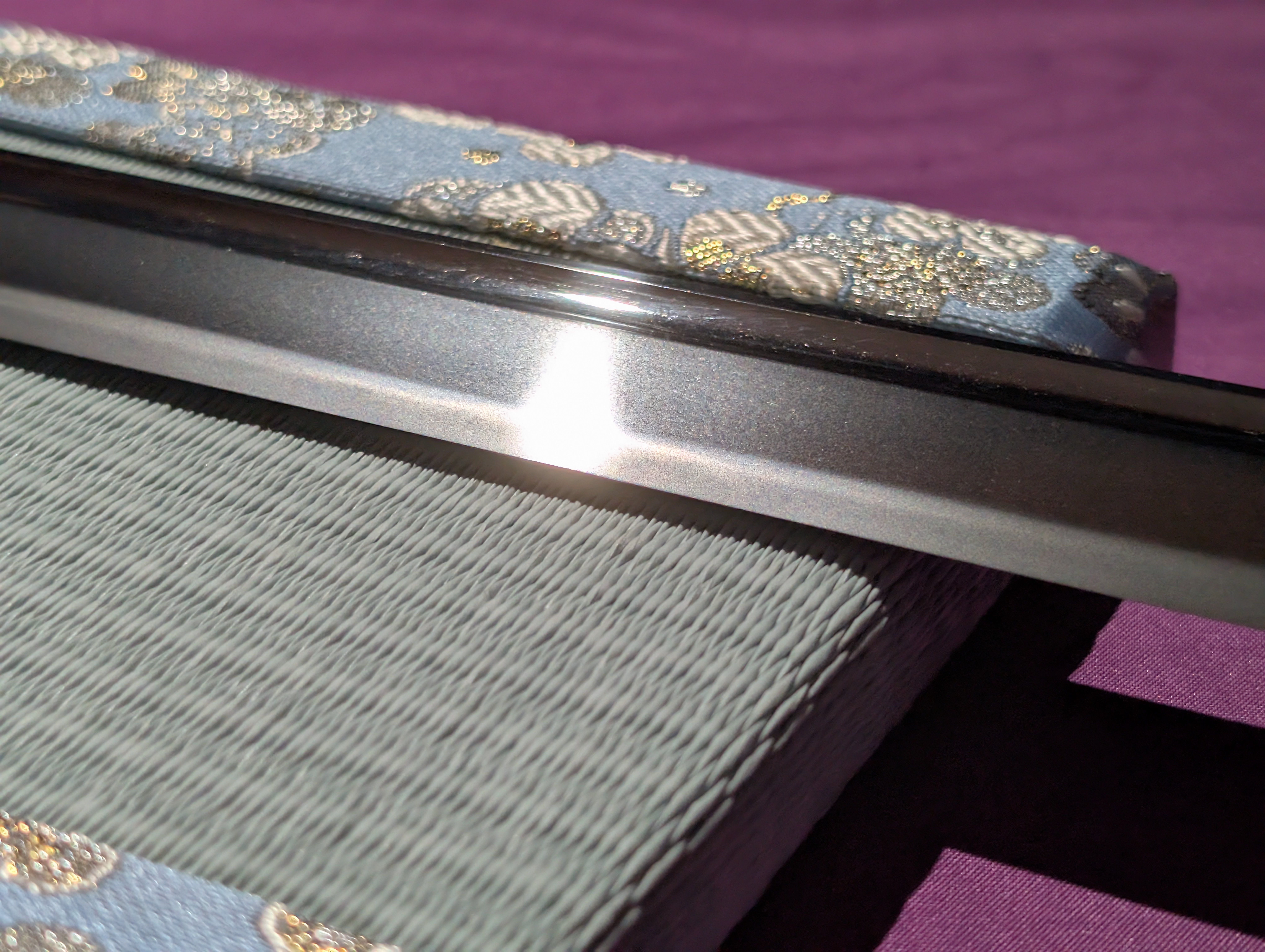
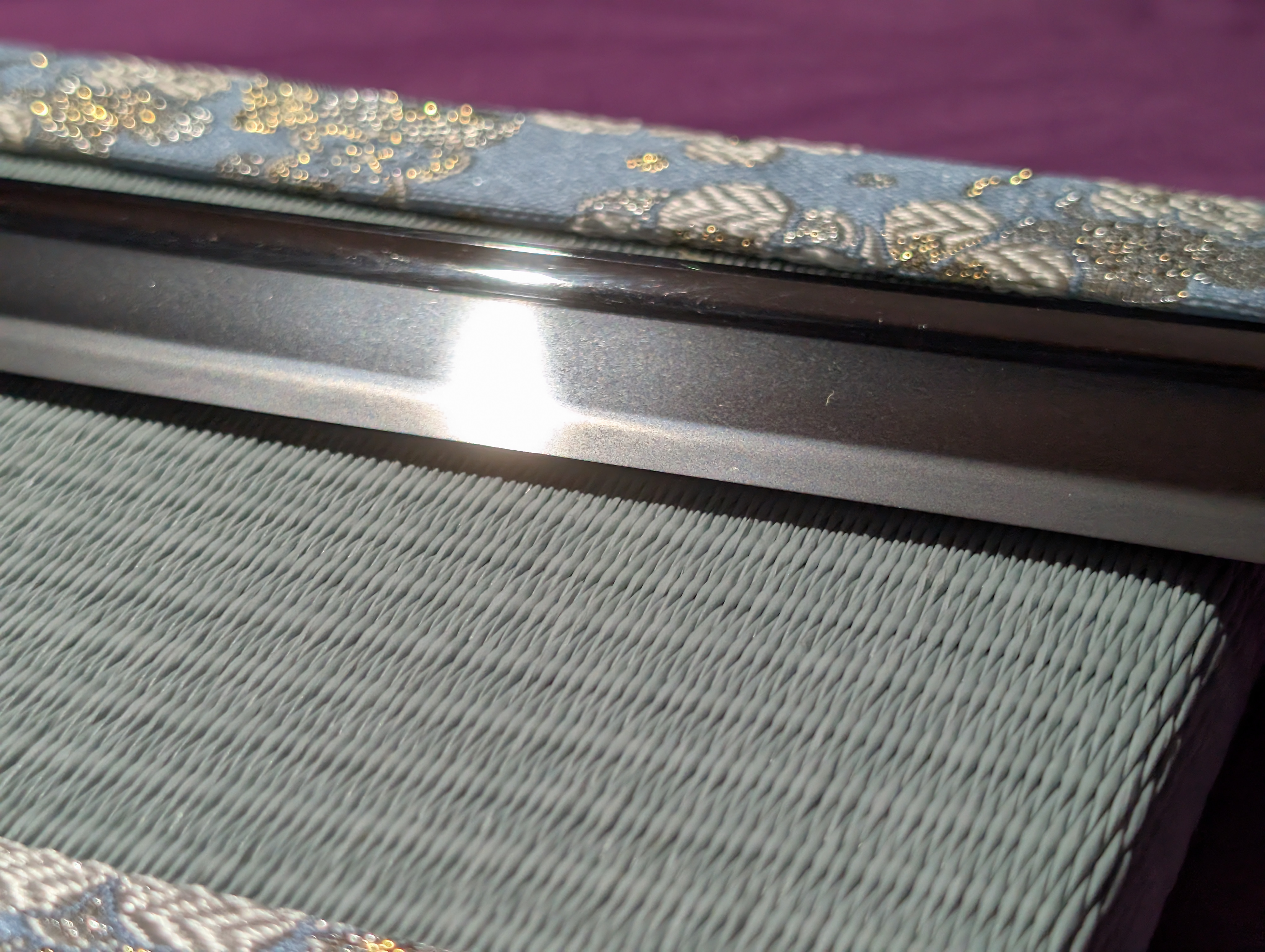
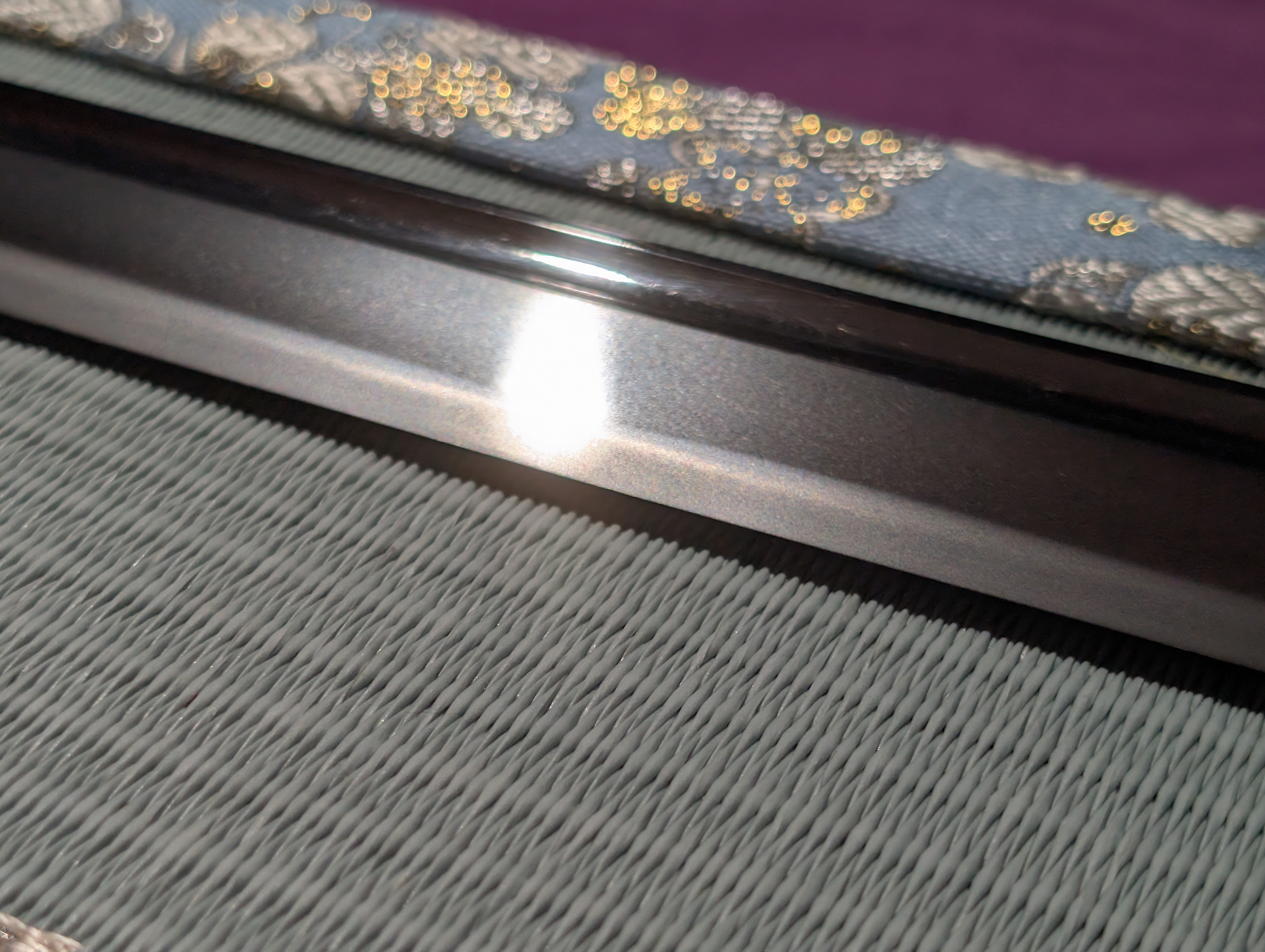
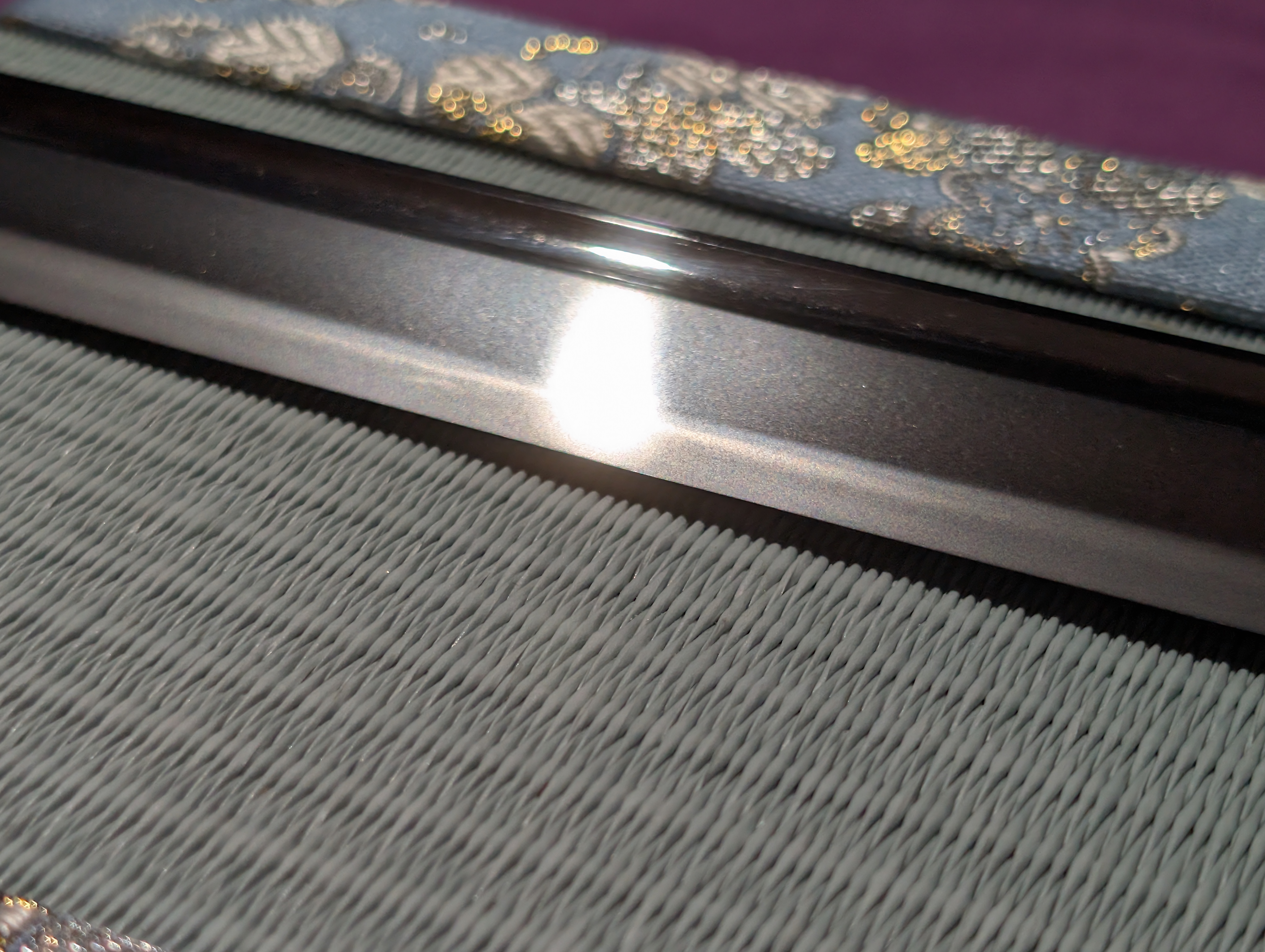
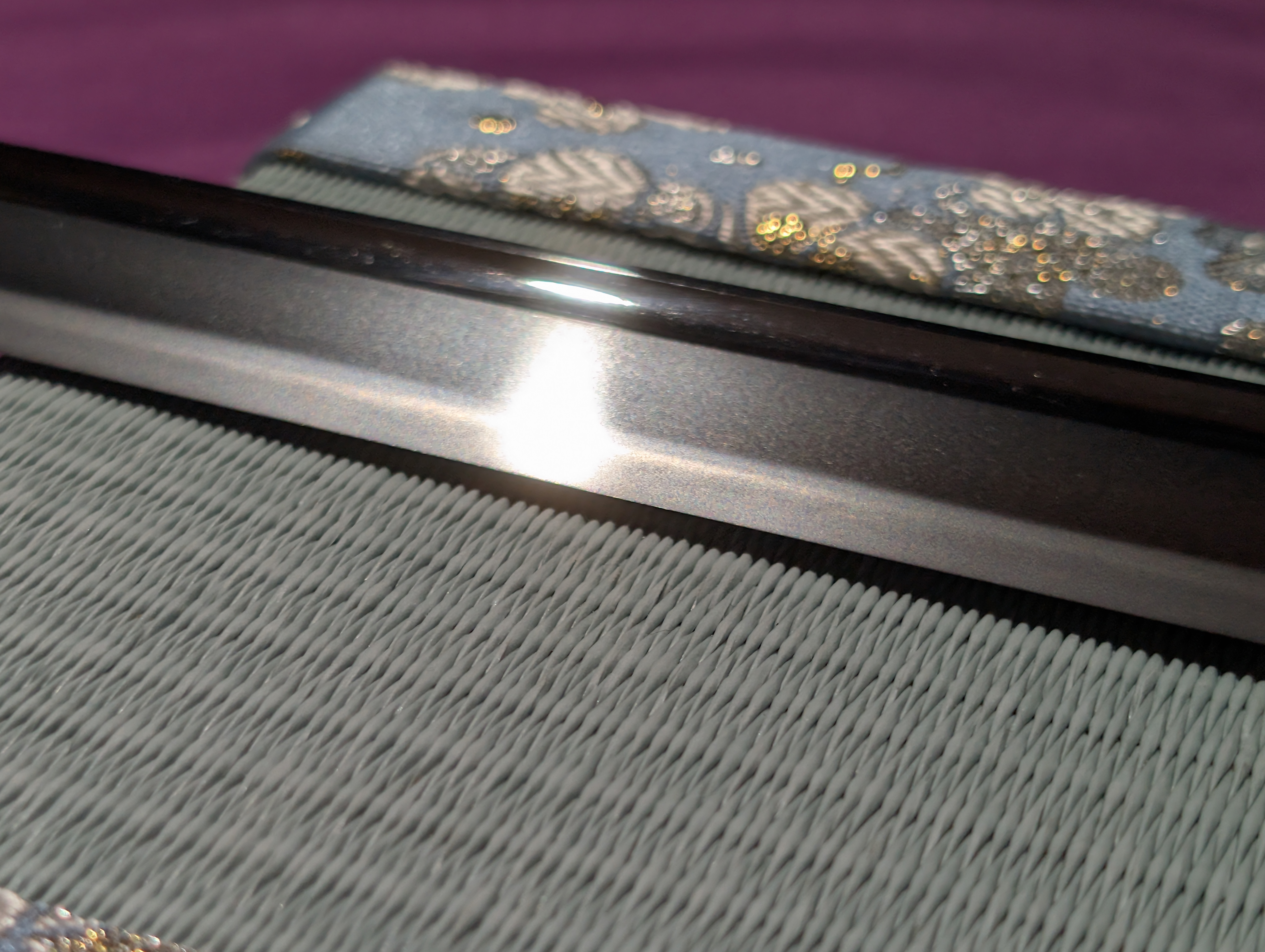
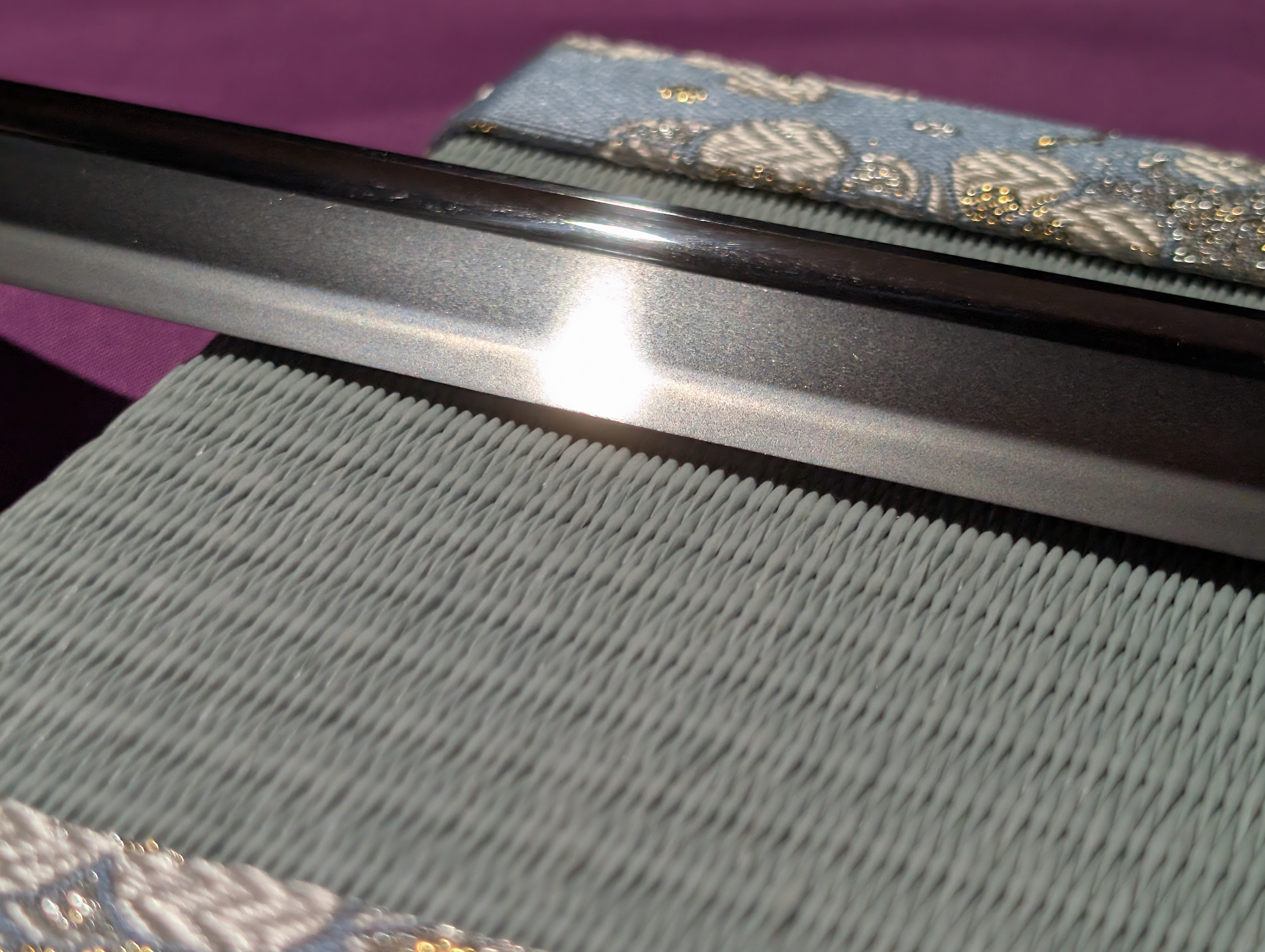
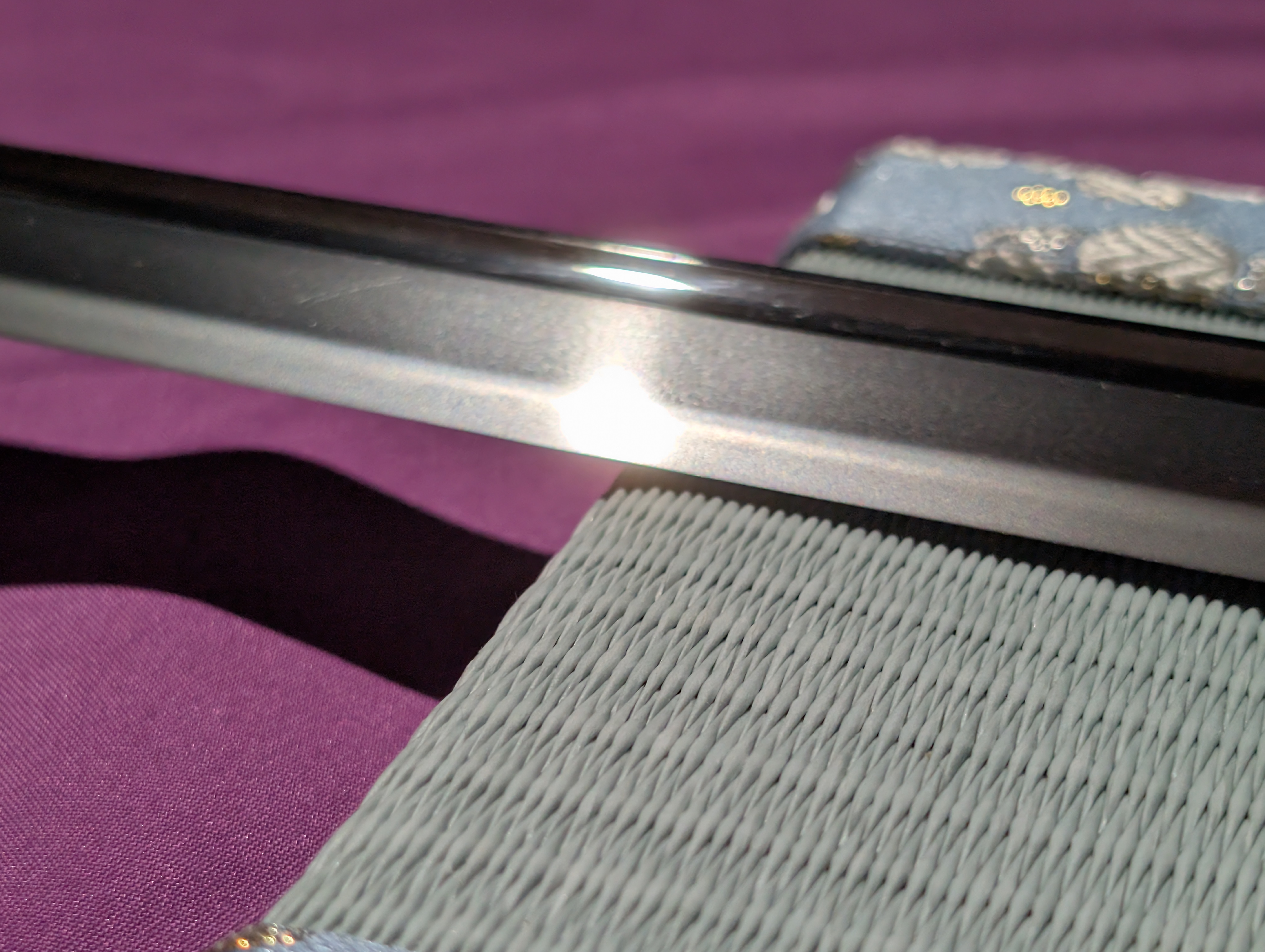
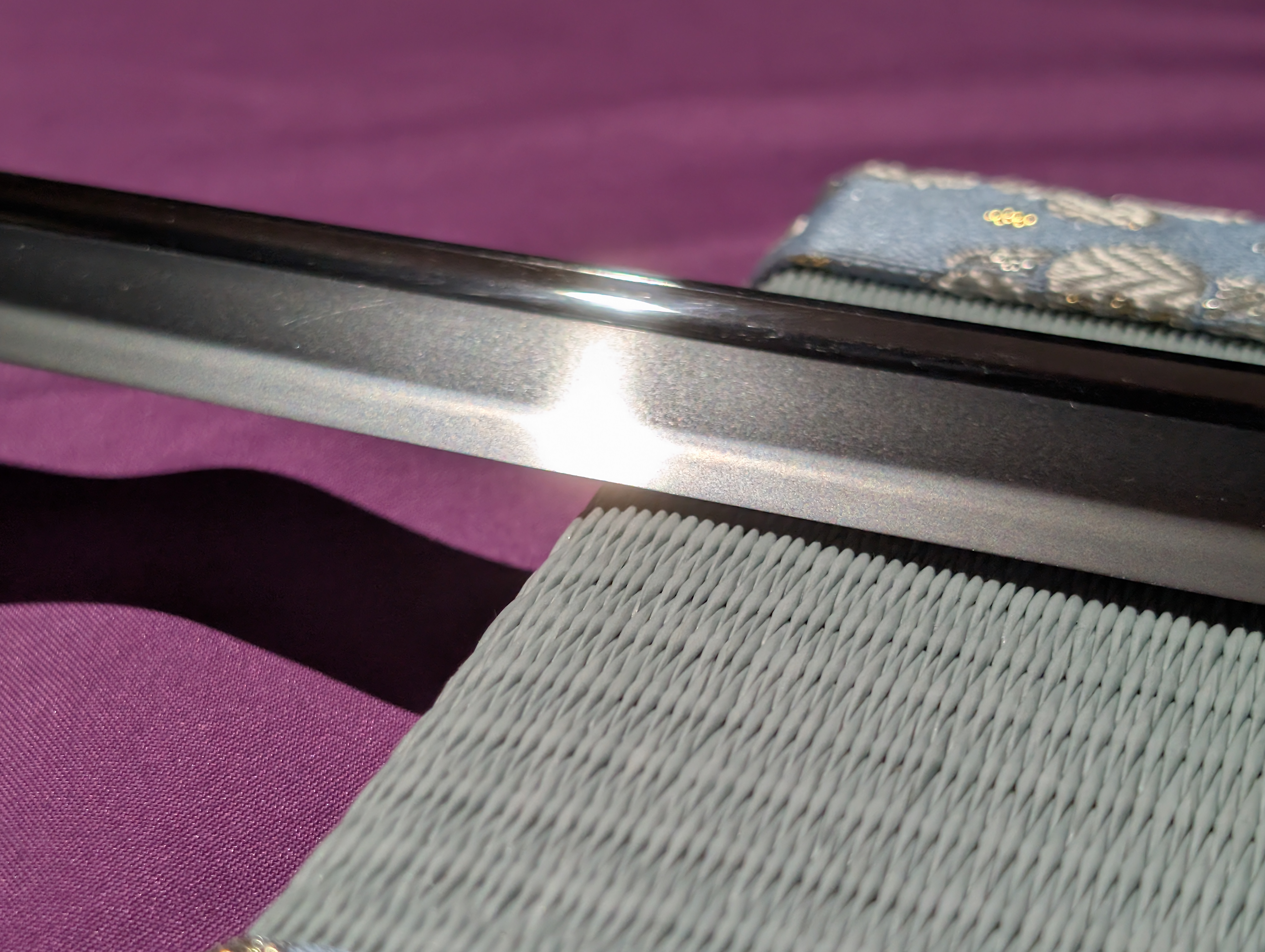
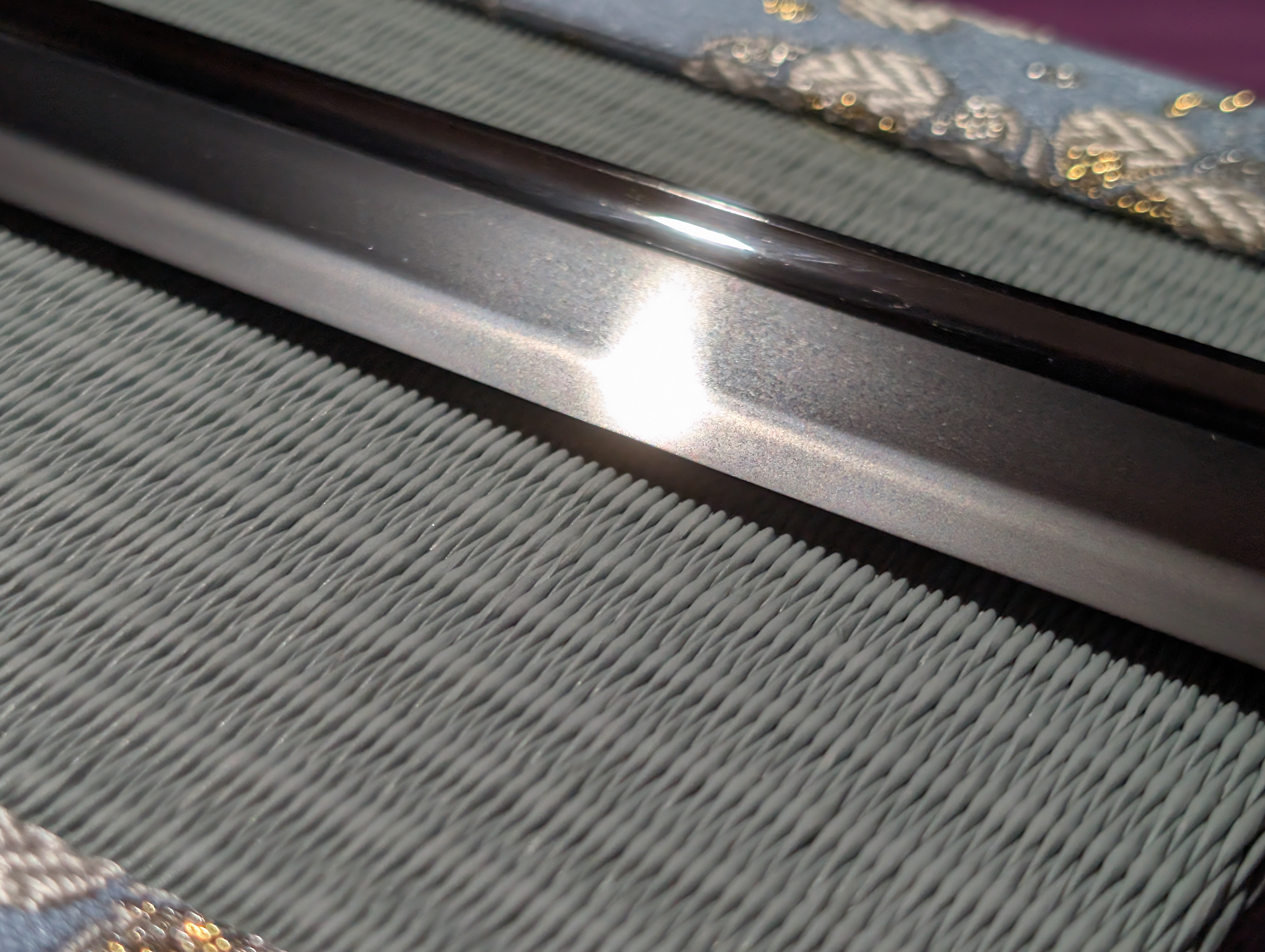
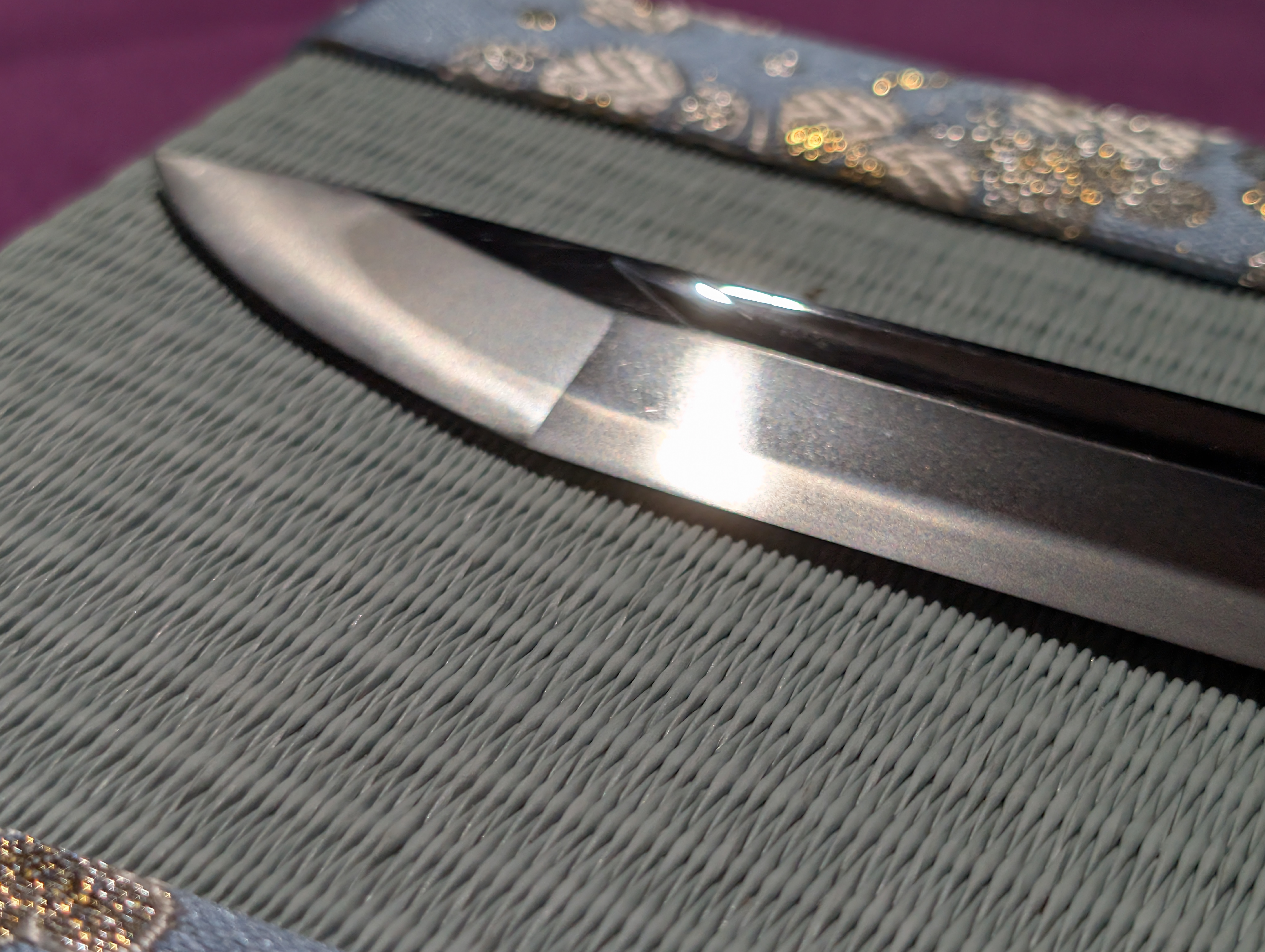
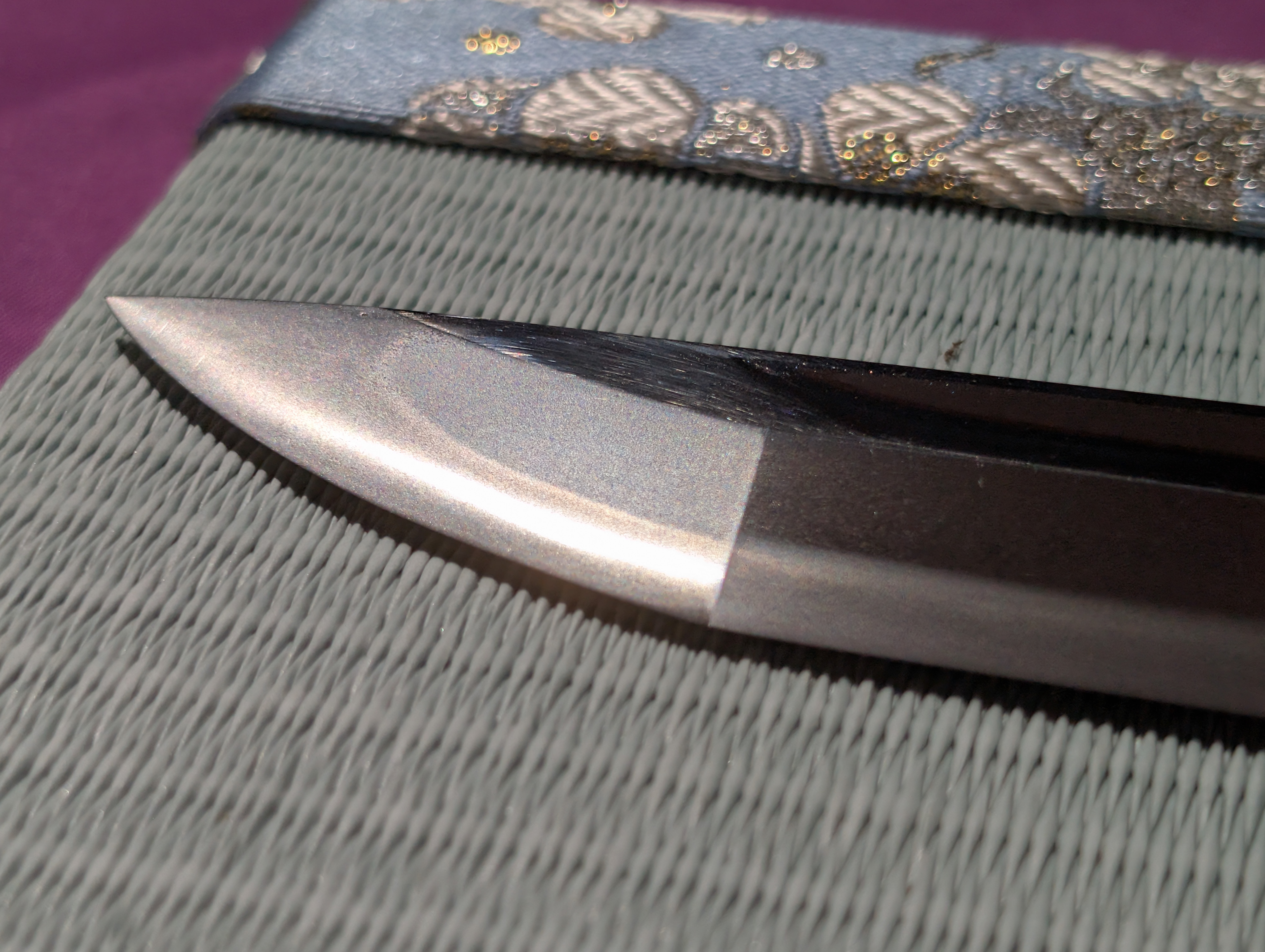
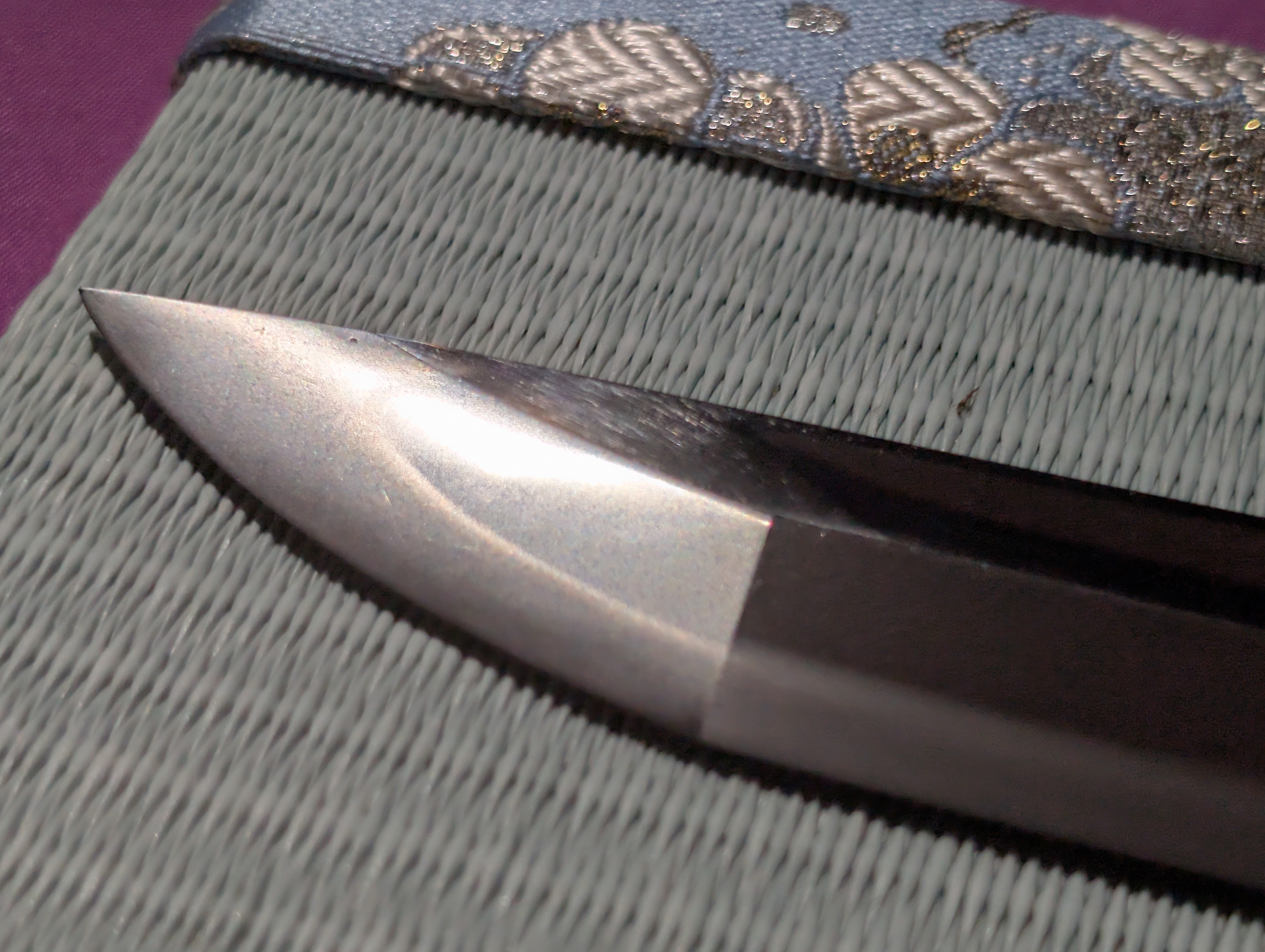
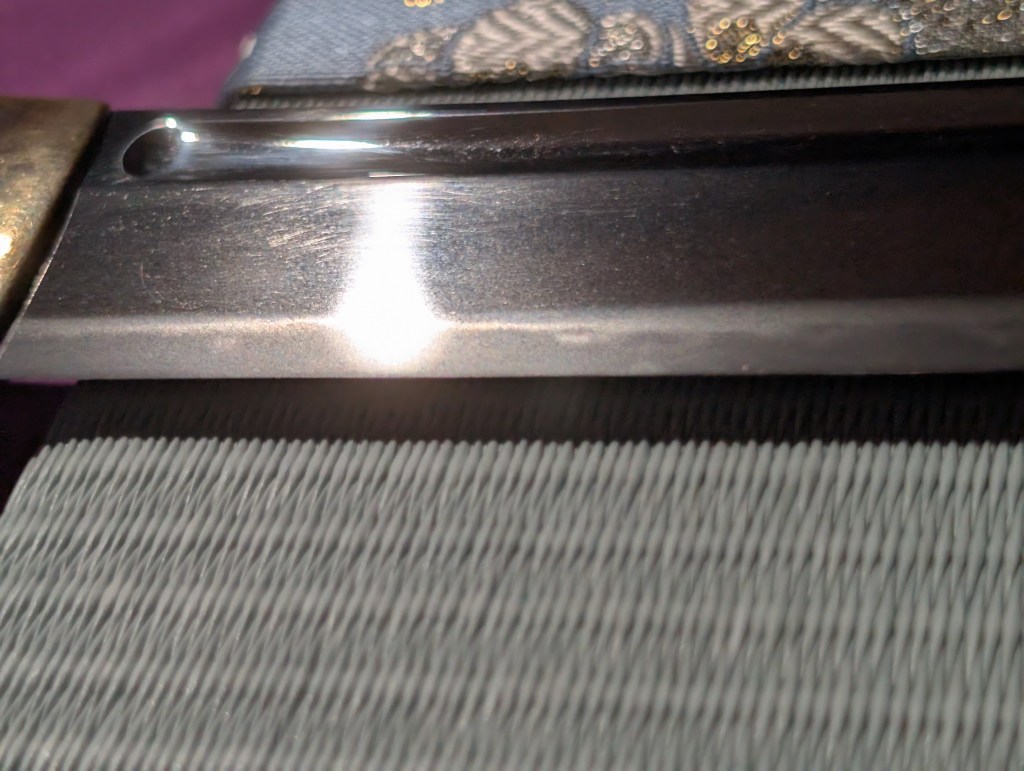
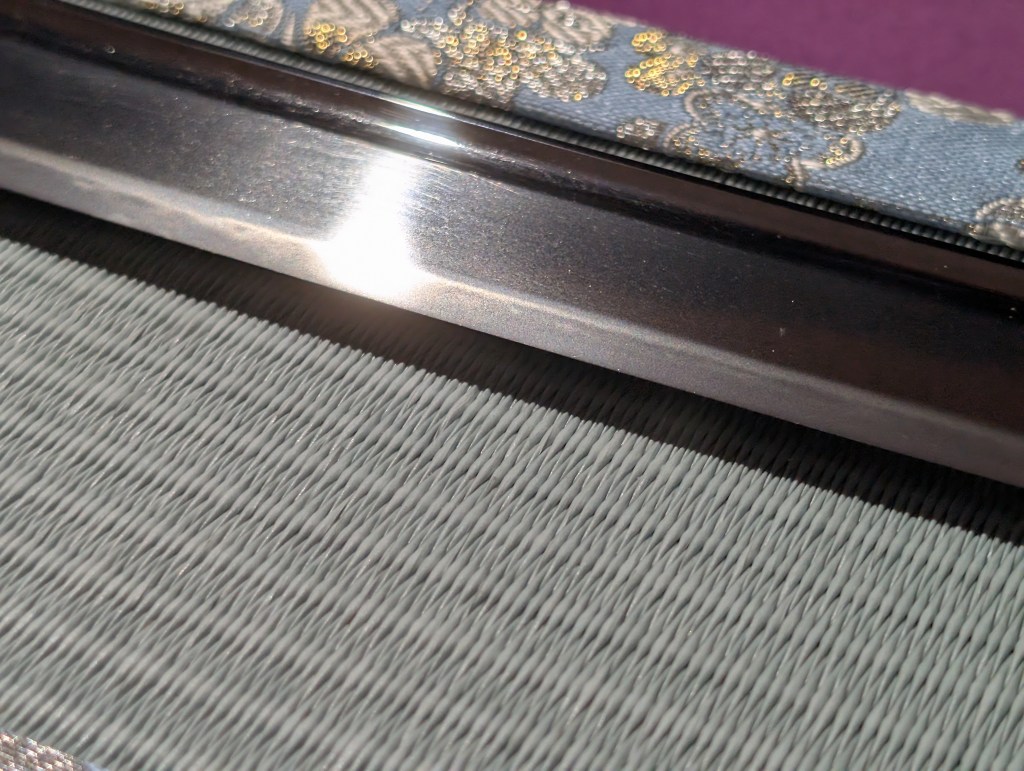
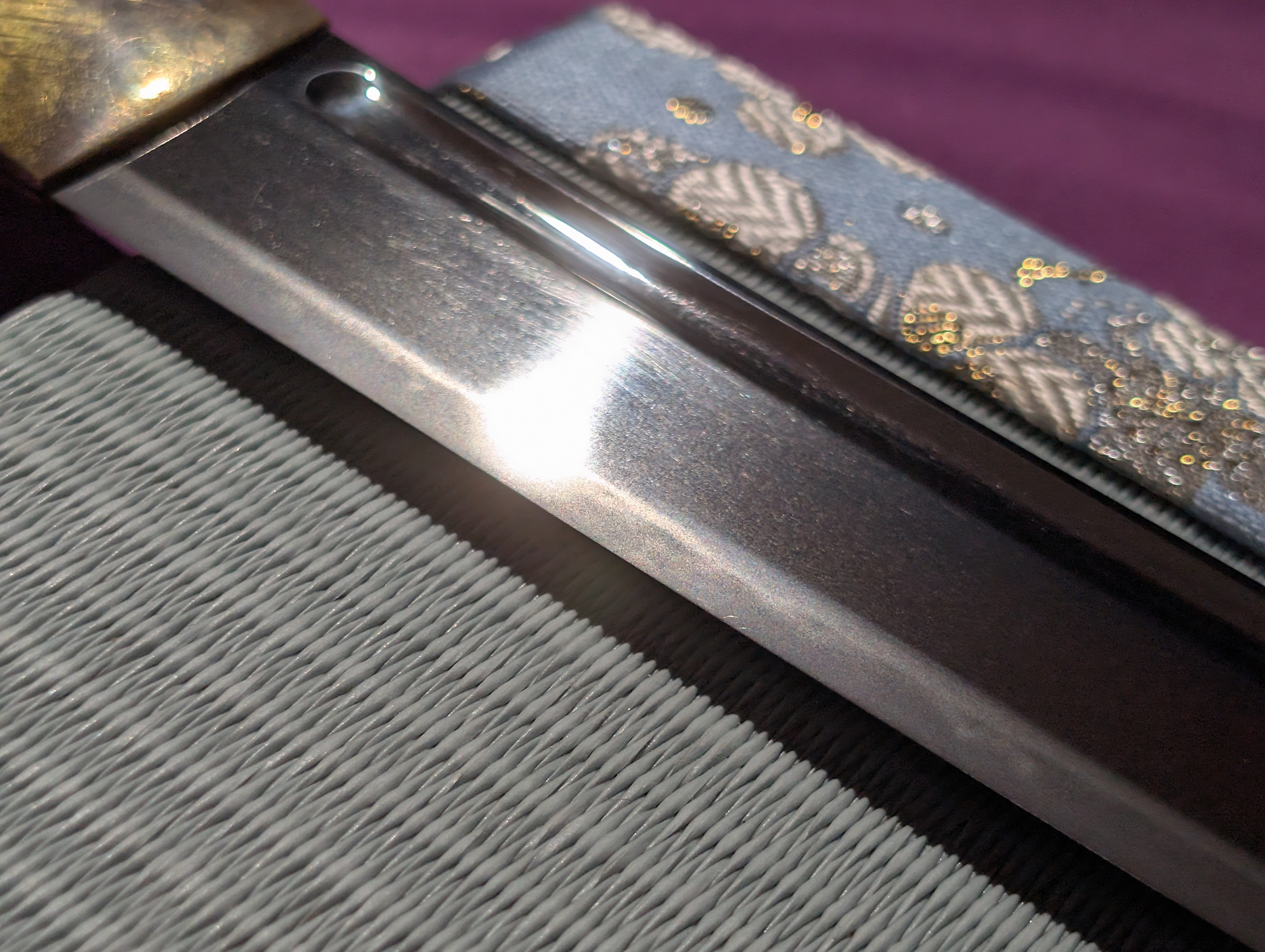
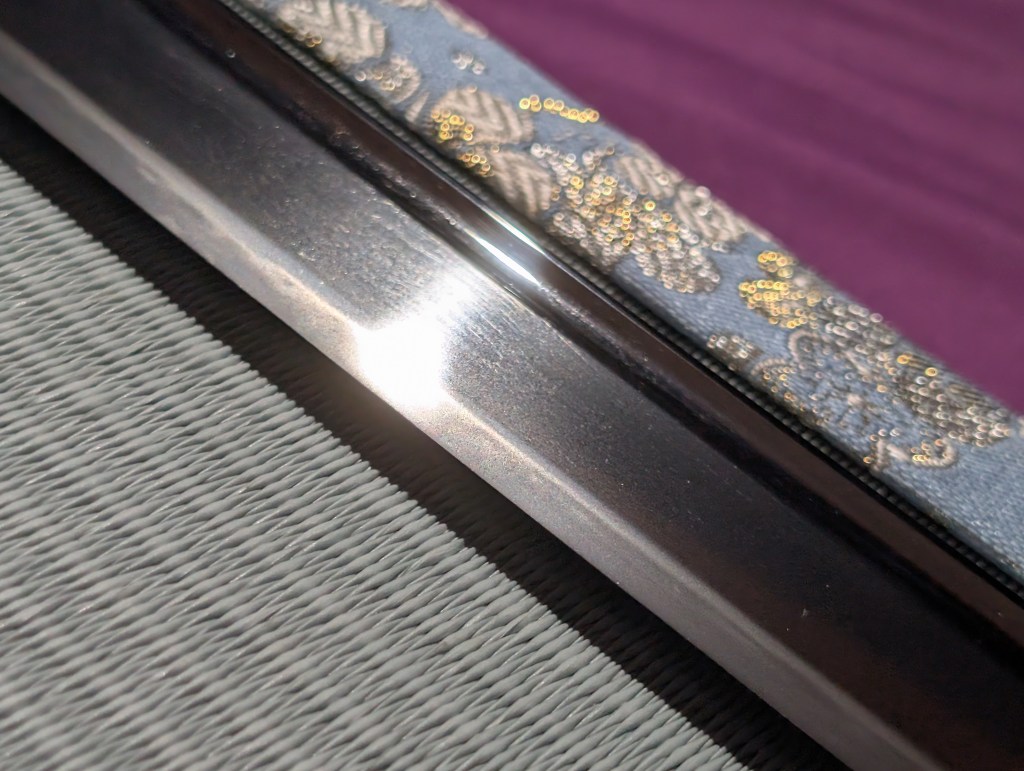
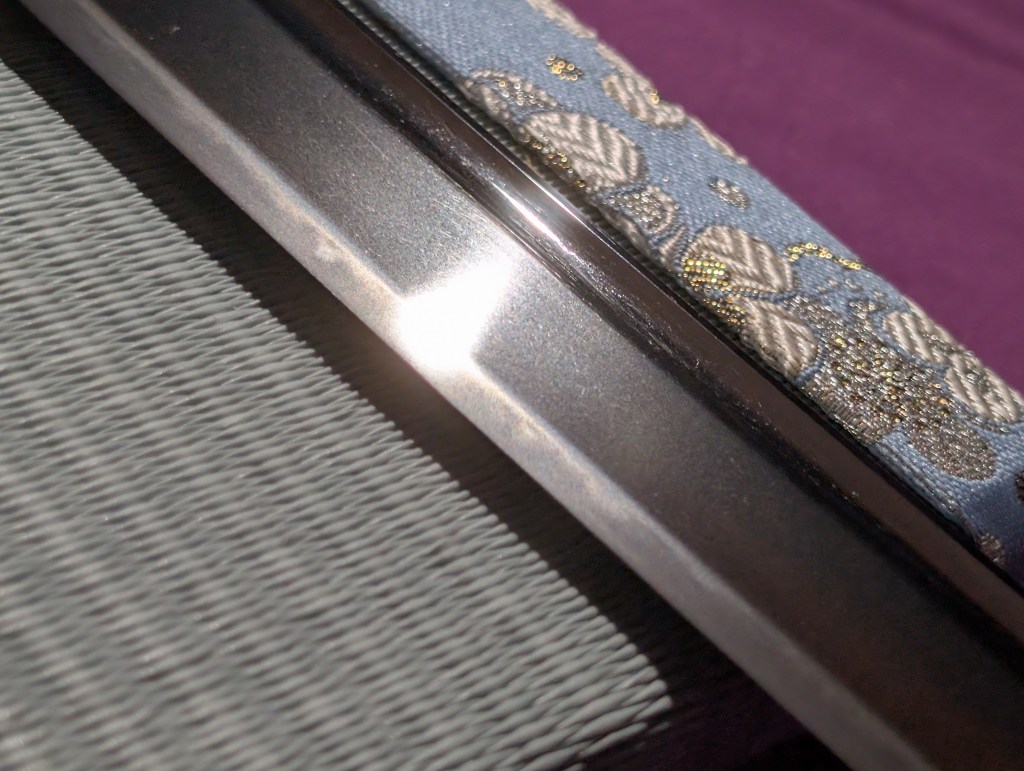
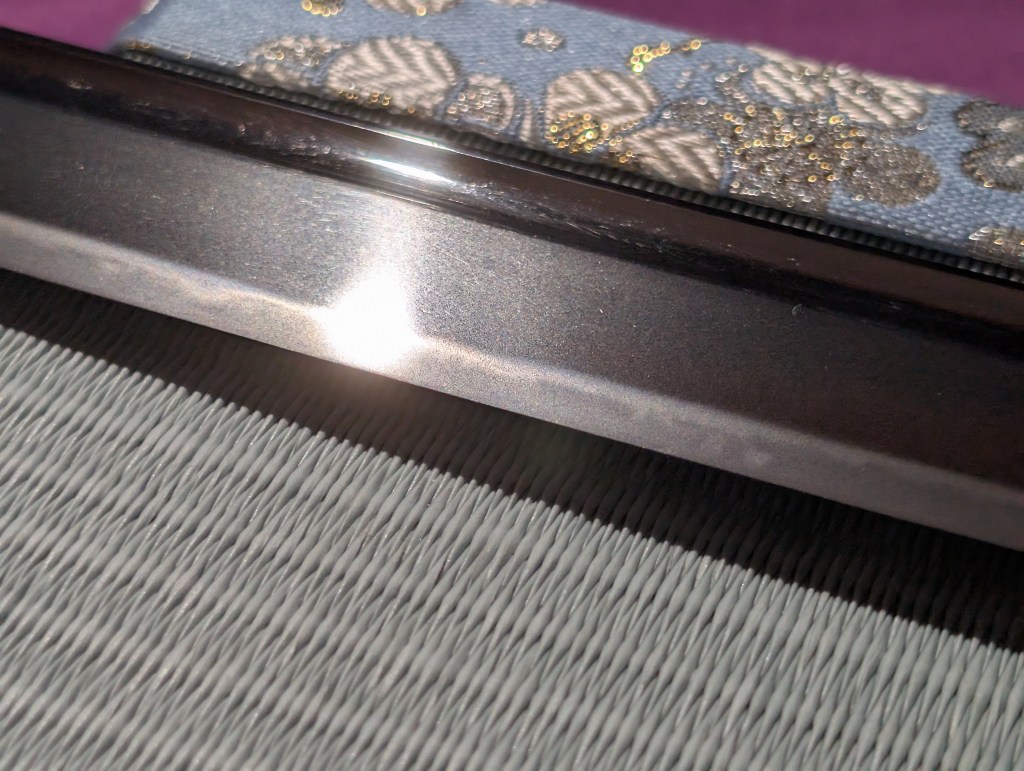
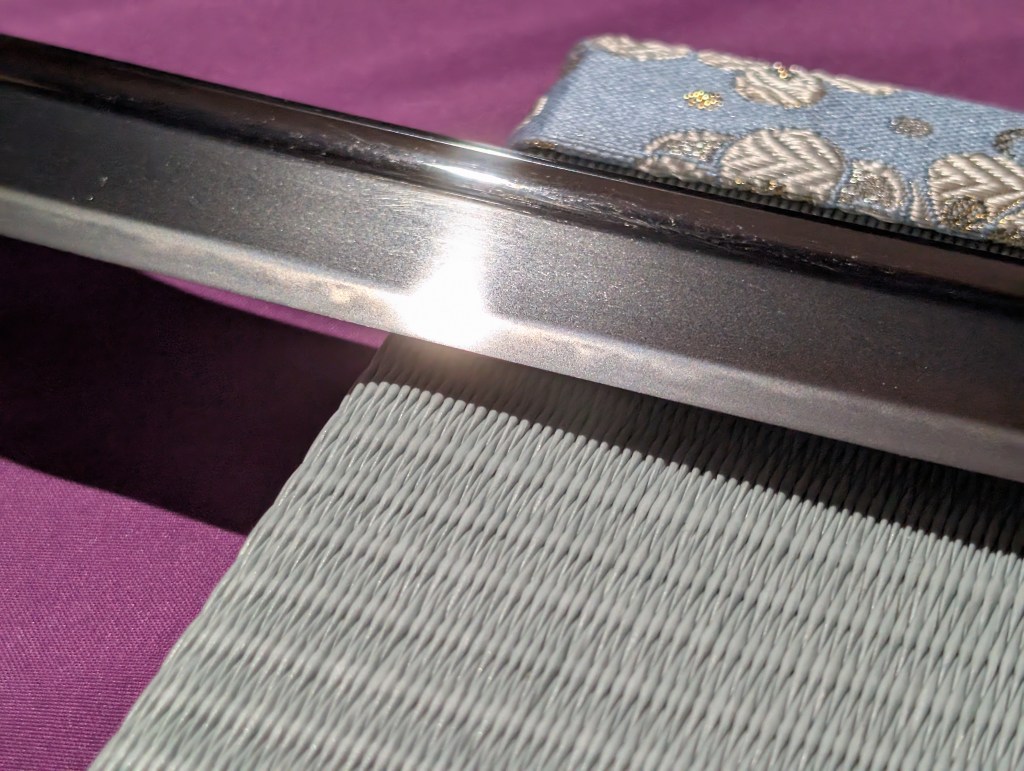
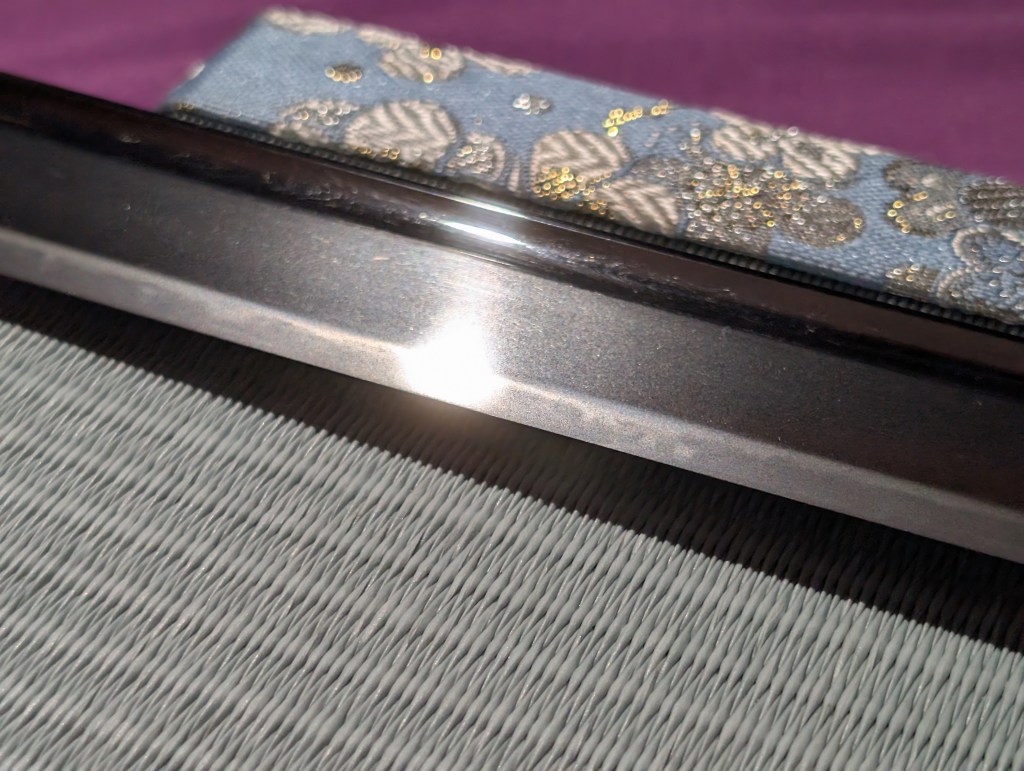
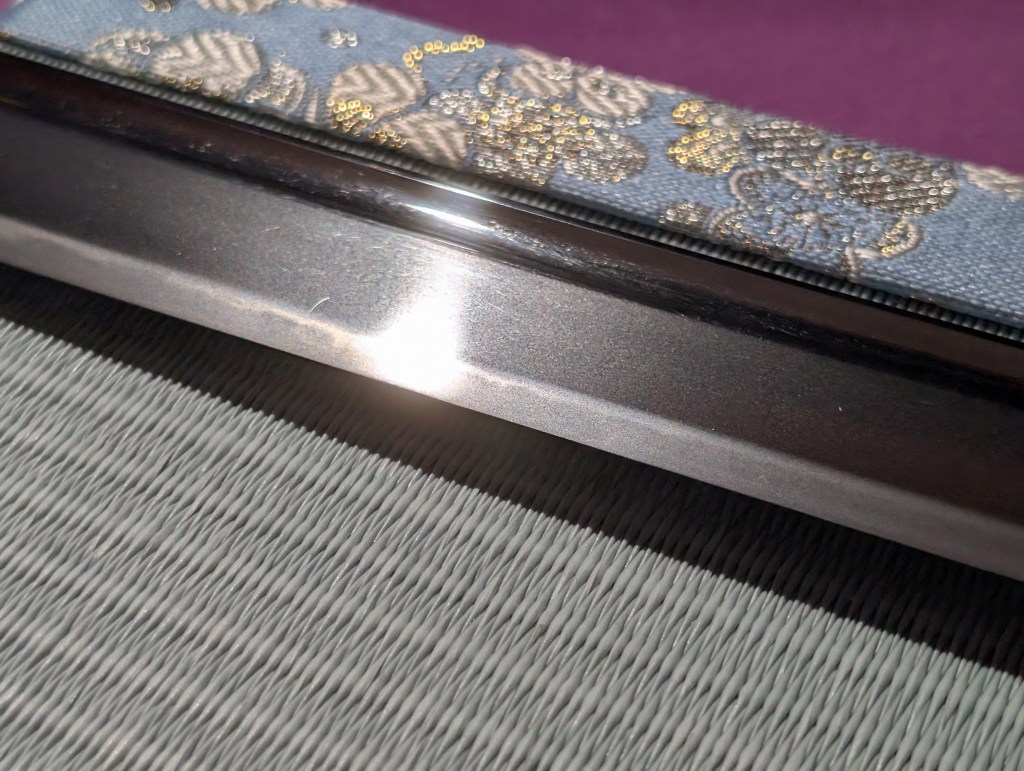
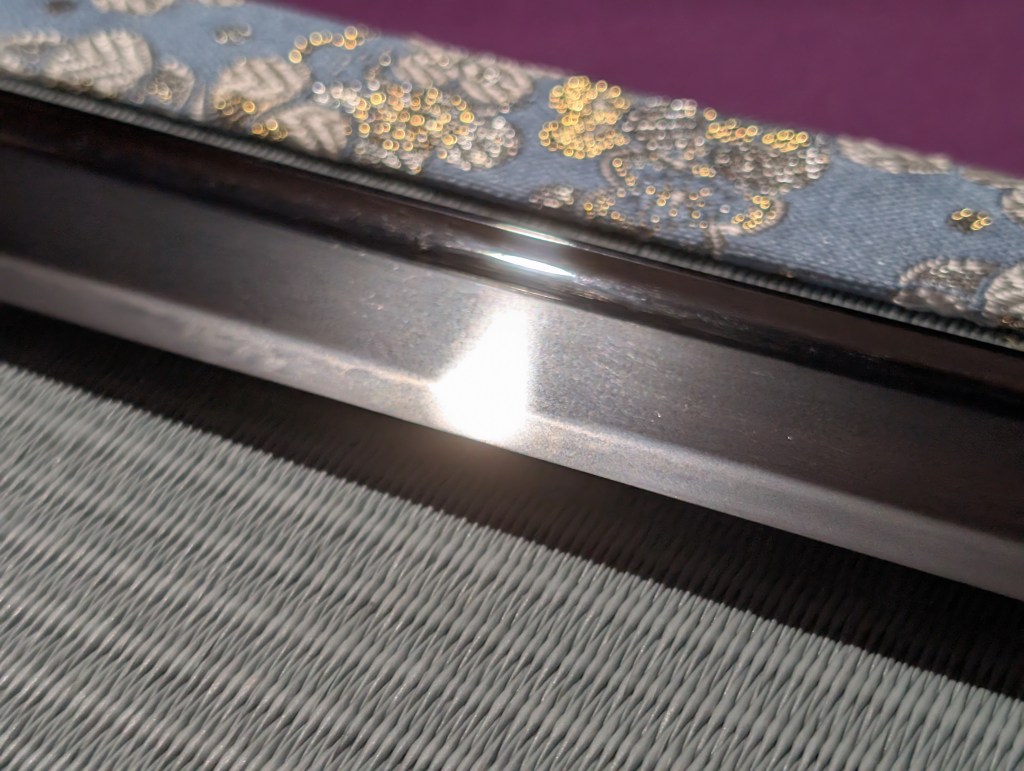
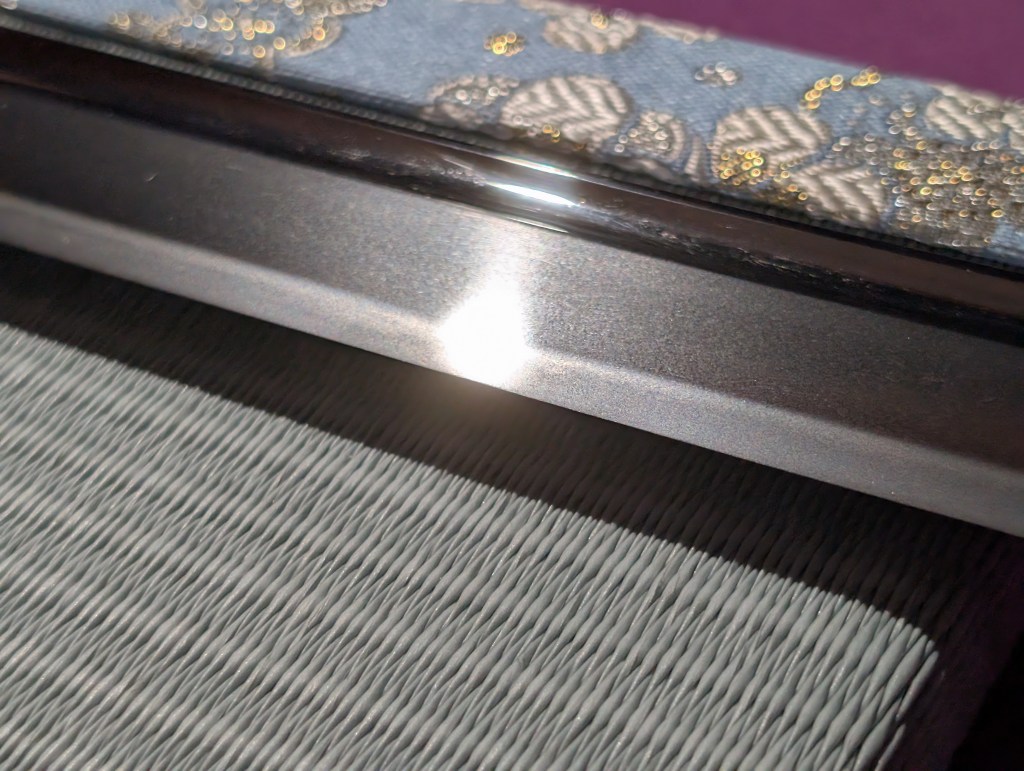
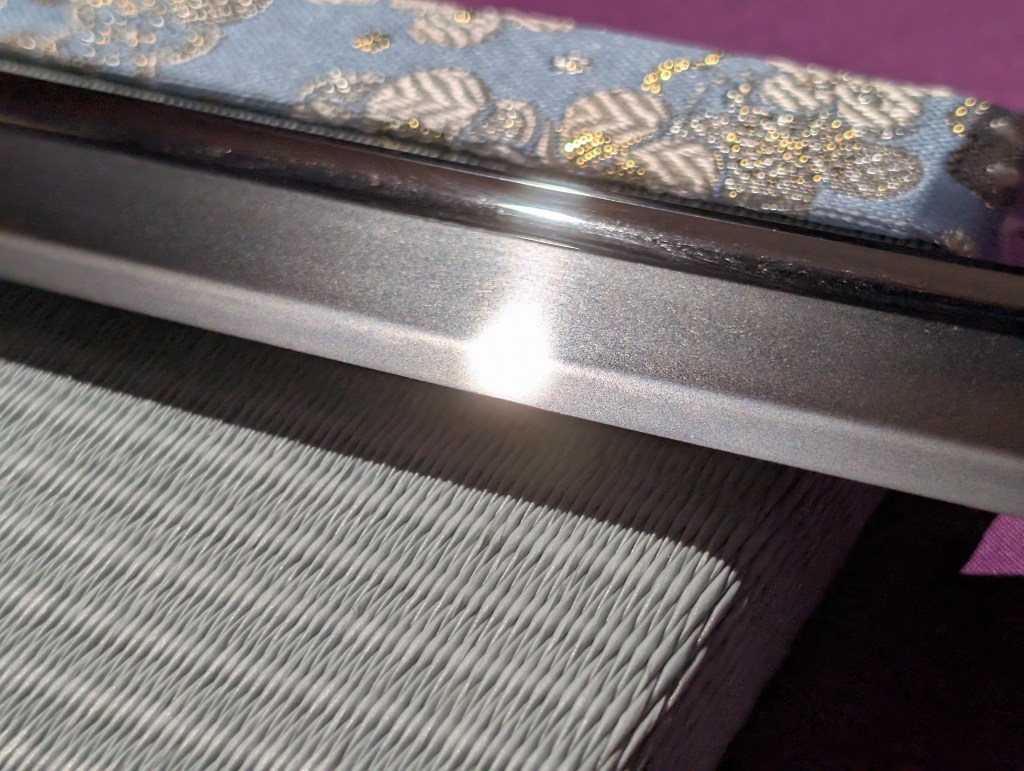
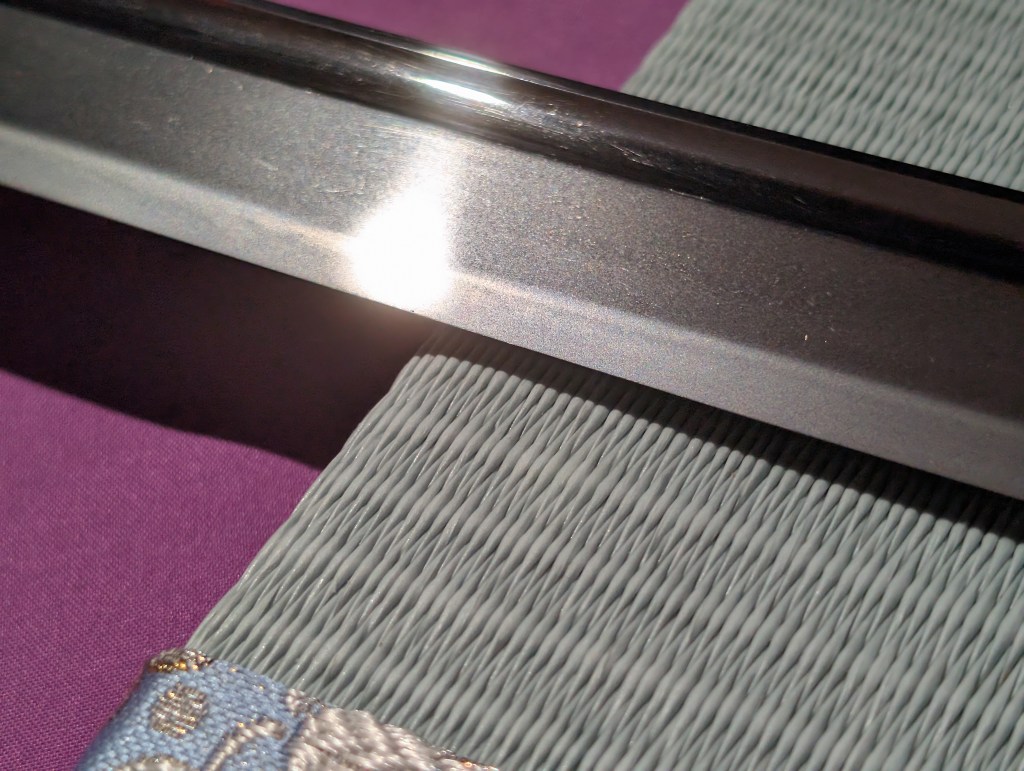
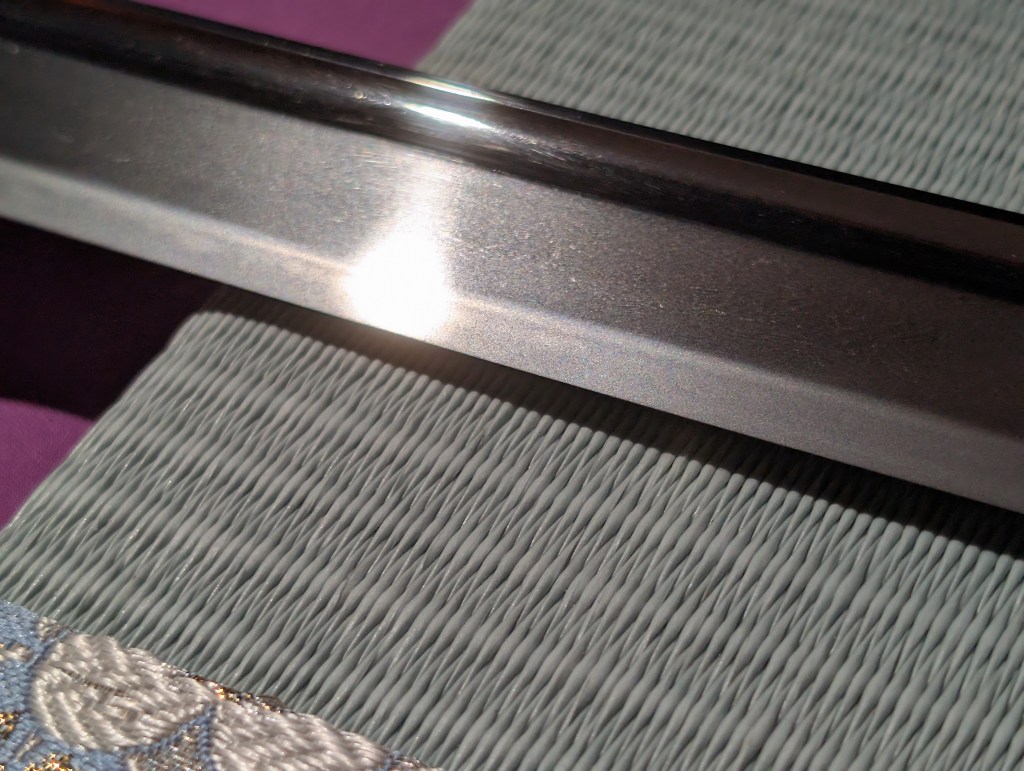
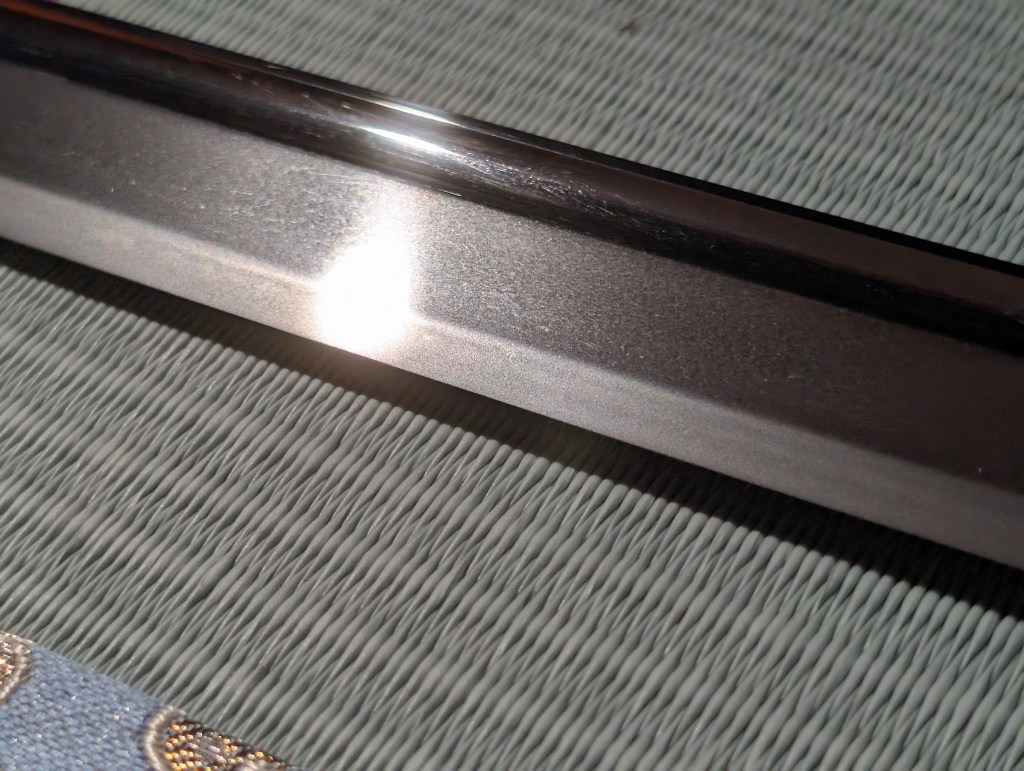
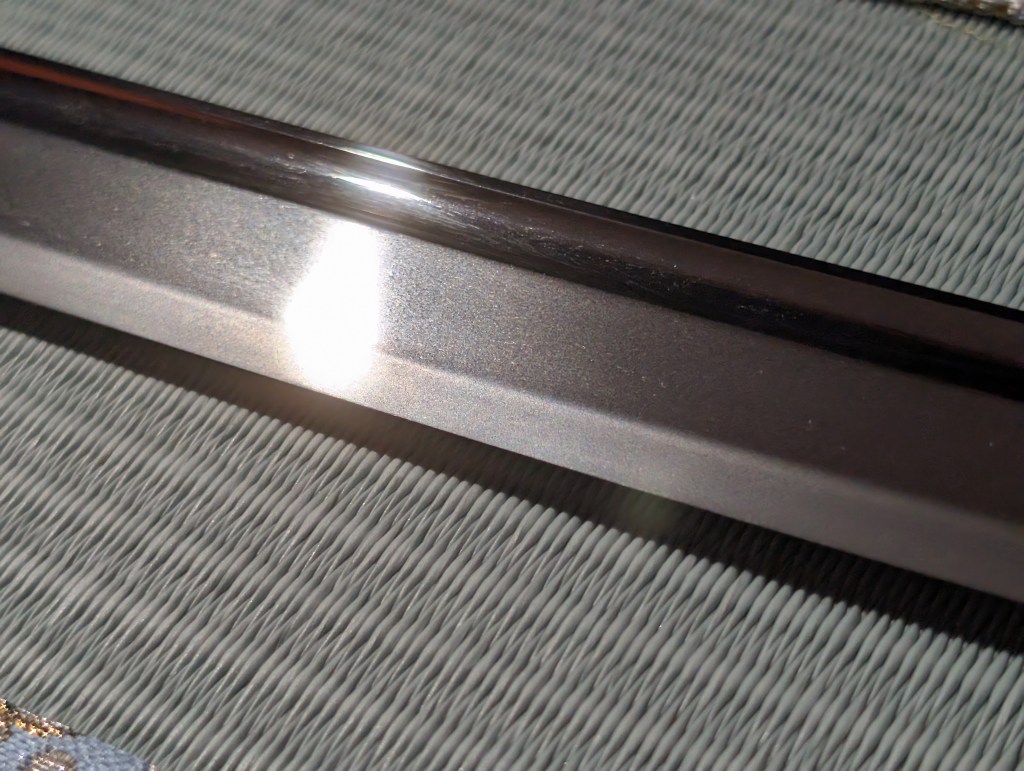
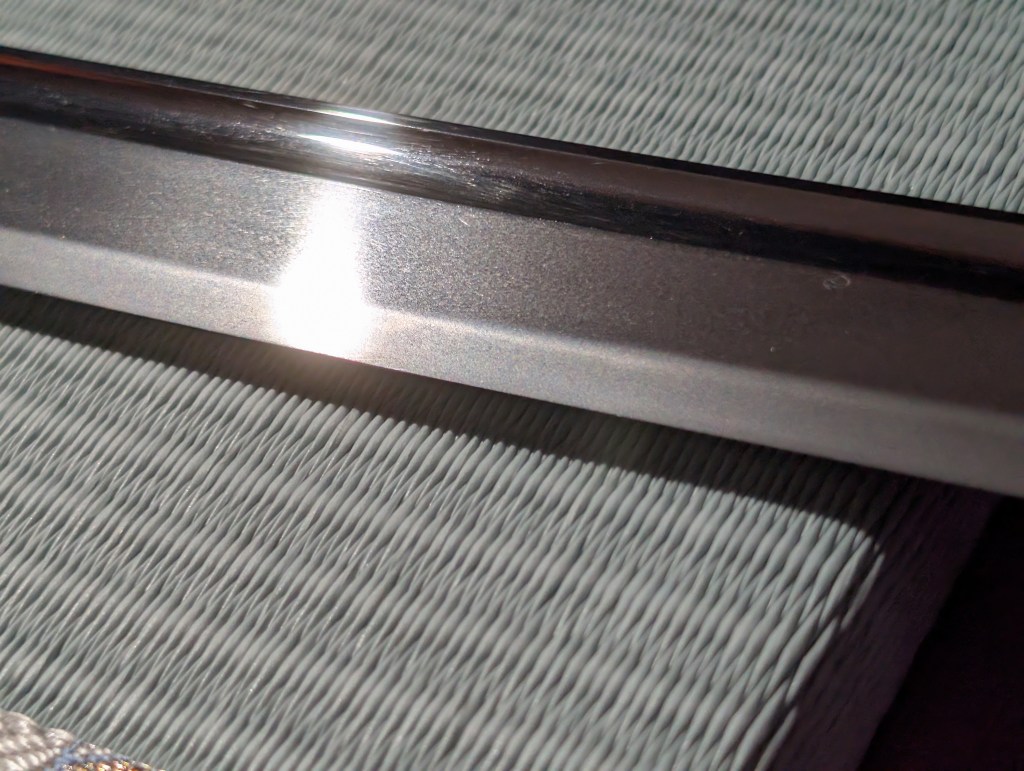
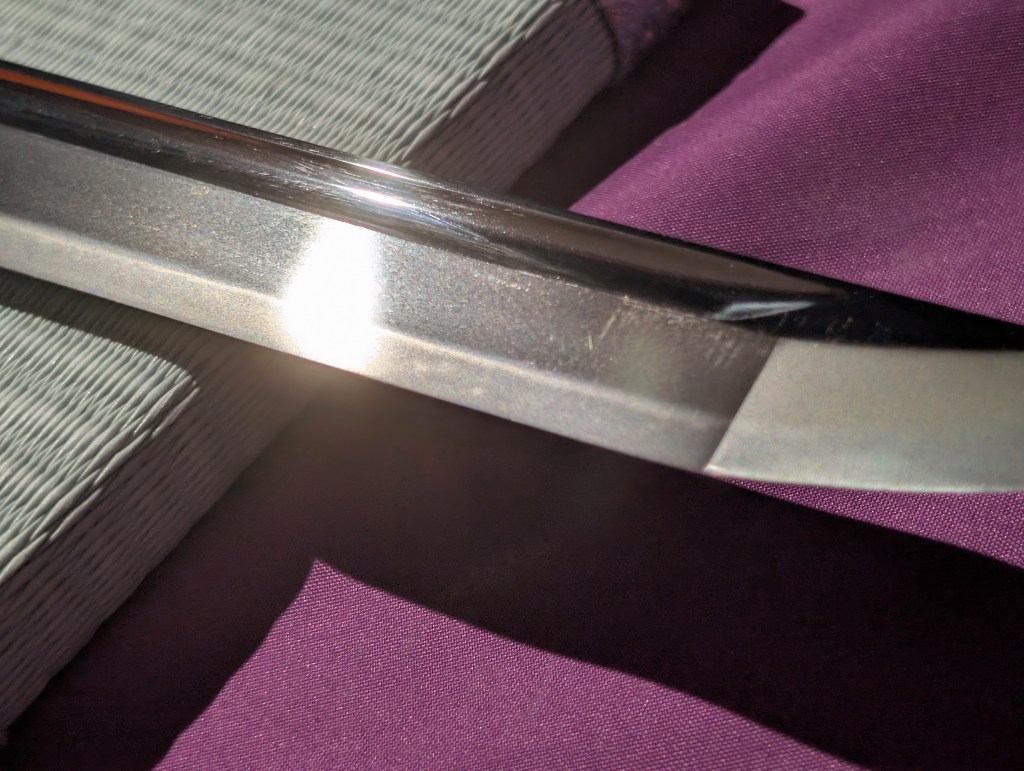
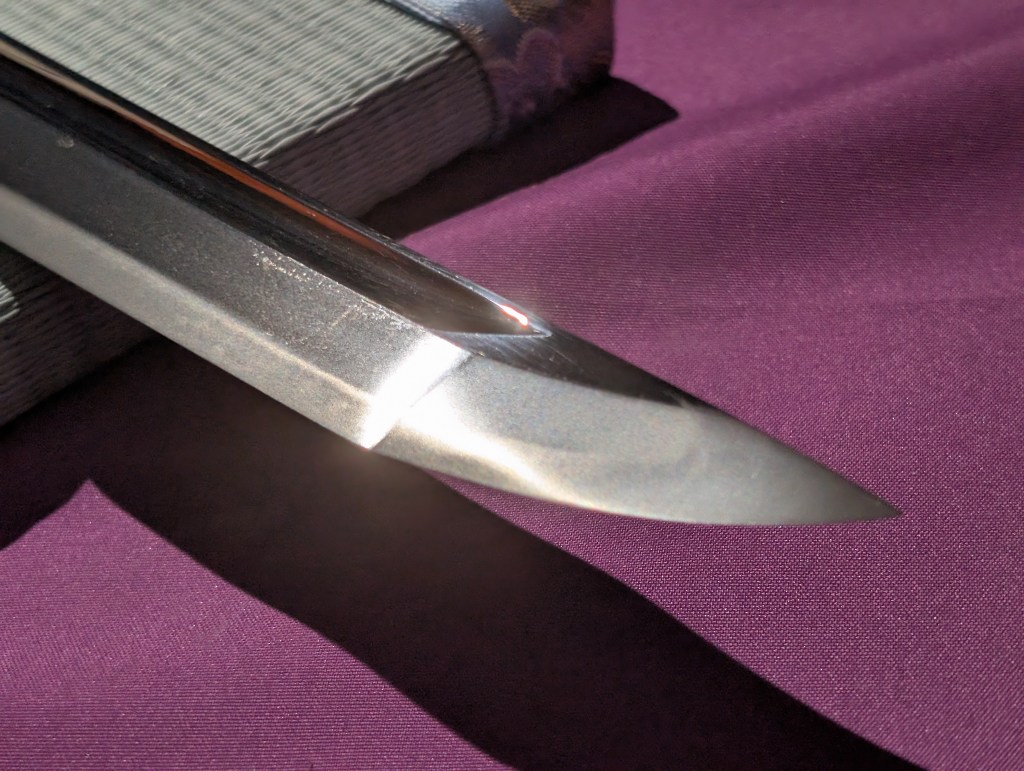
With the continuing trend toward less functional, flamboyant blades during the Edo Period, concerns of durability led to a movement within the nihonto world to return to Koto Era swordsmithing traditions, creating simpler, albeit useful nihonto. This need for practical weapons was well-founded, especially as foreign influence foreshadowed the coming of another civil war on Japanese soil. This change in political structure, alongside the shift in swordmaking philosophy, will be analyzed through a katana forged by Choshu Nagahiro, a swordsmith operating in the hotbed of anti-Tokugawa sentiments. The blade is finely forged, standing out from the generally inferior blades made in the late Edo Period and Meiji Period, expressing carefully managed dimensions in a clear homage to the ancient blades of the Koto Era. The blade’s surface is stunning, being forged from an extremely tight ko-itame hada reminiscent of Bizen works. The steel is particularly bright, likely due to its abundance of ji-nie, with sparsely clustered chikei amplifying this brightness. The hamon follows in the footsteps of Bizen Osafune work, being forged in a ko-nie deki with abundant ko-choji and ko-gunome along a suguha base. Hataraki are prevalent throughout the yakiba, including various ashi and yo within the hamon itself, alongside nie-based hataraki, such as kinsuji and sunagashi. Interestingly, kuichigai-ba is also present slightly below the nioi guchi, resulting in a “full” temper with much to observe. The blade’s temper ends rather modestly, approaching the kissaki in a ko-maru boshi. With the discussion of workmanship thoroughly resolved, the blade’s measurements are listed below with the necessary historical significance.
Measurements:
Nagasa: 74.2 cm (in line for the koto-inspired swords of the late Edo Period)
Motohaba: 3.4 cm (particularly wide, especially for a later blade)
Sakihaba: 2.3 cm
Motokasane: 8.5 mm (greater thickness of blades was prioritized at this time for tameshigiri)
Sakikasane: 5.7 mm
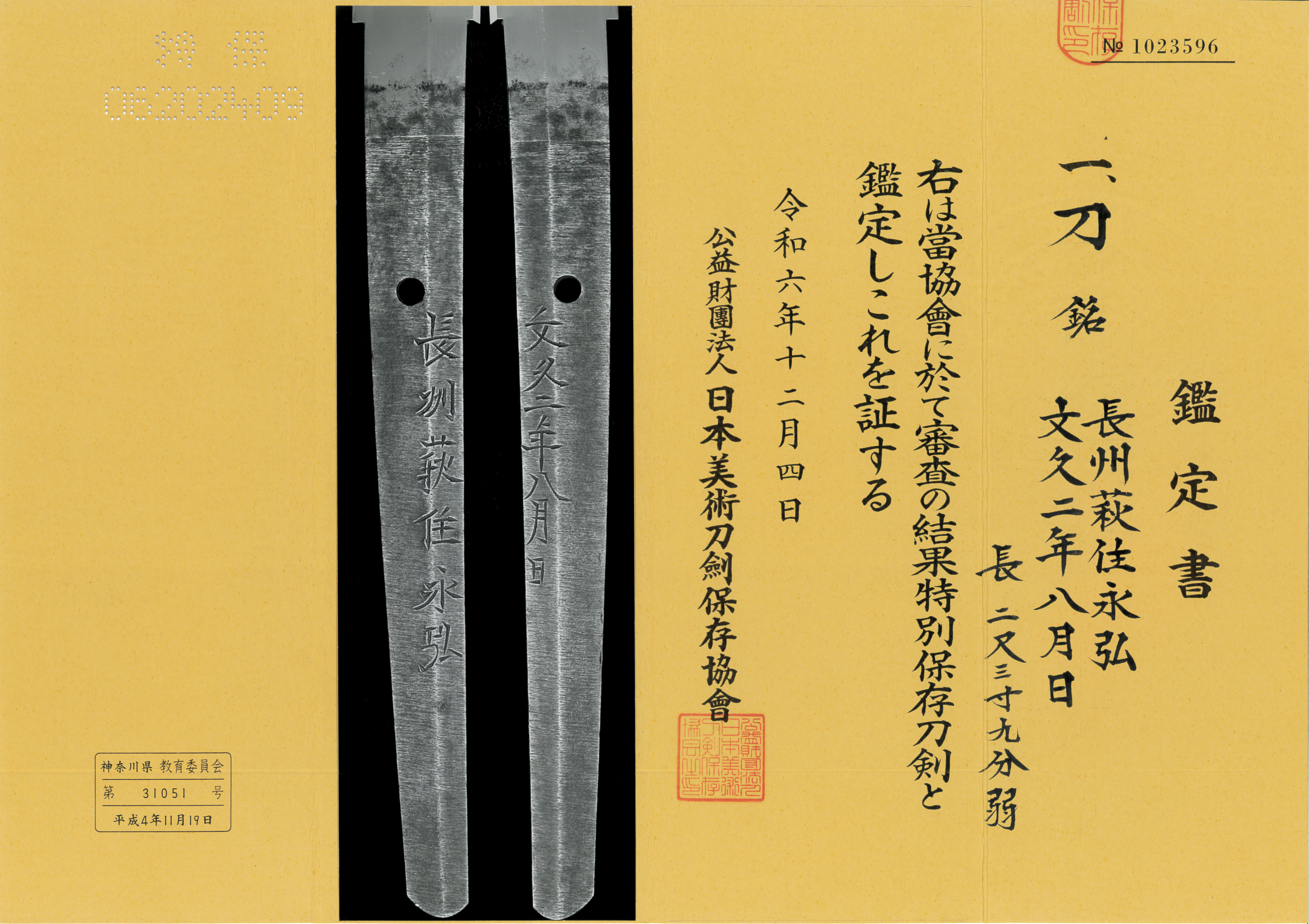
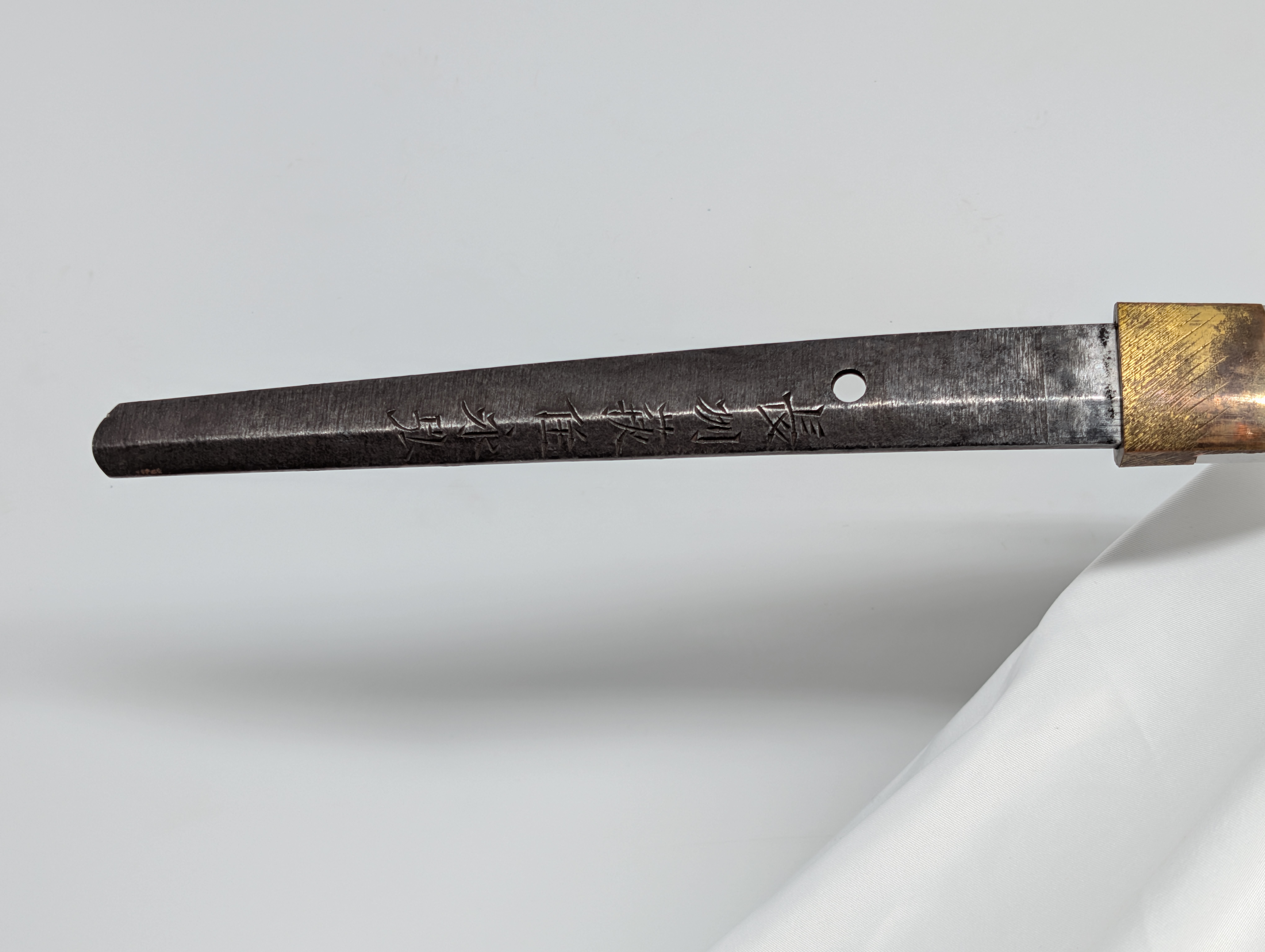
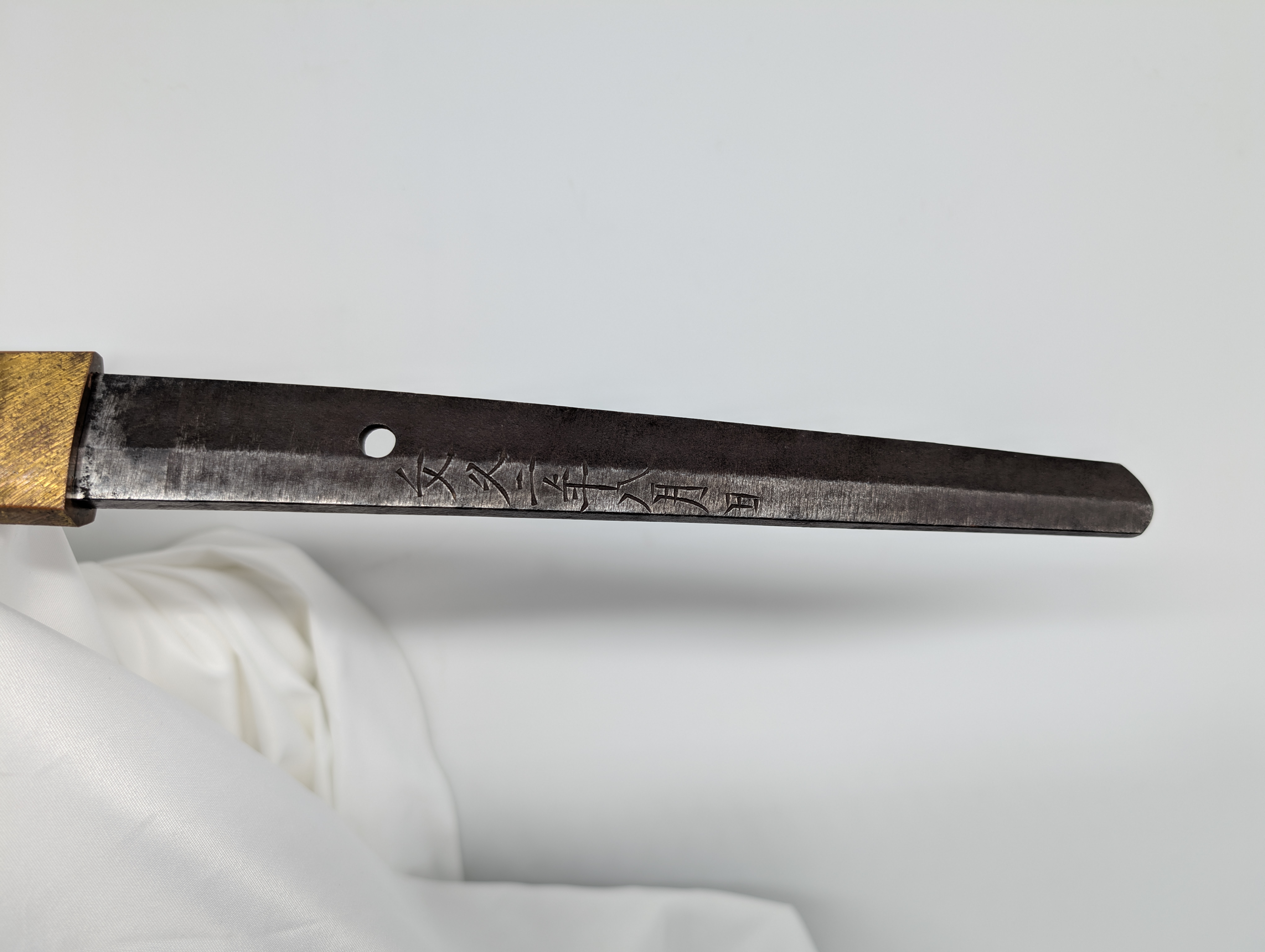
The nakago of the blade is ubu, being finished with a kengyo-jiri tip. The blade is both signed and dated, providing great insight into the history of the blade. On the katana-omote, the smith inscribed the naga-mei signature “Nagahiro, Resident of Choshu Domain” (長州萩住永弘). Looking to the obverse, the nakago was inscribed with the date “A Day in the Eighth Month of Bunkyu, Year Two” (文久二年八月日), dating the blade’s forging to September of 1862 CE. The tang has a single mekugi-ana, indicating a lack of alteration of the tang, even to wear different fittings.
The blade’s shape is in shinogi-zukuri, with an iori-mune. This is the most common form of geometry for nihonto, having had over a millennium to cement itself by the time of the sword’s forging. As such, the blade has a distinctly “Japanese” identity through centuries of refinement and continued use. Adding character to the blade is the tasteful addition of a bo-hi horimono, decreasing the blade’s weight while contrasting the otherwise bright jiba through the variable depth of the surface.
The blade is rated “Tokubetsu Hozon” by the NBTHK, indicating a higher level of workmanship than defines the baseline for nihonto. This is a testament to Choshu Nagahiro’s work, especially as the majority of Shin-shinto Era blades tend to fail in this regard, making the piece a rare masterwork in an era defined by the sword’s decline.
As the iron grip of the Tokugawa Shogunate began to loosen, sentiments against the shogunate began to fester, calling for a full return of power to the Imperial Court, as was practiced during the Heian Period. Such beliefs eventually made their way to the Mori Clan, former servants of the shogunate and the lords of Choshu Fief, resulting in the formation of an unexpected alliance between Choshu and its rival domain, Satsuma Province, due to foreign influence through British arms dealer Thomas Glover, alongside mediation by Tosa-based samurai Sakamoto Ryoma on behalf of Glover, who armed the generals of both regions. Following these agreements, the daimyo of Choshu, Mori Takachika, was ordered to retire and remain in confinement following a decree from the Tokugawa Shogunate in 1866 CE, sowing the seeds of the Boshin War and galvanizing swordsmiths in the region to return to their work of producing weaponry for warriors in service to these rebel lords. Choshu Nagahiro was one such smith. Born Fujita Kaneware, Nagahiro was a renowned swordsmith of the late Edo Period, having operated in both Choshu and Suo Provinces after instruction from the Bizen Osafune swordsmith Yokoyama Sukekane. Although the smith worked earlier under the Mori Clan, as war loomed, Nagahiro worked tirelessly to rearm the Mori Clan, operating under their patronage from 1865 CE to 1868 CE. Based on the specific period of operation, alongside the brief timeframe, it can be inferred that Nagahiro’s primary motivation as a smith was profiting off of conflict in the three provinces between the Edo Bakufu and the rebel lords of the Satcho Alliance. As such, this piece is an excellent dated example of insurrectionist swordsmithing, calling back to traditional sentiments of the nihonto world, just as the nation was shifting in a similar direction politically. Furthermore, the refined workmanship and lack of flaws amplify the blade’s value, denoting a functional masterwork of a time known for increasingly inferior and impractical blades, highlighting its appeal to both practitioners of swordsmanship as well as enthusiasts of Japanese history.
Article by Nicholas Zogu