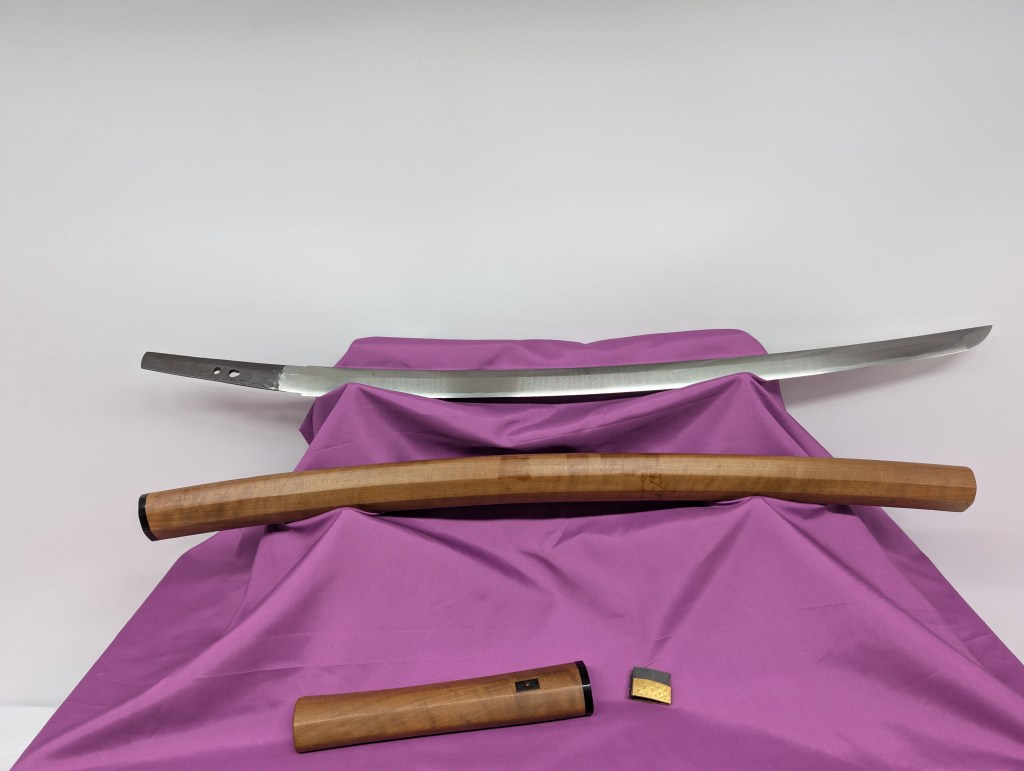
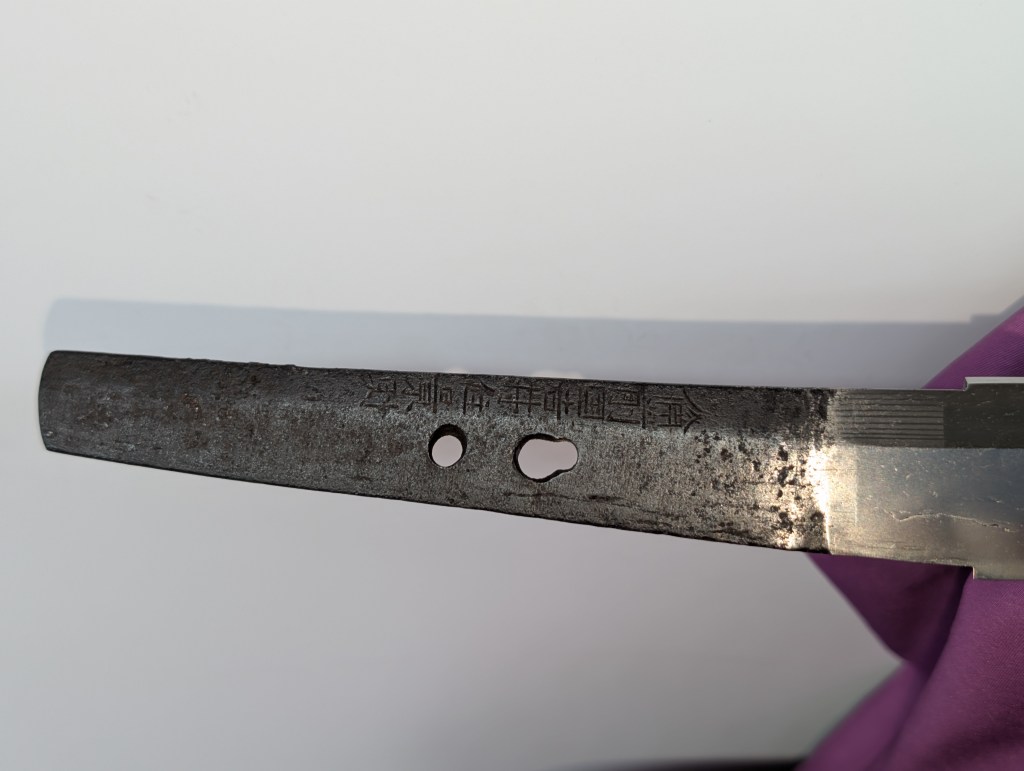
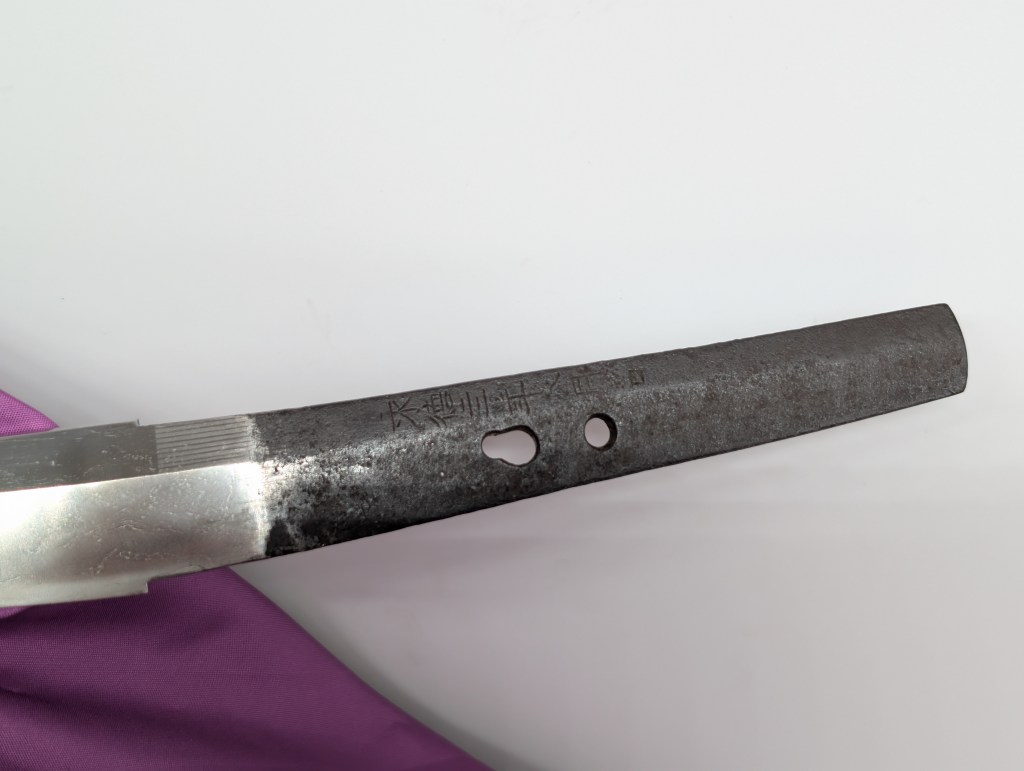
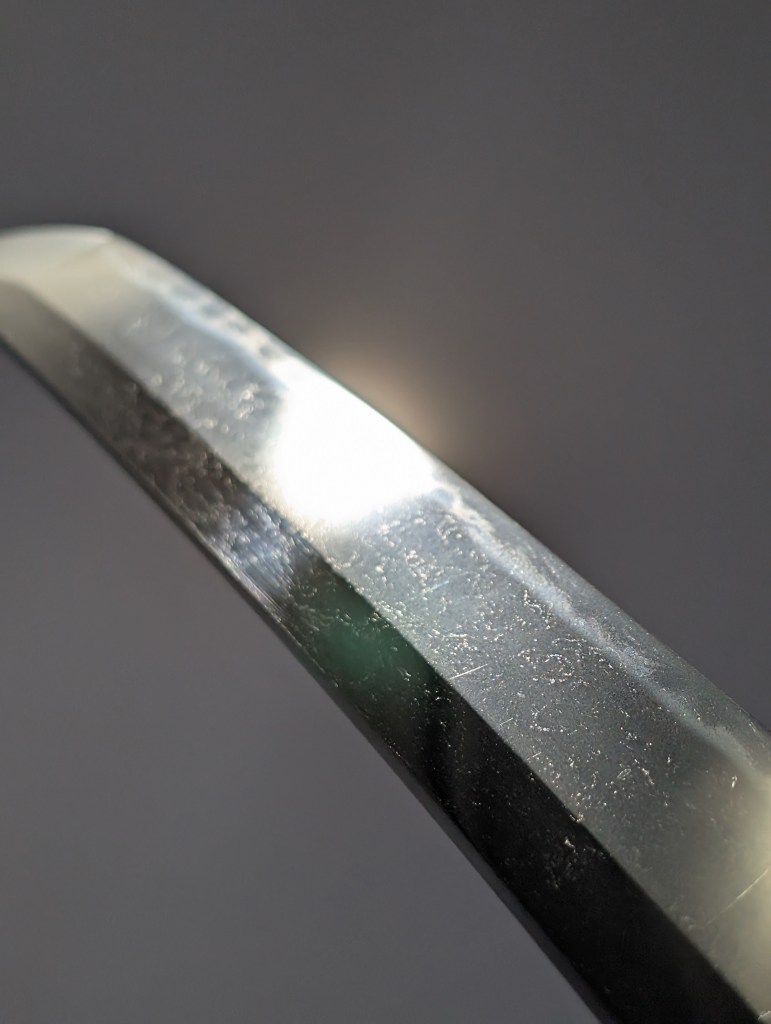
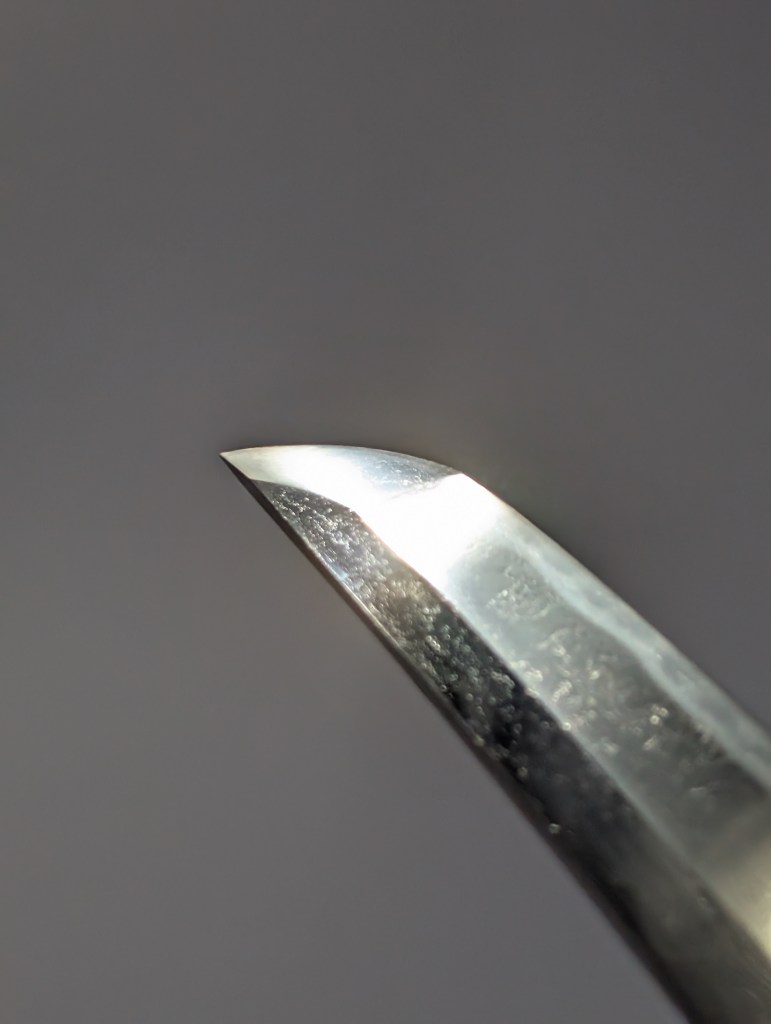
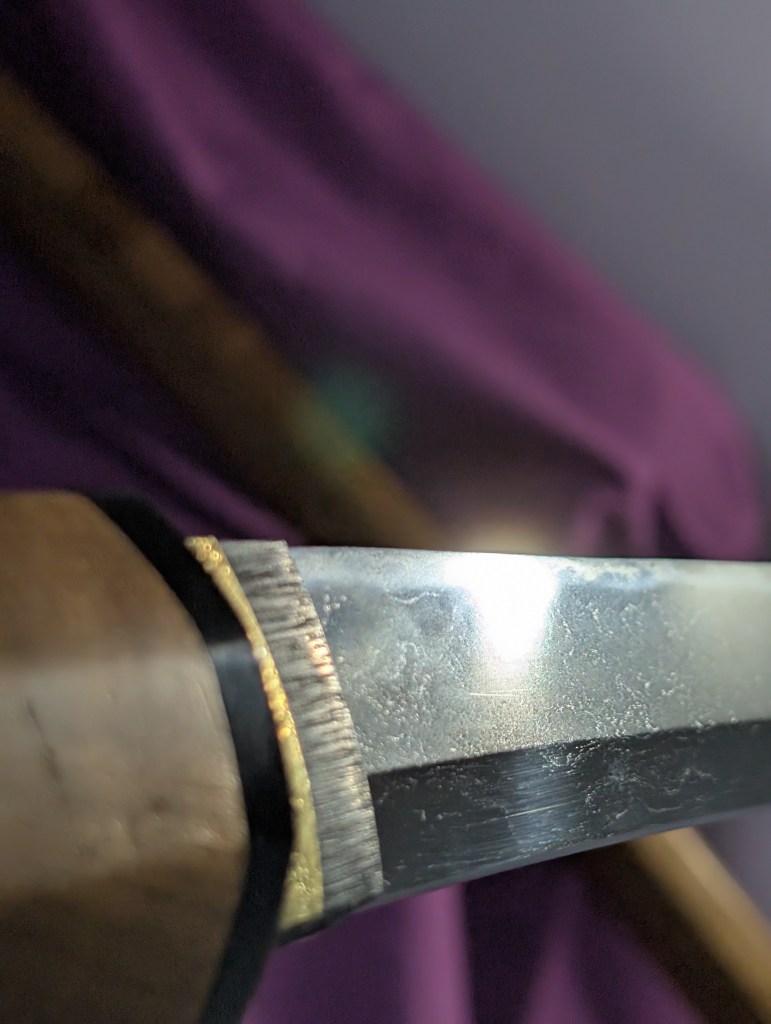
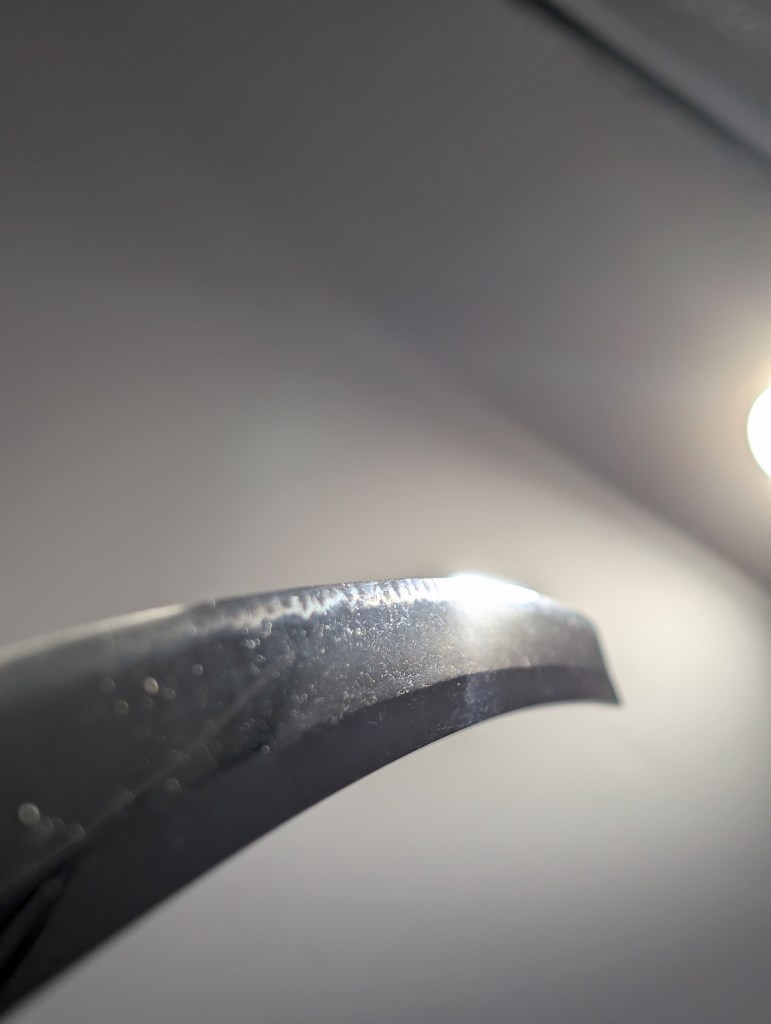
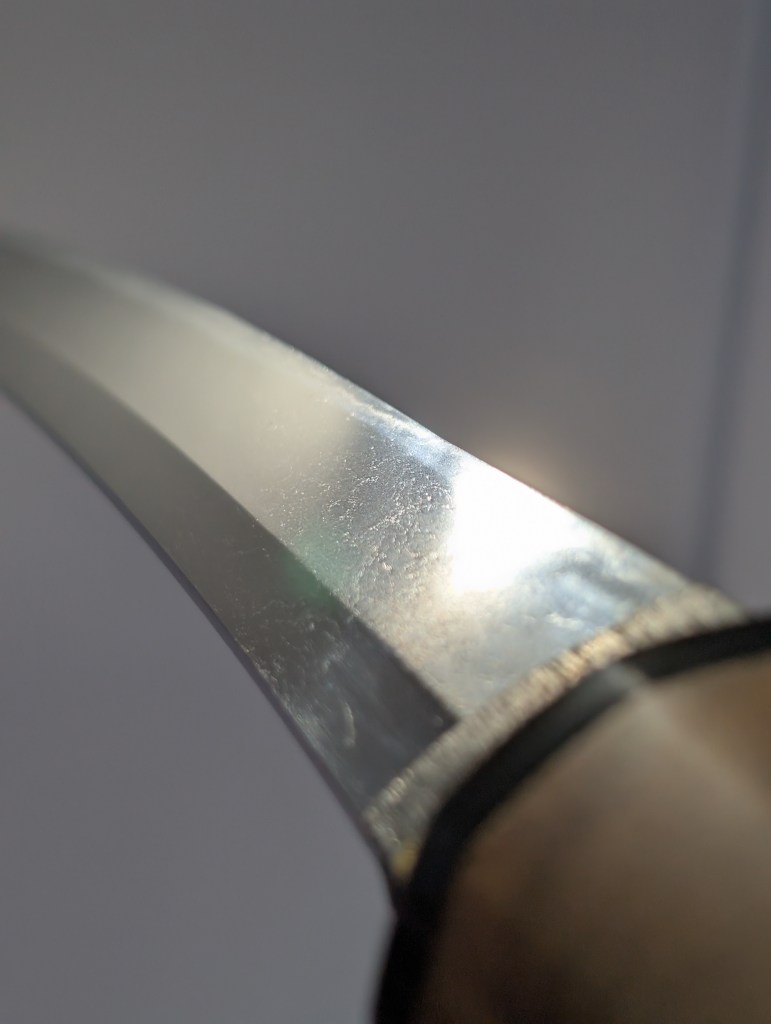
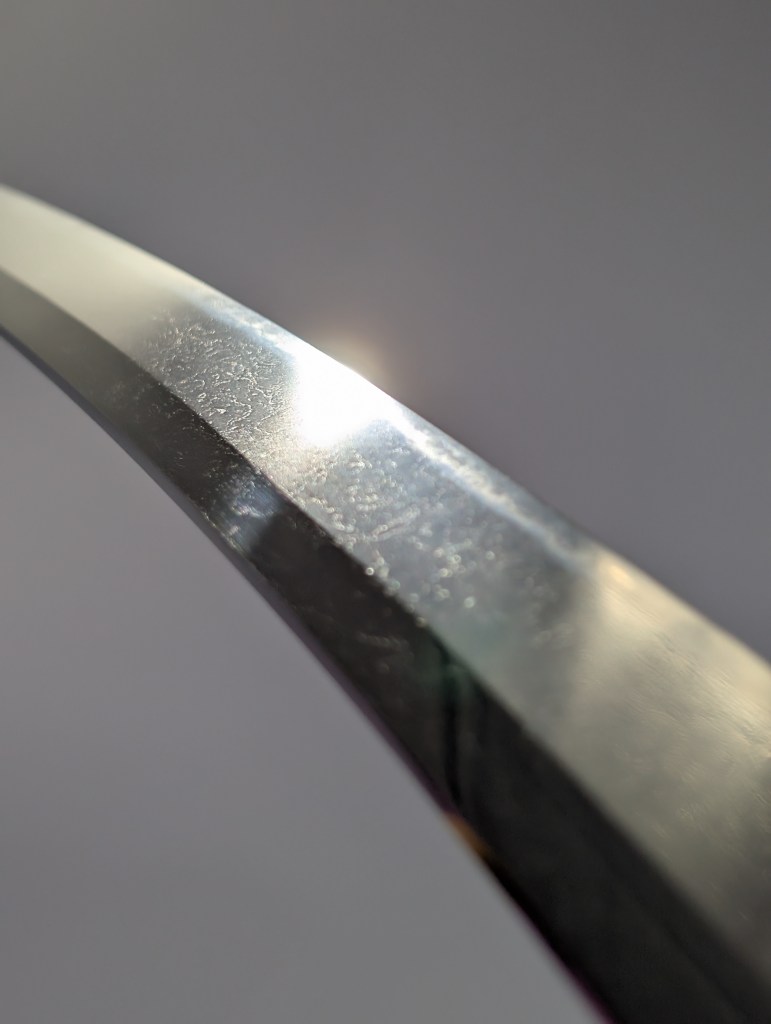
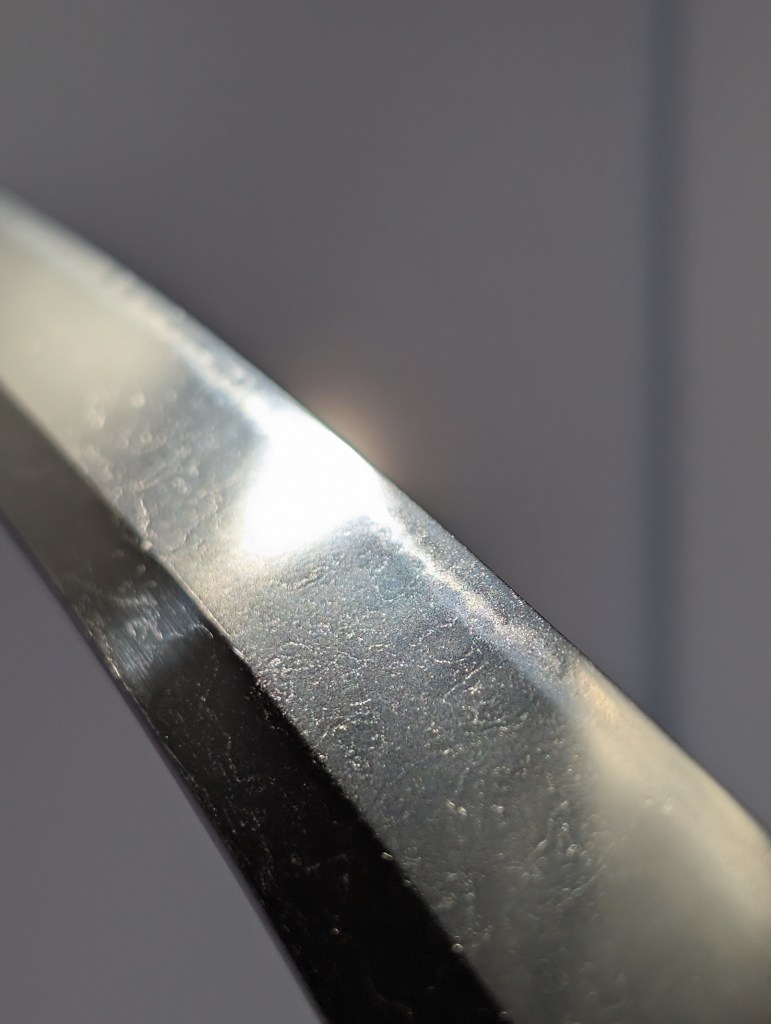
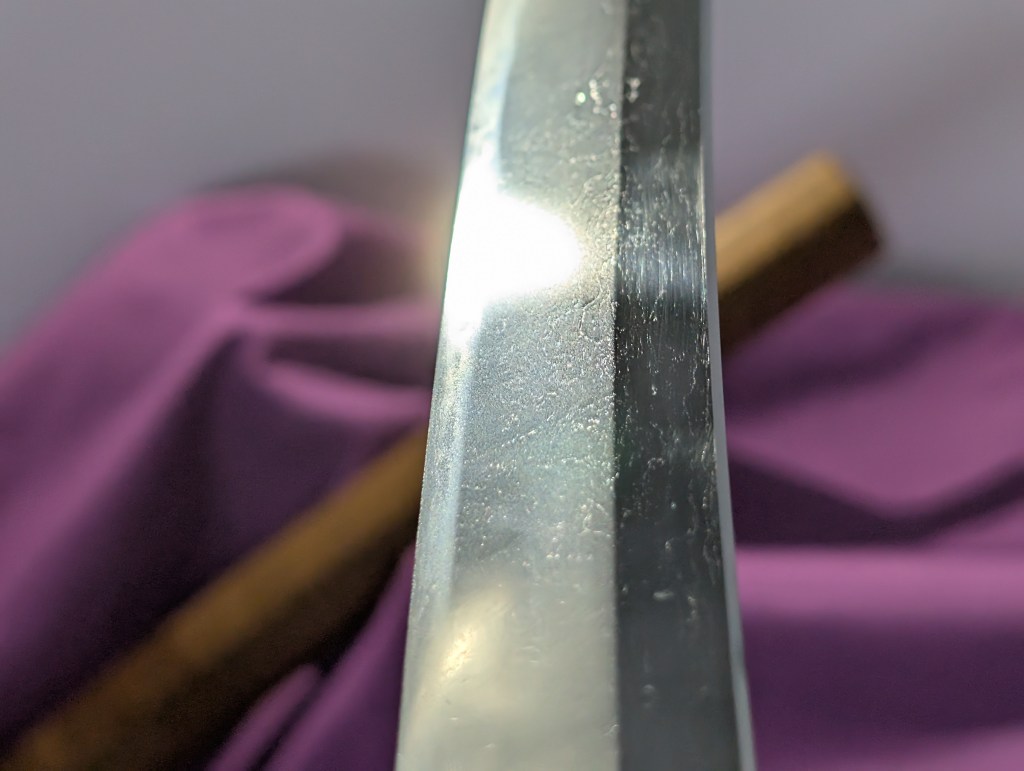
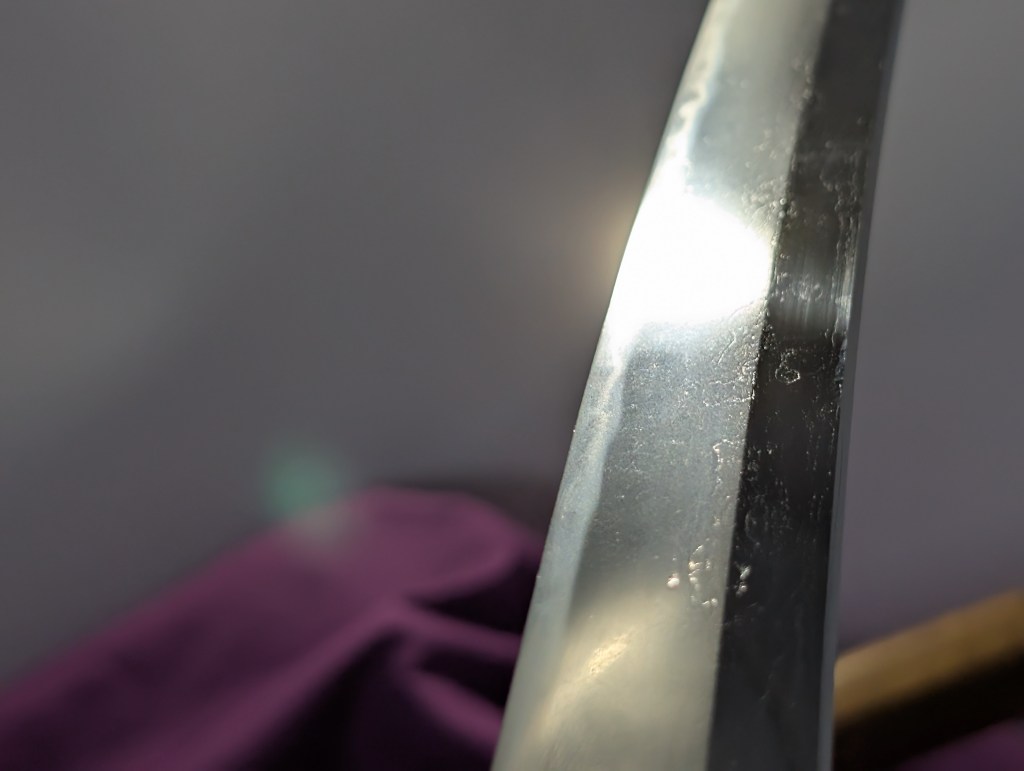
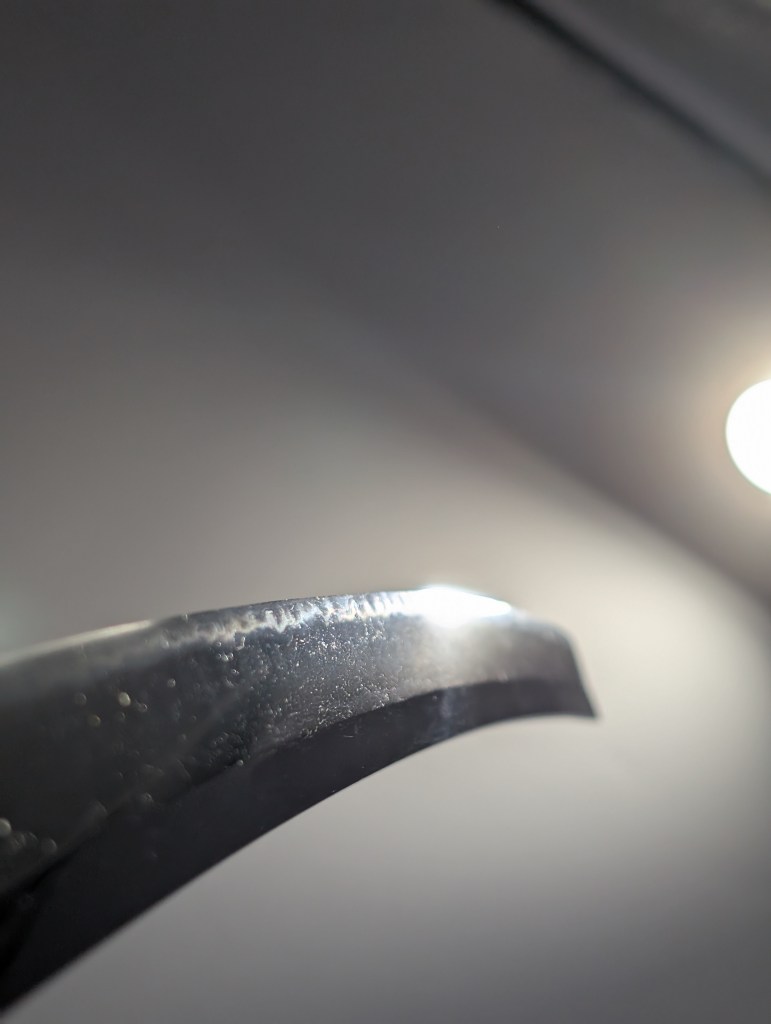
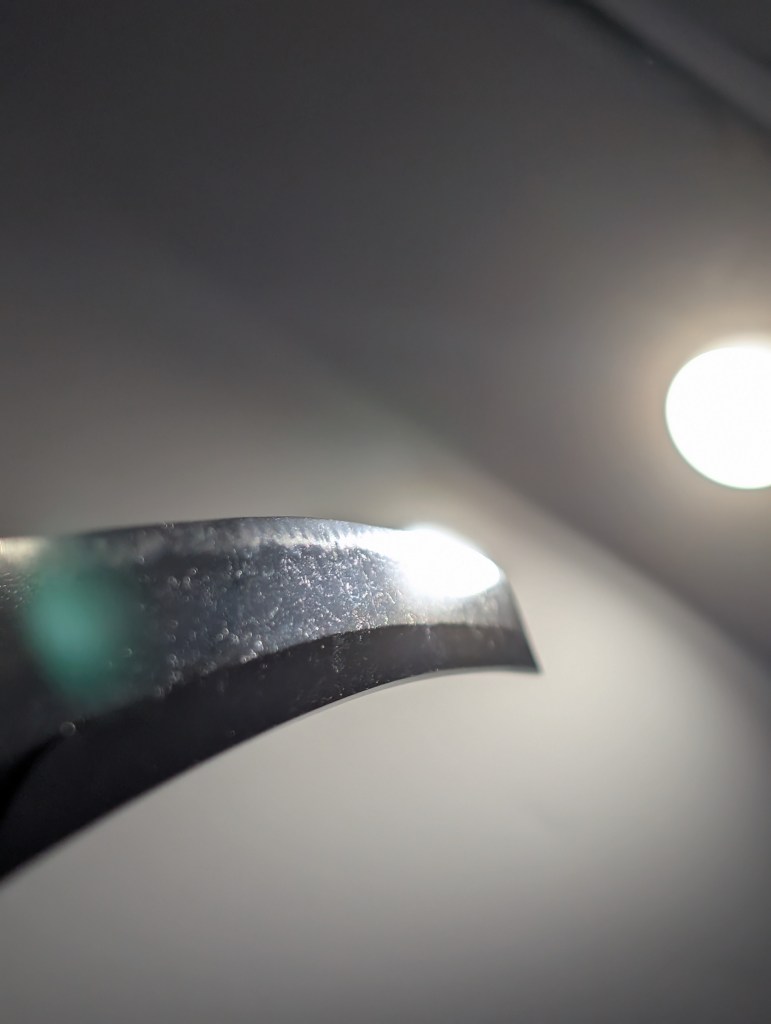
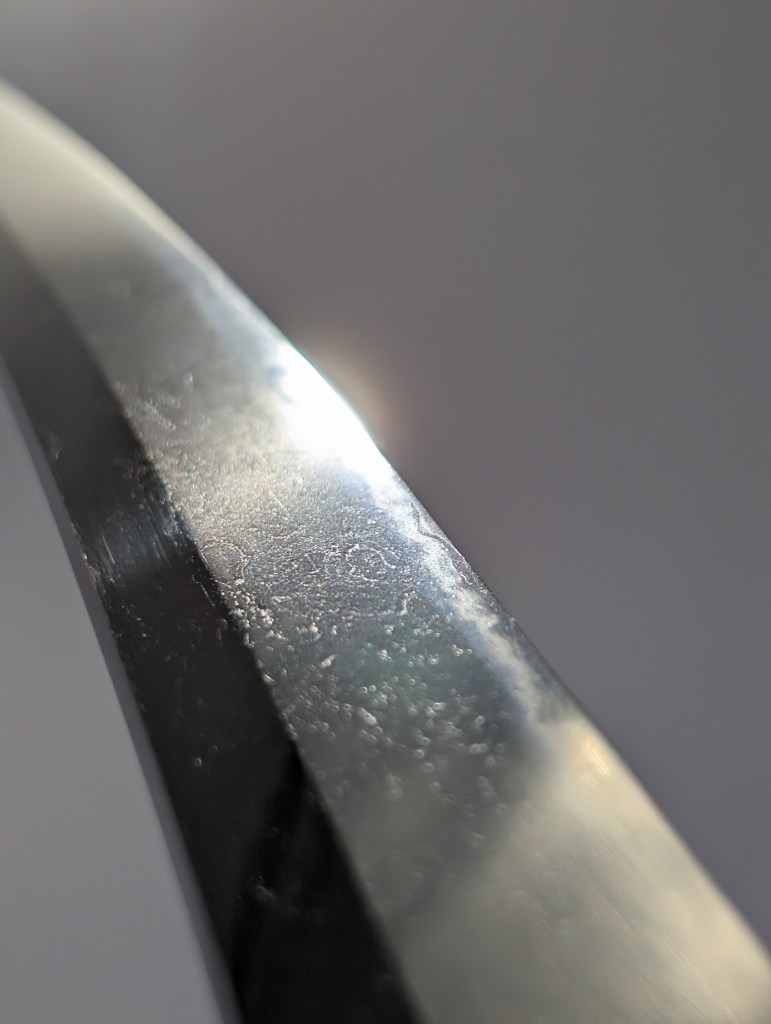
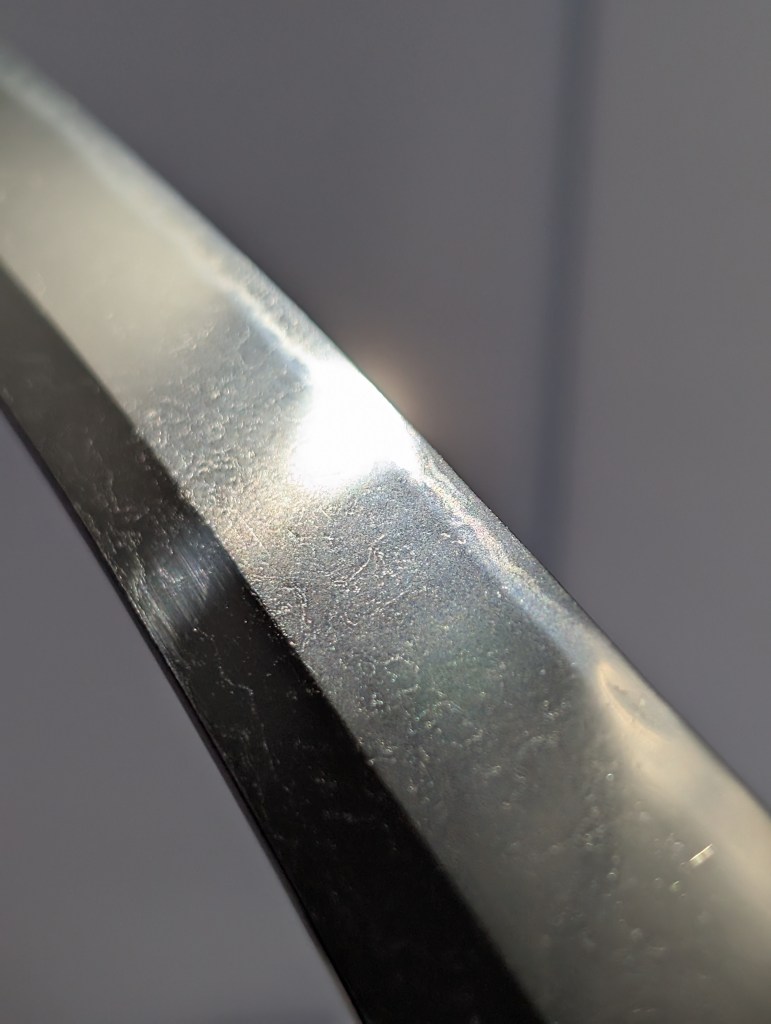
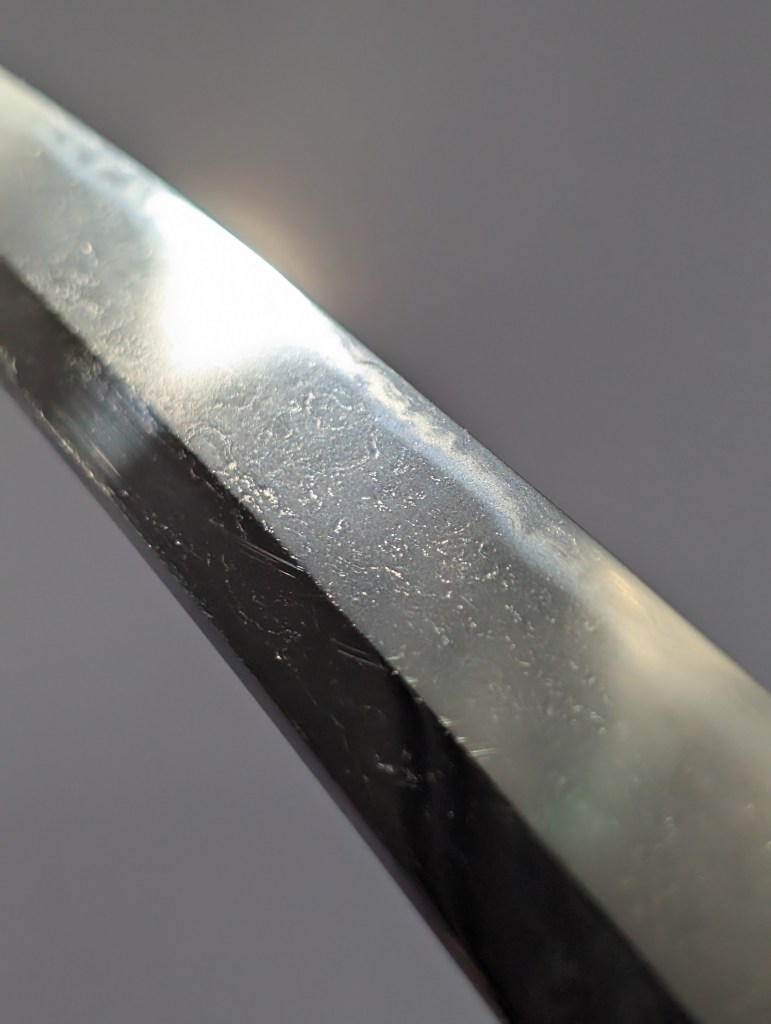
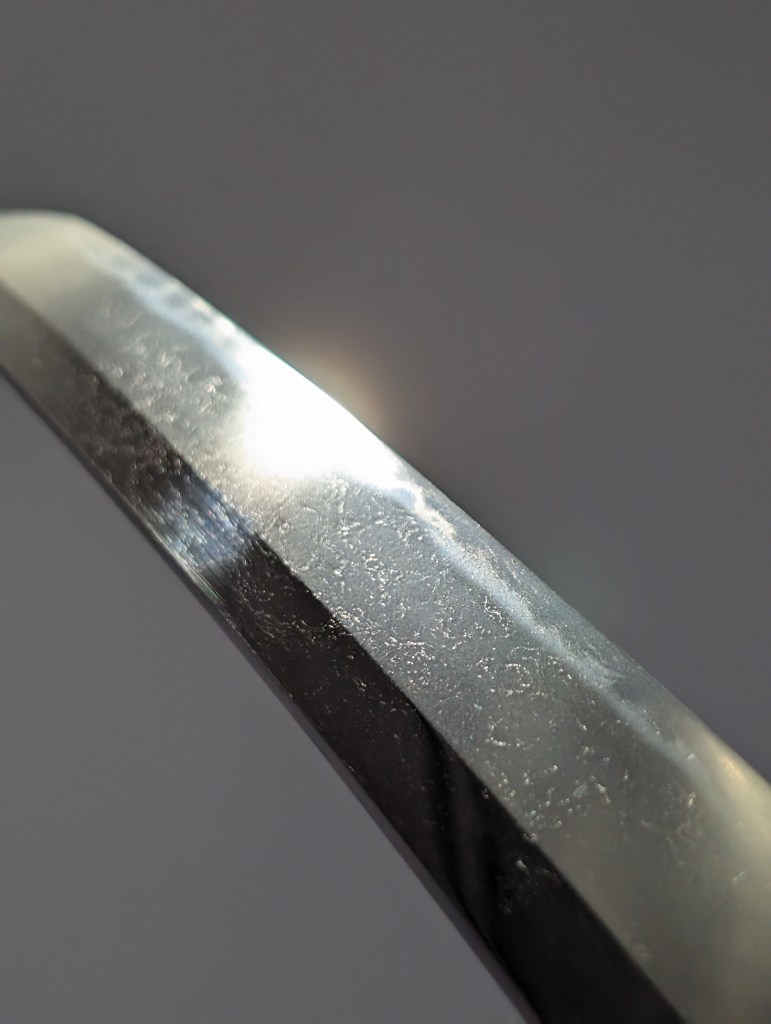
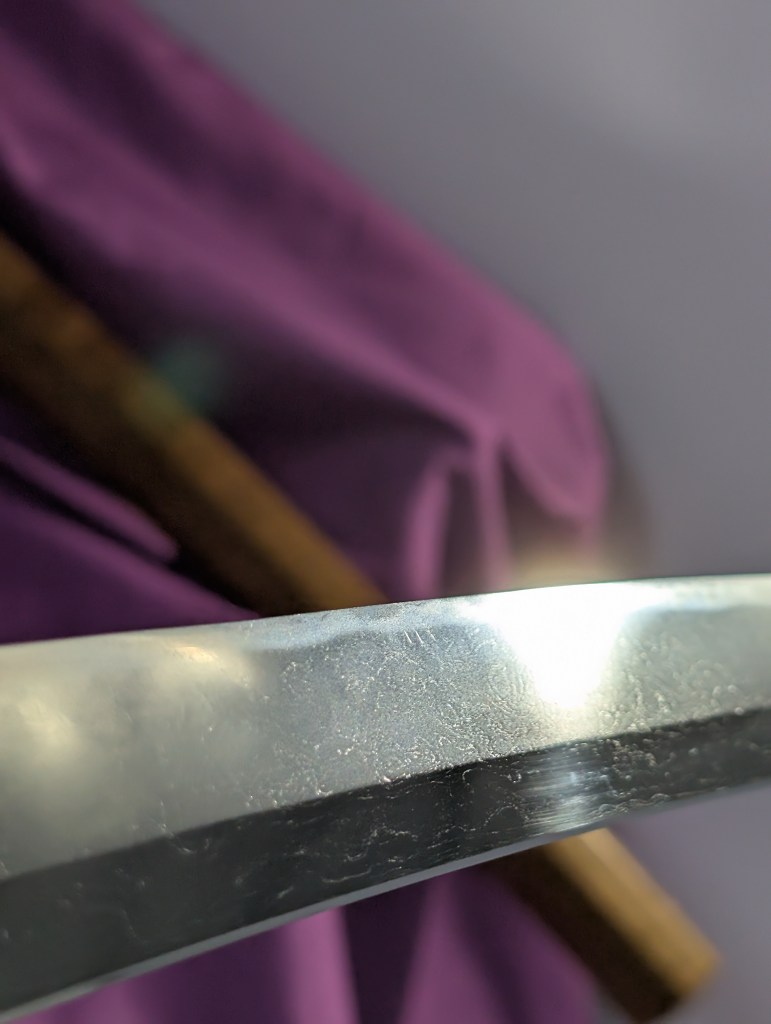
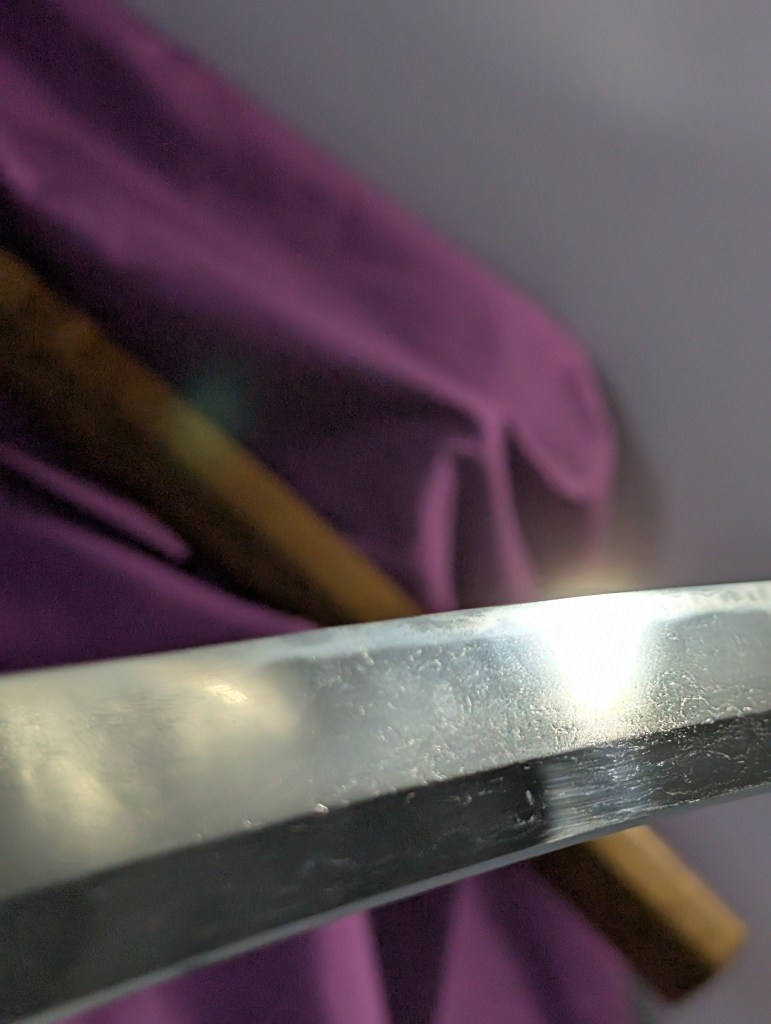
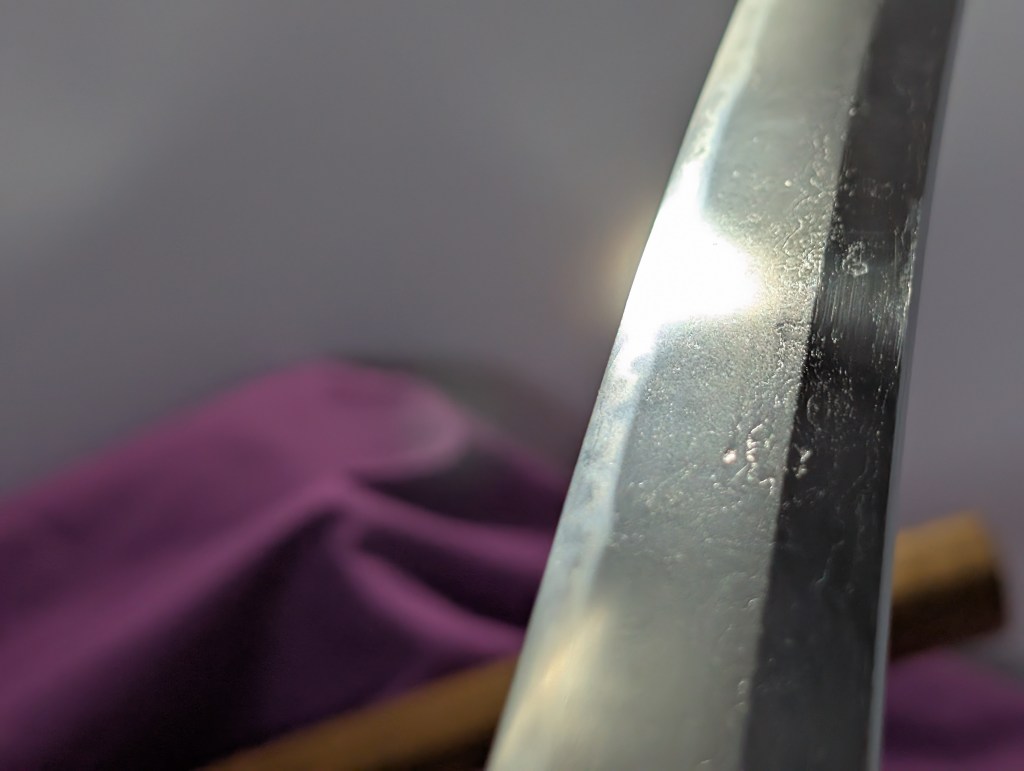
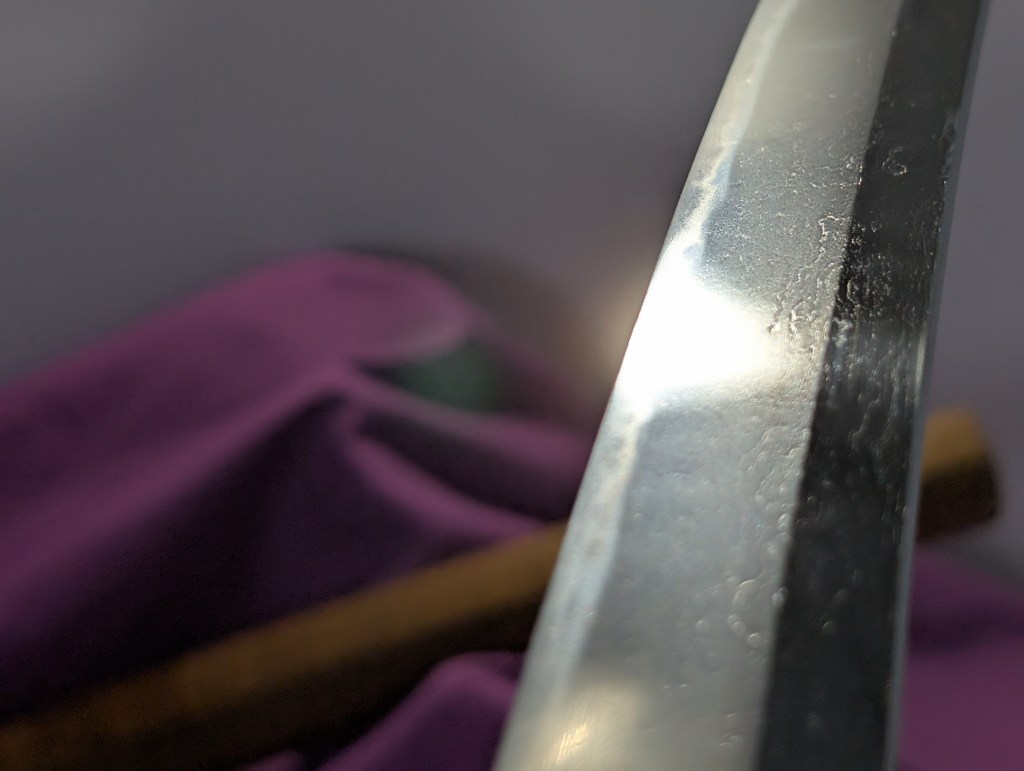
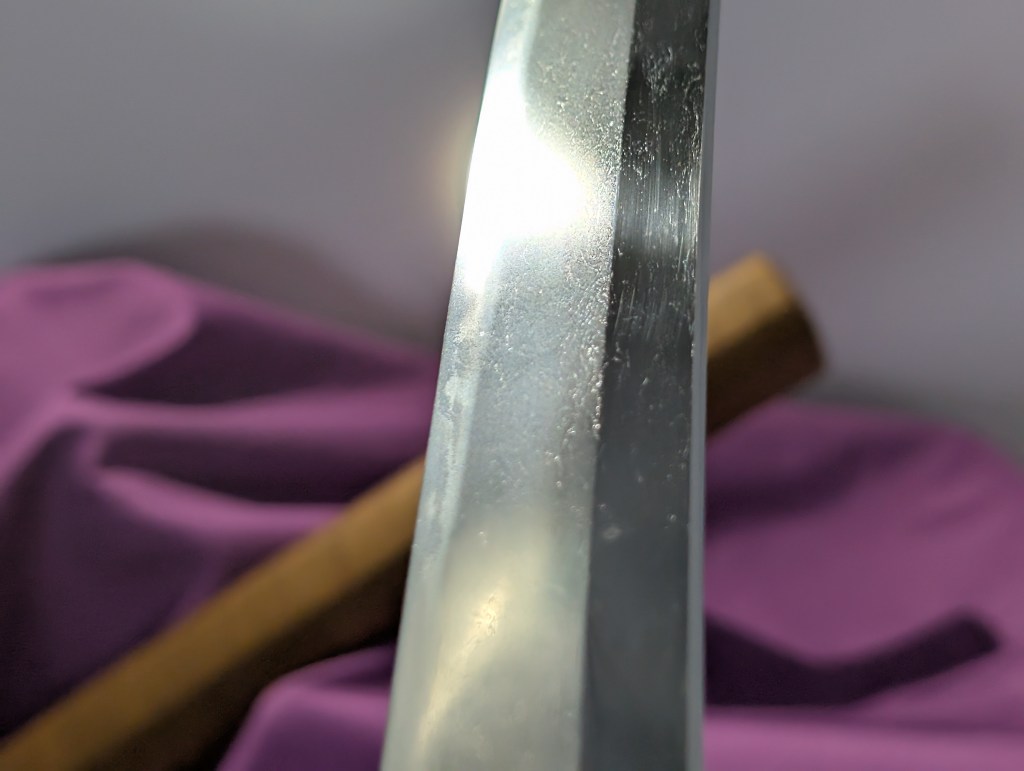
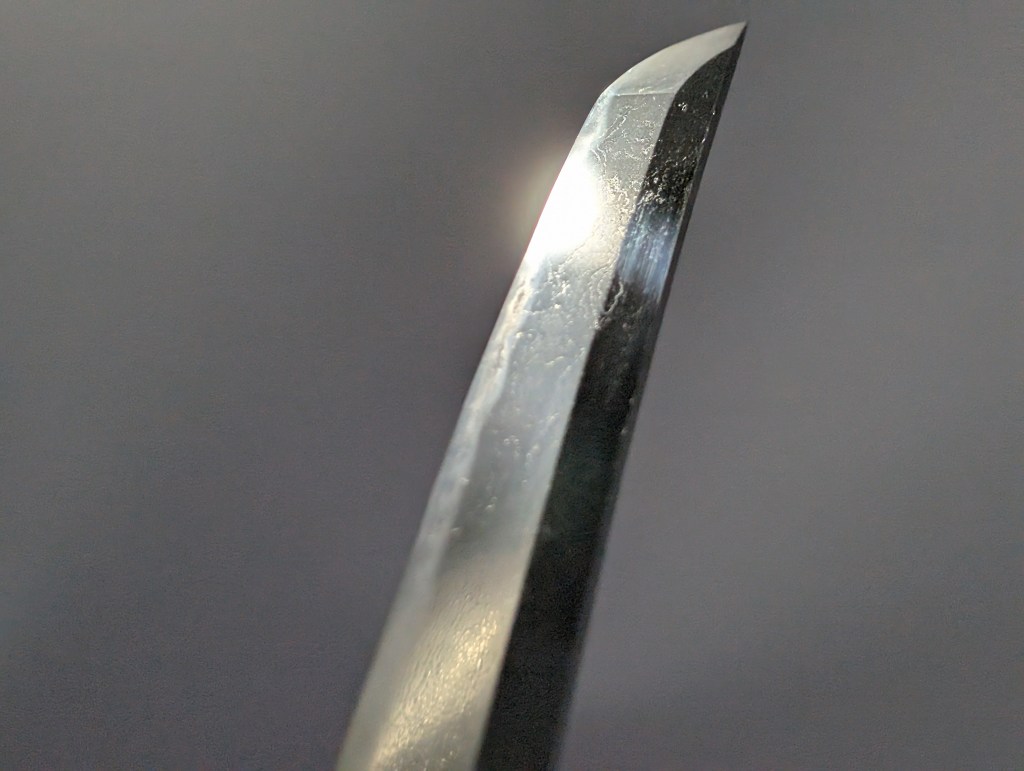
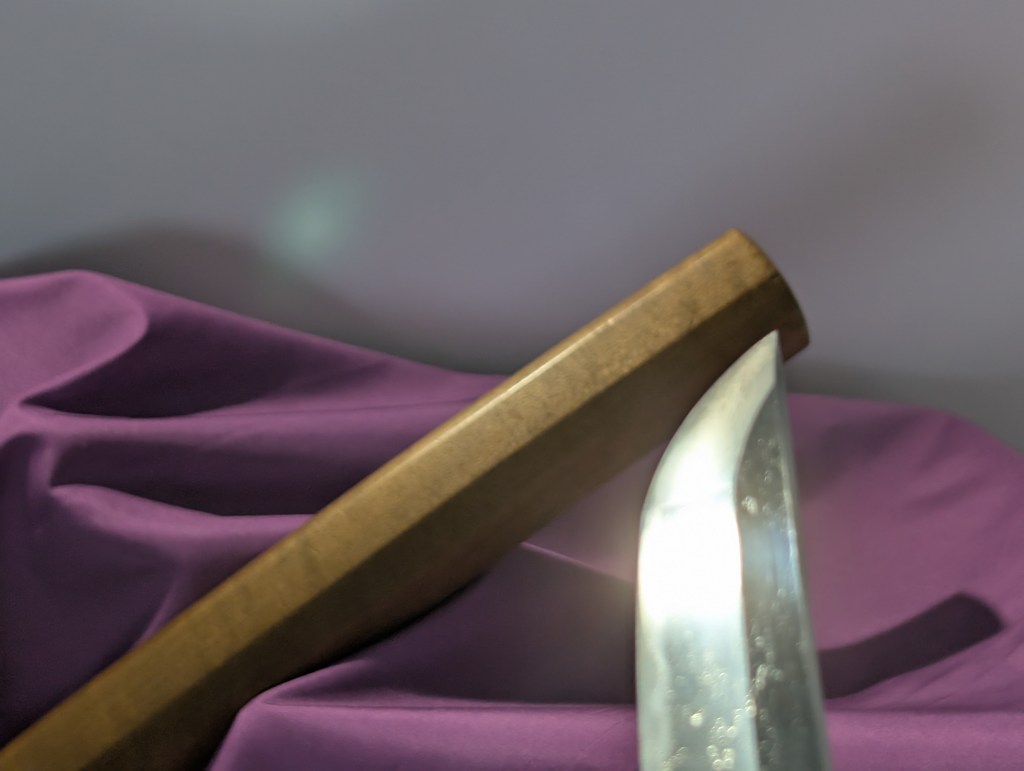
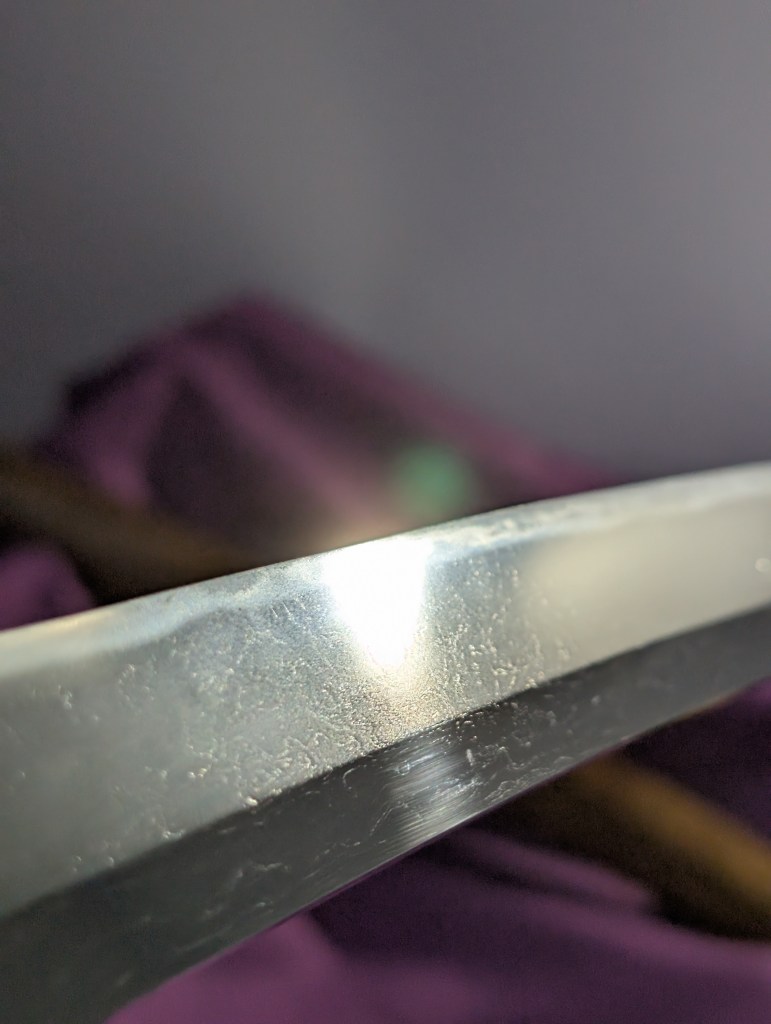
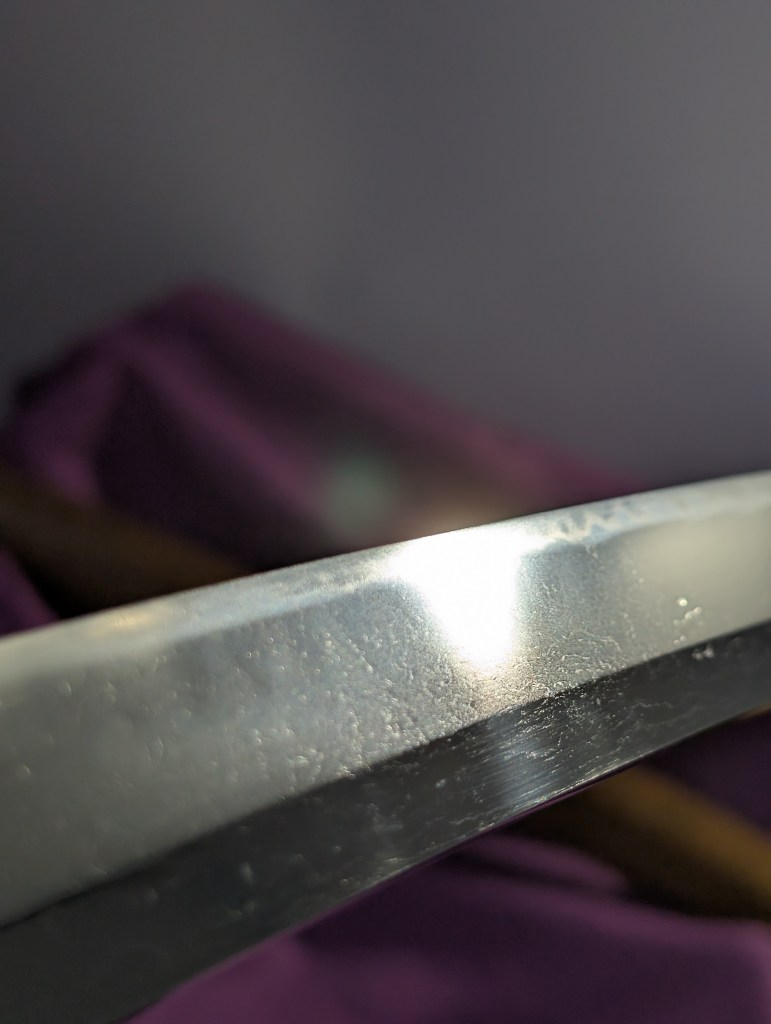
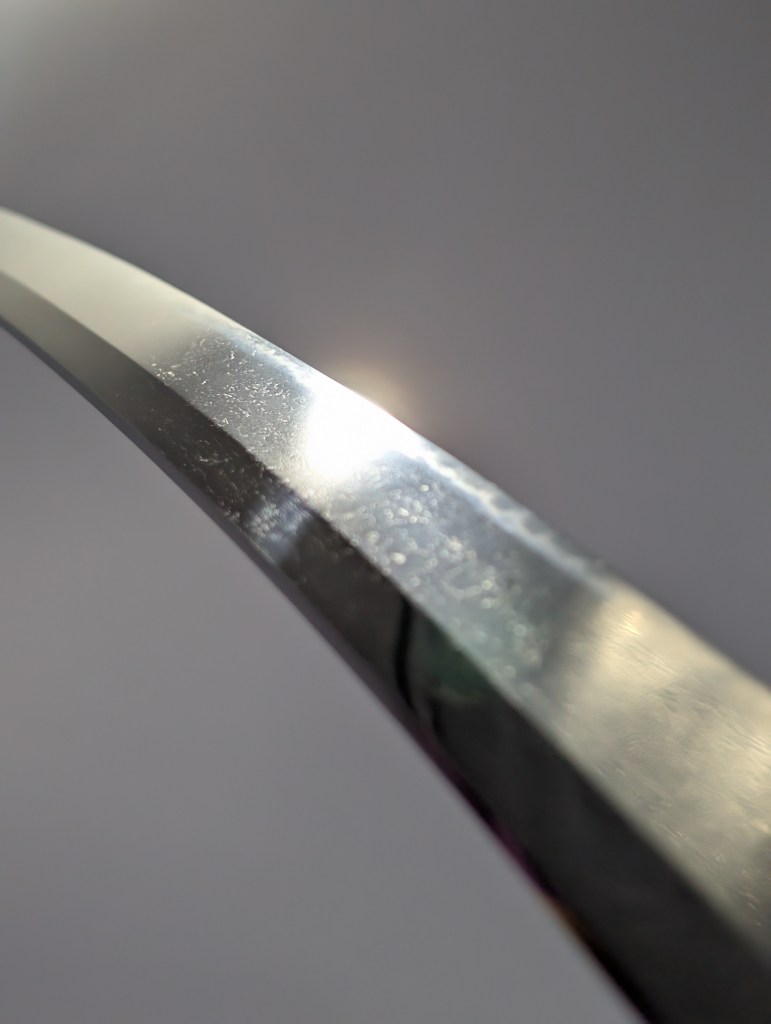
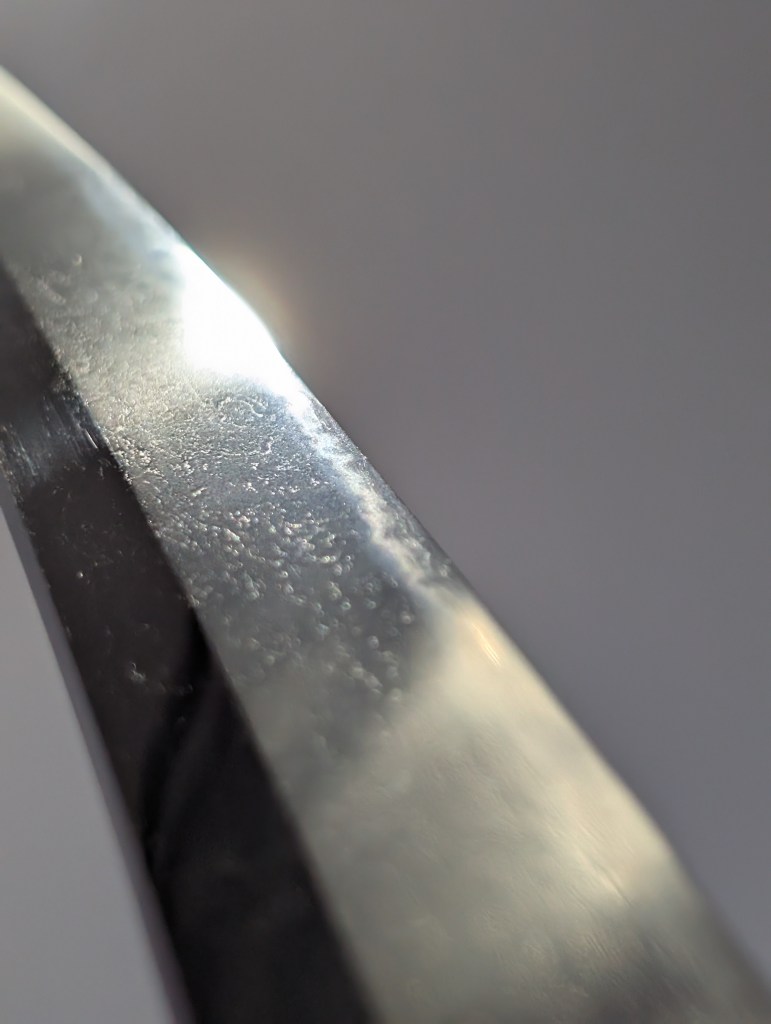
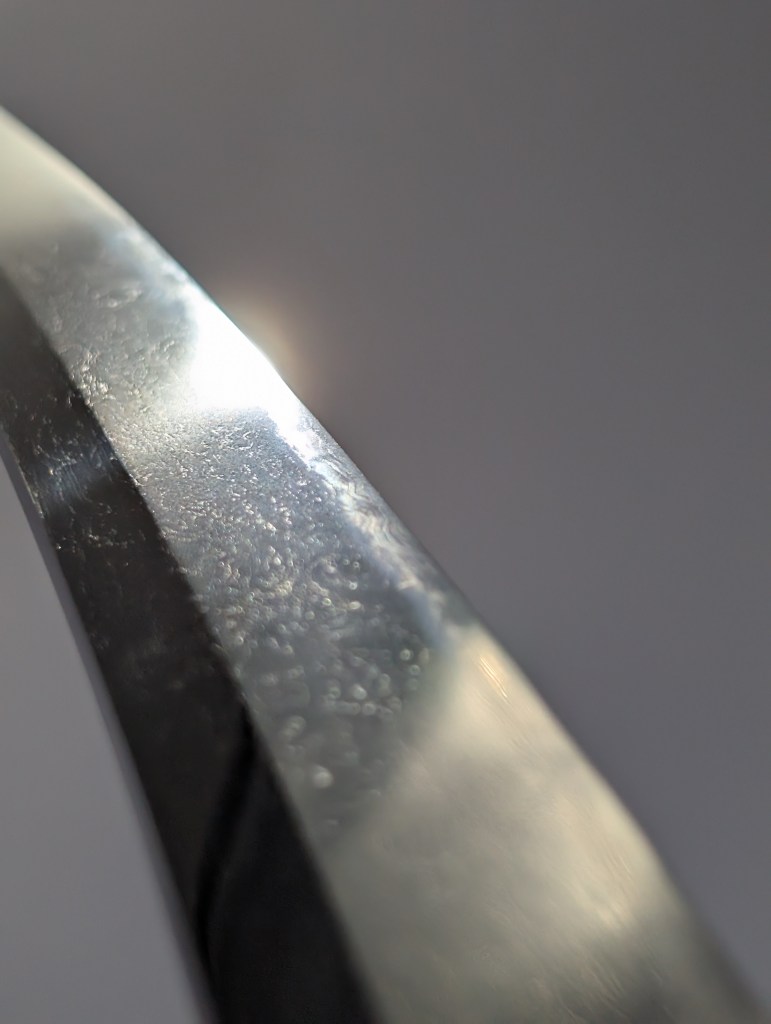
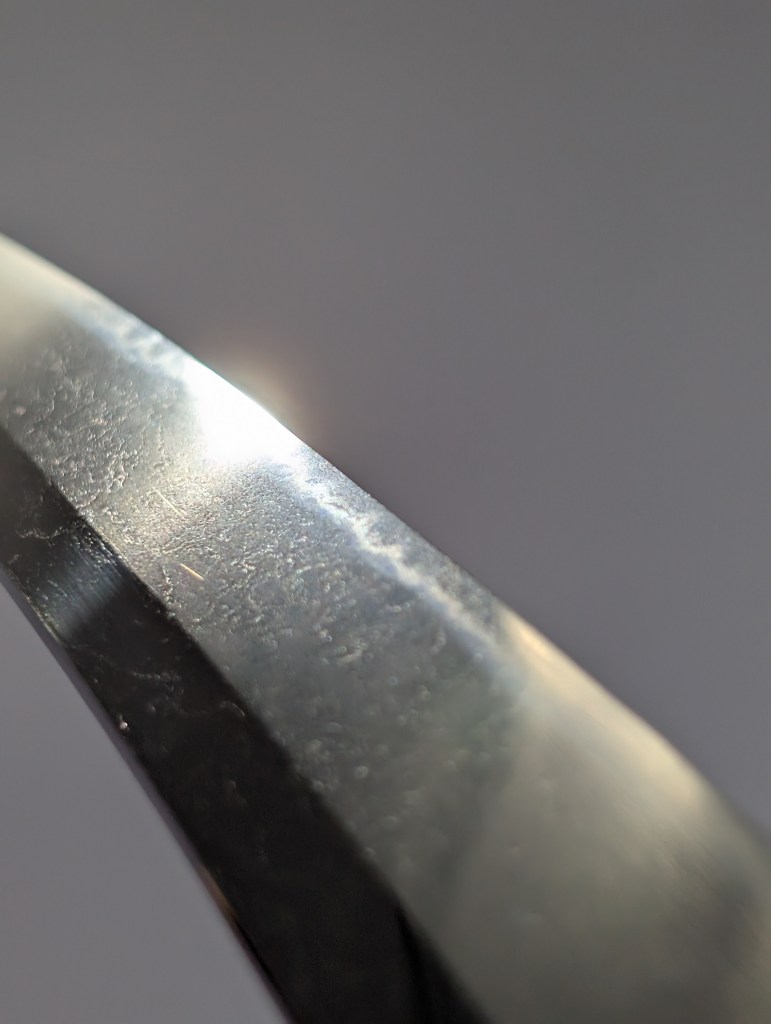
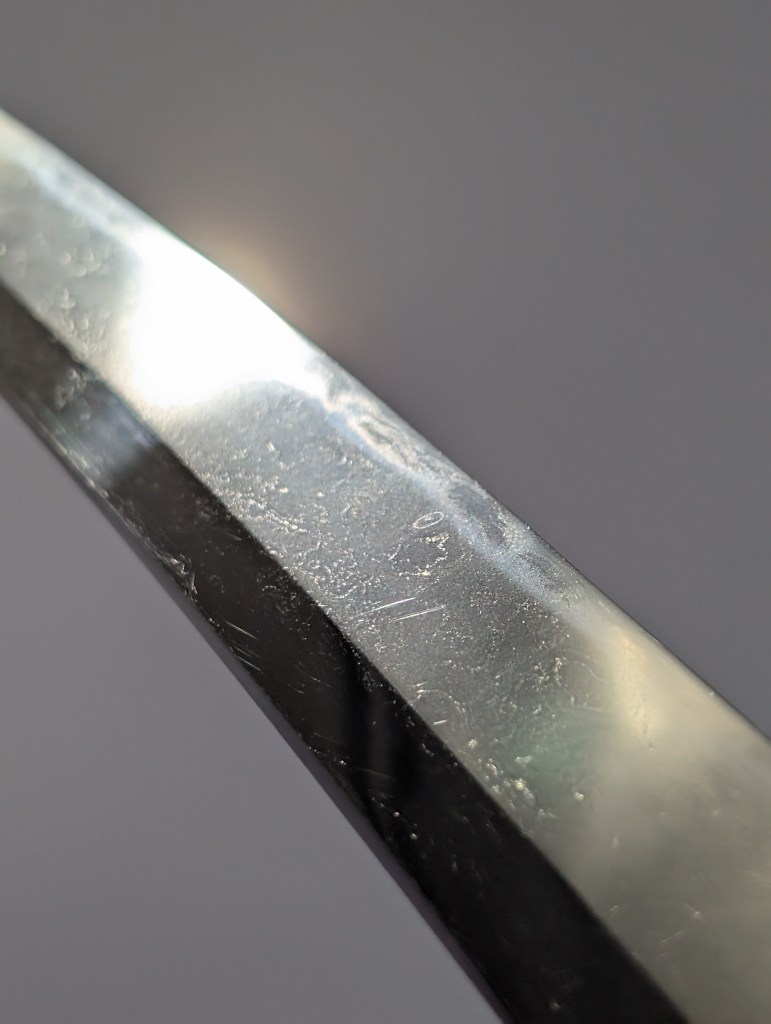
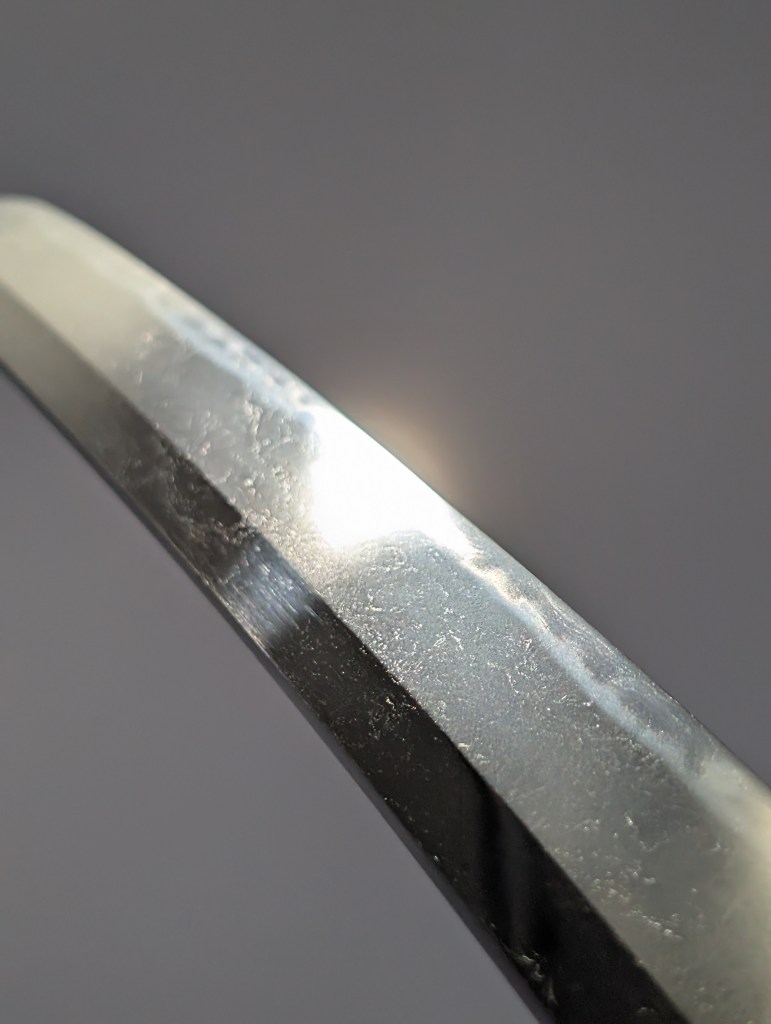
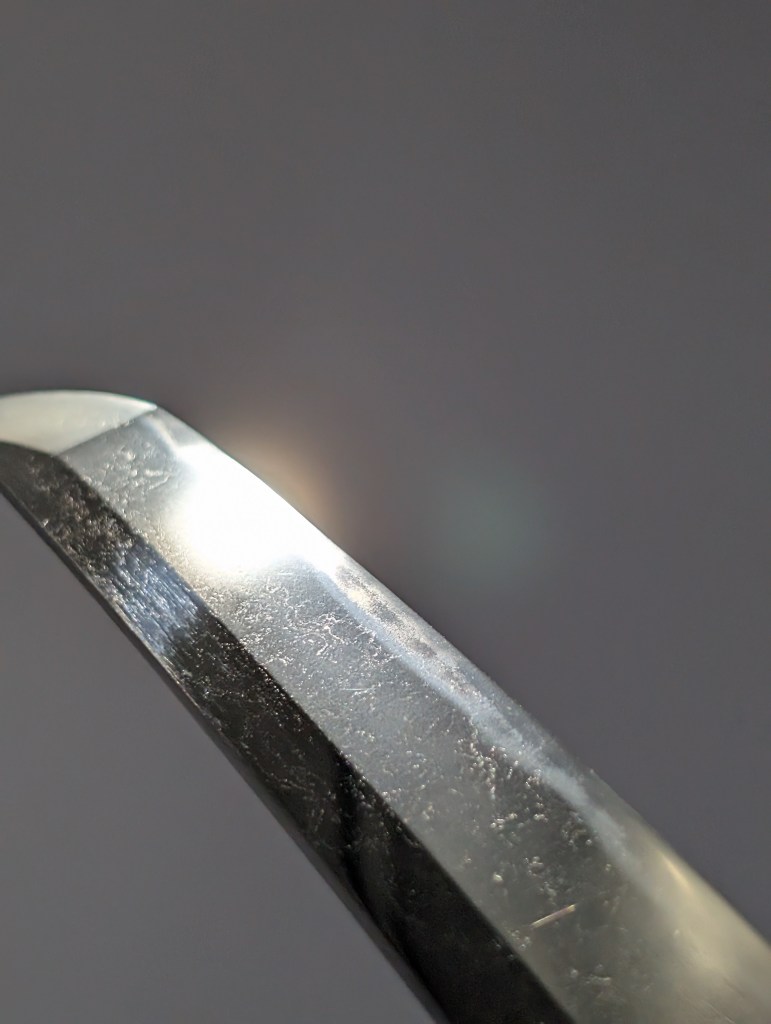
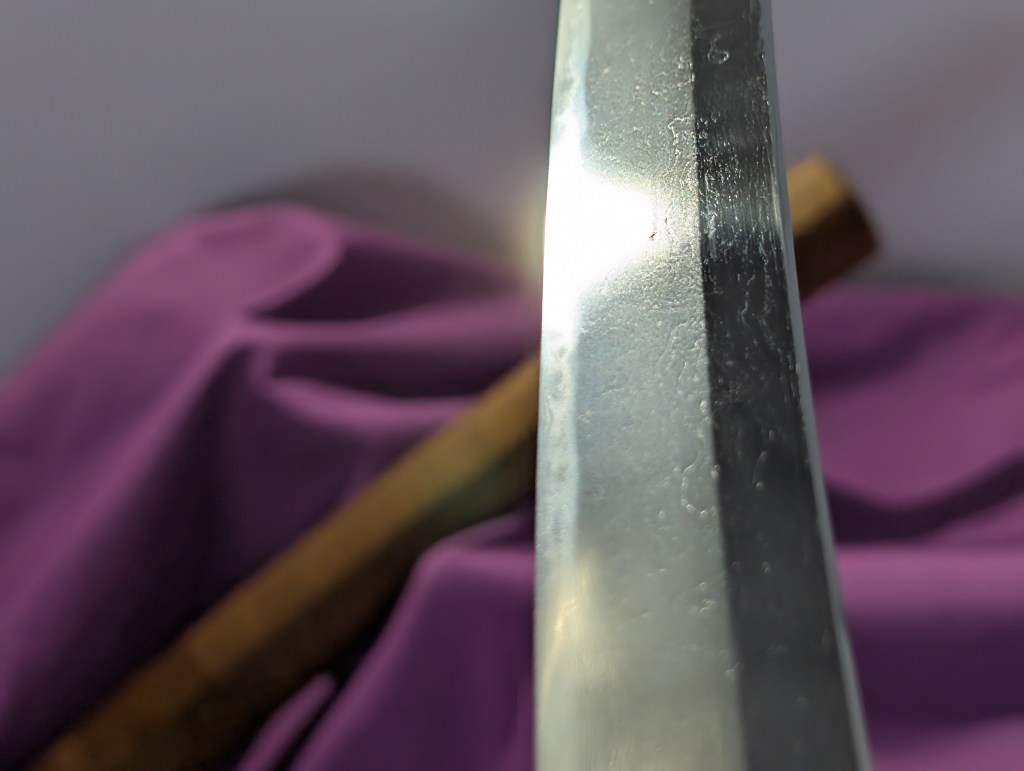
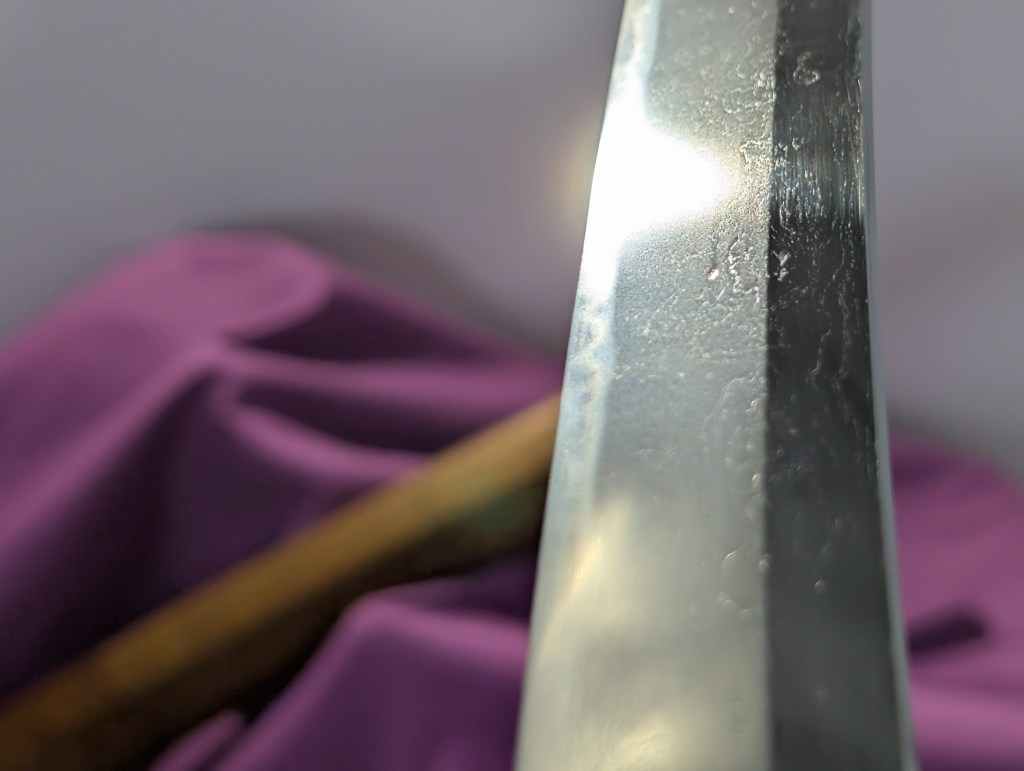
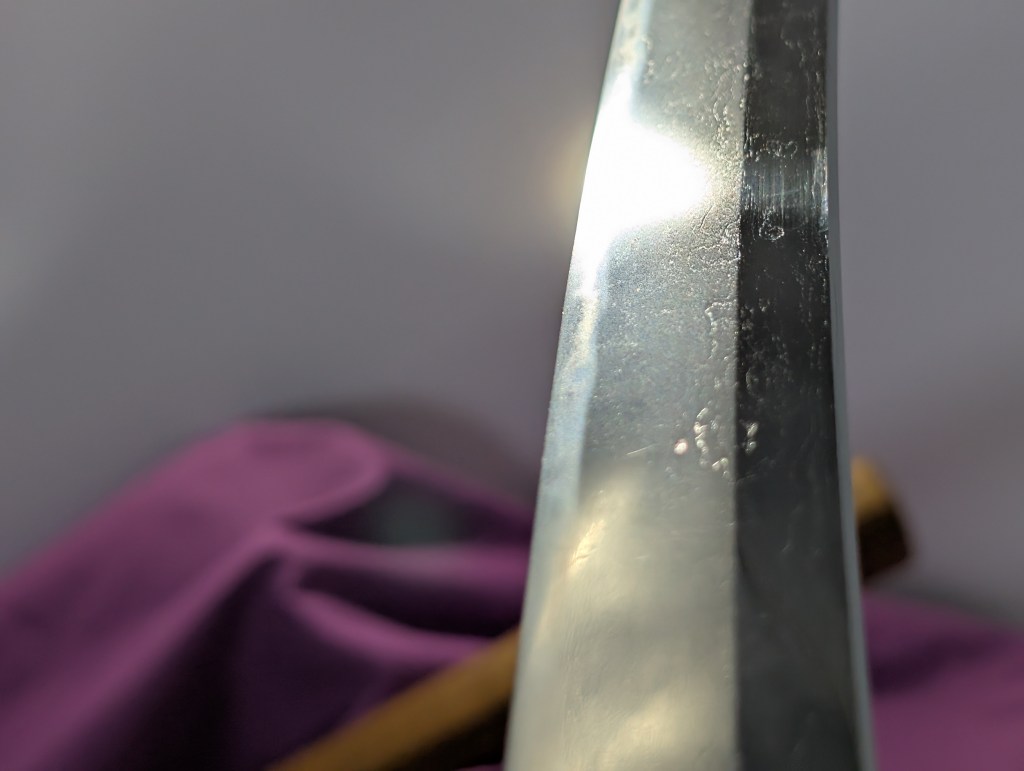
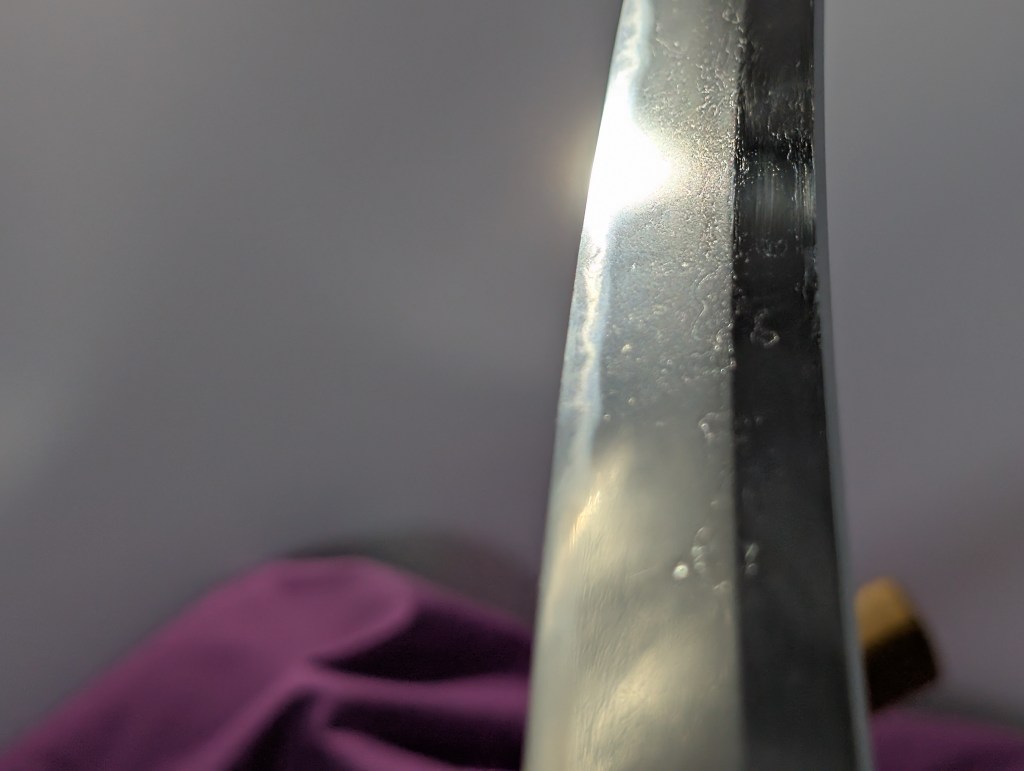
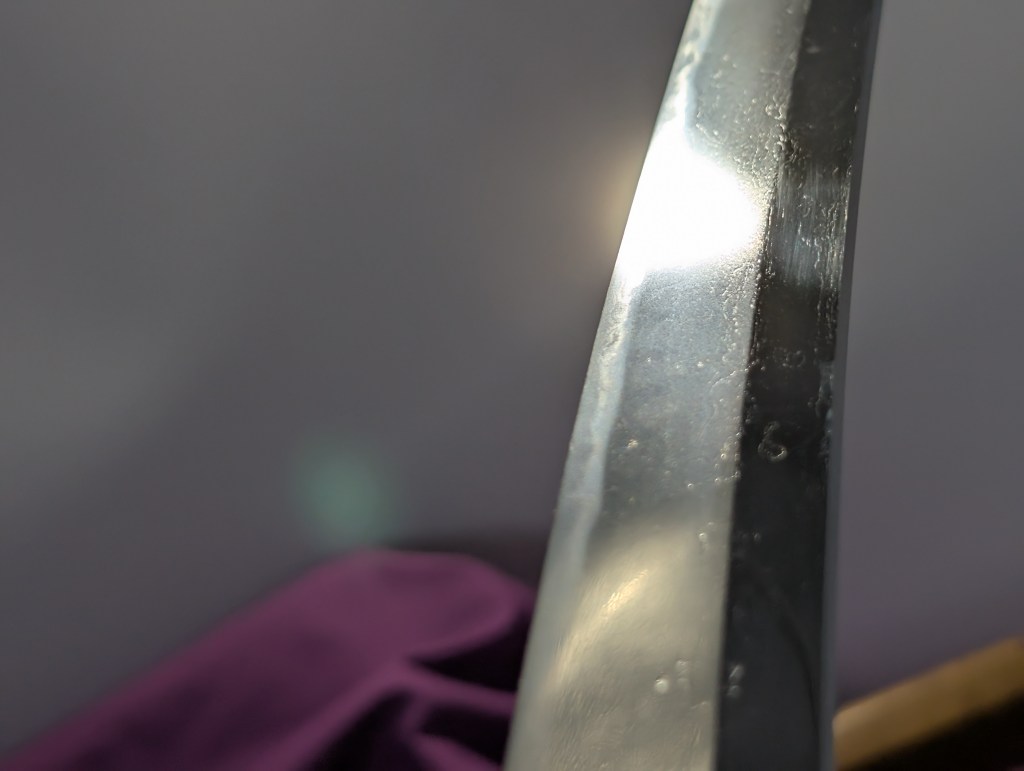
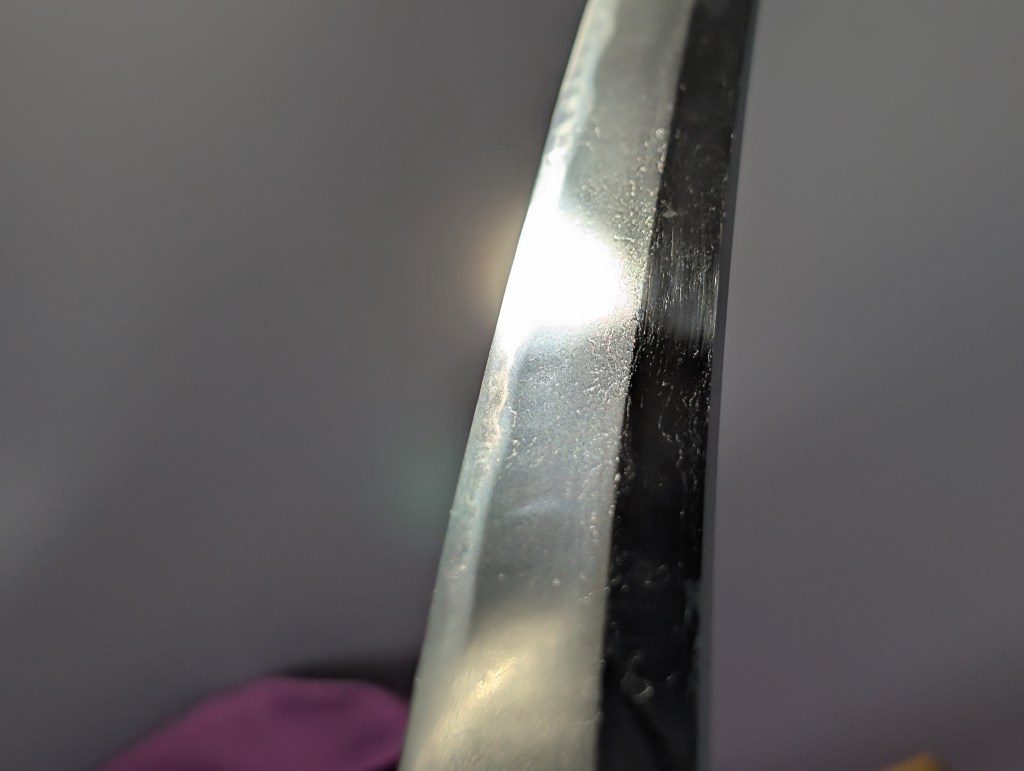
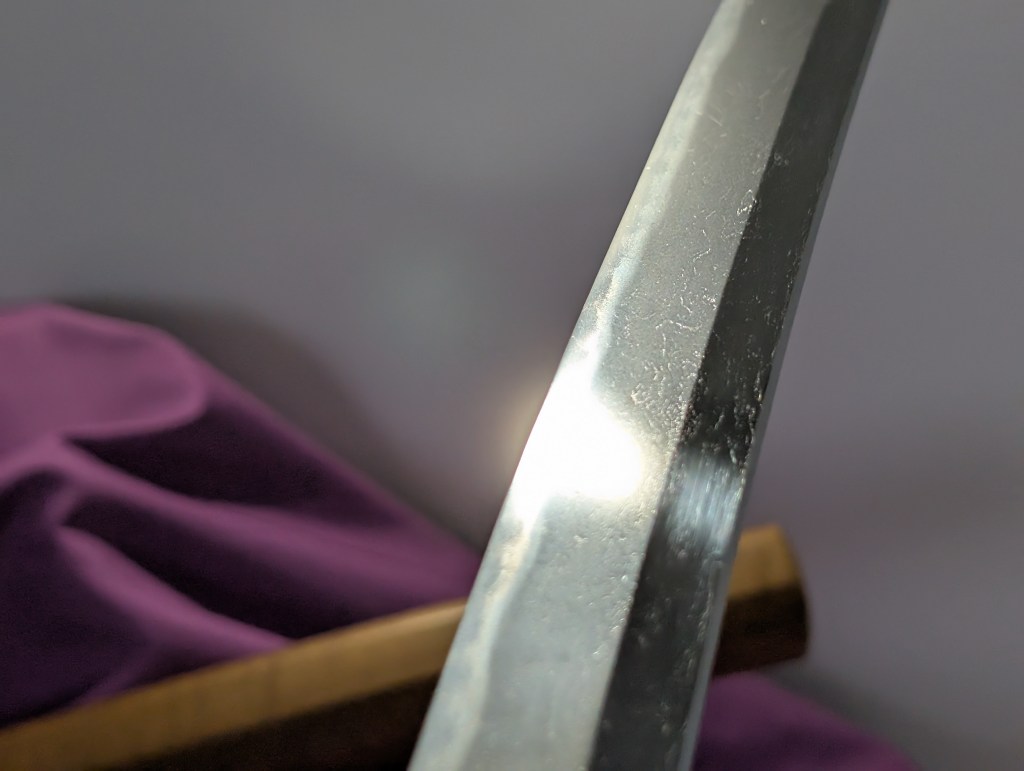
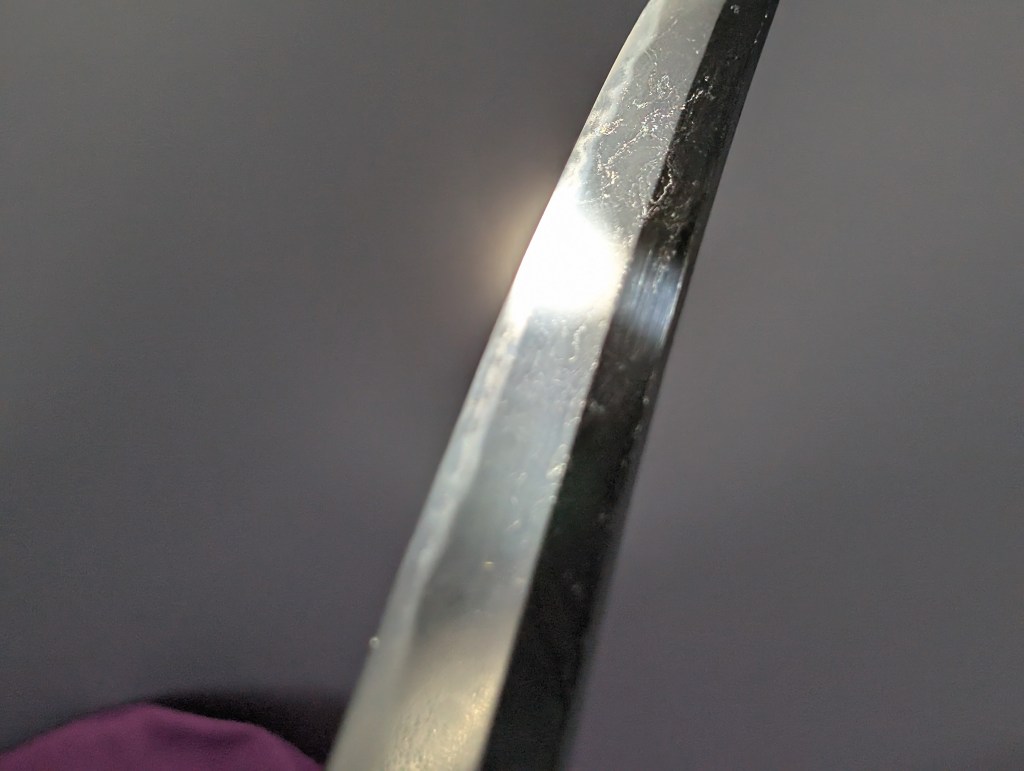
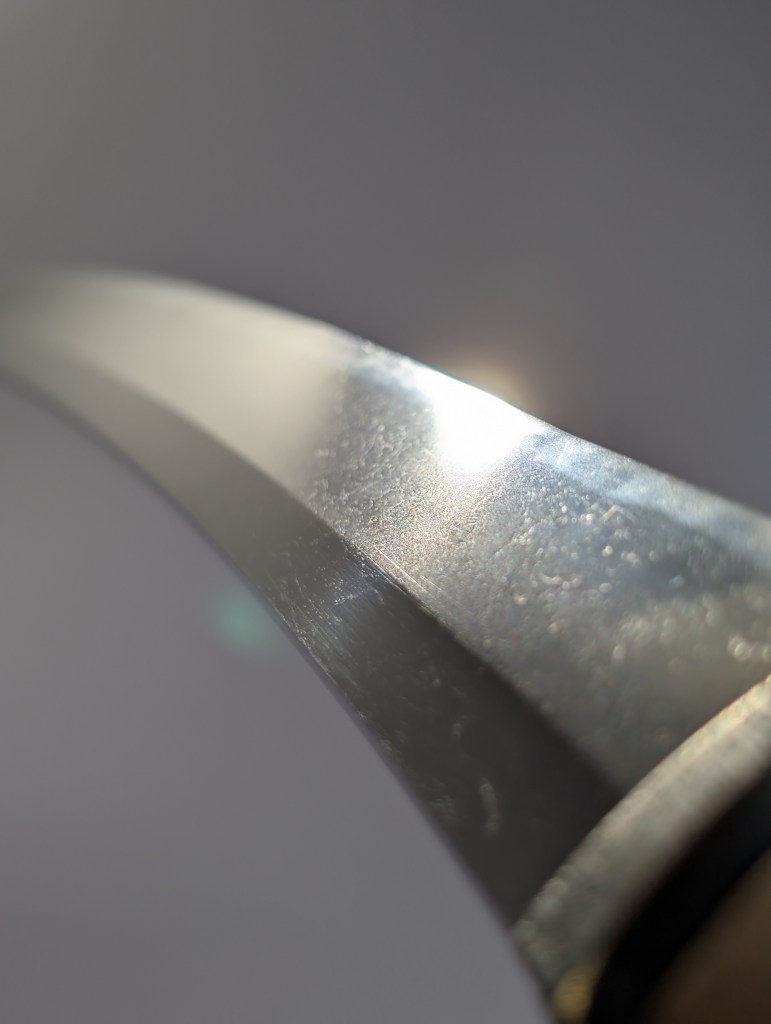
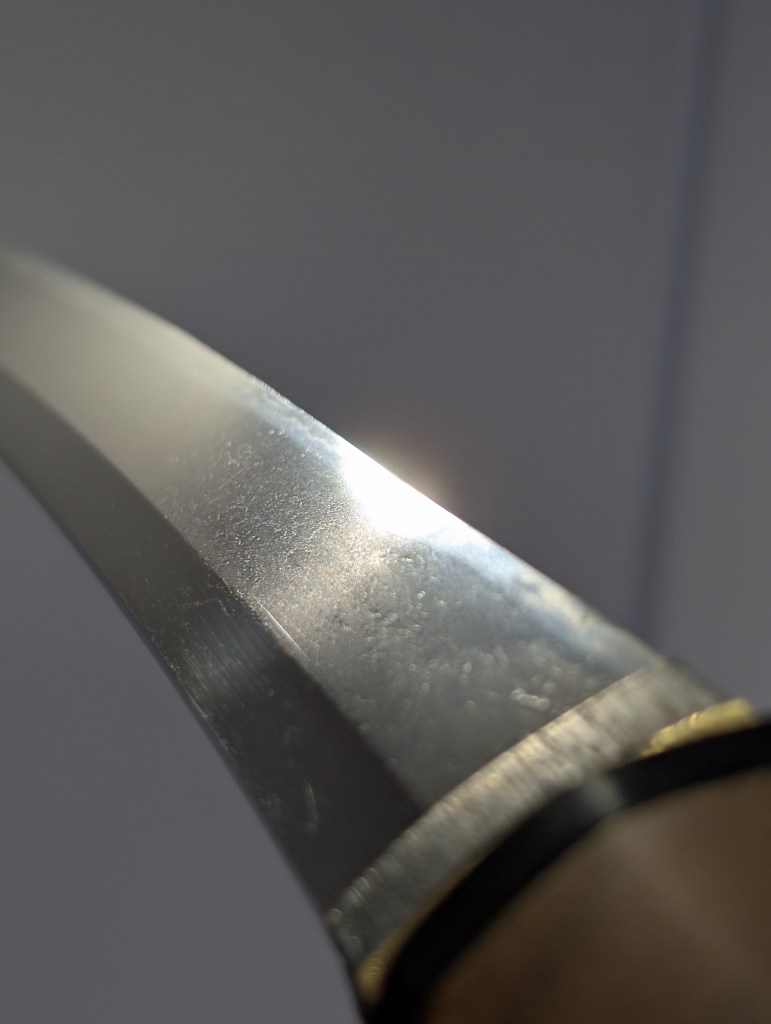
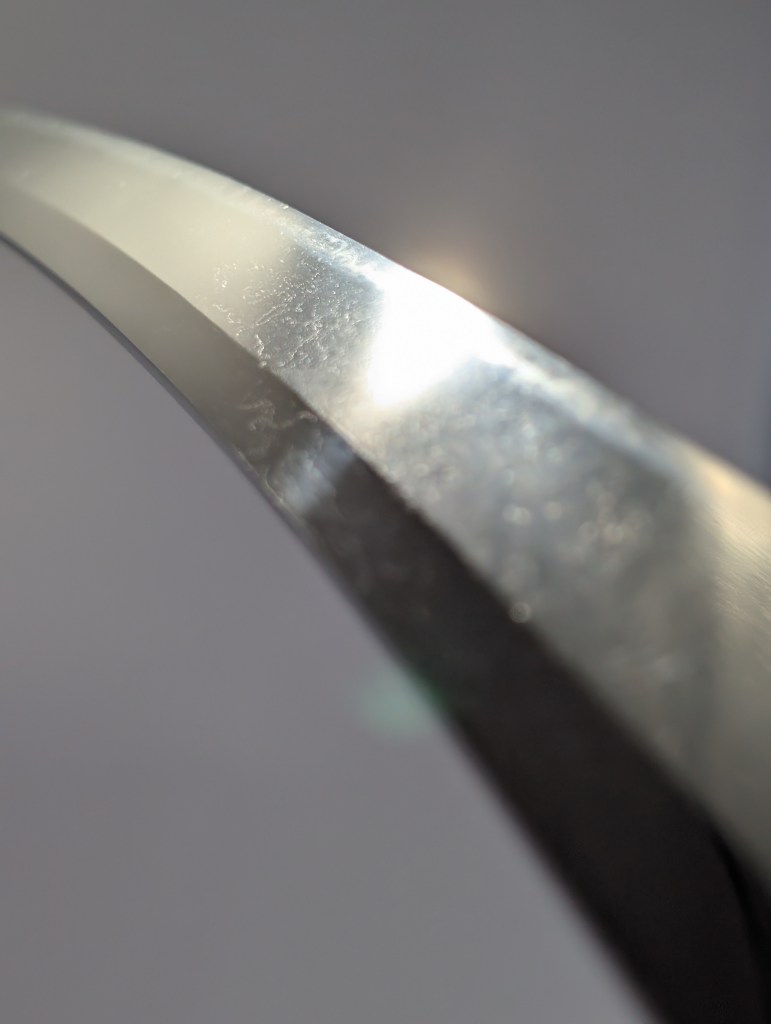
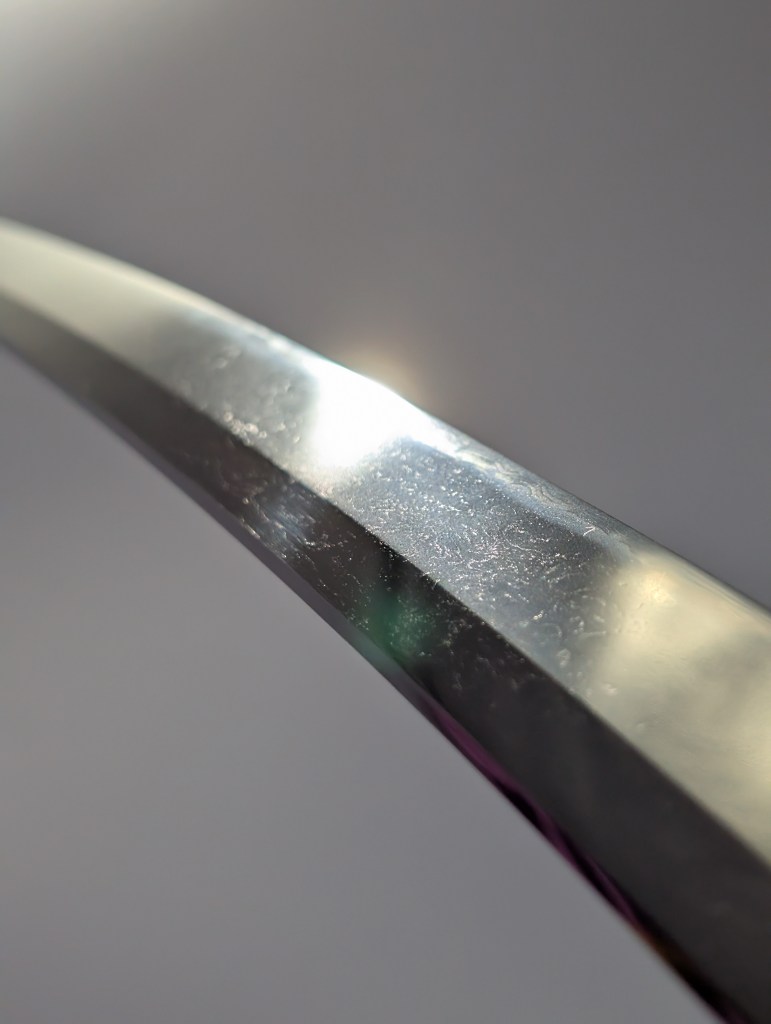
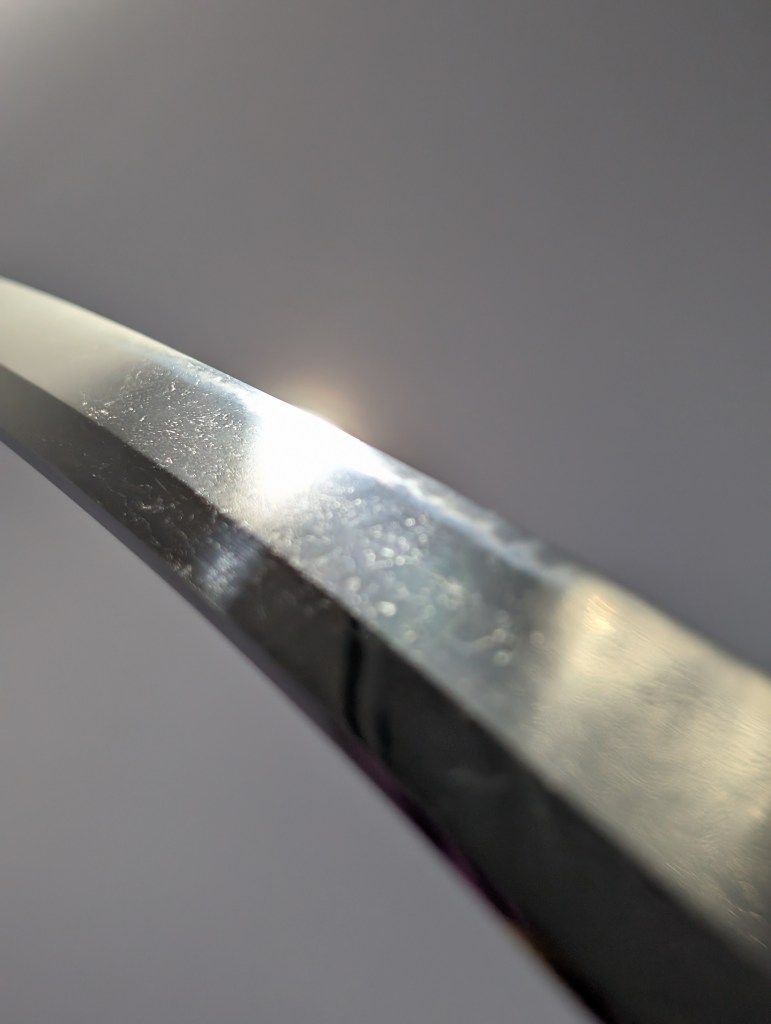
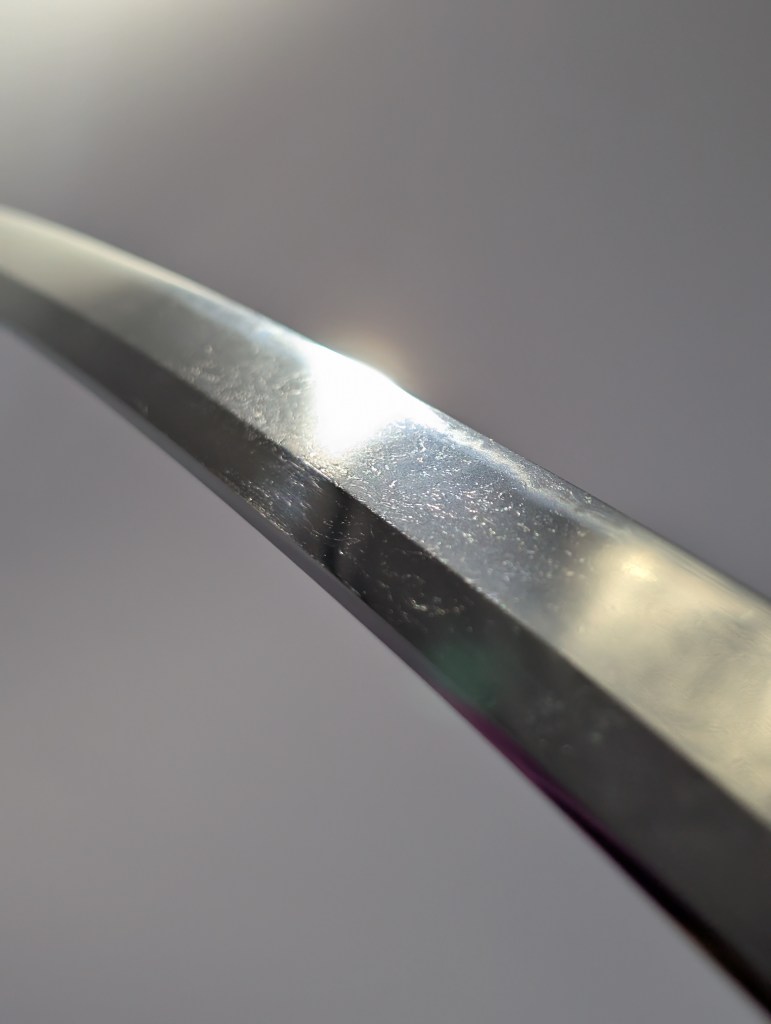
● This Bizen Kagenori Tachi is an extremely rare, signed work, which is not only ubu, but is also signed and dated. In terms of Koto era blades, this makes it an extremely relevant and rare piece since unshortened, let alone signed and dated works from the Nanbokucho era in the form of daito are scarce, to the point where, before this piece, I have never personally held one that was in the private market for sale. This sword also has an extremely large figure, which, for the Yoshii School, is almost unheard of because they are much more well known for having feminine, slender blades, even when quite healthy. As said above, the dated signature is inscribed as “On a day in August on Eitoku 1384” (永徳二二年八月 日), which would indicate that this is a work done by the fourth Kagenori. The hamon on this sword is done in a beautiful choji-gunome style, which is very reminiscent of the Fukuoka Ichimonji School, and is atypical for the Yoshii School as well, making this not just a unique sword in the signature, date, condition, and shape, but in the very deki in the hamon as well. The itame mokume mix is absolutely stunning to behold as well and suits the sword perfectly.
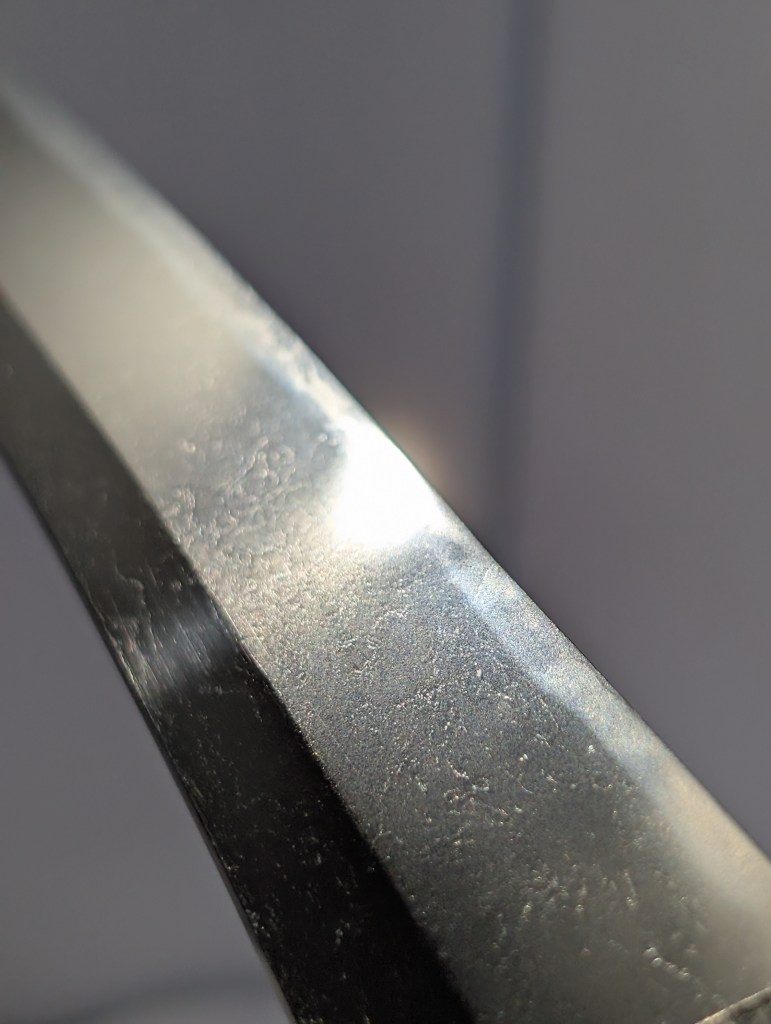
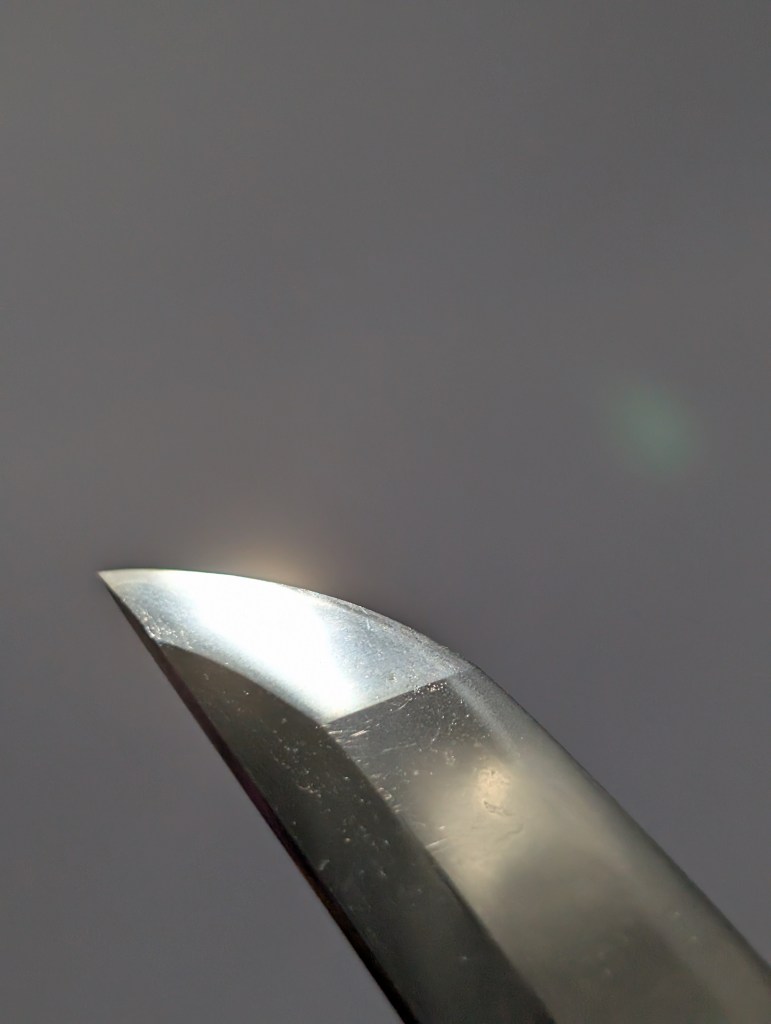
There are also multiple old kirikomi on this sword, one very visible on the mune, with some exceedingly small ones which are less visible as well, and a single kirikomi on the shinogi alongside as a dent in the ha towards the ha-machi, where the user repelled an enemy strike. It is interesting to see such a dent on the blade so low because, in most cases, these result in a substantial chip to the blade. These kinds of dents are much more common to see on the kissaki on account of their use in thrusting. This sword is also remarkably healthy given its age, and given its signs of use in combat, I have seen many Gendaito in similar or even worse condition in my time studying swords. The boshi appears to be a standard ko-maru boshi, as it is similar to many swords of the era. The boshi is finished remarkably close to the edge of the kissaki, and is also in fine condition.
The dimensions of the sword are ● Nagasa: 63cm ● Motohaba 3.1cm ● Motokasane 5.9mm ● Sakihaba: 2.1cm ● Sakikasane: 4.4mm THE BIZEN YOSHII SCHOOL 備前吉井派 The Bizen Yoshii were a group of swordsmiths who worked in Bizen Province in the Kamakura Period until the Muromachi Period. They were called the Yoshii School on account of their being situated along the Yoshii River in Bizen Province. This river was extremely rich in iron sand, which they used to produce high-quality swords. The Yoshii school, in general, was rather large and spanned multiple provinces. There were Yoshii smiths in, of course, Bizen Province, which is the core focus of this written piece; however, Mimasaka Province, just north of Bizen, alongside two groups in Izumo Province called Yoshii Doei and Yoshii Chutei, respectively. The Bizen Yoshii group had two main lines: the Kagenori line and the Naganori line. The Kagenori line learned from the swordsmith Osafune Kagehide, who was one of the brothers of the legendary swordsmith, Osafune Mitsutada.
Shodai Kagenori himself, on the other hand, did not originate from the Osafune line but is instead believed to be a smith of the Fukuoka Ichimonji School, which makes the Yoshii School a direct branch of the Fukuoka Ichimonji School. The connection with both Ichimonji and Osafune Mitsutada makes this school possibly one of the most interesting and underrepresented schools of Bizen swordsmithing as a whole. The Naganori line is somewhat smaller than the Kagenori line and also descends from the Fukuoka Ichimonji School by way of Ichimonji Muneyoshi. They mostly made their swords in a perfectly uniform ko-gunome, with the dips and points of the ko-gunome hamon being perfectly uniform. They also occasionally made swords in other Bizen styles, such as choji-gunome, but the ko-gunome deki in the hamon is most common. The makeup of their hamon is typically done in ko-nie and is very tightly knit together. Sunagashi can be present as well as togari-ba. In terms of jigane, they have a very typical Bizen look to them and are normally a mix of itame and mokume hada.
Written by Charles White