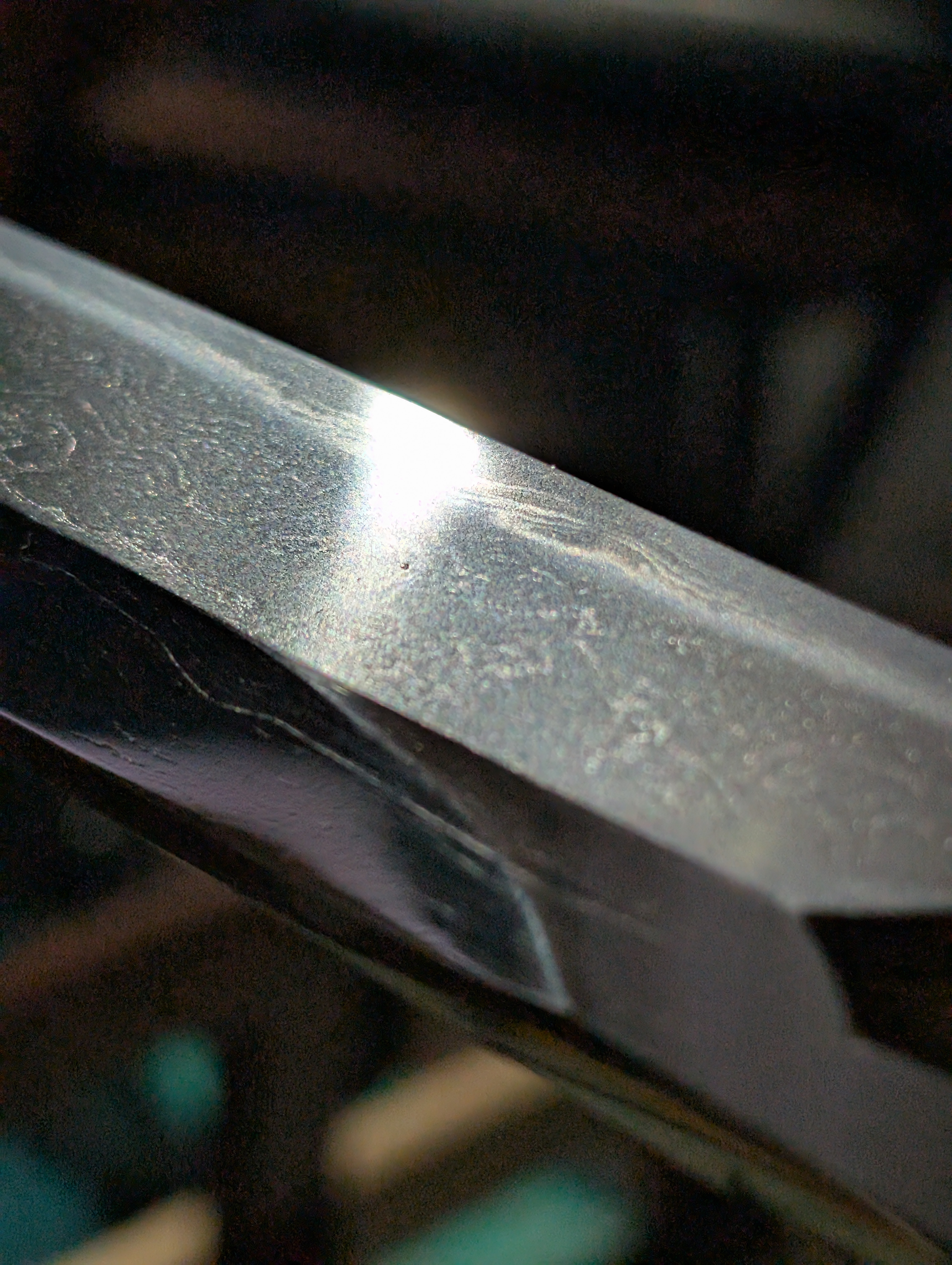
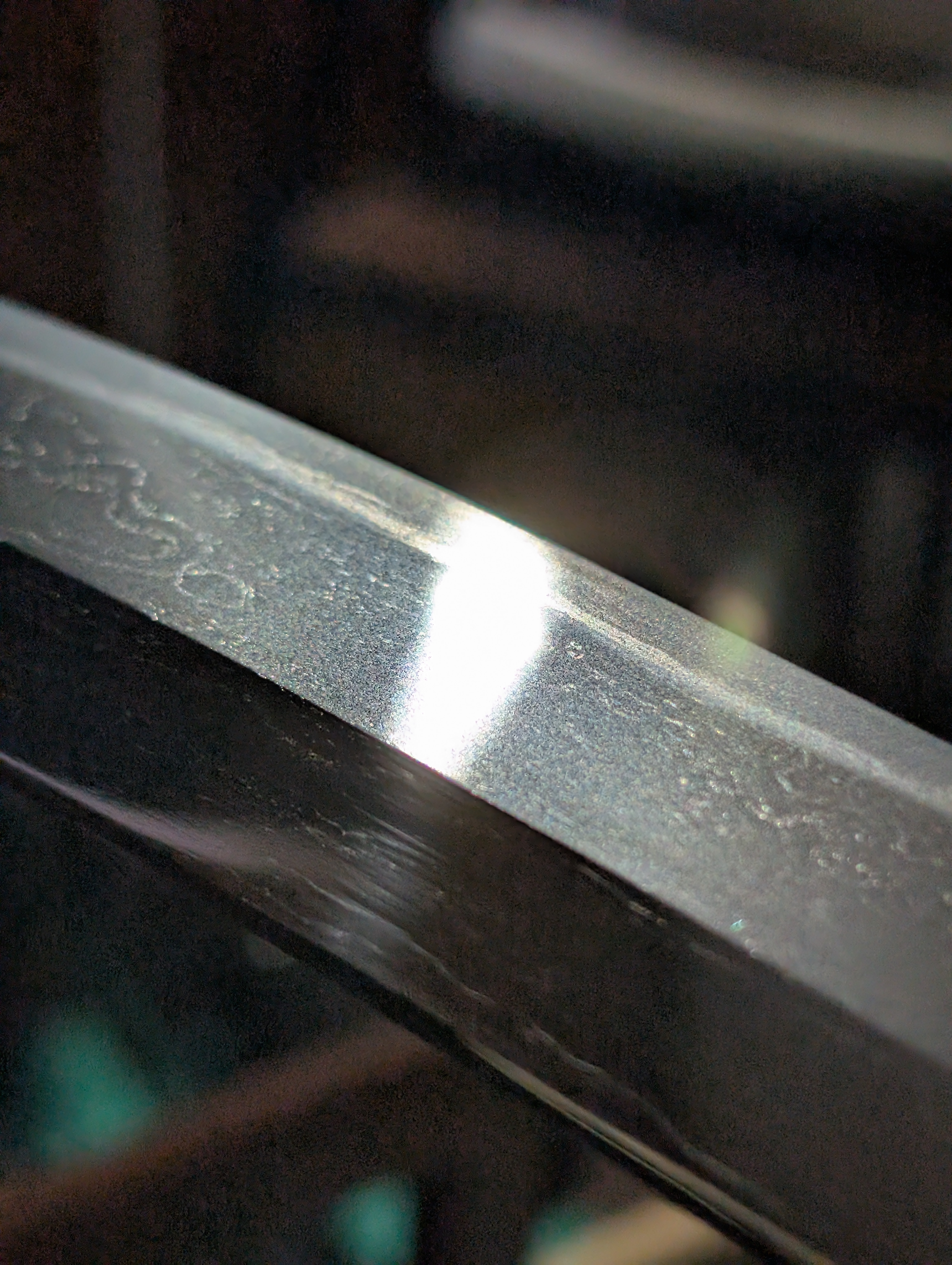
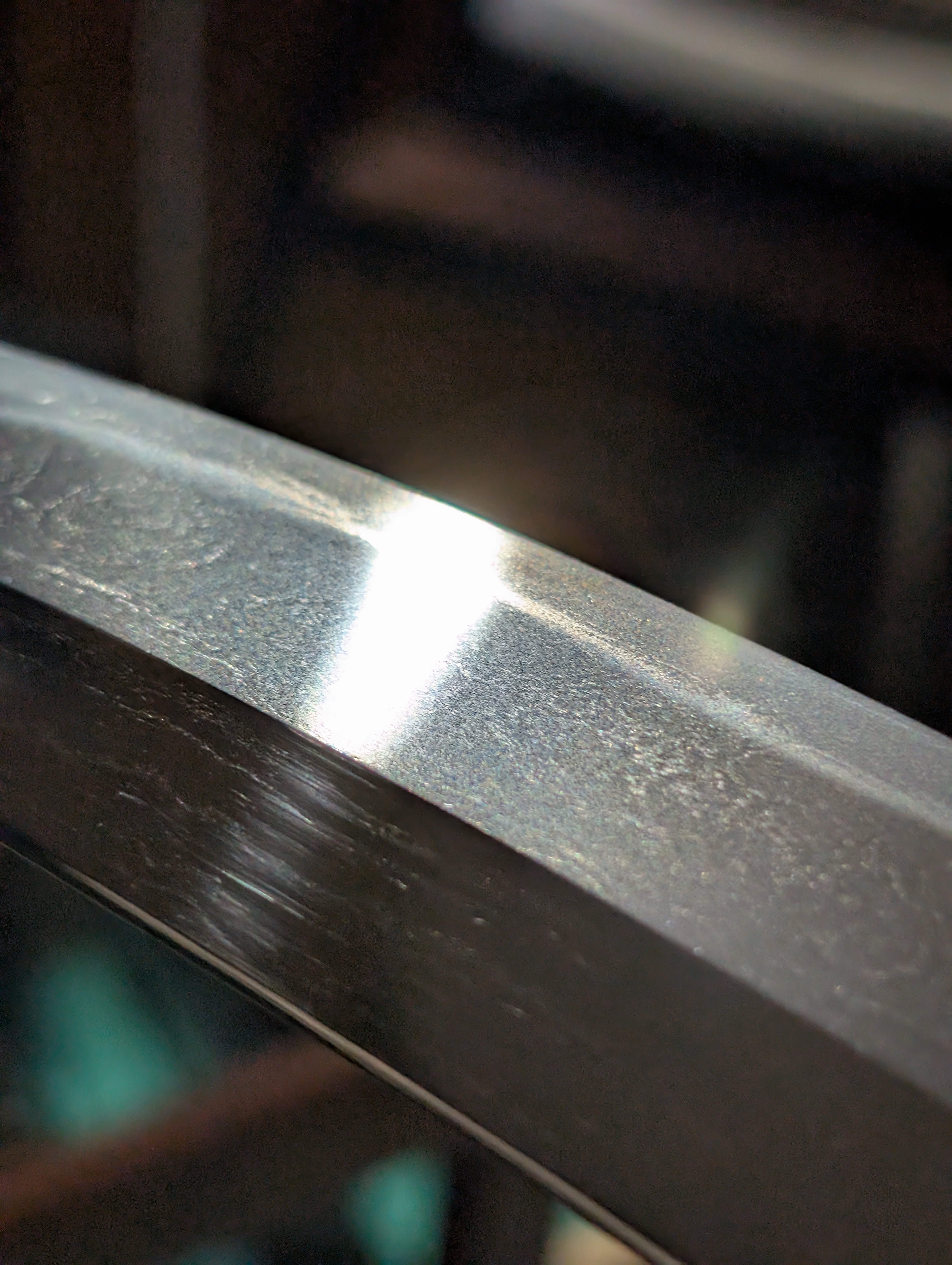
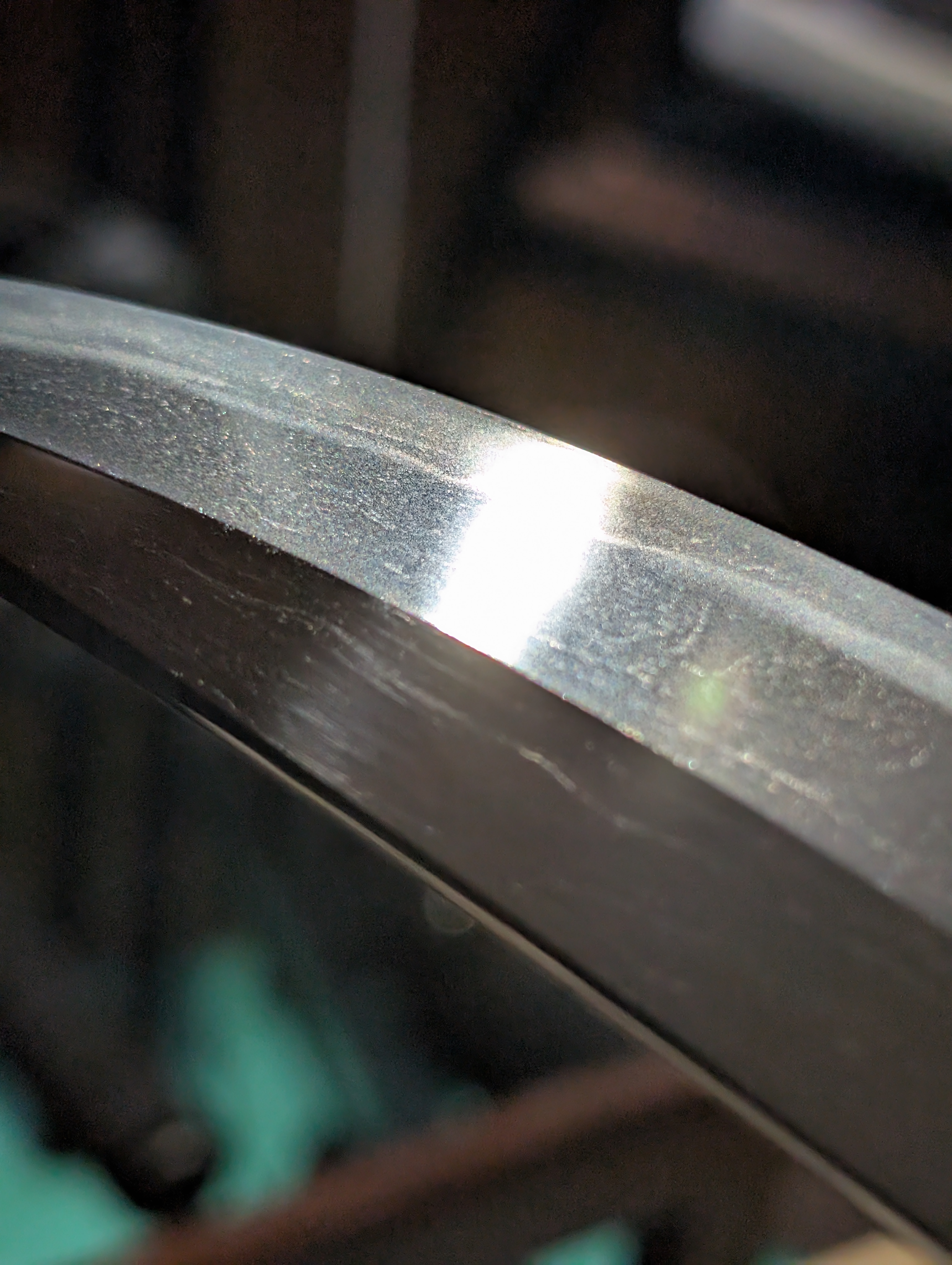
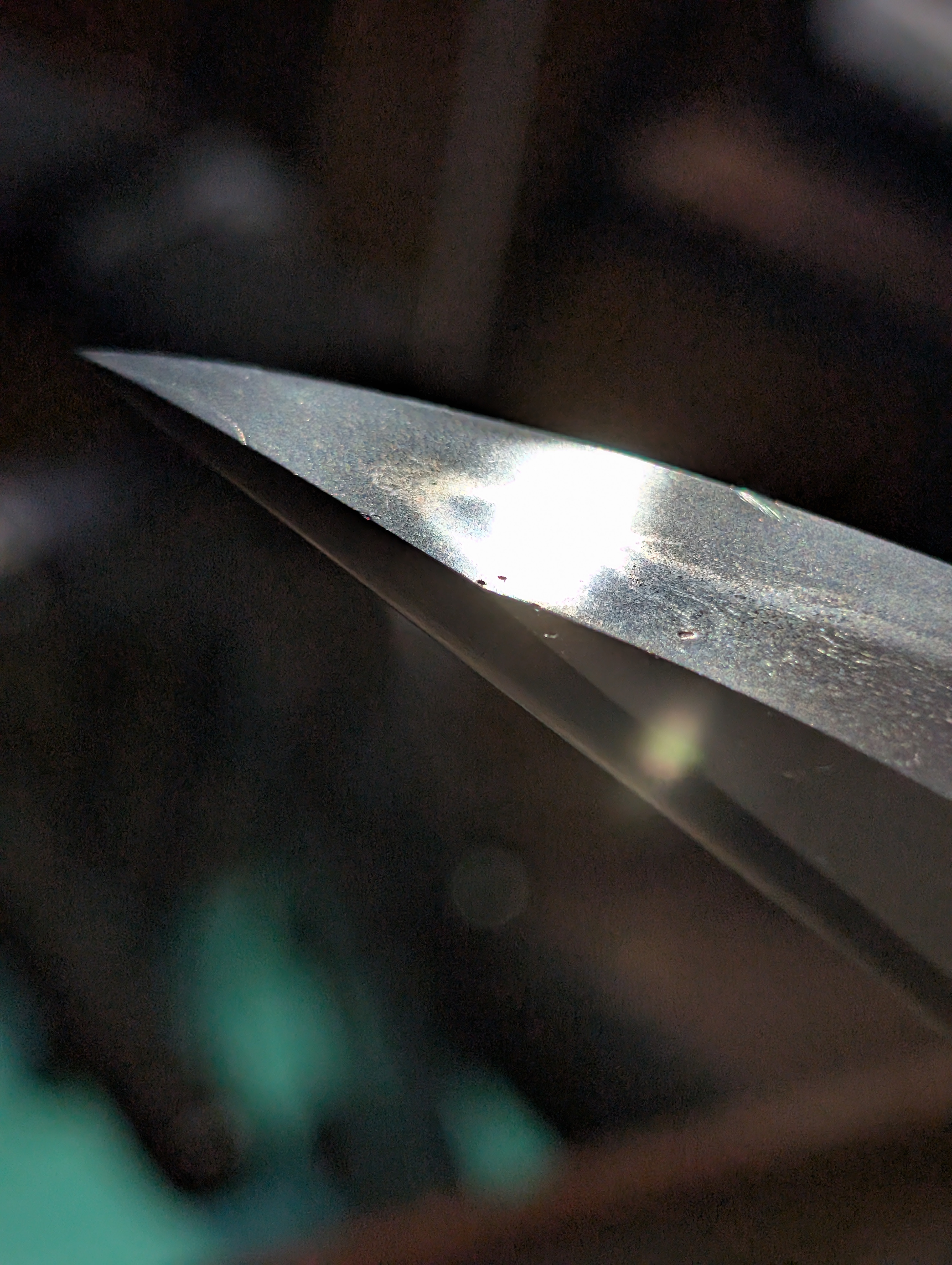
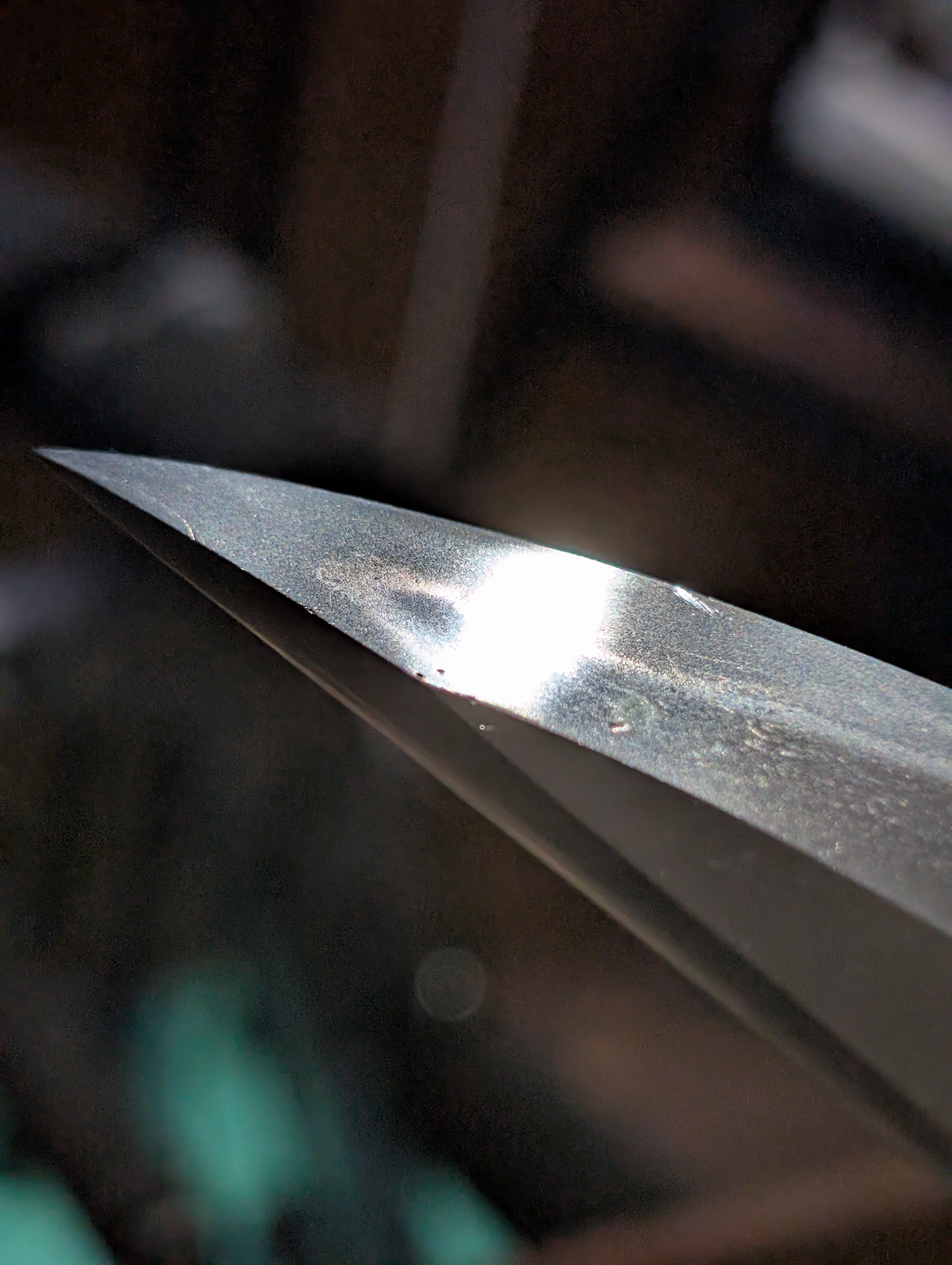
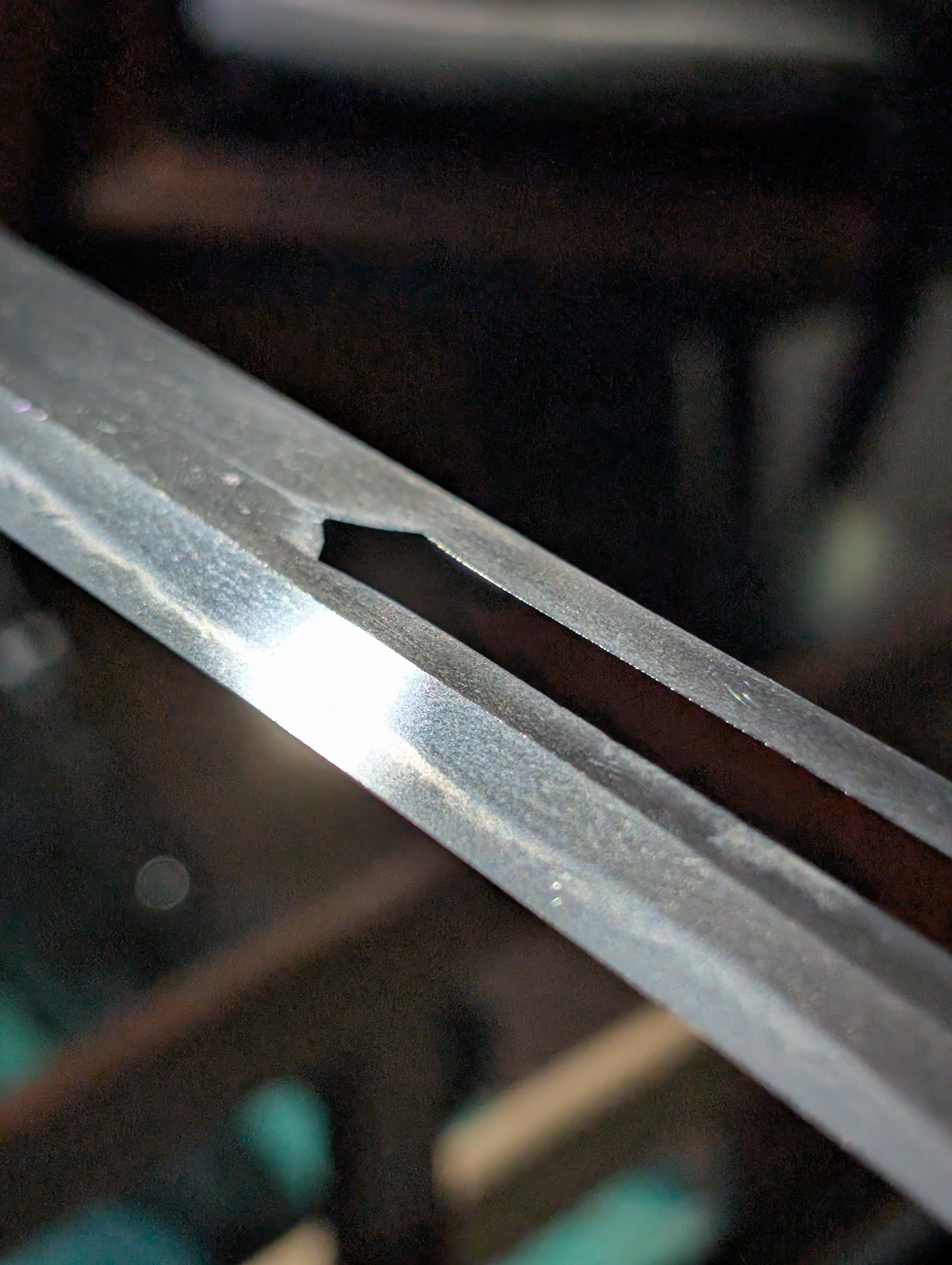
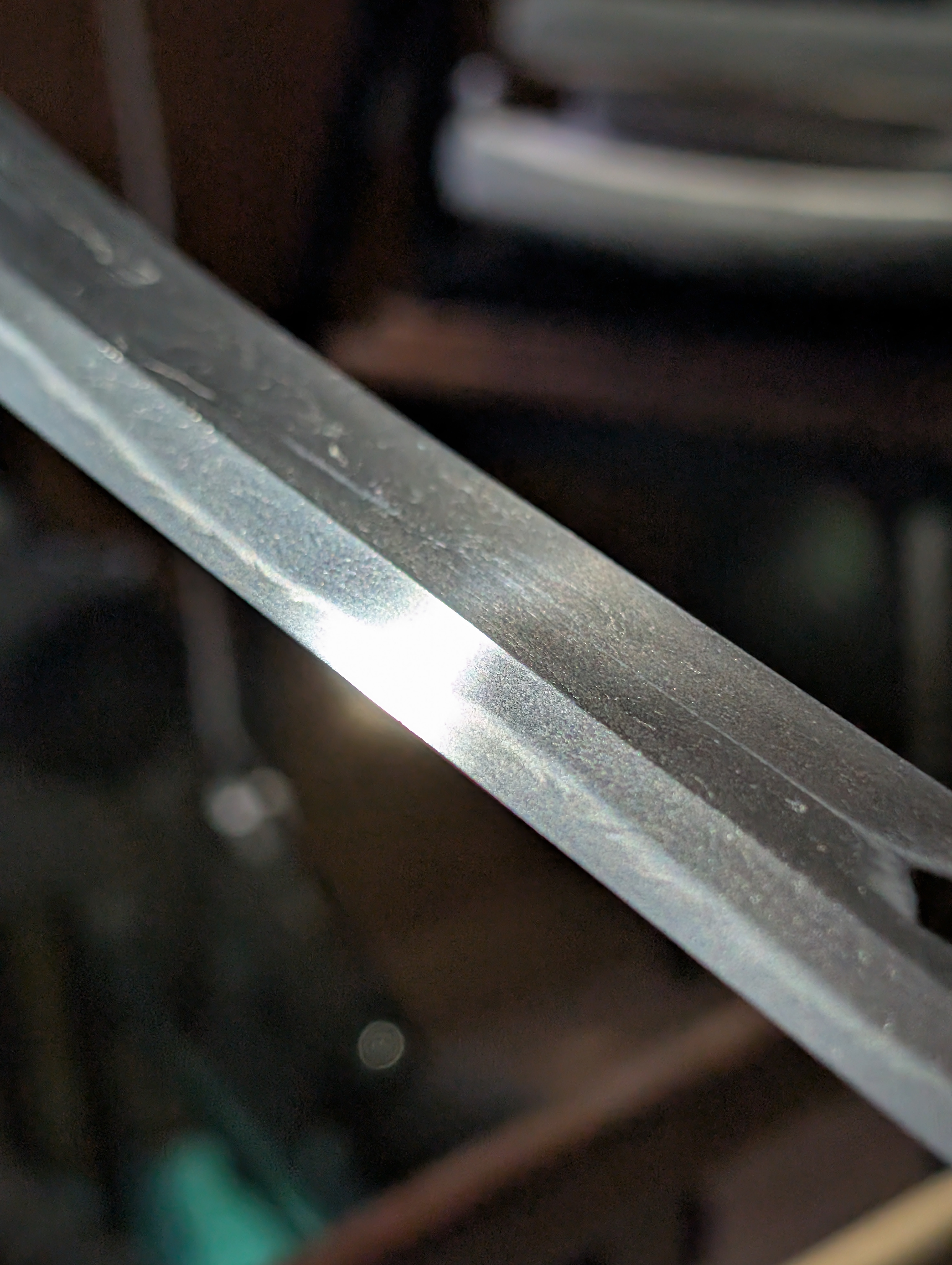
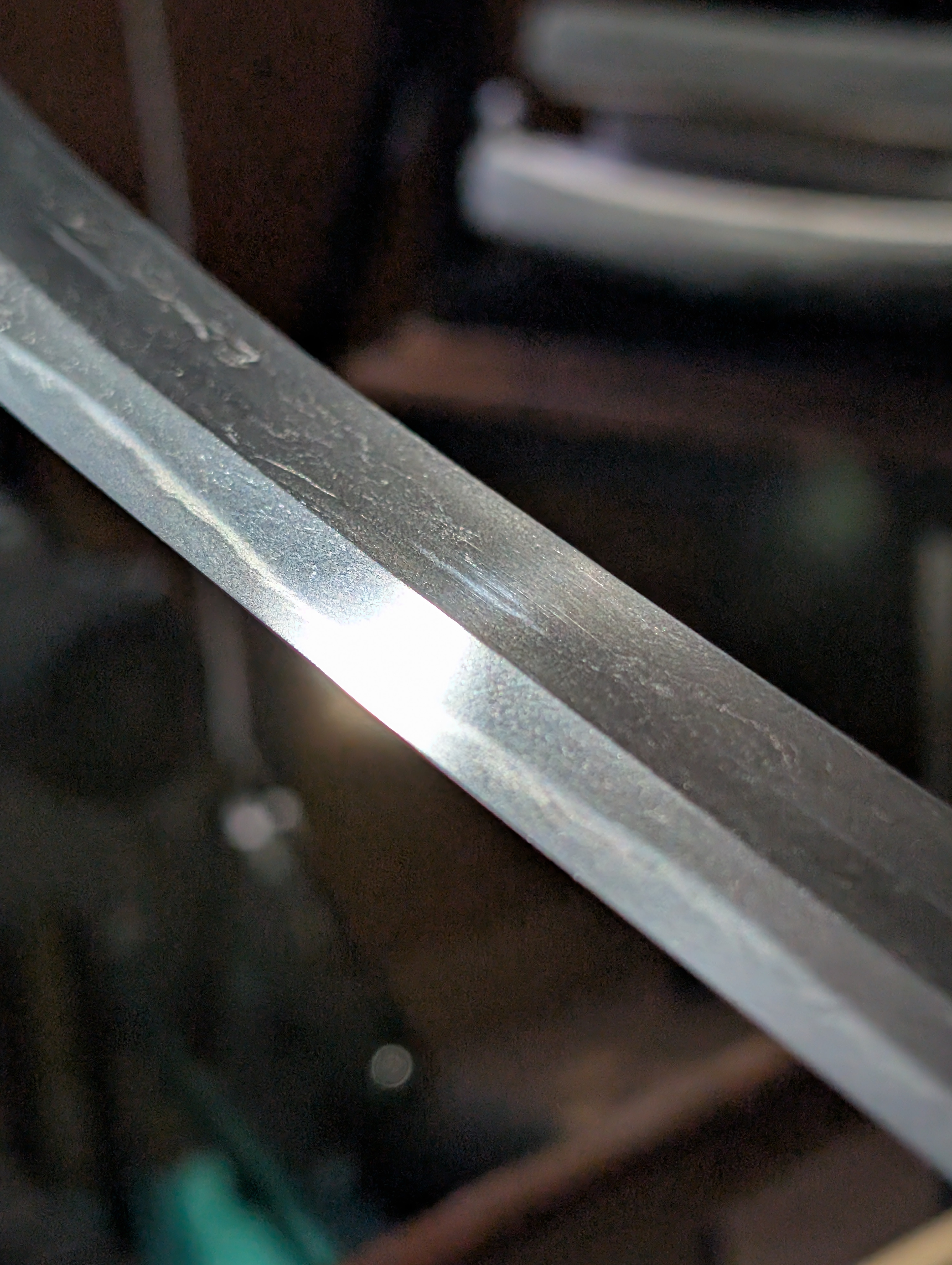
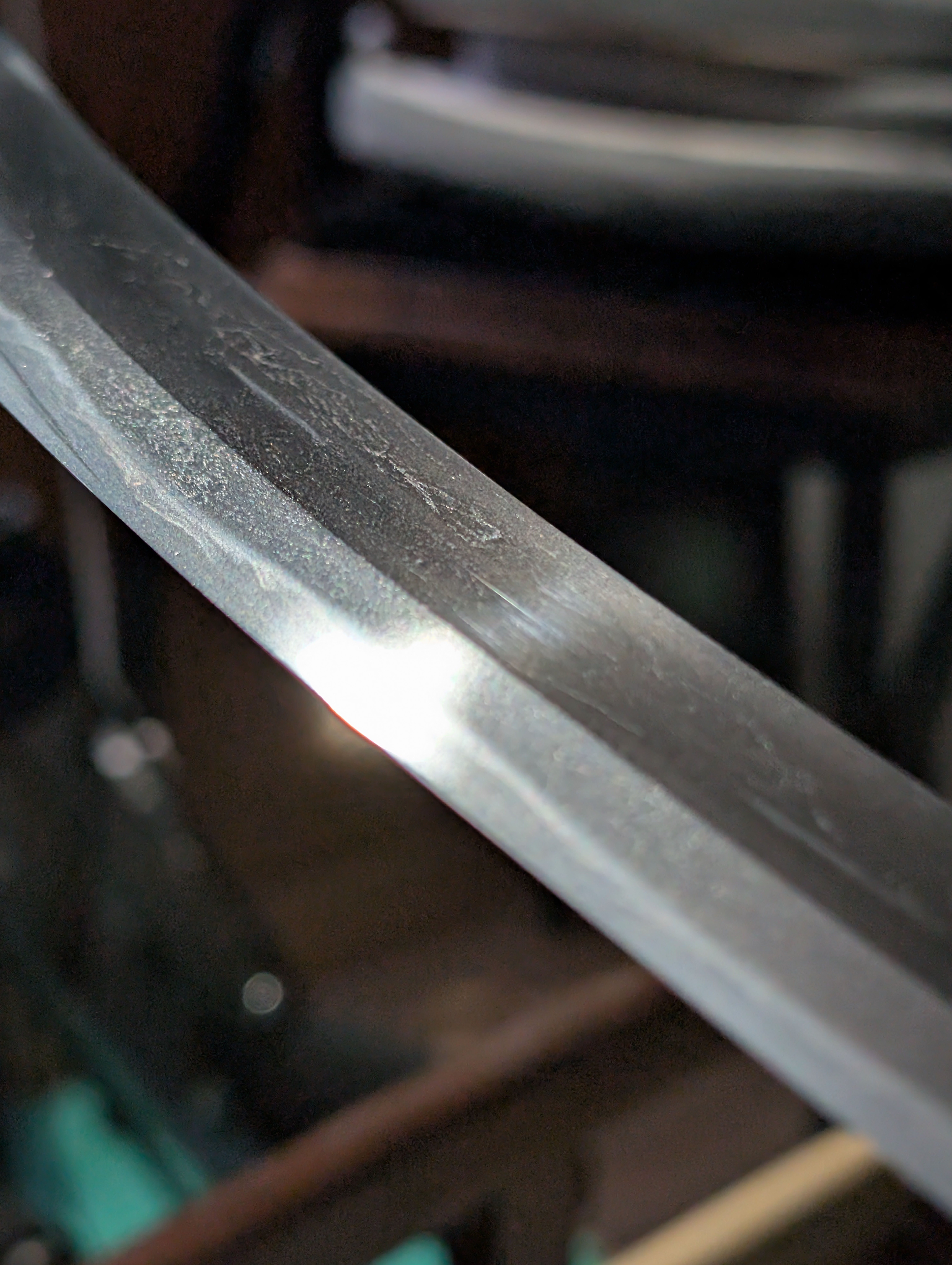
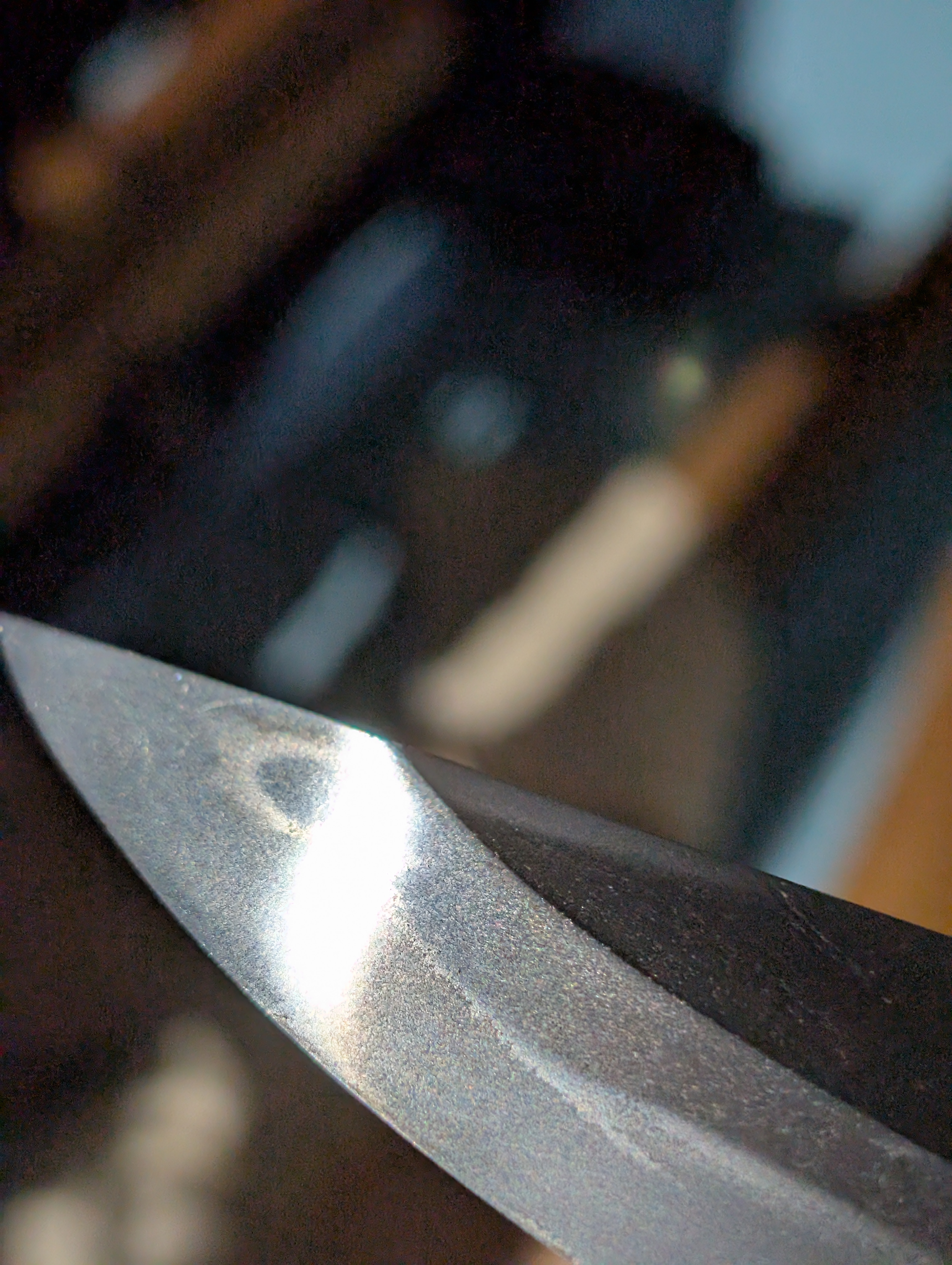
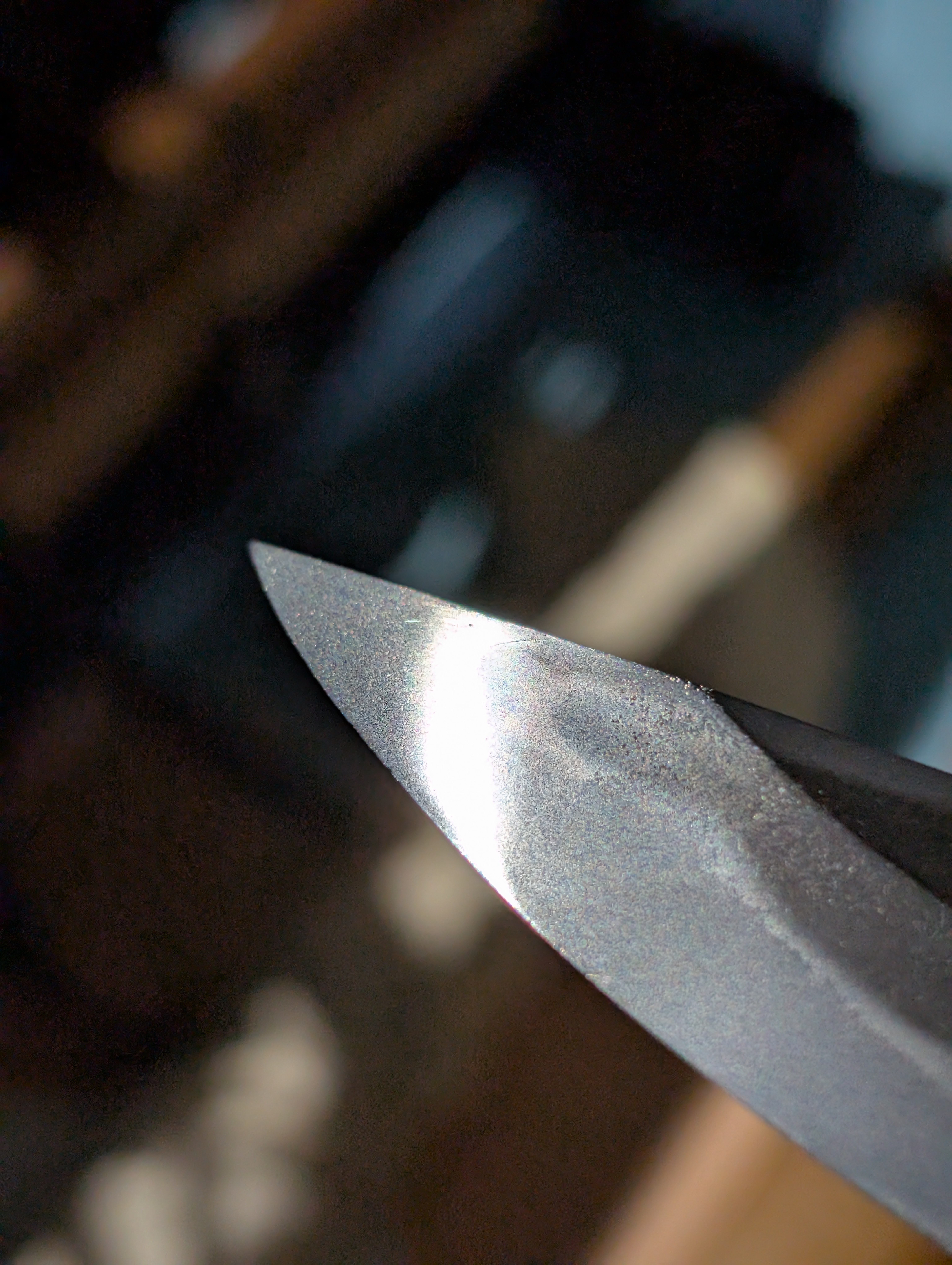
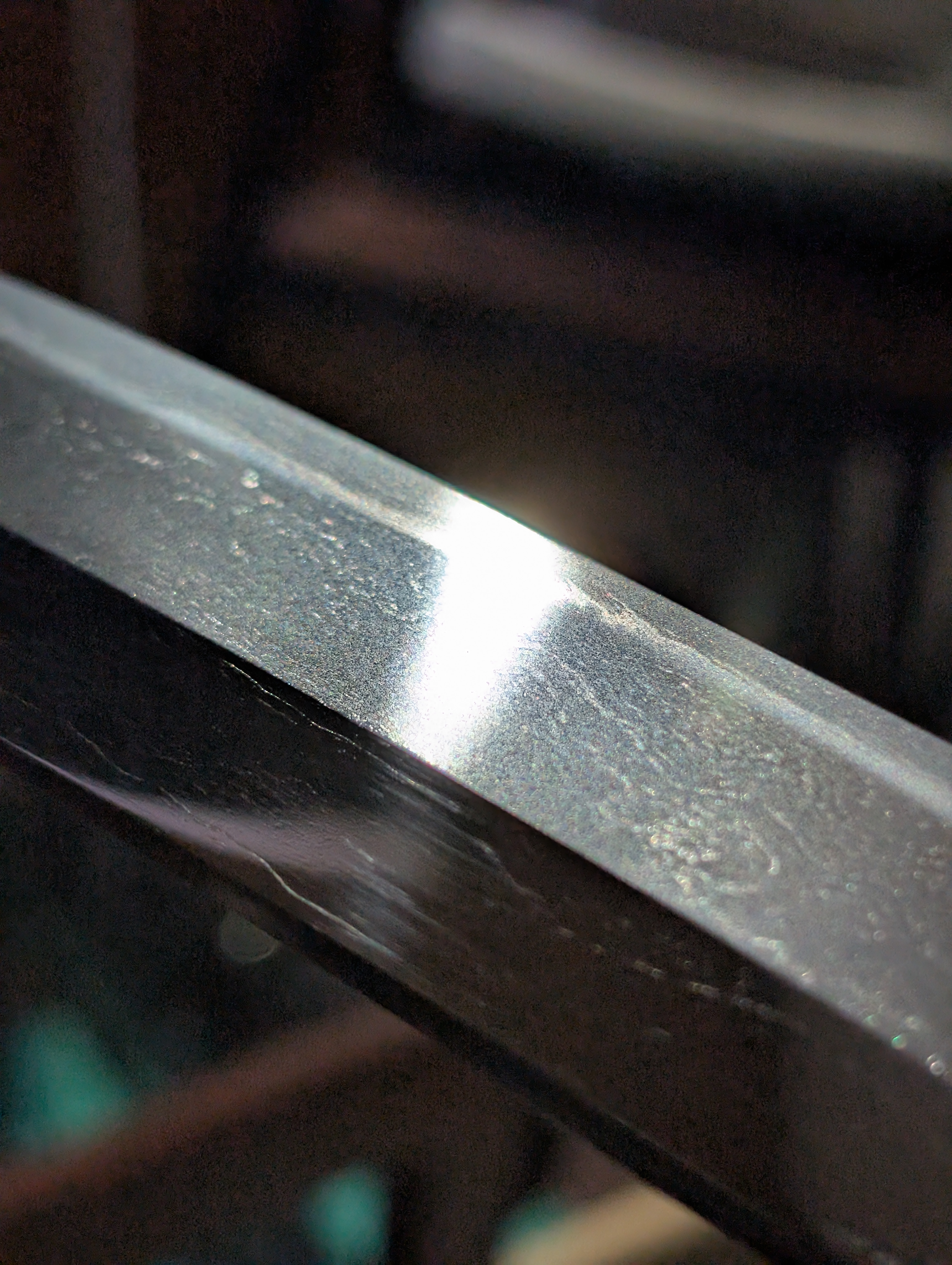
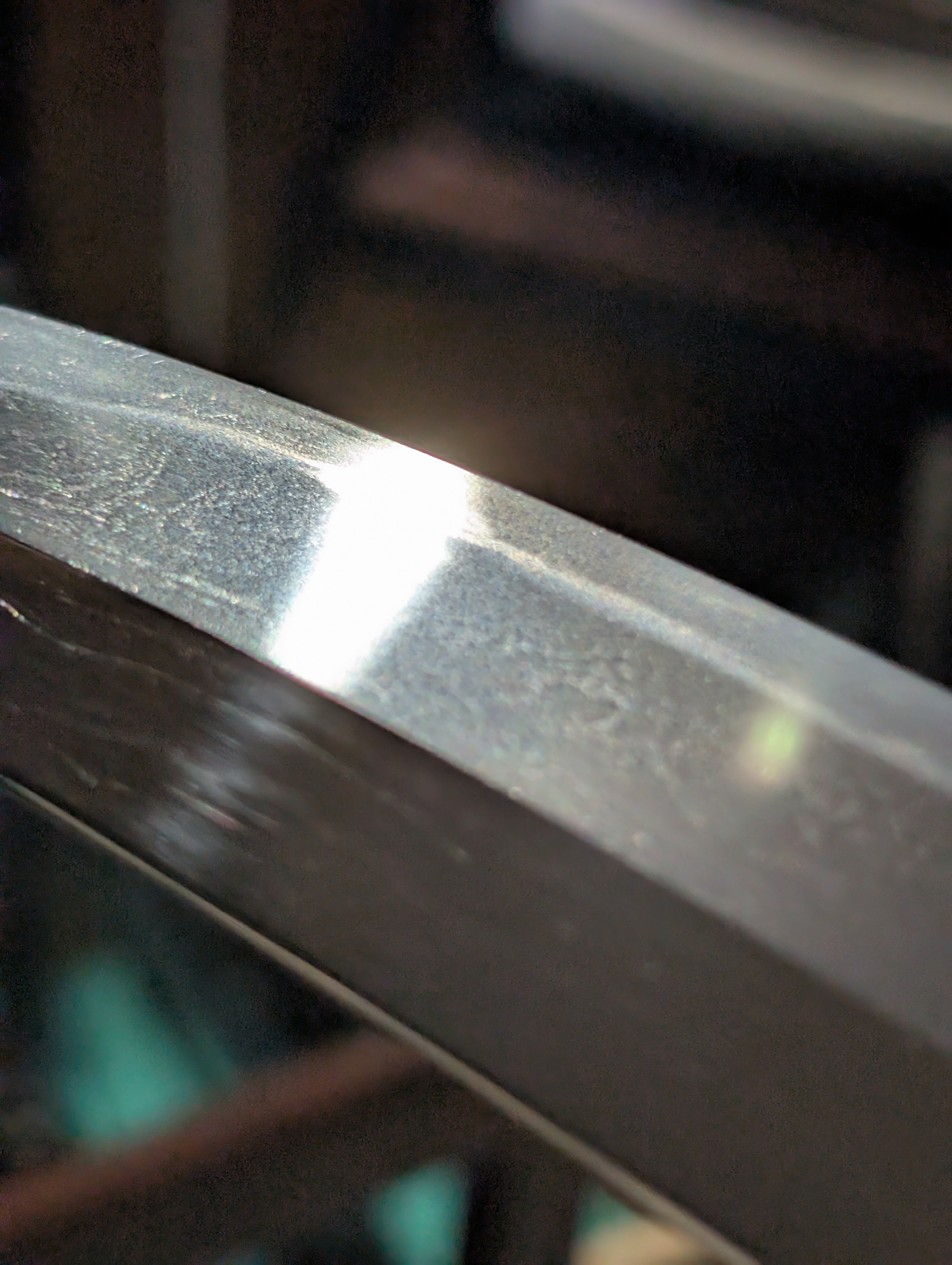
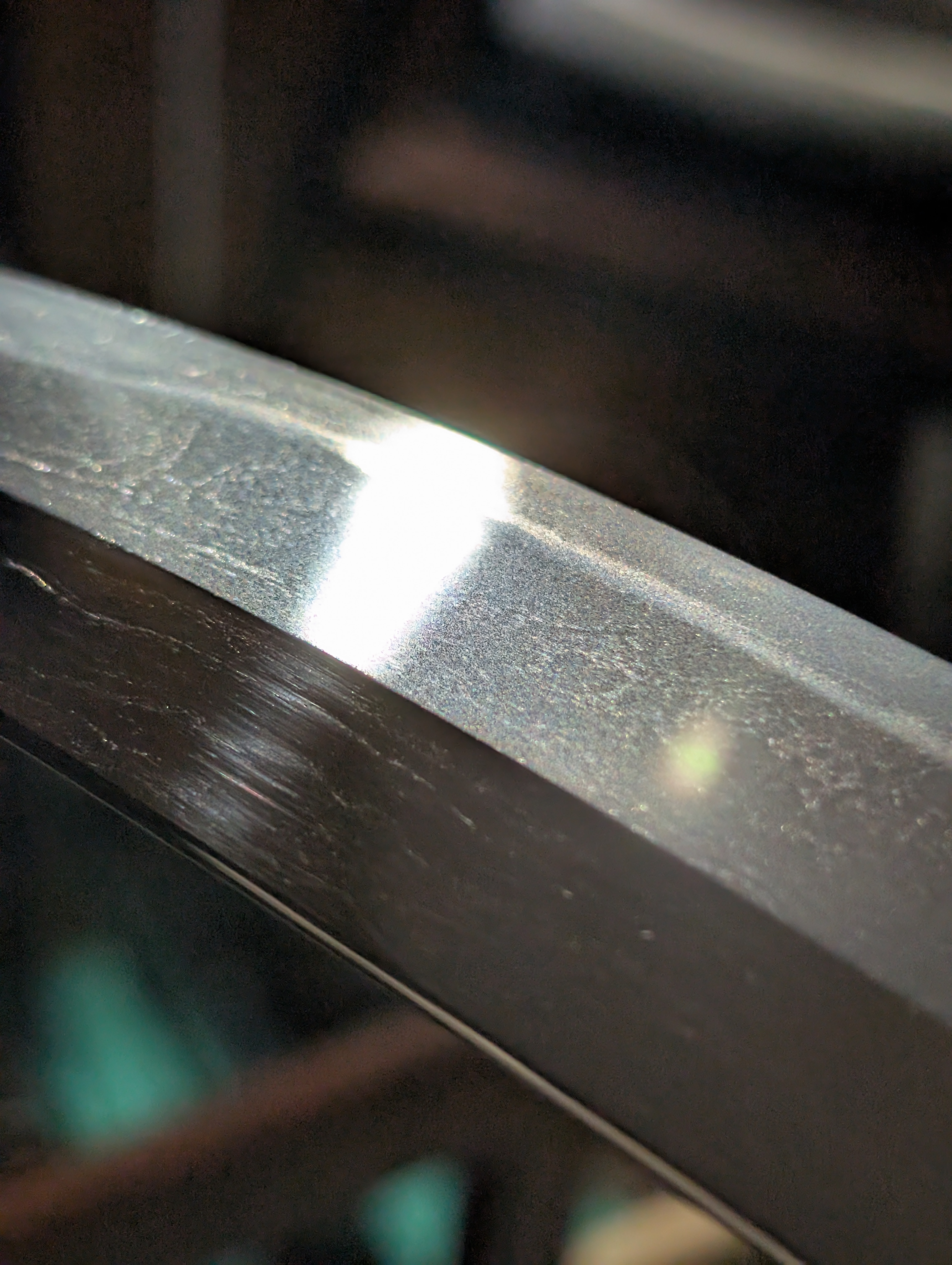
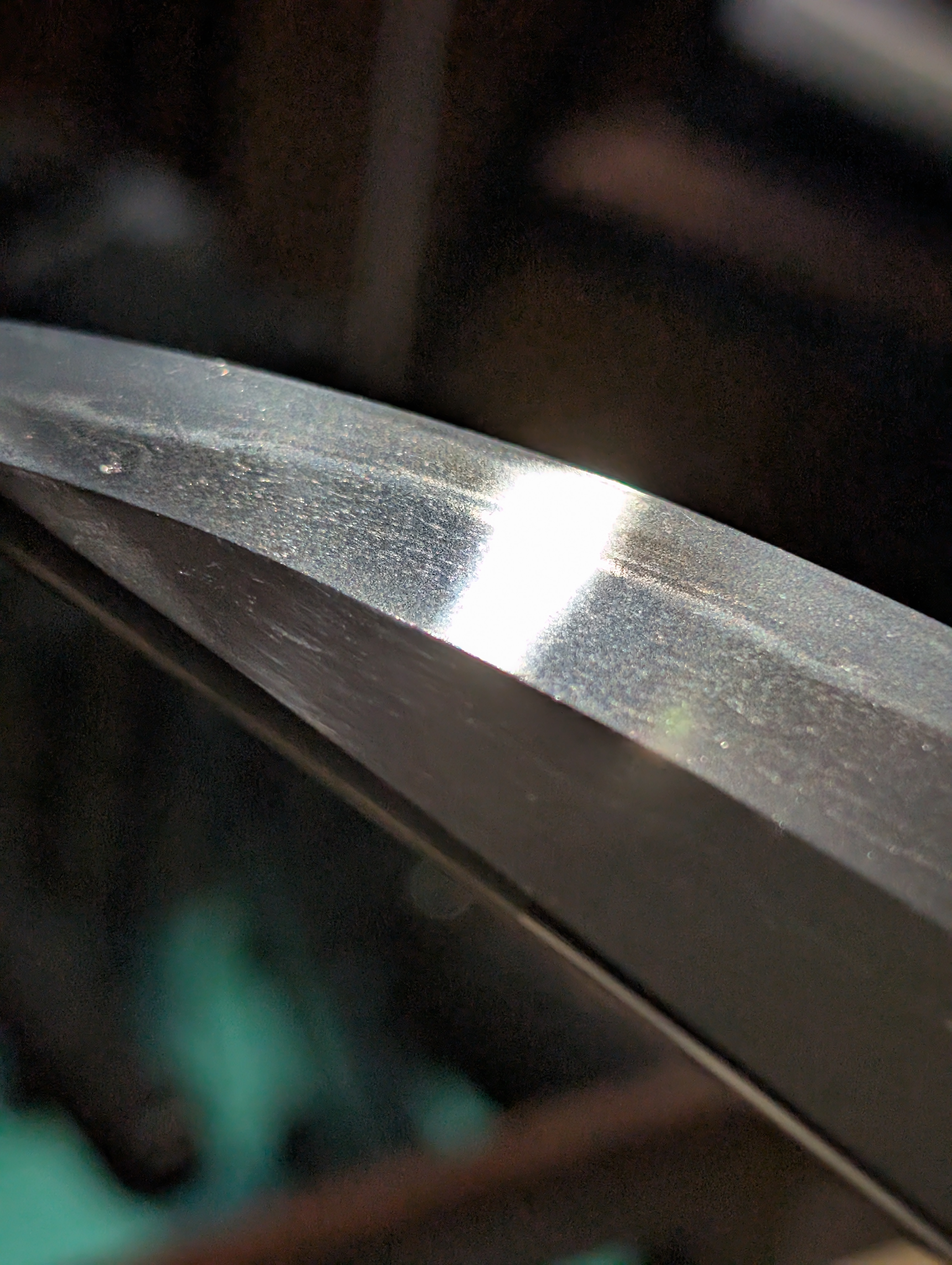
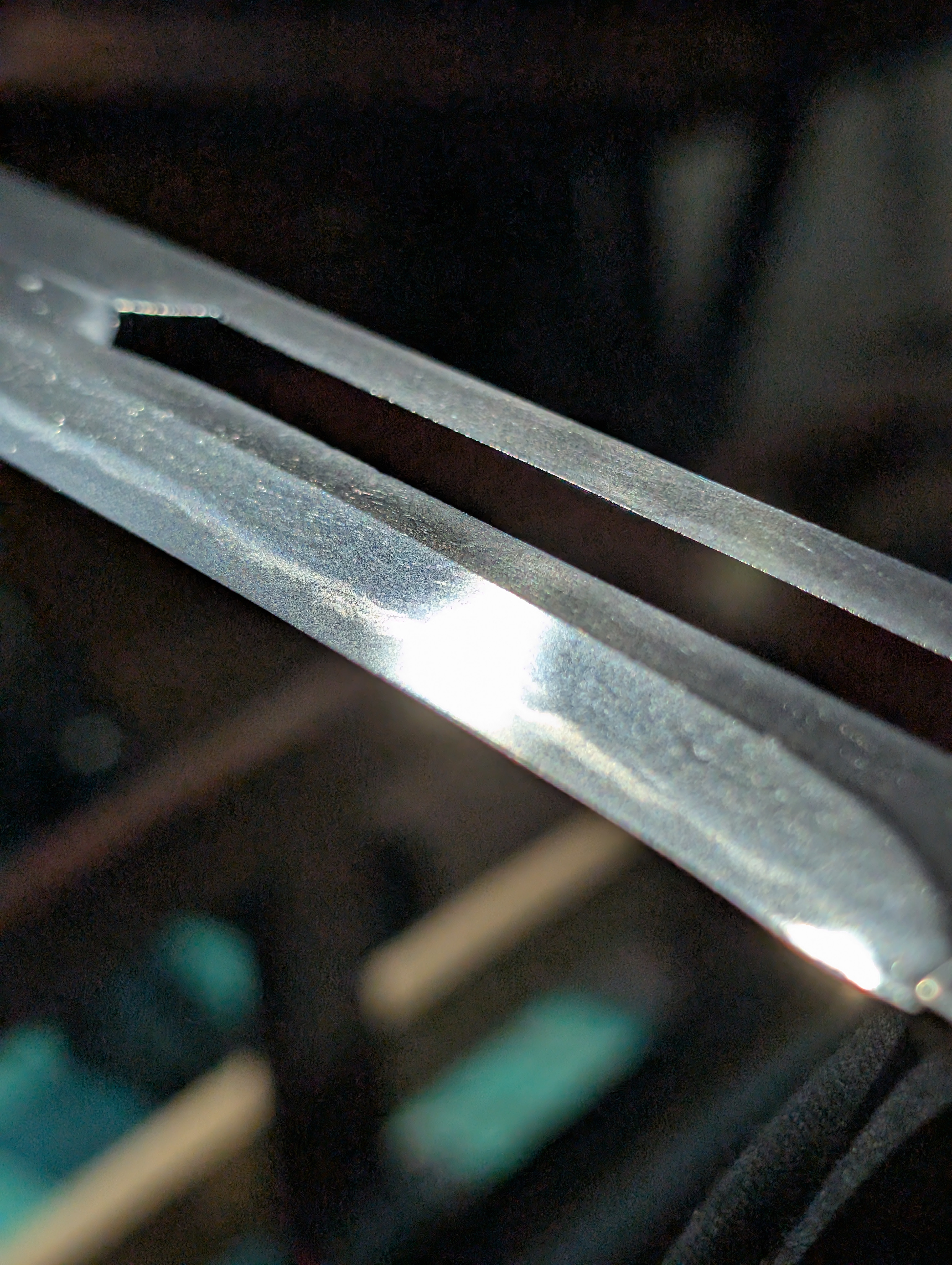
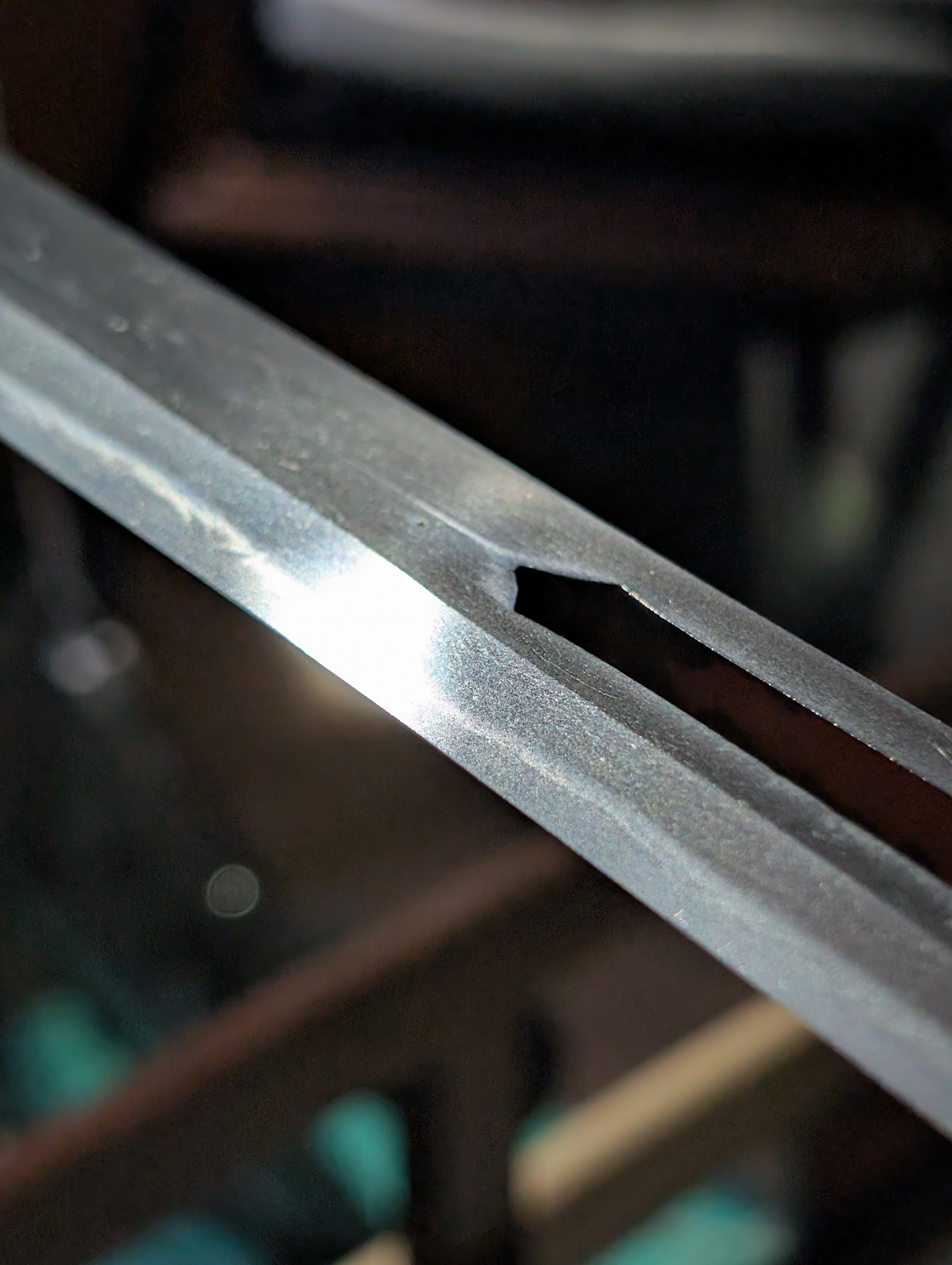
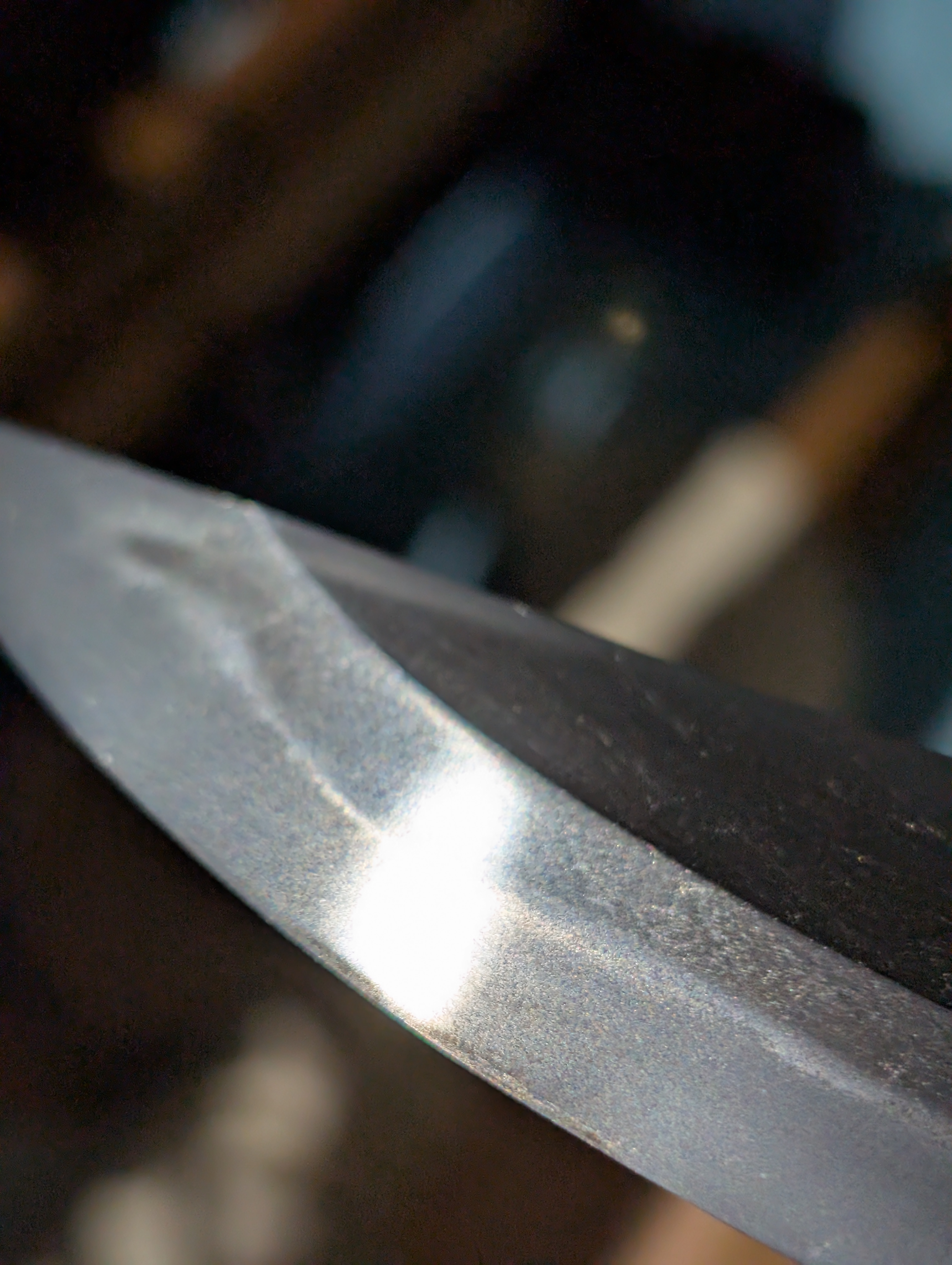
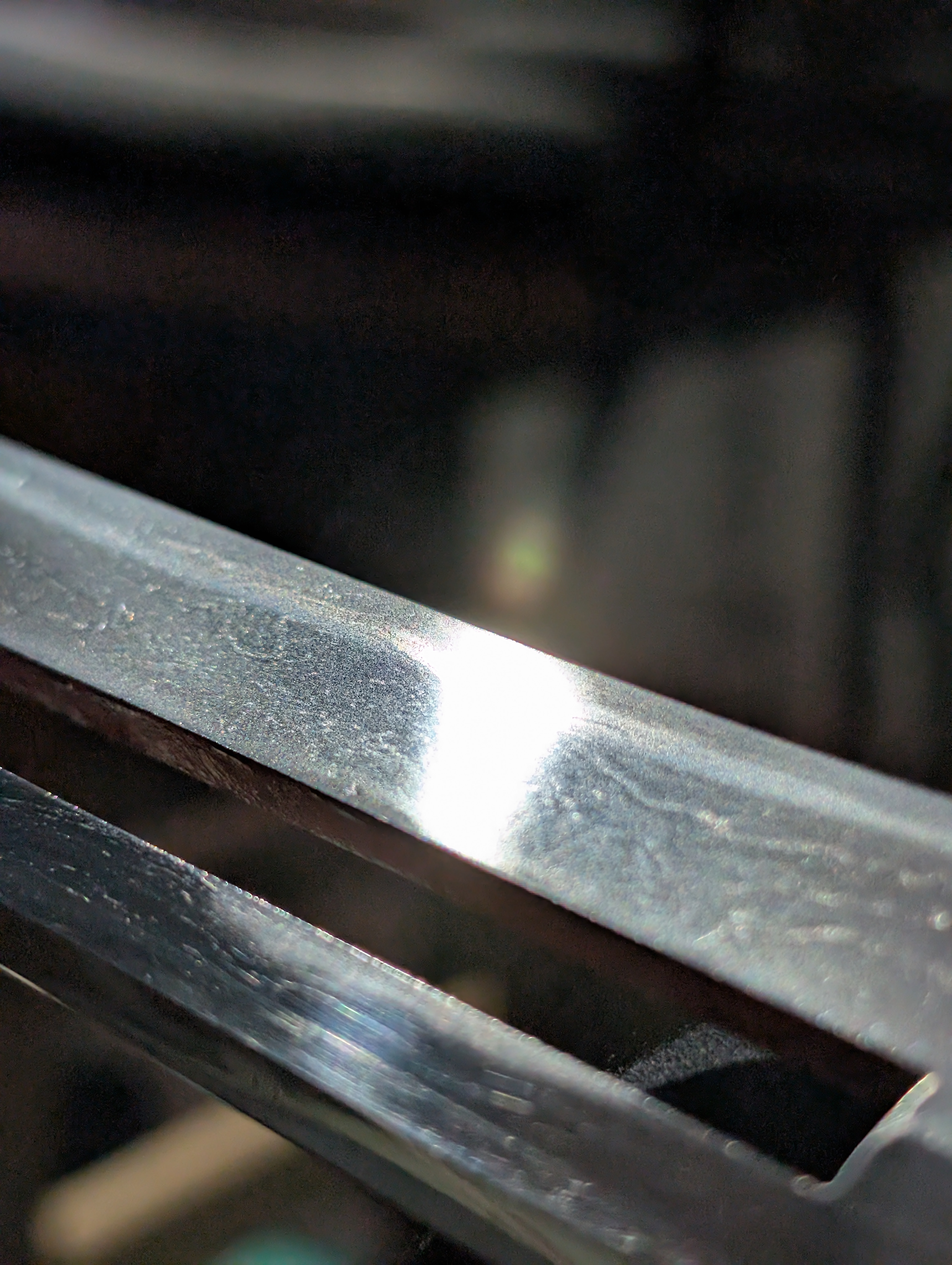
As the Tokugawa Shogunate’s influence spread throughout Japan, starting from their time as retainers to the Oda Clan in the 1500s CE up into their power grab in the year 1596 CE, changing swordsmithing trends resulted in new diasporas and the rebirth of artisanal swordsmithing, culminating in a new breed of swordsmiths who appealed to more modern sensibilities. Such an example will be analyzed through a rare naginata by the swordsmith Bishu ju Kanetake of the Inuyama School. The blade itself has a grand shape, expressing the luxury and glamour that came with an end to civil war, with a broad, leaf-shaped tip and a thinner, more refined base. Moving to the blade’s workmanship, clear elements of the Mino Tradition survive, with the jigane being comprised of a broad itame-hada with running o-hada alluding to earlier works. Ji-nie is present, although the steel takes on a darker color through an abundance of chikei along the glaive’s length. Moving to the cutting edge, the hamon is composed of a gently undulating notare-midare in nie-deki. Occasionally, togari-ba gunome are interspersed, especially approaching the tip. Hataraki are present in great number, with thick kinsuji and sunagashi running parallel to the nioi guchi, alongside yo within the hamon itself. Saka-ashi are also noted near the boshi, creating a gorgeous appearance imitating earlier works. As the hamon comes into the tip, it ends in a simple “Jizo” boshi, turning back gently to end the temper. With aesthetic descriptions accounted for, relevant measurements are listed below.
Measurements:
Nagasa: 40.6 cm (Understandably short, as polearms are mounted on longer shafts)
Sori: 1.6 cm
Motohaba: 2.91 cm (Rather fine for an early Edo Period naginata)
Sakihaba: 3.2 cm (Wider than the base, as is standard with glaives of all varieties)
Motokasane: 7.0 mm (Particularly thick, as is expected for grandiose polearms of mostly ceremonial use)
Sakikasane: 5.0 mm
The nakago of the glaive is ubu with a kengyo-jiri tip. On the naginata-omote, the goji-mei signature “Kanetake, Resident of Bishu” (尾州住兼武) is carefully inscribed. The shaft is long, with a single mekugi-ana punched into the tang, indicating a completely unaltered naginata. This is particularly rare, as most polearms have been shortened into wakizashi, and later, unaltered examples were rarely produced due to their expense and battlefield obsolescence.
The blade’s shape is in shobu-zukuri, with an iori-mune. Although seen on swords, this style of geometry is most commonly seen on naginata, such as this particular example. Early examples of such work can be found in the late Heian Period, with the most famous example being a naginata allegedly owned by Musashi-Bou Benkei, held at Oyamazumi Shrine. As battlefield combat ended with the coming of the peaceful Azuchi-Momoyama and Edo Periods, such a work is particularly rare, only being elevated through the inclusion of a rare sukashi-bori (openwork) carving of a Buddhist vajra sword.
The blade is rated “Tokubetsu Hozon” by the NBTHK, representing a higher level of quality than is generally expected for Japanese swords. This ranking is a testament to finer craftsmanship by the smith, alongside the careful preservation maintained over countless owners through nearly four centuries, justified by the rarity of such a piece. As the age of civil war waned with the consolidation of power by Oda Nobunaga at Azuchi Castle, swordsmiths of the Mino Seki School no longer needed to produce vast amounts of cheap arms for foot soldiers. As a direct result of this, a number of Seki swordsmiths migrated to other provinces in the hopes of entering the services of famous lords. Of these smiths, the first-generation Kanetake migrated to the city of Inuyama in Owari Province and opened up a workshop, taking on new students. These students often collaborated with out diaspora Mino-based swordsmithing schools, leading to a connection between the Owari Inuyama School, Owari Seki School, and, in particular, the second-generation Kanewaka, who had lived temporarily in Inuyama before eventually settling in Kaga Province. Returning to Kanetake himself, it is believed he found local fame, as surviving examples suggest a close relationship between his school and both the Hiraiwa and Naruse Clans, who ruled over Inuyama. In particular, a yari measuring 68.5 centimeters bearing the signature of Shodai Kanetake is currently housed in Atsuta Shrine, which has direct provenance to Hiraiwa Chikayoshi, who was lord of Inuyama Fief until his death in 1611 CE. Following his death, successive generations of Kanetake continued producing swords in the region until the late Edo Period, when swordsmithing re-established itself under the tutelage of the reformer Suishinshi Masahide. Due to the unique form of the naginata, it is believed that the maker of this glaive is a later Kanetake, operating from roughly 1658 CE to 1661 CE, placing this smith firmly into the Shinto Era and suggesting that such a work was likely meant to be presented to a member of the Naruse Clan. Overall, the blade is a rare example of an unaltered naginata hailing from an elusive swordsmith with direct ties to two of Japan’s most prominent daimyo families. As such, the work remains a treasured example of variance within later swordsmithing traditions, displaying how access to funds and high-level artisans results in a true oddity of later Mino Tradition greatness.
Article by Nicholas Zogu
-Photographs from Charlie White’s Facebook page; Blade in Possession of Charlie White-